- Best for
- Small patios, balconies, shared yards
- Season
- Spring to Fall
- Weatherproof
- Moderate (items can be brought inside)
- Cost
- Under $350
Why Your Outdoor Zone is the Retreat of 2026
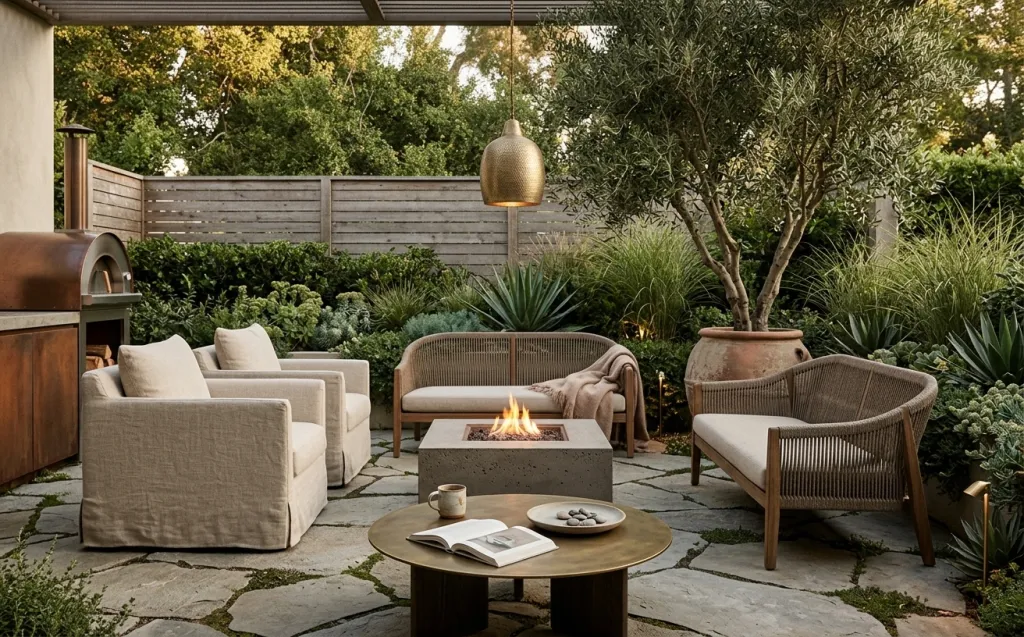
In an era where personal space is a premium, especially in shared living, carving out your own outdoor oasis is more appealing than ever. This look, reminiscent of California-cool meets minimalist comfort, uses a palette of natural linens, warm metallics, and rich, varied greens to create a serene environment. Think Behr's "Smoked Oyster" for the mood, paired with textural elements like woven ropes and smooth flagstone underfoot. The beauty of this approach for students and professional sharers is its impermanence; every piece is chosen for its ability to pack down into a few boxes and travel with you to the next lease, ensuring your comfort isn't tied to a long-term commitment.
Layer 1 — Seating ($150) Flexible comfort for any outdoor nook
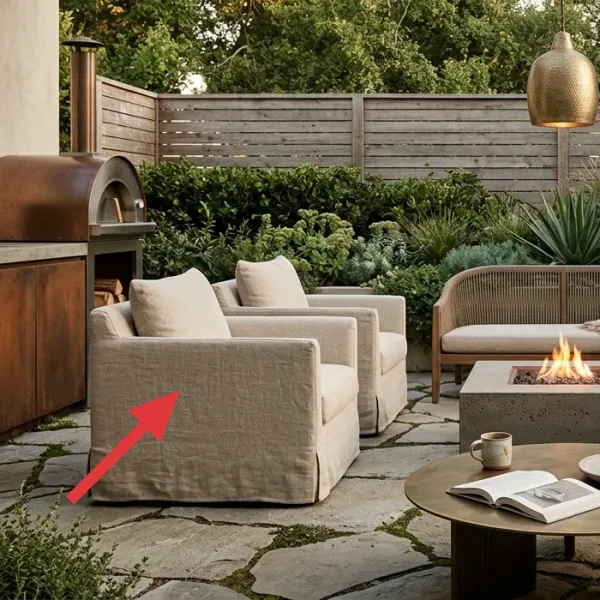
Creating a comfortable seating area is paramount for any outdoor space, no matter how temporary. For shared housing, the goal is lightweight, foldable, and easy-to-store pieces that offer individual comfort without being a burden to move. Look for sling chairs with aluminum frames or small benches that can collapse flat.
We opted for two simple folding sling chairs and a compact folding bench. These provide enough seating for a small gathering or a solo relaxation session, and their light construction means they can be moved effortlessly, even by one person. The fabric slings are also easy to clean or replace if needed.
Choosing lightweight outdoor seating
When selecting seating, prioritize materials like aluminum, lightweight wood, or durable canvas. Avoid heavy wrought iron or bulky upholstered pieces. Always check if the item can be folded or disassembled quickly; this is crucial for apartment dwellers and students who move frequently.
Layer 2 — Coffee Table & Decor ($35) Curated moments for relaxation
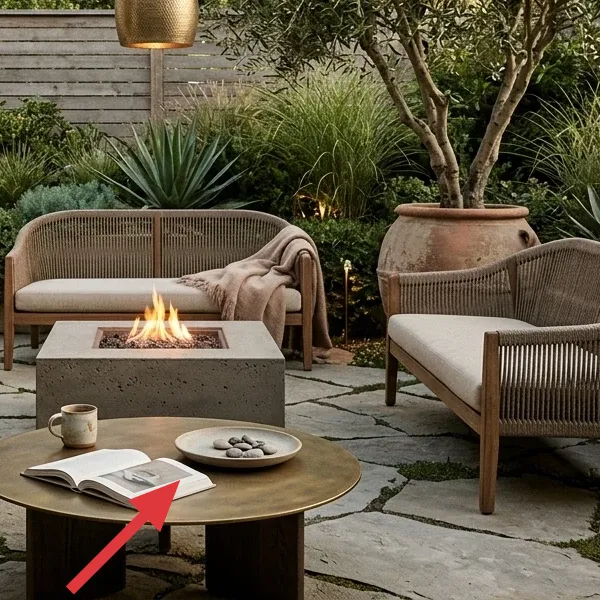
A coffee table serves as the anchor for your outdoor lounge, providing a spot for drinks, snacks, and a good book. For a renter's space, choose a small, round table that is either foldable or incredibly light. We found a simple, flat-pack side table that blends seamlessly into the natural aesthetic.
The real magic happens with the decor. A few carefully chosen items can make your outdoor zone feel personal and inviting. We styled ours with natural elements: a simple ceramic mug, an open book, and a small tray holding smooth river stones. This combination invites relaxation and adds a textural layer.
Make it instead of buying it
Create a beautiful, portable decorative tray for your outdoor coffee table using inexpensive natural elements.
- Purchase a small, shallow wooden or metal tray (around 10-12 inches in diameter) from Target or a dollar store for about $5.
- Gather a handful of smooth river stones or pebbles from a local craft store like Michaels (a bag typically costs around $10).
- Arrange the stones neatly in the tray, varying sizes for visual interest.
- Place an existing favorite book and a ceramic mug on the table alongside the tray.
- Position the styled tray on your coffee table; it's easy to pack when moving, just empty the stones into a small fabric bag.
Total DIY cost: ~$15 — saves about $20 over buying a pre-made decorative set.
Layer 3 — Fire Pit ($80) Warmth without the commitment
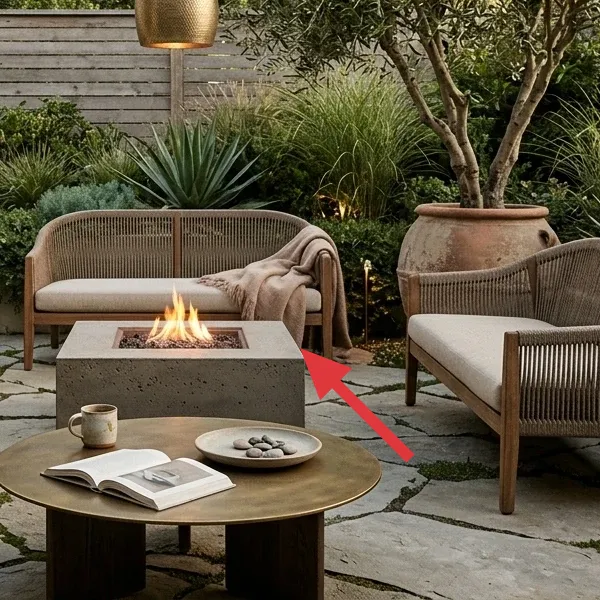
Even a small outdoor space can benefit from the cozy ambiance of a fire pit. Since permanent installations are out, a tabletop ethanol or propane fire pit is an excellent, portable alternative. These units are compact, relatively lightweight, and provide a real flame without the mess of wood or the need for a gas line.
Our choice was a sleek, modern tabletop ethanol fire pit. It instantly elevates the evening atmosphere, making cool nights more enjoyable. When not in use, it's easy to store, and it poses no permanent fixture issues with a landlord.
Safety first with portable fire pits
Always place tabletop fire pits on a stable, non-combustible surface away from anything flammable. Ensure adequate ventilation and never leave them unattended. Store fuel safely and out of reach of children or pets. Check local regulations on open flames, even small ones, in your specific rental property or shared outdoor space.
Layer 4 — Pendant Light ($30) Ambient glow that moves with you
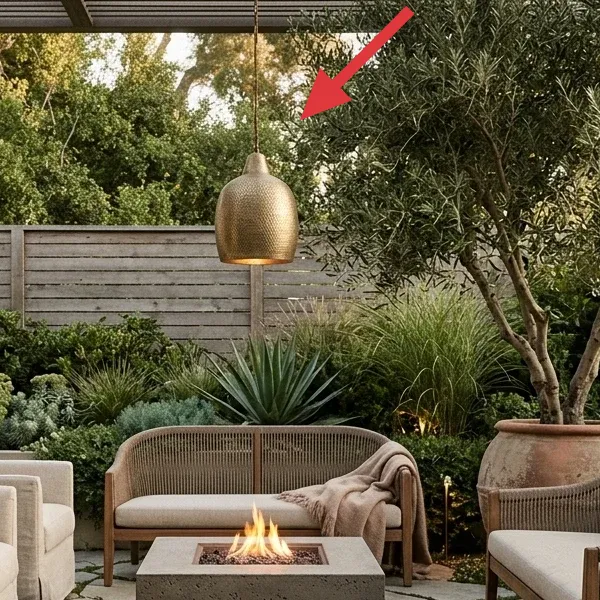
Good lighting is essential for extending the usability of your outdoor area into the evening. While the image shows a hardwired pendant, a renter-friendly approach involves battery-operated or solar-powered hanging lanterns. These offer great flexibility, requiring no electrical work or permanent installation.
We opted for a solar-powered hanging lantern that charges during the day and automatically illuminates at dusk. If you have a pergola or a sturdy branch, you can simply hang it with a removable hook. For spaces without overhead structure, a freestanding solar path light or even a cluster of LED candles in hurricane lanterns can achieve a similar effect.
Maximizing light with solar power
Solar-powered lights are a renter's best friend for outdoor spaces. Place the solar panel where it gets direct sunlight for at least 6-8 hours a day. For maximum impact, use a mix of hanging lanterns, tabletop lights, and path lights to create layered illumination.
Layer 5 — Potted Olive Tree ($50) A touch of nature, easily relocated
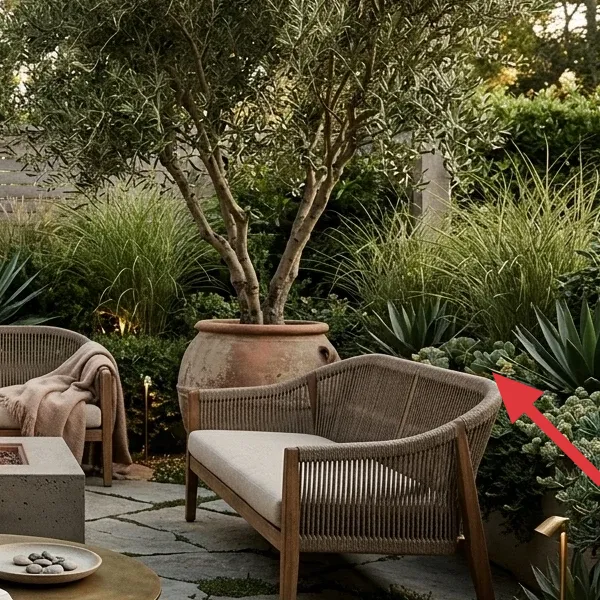
Adding greenery makes any space feel more alive and personal. While a mature olive tree in a heavy terracotta pot looks impressive, it's not practical for temporary living. Instead, choose a smaller, more manageable plant in a lightweight, durable pot that can be moved easily.
A dwarf fig tree, a large fern, or even a robust rosemary bush in a sturdy plastic or fiberglass pot can provide a similar natural aesthetic without the weight. These plants are easy to care for and can be transported to your next home with minimal fuss.
Choosing portable plants and pots
When selecting plants, consider their mature size and weight. Look for smaller, upright varieties that thrive in containers. For pots, prioritize lightweight materials like plastic, resin, or lightweight concrete over heavy ceramic or terracotta. Ensure pots have drainage holes to prevent root rot.
Layer 6 — Outdoor Kitchen / Pizza Oven ($0) Working with what you have
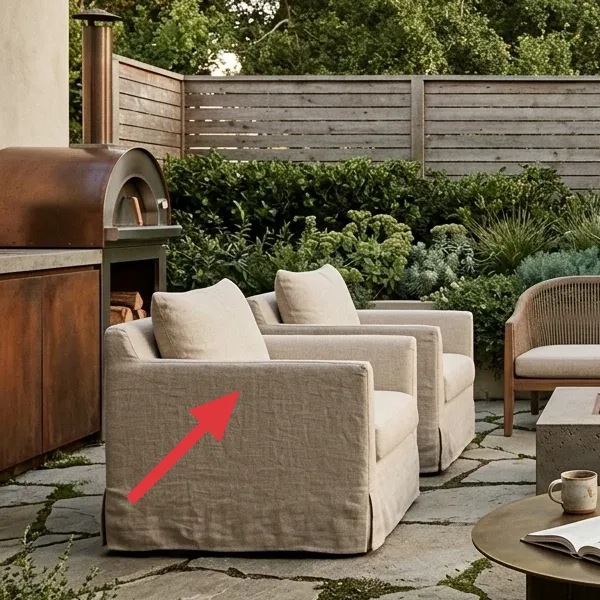
The built-in pizza oven and outdoor kitchen counter in the hero image are clearly fixed features, not something a renter would install. However, this layer represents an opportunity to either leverage existing elements of your rental property or consider portable alternatives that achieve a similar function.
If your rental has a built-in grill or a small prep area, incorporate it into your design by placing your portable furniture nearby. If not, consider a small, portable charcoal grill or an outdoor cart that can be rolled out when needed and stored away easily. The key is to make use of what's available without making permanent modifications.
Leveraging existing fixed elements
Don't fight your rental's built-in features. Instead, design your portable space to complement them. If there's a wall, use it as a backdrop for string lights or a tension-rod curtain. If there's an existing bench, add your own cushions and throws to make it feel like yours.
Layer 7 — Landscaping / Fence ($0) The natural backdrop
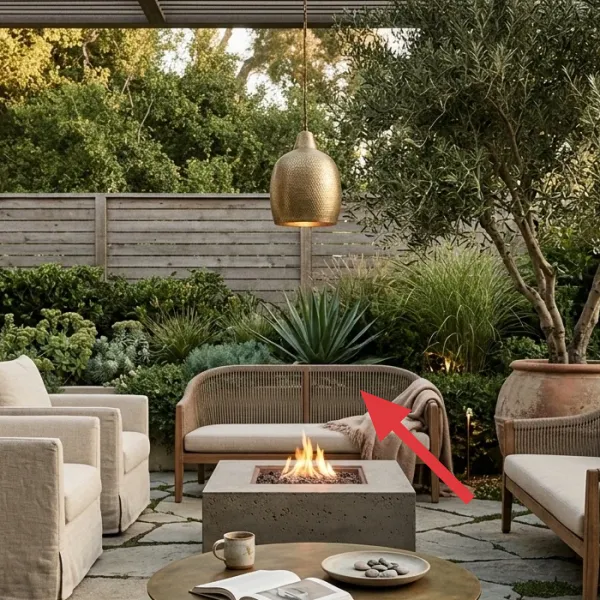
The lush landscaping and wooden fence provide a beautiful, organic backdrop to this outdoor space. As a renter, you likely won't be installing a new fence or planting permanent hedges. This layer is about appreciating and subtly enhancing the natural elements that are already part of your shared outdoor area.
You can lean into existing greenery by placing your portable furniture to maximize views or create a sense of enclosure. Small additions like clip-on string lights along a fence (using removable clips) or a few potted herbs on a windowsill can personalize the space without any permanent changes.
Enhancing existing greenery with small additions
If your outdoor space has existing bushes or a fence, consider adding small, non-permanent touches. Hang battery-operated string lights with removable adhesive hooks. Place a few small pots of fragrant herbs like mint or basil on a ledge. These small details can make a big difference in how the space feels without violating any lease terms.
The cost, layer by layer
| Layer | Item | Cost |
|---|---|---|
| 1 | Folding Sling Chairs (2) | $100 |
| Small Folding Bench | $50 | |
| 2 | Foldable Round Side Table | $20 |
| DIY Decorative Tray & Stones | $15 | |
| 3 | Tabletop Ethanol Fire Pit | $80 |
| 4 | Solar-Powered Hanging Lantern | $30 |
| 5 | Lightweight Potted Fig Tree | $50 |
| 6 | Outdoor Kitchen / Pizza Oven (existing) | $0 |
| 7 | Existing Landscaping / Fence | $0 |
| Total | $345 | |
To reduce costs further, consider thrifting a small side table or using an existing stool you already own. For the fire pit, a cluster of battery-operated LED candles in hurricane lanterns can create a similar cozy glow for a fraction of the price.
What worked, what didn't (across the whole room)
Creating a personal outdoor zone with impermanent pieces has its unique challenges and rewards. Here’s an honest look at what truly clicked and where we might have taken a different turn.
What worked
- The emphasis on lightweight and foldable furniture made setup and potential moves incredibly simple.
- Focusing on soft goods like cushions and throws instantly elevated comfort without permanent changes.
- Using solar-powered lighting eliminated the need for outdoor outlets and complex wiring.
- Embracing container gardening allowed for personalization without altering the existing landscape.
- The tabletop fire pit provided genuine warmth and ambiance, making the space feel more like a destination.
- Sticking to a neutral palette of natural textures made all the pieces feel cohesive, even if sourced from different places.
What didn't
- Some foldable furniture felt less sturdy than desired, requiring careful handling.
- The smaller scale of portable items meant the space could feel a bit sparse if not carefully styled.
- Relying solely on battery/solar power meant less intense lighting than hardwired options.
- The tabletop fire pit, while charming, offered limited heat compared to a full-sized unit.
- Keeping plants alive in containers, especially during hot spells, required consistent attention.
What we'd skip if we did it again
If we were to approach this project again, one thing we'd definitely reconsider is investing in a specific "outdoor" side table. While our chosen foldable one was practical, a sturdy, small indoor end table from a thrift store, like a solid wood stool, could have offered more character and potentially better stability for a similar price. The key is finding something lightweight enough to move but durable enough for occasional outdoor use, easily brought inside during bad weather.
Another item we might skip is the dedicated tabletop fire pit, unless it's a very specific desire. While it adds a nice touch, the budget could be better reallocated to more comfortable seating or larger, more impactful potted plants. For ambiance, a collection of weather-resistant LED lanterns or string lights (tension-mounted, of course) can provide a similar cozy glow at a lower cost and with less maintenance.
Frequently asked
Can I really create an outdoor space if I don't own the property?
Absolutely! The key is to choose items that are lightweight, portable, and require no permanent installation. Focus on soft goods, freestanding furniture, and solar-powered lighting that you can easily pack up and take with you.
What kind of lighting is best for a renter's outdoor area?
Solar-powered lights (like string lights or lanterns) and battery-operated lamps are ideal. They eliminate the need for outdoor outlets or complicated wiring, and you can place them virtually anywhere without drilling or permanent fixtures.
How can I add plants without heavy pots or permanent landscaping?
Container gardening is your best friend. Choose lightweight pots made of plastic or resin, and select smaller, easy-to-care-for plants like herbs, dwarf fruit trees, or ferns. These are easy to move and maintain.
Are Command Strips safe for outdoor use on rented property?
Some Command Strips are designed for outdoor use. However, for plaster walls or delicate surfaces, always opt for the foam-core Command Strips and test them in an inconspicuous area first. Avoid those that are known to pull paint upon removal, especially on older buildings.
How do I make my temporary outdoor space feel cozy and personal?
Focus on textiles like outdoor rugs, throw pillows, and blankets (that can be brought inside). Add personal touches like styled trays, lanterns, and a small, portable fire pit. Layering these elements creates warmth and defines your personal zone.
What's the best way to clean and store these portable outdoor items?
Most outdoor fabrics can be spot-cleaned or machine washed. Wipe down furniture frames with a damp cloth. For storage, ensure everything is dry to prevent mildew, then disassemble or fold items and pack them into plastic bins or moving boxes to protect them from the elements and prepare for your next move.