- Best for
- Textile-heavy bedroom refreshes
- Time
- A weekend (2–4 hours active)
- Total cost
- About $520 (cap $600)
- Renter-safe
- No-drill textiles + clip-in/upwall swaps
Why this earthy green bedroom is the wood-paneled bedroom of 2026
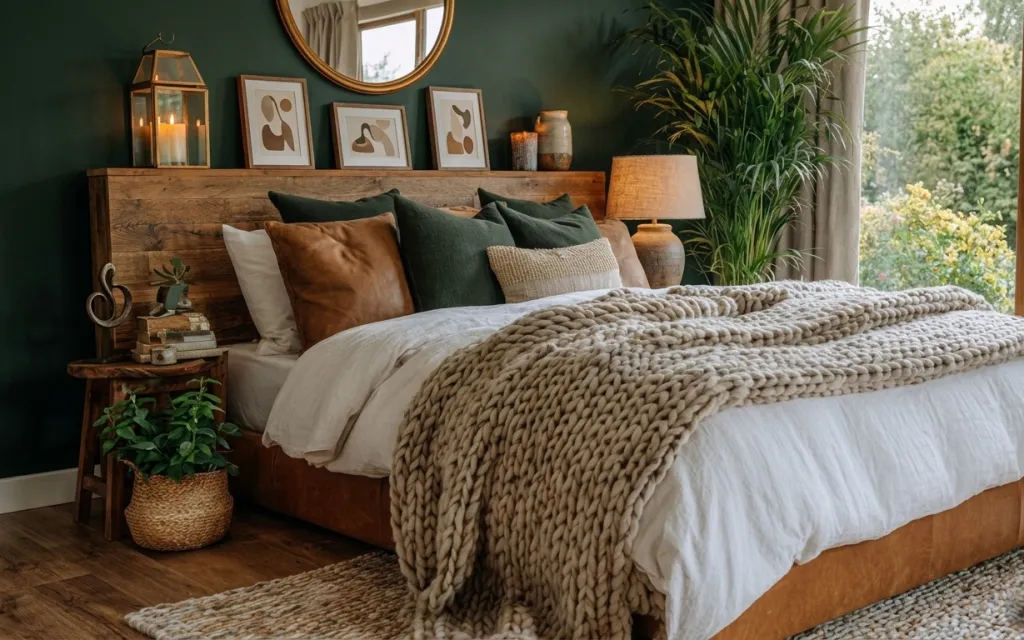
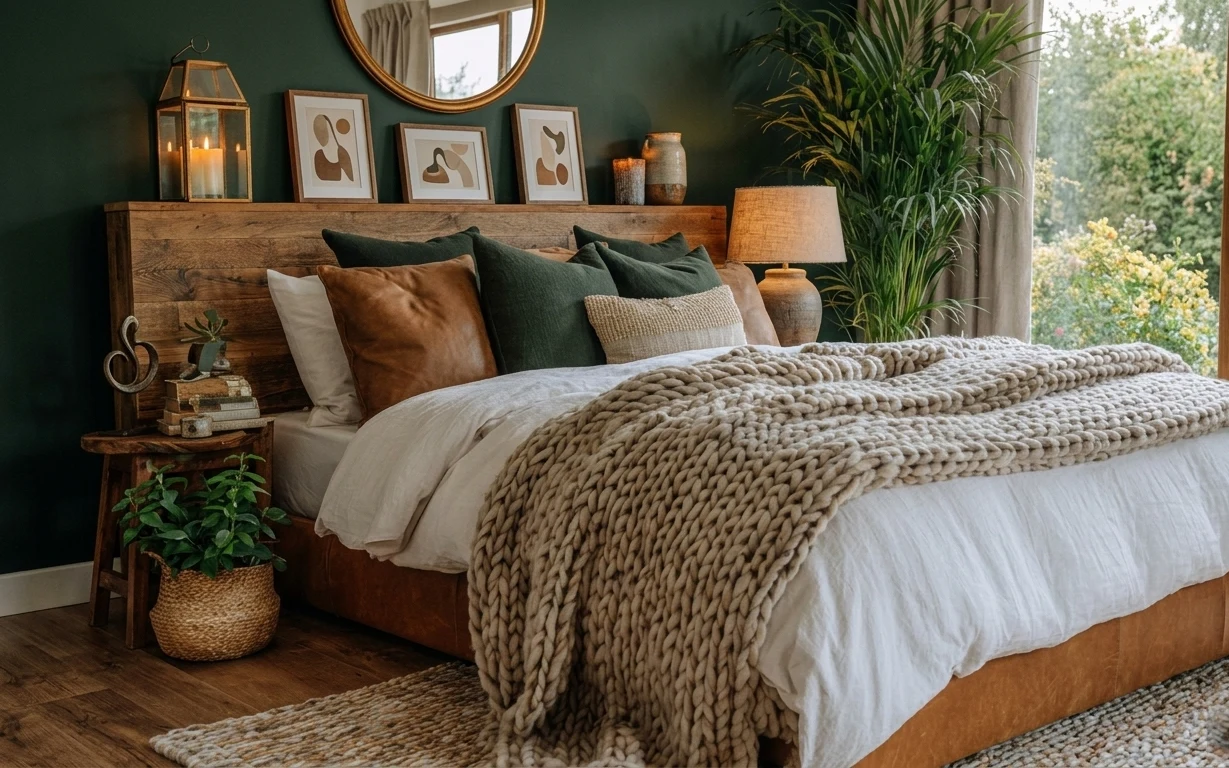
That deep green wall works like a built-in mood: you can keep everything else in warm neutrals and still feel intentional. In the photo, the chunky knit throw, the cream sheet set, and the suede-look brown pillow add real texture contrast against the smooth paint. The layered rug grounds the whole bed zone, while the table lamp and the metal lantern candle holder make the room feel softer after dark. For shared housing, this is especially doable because the key pieces are textiles and freestanding swaps—not permanent installs.
I almost default to “matchy” when I style bedrooms—like buying one more thing in the exact green of the wall. But here the better move is making green the background and letting textures do the talking: knit, woven, and a little matte velvet/”suede” in pillow form. Swapping the art and adding one round mirror also changes the height and rhythm without asking for wall tools. The result is that the room reads cohesive, even when you’re packing everything into boxes later.
Layer 1 — Area rug ($150) anchors the bed zone
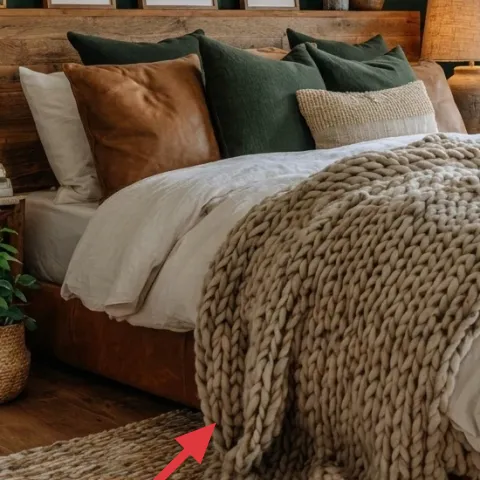
A rug is the fastest way to keep a rented bedroom from feeling like “a bed in a hallway.” This one has a natural, heathered texture that reads warm under both daylight and lamp light, and it sits far enough under the bed to visually tie the whole setup together. The trade-off with a textured rug is it can look busier than a flat-weave, so it helps to keep your wall and bedding colors fairly limited. A simple jute-style rug also hides day-to-day scuffs better than a high-pile option.
Choose the rug that matches your floor’s warmth
If your wood floors are honey-toned, a beige-brown neutral rug keeps the palette from going cool.
Layer 2 — Chunky knit throw blanket ($60) adds volume on the bed
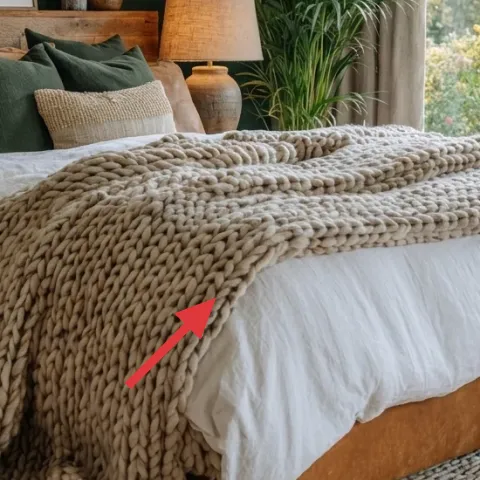
This chunky knit throw is doing most of the styling heavy lifting: it brings thick, tactile layers that look expensive without needing furniture changes. Draped across the front of the bed, the knit’s oversized loops create a soft “cushion” effect and help the whole look feel styled instead of purely functional. The decision that matters here is scale—too-small knit throws look lost on a wide bed. The trade-off is that chunky knits can shed a little at first, so shaking it outside once or twice before styling helps.
Let it bunch slightly near the foot
Small folds make the knit look intentional instead of flat and taped-down.
Layer 3 — Brown suede-look throw pillow ($30) warms up the green
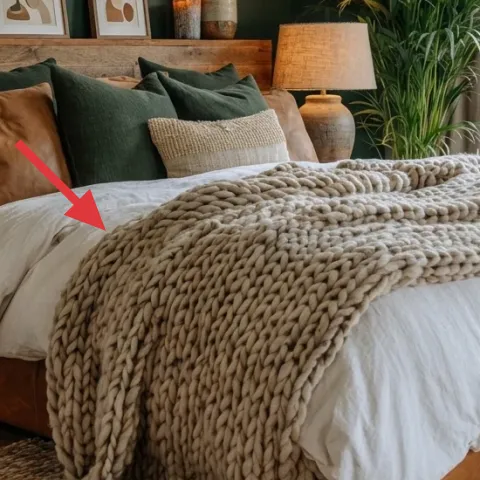
The brown suede-look pillow is the bridge between “cool” wall color and “cozy” bedding. It reads matte and velvety compared to the smooth cream sheets, so it gives the room depth without adding more patterns. This works better than adding another printed accent because the textures already carry visual interest in the photo (knit throw, woven rug, and the jar/plant styling). The trade-off with suede-look fabrics is they show lint more easily than tightly woven cotton, so a lint roller nearby is worth it.
Don’t add one more color before you add one more texture
In a green-forward palette, texture gives you richness; extra color can make it feel busy fast.
Layer 4 — Hand-painted abstract on cardstock ($80) creates a no-drill wall story
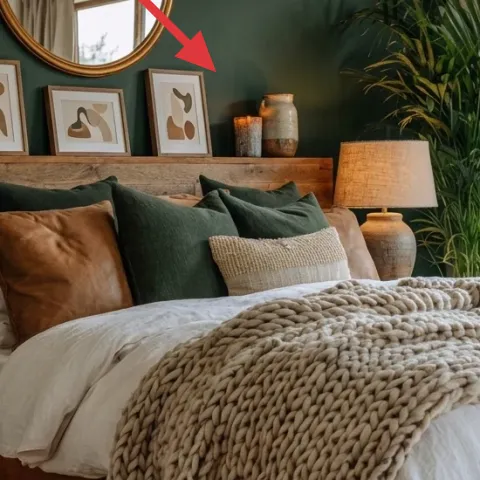
Instead of buying a matching gallery set, paint or mark cardstock and slip the pieces into frames you already own (or cheap, lightweight frames you can carry). The photo’s framed prints are graphic and tonal, and that look is easy to replicate with warm creams, ochres, and a muted umber shape or two. This DIY keeps the wall feeling curated while staying move-friendly: the art can come out quickly and the frames can go to the next place. The trade-off is you’ll spend a couple of evenings making art, but it’s still cheaper than buying three coordinating prints outright.
Make it instead of buying it
Hand-paint a small abstract set on cardstock, then swap the finished pieces into lightweight frames for the same gallery feel.
Materials
- Cardstock, pack of 12 — 12 sheets — craft store — $6
- Student acrylic paint set — small set — craft store — $18
- Disposable foam brushes (or small brushes) — 8-pack — craft store — $20
- Matte clear sealer (spray or brush-on) — small can — craft store — $10
- Painter’s tape — roll — hardware store — $8
Steps
- Cut cardstock to your frame insert size and line up a simple pencil grid for spacing.
- Tape off a few shapes (circles, rounded rectangles, or a single “loop” line) so the abstracts stay graphic.
- Paint with 2–3 warm tones, then add one darker accent shape for depth.
- Let the paint dry fully, then add a second pass if you want more opacity on the main shapes.
- Remove tape carefully and let edges set without touching.
- Seal lightly with matte sealer so the surface handles being moved and swapped.
Total DIY cost: $62 — saves about $18 over buying.
Layer 5 — Round wall mirror ($100) bounces light and adds height
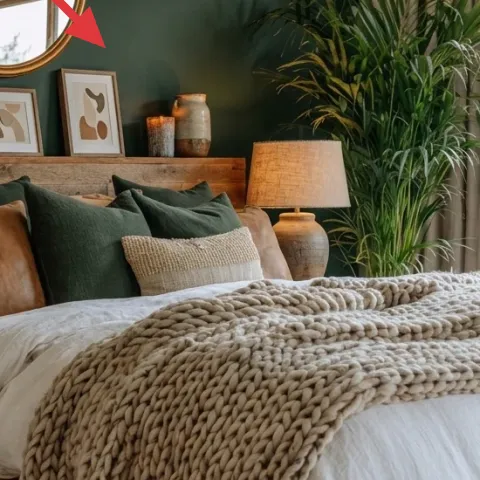
A round mirror is one of those “quiet architecture” pieces: it softens straight lines, reflects window light, and makes the wall feel finished without extra shelves. In this photo, the mirror sits above the art and reads like a focal point, balancing the bed’s width and the height of the window curtain on the right. The trade-off with mirrors is weight and breakability, so pick one with secure backing and handle it like a picture. If you’re moving often, choose a style with a frame you can pack flat (or keep bubble-wrapped) and transport in the cab or trunk.
Keep the mirror’s diameter in the “portrait” range
Too small looks like decoration; too big can compete with the art cluster.
Layer 6 — Table lamp ($60) turns daylight into evening comfort
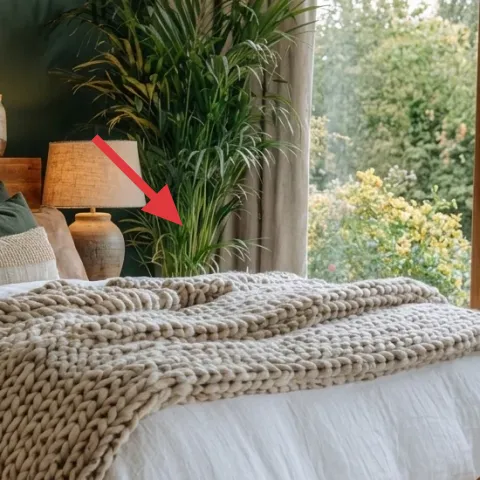
The table lamp matters because it changes how the green wall reads: warm light pulls the color toward brown-green instead of sharp teal. The lamp in the photo also has a soft shade, which helps the glow feel even rather than harsh. This is one place where it’s worth paying for the right bulb temperature—2700K is the sweet spot for a bedroom that feels restful. The trade-off is that warm bulbs cost a bit more than standard ones, but it’s a small upgrade that makes everything else—rug, throw, pillows—look better.
Match lamp shade texture to your knit + rug
A fabric or linen-like shade complements the chunky throw instead of fighting it.
Layer 7 — Large potted plant ($40) brings life without clutter
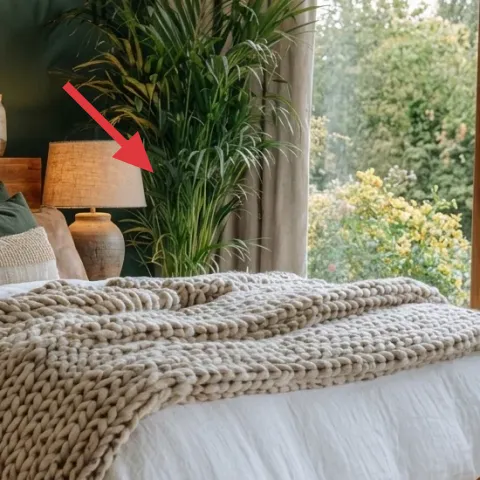
A medium-to-large potted plant gives you “end-of-day calm” because it adds organic shape right next to the bed. Here, the plant sits near the window side, so it benefits from daylight and looks fuller over time. The trade-off is upkeep—plants want consistency with watering—but it’s still simpler than maintaining fresh flowers or rotating decor weekly. If your apartment runs dry in winter, consider using a slightly larger cachepot and checking soil moisture on a schedule.
Pick a plant you can keep alive for a year
For shared housing, survival beats perfection every single move.
The cost, layer by layer
| Layer | Item | Cost |
|---|---|---|
| 1 | Area rug 5×7 (natural jute-style) | $150 |
| 2 | Chunky knit throw blanket | $60 |
| 3 | Brown suede-look throw pillow | $30 |
| 4 | Hand-painted abstract on cardstock (in frames) | $80 |
| 5 | Round wall mirror (medium) | $100 |
| 6 | Table lamp with fabric shade | $60 |
| 7 | Large potted plant (4–5 ft) | $40 |
| Total | $520 | |
A cheaper variant is to swap the rug for a smaller budget weave (or hunt for a close 5×7), choose a knit throw in a lighter weight, and pick a smaller mirror diameter while keeping the same color story. That lets the bedroom feel styled without spending on high-ticket decor.
What worked, what didn't (across the whole room)
The look succeeds because it stacks texture and uses one clear color story: deep green wall, warm browns, and cream. The rug and chunky throw do the heavy visual lifting, while the lamp and mirror control how the space reads at night and in daylight.
What worked
- The textured area rug keeps the bed from floating and hides everyday wear on wood floors.
- Chunky knit on the bed adds volume without needing any permanent furniture changes.
- Suede-look brown pillows warm up the green wall so the palette feels calm, not icy.
- Framed abstracts plus a round mirror creates height balance above the bed zone.
- Warm table-lamp light makes the wall color look softer after dark.
- One larger plant gives organic shape near the window without visual clutter.
What didn't
- Adding another bold pattern too early would compete with the existing knit-and-rug textures.
- A smaller rug would leave the bed looking disconnected from the floor.
- A glossy finish on wall decor would reflect harsh highlights on the green paint.
- Skipping the warm lamp light makes the room read flatter and less restful.
What we'd skip if we did it again
Skip a third “hero” print on the wall. With framed abstract pieces already present, extra wall busyness fights the calm of the knit throw and the green background.
Skip a low-watt, cool-toned bulb. Bedrooms need warm light for that brown-green shift; otherwise the wall and fabrics look dull and a little harsh.
Skip oversized bulky furniture additions to “complete” the look. The cozy vibe here comes from textiles, one mirror focal point, and greenery—everything else is optional and harder to move.
Frequently asked
How long does this bedroom refresh take for shared housing?
Most of the work is swapping textiles and styling the bed—think 1 to 2 hours for rug placement and layering the throw and pillows. The rest is wall and lighting setup: frames and mirror placement can be quick if you already have lightweight hardware, and the lamp just needs a plug. If you DIY the abstract cards, add a separate evening for painting and sealing. Overall, it fits into a long weekend.
Is this renter-friendly if the room has weird wall texture or plaster?
The core choices here are things that don’t require wall modification: a rug, a knit throw, pillow covers, a plug-in lamp, and freestanding or lightweight framed art. For wall hanging, use the lightest possible approach that doesn’t require drilling. The mirror and frames are the only wall-sensitive pieces—choosing lightweight versions and careful mounting methods makes the refresh stress-free at move-out.
What if my bedroom is smaller than the photo?
Go down a size on the rug footprint, but keep it long enough to extend past the bed edge. Reduce the scale of the lamp shade or choose a slightly narrower mirror, while still keeping one round focal point. The chunky knit throw can stay the same because it adds visual softness at any size; you just want to keep pillow count and wall art number balanced so the bed doesn’t visually crowd the room.
What if my bedroom is bigger—how do I avoid it looking empty?
Bigger rooms usually need more “surface coverage,” not more furniture. Extend the rug so the bed sits more fully on it, then add a little more vertical emphasis: a slightly larger round mirror or a taller plant works well. Keep the wall story cohesive by using the same tonal abstract palette for the three prints. The goal is more presence from existing categories—textiles, lighting, and one focal wall—so packing stays easy.
Where should I shop if I want the earthy neutral look without overspending?
Start with the categories that usually vary in quality: rugs and knit throws. For budget-friendly options, look for jute-style rugs and chunky knits in warehouse stores, home resale, and end-of-season sales. For wall art, the DIY cardstock approach keeps you in control of color and lets you match your wall paint. Lamps and mirrors are often best bought from mainstream retailers where you can return if the shade looks flat in your room lighting.
What’s the biggest mistake people make in bedrooms like this?
The most common misstep is adding too many competing patterns. This room works because the wall and accessories stay tonal, and texture does the styling. When people add multiple new prints without a textured anchor (like the knit throw + rug), the palette can feel chaotic fast. Another frequent issue is using cool lamp light, which makes warm browns and green walls look less flattering.
More in Bedroom
5 boho bedroom swaps for a $600 refresh
A warm, move-friendly bedroom refresh under $600: rug + chunky knit throw + pillow color, plus no-drill wall art and a soft lamp glow. Desi…
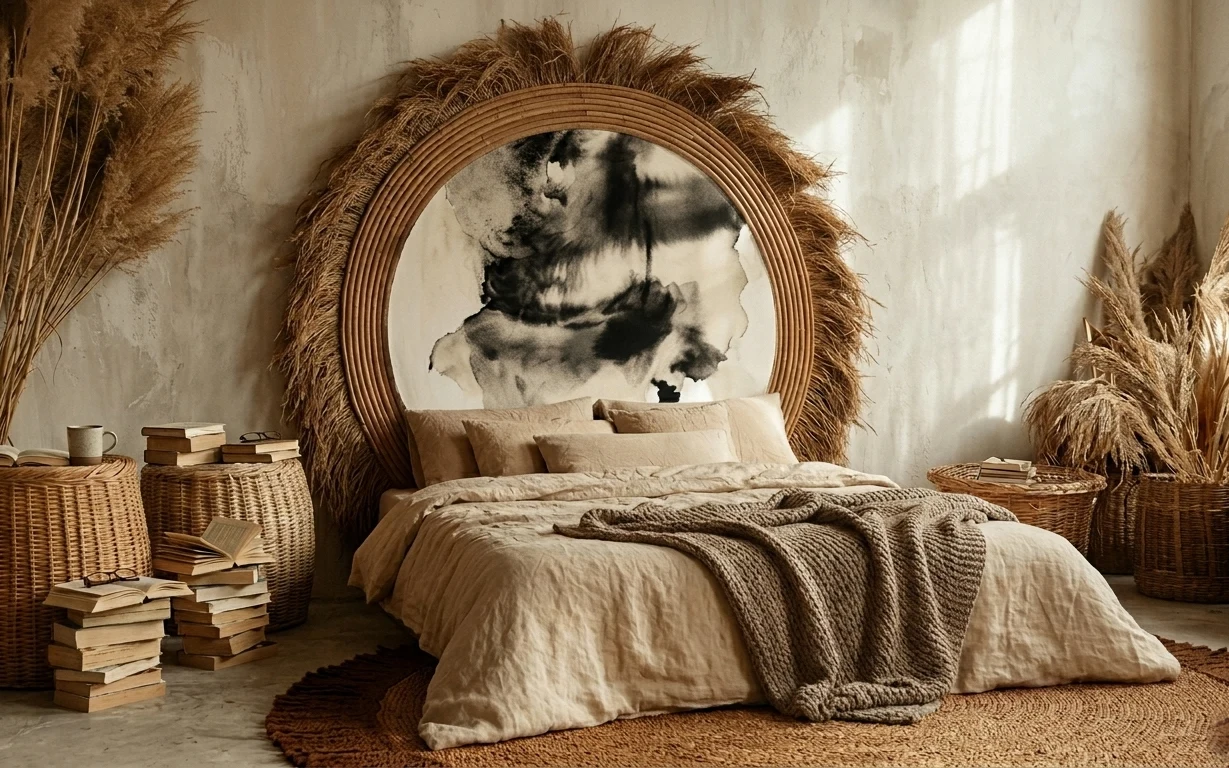
Earthy boho bedroom refresh, $800
A boho bed nook makeover that makes one bedroom feel intentionally styled—using a braided rug, neutral duvet, soft knit throw, and a framed…

Under $500: a warm boho bedroom nook refresh
A warm boho bedroom nook refresh for renters, built around an arched rattan backrest look, a round jute rug, and airy cream textiles. All-i…