- Best for
- move-ready living room styling
- Cost
- under $350
- Difficulty
- easy (mostly textiles)
- Time
- 1–2 afternoons
Why earthy boho palette is the sunlit living room of 2026
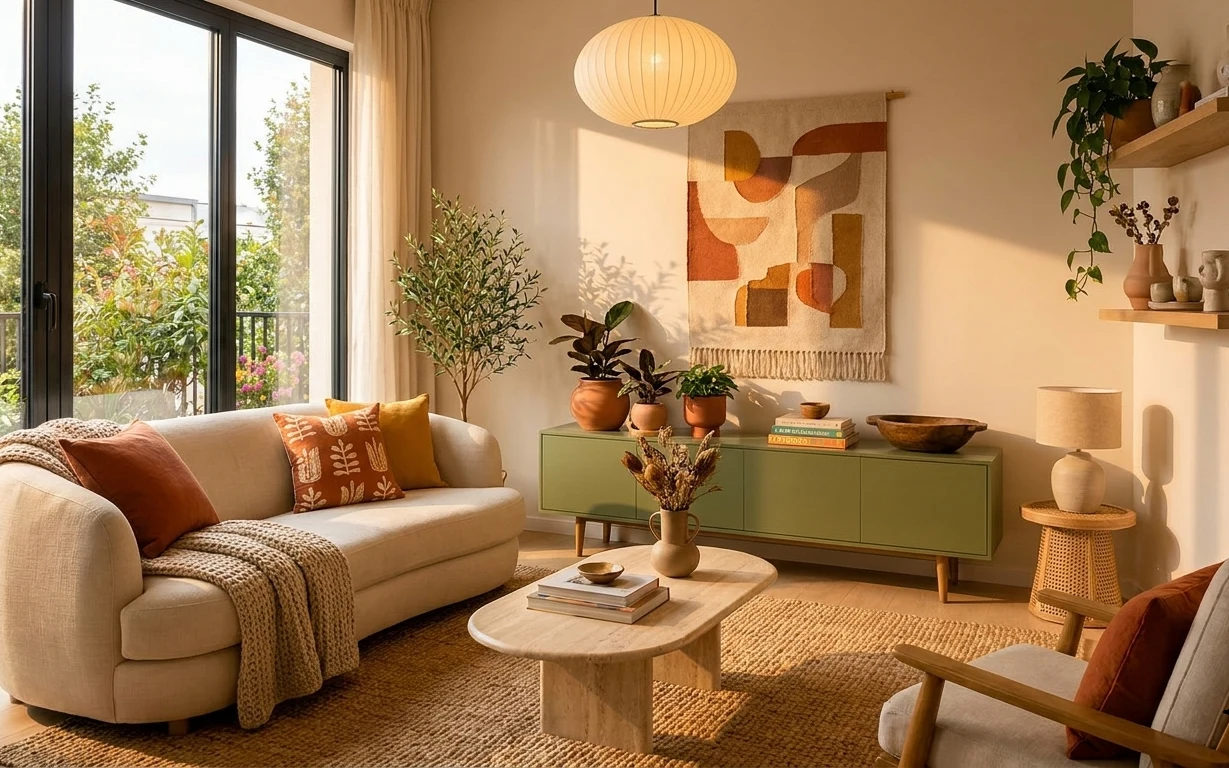
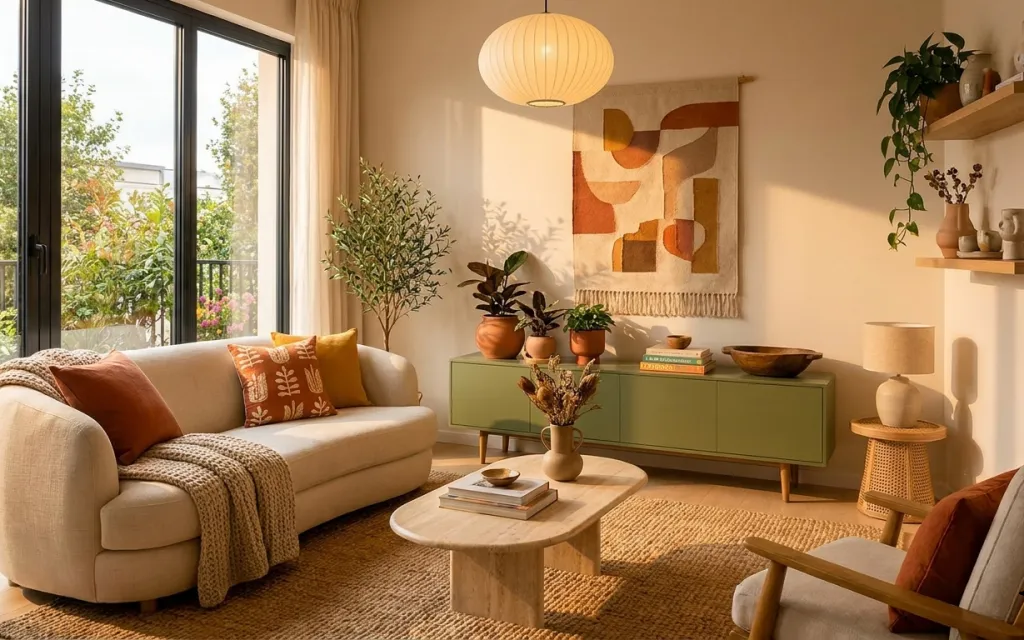
In this photo, the cream sofa and the warm terracotta accents read like a set, even before the decor shows up. The jute-style rug anchors the floor with a textured, woven look, while the beige curtain panels soften the big window area. A knit throw blanket adds that lived-in, chunky surface you can feel in photos. The framed abstract wall art gives the wall a modern focal point without needing any built-in changes. For shared housing, the best part is that this palette is made from swaps: textiles, art, and small objects that pack flat.
The first time I tried this vibe in my own place, I over-committed to matching throw pillows and ended up with a cluttered color fight. What fixed it was choosing one warm accent color (terracotta) and repeating it once more through a smaller object—like a pot or a ceramic. I also learned to trust the rug texture; it makes the whole room feel intentional even if the accessories are thrifted. Here, the layers stay light enough to move, which is exactly the point.
Layer 1 — jute-style area rug ($80) textured weave underfoot
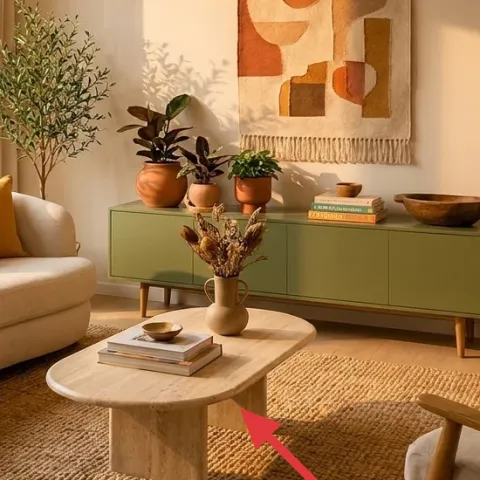
A jute-style area rug is the fastest way to ground the cream sofa and make the whole living room feel less “floating.” In the photo, the woven texture sits under the coffee table and pulls the eye across the floor, which is especially helpful when you don’t have the option to change wall paint or built-ins. The trade-off is that jute-style fibers show dirt more than a low-pile synthetic, so vacuuming matters. Still, it’s move-friendly: a rug rolls, fits in a rental van, and replaces easily next lease.
Pick the size by legs, not by the sofa
Try to keep the front legs of both the sofa and nearby chair on the rug for a more cohesive footprint.
Layer 2 — beige curtain panels ($60) softens tall window lines
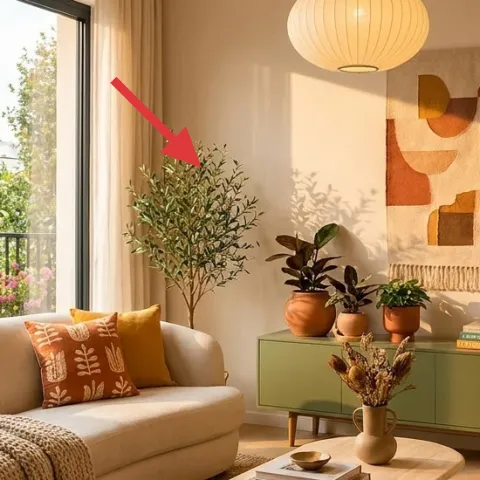
Beige curtain panels make the big glass area feel dressed and less stark, even when the rest of the room is simple. The fabric here is light and neutral, so it flatters the warm wood tones and doesn’t overpower the terracotta accents. Choosing removable panels is the shared-housing win: they can be taken down with hardware you already own or with non-damaging methods, then re-hung later. The trade-off is that short curtains can look accidental, so measure height from the top rail to the floor line before buying.
Let the curtains do the “color mixing”
Beige reads like a bridge between cream upholstery and sage-green furniture.
Layer 3 — knit throw blanket ($25) chunky texture on the sofa
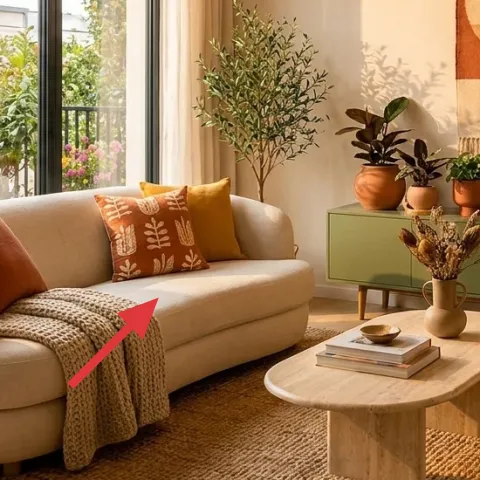
A knit throw blanket draped over the sofa arm adds visual texture without committing to a heavy, permanent change. In the photo, the throw’s thicker weave makes the cream fabric feel warmer and more touchable, and it helps the room look styled even in daylight. It’s also one of the easiest pieces to pack: fold it into a flat bundle, then tuck it back onto the chair or sofa after the move. The trade-off is that you’ll want a lint roller for textured knits if you have pets or frequent fabric transfer.
Match fiber weight, not exact color
Look for a throw that feels similar in thickness to the rug’s weave.
Layer 4 — throw pillow covers ($24) repeat terracotta without extra clutter
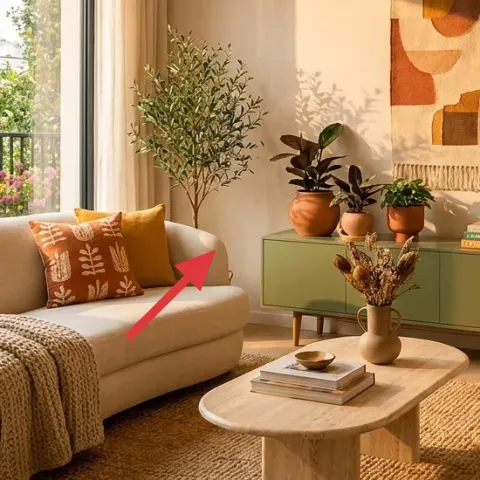
Throw pillow covers are where the terracotta note becomes intentional. In this photo, the warm pillow tones pick up from the ceramic pots and keep the palette from going too beige. The swap is also practical: covers remove fast, and you can keep the “core” pillow inserts while changing the cover color for the next season or next lease. The trade-off is that small prints can feel loud if there are too many patterns at once, so stick to one accent color family and keep the rest of the pillows more solid or subtly textured.
Two pillows can be more than enough
If the room already has a patterned art piece, limit pillow patterns to one.
Layer 5 — framed abstract wall art ($80) ties the wall to the warm palette
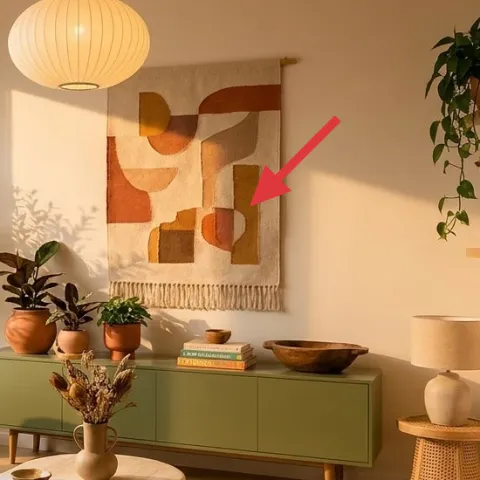
Framed abstract wall art gives the beige wall a focal point and adds a modern edge to the boho mix. The specific benefit here is that the art’s shapes echo the same warmth found in terracotta ceramics, so it doesn’t feel pasted on. This is also one of the most rental-friendly upgrades because art can be swapped quickly and packed flat in protective corners. The trade-off: art placement matters—too high or too low and the whole wall feels off—so measure from the sofa back height before committing.
Avoid anything that pulls when removed
If using wall hooks or adhesives, choose options designed for plaster/drywall so they don’t leave residue or lift paint.
Layer 6 — decorative tray on coffee table ($15) makes styling look “collected”
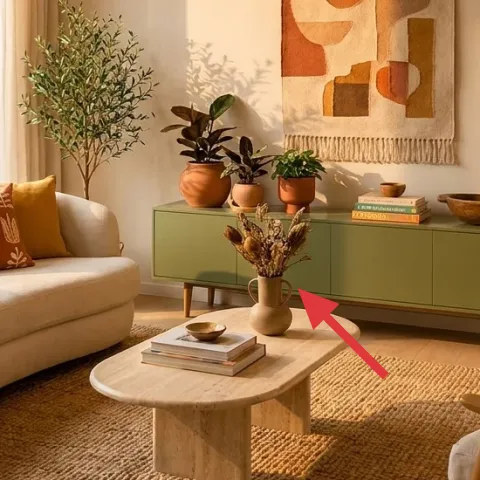
A decorative tray on the round wooden coffee table creates a visual center and keeps small items from looking scattered. In the photo, the tray groups together books and bowls in a way that reads as curated, not accidental. This is a low-cost lever that’s easy to recreate in every shared-house living room, and it’s light enough to carry in a tote. The trade-off is that trays can look too matchy if you choose a style that clashes, so pick a finish that matches the wood tones (light natural works well here).
Limit items to one height “moment”
Keep most pieces flat, then let one element—like a bowl or one book stack—rise above the others.
Layer 7 — terracotta planter pot ($30) brings the outdoors into the corner
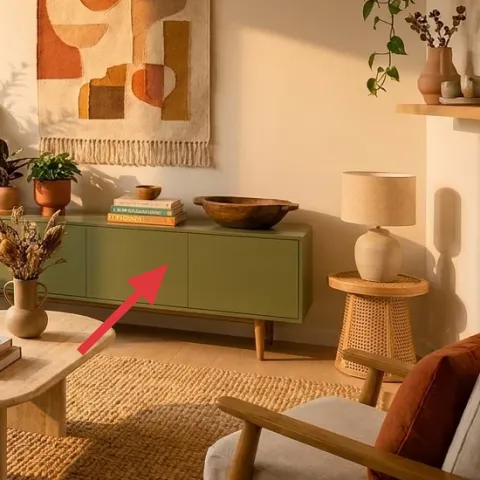
Terracotta planter pots add the warm, earthy color that makes the whole room feel lived-in. In the hero image, the terracotta and ceramic vessels sit near the credenza and help connect the greenery to the sofa palette, especially alongside the woven rug. A single pot is enough to start; you don’t need a full plant wall to get the effect. The trade-off is that heavy pots are harder to move, so choose a medium-size pot that can be lifted in one trip or filled with an insert pot for easier transplanting later.
Use a matching pot, not matching plants
Vary the greenery shapes, but keep the container color family consistent.
The cost, layer by layer
| Layer | Item | Cost |
|---|---|---|
| 1 | Jute-style area rug 5×7 | $80 |
| 2 | Beige curtain panel pair | $60 |
| 3 | Knit throw blanket | $25 |
| 4 | Throw pillow covers (DIY not costed) | $24 |
| 5 | Framed abstract wall art 16×20 | $80 |
| 6 | Decorative tray for coffee table | $15 |
| 7 | Terracotta planter pot (medium) | $30 |
| Total | $314 | |
A cheaper variant keeps the same structure: choose a smaller jute-style rug (or a flat-weave runner) and swap in thrifted framed art. Curtain panels can be replaced with one lighter set or a sheet-style curtain panel that still drapes well. Pillow covers can come from the clearance rack—pick one terracotta tone.
What worked, what didn't (across the whole room)
This refresh works because it prioritizes movable textiles, then adds a single wall focal point and a couple small grouping tools. The result looks styled even in daylight, and it’s all easy to pack for the next shared lease.
What worked
- The jute-style rug anchors the room and makes the cream sofa feel intentional.
- Beige curtain panels soften the window area and reduce the “bare glass” look.
- The knit throw introduces chunky texture that reads well in photos.
- Terracotta pillow covers repeat the pot color without adding more pattern chaos.
- Framed abstract wall art gives the beige wall a modern focal point fast.
- A small tray organizes books and bowls so styling looks collected, not random.
What didn't
- Too many patterned pillows at once can compete with the framed abstract art.
- Curved or mismatched curtain lengths can make tall windows feel cut-off.
- Jute-style fibers show lint and foot traffic more than low-pile rugs.
- Skipping a grouping tool (like a tray) makes small coffee table items look cluttered.
What we'd skip if we did it again
Skip “matching set” shopping for textiles. The sofa, rug, and curtains already provide enough cohesion, and matching everything can flatten the look into one beige blob. Choosing one repeated warm accent (terracotta) keeps the room boho without feeling coordinated to a fault.
Skip larger statement decor that can’t pack flat. A heavy decor object or a wide wall piece is harder to move between shared leases, and the vibe can still be achieved with framed art plus small ceramics. Mobility matters more than one big moment.
Skip adding multiple new plant containers in different finishes at once. If terracotta is the chosen accent, keep container tones consistent, then vary the plant shapes. That keeps the corner cohesive even when the greenery changes over time.
Frequently asked
How long does a refresh like this usually take?
Most of the time goes to measuring and planning placement for the framed art and curtain panels. If the rug is the only “big” item, the rest is swap-and-style: drape the knit throw, change pillow covers, and assemble a tray with a book stack and bowl. In shared housing, budget an extra 30–45 minutes for quick removal/packing rehearsals so everything fits the next move.
Is this renter-safe for shared housing where you’ll move again soon?
Yes—everything in the layered list is designed to be movable. Rugs roll up, throws fold flat, and pillow covers come off in seconds. Framed art should use non-damaging mounting methods if the wall needs to stay intact, and curtain panels can be swapped without touching fixed fixtures. The goal is to create a look that survives moving day.
What if my living room is smaller than the photo?
Go smaller with the rug footprint first, but keep the “anchor” rule: try to keep at least the front legs of the sofa on the rug. For the walls, choose one framed piece (not a cluster) to avoid visual crowding. Keep pillow cover colors fewer—one warm accent family plus neutrals—so the room still feels airy.
What if my living room is bigger and feels empty?
Add scale through one larger framed abstract piece or a taller set of curtain panels, then increase the rug size so it extends under the coffee table area. The tray styling can include a slightly taller item (one vase) to give height variation. The plant corner can also become a “one container, one statement plant” moment instead of multiple small pots.
Where should I shop if I want this exact boho palette?
Look for jute-style rugs and knit throws at home stores with frequent markdowns, then shop framed abstract art for 16×20 sizes at poster/art retailers or online marketplaces that ship flat. For terracotta pots and ceramics, garden centers and craft stores are often cheaper than home decor chains. The best “secret” is consistency in the warm accent color, not the exact brand.
Biggest mistake to avoid in a move-friendly living room refresh?
Overbuilding permanent-looking decor. When a refresh depends on wall work or hard installs, it becomes stressful at move-out. Another common mistake is adding too many competing patterns at once—especially pillows—when the framed art already carries the design. Stick to one focal wall piece, then let textiles and ceramics do the rest.