- Best for
- Move-ready bedroom styling
- Time
- 1 afternoon
- Total cost
- Under $400
- Renter-safe
- No-drill textiles + lightweight decor
Why terracotta-and-cream textures are the move-friendly bedroom of 2026
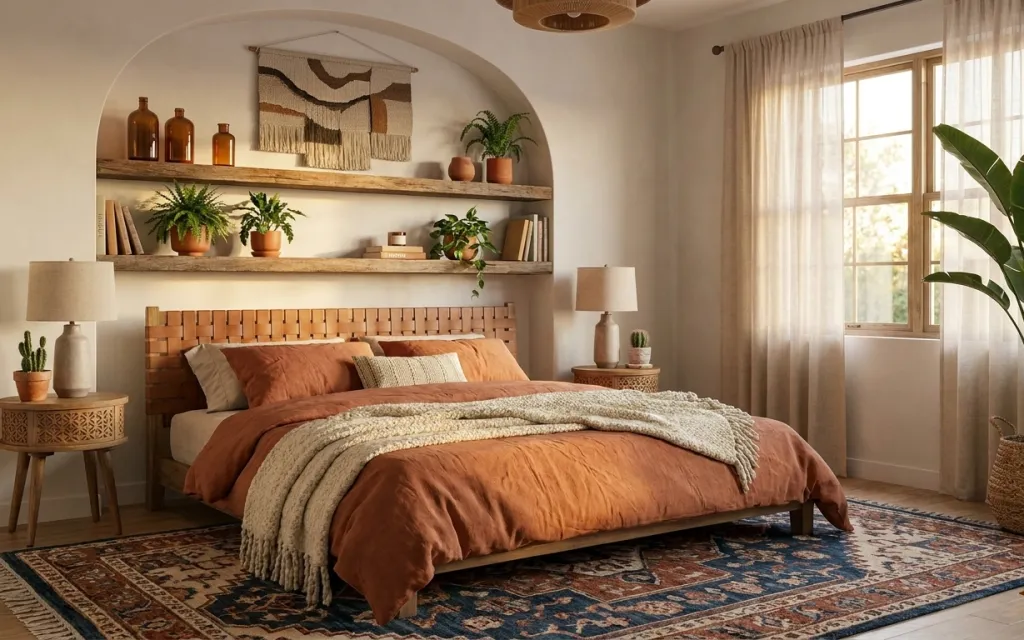
In this bedroom, the warm terracotta tones read cozy without feeling heavy—especially once cream textures and a patterned rug pull the palette together. The light wood floor and white walls give everything room to breathe, while the macramé wall hanging adds that handmade boho detail. A cream textured throw changes the feel of the whole bed area without replacing any fixed pieces. And the fabric-shade lamp keeps the lighting soft enough for evening wind-downs, even when you’re sharing space and rotating furniture every year or two.
I’ve made the mistake of buying “cute” decor that’s too big to move, then realizing it doesn’t pack flat. Here, everything is either a soft good (easy to fold) or a lightweight prop that can travel in a tote. The shelves and plant styling look styled, but the actual repeatable move is choosing warm colors and mixing matte textures with one slightly woven texture. That’s what makes this feel pulled-together instead of accidental.
Layer 1 — Area rug ($150) anchors the pattern play on light wood

Start with the area rug because it does the heavy lifting for color and scale. The pattern sits right between warm terracotta and cooler blues/charcoals, so the bedroom stays balanced instead of turning monochrome. Choosing a rug you can lift and roll matters for shared-housing moves: no fixtures, no wall changes, just something that comes with you. The trade-off is that rugs can be the priciest “textile swap,” but this one pays back by making every other layer look more intentional.
Roll from both ends
For storage, roll inward and keep it loosely wrapped—pattern rugs hate sharp creases.
Layer 2 — Cream textured throw blanket ($25) adds a second texture to the bed area
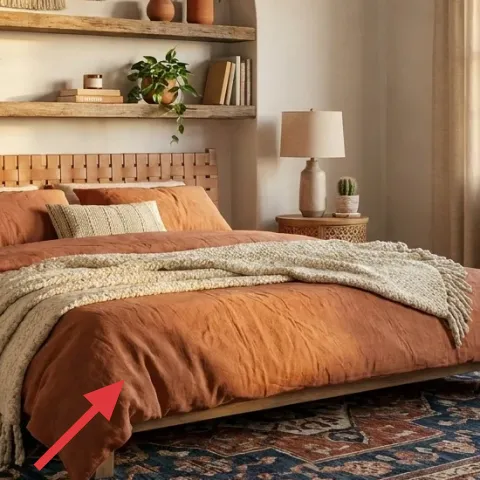
The cream textured throw sits folded over the bed cover area, and it’s one of the quickest ways to change how the bed zone reads from across the room. The nubby knit texture also plays well with the rug pattern—so the palette stays lively without adding another color. This is the move-friendly alternative to replacing the whole bedding setup: no sizing puzzles, no fixed replacements. The trade-off is that throws show wear faster, so it helps to rotate the fold and shake it out occasionally to keep the texture crisp.
Choose texture over color here
Cream keeps the room bright while the rug already carries most of the pattern.
Layer 3 — Beige throw pillow ($30) softens the terracotta without going all-beige
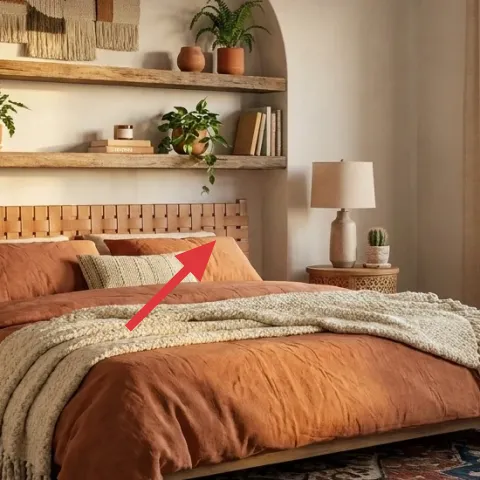
This beige throw pillow gives you a neutral that isn’t the same exact shade as the cream throw, which keeps the bed from looking flat. Beige is close enough to the walls and curtains to keep things airy, but it’s different in undertone from the terracotta, so the colors separate instead of blending. A single pillow is also easier to swap than an entire bedding set, which matters when leases change mid-semester. The trade-off: matching pillows to the shelf décor can be tempting, but it’s better to contrast slightly—this one reads calm, not copied.
Pick one “bridge” neutral
Use beige to connect terracotta to cream, then let the rug bring the deeper contrast.
Layer 4 — Fabric-shade table lamp ($40) keeps evening light warm and forgiving
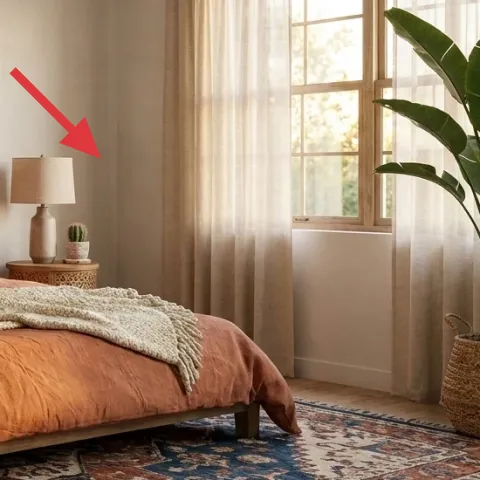
The fabric-shade lamp works because it diffuses light instead of broadcasting it. That matters in a bedroom with a patterned rug and natural textures—hard light makes textures look dusty fast. When the shade is fabric, the glow feels warmer even if you’re just using a standard bulb. This is a better choice than adding a complicated light setup because it’s plug-in and easy to pack. The trade-off is that fabric shades can collect lint, so a quick wipe or lint roller keeps the look clean.
Don’t pair a cool bulb with warm textiles
Crisp bluish bulbs fight the terracotta and can make the whole palette feel gray.
Layer 5 — Macramé wall hanging ($55) adds handmade texture above the bed zone
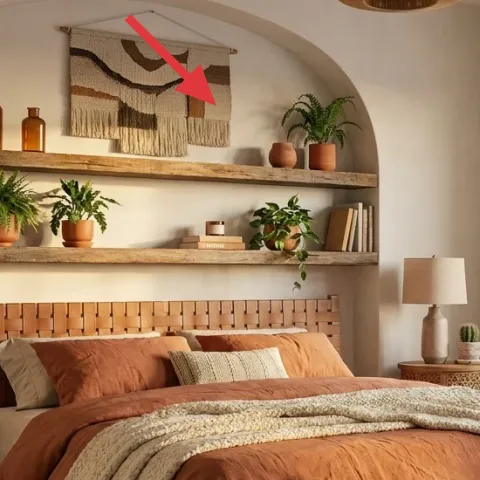
The macramé wall hanging sits in the arched alcove area and reads like the bedroom’s “accent texture.” It gives movement to an otherwise clean wall plane, and it’s visually light compared to a framed piece. The best move-friendly part is that macramé can be swapped per season without changing anything fixed—just roll and rehang later. The trade-off with this handmade look is that it can skew busy if the colors multiply, so keep your other wall décor minimal and let the macramé pattern do the work.
Keep the rest of the wall calm
When this takes up the texture spotlight, shelves and plants can stay styled but not overcrowded.
Layer 6 — Potted palm plant on floor ($30) brings vertical shape without bulky furniture
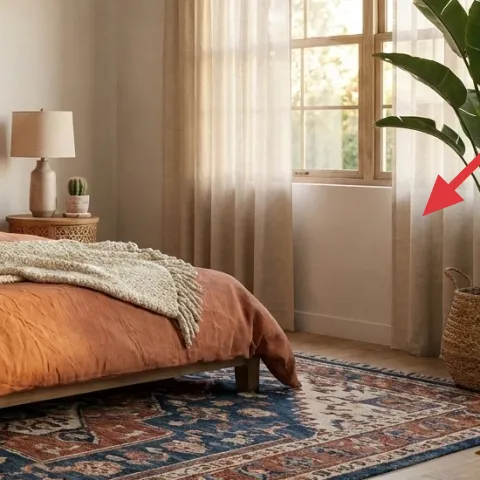
The tall palm adds vertical line that makes the room feel taller, especially near the window corner. It’s a styling shortcut that gives the bedroom “designer staging” energy without introducing another piece of furniture. A plant also photographs well next to a patterned rug because the leaves repeat the mid-tone palette and soften edges. This works in shared housing because pots can be boxed, and the plant can travel when a lease ends. The trade-off is light: plants need brightness, so place it where daylight hits for most of the day.
Use a plant saucer for easy resets
Even if you can’t alter anything, a saucer keeps spills contained during watering and moving.
Layer 7 — Off-white curtains ($30) soften the window and make the palette feel intentional
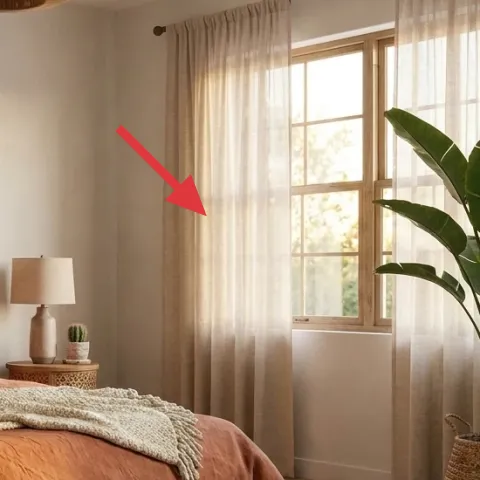
Off-white curtains add a gentle veil between bright window light and the warm interior tones. That softness matters in a bedroom with many textures—rug pattern, macramé fibers, and the knit throw—because it prevents the space from feeling sharp-edged. Curtains are also one of the most renter-friendly upgrades: they’re fabric swaps that pack down and don’t require changing the fixed window components. The trade-off is that sheerer panels show more outdoor contrast, so choose an off-white shade that still reads warm, not icy.
Hang higher for the “arched” feel
Even slight height changes can echo the alcove shape and lift the whole composition.
The cost, layer by layer
| Layer | Item | Cost |
|---|---|---|
| 1 | Area rug | $150 |
| 2 | Cream textured throw blanket | $25 |
| 3 | Beige throw pillow | $30 |
| 4 | Fabric-shade table lamp | $40 |
| 5 | Macramé wall hanging | $55 |
| 6 | Potted palm plant | $30 |
| 7 | Off-white curtains | $30 |
| Total | $360 | |
If the budget has to shrink, start by swapping only the rug and one textile layer (throw or pillow). Skipping the lamp and plant for one move cycle can still leave a warm palette, and those pieces are easy to add later when the next paycheck hits.
What worked, what didn't (across the whole room)
The overall look succeeds because it stacks warm neutrals with one clear accent direction: terracotta plus cream texture. Pattern is handled once (the rug), and the rest of the details stay tactile and lightweight. The result feels styled, not cluttered, which matters in shared housing.
What worked
- The rug’s pattern creates depth so smaller swaps (pillows and throws) look deliberate.
- Cream texture on top of terracotta keeps the bed area from reading flat or overly orange.
- The macramé wall hanging brings a handmade fiber texture without needing any wall changes.
- The fabric-shade lamp softens contrast and makes warm tones feel cohesive after dark.
- The tall palm adds vertical balance near the window, so the room doesn’t feel top-heavy.
- Off-white curtains blur the edges of daylight, which helps multiple textures sit calmly together.
What didn't
- If the throw is too light in texture, the palette can look washed out against the rug.
- A lamp bulb that’s too cool can make terracotta read muddy instead of warm.
- Plants that don’t get enough window light can look tired fast, especially in winter.
- If the wall is crowded with too many small items, the macramé loses its focal power.
- Curtains that are too gray shift the whole temperature of the bedroom.
What we'd skip if we did it again
Skip heavy wall upgrades in the first pass. Even when they look good, anything that feels permanent fights the shared-housing reality: you’re moving soon, and packing should be straightforward.
Skip “theme matching” that chases every color in the rug. Picking one neutral bridge (beige to cream) keeps the room calm, while terracotta stays the repeated accent.
Skip buying too many small decor pieces at once. A macramé wall hanging plus a single tall plant and a couple of textiles make the look feel styled without turning the bedroom into a constant dusting project.
Frequently asked
How long does this bedroom refresh take?
Plan for about 1 afternoon. The rug and textiles are quick swaps, and the lamp and curtains are mostly straightforward. The only part that can slow things down is positioning: getting the rug centered and the lamp placed so the light hits the bed zone without glare.
What if this isn’t a full bedroom—could the same swaps work in a shared living area?
Yes. The rug, throw blanket, and pillow approach translates well to a shared living room corner. Swap the lamp placement to wherever people sit most often, and use the macramé texture as the single “wall interest” point so the area doesn’t get visually busy.
What if my room is smaller than the photo?
In a smaller room, keep the rug as the anchor but choose a slightly smaller size if rolling it up is more important than covering every inch of floor. Use fewer textiles: one pillow plus the throw. A tall plant can still work, but consider a narrower pot to avoid blocking pathways.
What if my room has different window light or a cooler color palette?
If the light turns cool, lean more into the warm terracotta and cream textures (pillow and throw) so the room doesn’t read gray. Keep the curtains off-white rather than stark white. The lamp also helps—use a warm bulb so the fabric shade produces a soft amber tone.
Where should these pieces be shopped if I need the look quickly?
For speed, focus on department stores or big-box retailers for the rug, lamp, and curtains, then add one handmade wall piece from a craft marketplace or artisan shop. Plants are easiest from local nurseries for better acclimation, especially if you’re placing it near a bright window.
What’s the biggest mistake people make with this style?
Over-adding small decor so every surface becomes a collection. The bedroom in the photo works because it mixes pattern once (rug) and texture everywhere else (throw, macramé, curtains). Keep shelf styling intentional: a few terracotta planters plus a couple of bottles is enough.
More in Bedroom
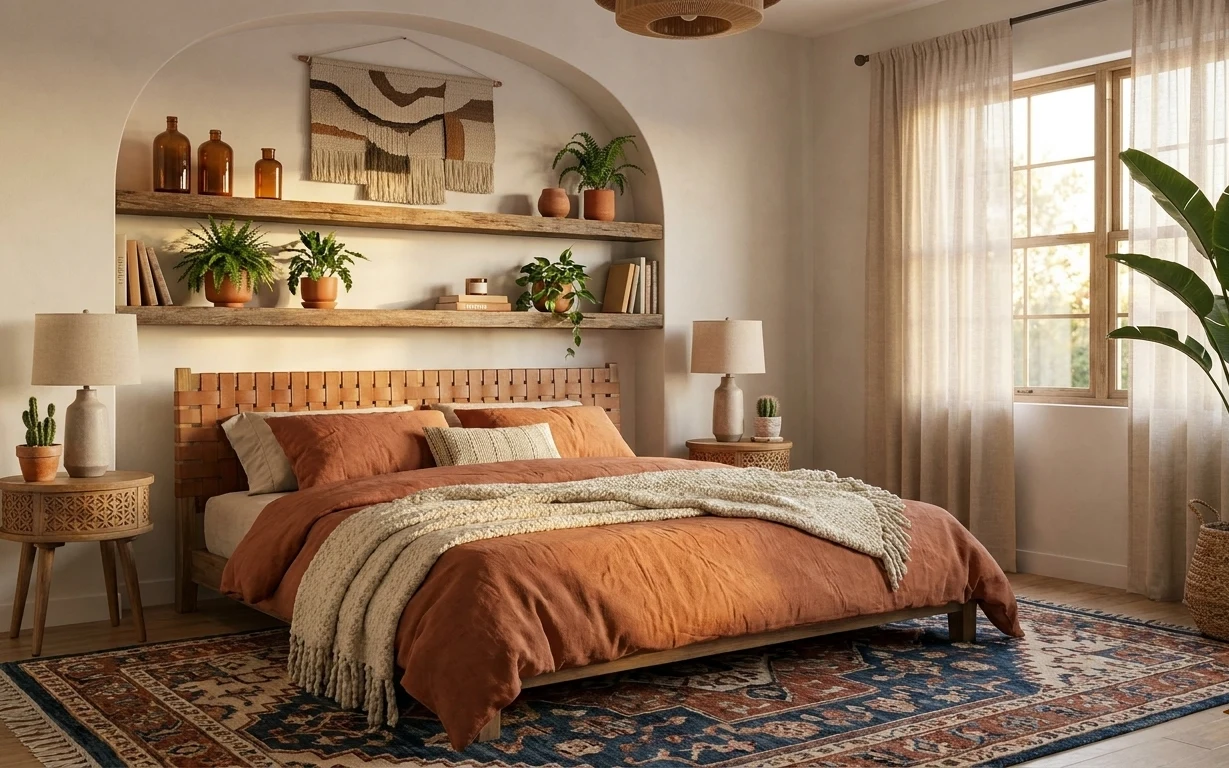
Under $400: earthy-neutral bedroom refresh with 7 move-ready swaps
A move-friendly earthy-neutral bedroom refresh under $400. Seven swaps focus on warm textiles, layered light, and renter-safe plant styling…
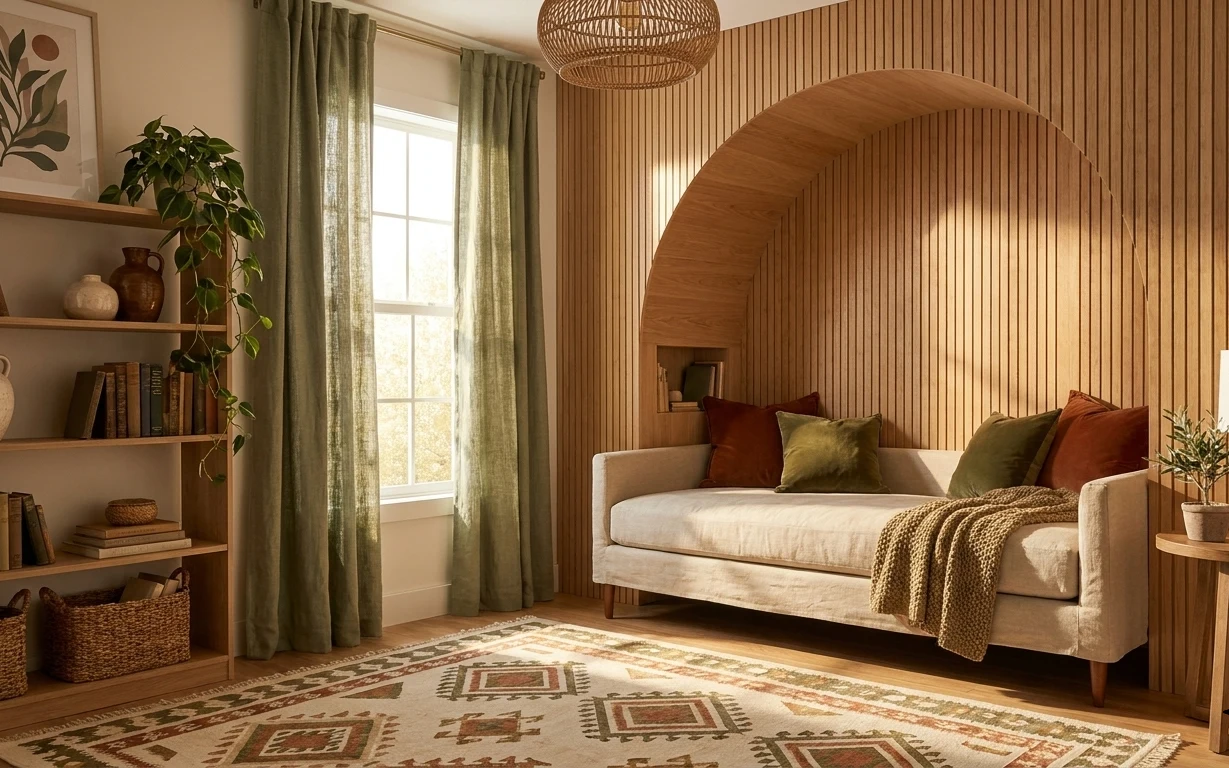
Under $600: earthy-olive arched bed alcove refresh
This arched bed alcove look leans warm wood, olive curtains, and layered textiles—built for renters without drilling. For under $600, swap …