- Best for
- Move-friendly bedroom refreshes with a strong anchor rug
- Time
- 1 afternoon (mostly textiles + swapping inserts)
- Total cost
- $368 for the full look plan
- Renter-safe
- No drilling; everything packs into boxes
Why this warm sage-and-cream bedroom setup is the arch daybed nook of 2026
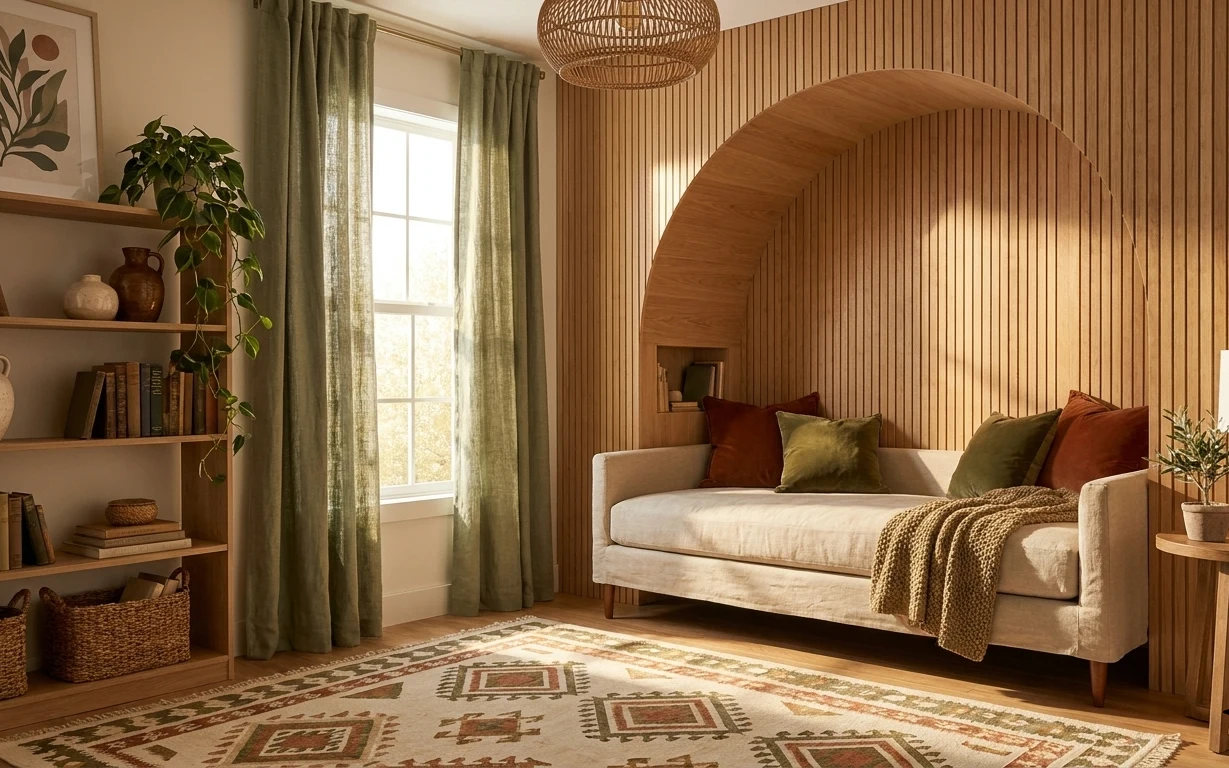
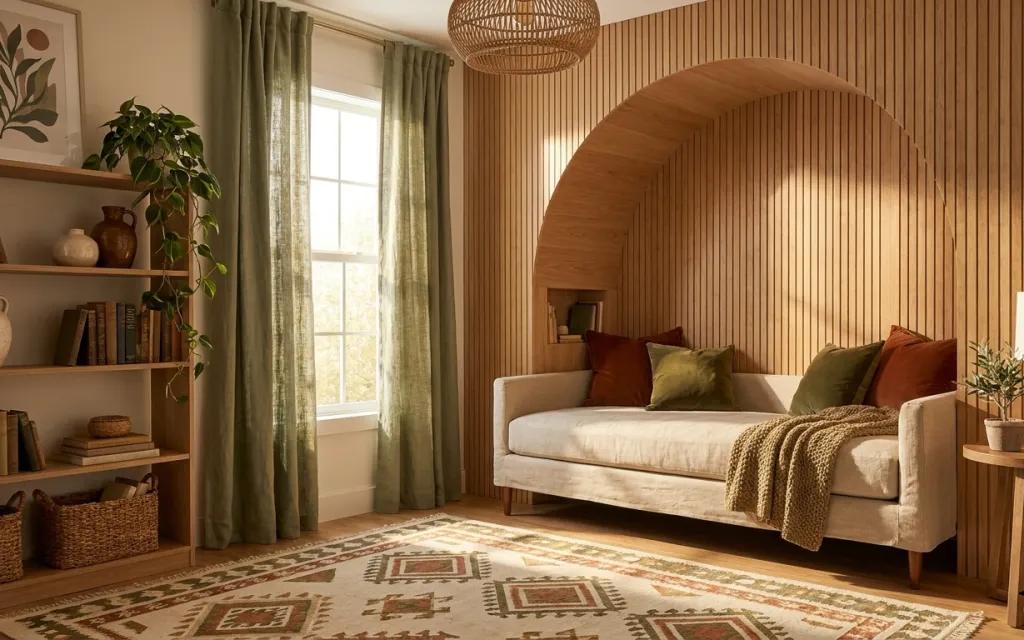
What I notice first in this photo is the way the warm tan wood paneling frames a small sleeping zone, then the softness shows up everywhere else: the sage green curtains, the cream-and-terracotta rug pattern, and the textured throw blanket over the daybed base. It’s very “magazine spread” in silhouette, but the materials are everyday: woven rug fibers, cotton-like curtains, and a plug-in table lamp for night comfort. For shared housing, this look works because you can carry it all—nothing depends on drilling into the walls.
I used to overdo the “statement” part by buying a big, heavy piece I couldn’t move easily. Then I got stuck with it in my third bedroom when the layout changed. The fix was simple: I started treating the nook like a portable kit—one rug, two curtain panels, and textiles I can swap without regret. That’s exactly how this arch daybed nook feels: cohesive, but not precious.
Layer 1 — Framed botanical print ($35) softens the light wall
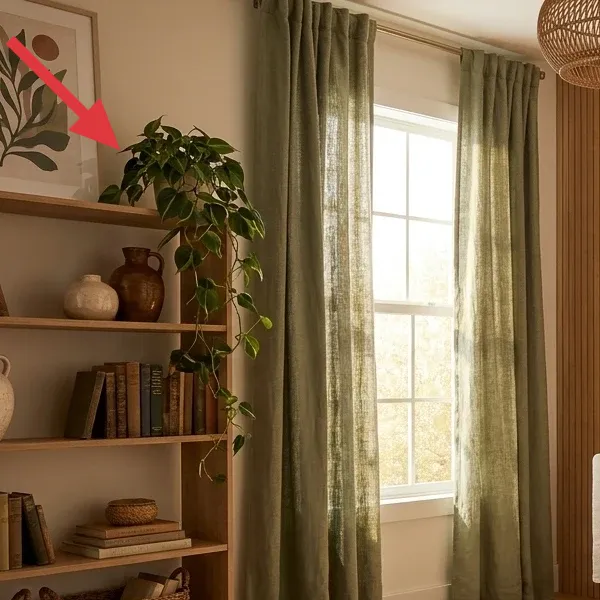
This framed botanical print brings an organic shape to the otherwise straight-lined arch paneling. In the hero, it’s on the left wall at eye level, so it acts like a visual “anchor” before you even notice the rug. I’d choose a print with similar tones—cream plus warm tan and a muted green—because it won’t fight the curtains. The trade-off with prints: you have to be picky about scale, or it can feel too small against a larger wall. Kept modest like this, it reads intentional without becoming permanent.
Make it instead of buying it
DIY a hand-painted abstract on cardstock to swap into the existing frame, so you get the same focal-wall job for less money.
Materials
- Cardstock sheet (size to fit the frame) — 1 — craft store — $2
- Acrylic paint set (small starter set) — 1 — art store — $12
- Paintbrushes (flat + small detail) — 1 set — craft store — $6
- Pencil + eraser — 1 — office supplies — $1
- Painter’s tape — 1 roll — hardware store — $0
- Plastic palette paper/plate — 1 — craft store — $0
Steps
- Sketch 3–5 soft shapes lightly in pencil (no need for perfect outlines).
- Mask clean edges with painter’s tape where you want crisp blocks.
- Paint broad washes first (cream and warm tan), then add small muted-green accents.
- Let it dry flat for about 20–30 minutes before touching up details.
- Remove tape slowly at a low angle so edges don’t peel.
- Let the cardstock dry fully for 1 hour, then slide it into the frame.
- Optional: if paint feels tacky, wait another 30 minutes before closing the frame.
Total DIY cost: $21 — saves about $14 over buying.
Notes on renting
If your frame is already there (like the photo), you’re only changing the paper insert—so it’s fast to pack and easier to leave behind in a good way.
Layer 2 — Area rug ($150) grounds the arch nook
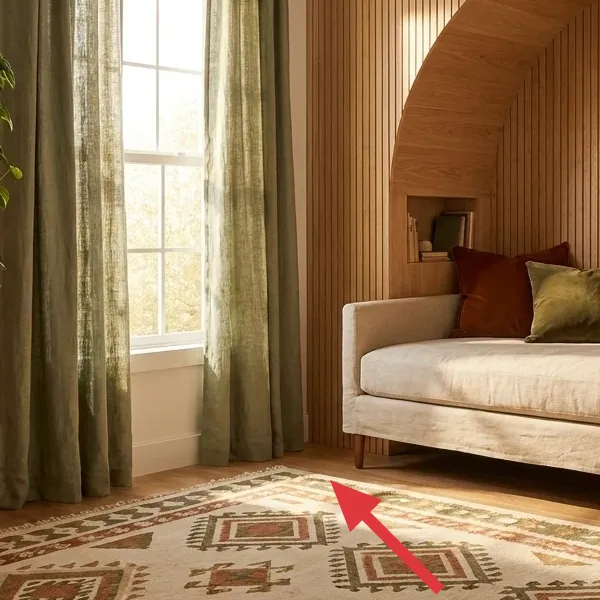
The area rug is what makes the arch daybed nook feel like a “room inside a room.” In the hero, it sits under the daybed base and extends into the walkway space, and that size matters more than any pattern trend. Look for a rug with warm neutrals and a muted green in the design so it echoes the curtains without matching them exactly. The obvious alternative—going smaller—usually makes the nook feel floaty and unfinished. The trade-off you accept with a bigger rug: it’s a bit heavier to carry, but it still rolls and fits into a moving van.
Go by floor coverage, not floor size
For a bed nook, prioritize a rug that reaches at least a foot past the daybed edges so the whole zone looks anchored.
Layer 3 — Green curtains ($60) softens the window wall
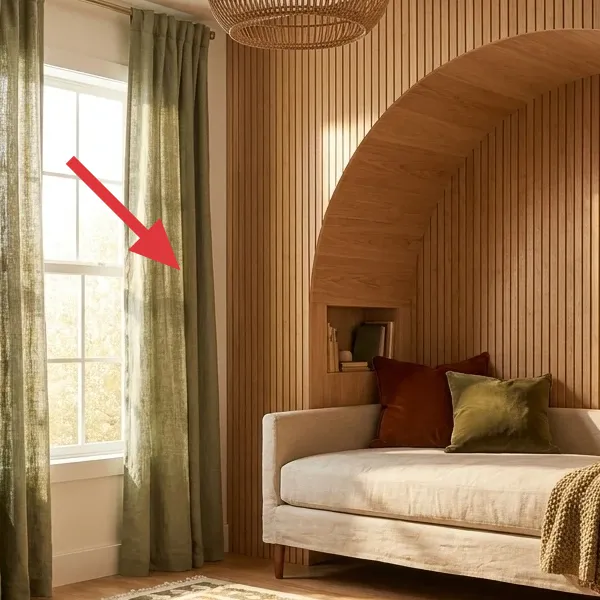
These green curtains do two jobs at once: they soften the bright window area and they bring a muted color back into the room so the rug doesn’t feel like the only pattern source. In the photo, the curtains hang tall enough to visually extend the height, which keeps the arch bed nook from feeling cramped. If you’re shopping, choose curtain panels in a drapey fabric (not stiff sheers) for that relaxed fold pattern. The trade-off is that heavier drapes can block more light—but in a bedroom nook, that’s often a win. For shared housing, curtains also pack flat and change the mood instantly.
Avoid “cheap too-short” panels
If the panels don’t reach near the window trim, they look like window coverings, not room framing—so the nook loses its intended proportions.
Layer 4 — Throw blanket ($30) adds texture over the daybed base
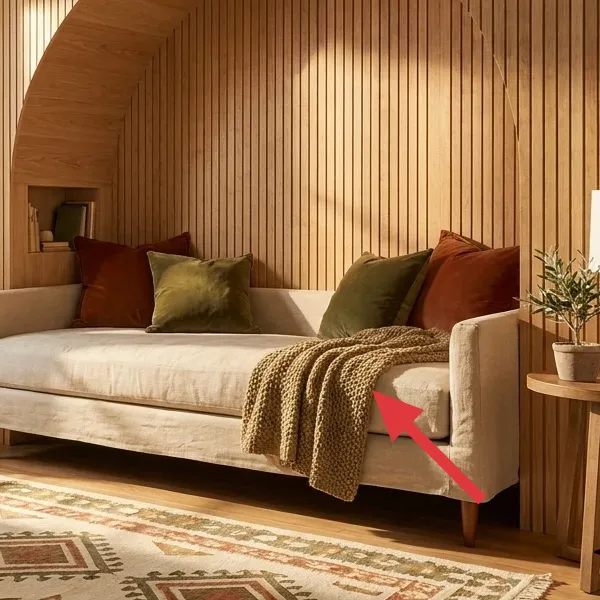
The throw blanket is the easiest way to add depth without buying anything structural. In the hero, it’s draped over the bed zone, and the knit texture shows up especially well under the warm light. Choose something with visible texture—like a chunky knit or a woven-look throw—in a warm tan or olive to echo the curtains and rug palette. The obvious alternative is buying another pillow, but textiles stack faster than you think and can make the daybed zone feel cluttered. This blanket keeps the look layered while staying move-friendly: you can fold it into a flat box and replace it in minutes at the next lease.
Why texture beats color matching
You don’t need exact fabric colors; you need similar warmth so the room reads cohesive in both daylight and lamp light.
Layer 5 — Decorative pillows ($18) ties the palette together
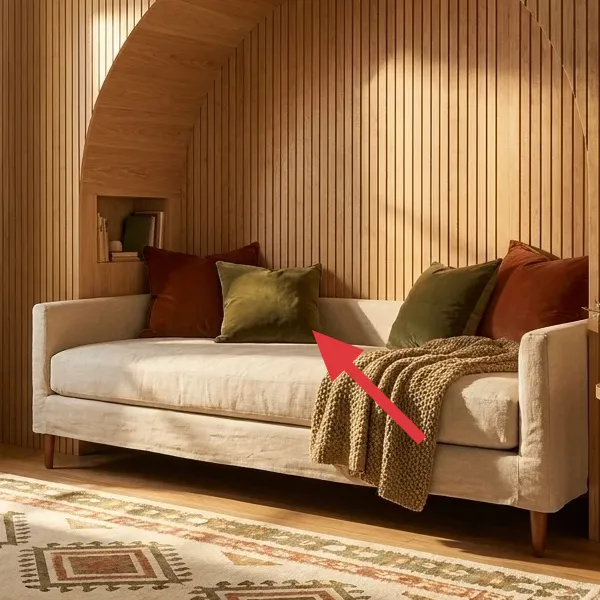
In the photo, the decorative pillows add the “soft landing” effect: they sit right at eye level and give you a place for accent colors without changing the underlying arch. I’d buy pillow covers (not hard-to-pack inserts) in two complementary directions—muted green and warm terracotta or rust tones. The obvious alternative is going all-neutral, but then the nook can start to look flat against the wood paneling. With pillows, the trade-off is that they get used and moved around, so you’ll want washable covers. Even so, covers are perfect for shared housing: they fold and pack small, and you can rotate them for new seasons.
Buy covers you can wash
Choose removable covers so everyday use doesn’t force you into replacing the whole pillow set mid-semester.
Layer 6 — Table lamp ($35) makes night feel intentional

The table lamp adds warmth after dark, and it’s positioned to light the right side of the nook without demanding any wall work. In the hero, the lamp shade looks cream and soft, which is exactly what you want with the woven pendant light overhead—two warm sources, different shapes. If you go too bright or too cool, the whole palette turns flat against the tan wood. The obvious alternative is relying on overhead light only, but that usually makes a bed nook feel like a hallway instead of a place to land. The trade-off: lamps use bulbs and outlets, so plan where your power cord can reach safely for daily living.
Layer lighting at two heights
Pairing a floor/ceiling pendant with a table lamp keeps shadows gentle across the daybed zone.
Layer 7 — Potted plant on shelf ($40) brings in movement and green
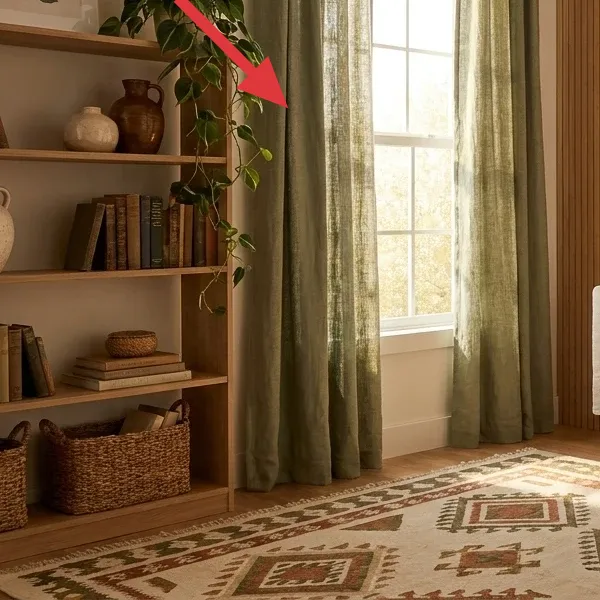
The potted plant on the shelf is the “breathing room” element in this setup. It’s placed where your eyes naturally travel—left wall shelving—so it looks like part of the architecture rather than a last-minute add-on. Choose a plant with trailing or upright leaves that look good from across the room, and keep the pot neutral or warm-toned to avoid competing with the rug pattern. The obvious alternative is only using ceramics (vases) for styling, but a living shape adds softness that objects can’t replicate. The trade-off is care: you’ll need a basic watering routine, but it’s still easy to pack—pot wraps and goes in a box.
Pick a plant you can maintain between semesters
Choose something forgiving if you travel for breaks; thriving plants look better than perfect styling anyway.
The cost, layer by layer
| Layer | Item | Cost |
|---|---|---|
| 1 | Framed botanical print | $35 |
| 2 | Area rug | $150 |
| 3 | Green curtains | $60 |
| 4 | Throw blanket | $30 |
| 5 | Decorative pillows | $18 |
| 6 | Table lamp | $35 |
| 7 | Potted plant on shelf | $40 |
| Total | $368 | |
If you need a cheaper version, keep the rug and curtains, but choose a simpler framed botanical print (or DIY it) and swap the pillow covers for one or two multipacks. You can usually hold the vibe with fewer accents and still get the “anchored nook” effect.
What worked, what didn't (across the whole room)
This nook works because the big visual moves are all portable: rug scale, curtain height, and layered textiles. The lighting choices also keep it warm without needing any permanent fixtures. The misses are mostly about over-styling and picking accents that don’t share the same warmth level.
What worked
- The rug’s pattern colors echo the curtains, so the arch bed nook looks cohesive instead of patchy.
- Long, soft curtains frame the window and make the room feel taller next to the arched wood paneling.
- Textured throw fabric adds depth against the smooth wood surfaces.
- The warm table lamp adds comfortable night light without changing any fixed fixtures.
- Botanical wall art gives an organic focal point near the shelving styling.
- The potted plant adds a real green element that objects can’t fully replace.
What didn't
- Too-small rugs make the bed zone look like it’s floating on the wood floor.
- Matching every color exactly can look flat; similar warmth beats exact hue.
- More than two accent pillow covers can turn the daybed zone busy quickly.
- If the curtains hit at the window sill, the height effect disappears and the nook feels cramped.
- Cool-toned bulbs can make the tan wood paneling read orange instead of warm.
What we'd skip if we did it again
Skip replacing the rug with a runner or a mat-sized piece. The arch daybed nook needs full “zone” coverage, not a narrow strip that leaves the floor looking unfinished.
Skip overmatching everything (same green, same tan, same pattern scale). Instead, repeat warmth and one or two colors, then let texture do the linking between rug, curtains, and textiles.
Skip buying extra decor that can’t pack flat. Between boxes and semesters, I’d rather spend that money on curtains, pillow covers, and one good plant that you can move and keep alive.
Frequently asked
How long does this kind of arch daybed nook refresh take?
Plan on about 3–5 hours for the main swap day. Rug and curtains take the longest because of measuring and fluffing, while pillows and the table lamp are quick wins. If you DIY the framed botanical print insert, add 1–2 hours including drying time, but you can still do it in one sitting.
Will this work if I have to rent and I can’t change walls or fixtures?
Yes, because the visual changes are portable: textiles (rug, curtains, throw, pillows), plug-in lighting (table lamp), and an easy swap on the framed botanical print. You’re not touching fixed things like cabinets, hardwired fixtures, or wall-mounted hardware—so when your lease ends, you pack and go.
My room is smaller than the photo—what should I adjust first?
Start by adjusting the rug size, then curtain height. Keep the rug large enough that the bed zone feels anchored, but if you’re constrained, prioritize width and coverage under the daybed base. For curtains, aim for panels that still hang high with tall folds; length and drape matter more than fancy fabric.
What if my room is bigger or the arch feels less centered?
In a larger space, you’ll usually need bigger scale in the textiles rather than more objects. Choose a rug with bolder pattern presence and extend curtain coverage slightly beyond the window width so it frames the area. Then keep wall art simple and centered so the nook doesn’t sprawl visually.
Where should I shop for the rug and curtains on a shared-housing budget?
For rugs, look for patterns in warm neutrals with muted green accents and prioritize washable or durable blends. For curtains, search for pre-measured panel pairs that list length options similar to what you see in the photo. If you want to keep it budget-friendly, do the biggest-cost items once (rug + curtains), then rotate accessories like pillow covers seasonally.
What’s the biggest mistake people make with bed nooks like this?
Buying too-small pieces and ending up with a “decorated corner” instead of a cohesive zone. A rug that doesn’t extend past the daybed edges, curtains that end too high or too short, or pillows that don’t share the same warmth level will all break the arch daybed nook effect—even if the individual items are nice.