- Square footage
- Small-to-medium patio zones (under 200 sq ft)
- Cost
- Under $500 total
- Difficulty
- Low (mostly textiles + freestanding pieces)
- Renter-safe
- Yes — no drilling or permanent installs
Why olive-and-cream plant decor is the plant-filled patio lounge of 2026
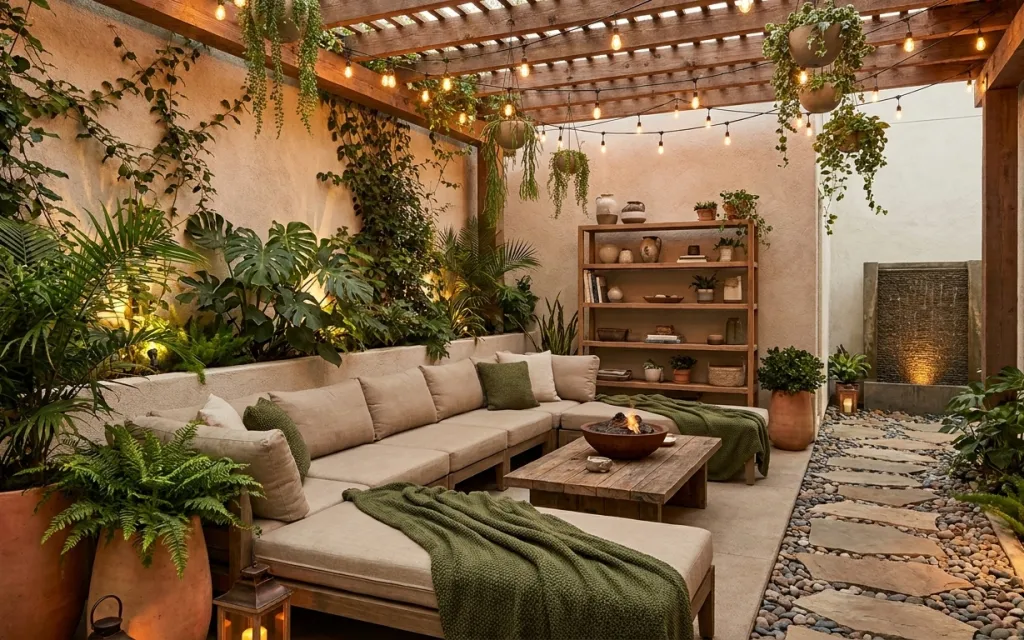
This photo does something I always chase in shared housing: it mixes soft fabrics with hard textures. You get the grounded look of a woven rug and stone floor, then the softness of olive green throw fabric and cream cushions, all under warm string lights. The open wooden shelving unit adds vertical shape without looking bulky, which matters when you’re not staying put long. For students and professional sharers, this is achievable because the high-impact parts are rugs, throws, candles, and freestanding pieces—everything packs flat or ships in one trip.
The first time I tried a “plants everywhere” setup, I overdid it and the room felt like a jungle gym. What changed my mind was noticing how often the plants in this look repeat the same palette: olive greens, warm tan, and creamy neutrals. It also helps that the textiles sit in the same color family as the greenery instead of competing with it.
Layer 1 — Woven rug ($80) anchors the patio stone
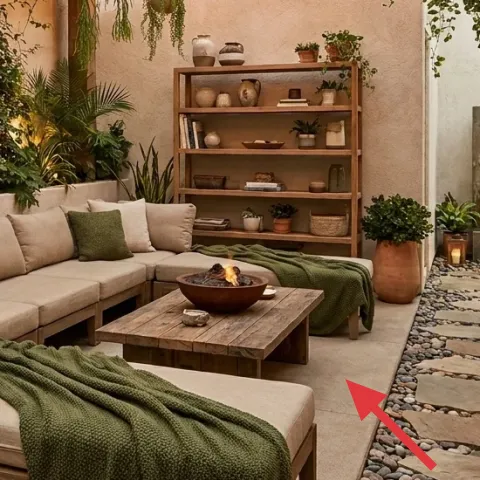
A woven rug is the quickest way to make a stone patio feel intentional. In this photo, it creates a soft “landing zone” under the sofa and coffee table, which is why the seating looks styled rather than accidental. The trade-off is that a rug takes on dirt faster outdoors, so pick one that’s easy to shake and hose off if needed. Over buying a bigger sectional or adding permanent flooring, a rug is also far more move-friendly: it rolls, packs, and replaces without touching the house.
Shake and spot-clean early
Fresh stains usually come out faster if you treat them right after the meal or rain shower instead of waiting for weekend deep-cleaning.
Layer 2 — Olive green throw blanket ($25) keeps the sofa visually grounded
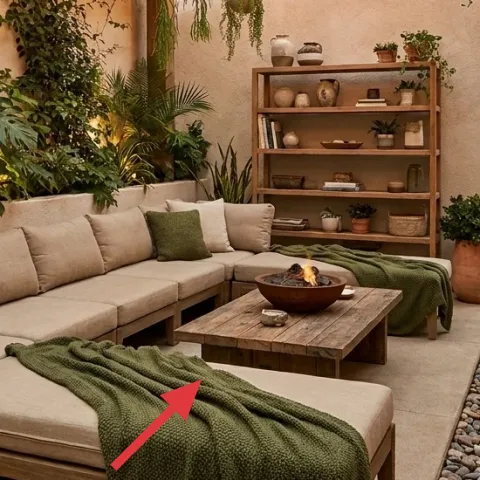
That olive green throw blanket draped across the seating turns a plain cushion pile into a layered, lived-in moment. The color echoes the greenery and makes the whole patio feel cohesive against the warm tan wall and wood ceiling beams. I like choosing a thicker knit or woven texture here rather than a shiny blanket, because the rougher surface matches the stone floor. The trade-off is warmth: heavier throws can get bulky to store, so fold it tight and keep it in one labeled box for the next move.
Match undertones, not just the hue
Olive can read gray or yellow depending on the knit—aim for a mid-tone that looks similar to the plants, not a bright chartreuse.
Layer 3 — Green accent throw pillows ($24) adds soft color without clutter
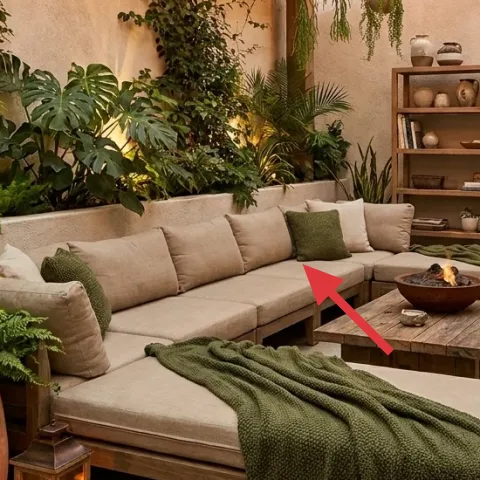
Green accent throw pillows are the “small decision” that does a lot of work in this scene. They tie the sofa to the plants without adding more bulk like extra rugs or furniture. In the photo, the pillows sit among the cream cushions, which means the room has both contrast and continuity: light fabric for brightness, green fabric for cohesion. The trade-off is that pillow covers can look dated if they’re too pattern-heavy, so choose solid or subtle texture instead of bold prints when you need something that will survive future roommates and moves.
Keep one green, one neutral
Pick one accent green and repeat cream/linen tones around it—so the patio stays calming even with lots of plants.
Layer 4 — Rectangular wooden coffee table ($140) gives the plants a “stage”
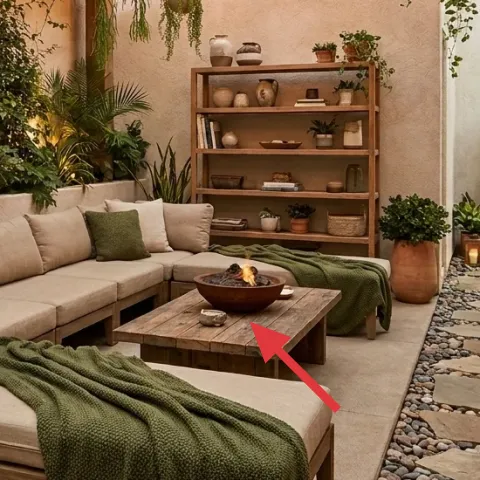
A rectangular wooden coffee table is practical and aesthetic here because it sits between the rug and the arrangement of greenery. Its warm wood tone helps bridge the cream textiles and the tan plaster wall, and the tabletop gives you a place for a shallow centerpiece bowl and small jars. The trade-off is size: coffee tables that are too big steal the floor area you need for moving around plants and people. A standard rectangular shape is easier to pack than a special cocktail table—more resale options, too.
Don’t choose finish that scratches too easily
If the table has a delicate topcoat, pot bottoms and tray items can leave marks; matte or sealed wood typically holds up better for shared living.
Layer 5 — Open wooden shelving unit ($160) adds vertical storage you can relocate

The open wooden shelving unit brings height and structure, which matters when your outdoor “decor wall” is mostly plants and warm plaster. It’s also doing the quiet work of making the scene feel curated: small pots on shelves read as intentional vignettes rather than random clutter. I’d rather use an open shelving unit than closed cabinets for this exact look because you can swap what’s displayed as seasons change. The trade-off is dust and visibility, so stick to smaller items you can wipe quickly, and pack the unit with padding when you move.
Use shelf space like a gallery
Group items in threes with one taller planter, one mid planter, and one small object so the shelves don’t look scattered.
Layer 6 — String lights ($15) make the patio feel warm after dark
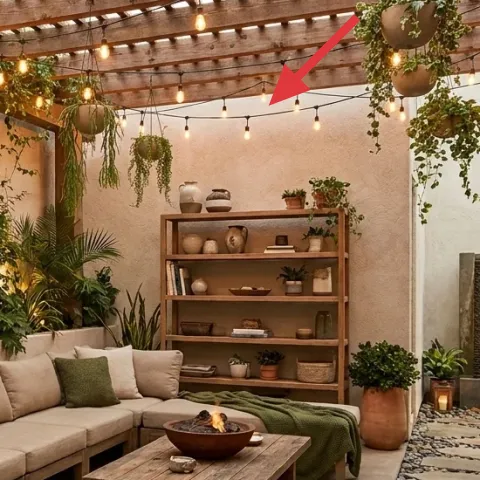
String lights are the outdoor version of a warm lamp glow: they soften the edges of stone, wood, and greenery. In this photo, the bulbs hang across the top and turn the patio into something you want to use at night, even with only a few candles on the floor. The trade-off is tangling—so choose a plug-in set with sturdy hooks and coil carefully for storage. Buying a string light kit is also much easier than trying to change fixed overhead fixtures in shared spaces, and it dismantles in minutes when it’s time to move.
Hang for a “sag line,” not a straight line
A gentle curve reads cozier and looks better on camera than perfectly taut strings.
Layer 7 — Glass jar candle ($35) adds low, flickering light near the seating
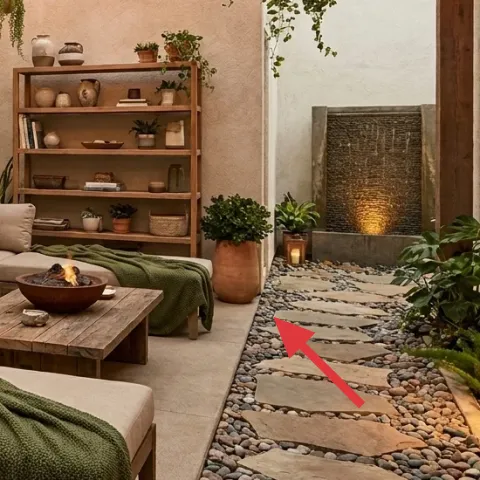
Low candlelight is what makes the lounge feel calm instead of overly bright. The glass jar candle in this corner gives that small, golden pulse that also flatters the terracotta and plant textures. I picked this as a DIY opportunity because candle pours are one of the few “grown-up” projects that still pack down to nothing but a jar and a wick. The trade-off is patience: cooling and trimming take time, but the result is portable and easy to refresh with new scents for each move.
Make it instead of buying it
This candle pour recreates the same warm, glass-jar glow, using a simple container you can reuse and refills you can make again.
Materials
- Soy wax — 1 lb (enough for multiple small jars) — store: craft supplier — $10
- Candle wicks — 2–4 (size to match jar) — store: craft supplier — $4
- Glass jars — 1 jar (or reuse a similar jar) — store: thrift or craft supplier — $8
- Wick stickers or hot glue dots — 1 pack — store: craft supplier — $2
- Scent or essential oil (optional) — 1 small bottle — store: craft or grocery — $5
Steps
- Set the wick in the center of the jar using wick stickers or a dab of hot glue, then trim the wick to the right height.
- Measure soy wax by weight and melt it in a heat-safe container until fully liquid.
- Cool slightly, then stir in scent if using.
- Pour the wax slowly into the jar, then tap the jar gently to release bubbles.
- Let it cool fully at room temperature, then trim the wick before lighting.
- Test burn for 1–2 hours to set the melt pool.
Total DIY cost: $29 — saves about $6 over buying.
The cost, layer by layer
| Layer | Item | Cost |
|---|---|---|
| 1 | Woven rug | $80 |
| 2 | Olive green throw blanket | $25 |
| 3 | Green accent throw pillows | $24 |
| 4 | Rectangular wooden coffee table | $140 |
| 5 | Open wooden shelving unit | $160 |
| 6 | String lights set | $15 |
| 7 | Glass jar candle | $35 |
| Total | $479 | |
A cheaper variant keeps the same layout but swaps the shelving unit for a smaller step-style plant stand ($80 instead of $160) and chooses a lighter, machine-washable rug ($60 instead of $80) while still using the olive textiles and warm lights.
What worked, what didn't (across the whole room)
Overall, this patio lounge works because the styling repeats a tight palette: warm tan, cream, and olive green. The mix of soft textiles, warm wood, and string-lit glow makes the greenery feel intentional instead of random. A couple choices create friction, mostly around storage and maintenance.
What worked
- The woven rug defines the seating zone on stone, so the lounge feels like one designed area.
- Olive textiles repeat the plant color family, which keeps the look cohesive even with lots of leaves.
- The green accent pillows add depth without introducing new patterns that would date quickly.
- The rectangular coffee table creates a natural gathering surface for small bowls and jars.
- The open shelving unit adds vertical structure while staying easy to pack and move.
- String lights provide warm, low-contrast illumination that flatters terracotta and wood.
What didn't
- More than one heavy blanket gets bulky fast, making quick seasonal swaps annoying.
- Open shelving exposes every small item, so dusting becomes part of the patio routine.
- Candlelight looks best when clutter is minimized; too many trays or jars can overwhelm the scene.
- Oversized rugs can fight the stone texture if the seating layout is tight.
- If string lights are wrapped for storage without care, tangles make setup feel like a chore.
What we'd skip if we did it again
Skip a second, separate accent rug. With a stone patio, one defined rug zone is enough—two rugs compete visually and create more edges for dirt to collect.
Skip a glass-topped coffee table. In shared setups, plants and day-to-day use invite scuffs and fingerprints; a wood tabletop reads warmer and hides wear better.
Skip a high-maintenance candle setup with too many scented layers. One glass jar candle with a simple warm scent profile keeps the patio cozy without turning maintenance into weekend work.
Frequently asked
How long does this patio refresh take?
A move-ready version usually lands in a half-day to one full day, depending on how many pieces come from storage. Rug and textiles are fast, freestanding shelving is a careful but simple setup, and string lights take the most “fussy” time because they need the right sag. The candle pour is the only slow part: it needs full cooling and a test burn, but it can be done on a different day.
If I’m renting, can I still get this look?
Yes, because the core changes are portable: a woven rug, olive throw fabric, accent pillows, string lights, and a freestanding shelving unit. The photo’s warm texture comes from textiles and wood tones, not from altering the fixed ceiling or walls. Skip any idea that requires drilling into plaster or replacing hard surfaces—keep everything built to dismantle into boxes when the lease ends.
What if my patio is smaller than this?
Downsize the rug and keep the seating footprint similar by using fewer pillows (two green accents instead of four) and a smaller coffee table. The shelving unit can become a simpler plant stand if you don’t have much wall space. String lights still work in smaller areas—focus on a single “line” above the seating rather than trying to cover the whole ceiling.
Where should I shop for the rug and shelving?
For the rug, look for woven jute-style or indoor-outdoor options that are easy to shake. For the open shelving unit, prioritize lightweight frames with simple assembly and shelves that can be wiped down. Big-box home stores, thrifted wood shelving, and marketplace finds are all viable as long as the unit is stable and you can break it down into transportable parts.
What’s the biggest mistake on a plant-filled patio lounge?
The most common mistake is adding too many different textures and colors at once. When greenery multiplies, the palette has to stay tight: repeat olive and cream, keep wood warm, and choose one rug zone. Another frequent slip is forgetting lighting height—string lights and low candles need to be positioned so they glow toward seating, not only toward the plants.
More in Outdoor & Patio
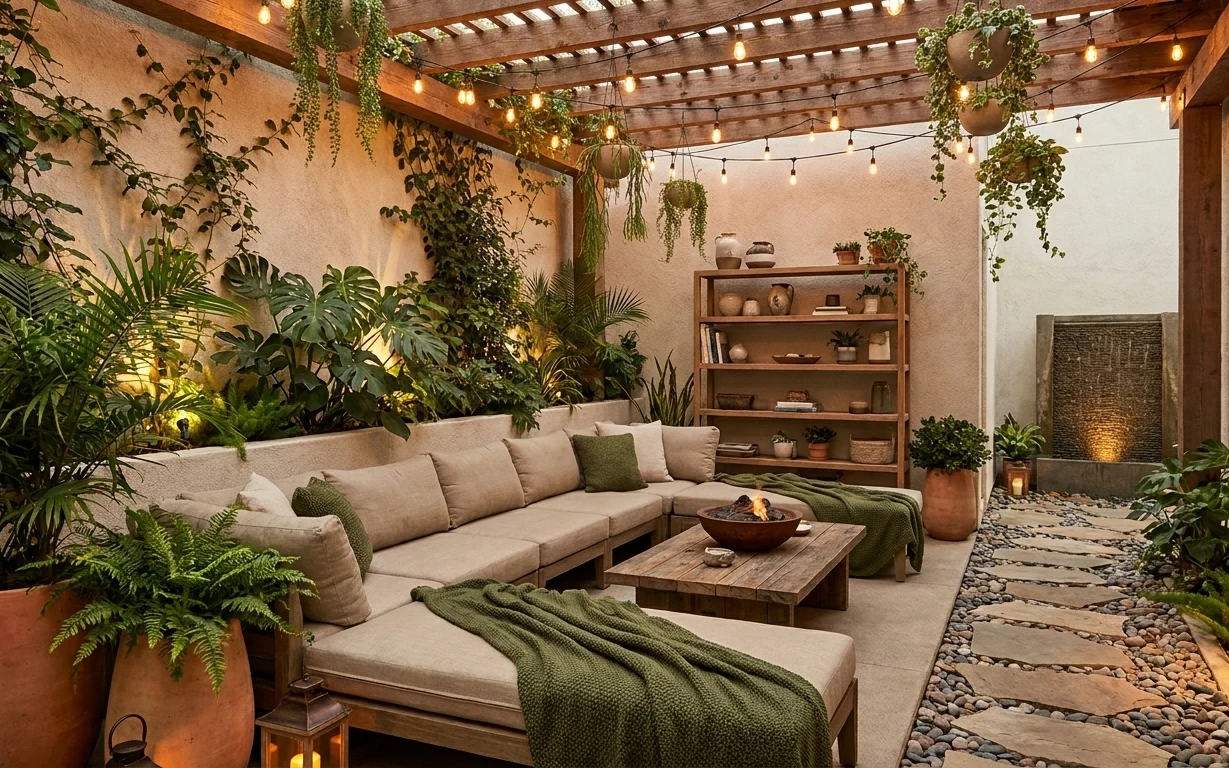
Under $500: plant-filled patio lounge refresh with 7 move-ready swaps
A plant-filled patio lounge already has the best bones—this refresh leans on a woven rug, olive textiles, layered wood, and warm string lig…
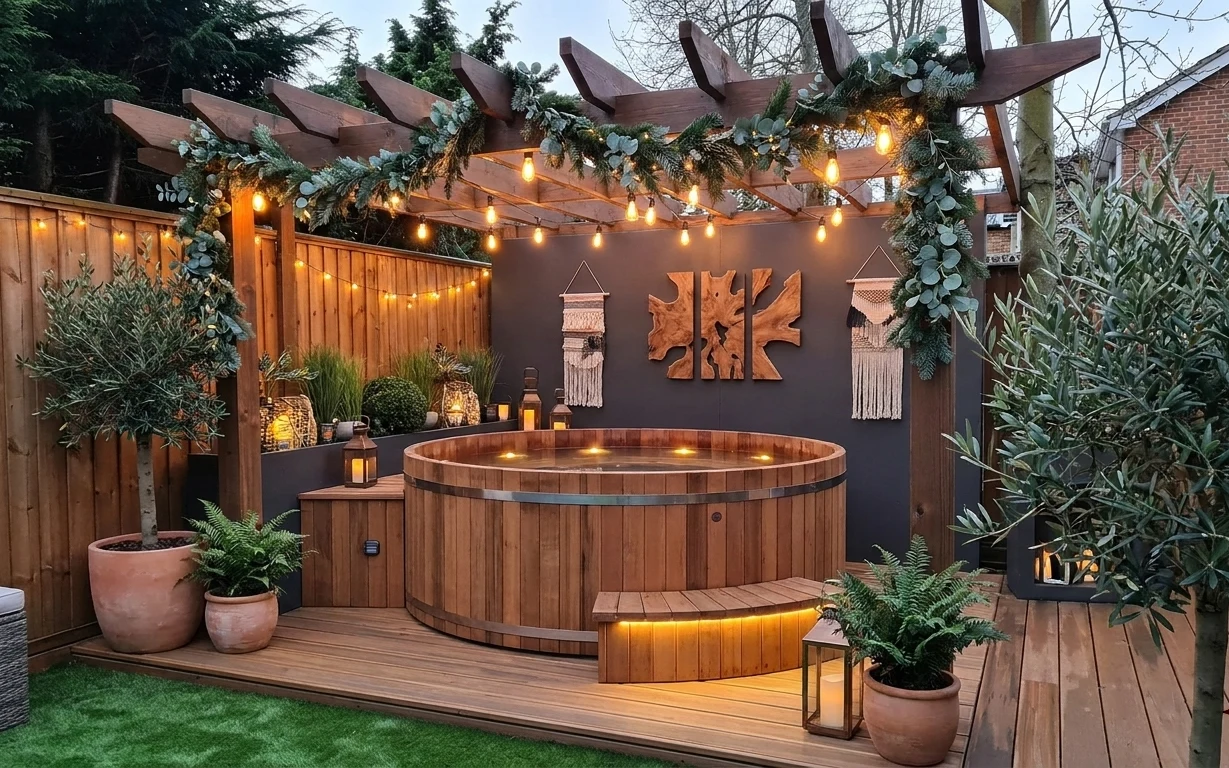
Under $400: 7 move-friendly outdoor deck styling swaps
A warm, rustic deck look—string lights, lanterns, painted terracotta planters, and easy wall hangings—built for shared housing moves. This …
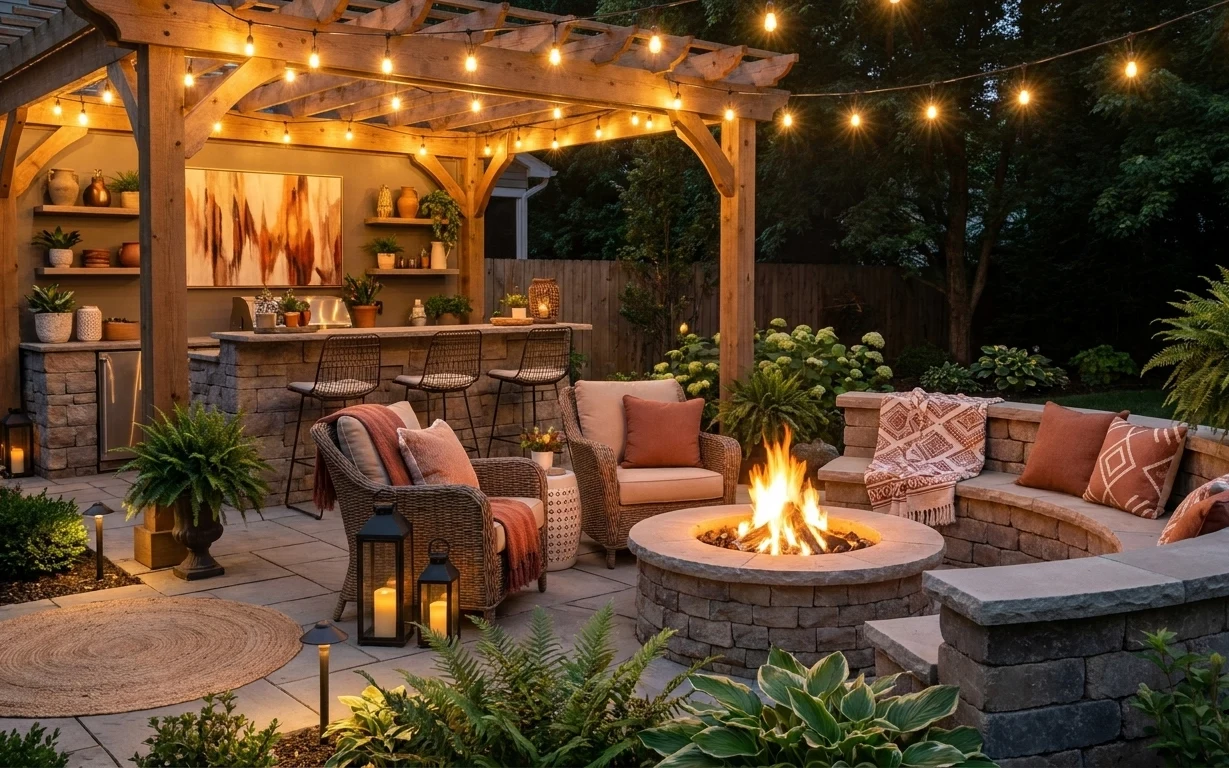
Under $500: renter-friendly outdoor lounge ring refresh
A move-friendly outdoor lounge ring refresh that leans on string lights, a jute-look rug, and pillow color. Built with renter-safe swaps an…