- Best for
- Roommates, college apartments, shared leases with frequent moves
- Cost
- Under $600 for 7 layers ($593 total)
- Difficulty
- Beginner-friendly; most layers are textiles or freestanding items
- Renter-safe
- No drilling, no replacing fixed fixtures, pack-flat styling focus
Why the living room is the living room of 2026
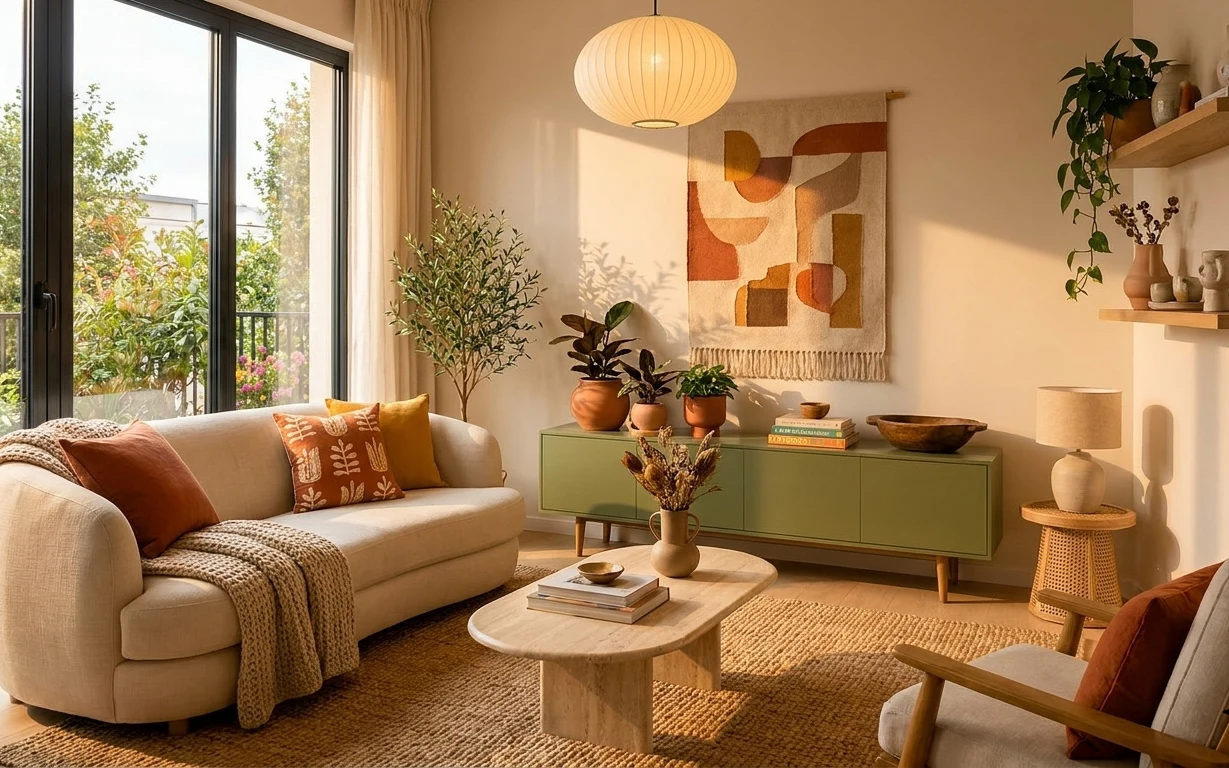
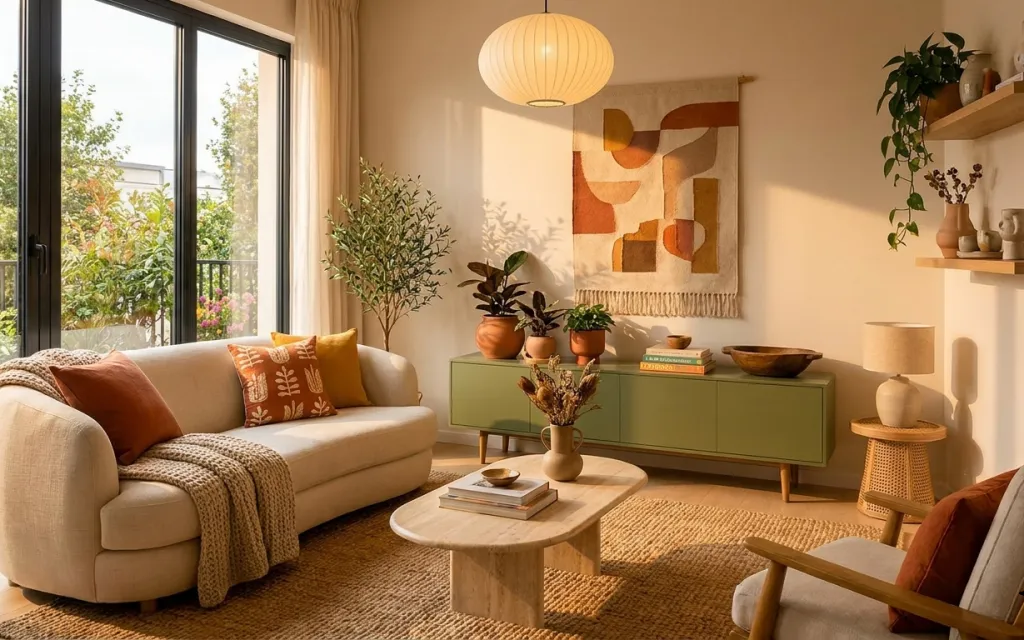
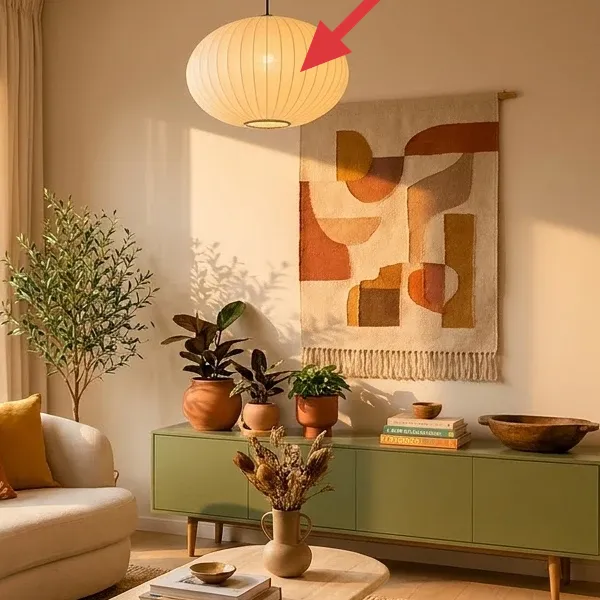
Every shared-house living room needs one job: make the space feel like yours even if the building isn’t. In this photo, the vibe starts with the existing cream sofa, then gets cozy fast via warm textiles—an earthy rug underfoot and terracotta and spice-toned pillows. The pendant light adds that soft, rounded top glow that you can’t fake with a single floor lamp. Add the leafy plants and a curated cabinet top, and suddenly it reads as intentional, not “we just moved in.” For our movers and roommates, this is achievable because almost everything here is either fabric (easy to pack flat) or freestanding (easy to wrap and load).
When I try this look, I always want to start with “big fixes”—new paint, a statement wall, anything permanent. And then I remember how often I’m packing in under two years. The shift for me was treating lighting, rug texture, and wall art as a temporary styling system, not a permanent renovation. One mistake I made early on: buying a rug that was too small for the sofa footprint, so the room felt like it was floating. In this setup, the grounding layer is clearly sized to pull the seating area together, which is why it holds its shape from day to night.
Layer 1 — Upholstered sofa in cream ($250) Thrifts well, anchors every other layer
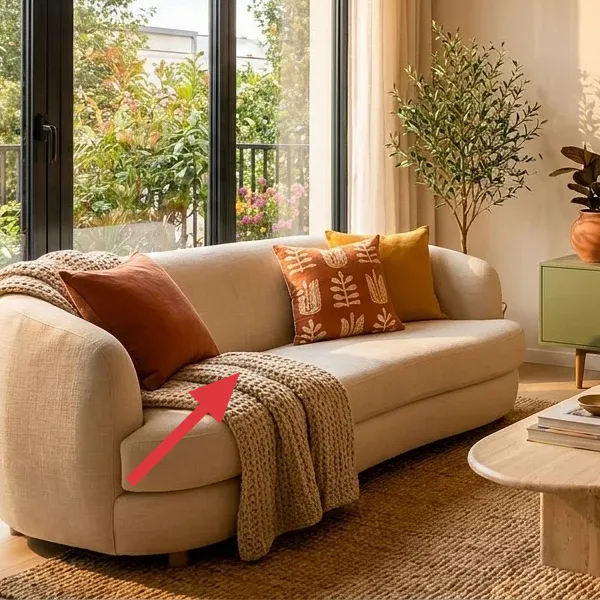
This cream upholstered sofa is the main volume in the room—rounded arms, a soft seat, and an overall shape that reads mid-century casual. It sits left of the picture plane, facing inward, so everything else (rug, pillows, coffee table) visually orbits it. Its light color also makes the room feel brighter near the big windows without needing wall changes.
I’d pick a sofa like this for shared housing because it’s an anchor that doesn’t require assembly gymnastics: you can wrap it in moving blankets and move on. The trade-off is price—cream sofas don’t come cheap in either thrift or new—but you can buy it once and build the rest around it with lower-cost, packable layers.
Layer 2 — Throw blanket + 3 accent pillows ($60) Terracotta-and-cream textiles that pack flat
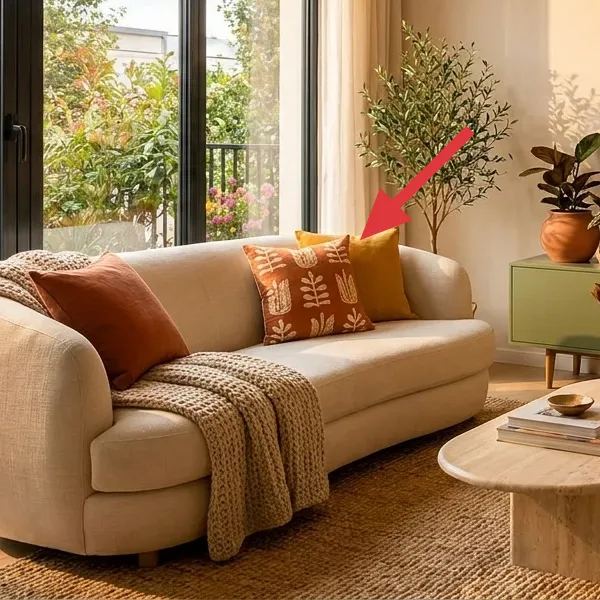
On the sofa, you can see a warm, woven-pattern throw draped over the arm and several accent pillows in terracotta and rust tones, plus one cream pillow. The textures matter: the throw looks like chunky knit or waffle weave, while the pillows have a more graphic, patterned surface. Together they add depth without changing anything fixed in the apartment.
This is the layer I’d swap first in a move—textiles are the easiest to box without damage. I’d skip buying a whole matching “set” because the charm here is the mix: one solid-ish warm pillow, one graphic patterned pillow, and one textured throw. The trade-off is that you’ll want two nights’ worth of fluffing after unpacking so the cushions look full again.
Layer 3 — Jute-style area rug ($95) Grounded footprint without permanent installs
The rug is a warm, woven jute look in a honey-tan tone, laid flat across the seating zone. Its open weave brings texture and pattern without needing wall color. You can see how it visually connects the sofa to the coffee table, making the whole area feel like one “room within the room.”
For roommates, rug shopping is where people overspend or under-buy. This look works because the rug fills the space enough that your furniture doesn’t look like it’s floating. If your rug is too small, the room reads unfinished no matter how nice the pillows are. I’d choose a rug like this over a deep pile because it’s easier to roll, transport, and shake out after spills.
Layer 4 — Light green media/console cabinet ($80) Freestanding storage for renter-safe styling
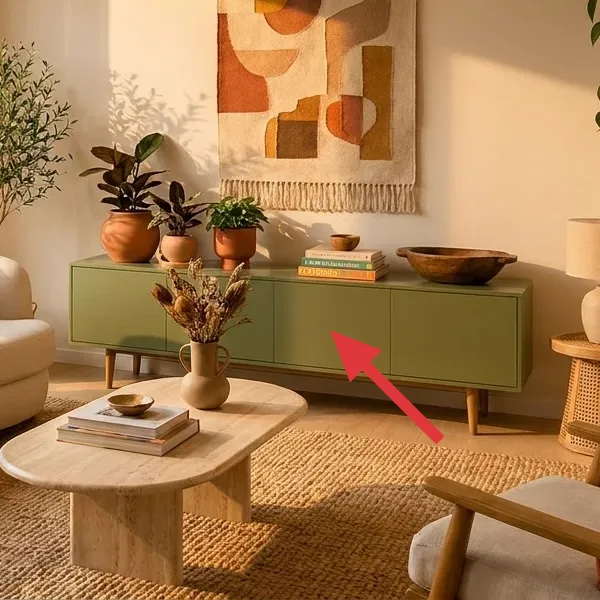
Against the wall, there’s a light green low cabinet with multiple doors and slender wooden legs. On top, the styling is mostly neutral-toned—small sculptural objects, a shallow dish, and a couple of plants—plus a few stacked books. The cabinet brings a real piece of furniture weight into the room without changing any landlord fixtures.
I’d pick a freestanding console like this instead of adding floating shelves because it moves with you and doesn’t require wall hardware. The trade-off is stability: since it’s light green and visually “airy,” you’ll want to keep the top styling from getting too heavy. That’s also why this setup works—the objects stay low and balanced, so it looks curated instead of cluttered.
Layer 5 — Plug-in pendant lamp shade ($60) Warm overhead glow without rewiring
The pendant light uses a rounded, ribbed shade—an off-white globe that hangs from above the center of the seating area. It gives a soft, diffused glow instead of harsh task lighting. Because it visually sits between the sofa and the cabinet wall, it helps tie the whole room together.
I’d choose a plug-in or otherwise renter-safe version rather than a hardwired upgrade, since most shared apartments won’t let you mess with existing ceiling fixtures. The trade-off is that the cord becomes part of your styling—so route and hide it cleanly and keep the shade centered for that “designer” look. This pendant shape is especially forgiving because it flatters warm-toned textiles underneath.
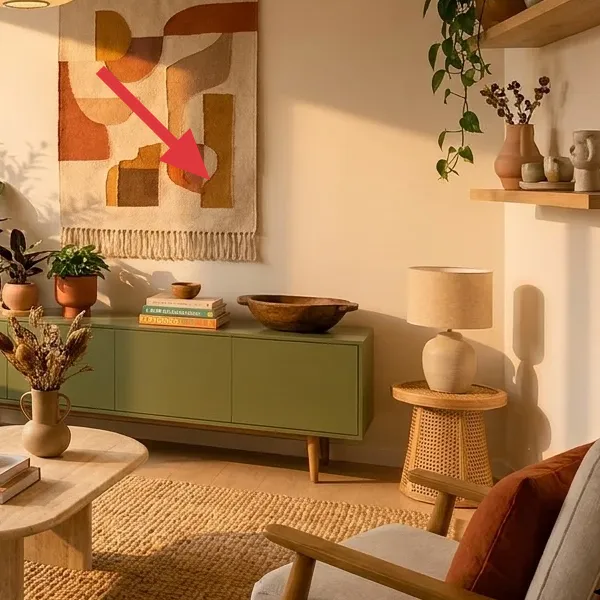
Layer 6 — DIY abstract wall art (cardstock + paint) ($18) A temporary framed look, no wall damage
This wall feature is an abstract, blocky composition in warm terracotta, rust, and neutral tones, finished on a fabric-like surface. It’s centered above the rug zone and reads as a focal point behind the plants and cabinet styling. The edges feel finished enough to be treated like wall decor rather than casual paper.
For a move-friendly version of this vibe, you can make a “lean-or-stand” abstract piece on cardstock and display it without hanging it on the wall. I’d skip canvas stretching or anything nail-based because shared housing means you’ll be taking it down quickly. The result will look graphic and warm, but it packs into a flat sheet or two, so you can rebuild the look at the next address with minimal fuss.
Make it instead of buying it
Paint an abstract composition on thick cardstock and display it in a cheap freestanding frame so you get the same warm focal-point energy—without hooks or drilling.
Materials
- Thick cardstock (A3 or equivalent), 10 sheets — Michaels — $8
- Acrylic craft paint set (terracotta, rust, warm beige, off-white) — Walmart — $6
- White gel pen or fine-tipped paint marker — Amazon — $2
- Freestanding tabletop frame (8x10 to 11x14) — Target — $10
- Painter’s tape — Home Depot — $2
Steps
- Lay your cardstock flat and use painter’s tape to mark a few “block” shapes roughly the size of the composition you want.
- Paint large areas first with terracotta and warm beige, leaving intentional gaps for lighter shapes.
- Fill smaller blocks with rust and darker warm tones, then let everything dry flat for 15–20 minutes.
- Peel tape carefully to reveal crisp edges and touch up any feathered lines with your smallest brush.
- Add simple geometric accents with a gel pen/marker for contrast, then let dry for another 10 minutes.
- Slide the artwork into the tabletop frame and lean it where you want it behind/near your cabinet styling.
- If you want a more “finished” look, add a 1–2 inch border of off-white paint around the edges and let it dry before inserting.
Layer 7 — Cluster of tabletop plants in small pots ($30) Leaf texture that reads fresh, even when you’re busy
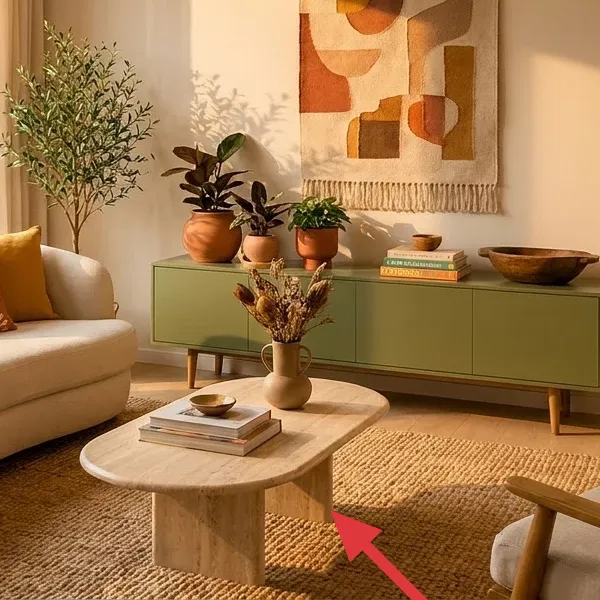
You can see multiple plants grouped together—one with elongated leaves and another with smaller, rounded foliage—set on the cabinet surface. They’re in simple terracotta or neutral containers, and their greens break up the warm neutrals of the rug and textiles. The plants act like “living decor,” adding height and softness without bulky furniture.
This works in shared housing because plants are easy to swap at the next place: the pots pack in one box and you can repot later if needed. I’d skip giant floor planters here—the room already has a lot of horizontal styling on the cabinet, and tall plants can block natural light near those big windows. The trade-off is upkeep; choose plants that tolerate your schedule and keep them away from harsh drafts.
The cost, layer by layer
| Layer | Item | Cost |
|---|---|---|
| 1 | Cream upholstered sofa (thrifted) | $250 |
| 2a | Woven throw blanket | $30 |
| 2b | Throw pillow covers (3) | $30 |
| 3a | Jute-style area rug (5x7) | $80 |
| 3b | Rug pad (5x7) | $15 |
| 4 | Light green freestanding cabinet | $80 |
| 5 | Plug-in pendant light shade | $60 |
| 6a | Thick cardstock | $8 |
| 6b | Acrylic craft paint | $6 |
| 6c | Freestanding tabletop frame | $4 |
| 7a | Small indoor plants (2–3) | $20 |
| 7b | Simple terracotta/neutral pots | $10 |
| Total | $593 | |
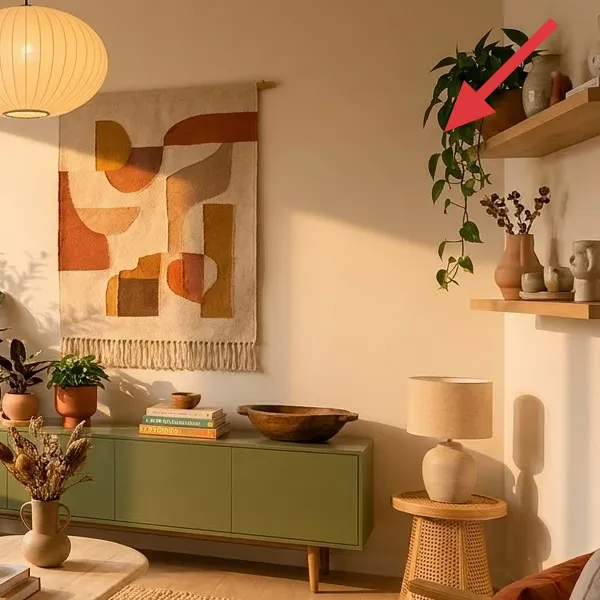
If you need a cheaper variant, keep the sofa and rug, then swap the pendant and plants for one statement: a single large throw pillow and one hardy pothos-style plant. You can also thrift the cabinet later—staging with a tray on a bookshelf can carry the decor vibe temporarily until you’re ready to buy the furniture piece.
What worked, what didn't (across the whole room)
The overall verdict: this room succeeds because the “system” is consistent—warm neutrals, soft textures, and freestanding styling that layers visually. The only time it would feel off is if one layer is missing size or if the lighting reads too cool against the earthy textiles.
What worked
- The cream sofa gives a light backdrop so terracotta pillows and wall art read warm instead of loud.
- The woven jute-style rug anchors the seating area, which keeps the furniture from floating when you move things around.
- Layering a throw with multiple pillow textures creates depth without adding clutter.
- The green freestanding cabinet adds color in a renter-safe way because it’s movable furniture, not a wall change.
- The rounded pendant shade diffuses light softly, making the room feel cohesive even when the only light is overhead.
- The plant cluster adds height and organic shapes, balancing the rectangles of the rug and cabinet.
- The abstract wall art gives a focal point behind the styling so the eye has something to land on.
What didn't
- If you go too matchy-matchy with pillow patterns, the terracotta palette stops feeling curated and starts feeling themed.
- A rug pad that’s too thin can cause slipping, which makes the room look “off” even when everything else is right.
- Plant styling can tip into clutter if you add too many small pots instead of varying heights.
- If the pendant bulb color is too white, it will fight the warm textiles and make the rug and pillows look dull.
- Buying a heavier cabinet top decor stack can look crowded and also feels risky during moves.
What we'd skip if we did it again
Skip the matching “living room set” approach—like buying the sofa, chair, and coffee table all from the same collection. In this photo, the charm comes from contrast: rounded seating lines against a woven rug and an abstract wall focal point. Matching everything can flatten the texture story, and it’s also harder to replicate when you’re moving because you’ll want to bring only what fits your next layout.
Skip the cheap ceiling-mount lighting that requires ceiling rewiring or permanent hardware. Even if the shade looks right, shared housing punishes permanent installs. A plug-in pendant (or a renter-safe lighting option) keeps you from having to fight the landlord’s existing fixtures later.
Skip oversized wall art that needs precise hanging. The wall feature here reads strong because it’s a focal point—but you can get the same effect with a smaller, move-friendly frame you can lean or set up again at the next address. When in doubt, choose something you can pack flat and redeploy in 10 minutes.
Frequently asked
How long does this kind of living room refresh take?
For most shared-house setups, plan for 3 to 5 hours total. The bulk of the time is usually rug placement and getting the pillow/throw styling to look “intentional” instead of tossed. If you DIY the abstract wall art, add 1 to 2 hours for painting and letting it dry flat. The day after, do a 10-minute reset: straighten the pendant cord/position, fluff cushions, and wipe any rug dust from unpacking.
What if I rent and can’t change lighting or wall fixtures?
You can still get the same look because the key layers are mostly textiles and freestanding objects. For lighting, look for a plug-in pendant or a renter-safe shade that hangs without ceiling rewiring. For wall decor, stick to freestanding or lean-in methods—tabletop frames, clip-on picture ledges, or decor you can support on a cabinet edge. This keeps you from running into “you have to patch that” situations when your lease ends.
My room is smaller than this one—what changes?
Keep the rug, but size it carefully so the front legs of the sofa land on it. If your room is tight, go for two accent pillows instead of three, and choose a throw with a simpler pattern so the sofa doesn’t look visually heavy. For the cabinet, consider a narrower console or even a tall but slim shelving unit—freestanding storage still adds the designed feel without overwhelming square footage. The plants are the one place I wouldn’t cut: just reduce to one or two pots.
Where would you shop differently in 2026?
I’d prioritize category-specific sourcing: thrift for the sofa and cabinet, then retail for the textiles and lighting that need consistency. For rugs, look for woven jute-style options in 5x7 and 6x9 sizes that roll and store well between moves. For wall art, craft supply stores and thrift frames are your best friends—you can build warm abstracts that match the palette in a night. For plants, pick hardy, medium-light choices so they survive both your routine and moving-day transitions.
What’s the single biggest mistake people make with this kind of renter-friendly living room?
Buying only “decor,” not building a grounding base first. Pillows and plants can look cute, but without a properly sized rug and an anchor seating shape, the room won’t feel cohesive—it’ll look like separate items on different missions. Start with the rug footprint, then pick pillow textures, then choose lighting and wall art as the final cohesion layer.
Is the DIY abstract art worth it versus buying prints?
Yes—especially for renters who need packable, replaceable decor. Store-bought art is easy, but it often arrives in fragile sizes that don’t survive repeated moves. A cardstock abstract is cheap, lightweight, and fast to redraw if you want a slightly different palette next year. Plus, it’s customizable: if your plants lean more olive or your throw is more burnt-orange, you can tweak the composition to match your actual fabrics.