- Best for
- Weekend kitchen counter refresh
- Time
- 2–5 hours active, plus drying time for DIY
- Difficulty
- Easy
- Cost
- Under $700
Why terracotta-toned coffee setup is the kitchen counter-and-shelf corner of 2026
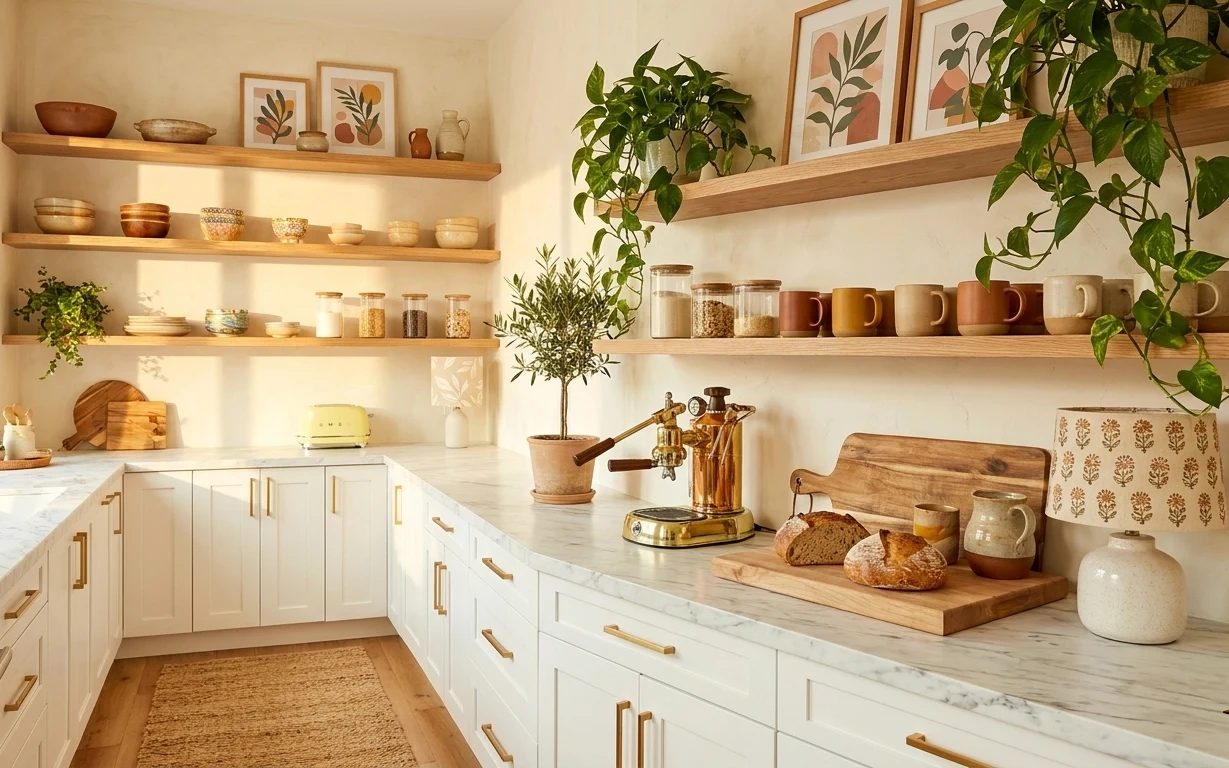
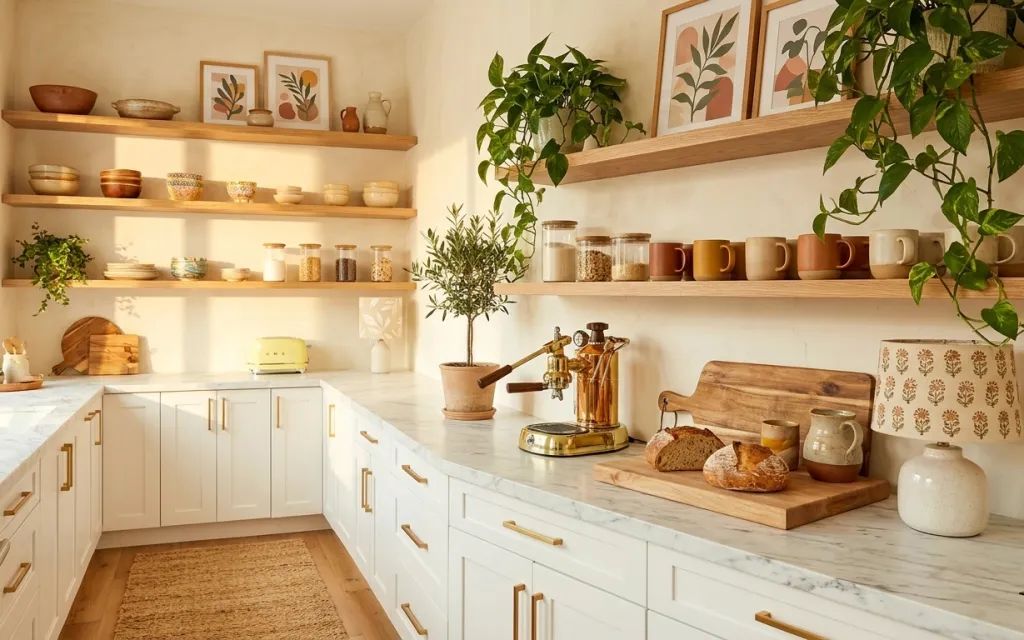
That bright counter zone works because it has real rhythm: open shelves above, a practical countertop below, and a few warm materials that repeat (light wood, brassy metal, terracotta ceramics). You can see the contrast in the white marble-look countertop and subway-tile backsplash, then the eye lands on the wood cutting board and the patterned dish towel. Even the plants feel placed, not random—one small potted plant for height and a larger leafy one to soften the whole corner. For homeowners, the best move is choosing the highest-impact option first: storage that’s visible.
I almost reached for “matching” everywhere—same color mugs, same jar shapes, same vibe. Then I caught myself thinking about what I actually use in a real kitchen: bread, coffee, and something you can wipe without drama. This look changed my mind because the objects aren’t identical; they’re coordinated by warm tones and similar finishes, so it still looks curated even when everyday items are part of the scene.
Layer 1 — jute area rug runner ($120) hides splash marks
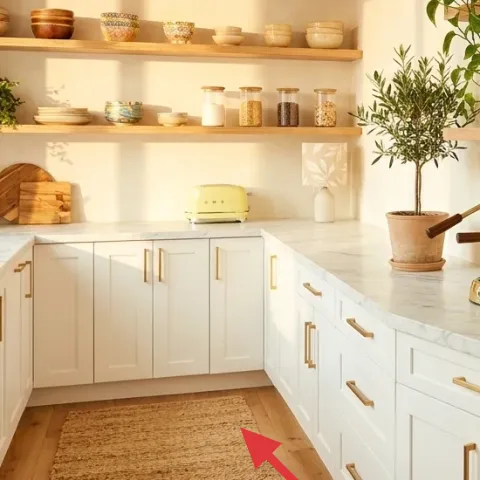
A jute area rug runner in the kitchen is one of those small choices that quietly changes everything about your counter zone. In this photo, the runner anchors the walkway area, breaks up the white marble-look countertop and cabinets, and gives you a softer step when you’re standing at the sink. I’d pick jute (or another natural fiber) over a cheap flat mat because it blends warmth with texture, so terracotta and wood accents look richer by comparison. The trade-off is that natural fiber needs a little care around water—so treat it like something you’ll blot, not scrub.
Blot spills fast
Natural fibers look best when you catch water early; quick blotting prevents darker tide marks.
Layer 2 — brass sink faucet ($150) gives the warm-metal repeat
The brass sink faucet is doing double duty: it updates the function and it repeats the warm-metal note you see again on the countertop objects. In the photo, the faucet sits right in the busiest part of the kitchen, so even a small change reads instantly. I would skip an all-chrome look here because it can fight the terracotta tones and the honey wood shelves; brass keeps the whole corner cohesive. Trade-off: brass finishes show fingerprints and spots more than matte stainless, so it’s worth wiping with a gentle cleaner instead of letting it build.
Match undertones, not just shine
If your shelves and accessories are honey-toned wood, choose brass that reads warm rather than yellow-gold.
Layer 3 — wood cutting board ($60) earns the counter “styled” look
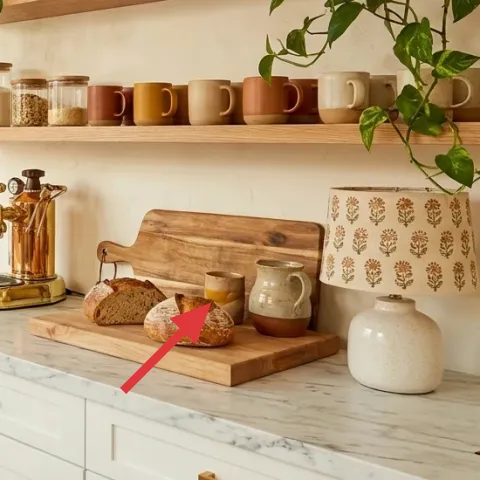
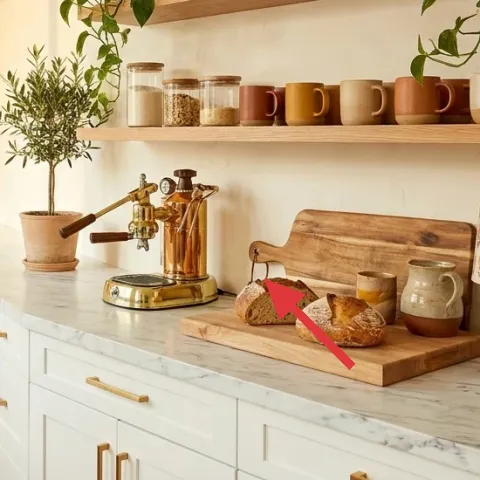
This cutting board is the reason the counter doesn’t feel like a display case. It’s oversized enough to look intentional, but it still reads as a working surface with bread and a mug nearby. I prefer a real wood board over a decorative tray because it can live in your day-to-day routine and still look good when it’s carrying groceries or breakfast. The visual trick is scale: the board spans enough of the countertop to create a grounded rectangle, while the lighter marble-look surface keeps everything airy. Trade-off: wood boards require occasional oiling, but that upkeep is what keeps the grain looking rich.
Make it instead of buying it
Refresh a worn board by sanding lightly and re-oiling it so the grain pops like it does in the photo—without paying for a brand-new board.
Materials
- Food-safe mineral oil — enough for 1–2 boards — $10
- Fine-grit sandpaper (180–220) — 1 pack — $12
- Microfiber cloths — 2–3 — $8
- Dish soap — 1 bottle — $7
- Paper towels or shop towels — 1 roll — $8
Steps
- Wash the board with warm water and dish soap, then dry fully.
- Sand with fine-grit paper following the wood grain to smooth rough spots.
- Wipe away sanding dust with a dry microfiber cloth.
- Apply a thin layer of mineral oil across the board’s top and edges.
- Let it soak for 15–20 minutes, then wipe off excess oil.
- Let the board dry until it no longer feels oily to the touch.
Total DIY cost: $45 — saves about $15 over buying.
Layer 4 — ceramic jar canisters (on counter) ($65) turn “storage” into styling
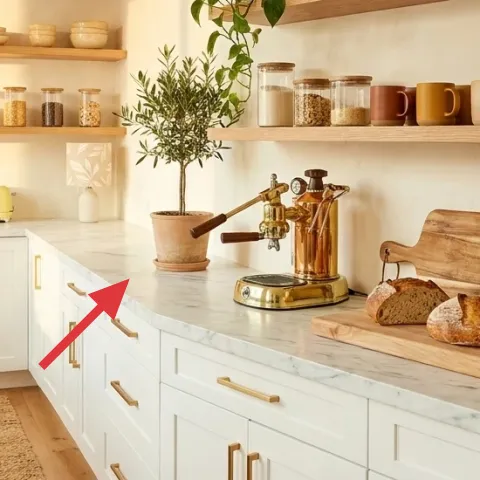
Ceramic jar canisters on the counter make the whole corner feel lived-in on purpose. In the photo, the jars read warm and tactile against the white backsplash and marble-look surface, and they’re grouped tightly enough to feel curated rather than cluttered. I’d choose a matching set style (same glaze family) instead of random glass containers because ceramics take terracotta and cream tones in a way that looks softer in daylight. The trade-off is counter real estate: keep the canisters to the staples you actually reach for, then switch out what’s not needed instead of letting empty jars linger.
Keep the group to essentials
Too many canisters makes the counter look busy; edit down to the items that get used daily.
Layer 5 — open wood shelving ($180) makes vertical storage feel intentional
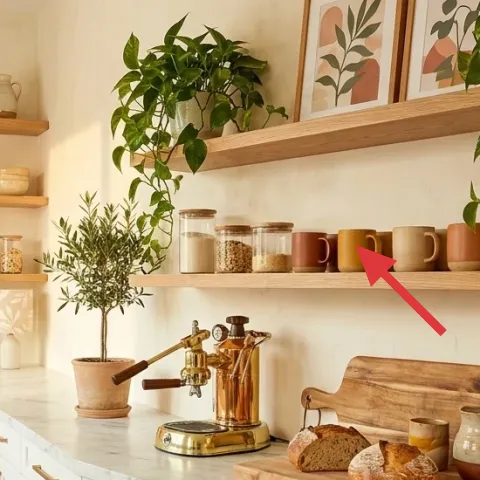
Open wood shelving is the visual engine here. It gives you vertical storage without the heaviness of upper cabinets, and it lets you repeat the warm woods and terracotta ceramics so the kitchen feels styled even when you’re not. The key detail is the spacing: shelves are high enough to display mugs and jars comfortably, and the different heights keep the eye moving across the corner. I’d rather do open shelves than paint extra cabinets because it’s a bigger look in the same amount of weekend effort. Trade-off: you’ll dust more often, since everything is visible.
Stagger heights with everyday items
Mix jar heights and mug sizes so the shelf looks balanced, not perfectly symmetrical.
Layer 6 — patterned dish towel ($25) adds a small “print moment”
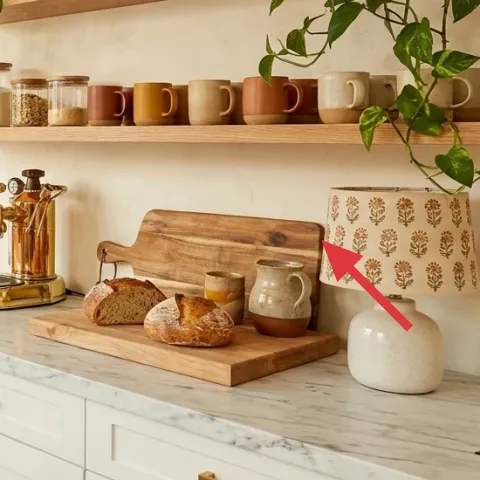
A patterned dish towel is a budget-friendly way to add contrast without repainting anything. In the image, the cream-and-terracotta motif echoes the warm palette, and it gives the countertop a focal point when folded or draped near the sink zone. I’d pick a towel that matches your tile undertone (here, warm white) rather than a bold black graphic, because the kitchen reads airy and bright overall. The trade-off is that a print with thin lines can fade faster if you wash aggressively—so follow the care label and rotate out when it starts to look tired.
Use it where you already stand
Draping the towel near the sink keeps the pattern visible when you’re working, not just when you’re walking by.
Layer 7 — small potted plant ($35) brings the shelf down to earth
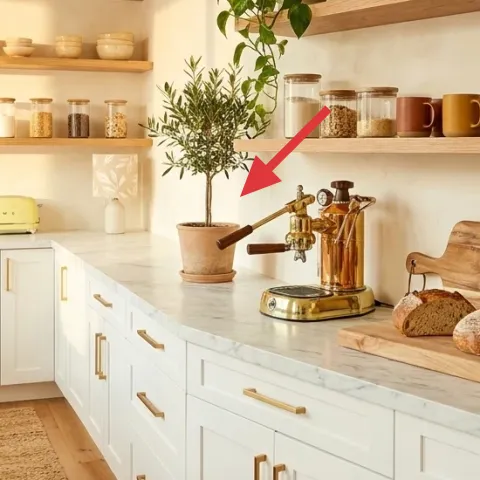
A small potted plant on the counter works because it softens the hard surfaces and connects the shelf styling to the countertop zone. In the photo, it sits between the jars and the faucet area, creating a natural transition so the corner feels collected rather than purely arranged. I’d choose a plant with an airy shape (not a dense, round shrub) so it doesn’t block sightlines or crowd the countertop. The trade-off is that plants need light and occasional leaf cleaning, but that’s easier than trying to replace the whole shelf styling when it starts looking flat.
Rotate weekly
Turn the pot a quarter turn each week so new growth stays even.
The cost, layer by layer
| Layer | Item | Cost |
|---|---|---|
| 1 | Jute area rug runner (kitchen size) | $120 |
| 2 | Brass sink faucet | $150 |
| 3 | Wood cutting board | $60 |
| 4 | Ceramic jar canisters (counter set) | $65 |
| 5 | Open wood shelving kit | $180 |
| 6 | Patterned dish towel | $25 |
| 7 | Small potted plant | $35 |
| Total | $635 | |
If you want a cheaper version of this look, swap open shelves for a single-lane counter shelf or use fewer countertop canisters. Choose a synthetic natural-fiber runner and look for a faucet in a polished brass finish instead of true solid-brass pricing.
What worked, what didn't (across the whole room)
The strongest win is how the warmth repeats: light wood shelving, brass metal, and terracotta ceramics all show up multiple times, so the corner looks cohesive. The rug runner also makes the whole workflow area feel softer and more intentional. The only miss is that plant and towel styling can tip into clutter if everything is placed with the same “perfect” energy every day.
What worked
- The jute runner adds texture underfoot and makes the bright counter zone feel grounded.
- The brass sink faucet adds warm-metal repeat right where your eyes land most.
- Wood cutting board styling stays practical because it still gets used for bread and prep.
- Ceramic jar canisters on the countertop turn storage into a calm visual group.
- Open wood shelving creates vertical storage and a place for terracotta ceramics to repeat.
- The patterned dish towel adds print contrast without changing cabinet paint or tile.
What didn't
- Leaving too many countertop items visible can make the counter read busy instead of curated.
- Warm-toned brass can show spots if it isn’t wiped after a few heavy-use days.
- A plant placed too close to hot-water splash zones can look tired faster than expected.
- Mirroring jar placement exactly like a photo can remove the “real life” feeling.
- Trying to match everything by exact color makes the shelf styling feel less natural.
What we'd skip if we did it again
Skip adding extra small decor pieces on the counter just because there’s empty space. This photo looks good because the essentials (board, jars, towel) do the heavy lifting, and every extra object steals attention from the warm repeats.
Skip a high-gloss finish approach for the warm-metal note. Brass looks best when you’re willing to wipe it now and then, but you’ll fight fingerprints with a mirror shine; a finish that reads warmer and less reflective is easier.
Skip overfilling open shelves. The shelving looks styled because it’s edited—enough jars and mugs to show personality, not so many that dusting becomes a monthly chore.
Frequently asked
How long does this kitchen counter-and-shelf refresh take in a weekend?
Plan on 2–5 hours of active work, depending on whether you’re installing new shelving or just styling shelves you already have. Rug placement and towel styling are quick. If you’re refreshing a cutting board DIY, add sanding/oiling time plus a dry period. The rest is arranging jars and mugs into a repeatable grouping that looks intentional from standing height.
What if I rent and can’t change the faucet or shelving?
If faucet swaps aren’t an option, keep the same styling principles: repeat warm tones (terracotta ceramics, light wood) and create a small counter “group.” For shelving, consider renter-friendly alternatives like a freestanding shelf unit or tension-mounted displays where allowed. The rug runner and dish towel still provide the biggest visual shift without touching plumbing.
Can I scale this down if my kitchen is smaller?
Yes—reduce the visible volume. Use fewer canisters (only the items you reach for daily) and keep one plant instead of two. A runner that’s narrower still anchors the workspace. If the shelf area is tight, focus on one shelf line with staggered jar heights rather than filling every level.
Where should I shop differently for these items on a budget?
For the rug runner and dish towel, look for natural-fiber options at home goods stores and fabric outlets. For jars and canisters, check kitchen specialty shops and thrift stores for matching glaze families. Faucet and shelving are the most variable investments—compare finishes in showrooms, then commit only when the undertone matches your wood and terracotta.
What’s the biggest mistake people make with open shelving?
The most common issue is filling shelves to the edges and leaving no breathing room. Open shelving looks good when there’s spacing, height variation, and a small set of repeated tones. Edit until you can spot the “hero” items quickly—jars, mugs, and one plant—then stop adding when it already feels balanced.
How do I keep the countertop and shelves looking clean without constant work?
Make it easier on future-you: wipe the faucet after messy tasks, blot the runner instead of scrubbing, and group canisters so you’re only wiping a few contact surfaces. Dusting open shelves becomes manageable when you choose fewer, taller items that don’t hide behind clutter. A patterned towel also helps by keeping everyday visual mess less obvious.