- Best for
- Bold rented-wall style with renter-safe swaps
- Cost
- $685 total for the key layers
- Difficulty
- Easy (mostly textiles + peel-and-stick)
- Time
- 1 weekend
Why botanical wallpaper-and-mustard accents are the bar seating corner of 2026
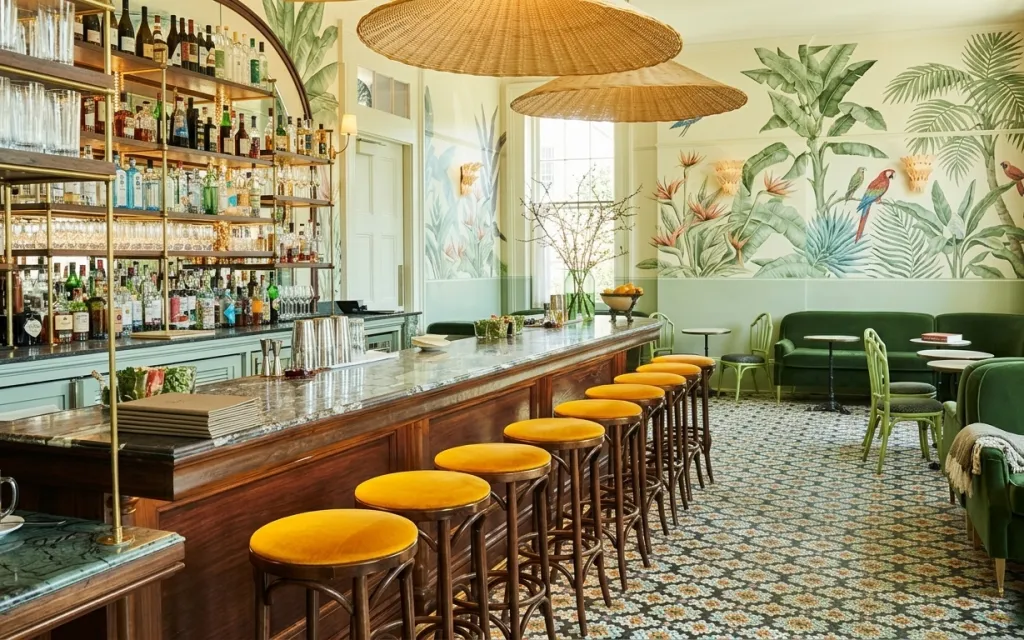
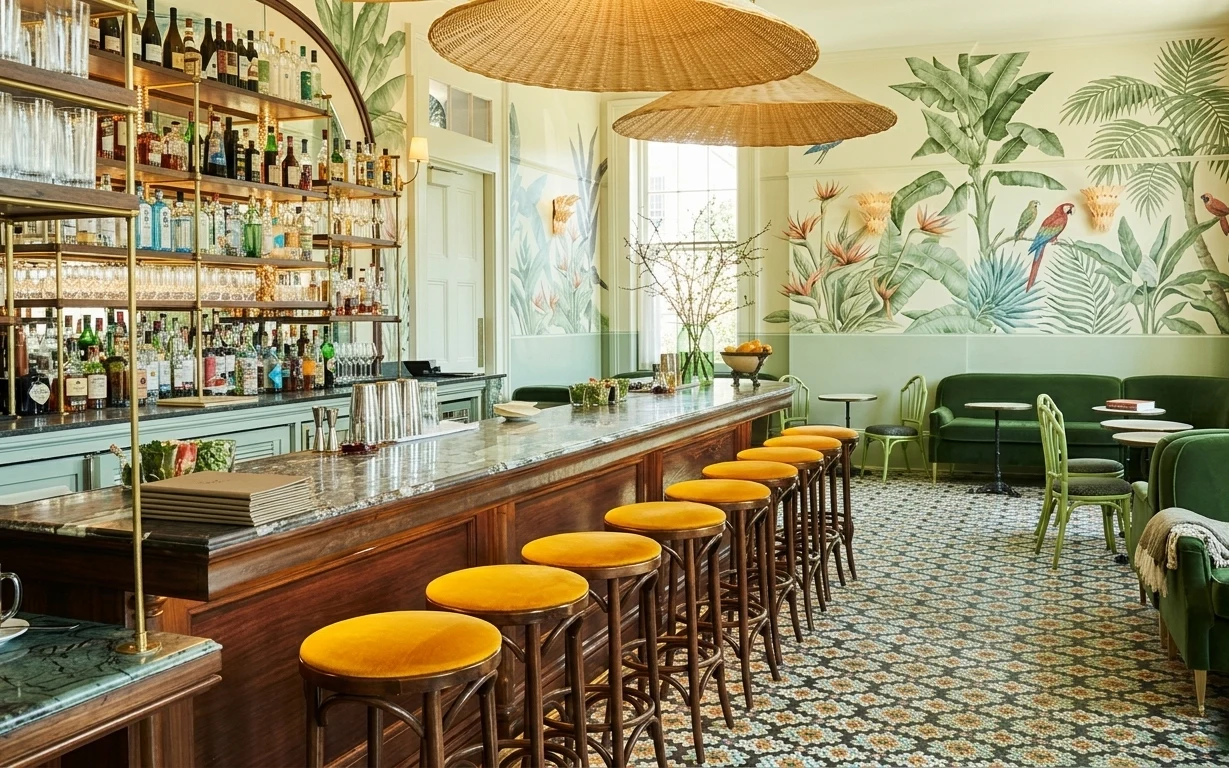
The hero here is all about contrast: a botanical wallpaper mural paired with bright yellow circular cushions, grounded by a patterned rug. The materials do a lot of the work—look at the warm wood bar counter, the woven texture of the rattan pendant shades, and the velvet-like green seating. Even without matching everything, the color story stays coherent because the green repeats across walls and upholstery while the yellow stays concentrated on the stools. For renters, this is workable because the biggest “change” (the wall) can be removable, and the rest is furniture-and-textile styling.
I almost steered this kind of look toward plain neutrals, but then I remembered how this space reads in real life: it needs punch. The mistake I’ve made before is buying one statement (usually a rug) and then calming everything else down too much, so the room feels unfinished. Here, the repetition of green—wall mural and seating—creates cohesion, and the rug pattern keeps the mustard from feeling random. Once that clicks, it’s mostly arranging what you already want to live with.
Layer 1 — patterned area rug ($200) Adds movement under the stools
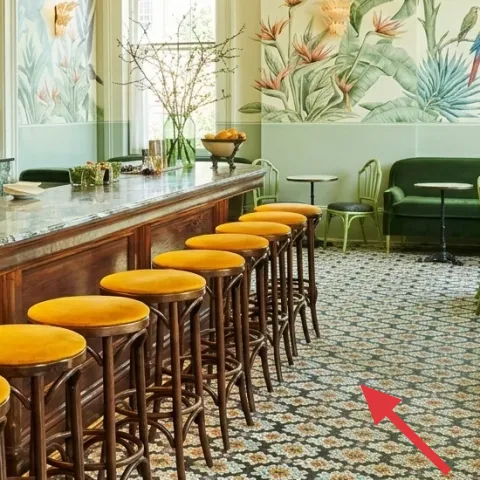
This patterned area rug sits under the full stool and chair zone, so it has to do more than look nice—it has to visually “hold” the layout together. A dense, small-scale motif prevents the yellow cushions from standing out too loudly, while still keeping the room lively. The trade-off is that pattern takes up visual space, so you’ll want simpler, more solid-colored seating nearby (which you get here in green). If the rug feels busy at first, that’s normal—after a week, your eye starts treating it like texture instead of noise.
Use the rug as your color anchor
Pick accessories that repeat only one rug color twice (green shows up on the wall and seats here).
Layer 2 — large botanical wallpaper mural ($150) Makes the wall feel like a destination
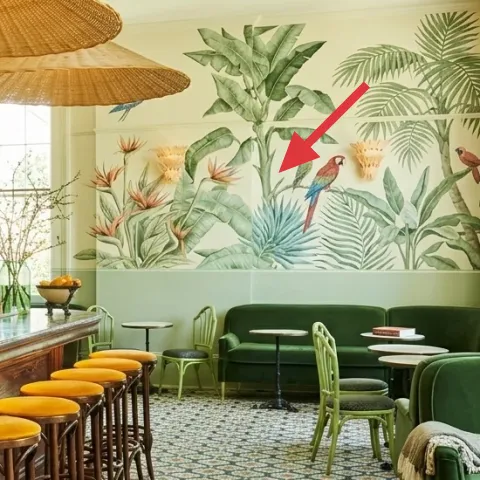
The botanical wallpaper mural is the room’s strongest design element because it turns a blank wall into an actual “view.” For renters, peel-and-stick is the right route: the mural look stays bold without requiring a paint job or landlord permission for new finishes. The pattern is complex, but it’s also structured—leaf shapes cluster in zones, and the birds add a natural focal point. The trade-off is that you’ll have to be selective with small décor, because anything too fussy will fight the wallpaper. In this setup, the wall does the storytelling while the furniture provides clean shapes.
Measure for one smooth stretch
Wallpaper murals work best when you can align the main central scene before trimming the edges.
Layer 3 — green throw blanket ($25) Softens the banquette edge
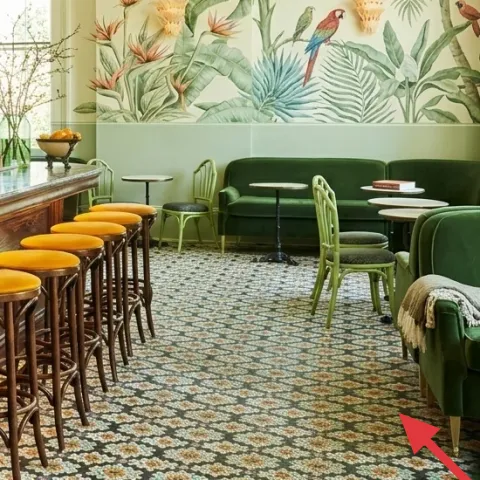
A green throw blanket pulled over the banquette is a small layer with a big effect: it makes the seating feel intentional rather than purely decorative. The color also ties back to the wall mural’s green tones, so your eye keeps finding the same family of hues. This is also an easy renter win because textiles are the first things to pack when the lease ends. The trade-off is keeping it casually draped—if it’s folded too neatly, it starts reading like a “photo prop” instead of lived-in comfort.
Match the shade, not the fabric sheen
Velvet can look shinier than cotton; aim for the green family, not an exact finish match.
Layer 4 — yellow-cushioned bar stools ($120) Brings the mid-century hit
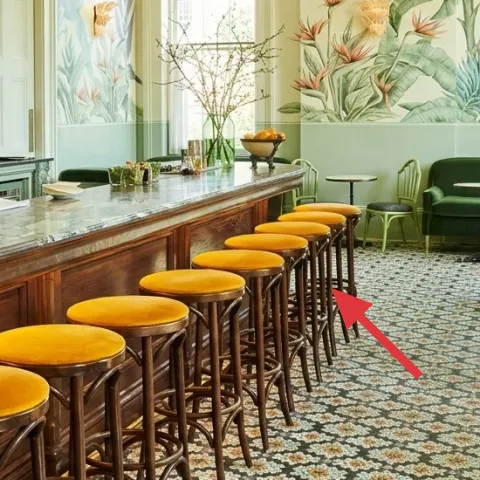
The yellow circular cushions on the bar stools are pure mid-century energy, and they’re placed where they’ll be seen every day: when you sit, when you step back, and when you set drinks on the bar. Yellow can go chaotic fast, but here it works because the rug and wallpaper already supply plenty of texture and color. The trade-off with adding bright seats is practical: you’ll want something you can wipe down and refresh, since bar areas get splashes. Keeping the chair backs and frames a calmer green/wood tone prevents yellow from becoming the only color doing the heavy lifting.
Skip thin, pale cushions
If the yellow is see-through or washed out, it won’t hold up against the strong botanical pattern.
Layer 5 — green metal-framed chairs with dark cushions ($100) Keeps the seating grounded
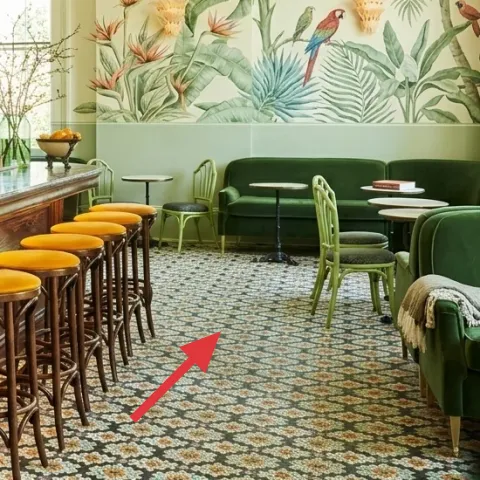
Green metal-framed chairs with dark cushions give the space structure, especially next to a patterned rug. The metal frames echo the polished bar hardware vibe, while the deep cushion color balances the brightness of the yellow stools. This is an “overlooked” layer because it’s not a single dramatic object—it’s the repetition of similar shapes across the seating cluster. The trade-off is comfort: metal frames can feel less forgiving than fully upholstered chairs, so add depth with thicker cushions or a breathable throw when the room is used often.
Keep chair styles consistent
Even if you don’t match every chair, matching the frame language makes the set look curated.
Layer 6 — green metal side table ($60) Adds surface for glasses and small moments
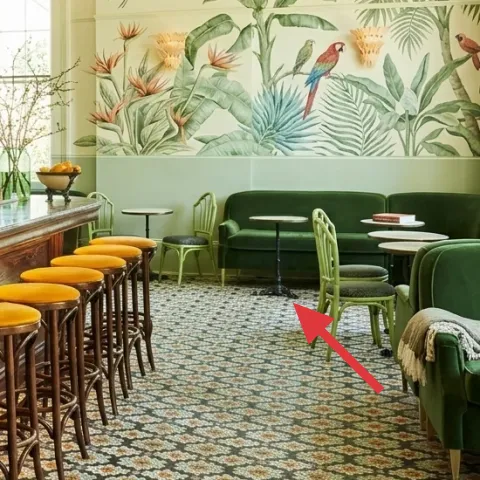
A small green metal side table is what turns seating into a real “hang out” area. It gives you a place for a drink, a book, or a tray without cluttering the bar counter, and the thin legs keep sightlines open across the rug pattern. The green color also repeats the wall and chair palette, which matters when the wallpaper is already doing a lot. The trade-off is scale: if the table is too large, it can feel like furniture sprawl in a tight bar layout, so choose something compact with a stable footprint.
Pick a table that works for two uses
When a space is small, you want your side table to double as a styling surface and a functional stop.
Layer 7 — glass vase with branches ($30) Makes the bar feel styled, not staged
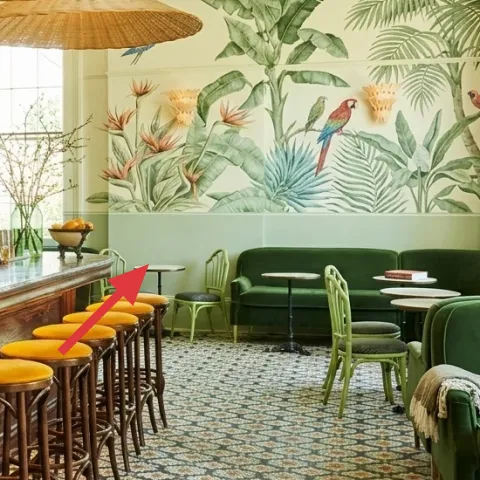
A glass vase with branches adds height and softness right at the bar, where your attention goes first in photos and in real life. The branches read airy against the mural wall, and the clear glass keeps the color palette from getting too heavy. This layer also helps you time the “seasonal” part of decor without committing to long-term purchases—branches and stems can be swapped out whenever your mood changes. The trade-off is that glass shows fingerprints, so it helps to choose a simple vase shape that’s easy to wipe down between guests.
Go twiggy, not flowy
Tall, branching stems look best with bold wallpaper because they echo the leaf shapes instead of competing with them.
The cost, layer by layer
| Layer | Item | Cost |
|---|---|---|
| 1 | patterned area rug 5×7 | $200 |
| 2 | peel-and-stick botanical wallpaper mural | $150 |
| 3 | green throw blanket | $25 |
| 4 | yellow-cushioned bar stools (small set) | $120 |
| 5 | green metal-framed chairs with dark cushions (small set) | $100 |
| 6 | green metal side table | $60 |
| 7 | glass vase with branches | $30 |
| Total | $685 | |
If the full botanical wallpaper mural price feels high, use a smaller peel-and-stick botanical panel behind the bar or choose a partial wall section to keep the look. The rug and yellow stools still carry the mid-century punch.
What worked, what didn't (across the whole room)
This setup works because it repeats one key color (green) in three different ways—wall, seating, and accents—while letting yellow become the intentional pop. The rug pattern helps everything look collected instead of pieced together. The one area that can go wrong is when the wall pattern is too busy for the rest of the décor, so spacing and negative room matters.
What worked
- The patterned rug anchors the stool and chair zone so the furniture cluster reads as one plan.
- The botanical wallpaper mural creates a strong focal point, making the bar area feel designed.
- Green seating and green wall tones repeat the same palette without requiring exact shade matching.
- Yellow cushions deliver mid-century warmth while the darker cushions keep the look balanced.
- A small green side table prevents the bar top from becoming the only surface for drinks.
- The glass vase with branches adds height and softness without adding clutter.
What didn't
- If the rug pattern is too faint, the yellow seats start looking random instead of intentional.
- Over-accessorizing the wall behind patterned wallpaper makes the mural feel smaller.
- Using only yellow accessories (without green repetition) can tip the palette into “one-note” brightness.
- Too many different chair shapes in the same seating area can make the room feel busy.
- A bulky table beside the stools can block sightlines and make the rug look like it shrank.
What we'd skip if we did it again
Skip adding a second big wall feature on top of the botanical wallpaper mural. When the wall already has birds and layered leaves, extra framed art or shelves tends to feel crowded and can shrink the “view” effect.
Skip low-contrast seating. If the chair cushions are pale or the rug motif is washed out, the yellow bar seats lose their purpose and the room reads flatter than it does in the photo.
Skip trying to match every element perfectly. This look works because the palette repeats and the textures vary—rattan texture, velvet-like seating, and patterned rug—so buying slightly different shapes in the same color family is usually the better move.
Frequently asked
How long does this kind of bar seating corner refresh take?
Plan for about 1 weekend. Peel-and-stick wallpaper is the longest step—dry-fit, align, and smooth slowly so the mural lines up. The rest is quicker: rug placement, styling the stool cluster, and adding the throw and branches. If the wall is unusual (outlet covers, trim edges), add an extra few hours for careful trimming.
Is peel-and-stick wallpaper renter-safe on textured walls?
It depends on texture and how dirty the surface is. For best results, clean the wall thoroughly and test a small section first if possible. If the wall has heavy texture, edges may lift sooner. The upside is removability: you can switch to a different mural section later without repainting.
What if the room is smaller than the photo?
Keep the same color system, but scale down the number of pieces. Use fewer chairs and choose a slightly smaller rug size so the pattern doesn’t overpower the floor. The wallpaper mural still works if it’s concentrated on one wall zone behind the bar. In a smaller footprint, leave extra open floor area around the stool legs.
Where can you shop for the yellow stool look without going over budget?
Look for “cushioned bar stools” or “circular seat stools” from big-box home sections and marketplace listings, then prioritize the seat color. If the frames are already acceptable, swapping the accent cushions is usually cheaper than replacing full seating. The rug and wallpaper do the heavy style lifting, so don’t overpay for perfect matching.
What’s the biggest mistake people make with botanical wallpaper in rentals?
They add too many competing decorative items right away. Let the mural be the main event, and repeat just one palette family (green, in this case) in furniture and textiles. Keep surfaces simple and focus on texture—rug pattern, woven textures, and upholstery—so the wallpaper reads intentional instead of chaotic.
More in Living Room
What $700 buys: a no-drill bar seating corner refresh
A move-friendly bar seating corner refresh built around peel-and-stick botanical wallpaper, a graphic rug, and renter-safe styling. This lo…
How to refresh a sofa lounge for under $400
A warm, move-friendly refresh for a sofa lounge built around an ochre striped area rug, framed abstract art, and soft lighting. This $400 p…
7 ways to refresh a sunlit living room for under $800
A sunlit living room with warm wood tones and a bold patterned rug. For about $800, update the look with a new rug, framed abstract prints,…