- Best for
- Renter-friendly, plant-centered bedroom styling
- Cost
- About $600 for the full refresh
- Difficulty
- Easy (no-drill additions + one DIY print)
- Time
- A weekend, plus a short DIY session
Why earthy-neutrals is the plant-filled bedroom of 2026
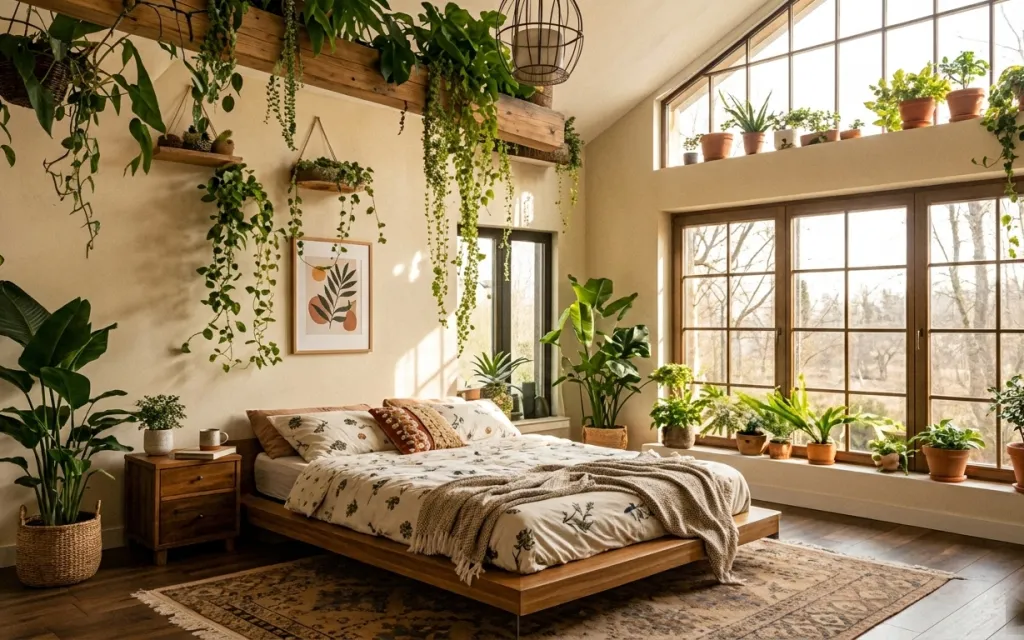
This room works because it mixes soft materials with living texture: the fringed rug anchors the floor, the knit throw adds weight to the bed, and patterned pillows bring in small-scale detail. You can also see how the framed botanical print and clustered windowsill planters repeat the same olive-and-terracotta palette against warm cream walls. It’s the kind of styling that feels “collected,” not matchy—exactly the move-friendly vibe renters need. And the best part? Everything here is removable, storable, and replaceable without permission.
I used to overbuy plants and underbuy the textile base—then the whole room looked like a greenhouse draped over a bed. What changed my mind was pulling a rug up first and building out from that warmth, like a floor plan you can feel. Once the rug and one blanket were in place, the pillows and wall art suddenly looked curated instead of random. That’s the order this layout follows.
Layer 1 — area rug with fringed edge ($200) Textures the floor before the bed enters
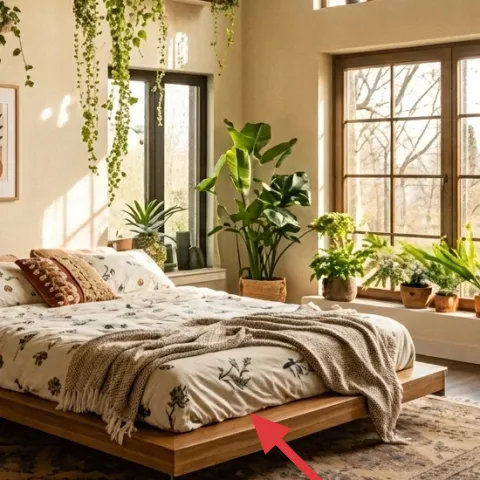
Start with the rug because it sets the “grounding” before you add anything tall or delicate. This one’s the right move for a plant-filled bedroom: the muted pattern keeps the greenery from taking over, while the fringed edge adds that slightly boho, lived-in finish you can’t fake with plain vinyl flooring. Choosing a 5×7 style rug also gives you that anchored look under the bed without needing an oversized wall-to-wall commitment. The trade-off is you’ll probably want a rug pad so it doesn’t shift when you pace around in the morning.
Layer first, plants second
A rug with pattern lets all the greens read intentional instead of visually noisy.
Layer 2 — wood nightstand with drawers ($80) Brings walnut warmth to the left side
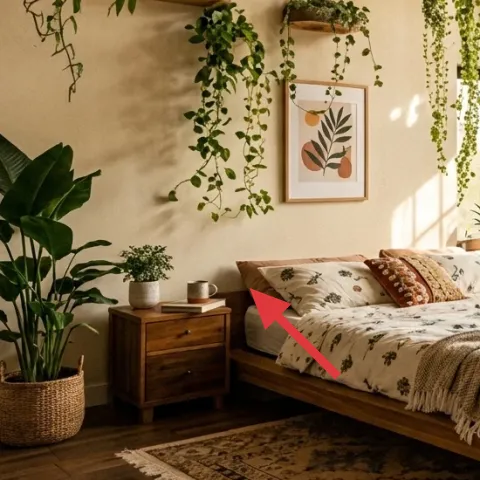
The wood nightstand balances the bed’s long lines and gives the left side a “landing spot” for small objects, like the folded decor stack you can see near the bed. In a room like this, the nightstand matters more than you’d think: its color bridges the rug tones and the walnut bed frame so the room feels cohesive, not scattered. If you went with a metal table, the plants would still look pretty, but the whole palette would skew cooler. The drawback with wood is it can show scratches, so keep a small tray or coaster on top from day one.
Keep it compact
Even a narrow drawer nightstand gives you function and visual weight without crowding the walkway.
Layer 3 — framed botanical print ($80) One piece of art that repeats the leaf shapes
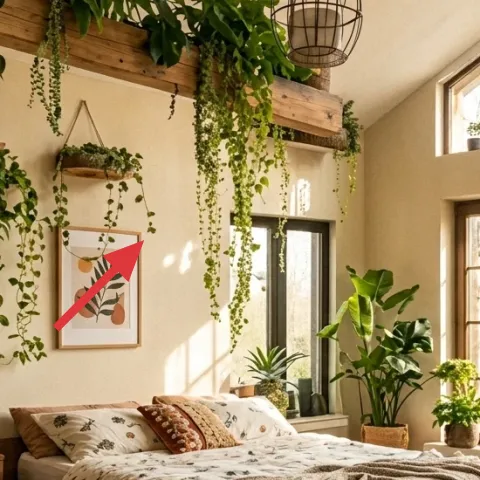
This framed botanical print is doing a specific job: it echoes the plant theme but keeps it graphic. The background tone sits close to the cream wall, so the room stays bright, while the illustration adds a different kind of texture than the live leaves. For renters, it’s also a smart move—swapable, packable, and easy to hang with non-damaging hardware. The trade-off is scale: too small, and it disappears behind vertical greenery; too big, and it can fight the windows. This size keeps the wall feeling “finished” without stealing the show from the plants.
Make it instead of buying it
DIY a framed botanical-style abstract on cardstock so you get the same leaf-forward look for less.
Materials
- Cardstock (8.5×11 sheets), 2–3 pages — craft store — $12
- Acrylic paint set (assorted greens + terracotta), 1 set — craft store — $18
- Small foam brush or stipple brush — craft store — $8
- Simple small frame (16×20 or 11×14 equivalent), 1 — thrift or discount store — $20
- Matte clear sealant spray (optional), 1 can — craft store — $2
Steps
- Lightly sketch 2–3 leaf silhouettes on the cardstock with pencil.
- Paint one leaf shape at a time using thin layers so edges don’t blob.
- Mix a terracotta accent with a darker green to create one “shadow” tone.
- Let the card sit undisturbed until the surface is fully dry to the touch.
- Seal with matte clear spray (or skip if the frame uses a glass cover).
- Dry until non-tacky.
- Trim the artwork to fit inside the chosen frame opening.
- Insert into the frame and secure the back.
Total DIY cost: $60 — saves about $20 over buying.
Layer 4 — knit throw blanket draped over bed ($60) Adds movement without overdoing the pattern
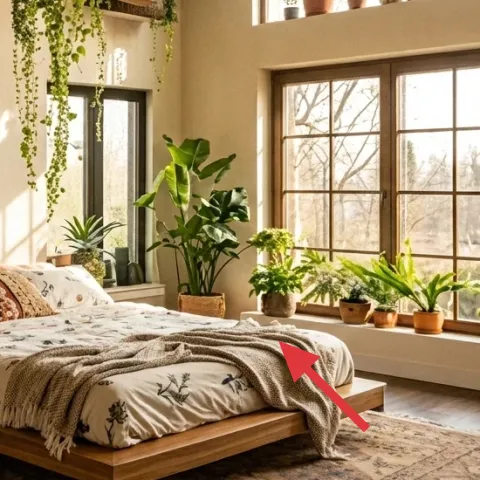
That chunky knit throw is what makes the bed look styled instead of just “made.” The blanket’s neutral base and textured weave give the room tactile depth, especially against the smoother pillows and the wood bed frame. Drape it across the bed so you get that diagonal, slightly rumpled line—straight folds can read a little stiff in bright daylight. If you grabbed a thin cotton throw instead, the bed would still look nice, but you’d lose the cozy weight that visually balances all the vertical plant strands. The trade-off here is you’ll be adjusting it occasionally so it keeps that effortless drape.
Drape for a diagonal line
Let the throw fall in one arc so it echoes the rug’s texture instead of matching it perfectly.
Layer 5 — patterned throw pillows on bed ($30) The small-scale detail that keeps the look airy
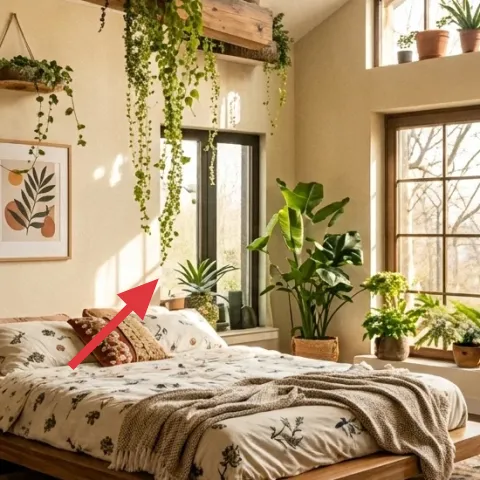
Patterned pillows are the quickest way to make a renters’ bedroom feel designed, because they add color variety without buying new furniture. In this look, the pillow prints stay mostly in the same earthy family, so they don’t fight the greenery by introducing loud, unrelated colors. Choosing covers (not a full bedding set) keeps it move-out friendly, and you can mix one patterned cover with one plain neutral cover for less clutter. The trade-off with pattern is that it can look busy if you oversaturate the bed—stick to two to three pillow covers so the plants stay the hero. Swap them seasonally if you get bored fast.
Limit the number of prints
Two patterns max keeps the room from turning into a mash-up of small designs.
Layer 6 — terracotta planter pots on windowsill ($80) Builds the “plant cluster” rhythm
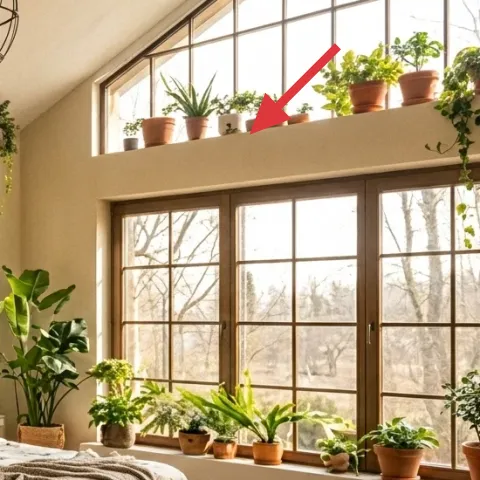
The windowsill planters are the visual engine of the room: they create a repeating row of warm terracotta against the bright glass. That repetition makes the plants feel styled rather than accidental, even when the plants vary in size. This is one of those upgrades that renters can do fully within their lease—bring in pots, swap soil if needed, and group them by height so you get depth without moving the windows or adding permanent fixtures. The trade-off is space: windowsills can get tight, so choose a mix of small and medium pots instead of one oversized planter.
Don’t crowd the brightest spots
If plants block each other completely, the leaves will stretch and your “lush” look won’t last.
Layer 7 — floor potted plant in woven basket ($20) Adds big-leaf drama at ground level
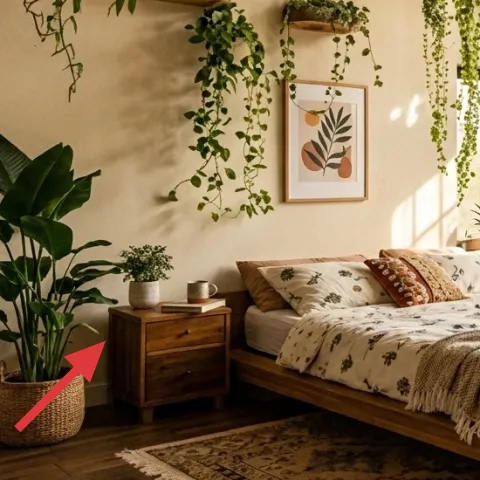
This floor plant in a woven basket anchors the left side and pulls the room down to ground height, which makes everything else feel balanced. The woven basket texture works with the rug’s fringes and the room’s natural materials, so the plant doesn’t look like a random add-on. If you skip this and only do tabletop or windowsill greenery, the bedroom can feel “topped-heavy,” like all the interest lives above the bed line. The trade-off is maintenance: baskets can trap moisture, so check the pot inside and avoid letting water pool on the floor.
Match texture, not just color
Woven basket + fringed rug is a better pairing than relying on green tones alone.
The cost, layer by layer
| Layer | Item | Cost |
|---|---|---|
| 1 | Area rug 5×7 with fringed edge | $200 |
| 2 | Wood nightstand with drawers | $80 |
| 3 | Framed botanical print | $80 |
| 4 | Knit throw blanket draped over bed | $60 |
| 5 | Patterned throw pillows (2-pack covers) | $30 |
| 6 | Terracotta planter pots on windowsill (set) | $80 |
| 7 | Floor potted plant in woven basket | $20 |
| Total | $550 | |
If you want a cheaper version, swap the framed botanical print for an unframed print in a thrifted frame later, and choose one fewer planter pot on the windowsill. Keep the rug as the anchor—everything else can be added slowly as you find the right plants and textiles.
What worked, what didn't (across the whole room)
The biggest win is the layering logic: rug first, then textiles on the bed, then wall art and plant clusters. The plants look curated because terracotta and woven textures repeat across heights. The only area that can feel off is when the plants overwhelm the wall art and bed linens, especially if heights aren’t grouped deliberately.
What worked
- The fringed area rug grounds the room and keeps the plant wall from looking visually flat.
- The wood nightstand ties the bed frame color into a warmer, more cohesive palette.
- The framed botanical print adds a controlled “leaf” pattern that won’t overgrow your decor.
- The knit throw blanket brings texture contrast against smoother pillows and the painted wall.
- Patterned pillows add detail at bed level so the space feels styled, not just planted.
- Terracotta planter pots create a repeating rhythm across the windowsill.
What didn't
- Too many plants at the same height can flatten the look and make the wall feel crowded.
- Oversized bedding patterns can compete with the botanical print and read busier in daylight.
- If the throw is folded too neatly, the bed looks staged rather than lived-in.
- Woven baskets can trap excess moisture if you don’t check the inner pot.
- A nightstand that’s too small makes the bed feel heavy and visually unbalanced.
What we'd skip if we did it again
Skip adding more wall art when the botanical print is already doing its job. The room’s interest comes from vertical plant strands and the windowsill cluster, so adding another frame can tip it into “too much.” Keep the wall simple: one framed print is enough to repeat the leaf motif and hold the palette.
Skip choosing plants by color alone. It’s tempting to match only the greens, but the woven basket texture, terracotta pots, and rug fibers are what make everything feel intentional. Prioritize material variety (woven, terracotta, knit) before you add another plant.
Skip a throw blanket that’s too thin. In a bedroom with lots of greenery height, a lightweight blanket disappears visually and the bed looks unfinished. Go for knit or a textured weave, then drape it with a diagonal line so it reads styled from across the room.
Frequently asked
How long does this bedroom refresh take?
Plan on one weekend for the purchases and styling: rug placement, nightstand setup, pillow/throw layering, and arranging planter pots. The DIY framed print usually fits in a couple of hours for painting and drying, depending on how many leaf shapes you want. If you’re replacing only a few items (like the rug and pillows), you can make it feel complete in one afternoon.
Is this renter-safe if I can’t drill or use wall anchors?
Yes—everything in this look is either freestanding (rug, nightstand, plants) or wall-hung in a move-safe way. For the framed botanical print, the key is using non-damaging hanging options like Command-style methods that follow the product directions. Avoid changing landlord fixtures; the decor choices here don’t require swapping anything built in.
What if my bedroom is smaller than this one?
Keep the same order: rug first, then bed textiles, then one wall piece and a small plant cluster. In a smaller room, use fewer planter pots on the windowsill (three to five instead of a long row) and choose pillows with a quieter pattern so the bed doesn’t compete. You can also pick a slimmer nightstand so you maintain walking space.
Where should I shop for these items if I want the same earthy tones?
For the rug and textiles, look at home goods stores and discount retailers where patterns in creams, tans, and olive show up seasonally. For the nightstand and frames, thrift shops and secondhand marketplaces are great for the wood tones. For plants and pots, garden centers and plant shops help you match terracotta hues without guesswork.
What’s the biggest mistake people make with a plant-filled bedroom?
They add plants first and build no texture base. Without a grounding rug and a textured throw on the bed, the room can read like plants are “hanging out” in a bare space. Another common issue is stacking too many planters at one height—group by height and mix pot textures (woven, terracotta, ceramic) so it looks styled.
More in Bedroom
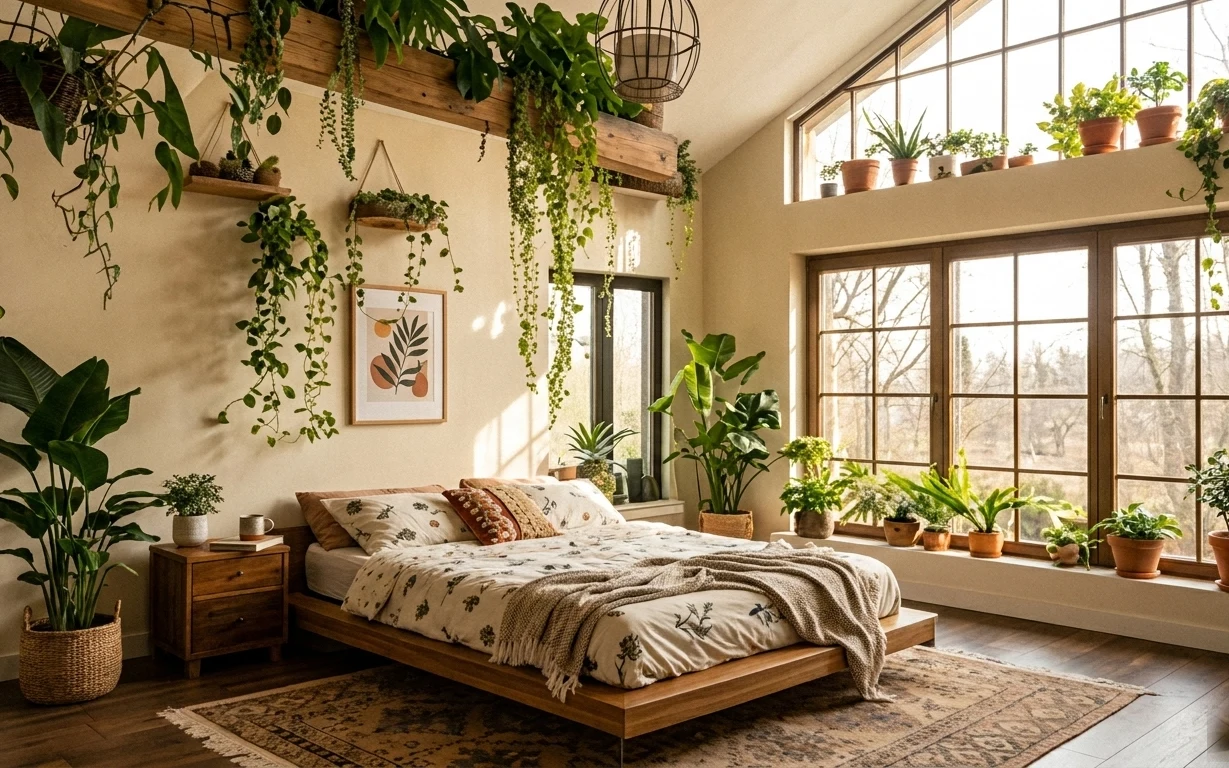
5 renter swaps for a plant-filled bedroom for $600
A plant-filled bedroom makeover for renters: swap in a textured rug, a wood nightstand, framed botanical wall art, and a simple blanket-and…
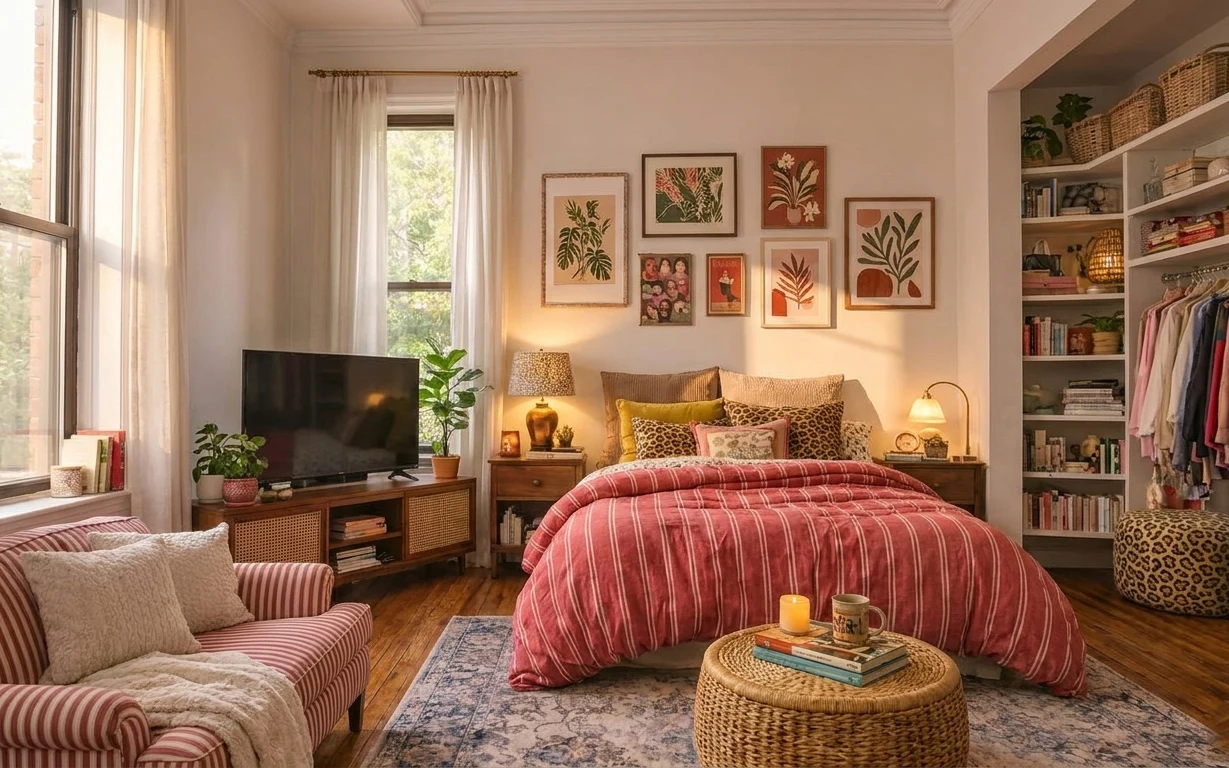
What $600 buys: a bedroom corner refresh with warm boho texture
A bedroom corner refresh built for move-friendly shared housing: blue rug, striped throws and comforter, a framed botanical print, warm tab…
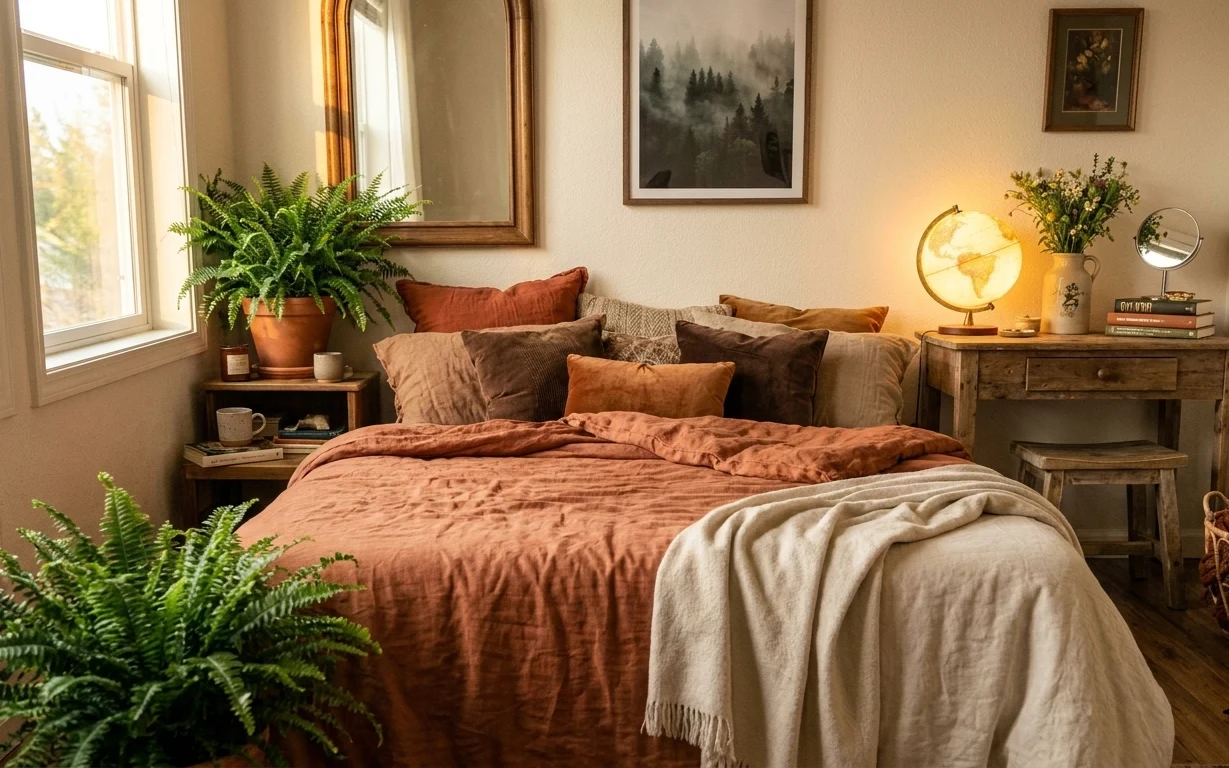
6 no-drill ways to warm up a bedroom, $400
A warm, renter-friendly bedroom refresh built around rust linen, layered throws, and earthy plants—no drilling required. This look is achie…