- Best for
- Vanity-zone styling
- Cost
- $455 total
- Difficulty
- Easy–Moderate DIY
- Renter-safe
- Some swaps only
Why warm brass-and-cream choices are the bathroom vanity nook of 2026
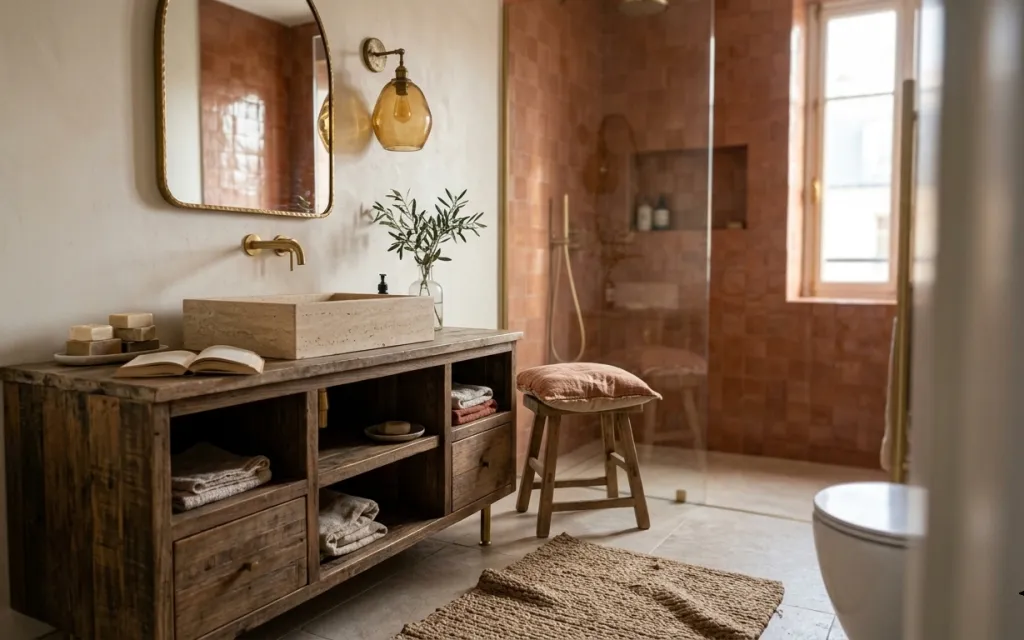
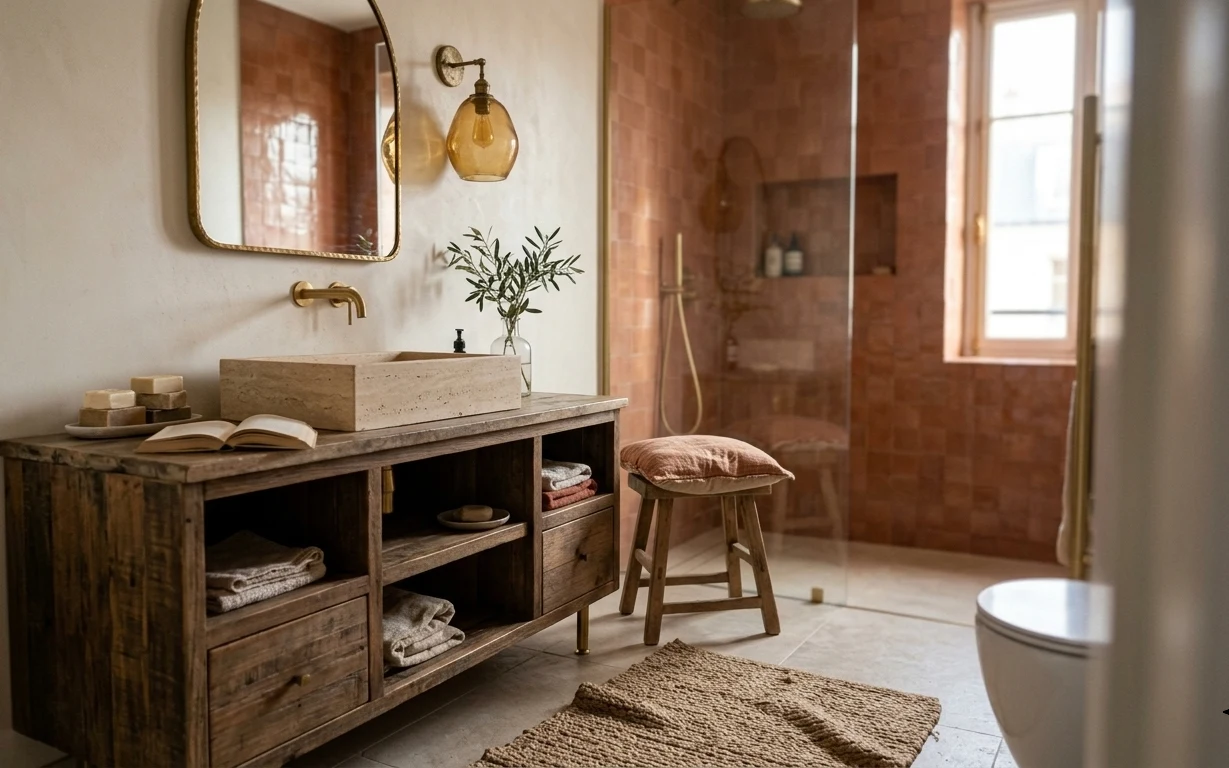
The first thing I noticed in this photo is how the brass mirror and the brass wall sconce pick up the warm tones, then the light tile floor keeps everything from feeling heavy. The rectangular bath mat rug anchors the foot-traffic zone, while the soap stack on a decorative ceramic tray gives the countertop a tidy “I planned this” feeling. Even the small potted olive tree brings texture without clutter. For homeowners, this is the kind of refresh you can actually finish on a Saturday because you’re working with what’s already there—just upgrading the handful of visible touchpoints.
I once overthought bathroom styling and ended up with way too much on the counter—bottles everywhere, towels stacked like a display shelf. What changed my mind was realizing the best-looking counters still have air around the objects. Here, the tray, the glass bottle, and the olive tree sit in a small cluster with breathing room, so the vanity nook reads calm instead of curated-for-a-photo. That’s the difference.
Layer 1 — rectangular bath mat rug ($120) softens the tile at bare feet
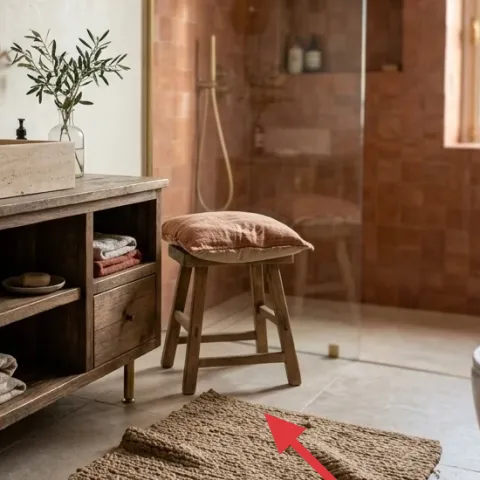
This rectangular bath mat rug is the anchor under the stool and it’s doing a jobs-to-be-done thing: it breaks up the pale tile and makes the whole vanity zone feel grounded. I’m a fan of rugs that are wide enough to land at least part of the stool’s front legs so the floor looks “finished,” not accidental. The trade-off is maintenance—bathroom rugs need a quick shake or light wash schedule to stay fresh. If the alternative is bare tile, the room always reads colder and louder.
Choose a rug that reaches the stool zone
Let the rug extend slightly past where you naturally stand; it visually tethers the stool and vanity.
Layer 2 — gold framed wall mirror ($120) brings back light without changing layout
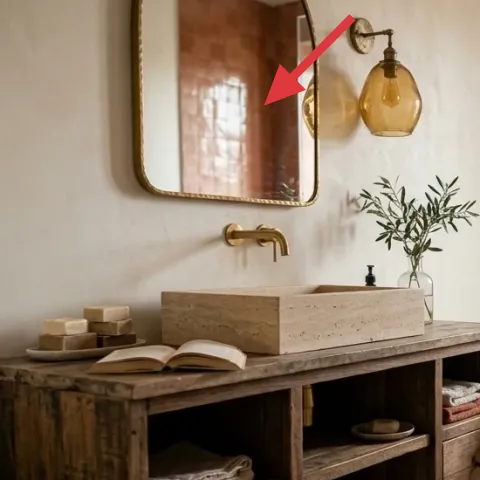
The gold framed wall mirror is placed high enough to bounce light and still feel practical for a quick wash-and-go moment. A mirror like this matters even more in a bathroom vanity nook because it’s one of the few items you see every day—its frame color also decides how warm the whole palette feels. The downside of going too ornate is it can fight the simple tile and shower panel, so the rounded gold frame is the sweet spot here. Swapping a mirror is one of the biggest “weekend only” visual upgrades because it changes the perceived brightness instantly.
Match the metal warmth
If your faucet and sconce are already brass-toned, keep the mirror frame in that same family.
Layer 3 — brass wall-mounted sconce light fixture ($120) ties the warm metals to the countertop
This brass wall-mounted sconce light fixture is the part you feel as much as see: it makes the vanity area look finished after dark and it echoes the gold mirror so the corner reads cohesive. The key decision here is finish—brass with a slightly antique warmth rather than cool chrome. The trade-off is that a dated sconce silhouette can pull the whole look back, which is why refinishing (instead of fully replacing) can be the fastest fix. If your goal is a polished weekend refresh, upgrading the visible light fixture finish does more than another bottle on the tray.
Make it instead of buying it
Spray-paint the brass sconce fixture so it matches the mirror’s warm tone, instead of paying for a whole new light fixture.
Materials
- Degreasing cleaner (bath/kitchen) — 1 bottle — $18
- Bonding primer for metal — 1 can — $9
- Spray paint enamel (brass-tone or antique gold) — 1 can — $8
Steps
- Unplug power to the sconce at the switch or breaker, then protect the glass shade and nearby surfaces.
- Degrease the brass thoroughly and let it dry completely.
- Lightly scuff the surface for adhesion.
- Apply bonding primer in thin coats; allow it to dry fully.
- Apply 2–3 thin coats of brass-tone spray paint, drying between coats.
- Let the final coat cure fully before reinstalling/turning power back on.
Total DIY cost: $35 — saves about $85 over buying.
Layer 4 — stool seat cushion fabric ($30) softens the line between vanity and rug
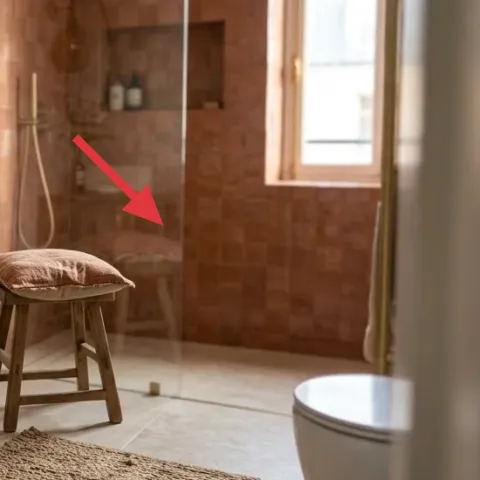
The stool seat cushion fabric is a small detail, but it changes how the whole corner feels because it adds a soft, textile surface right in the middle of hard materials—tile, glass, and wood. I’d rather refresh the cushion fabric than add another decorative object, because the stool is already part of the work zone and it’s visually closest to the bath mat rug. The trade-off is you’ll have to treat it like a textile: a spot clean schedule keeps it looking good. If you’re choosing one “quiet upgrade,” this is one that reads expensive without adding more clutter.
Pick a neutral that matches the rug texture
Look for a rough-woven or linen-look fabric so it echoes the rug instead of competing with it.
Layer 5 — decorative ceramic tray ($25) keeps countertop styling in one place
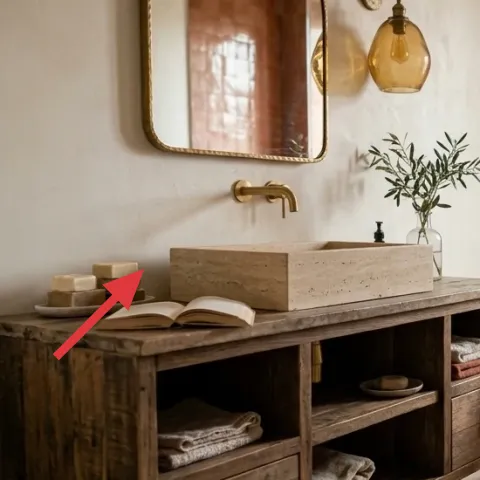
A decorative ceramic tray does two jobs at once: it visually organizes the soap bars and it creates a “styling base” so the countertop looks curated, not randomly stocked. In this photo, the tray makes the stacked soap bars feel intentional and gives the glass bottle a grounded place to sit. The trade-off is scale—if the tray is too small, it looks like accessories fell onto the counter. A tray that’s wide enough to hold the soap stack and still leave a little space around it is the sweet spot. This is the kind of upgrade that makes the mirror and sconce look even better because everything supports the palette.
Leave a border of counter showing
Two to three centimeters around the tray reads calmer than a full “packed” counter.
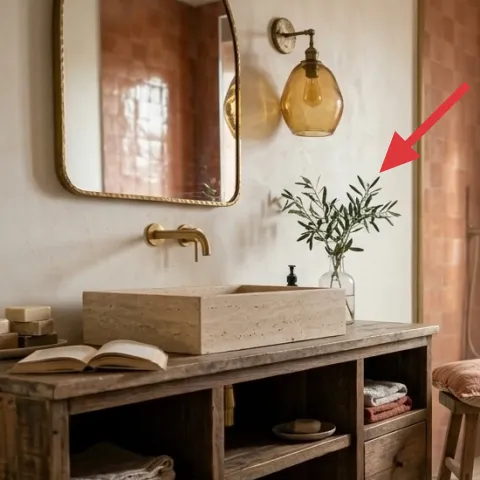
Layer 6 — small potted olive tree in glass vase ($20) adds height without taking up counter width
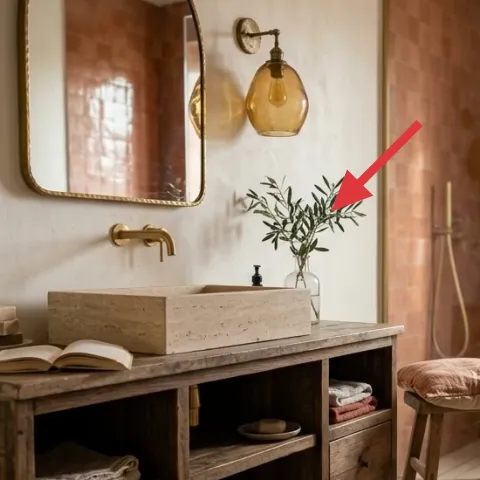
The small potted olive tree in a glass vase adds movement—those thin leaves give the vanity nook visual height and texture without needing extra furniture. I like this placement near the mirror side because it catches the warm light and keeps the corner from looking too flat against white wall paint. The trade-off is realism: if the plant looks sparse or fake, it can cheapen the whole setup fast. This is why using a tabletop plant at the right size is better than a bigger statement plant that crowds the vanity. When it’s done right, it feels like a lived-in home, not a showroom.
Avoid overly bright “green” leaves
Cool neon greens clash with brass and warm neutrals; steer toward muted olive tones.
Layer 7 — small glass bottle on vanity ($20) finishes the vignette with one useful object
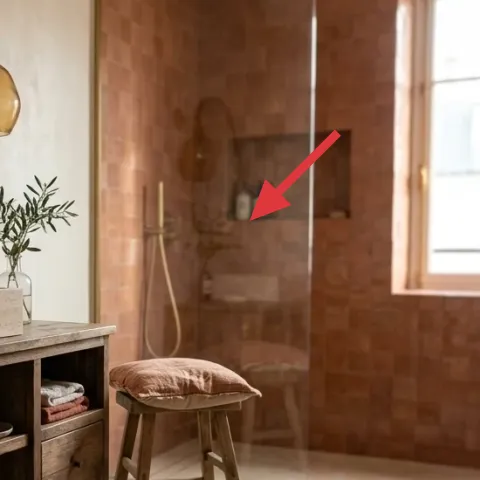
The small glass bottle on the vanity keeps the countertop functional while still looking styled. It’s a balancing element next to the soap bars on the decorative ceramic tray—both are practical, but the glass adds shine that echoes the clear glass pendant-style bulb shade. The trade-off is that bottles multiply quickly; that’s how bathrooms end up looking messy even with nice materials. Keeping it to one bottle plus the soap stack keeps the vignette crisp and repeatable day to day. If there’s already a bottle you like, the faster win is pairing it with the tray and letting the mirror and sconce do the rest of the heavy lifting.
Repeat the glass shape elsewhere if possible
Even one other clear-glass detail makes the whole nook feel more intentional.
The cost, layer by layer
| Layer | Item | Cost |
|---|---|---|
| 1 | Rectangular bath mat rug | $120 |
| 2 | Gold framed wall mirror | $120 |
| 3 | Brass wall-mounted sconce light fixture | $120 |
| 4 | Stool seat cushion fabric replacement | $30 |
| 5 | Decorative ceramic tray | $25 |
| 6 | Small potted olive tree in glass vase | $20 |
| 7 | Small glass bottle for vanity | $20 |
| Total | $455 | |
If the full $500 budget feels like too much at once, start with the bath mat rug and the brass-toned sconce finish. Those two choices change how warm the vanity zone feels immediately, then you can add the mirror and small countertop styling over the next weekend.
What worked, what didn't (across the whole room)
The best wins here are the warm metals and the few “repeat textures” that show up across objects: brass tones, glass shine, and woven textile texture. When the counter accessories are grouped on the tray, the whole corner looks composed instead of cluttered. The only consistent miss is over-styling—adding too many bottles or too many towels breaks the calm effect.
What worked
- The rectangular bath mat rug keeps the vanity zone from reading cold against light tile.
- The gold framed wall mirror amplifies warm light and makes the corner feel brighter.
- The brass wall-mounted sconce light fixture ties the palette together by echoing the mirror’s metal tone.
- The decorative ceramic tray makes the soap stack look intentionally placed, not randomly arranged.
- The small potted olive tree adds height and texture without widening the counter footprint.
- The small glass bottle adds functional shine that matches the clear glass bulb shade.
What didn't
- Too many countertop items turns the vignette into a cluttered shelf, even with good colors.
- A rug that doesn’t reach the stool zone looks like it was dropped in later.
- Cool-metal fixtures fight warm brass tones and make the whole bathroom feel less cohesive.
- If the olive tree looks sparse, it reads more like decor than living texture.
What we'd skip if we did it again
Skip replacing the wood vanity or doing any wall/tiling work. In a bathroom like this, the tile and countertop layout are already strong; the visible upgrades come from the few objects you can swap quickly.
Skip adding more countertop bottles “to make it feel complete.” Instead, keep one small glass bottle plus the soap bars on the decorative ceramic tray so the mirror and sconce stay the main visual story.
Skip a rug in a washed-out gray or high-contrast pattern. Warm brass and cream look best with textured neutrals, so choose something that echoes the bath mat’s weave and stays quiet.
Frequently asked
How long does a bathroom vanity nook refresh like this take?
Plan for 4–6 hours for the non-DIY swaps (bath mat rug, tray, mirror, and countertop items). If you’re spray-painting the brass wall-mounted sconce finish, add another evening for prep and a separate cure time so the paint is fully set before you use the fixture. The whole thing typically lands at one weekend when everything is staged ahead of time.
If I rent, what should I change first without permanent work?
Start with the rectangular bath mat rug, the decorative ceramic tray, and the small potted olive tree in its glass vase—none of that needs permission. For lighting and the gold framed wall mirror, check your lease rules, because swapping fixtures can be restricted. If you can’t change hardware, focus on styling and textiles: one warm-metal mirror look replacement plus a few grouped items does most of the visual work.
My bathroom is smaller or the vanity is a different shape—will these layers still work?
Yes, because the principle is placement: keep a rug that reaches the stool zone, use the mirror to bounce light, and group countertop accessories on a tray. If your vanity is narrower, use a smaller tray and reduce the number of items to the soap stack plus one bottle. If the room is larger, widen the rug so the stool feels “built in” to the zone.
Where should I shop for pieces that match brass and earthy neutrals?
For the gold framed wall mirror and brass wall-mounted sconce light fixture, look for bathroom-specific fixtures that list the finish clearly (brass, antique gold, or warm gold). For textiles and the rectangular bath mat rug, choose makers that describe weave and thickness. For the decorative ceramic tray and small glass bottle, home goods stores and ceramic-focused shops are easiest, because you can match texture instead of just color.
What’s the biggest mistake people make in a vanity nook refresh?
Overcrowding the counter. When too many items compete, the mirror and brass sconce lose their “anchor” role and everything reads busy. The fix is simple: one tray, one soap stack, one glass bottle, and a small plant with breathing room around it—plus a rug that visually grounds the foot area.
More in Bathroom
5 swaps for a $500 bathroom vanity nook refresh
A warm, earth-toned bathroom vanity nook that feels pulled-together without a full renovation. This $500 weekend refresh focuses on the bat…
What $350 buys: a move-ready green vanity nook
A renter-friendly green vanity nook makeover: rug, towels, plants, a framed print, and styled countertop objects—no drilling or fixture swa…
How to refresh a bathroom for under $700 with 7 quick swaps
A bathroom vanity nook can feel brand-new without a gut: swap in a terracotta bath mat, keep the brass faucet and mirror, and refresh the w…