- Best for
- a move-friendly bathroom nook refresh
- Cost
- about $340 (ceiling $400)
- Difficulty
- easy
- Time
- 1 weekend
Why terracotta-and-brass accents are the bathroom nook of 2026
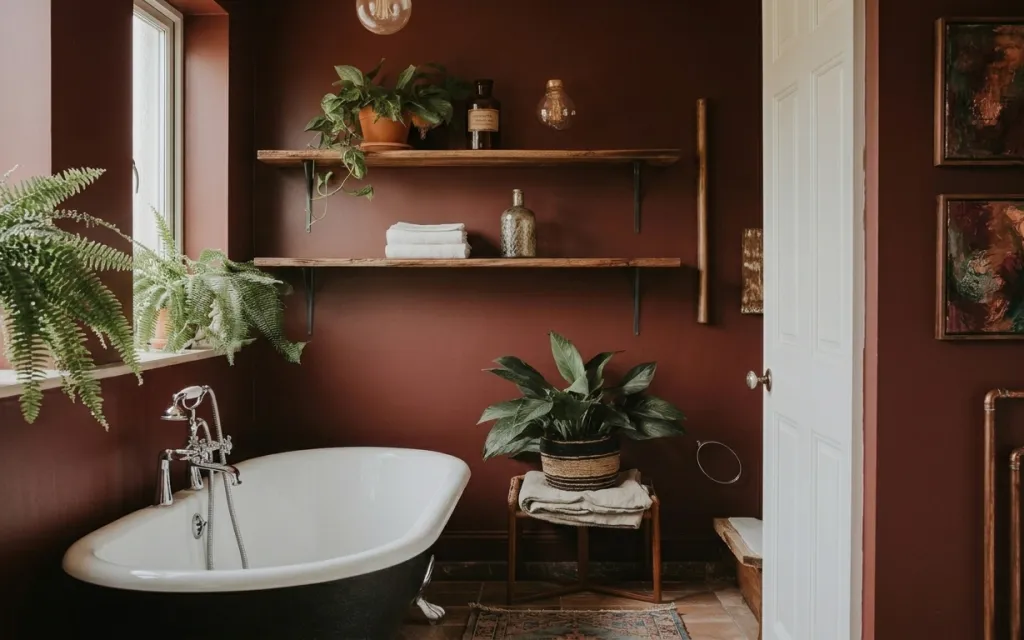
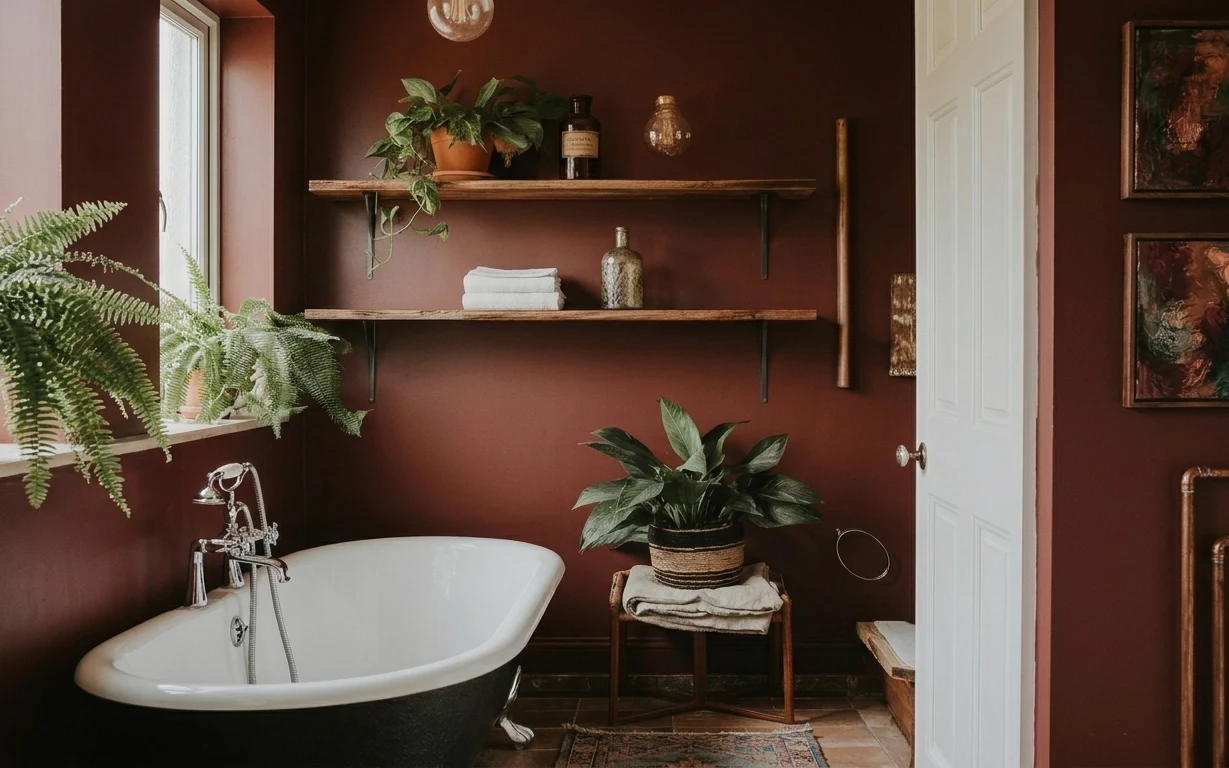
Warm terracotta walls and dark wood trim already set the tone, so the easiest way to borrow this vibe is through soft, movable layers. Start with a patterned bath rug to ground the tile, then echo the room’s natural texture with a woven plant basket and a wooden stool. White towels keep the palette crisp against the deeper wall color, and framed abstract art brings the “collected” feeling without needing a full gallery. This approach works especially well for shared housing because every item can come with you—no drilling, no permanent changes.
I used to over-plan bathrooms like they were permanent—more matchy matchy, more “buy the exact set.” Then I rented my way into realizing the fun is in the repeatable texture: rough + smooth, green + warm, matte + glossy. In this look, the glass pendant light and the off-white towels do the heavy lifting after dark, while the rug keeps the floor from feeling cold. That’s the shift: choose items that survive a move, not items that require one.
Layer 1 — Patterned bath rug ($80) Underfoot texture that hides tile cold
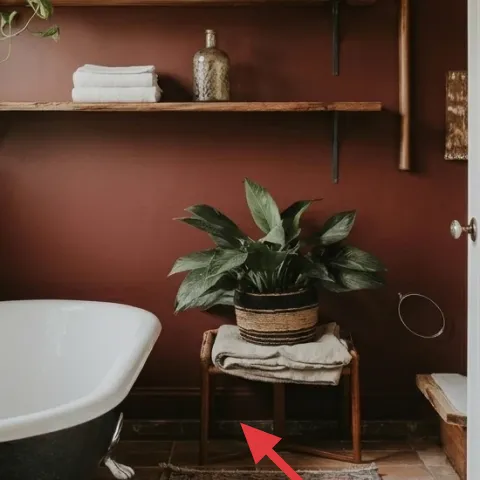
A patterned bath rug in a warm, muted palette makes the tile feel intentional and visually “softer” around the tub zone. In a room like this, I’d pick something with enough contrast to mask damp footprints and the occasional splash, rather than a single solid color that shows every mark. The trade-off is that you’ll want a rug you can shake out easily, because bathrooms move fast from clean to slightly humid. The upside: rug changes are fast, moveable, and can be reused in your next place as long as you measure the footprint first.
Choose contrast, not pure white
High-contrast patterns forgive everyday bathroom splashes better than light solids.
Layer 2 — Potted plant in woven basket ($25) Green texture that reads boho
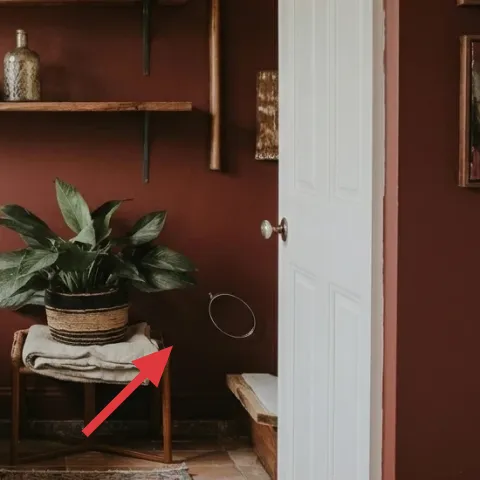
That woven basket around the plant is what makes the greenery feel styled instead of accidental. A woven or natural-fiber pot brings pattern and rhythm right away, which matters in warm-toned rooms where the wall color is doing a lot. This swap is also practical: the plant can live on the stool in this space now, then move to a windowsill later. The trade-off is watering—woven baskets can dry out unevenly, so using a small inner liner pot helps keep the look clean.
Keep the inner pot hidden
Use a plastic nursery pot inside the basket so spills don’t stain the weave.
Layer 3 — Wooden plant stool ($80) A natural “pedestal” for styling
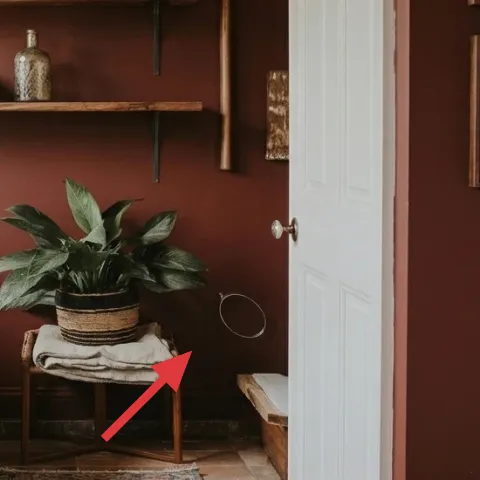
A wooden stool gives you height without adding another piece of built-in hardware to the room. In this layout, it creates a clear stage for the plant and the woven basket, so the corner doesn’t feel flat against the terracotta wall. I’d rather choose a sturdy, simple stool than a fancy side table here, because simple lines pack up better and don’t clash with the framed art. The trade-off: wood shows water spots if careless splashes happen, so keep a small cloth nearby during busy weeks.
Don’t pick something too tall for daily flow
When the stool sits close to the doorway, height can become an elbow risk fast.
Layer 4 — Stack of white towels ($30) Crisp balance against terracotta
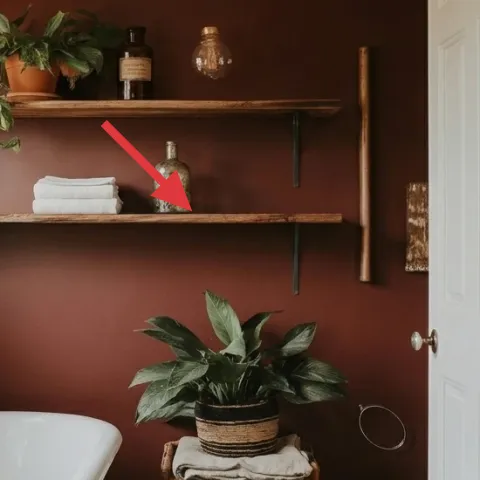
White towels are a visual reset: they brighten the dark wall and make the whole corner feel cleaner, even when the bathroom gets lived in. This look stacks them so you get neat edges and a little “hotel” feel without adding new furniture. I’d choose towels that are thick enough to hold shape when folded, not ones that collapse into a wrinkled blob. The trade-off is that bright whites need a quick wash schedule, but the color payoff is worth it in a warm-toned room.
Fold for edges, not fluff
Sharp folds read styled; overly airy towels read messy from across the room.
Layer 5 — Framed abstract wall art print (upper right) ($80) One no-drill focal point
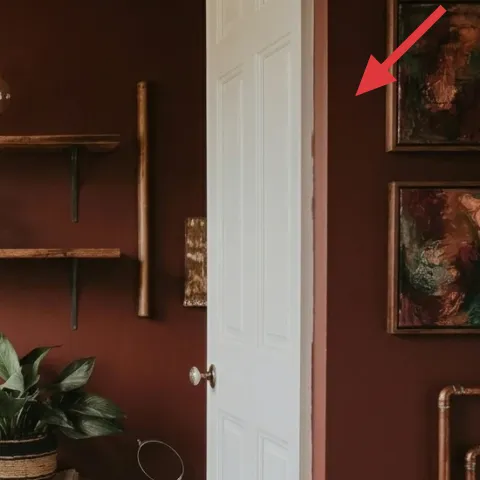
This framed abstract print supplies the color echo—warm browns and deep reds—that matches the terracotta walls while still feeling contemporary. A single strong piece is usually easier (and cheaper) than building a full gallery when you know you’ll move. If you’re renting, swapping the paper inside an existing frame is also far less stressful than dealing with mounting hardware. The trade-off is scale: too small and it disappears, too large and it overwhelms the nook. Aim for a medium-ish frame that holds its own at eye level.
Make it instead of buying it
DIY a hand-painted abstract on cardstock and slide it into a standard frame so you get the same focal-point role for less.
Materials
- Cardstock pack — 1 set (8.5×11 sheets) — Michaels/Target — $12
- Acrylic paint set — 1 small set — craft store — $15
- Fine-tip paint marker — 1 — craft store — $4
- Small flat paintbrush — 1 — craft store — $5
- Painter’s tape — 1 roll — hardware store — $4
Steps
- Cut cardstock to match the frame’s insert size, then test-fit it.
- Tape off simple blocks and arcs, using the terracotta and deep red tones from the room as your palette guide.
- Paint in broad strokes, then add a few thinner lines for contrast with the marker.
- Let it dry fully, then peel the tape for clean edges.
- Slide the finished cardstock into the frame backing and close the frame latch.
Total DIY cost: $40 — saves about $40 over buying.
Layer 6 — Small ceramic vase/bottle ($20) Curated “shelf edit” without clutter
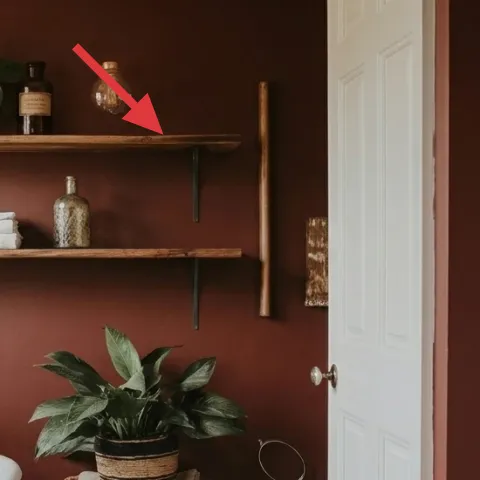
A small ceramic bottle or vase keeps the top shelf from looking empty, but it also reads lighter than stacking too many items. With terracotta walls, choose warm neutrals or deep, smoky glazes so the object doesn’t look like it belongs in a different room. This piece is a good substitute for “expensive decor” because it’s easy to swap and still delivers that styled, collected feeling. The trade-off is proportion: too tiny looks lost, too large crowds the towel stack and books the shelf space.
Match the finish, not the color
Matte ceramics and a warm light bulb finish look cohesive even when the exact hue differs.
Layer 7 — Green fern in window planter ($25) Instant life where light hits
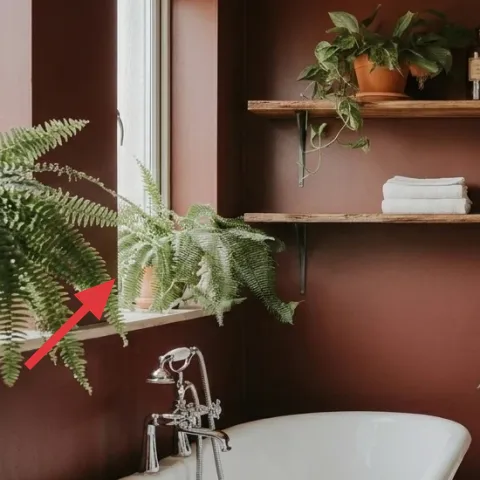
That fern in the window adds movement and moisture-friendly texture—perfect for a bathroom nook that already has warm, earthy walls. Plants also make the corner feel less like a storage zone and more like a small sanctuary. Choose a fern or similar leafy plant that tolerates indirect window light, because bathrooms can be inconsistent if they’re not used evenly. The trade-off is upkeep: ferns want steady hydration, so the plant’s presence is a commitment. If that’s not the plan, swap in a hardier green while keeping the woven pot styling for the same look.
Keep the pot rotate-friendly
Rotate weekly so the plant stays full on all sides, not just toward the window.
The cost, layer by layer
| Layer | Item | Cost |
|---|---|---|
| 1 | Patterned bath rug 2×3 | $80 |
| 2 | Woven plant basket pot | $25 |
| 3 | Wooden plant stool | $80 |
| 4 | White towel set (stack-ready) | $30 |
| 5 | Framed abstract art print (DIY-insert) | $80 |
| 6 | Small ceramic vase/bottle | $20 |
| 7 | Indoor fern plant | $25 |
| Total | $340 | |
If you want to go cheaper, downsize the plant basket, choose a smaller rug, and keep only one framed print instead of two. The terracotta towel + rug combo still reads “finished” even when the corner is minimal.
What worked, what didn't (across the whole room)
The best parts of this bathroom nook are the repeat textures: woven fibers, crisp white towels, and warm ceramics all play nicely with terracotta walls. The rug also does more than look good—it makes the tub area feel grounded instead of floating. The downside is that too many small objects on the shelf can turn “styled” into “messy” quickly.
What worked
- Patterned rug keeps the tile from feeling stark and hides everyday damp footprints better.
- Woven plant basket adds boho texture without introducing bulky furniture.
- Stacked white towels create visual brightness against terracotta paint.
- Abstract framed art brings depth and color without needing multiple decor pieces.
- Small ceramic objects make the shelf feel curated, not empty.
- Green fern adds motion and softens the hard lines of the tub and wall trim.
What didn't
- Going too matchy with colors can make the nook feel flat instead of layered.
- Over-stacking shelf items crowds the towel area and reads cluttered from the doorway.
- Plants in woven baskets can stain if water isn’t controlled with an inner liner.
- Choosing a light rug without contrast would show splash marks quickly.
What we'd skip if we did it again
Skip permanent-looking fixes like swapping hardwired lighting or changing built-in fixtures. Even when they’re “just an upgrade,” they’re the exact items that don’t move with you when the lease ends.
Skip matching sets that force the palette—towel bundles in identical textures can flatten the look. Instead, mix one bright textile (towels) with one natural-texture element (woven basket) and one ceramic piece.
Skip a rug that’s too small or too precious. In bathrooms, you want a rug that can take real life—cleaning, quick drying, and occasional splash—and still read warm against terracotta walls.
Frequently asked
How long does this bathroom refresh take for shared housing?
Plan for a single weekend. The rug swap and plant basket/stool styling are quick, and the towel stack is even faster. The DIY hand-painted cardstock art is the only slower part—especially drying time—so it’s best to start early. If you’re keeping an existing frame, the final insert step is quick and doesn’t require any wall work.
Does this work if I can’t change anything in my bathroom?
Yes—this plan is built around what’s truly moveable. It uses textiles, freestanding styling items, and an art insert rather than replacing fixtures or drilling into walls. The strongest visual changes come from rug scale, towel brightness, and one framed focal piece. Everything can be packed into labeled boxes so the next lease starts with less stress.
What if my bathroom is smaller than the photo?
Scale down the rug and keep the plant in the same corner idea, but choose a narrower basket and a slightly smaller framed print. The goal is to preserve the “one focal point plus texture” structure. If wall space is tight, go with a single framed print and spend the budget on a better rug instead.
What if my bathroom has less warm light than this one?
Bring warmth with materials, not paint. Choose off-white towels instead of bright white, pick a rug with warm undertones, and make sure the ceramic glaze reads earthy (brown, amber, or smoky gray). If the window is limited, keep the plant where it gets the most daylight so it stays full-looking.
Where should I shop to keep this budget realistic?
For rug and towels, start with big-box basics and then check local thrift stores for matching patterns or replacement sizes. The plant stool and ceramic bottle are often easiest to find secondhand. For the DIY art, a craft store for cardstock and paint is usually enough—then insert into the existing frame or buy a standard frame that fits the insert.
What’s the biggest mistake people make with bathroom nook styling?
Over-cluttering the shelf. In warm-toned bathrooms, too many small objects start to compete, especially when you already have terracotta walls and dark trim. Stick to one towel stack plus one or two ceramics, and let the plant and rug do the rest of the work.
More in Bathroom
6 no-drill bathroom swaps for a $400 bathroom nook refresh
A warm terracotta bathroom nook look for shared housing, built from movable textiles, freestanding styling, and one no-drill DIY. This plan…
6 no-drill ways to personalize a $400 bathroom vanity nook
A warm terracotta bathroom vanity nook refresh you can pull off without drilling, for about $400. This move-friendly plan leans on swaps yo…
7 renter no-drill ways to refresh a bathroom for $400
A bathroom vanity nook refresh that stays renter-friendly and no-drill, with a warm earthy-neutrals look. For about $400 total, focus on so…