- Square footage
- Works on small patios and corners
- Cost
- $500 refresh total
- Difficulty
- Easy (mostly swaps + dye)
- Renter-safe
- No drilling, packable items
Why terracotta-and-olive rattan patio is the rattan patio seating of 2026
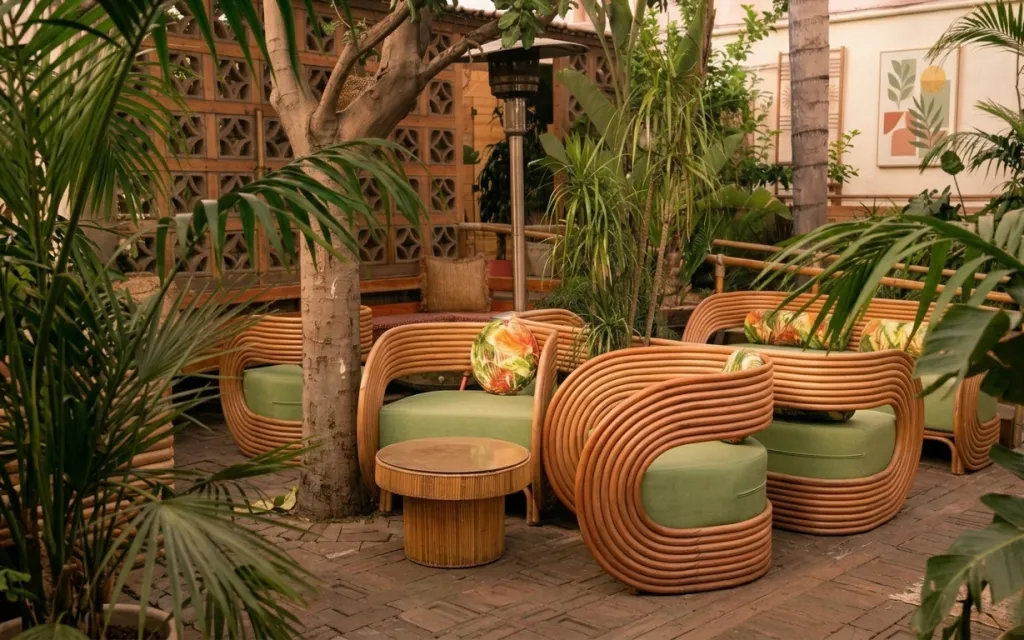
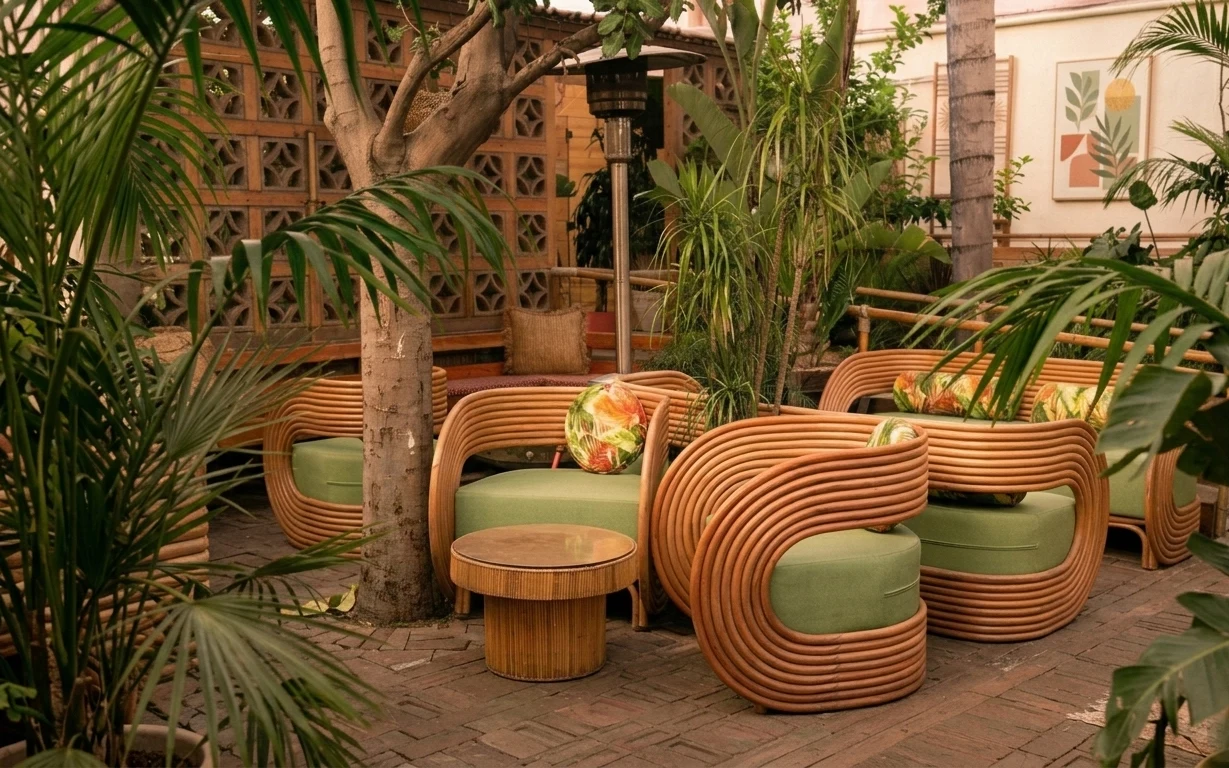
That warm, tropical-leaning rattan shows up fast once you anchor it with the right cushion color. In this photo you’ve got olive-green cushions and a patterned pillow that reads like a little burst of color against the terracotta curves. The black outdoor floor lamp adds contrast and height, and the brick pavers give everything a grounded, lived-in base. For shared housing, the best part is that cushions, throw pillows, and potted plants all pack into flat boxes or roll into a bundle—then move with you.
I used to overthink outdoor styling and end up buying “pretty” items that didn’t stack well with the main texture. Here, the rattan is doing the heavy lifting, so the accessories need to echo it: natural fibers, deep greens, and small pops of botanical color. The mistake I caught myself making most often? Choosing a pillow pattern that clashes with the cushion tone instead of sitting beside it. When you match the color family first, the mix feels intentional even with thrift-store pieces.
Layer 1 — green seat cushions ($60) Easy on/off color anchor
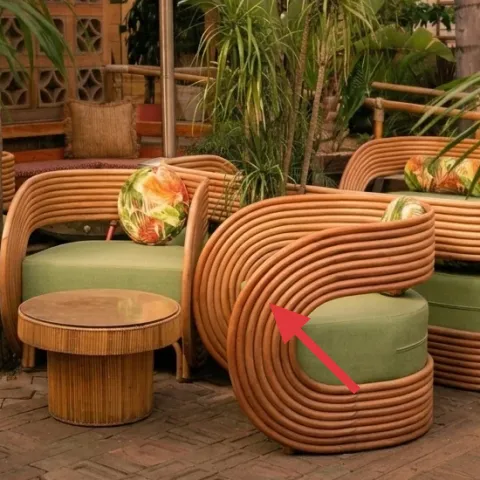
Green seat cushions are the color anchor in this rattan setup: they soften the terracotta frame and keep the patio from reading too orange. Swapping to a fresh set of removable cushion covers is the move-friendly shortcut because you can keep the underlying look while changing how it feels season to season. Choose an olive green that’s close to what’s already in the scene, so your patterned pillow doesn’t fight for attention. The trade-off is that you’ll want covers with a zip or a tailored closure so they stay smooth in use. Keep them washable, because outdoor spills happen even when you’re being careful.
Match the cushion undertone
Olive reads warmer than “true green,” so pick a cover with yellowy undertones to stay in the same palette as the rattan.
Layer 2 — patterned throw pillow ($45) DIY color pop for the set
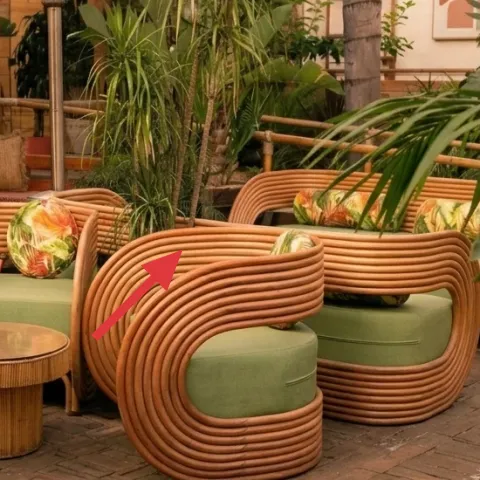
Make it instead of buying it
DIY-dye a pair of pillow covers to create the same tropical color pop, using the cushion green as your guide so the pattern looks intentional.
Materials
- Fiber-reactive fabric dye — 1 kit — $12
- Salt — 1 small bag — $9
- Plastic gloves — 1 pair — $6
- Drop cloth or garbage bags — 1 roll — $5
- Stir stick or disposable spoon — 1 pack — $2
Steps
- Pre-wet the covers so the dye spreads evenly (skip this and you get patchy stripes).
- Mix dye in water according to the kit instructions, adding salt during the mix step.
- Soak the cover fully, keeping it submerged and stirring occasionally for even color.
- Rinse in cool water until it runs clearer, then rinse once more to lock in dye.
- Dry flat or on a drying rack, away from direct sun that can fade lighter tones.
- Fluff and insert your pillow inserts only after the fabric is fully dry.
Total DIY cost: $34 — saves about $11 over buying.
Use the cushion as the palette
If you dye the pillow too far toward blue or too bright toward neon, it breaks the calm “tropical but wearable” balance in the photo.
Layer 3 — black outdoor floor lamp with glass shade ($120) Height without taking over
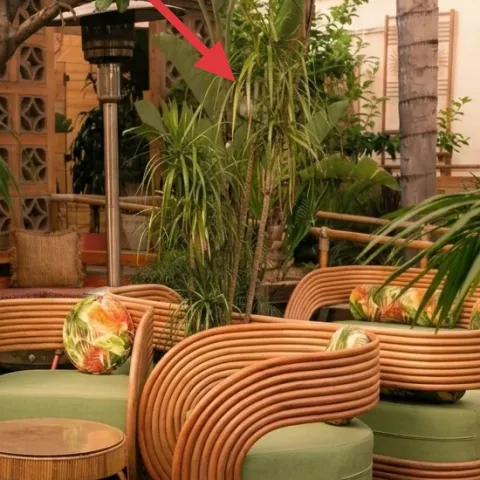
The black outdoor floor lamp with a glass shade is the visual punctuation in this patio scene: it adds a vertical line so the plants and rattan don’t look flat. Because the lamp is freestanding, it’s also one of the easiest “bring it with you” upgrades—no wall work required, and you can pack it into a few boxes with the shade protected. Pick a lamp with a warm bulb (soft amber range) so it mirrors the afternoon light you already see here. The trade-off is that outdoor lighting needs a little planning for outlets, so keep the cord management tidy with outdoor-safe hooks or cord ties on furniture frames (not walls).
Don’t chase “white” light outdoors
Cool bulbs can make green cushions look gray and wash out the terracotta color.
Layer 4 — framed botanical print ($80) Small wall color support
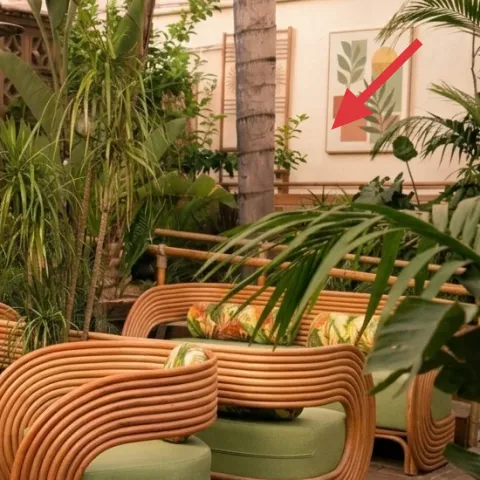
The framed botanical print acts like a bridge between the living greenery and the patterned pillow—same theme, different scale. If your rental wall allows it, use a removable hanging method (think picture-hanging systems that don’t require drilling) so you can take it down at lease end. Keep the frame size close to what’s shown here: not too tiny, not big enough to dominate the seating. The trade-off is you’ll need to measure where you want it so it lands at eye level around the seating area, especially when plants are tall. This is one of those details that makes the whole patio feel styled rather than accidental.
Repeat the botanical note elsewhere
Even just one smaller botanical element (like a pillow pattern) helps the wall print feel intentional.
Layer 5 — large potted palm tree ($60) Big texture that reads “vacation”
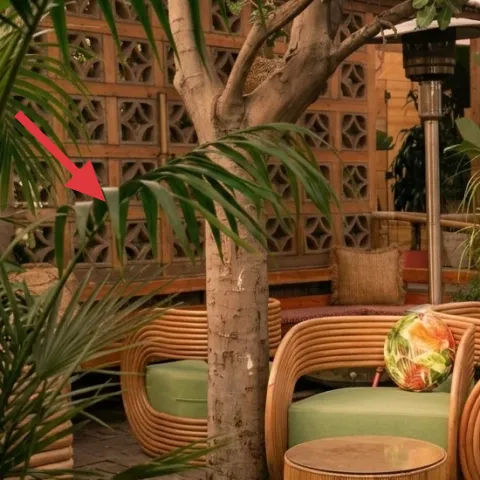
A large potted palm tree brings the “tropical” texture that no amount of furniture styling can fake. It’s also a strategic choice for shared housing because tall plants can live in the same spot even as your seating shifts—then they’re easy to transport in seasons if you need to downsize. Look for a plant with lots of frond shape so it fills the vertical space, like the palm in the photo. The trade-off is that big plants ask for sunlight and consistent watering, so choose a location where it will actually thrive. If your space is shaded, go slightly smaller and use multiple medium plants instead of forcing a single one.
Prioritize frond shape over height
Full, fanned leaves look fuller on camera than a thin, tall plant.
Layer 6 — large potted tropical plants ($35) Fill the edges, soften the brick
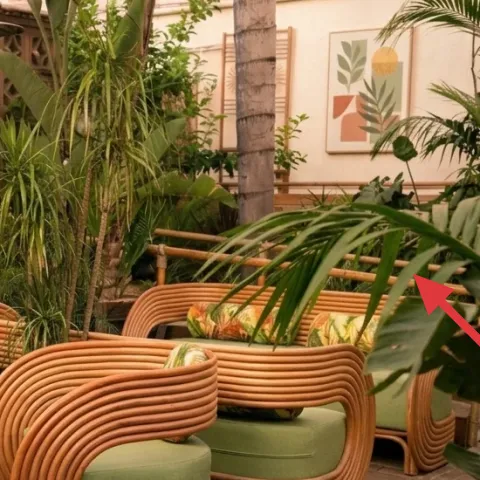
The large potted tropical plants on the right side help the seating area feel lush without requiring another big furniture purchase. This layer matters because brick pavers can read stark, and plants visually blur that hard line where patio meets furniture. Choose a plant with narrow leaves or grouped stems so it looks like it’s “spilling” outward, which matches the layered framing of the photo. The trade-off is that you’ll need enough space for airflow around the pots to avoid droopy leaves. If you’re working with limited floor space, pick one fuller plant instead of several tiny ones.
Stagger plant heights
Mix one tall statement pot with one medium pot so the patio doesn’t look like a straight line.
Layer 7 — round rattan side table with light top ($90) The practical style detail
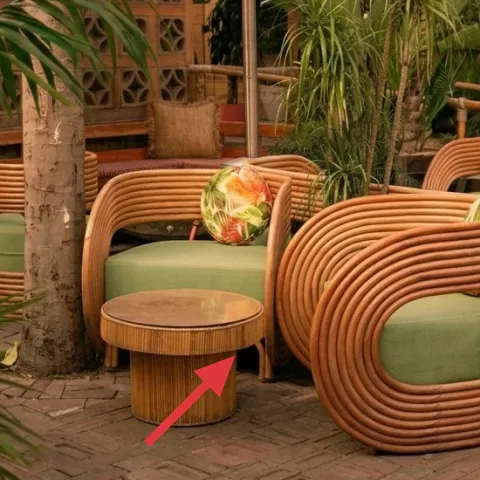
The round rattan side table with a light top gives you a surface that matches the furniture’s rhythm—round shapes echo the curves of the chair and loveseat. It’s also functional in a way that styling books rarely mention: it’s where drinks land, where a sunscreen bottle sits, where you can rest a book. The light top keeps the patio from feeling too dark once the lamp is on after sunset. The trade-off is size—too small and you’ll constantly clear it; too big and it competes with the chair. Aim for “one reachable handspan” space so it works without crowding your seating.
Make it easy to wipe
If the top is textured or fabric-like, keep a small tray or mat for spills.
The cost, layer by layer
| Layer | Item | Cost |
|---|---|---|
| 1 | Green cushion cover refresh | $60 |
| 2 | Patterned throw pillow (DIY dyed covers equivalent) | $45 |
| 3 | Black outdoor floor lamp with glass shade | $120 |
| 4 | Framed botanical print | $80 |
| 5 | Large potted palm tree | $60 |
| 6 | Large potted tropical plants | $35 |
| 7 | Round rattan side table with light top | $90 |
| Total | $490 | |
Cheaper version: keep the lamp and framed print, then cut costs by choosing smaller plants and plain cushion covers in the same olive family. Swap the patterned pillow for a single dyed cover on one side so the color pop still shows without buying a full matching set.
What worked, what didn't (across the whole room)
This patio reads “styled” because the color story is consistent: terracotta rattan, olive cushions, and botanical accents all echo each other. The best wins are the vertical lamp and the plants that soften the brick pavers. The main misses would be going too bright with the pillow and choosing plants without enough light—both throw off the calm palette.
What worked
- Olive-green seat cushions unify the terracotta rattan so the seating looks intentional, not random.
- The patterned throw pillow adds a botanical note that matches the framed botanical print.
- The black outdoor floor lamp creates vertical structure and makes dusk styling feel complete.
- Large potted palms add “vacation” texture that styling alone can’t replicate.
- The round rattan side table supports drinks and books while echoing the furniture’s curves.
- Stacking plant sizes makes the patio feel lush without needing extra furniture pieces.
What didn't
- If the pillow pattern leans too warm or too neon, it competes with the olive cushion tone.
- Too-dark lighting can flatten the plants and make terracotta look dull instead of rich.
- Plants placed without enough light can drop leaves, which instantly makes the whole setup look tired.
- Choosing a side table that’s too small forces constant clearing and breaks the relaxed vibe.
- Using only one plant size makes brick feel harsher and the seating look less layered.
What we'd skip if we did it again
Skip an all-in-one “matchy set” approach where every piece is the same pattern and texture. This patio works because rattan, green cushions, and botanical prints repeat in color, not in identical design.
Skip white or cool-toned bulbs in the lamp. Outdoor light that’s too blue changes how green reads, and it can make the whole seating feel harsher than the afternoon look.
Skip forcing plants that won’t get enough sun. If your patio is shaded, choose fewer plants with healthier leaf shape or go smaller plants you can actually keep thriving.
Frequently asked
How long does this kind of outdoor refresh take?
Plan for a half-day for the swaps (cushion covers, pillow covers, lamp placement, and plant staging). Dye projects add another window depending on rinse and dry time, so give it a full afternoon. If you’re buying plants, add a quick trip buffer for picking the healthiest leaves. The framed botanical print is usually the last step so you can adjust height around the plant shapes.
Is this renter-friendly if the patio is shared or not fully mine?
Yes—this approach stays in the “portable layers” zone. Cushions, pillow covers, potted plants, freestanding lighting, and framed art can all come with you at lease end. The only part to be cautious with is wall hanging; choose a method that doesn’t damage plaster or paint. Keep cords managed with furniture-based hooks so nothing gets taped to walls.
What if my outdoor seating area is smaller than this photo?
Go down one size tier: one large plant or two medium plants instead of multiple tall pots, and keep the side table proportionally closer to the chair. For textiles, prioritize the cushion color first, then do one patterned pillow rather than two. The goal is still the same—terracotta plus olive plus a botanical note—but scaled to the space so it doesn’t feel crowded.
Where can I shop for these specific items without spending a lot?
For cushion covers and pillow covers, look for outdoor-appropriate fabrics in home stores or marketplace listings. The framed botanical print is often easiest from online art retailers with removable hanging options. For plants, garden centers are best for quality, and you can ask for help finding fronds with full shape. If you’re budget-tight, choose thrifted rattan accessories and buy new covers for cleanliness.
What’s the biggest mistake people make with rattan patio styling?
Matching everything too literally. Rattan already has a strong texture story, so repeating the same pattern across cushions, pillows, and wall art can make the patio look busy instead of curated. Color-family first works better: olive and terracotta as the backbone, then one botanical pop that echoes the print on the wall.
Can I do the DIY dyed pillow cover if I’m not super confident?
Yes, because the dye method is forgiving when you follow the kit instructions closely. The key is to pre-wet the fabric and keep the material evenly submerged while dyeing. If you’re nervous about pattern accuracy, dye solid covers in a color that’s close to the cushion green undertone, then layer the dyed pillow next to the framed botanical print.
More in Outdoor & Patio
6 no-drill ways to refresh outdoor rattan seating for $500
A rattan patio seating look that stays move-friendly: swap cushion covers, add two pops of patterned color, and build around statement gree…
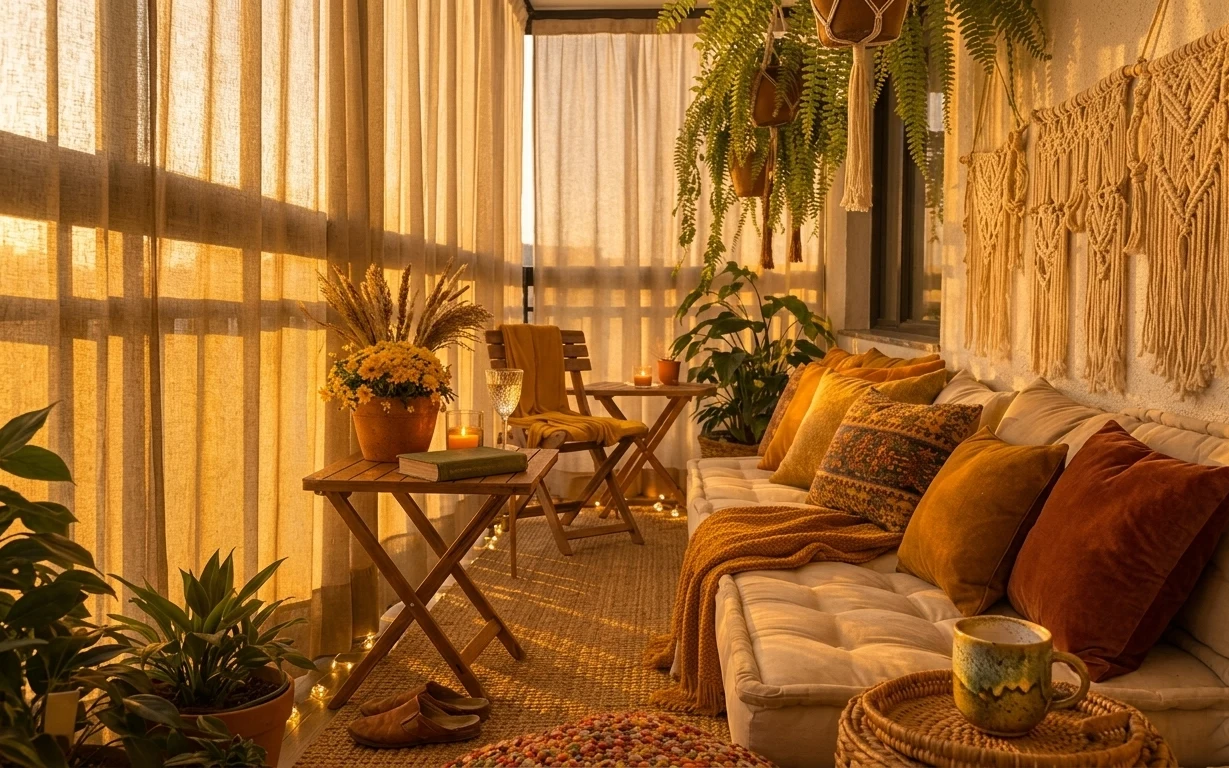
7 renter-friendly no-drill swaps for a $400 balcony seating area
A sunlit balcony seating area gets the boho, warm-gold look with no-drill upgrades on a $400 budget. This renter-friendly plan leans on a g…
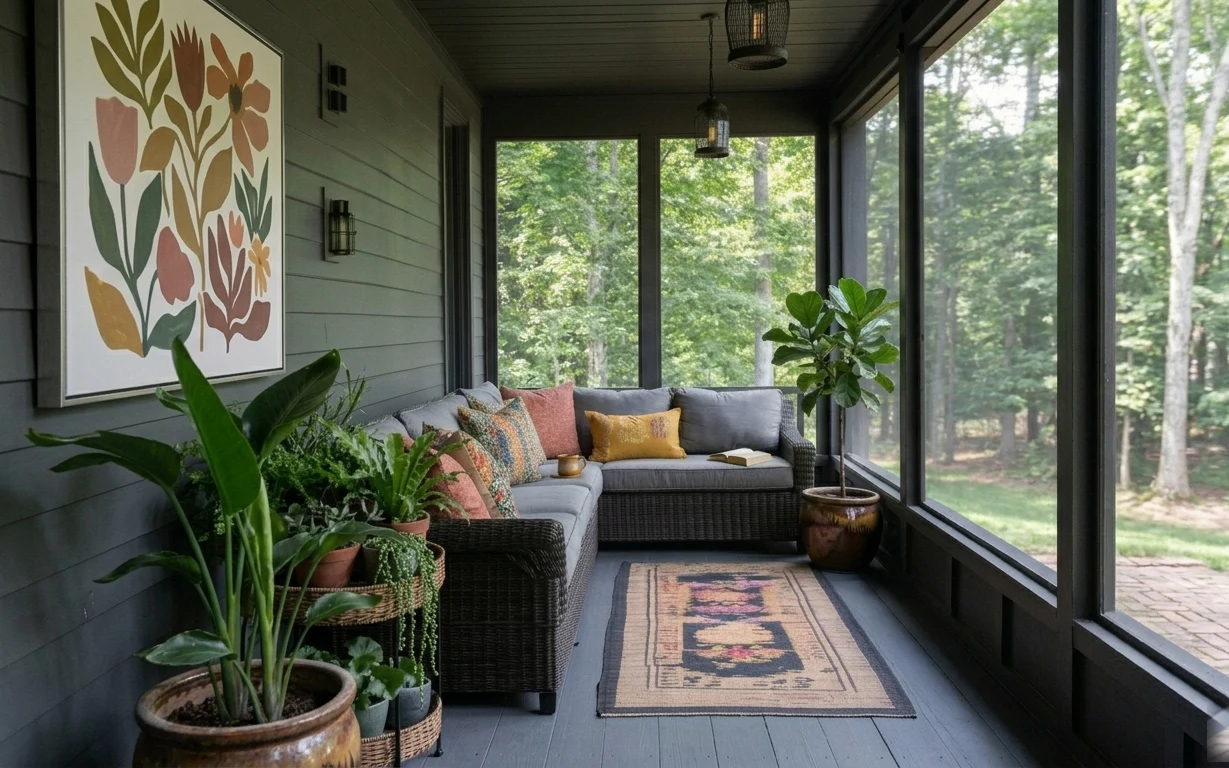
7 weekend swaps for a $600 porch seating nook
A porch seating nook with a patterned rug, framed botanical print, lantern light, and layered textiles—rebuilt for about $600. This weekend…