- Best for
- porch seating refresh
- Cost
- $600
- Difficulty
- Confident DIY
- Time
- 1 weekend
Why sunlit wicker-and-terra-cotta refresh is the porch seating nook of 2026
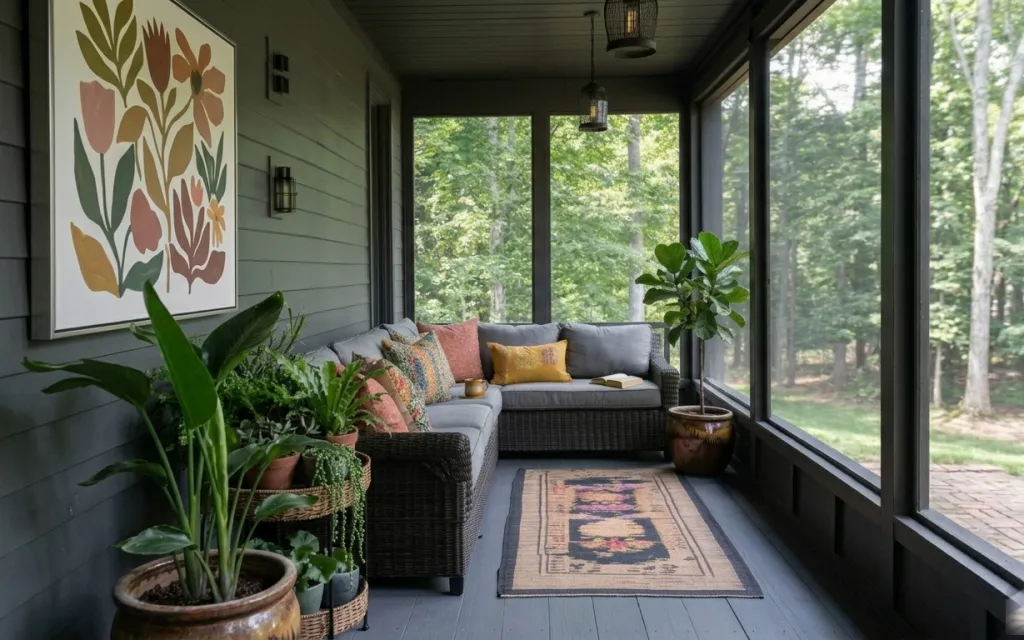
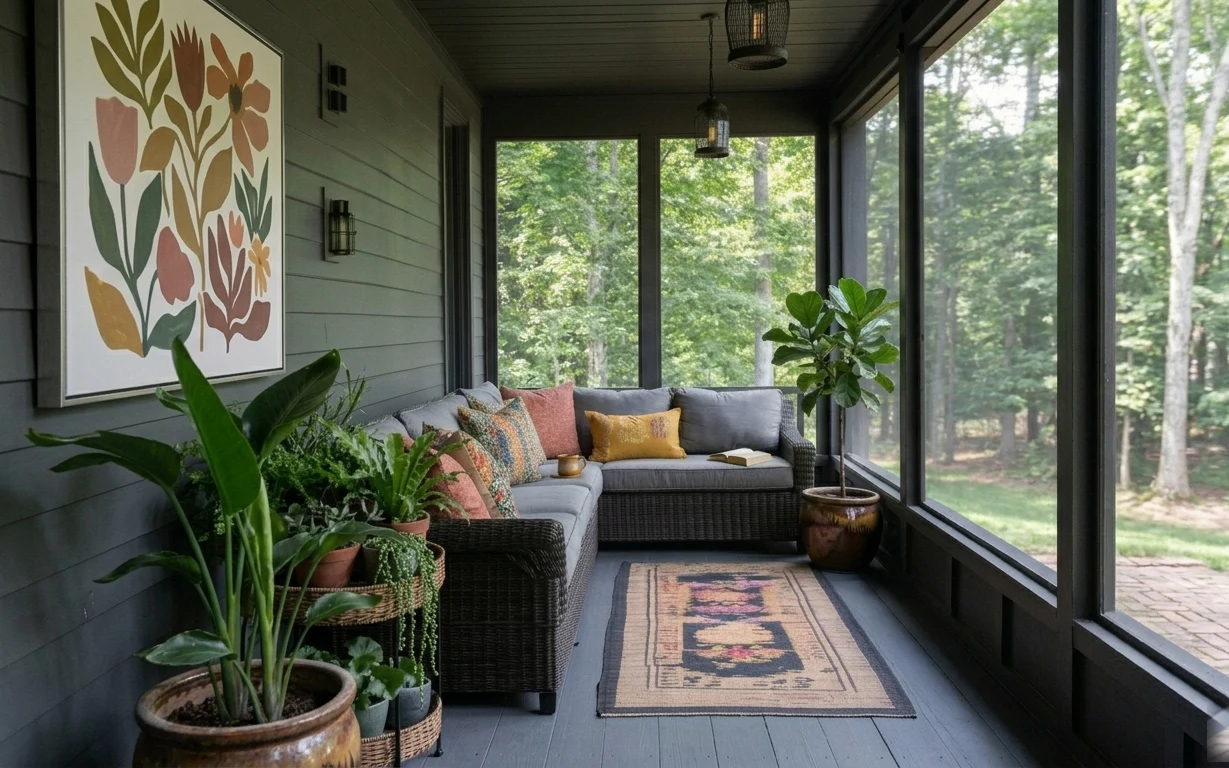
The fastest way I learned to make an outdoor corner feel intentional is to start underfoot. This patterned area rug sits on warm wood boards, then everything else—wicker texture, green plants, and muted terracotta—can “agree” without matching perfectly. You can see the mix of matte and texture: woven upholstery, a soft throw blanket, and the glazed look of the clay planters. If you want a weekend project that reads styled from across the porch, this is the route.
I used to think the rule was “match everything to the rug.” Then I tried letting the rug be the pattern anchor and repeated only the colors: greens in the plants and terracotta in the pots. It’s the same idea here—plants bring life, but the rug keeps the composition grounded. Once the lanterns and print were in place, the whole nook felt finished instead of temporary.
Layer 1 — patterned area rug ($200) Anchor the seating with a color-picked pattern
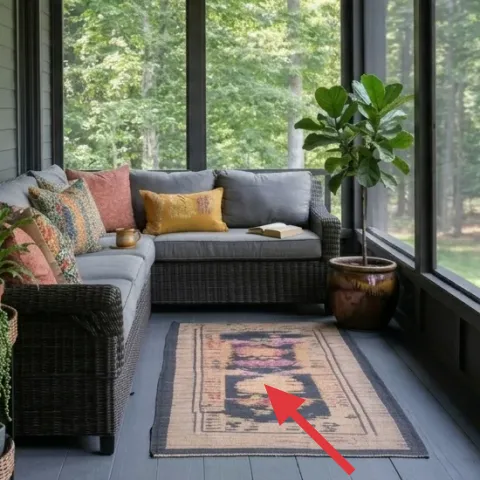
A patterned area rug in warm neutrals (like the one centered in front of the sofa) is what turns a porch into a “use-this” zone. It visually connects the sofa base and the plants along the left side, so you don’t have to hunt for matching upholstery. The trade-off is that you’ll want to vacuum more often and choose a rug that can handle outdoor humidity if your porch is uncovered. Still, it’s worth it: the rug is the biggest color field in the photo, and it’s doing most of the design work.
Pick a rug with both warm and cool tones
That way, greens from plants and grays from the seating don’t clash—you just pull them together through color.
Layer 2 — throw pillows on sofa ($30) Bring in the second pattern without redoing the furniture
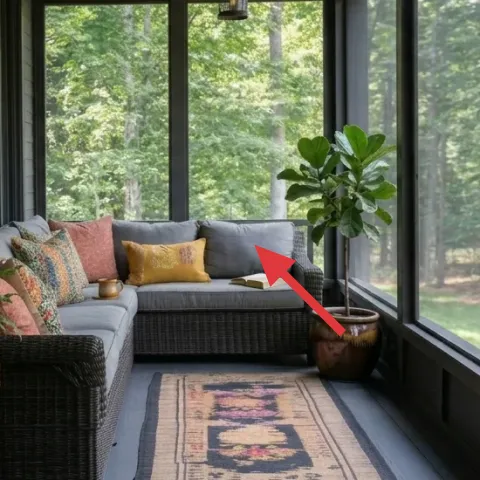
On this sofa, the throw pillows add a second layer of pattern and a softer surface between your eye and the woven texture. They sit toward the back cushions, so they read clearly through the window wall view. This matters because the rug already has pattern; the pillows prevent the corner from looking flat. I’m choosing pillow covers (rather than buying a whole new cushion set) because they’re the quickest way to change the look while keeping the same furniture silhouette. The downside: swapping covers means you’ll occasionally clean them, but it’s a small job compared to upholstery.
Use pillows to repeat rug colors
Pull one echo from the rug palette (like gold or dusty rose) and you’ll get cohesion without exact matching.
Layer 3 — framed botanical wall print ($80) Add “garden” energy at eye level
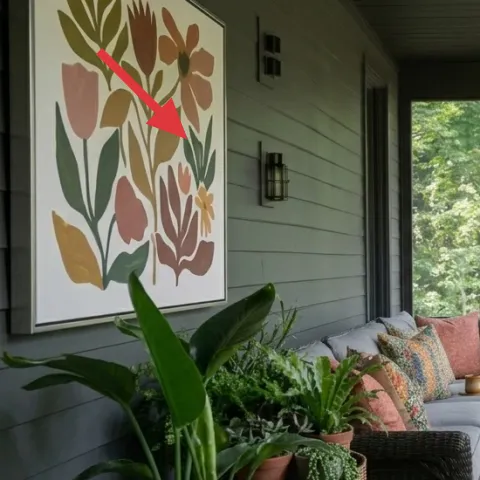
The framed botanical wall print on the left wall is what makes the nook feel lived-in instead of generic. It brings the same leaf shapes you get from the plants, so the room feels designed as a whole. This is the higher-impact wall move because the windows on the right already provide scenery; you need one intentional focal point on the sheltered wall. A trade-off: framing and hanging takes a little measuring, but it’s still a straightforward weekend task. If you go with a print that includes the rug’s warm tones, it’ll look like it belongs even when you mix patterns.
Hang it so it lands beside the sofa back line
Keeping the print at roughly eye height makes the corner readable from both standing and seated positions.
Layer 4 — wall-mounted lantern sconce ($45) Let warm light do the heavy lifting after dark
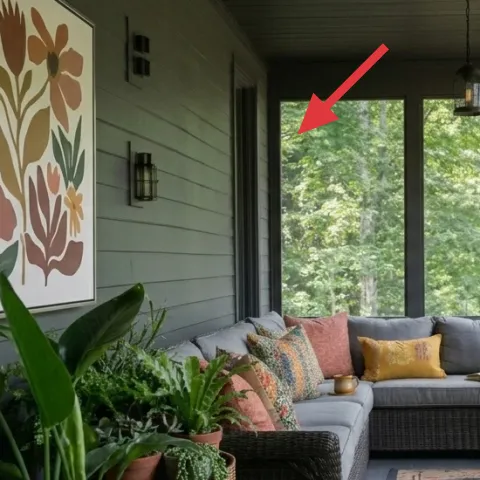
The wall-mounted lantern sconce adds that slightly vintage, cozy lighting moment without changing the room’s layout. In the photo, warm lantern light counters the cool gray wall and makes the plants look richer. The choice to add a wall sconce (instead of another lamp) is about placement: it fills the vertical space and keeps the side table and rug area from getting crowded. The trade-off is wiring or installation planning—if hard-wiring isn’t in your wheelhouse, choose a version that’s straightforward to power safely. Either way, the goal is the same: gentle warmth that complements the daylight outdoors.
Don’t pair a cool bulb with warm materials
If your sconce bulb is too blue, it can make terracotta and greens look dull. Aim for warm light.
Layer 5 — throw blanket draped over sofa arm ($60) Soften the woven look with a single cozy layer
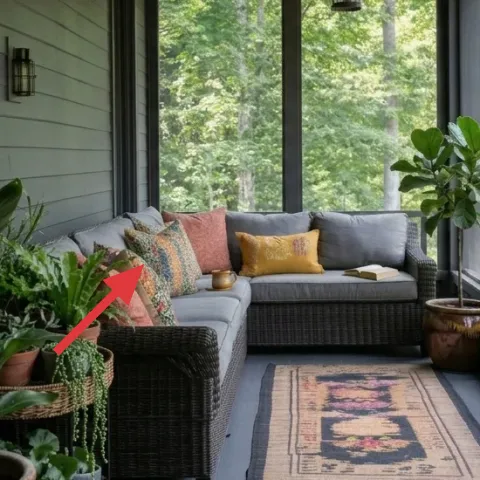
The throw blanket draped over the sofa arm adds softness right where your eye naturally lands when you sit down. It also gives the corner a “ready to linger” feel, but in a controlled way—one blanket is enough, so it doesn’t look cluttered. I’d choose a textured throw (knit or woven) over a smooth one because texture reads well against the wicker base. The trade-off is that you’ll shake it out now and then if pollen or porch dust collects, but it’s still a small maintenance item compared to washing larger pieces. This layer is how the nook transitions from daytime scenery to evening comfort.
Keep it casual, not perfectly folded
A slightly off-center drape looks more natural and avoids the “staged for photos” vibe.
Layer 6 — small round side table with mosaic top ($80) Create a landing pad for plants and books
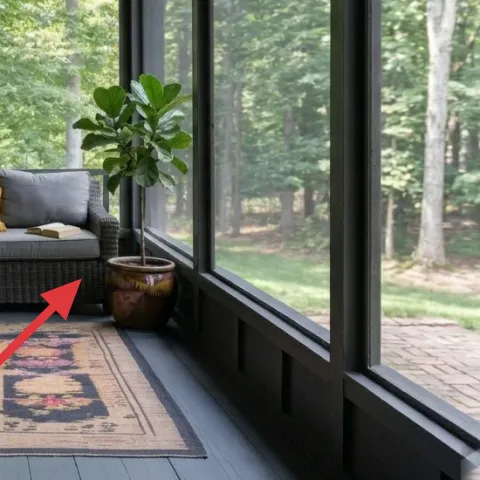
That small round side table on the right side gives the nook a practical surface for the planter pot and the stack of books, and it also balances the left-side plant cluster. The round shape matters: it softens the straight lines of the window wall and keeps the corner from feeling too angular. I’m pointing to this piece because the photo’s styling doesn’t rely on extra furniture—just one compact table that helps everything stay grouped. The trade-off is scale: go too large and the rug edge will feel squeezed, too small and the table won’t hold a book and pot together. This size hits the sweet spot for the space shown.
Style two heights on the table
A taller plant/pot plus a low book stack keeps the composition from looking flat.
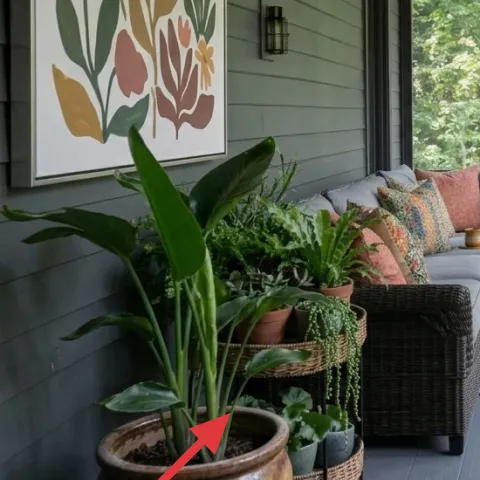
Layer 7 — medium terracotta planter pot set ($40) Repeat terracotta to tie the plants to the rug
Make it instead of buying it
DIY-painted terracotta planter pots help you repeat the same muted warmth as the rug without hunting for matching ceramics.
Materials
- Terracotta pots, 2 medium — store: garden center — $20
- Acrylic craft paint, matte finish (warm neutral) — store: craft store — $8
- Clear matte sealer, spray can — store: hardware store — $7
Steps
- Clean the pots: scrub off dust and let them dry completely.
- Lightly scuff the outside with fine sandpaper so paint grips.
- Wipe with a dry cloth to remove sanding residue.
- Paint a thin first coat, letting it dry fully.
- Add a second coat for even color coverage.
- Let the paint cure dry-to-the-touch.
- Spray on a thin, even layer of clear matte sealer.
- Allow the sealer to dry, then set pots aside until fully dry.
Total DIY cost: $35 — saves about $5 over buying.
The cost, layer by layer
| Layer | Item | Cost |
|---|---|---|
| 1 | Patterned area rug (outdoor-safe) | $200 |
| 2 | Throw pillow covers (2) | $30 |
| 3 | Framed botanical wall print | $80 |
| 4 | Wall-mounted lantern sconce | $45 |
| 5 | Throw blanket | $60 |
| 6 | Small round side table with mosaic top | $80 |
| 7 | Medium terracotta planter pot set (DIY-friendly) | $40 |
| Total | $535 | |
If you want the same look for less, keep the rug and the framed print, then scale down the side table or choose pillow covers in simpler solids that still echo the rug’s warm undertones.
What worked, what didn't (across the whole room)
The room’s strengths are clear: the rug anchors everything, and the wall print plus lantern lighting give the porch depth in both daylight and evening. The only weak spot is where styling can tip into “too many small things” if every pot and object doesn’t share the same warm color language.
What worked
- The patterned rug ties the gray seating to the green plants, so the porch reads cohesive.
- Lantern lighting adds warm contrast against the cool wall siding.
- The framed botanical print repeats leaf shapes and makes the corner feel planned.
- Textiles layered on the sofa prevent the woven base from feeling too stiff.
- The side table creates a real “landing” for books and planters, not just decor storage.
- Terracotta-colored pots repeat the rug’s warmth without needing an exact match.
What didn't
- If pillow patterns are too bold, they compete with the rug instead of supporting it.
- Overcrowding the side table makes the nook feel busy, especially near the window.
- Using cool-white bulbs in the lantern fixtures flattens the terracotta and greens.
- Skipping a wall focal point makes the sheltered wall feel empty compared with the window view.
What we'd skip if we did it again
Skip swapping the furniture first. The sofa already gives you scale and texture; it’s the rug and wall focal point that change how the whole nook reads.
Skip choosing lighting just for brightness. Start with warm-toned lantern light so the plants and terracotta keep their color in the evening.
Skip matching everything exactly. Repeating only two color families (gray + warm terracotta/amber, plus greens) creates a calmer, more lived-in porch.
Frequently asked
How long does a refresh like this take for a homeowner?
Plan on one full weekend for sourcing and hanging: about 2–3 hours to get the rug placed, pillows and blanket styled, and plants grouped, plus 1–2 hours for wall measuring and mounting the framed print. If your sconce requires wiring help, schedule that ahead of time. Most of the look is “place it and style it,” so it moves fast once you commit to the rug and wall focal point.
Is this renter-friendly, or would it be better to do it in a different way?
For a rental, focus on layers that don’t require permanent changes: the rug, pillow covers, throw blanket, and table styling. The framed print can be swapped for a different renter-safe hanging method if needed. For lighting, choose a plug-in lantern option or keep existing fixtures. The big idea—anchor with a rug and repeat color through plants and terracotta—still works great in rentals.
What if my porch is smaller than the photo?
Use the same strategy, but scale the rug first: choose the largest size that still leaves a comfortable walkway around the sofa. Then keep only one patterned element at full intensity (usually the rug), and make pillows either solid or closely related. For the wall print, keep it large enough to read at a glance, but don’t add extra prints—one focal piece is enough.
What if my porch is bigger—how do I keep it from looking empty?
Repeat the “anchoring” concept with more zone definition. Start with the rug as the anchor, then add a second visual landing if you can: a second side table or a larger plant grouping on the opposite side. Keep the color repetition method the same—gray base plus greens and warm terracotta—so the extra space doesn’t dilute the cohesive look.
Where should I shop to stay close to the budget?
For the rug and outdoor-friendly textiles, check home goods retailers and marketplace sellers with good return policies. For the framed print, look for botanical art in the $25–$80 range and pair it with a simple frame. Lighting and wall hardware are where it’s worth spending carefully: prioritize warm bulbs and a fixture that looks intentionally aged or lantern-like.
Biggest mistake on this room type?
The most common misstep is adding too many competing patterns at once—rug, pillows, and wall art all shouting loudly. Another frequent issue is using cool lighting in warm material setups. If the color repeats (rug warmth + terracotta pots + plant greens) and the scale stays right for the sofa, the nook will feel designed rather than random.
More in Outdoor & Patio
7 weekend swaps for a $600 porch seating nook
A porch seating nook with a patterned rug, framed botanical print, lantern light, and layered textiles—rebuilt for about $600. This weekend…
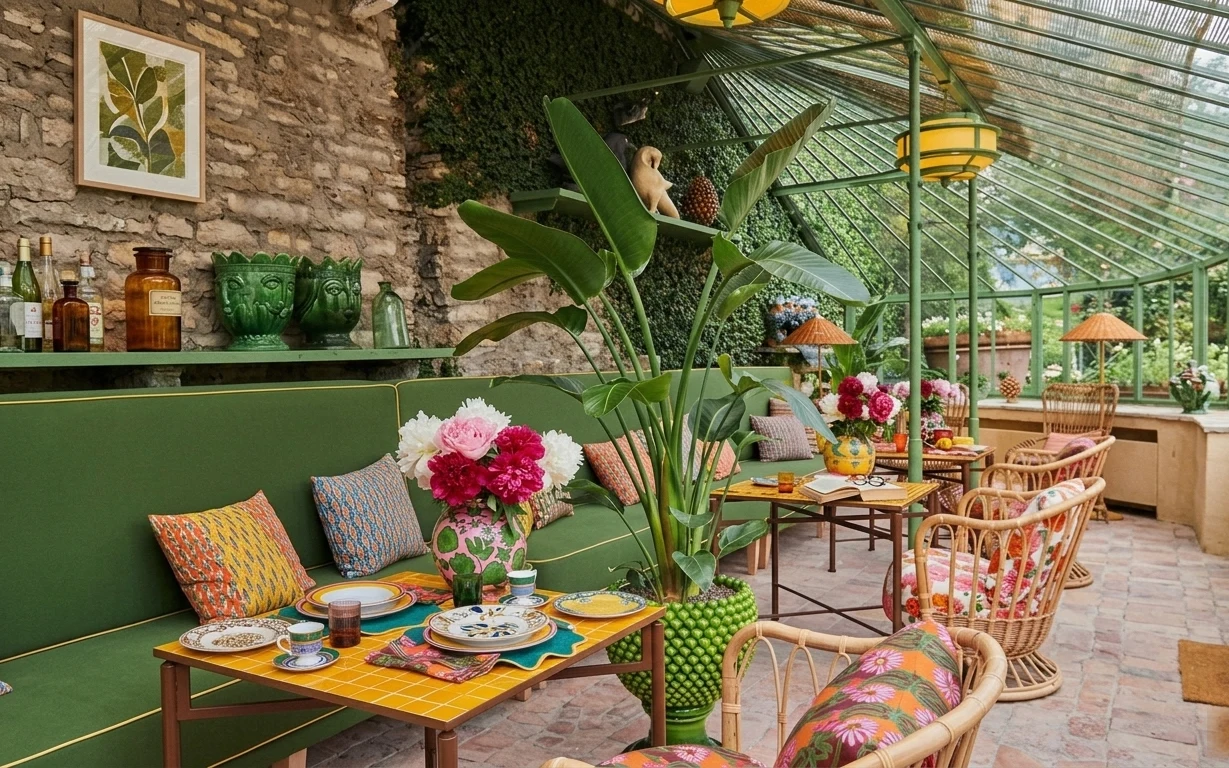
7 renter-safe swaps for an outdoor seating nook, $500
Outdoor seating nook refresh for shared housing, built around move-friendly swaps totaling $500. Get a greener, more lived-in look using a …
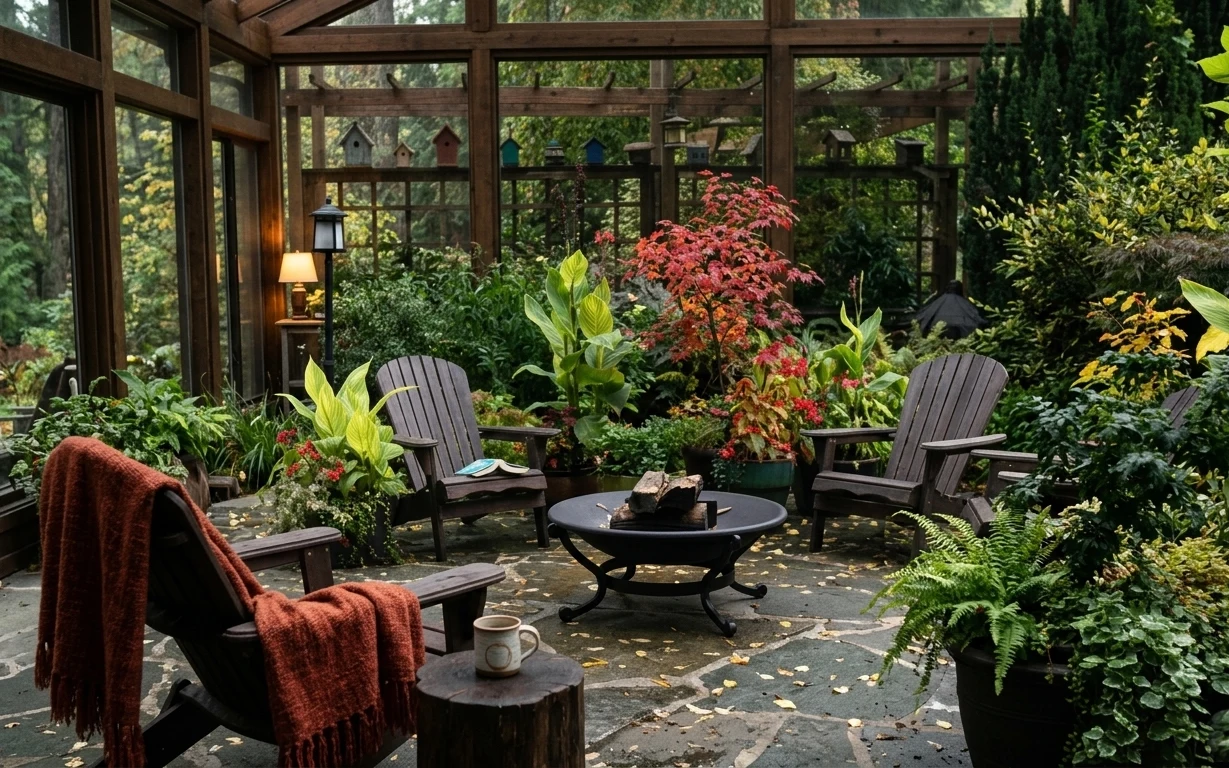
Rust-and-green patio garden seating refresh, $800
A patio garden seating setup with rust-brown warmth and deep-green plants—now you can recreate the look for about $800. This weekend-friend…