- Best for
- earthy, move-ready bedrooms
- Time
- 1 afternoon
- Total cost
- $600
- Renter-safe
- Yes (textiles + freestanding pieces)
Why olive-and-rust bedding styling is the move-friendly bedroom of 2026
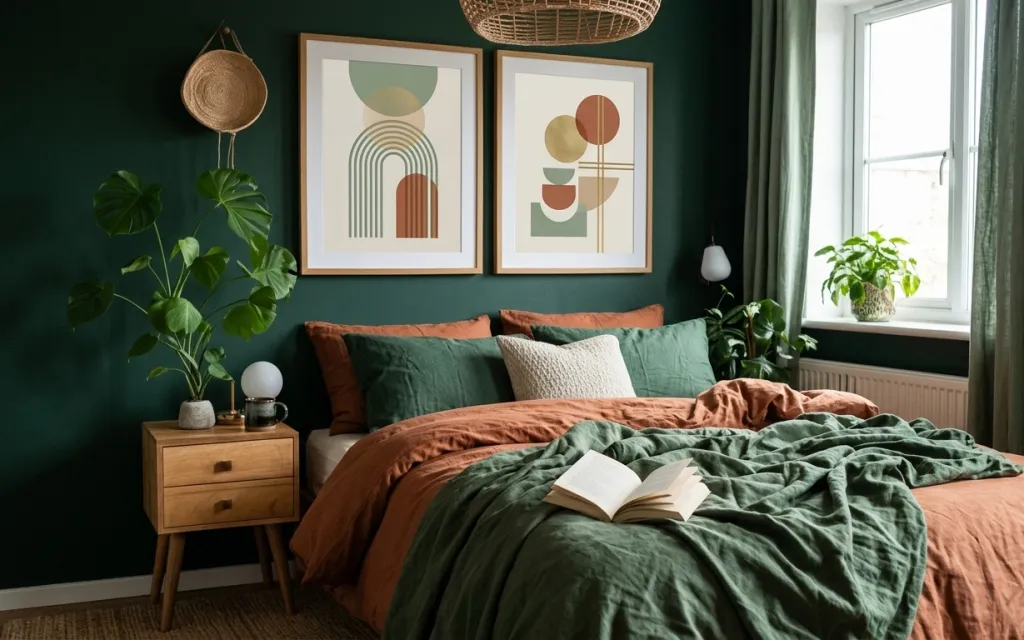
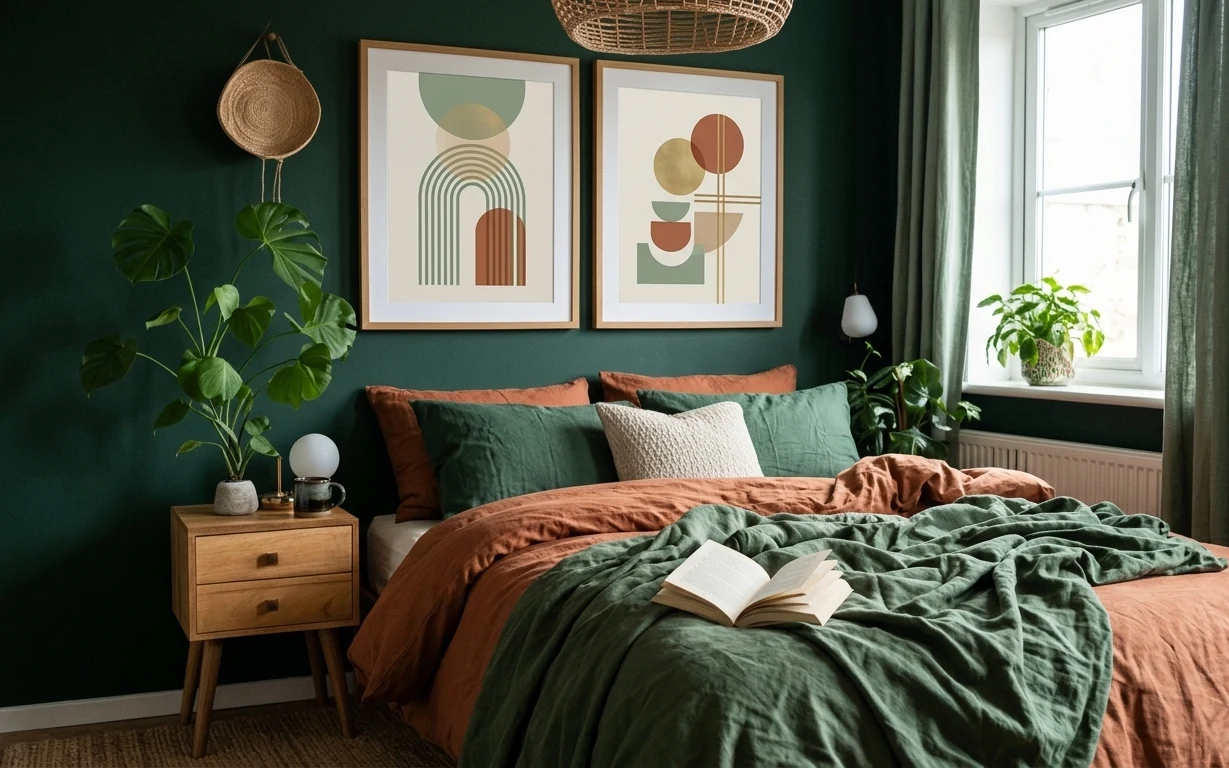
The first thing I noticed in this photo is how the textiles do the heavy lifting: that rust-brown duvet and the thick-looking throw layer read intentional even with a simple layout. The deep green wall anchors everything, while warm wood from the nightstand keeps the palette from going too cool. Add in a couple framed prints for rhythm, plus curtains that soften the window, and the room stops feeling “in progress.” For shared housing, this is the sweet spot: you can replace soft goods and freestanding pieces without touching anything fixed.
I caught myself wanting to “match” everything—like I’d only feel finished if the rug and pillows were the exact same tone family. Then I realized the contrast here is the point: the green plants and throw have enough variation to keep the look alive. When I stopped chasing perfect color matching, it got easier to build a repeatable formula for new apartments.
Layer 1 — area rug ($200) Soft underfoot for a shared bedroom
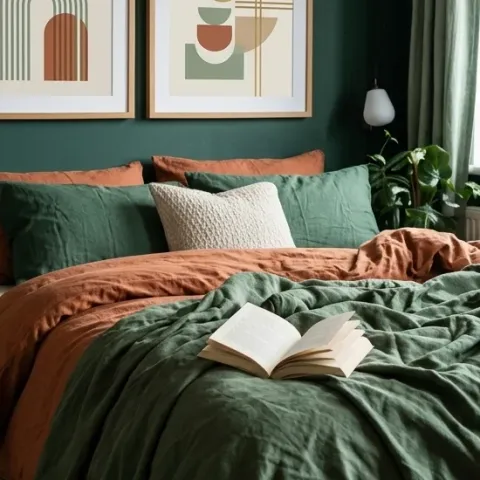
This area rug sits under the bed’s front edge and grounds the whole scene. In a shared place, it’s also the fastest way to make a room feel “complete” without changing landlord things, because rugs roll up and move as-is. I’d choose a rug with visible texture (not a slick flat weave) so it can handle daily life—books, shoes, and the occasional coffee spill—without showing every speck. The trade-off is you’ll want to vacuum regularly and use a rug pad if your floor feels a bit slippery, but you’re still staying 100% move-friendly.
Pick rug texture over exact pattern
Texture hides wear between moves, and it also makes the deep green wall look richer instead of flat.
Layer 2 — curtain ($80) Window softness without permanent installs
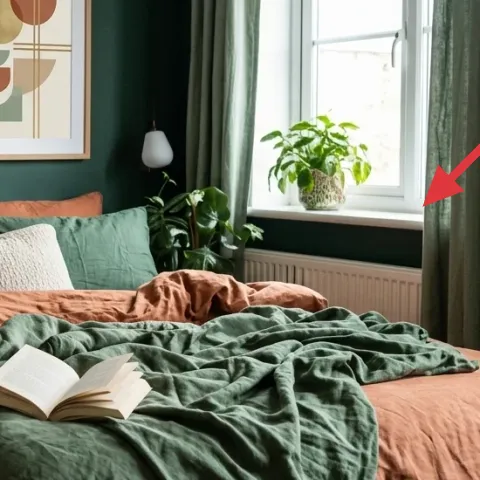
The curtain on the right adds instant softness and controls how much daylight hits the bed. Hanging long panels is a no-drill upgrade because you’re working with clips, rings, or tension-based setups depending on your window hardware. I’d pick a muted green like the one in the photo so it harmonizes with the painted wall, but keeps contrast with the rust duvet. A common alternative is a short café curtain—pretty, but it leaves the upper half of the window feeling unfinished. With full-height curtains, the room reads more pulled-together from across the bed.
Let the curtain color echo the wall
When the curtain shares one undertone with the deep green wall, the whole palette looks designed instead of accidental.
Layer 3 — framed art print pair ($180) Two prints give “gallery rhythm”
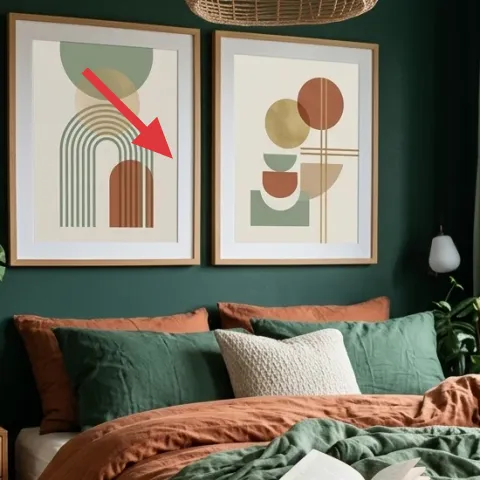
The framed art print pair on the dark green wall is doing more than decoration—it’s creating structure. Using two prints with similar framing keeps the look cohesive, while the different shapes and earth tones (greens, creams, and rust) echo your bedding and plants. For shared housing, framed prints are ideal because you can swap themes later and carry the frames from lease to lease. The “obvious alternative” would be one large print, but two mid-sized pieces tend to feel more flexible in different bed-to-wall layouts. Keep the frames straight and leave a little breathing room between them so the wall doesn’t feel busy.
Don’t over-tighten the spacing
If the prints are too close, the wall reads cramped—especially against a dark painted backdrop.
Layer 4 — duvet cover ($50) Rust-brown color that reads warm in daylight
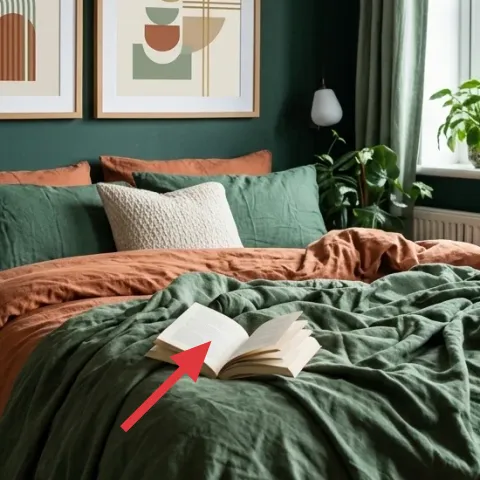
This duvet cover pulls the room into the warm zone, balancing the deep green wall and the leafy plants. I’d treat the duvet as your color anchor: when it looks good, everything else can be simpler. A smart alternative is swapping the throw blanket first, but the duvet covers the most surface area, so it’s the higher-impact change per dollar. In a move, duvets and covers are also the easiest to pack flat and replace quickly if you’re tired of a shade. The trade-off with rust tones is that they show lint and fuzz more than pale neutrals, so plan for quick machine washes.
Choose a medium weight fabric
A slightly textured cover catches light and keeps the bed from looking too “flat” on camera.
Layer 5 — large leafy plant in a pot ($30) Instant life on a dark wall
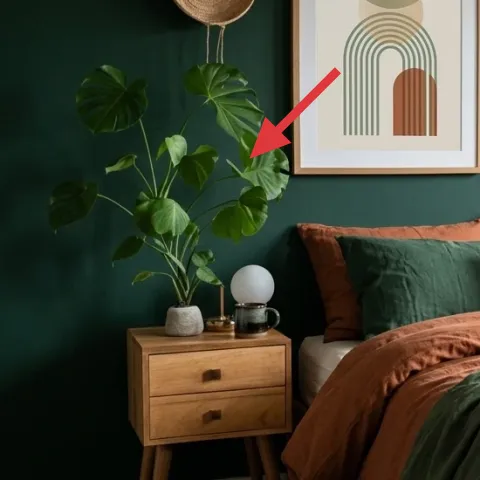
The large leafy plant in a pot on the left brings both height and movement, which matters a lot in bedrooms where everything else is horizontal (bed, rug, curtains). A tall plant also helps dark walls feel less heavy, because the leaves act like a visual “break” between the wall and the bed. I’d go for something similar in scale—big leaves, not a tiny desk plant—so it reads intentional from the doorway. The alternative would be adding more small decor items, but plants feel lived-in without clutter. Biggest trade-off: leaves drop and need occasional wiping, yet it’s still easier than maintaining any permanent wall decor.
Keep the pot light enough to carry
For shared housing, choose a pot you can lift without help when the next lease comes around.
Layer 6 — white bedside lamp ($25) One soft lamp to match the daylight mood
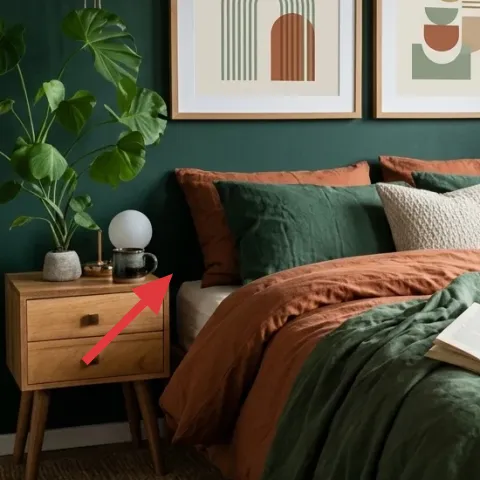
The white bedside lamp adds a gentle glow and keeps the palette cohesive—warm light off a deep green wall looks especially good. In shared housing, lamp swaps are practical because plug-in lighting doesn’t require any permanent work, and you can angle the shade to avoid glare on the bed. I’d choose a compact base like the one shown so it doesn’t crowd the nightstand, especially if you’re also sharing that surface with a book or glass. The obvious alternative is relying only on overhead light, but that makes the bedroom feel harsher once the sun goes down. A single bedside lamp is enough to make evenings feel calmer.
Match bulb temperature to your goal
A warmer bulb helps the rust duvet look richer and keeps the green wall from feeling blue.
Layer 7 — dyed pillow covers ($30) Borrow the color story without buying a new set
Make it instead of buying it
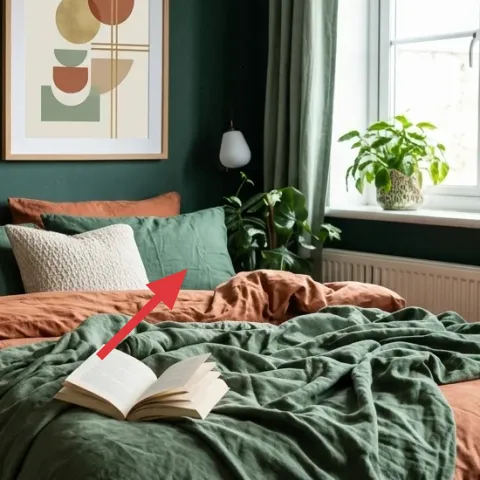
Dyed pillow covers help you pull rust-and-green tones onto the bed using removable textiles—perfect for a room that has to move.
Materials
- Fabric dye (rust/terracotta tone) — 1 box — craft store — $12
- Plain white cotton pillow cover(s), pre-washed — 2 covers — discount store — $6
- Salt (for color setting, per dye instructions) — 1 bag — grocery store — $4
- Disposable gloves + drop cloth — 1 set — dollar store — $2
Steps
- Pre-wash the pillow covers so dye grabs evenly.
- Dissolve the dye in warm water and stir until smooth.
- Soak the covers in a salt/water bath (per dye label) to improve uptake.
- Submerge covers in the dye and stir regularly for even color.
- Rinse in cool water until it runs clear, then air-dry.
- Check for even tone; dye again briefly if you want deeper rust.
Total DIY cost: $24 — saves about $6 over buying.
If you’re copying this look, pillow covers are the easiest place to add the “olive-and-rust” palette without committing to a whole new bedding purchase. On the bed, the pillows add height and softness, and dyeing lets you fine-tune the shade to match your existing duvet and throw. The trade-off is you’ll need a weekend afternoon for dye + rinsing, and you’ll want to protect nearby surfaces, but you’re avoiding the “new apartment syndrome” of buying too many matching sets. For shared housing, this also means you can switch colors when the next lease starts.
Go slightly deeper than you think
Dye often looks lighter when wet and then settles into the fabric as it dries.
The cost, layer by layer
| Layer | Item | Cost |
|---|---|---|
| 1 | Area rug (8×10) | $200 |
| 2 | Curtain panel pair (84") | $80 |
| 3 | Framed art print pair (2 prints) | $180 |
| 4 | Duvet cover (queen) | $50 |
| 5 | Indoor plant (4–6 ft) in pot | $30 |
| 6 | Plug-in white bedside lamp | $25 |
| 7 | Pillow cover dye refresh (DIY) — retail-equivalent | $30 |
| Total | $595 | |
A cheaper variant keeps the same layering formula but dials down the spend: choose a smaller rug, thrift the framed prints, and swap the bedside lamp for a budget plug-in option.
What worked, what didn't (across the whole room)
The best part of this bedroom plan is that every big visual move comes from soft goods and freestanding styling—so it looks finished in one day and packs up when the lease ends. The dark green wall plus warm rust textiles also makes the palette feel intentional rather than random. The main compromise is that deeper colors ask for a little more upkeep.
What worked
- The area rug anchors the bed and makes walking in bare feet feel softer and warmer.
- Full-height curtains add a finished top line around the window without touching fixed hardware.
- The framed art print pair creates structure on the dark green wall and repeats the rust tone.
- The rust-brown duvet cover does most of the color heavy lifting, so smaller items can be simpler.
- The tall leafy plant keeps the dark wall from feeling heavy and adds natural shape.
- The bedside lamp warms everything at night and makes the room feel calmer.
What didn't
- Rust textiles show lint and fuzz more than cream, so spot-checking helps between washes.
- If the curtains are too short, the window looks unfinished and the bed feels too low.
- Too much matching can flatten the palette—some variation is what keeps it interesting.
- If the plant pot is large and heavy, moving it for a lease transfer gets annoying.
What we'd skip if we did it again
Skip “all matching” sets where every fabric is the same tone and texture. This look works because green, rust, and warm wood overlap in slightly different ways, and that variation reads more expensive than sameness.
Skip over-buying wall decor. Two framed art prints in similar frames are enough to create rhythm on the dark green wall without turning it into a clutter zone.
Skip relying only on overhead lighting. One bedside lamp changes the bedroom mood fast, and it’s also one of the easiest freestanding pieces to pack.
Frequently asked
How long does this kind of bedroom refresh take?
For shared housing, plan for about 4–6 hours the first day. Rug placement, curtain adjustments, and styling the bed can be quick; the only part that usually stretches the timeline is getting the framed art positioned so it feels balanced over the bed. If you’re dyeing pillow covers, add a few extra hours for rinse and drying, plus one weekend afternoon.
Will this work if I can’t change the wall color?
Yes—this look is built around what you can change: textiles, plug-in lighting, freestanding plants, and framed art. The deep green wall in the photo is the anchor, but the same strategy works with other wall colors if you match undertones in the duvet and keep the curtains and pillows in the same warm family.
What if my room is smaller than this bedroom?
Keep the layering, but scale down the footprint. Choose a rug that still sits under the bed’s front edge, use two framed prints that are a touch narrower, and avoid a too-large plant that crowds the nightstand. Curtains should still reach high—length matters more than width.
Where would I shop if I’m trying to keep costs under $600?
Start with textiles first: rug, curtains, duvet cover, and pillow covers are where the look is made. Then grab framed art as a matched pair (or two coordinated prints) rather than piecing together unrelated sizes. For lighting and plants, prioritize plug-in lamps and plants with pots you can carry easily.
What’s the biggest mistake people make in this room type?
Overthinking the wall decor and underbuying the soft goods. A bedroom can look “done” with just curtains, a rug, and one strong bedding color, plus two pieces of art. If the rug is thin or the curtains are short, the whole room reads incomplete even if everything else is pretty.
Can I do just one upgrade and still get the effect?
Yes—curtains or the rug are the best single move. Curtains frame the window and change the room’s proportions immediately. A rug grounds the bed and softens the floor, which helps everything look more intentional. Then add a framed print pair when you’re ready for the next step.
More in Bedroom
6 renter-friendly swaps that make an earthy bedroom feel finished, $600
Earthy-green walls, rust bedding, and layered textiles make this bedroom look intentional without permanent changes. This $600 move-friendl…
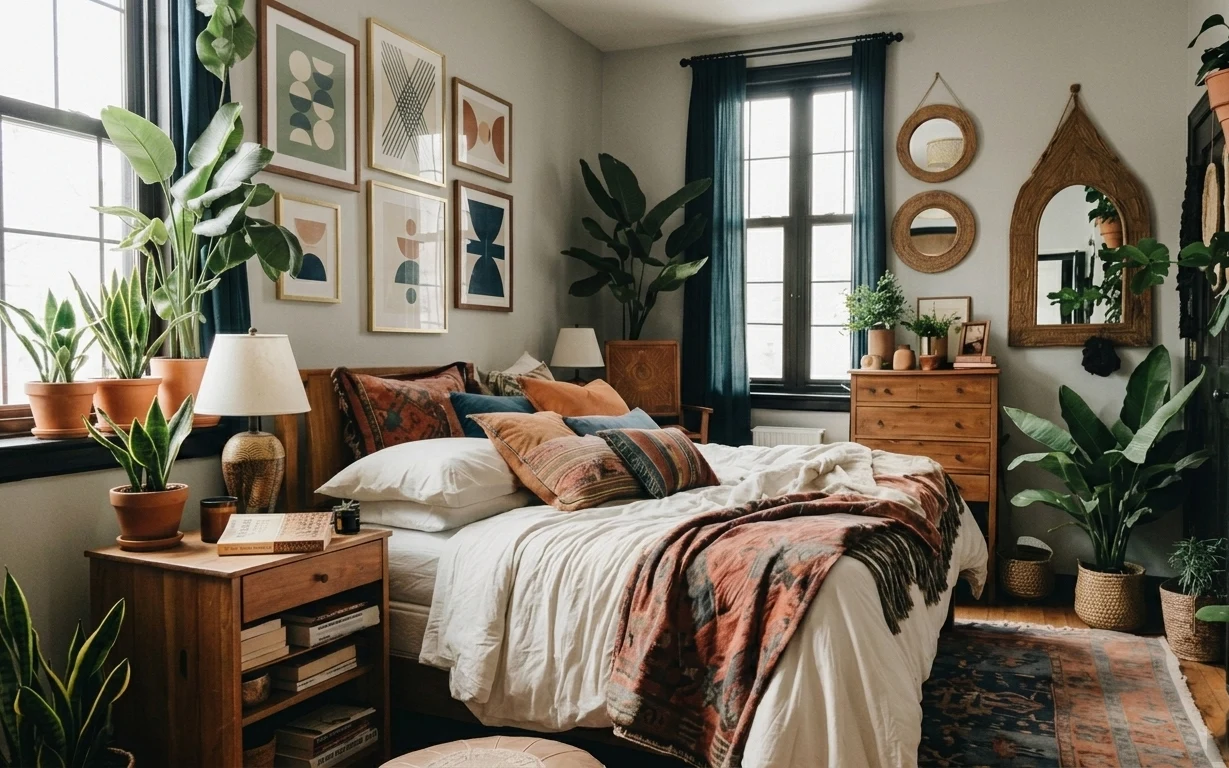
7 renter-friendly swaps for a bedside garden bedroom, $600
A bedside garden bedroom look, built for renters with no drilling—layering a patterned rug, teal curtains, warm lighting, framed art, and a…
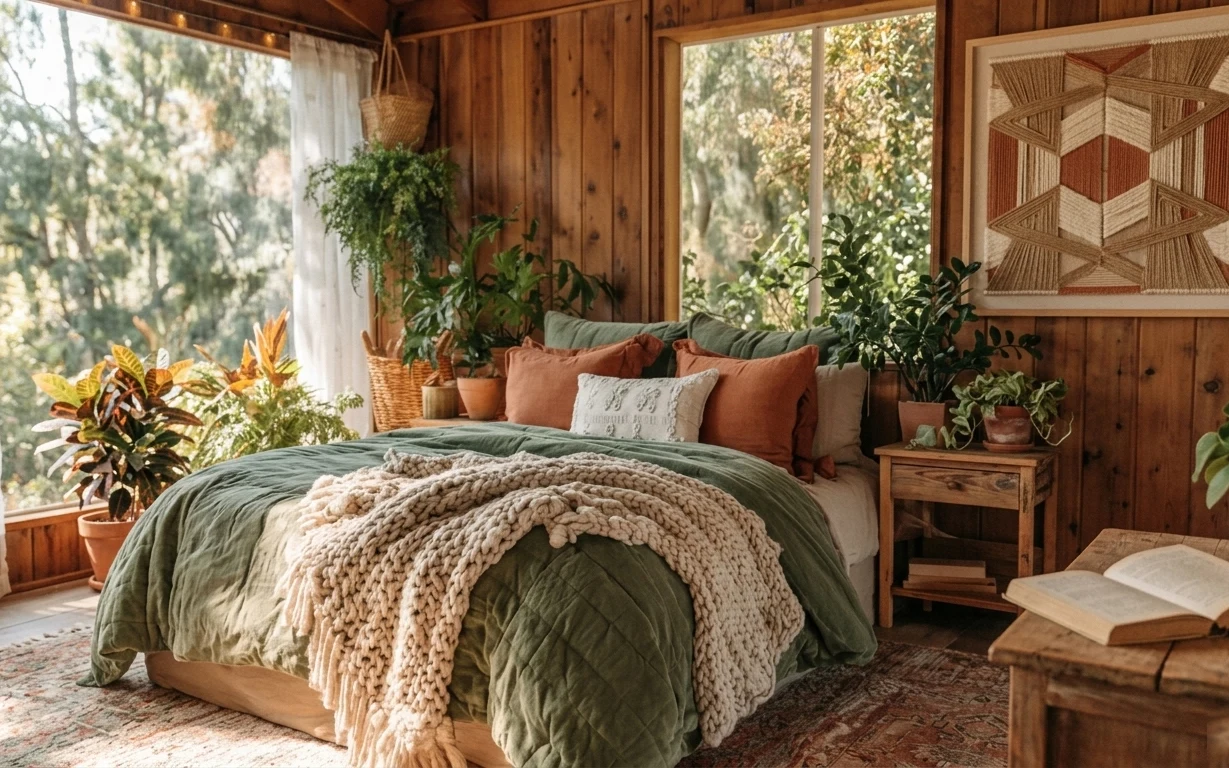
7 renter-friendly swaps for a $600 wood-paneled cabin bedroom
A move-ready bedroom refresh for a wood-paneled cabin look, built with renter-safe swaps. With a $600 budget, the biggest wins are an earth…