- Best for
- bedroom refresh with renter-safe wall art
- Time
- about a weekend, plus press time for botanicals
- Total cost
- around $400 for the full look
- Renter-safe
- yes (no-drill swaps; packable)
Why warm walnut-and-cream bed nook is the bed nook of 2026
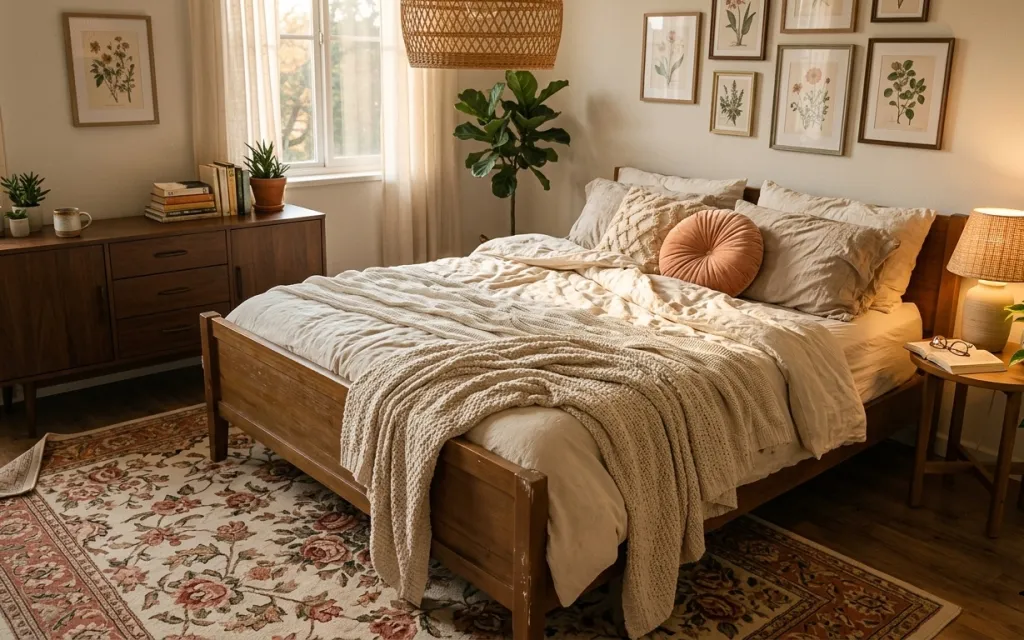
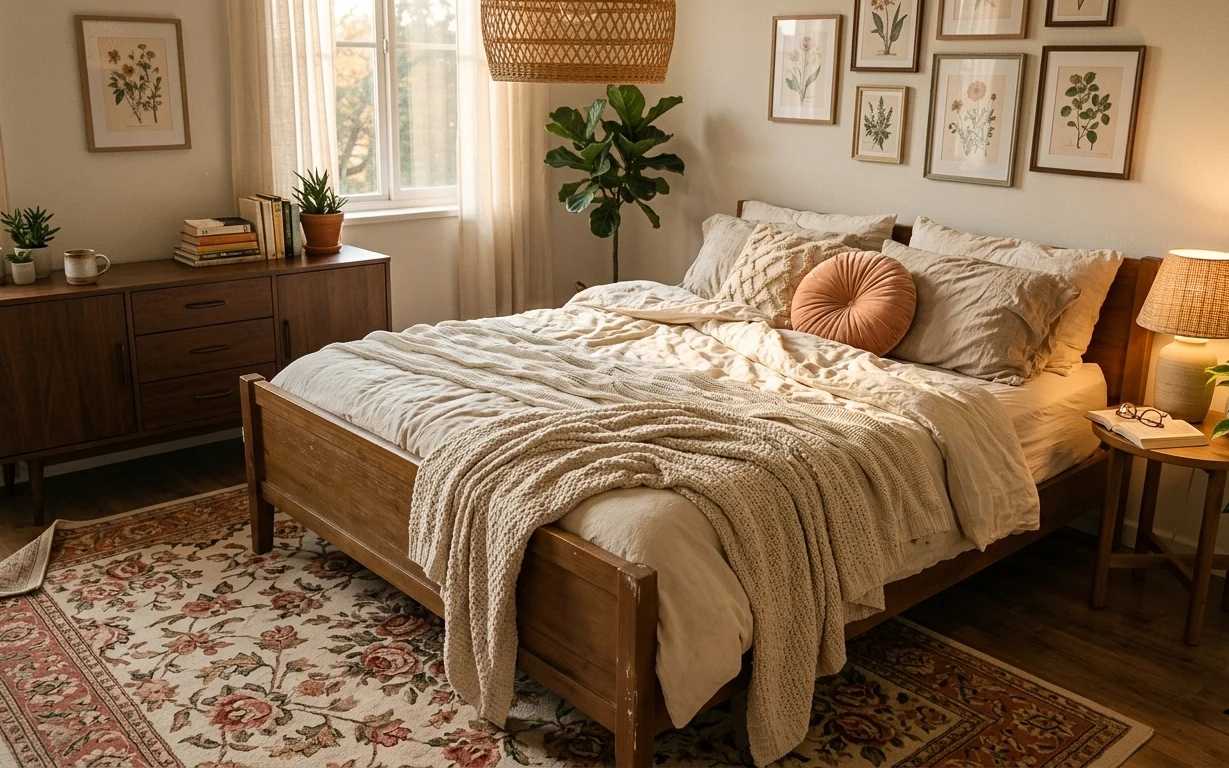
The fastest way to steal this vibe is to start underfoot. A vintage-inspired area rug anchors the whole bed and makes the wood floor feel intentional, not temporary. Then copy the bed texture: a woven throw draped across the blanket area plus a couple of pillows with different surfaces (one smooth, one tufted) gives the “lived-in but styled” read. For lighting, the fabric-shaded plug-in lamp adds warm, diffuse light without needing any hardwired ceiling changes. Finally, the framed botanical prints and greenery bring the soft, earthy palette into focus.
I almost went too matchy with the botanicals, trying to buy a perfectly identical set—then I remembered how random “collected” art looks in real homes. In my own place, I stopped chasing perfect spacing and chose frames with similar paper tones instead. That small shift is why this wall works: it reads coordinated, but not identical. If you rent, the other win is that the whole thing comes down in minutes.
Layer 1 — area rug 8×10, vintage-inspired ($150) Grounds the bed with a patterned base
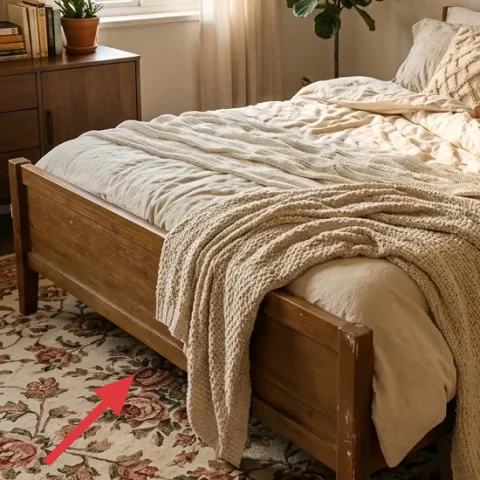
An 8×10 vintage-inspired rug is doing the heavy lifting here. It covers the long stretch of wood floor in front of the bed and keeps the palette warm—cream, rust, and muted green show up in the pattern and echo the botanicals. I’d choose this over a plain solid rug because the visible motifs help “hide” the casual mess that always happens on day one of settling in. The trade-off is that patterned rugs are less forgiving for color clashes, so it helps to keep everything else (pillows, lamp shade, curtains) in cream/wood tones.
Pick a pattern with your plant colors
If the rug already includes muted greens, the indoor plant looks like it belongs instead of feeling like an add-on.
Layer 2 — woven throw blanket draped across bed ($25) Adds texture without changing sheets
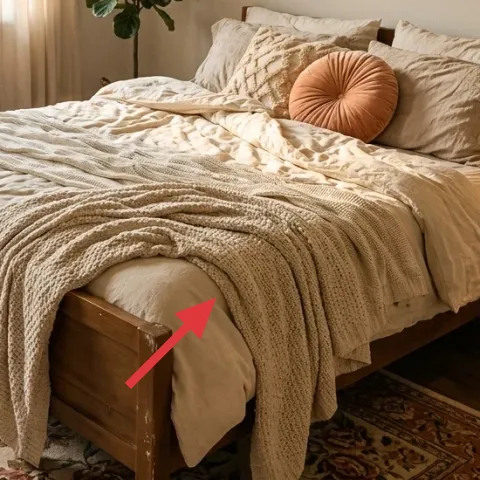
This woven throw blanket is what makes the bed look styled even when you’re not making it “perfect.” The knit-like texture reads clearly at a glance and works with the tufted pillow by adding another layer of surface variation. I usually reach for a throw like this before I add any other bed accessories, because it instantly makes the whole setup feel warmer. The trade-off is practical: draped throws can slide off during the night, so a quick tuck along the blanket edge keeps the look intentional.
Texture reads before color
In a palette like cream and walnut, texture is the main way the room stays interesting.
Layer 3 — cream pillow with tufted texture ($18) Softens the bed’s straight lines
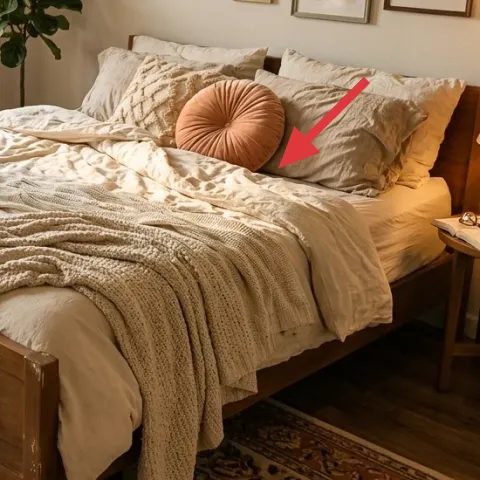
The cream tufted pillow creates a gentle, tactile break against the smoother bedding area. It sits near the center-right of the bed where your eye lands when you walk in, so it’s a high-impact swap. Choosing one pillow with raised texture beats buying a whole set of matching cushions—your bed will look styled with less stuff, which is a renter-friendly win. The trade-off is that tufted fabric can hold wrinkles, so it’s worth fluffing and letting it settle for a day.
Use two pillow textures, not two colors
If you keep tones similar, different textures still look curated.
Layer 4 — plug-in table lamp with fabric shade ($40) Makes warm light feel “built in”
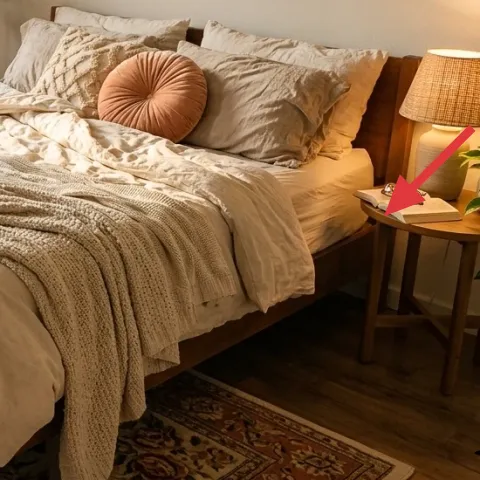
The plug-in table lamp is doing more than lighting—it’s shaping the mood. The fabric shade diffuses the light into a soft pool over the bedside table, which makes the bed and curtains feel cohesive instead of harsh. I’d pick a lamp like this over a bare bulb or a high-gloss shade because it matches the room’s earthy palette and doesn’t look too modern. The trade-off is brightness: for reading, you may still need a separate lamp or brighter bulb, but for evening ambiance, this one is spot-on.
Skip anything with a very cool white bulb
A cool tone fights the warm rug and walnut wood, especially in photos and at night.
Layer 5 — tall potted indoor plant on floor ($30) Brings the sage-green note upward
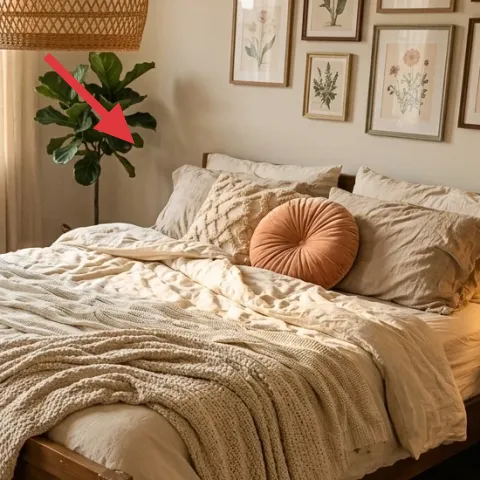
A tall potted indoor plant makes the room feel taller and more “finished,” especially behind the bed where there’s otherwise a big empty zone. The leaves pick up the sage-green notes already present in the botanical prints and rug pattern. I’d choose a taller plant over clustering several small ones because it balances the vertical lines of the bed frame and curtain height. The trade-off is that big plants need a little care—rotate the pot occasionally for even growth and keep it where the light is steady.
Placement matters more than pot style
The plant reads best when it visually anchors the space near the bed, not tucked into a corner.
Layer 6 — framed botanical wall prints set ($80) Makes the whole palette feel intentional
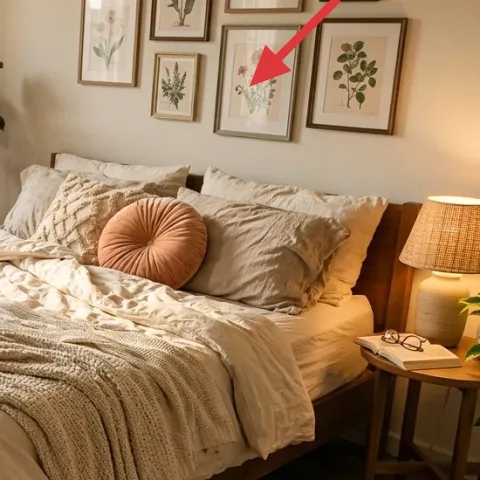
The framed botanical wall prints set turns the room from “furniture arrangement” into a lived-in story. With prints that share similar paper tones and plant colors, the grouping feels curated even when the frames aren’t identical. I’d pick botanical art over abstract prints in this specific palette because the shapes echo the plant and the rug’s florals, so everything feels connected without needing a heavy-handed color scheme. The trade-off is spacing: Command-strip hung frames can drift if you eyeball it, so measure the gap once and keep it consistent.
Make it instead of buying it
Press and preserve small botanicals, then mount them behind a simple frame so you get one custom “botanical print” panel to join the set.
Materials
- Pressed botanicals (foraged, small sprigs) — assorted — foraging kit — $18
- Cardboard backing/mat board — 1 sheet — craft store — $10
- Clear archival tape or hinging tape — 1 roll — craft store — $6
- Simple frame with glass or clear cover — 1 — home goods — $12
- Fine-tip glue (for securing pieces) — small bottle — craft store — $4
Steps
- Press small leaves or flowers between heavy books for several days until fully dry.
- Cut a backing card/mat to fit inside the frame and create a clean opening.
- Lay the botanicals on the mat, rearranging until the shape looks balanced.
- Secure each piece lightly with archival tape at the edges (keep centers flexible).
- Mount the mat into the frame and close the glass/cover carefully to avoid smearing.
- Hang with Command picture hooks using level marks so the new piece matches the group.
Total DIY cost: $50 — saves about $30 over buying.
Layer 7 — curtains in soft cream ($30) Adds softness and frames the window
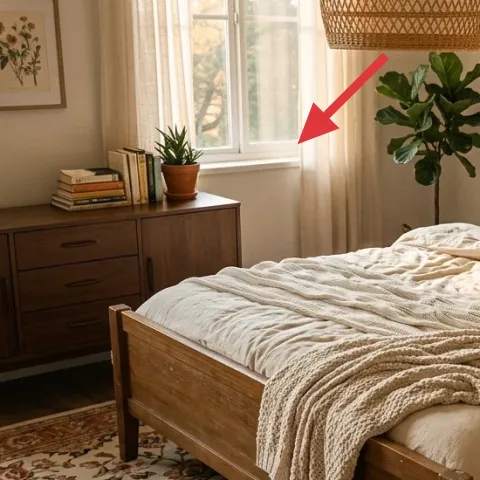
Cream curtains soften the whole bed nook and help the warm neutrals read consistent from day to night. Because they sit between the daylight and the bed, they also make the botanical prints feel less “flat”—the fabric texture adds depth in front of the wall. I’d choose curtains like this over blinds accessories because fabric is easier to remove at move-out and it instantly changes the room’s acoustic and visual feel. The trade-off is sunlight control: sheer or light curtains let in morning light, so plan for sleep comfort if that matters.
Hang at the highest point you can
Higher curtain placement makes the window feel taller and keeps the bed from looking boxed in.
The cost, layer by layer
| Layer | Item | Cost |
|---|---|---|
| 1 | Area rug 8×10, vintage-inspired | $150 |
| 2 | Woven throw blanket draped across bed | $25 |
| 3 | Cream pillow with tufted texture | $18 |
| 4 | Plug-in table lamp with fabric shade | $40 |
| 5 | Tall potted indoor plant on floor | $30 |
| 6 | Framed botanical wall prints set (DIY possible) | $80 |
| 7 | Curtains in soft cream | $30 |
| Total | $373 | |
A cheaper variant is swapping the rug for a smaller or simpler 5×7 version and choosing one fewer framed print. Keeping the throw, tufted pillow, and plug-in lamp still delivers the “styled bed” look without spending on extra wall pieces.
What worked, what didn't (across the whole room)
The biggest win is how texture and pattern do the mood work: the rug and woven throw keep the bed feeling finished, and the warm plug-in lamp makes everything softer after dark. The botanical wall and the tall plant also connect visually, so the palette feels cohesive without being matchy.
What worked
- The vintage-inspired rug grounds the bed and makes the wood floor look intentional.
- Layering a woven throw plus a tufted pillow adds depth without changing the sheets.
- The fabric-shaded plug-in lamp creates warm, diffuse light that flatters the neutral palette.
- The tall indoor plant balances the height of the curtains and fills the vertical space behind the bed.
- Botanical prints repeat the leaf shapes and keep the colors feeling collected, not random.
What didn't
- Buying fully identical frames would feel too uniform; the room needs slight variation to stay cozy.
- If the throw is too heavy, it slides and looks messy instead of styled.
- A very cool bulb temperature would clash with walnut tones and make the whole bed look flatter.
- Skipping curtain height changes the window proportion and makes the bed nook feel narrower.
What we'd skip if we did it again
Skip buying a full matchy bed set (everything same fabric, same color). A single woven throw, one tufted pillow, and the rug pattern do more work for less money—and they still photograph well when you make the bed quickly.
Skip a hard-to-move lighting setup. In a rental, a plug-in lamp with a fabric shade keeps the warm mood while avoiding hardwired ceiling changes that you can’t take with you.
Skip overbuilding the wall. Use one DIY botanical frame to join the set rather than trying to create a perfectly symmetrical grid—press-and-hang keeps the look intentional without spending on lots of prints.
Frequently asked
How long does this bed nook refresh take?
Plan on a weekend for styling. The rug placement, throw and pillow layering, plant positioning, and lamp setup are usually an hour or two each. If you’re doing the pressed-flower DIY, the “work time” is short, but pressing takes several days. That’s why it’s smart to start pressing first and hang frames when the set is ready.
What if I’m in a smaller bedroom?
If the room is tighter, keep the rug but scale down the framed print grouping—use fewer botanical frames and keep them closer to the bed’s center line. Choose a slightly smaller lamp or one with a narrower shade so bedside surfaces don’t feel crowded. The color palette still works: warm cream textiles plus walnut wood and sage-green plants.
What if my bedroom is bigger and the bed feels lost?
Lean into proportion. A larger rug helps, and you can add one more botanical print to extend the wall grouping horizontally. For plants, go taller rather than multiplying small pots—height behind the bed makes the whole setup feel designed, not staged. Keep the curtains long enough to maintain the vertical rhythm.
Can I do this as a renter if I can’t drill?
Yes. The rug, textiles, lamp, and plant are fully moveable. For framed botanical prints, hang with Command hooks or strips and use a level so the spacing stays even. At move-out, remove carefully and avoid repainting or patching—this look is built to disappear with the lease.
Where should I shop for these pieces on a budget?
For the rug, look for vintage-inspired patterns in big-box sales or resale listings. Pillow covers and woven throws are easiest to find in seasonal neutral collections. For botanical art, thrift for frames and DIY one pressed panel to cut the cost. Plants are often cheaper at nurseries than big home stores.
What’s the biggest mistake people make with this style?
Overmatching everything. When every frame, pillow, and plant pot is identical, the room can feel staged instead of collected. Choose shared colors (warm cream, walnut browns, muted green) but vary texture and frame finishes. That mix is what keeps the bed nook warm and believable.
More in Bedroom
6 renter-friendly ways to style a bed nook for $400
Warm walnut-and-cream bed nook, styled with no-drill swaps you can pack up when your lease ends. For about $400, this refresh layers a vint…
7 no-drill bedroom swaps for a $500 renter-friendly reset
A warm, earthy boho bedroom refresh built from move-friendly swaps: patterned rug, plug-in lamp, string lights, and layered throws. Total D…
Under $500: boho bed-by-the-window refresh with 7 renter swaps
A boho “bed by the window” look built for renters: warm curtains, layered textiles, and wall texture—without drilling. This refresh uses 7 …