- Best for
- porch lounging and layered boho texture
- Cost
- $332 total refresh
- Difficulty
- easy (mix of swaps and staging)
- Time
- about 2–3 hours
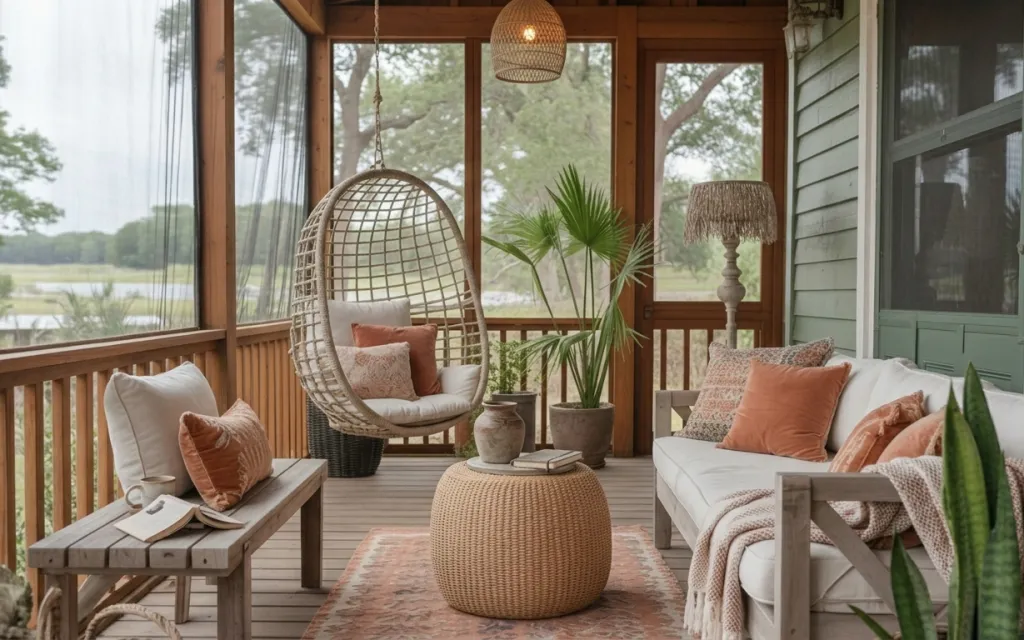
Why earthy-neutrals are the covered porch seating area of 2026
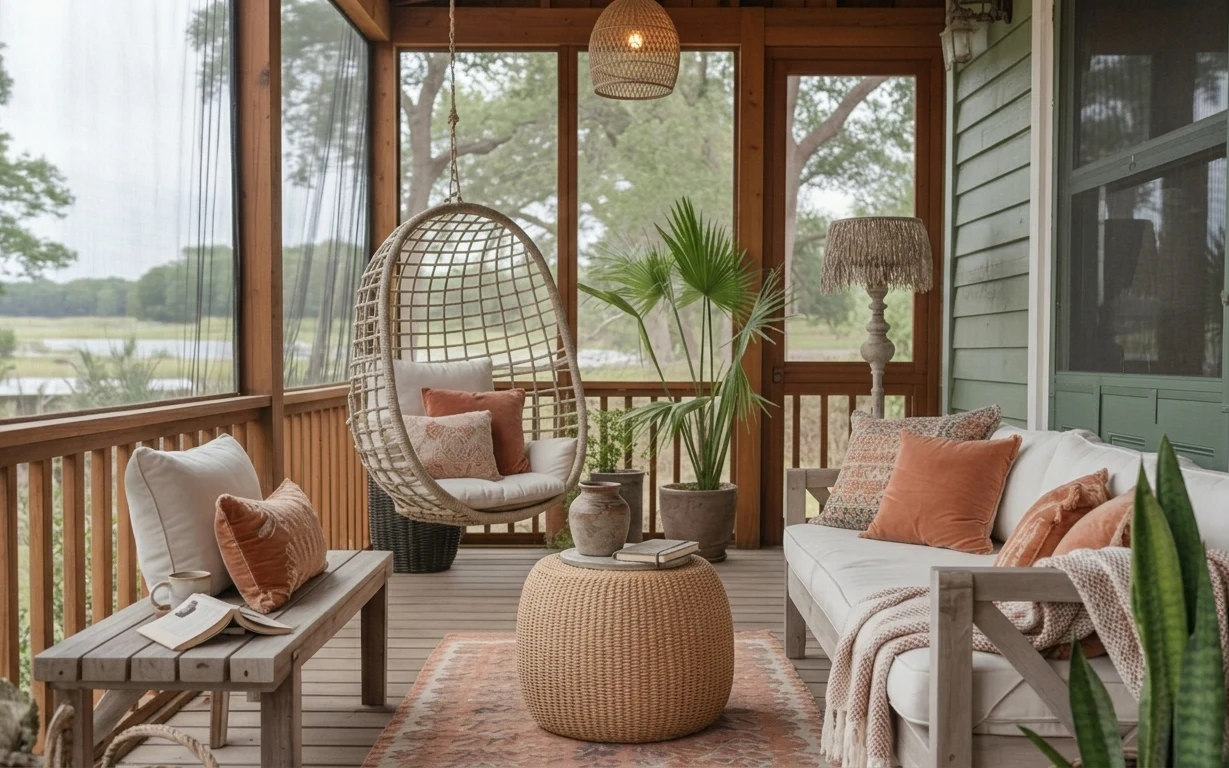
The easiest way to copy this vibe is to copy the materials first: a patterned rug underfoot, a soft throw draped on the sofa, and a few pillows in rust-orange and cream. The wooden coffee table adds that grounded, cabin-like texture, while the hanging rattan chair brings in the airy, boho patterning overhead. Even with daylight doing most of the lighting work, the room still feels intentional because the colors repeat—warm wood browns, cream, and sage-green plants. That’s a big reason this is renter-achievable.
I used to over-buy “statement” pieces for outdoor porches, then wonder why it still looked unfinished. The missing link was always the same: a tight palette and at least three textures that touch the eye at different heights. Once I start with an area rug and then layer pillows plus plants, the whole setup stops looking like separate purchases. This porch is proof that small, repeatable swaps do more than one expensive item.
Layer 1 — area rug ($200) Patterned underfoot, not busy-overhead
Start with the area rug because it sets the porch “foundation” the same way a floor plan does—pattern where your feet land, calmer color where your eyes travel up. In the photo, the rug sits centered under the sofa-and-pouf zone, which makes the hanging chair feel like part of the scene instead of a separate corner. The trade-off: a rug with texture (like a jute-look weave) can show tiny debris after storms, but it also hides day-to-day wear better than smooth prints. Choose a size that reaches at least the front legs of the seating.
Anchor the seating
Let the rug extend far enough that the sofa and pouf feel “caught” by it, not floating above deck boards.
Layer 2 — throw blanket ($25) Drape it where shoulders land
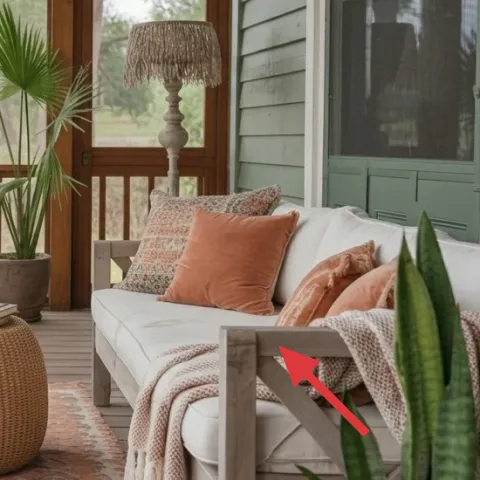
This throw blanket is one of those details that reads styled from across the porch. It’s draped over the wooden sofa arm/edge, which creates an instant softness against the straight lines of the frames. If you go the obvious route—just piling pillows—you can lose that lived-in shape. The blanket creates a diagonal fold that catches light and adds motion. The trade-off is maintenance: if the fabric is lighter, shake it after humid or windy days. For a renter setup, it’s easy to re-pack than a fixed upgrade.
Pick texture over thickness
A medium-weight throw keeps its drape without collapsing into a lumpy heap on outdoor cushions.
Layer 3 — orange throw pillow ($30) Warm rust that repeats the terra-cotta plants
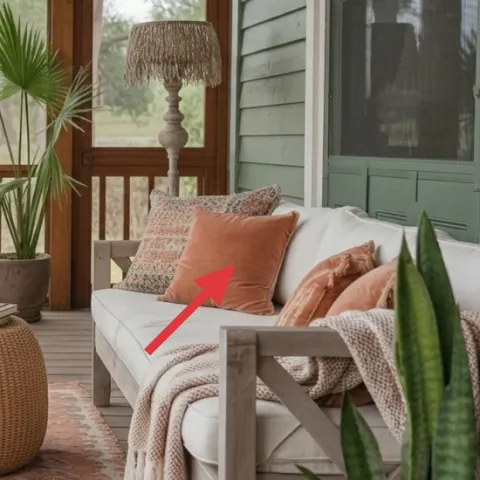
This orange throw pillow works because it’s not a random pop—it echoes the terracotta tone in the planters and the warm wood furniture. Visually, it also breaks up all the cream-and-brown neutrals coming from the chair, sofa, and rug. The trade-off: bold pillow covers show more lint and dust than a darker fabric, so a quick brush/hand shake helps. I also like placing the color pillow closest to where you sit (near the sofa edge in the photo) so it looks intentional every time you pass the chair. For renters, covers are easier to swap than re-styling the entire room.
Skip oversaturated orange
If it reads too neon under daylight, it can fight the sage-green plants—choose rusty or clay-leaning tones instead.
Layer 4 — decorative ceramic vase and pot planters ($12) Small ceramics, big cohesion
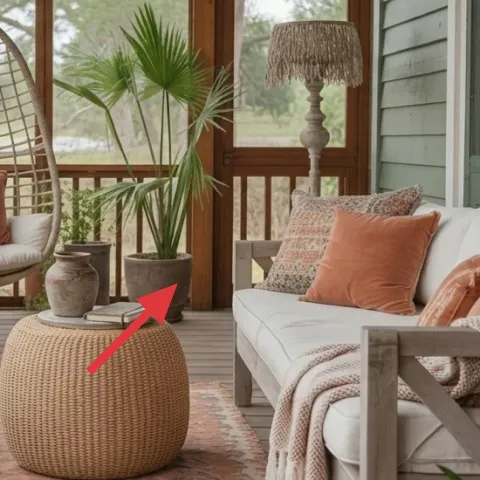
Those ceramic pieces on the coffee-table zone bring the room together because they repeat the same “handmade” feel as the woven chair. This is the kind of styling that looks expensive but doesn’t require much space. A cluster also helps when you’re trying to make two seating areas feel related; the ceramics act like a color bridge between the rug and the plants. The trade-off is that ceramics look best when they’re spaced—not jammed—so leave a little breathing room around each object. If you’re storing for a move, ceramics wrap easily compared to bulkier furniture.
Group in odd numbers
Three small pieces reads more natural than two, and it photographs like a “curated” arrangement.
Layer 5 — potted palm-like plant ($30) Height that makes the hanging chair feel grounded
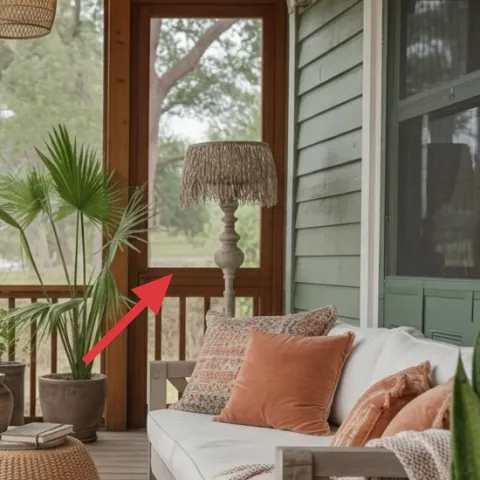
Plants do double duty here: they add greenery and they create height variation that makes the porch feel taller. The palm-like plant sits behind the seating zone, which gives that layered look you see in magazine verandas—something tall behind, something textured in front. The trade-off is you’ll need to keep an eye on light; if it’s too shaded, the leaves can look sparse. For renter-friendly styling, keeping plants in movable pots is the easiest way to adjust around the sun. Also, plants soften hard edges from the siding and railing without looking like “decor.”
Use plants to connect corners
If a porch feels split into zones, a tall pot in the middle of the sightline fixes it.
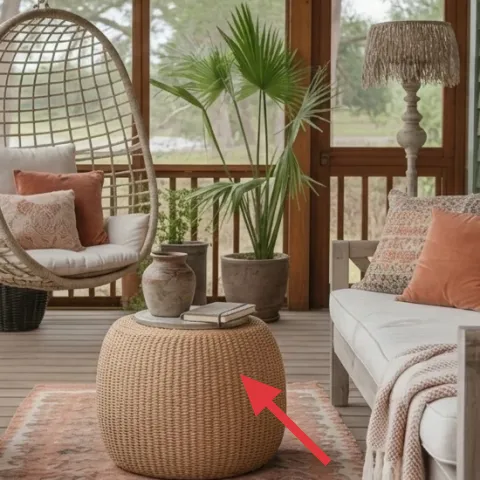
Layer 6 — round woven floor pouf ($20) Extra seating without adding furniture
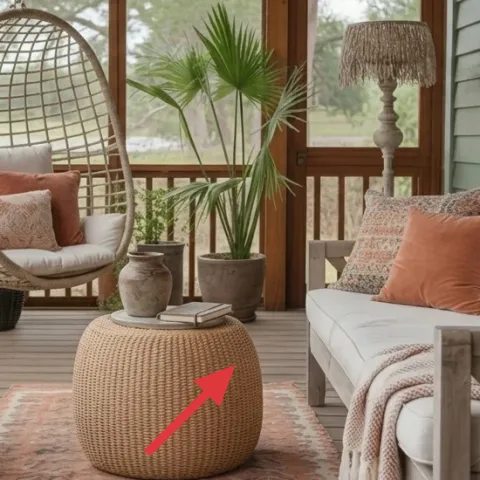
The round woven floor pouf gives you a place to land—feet up, or a quick seat—without introducing another large piece of furniture. In the photo, it sits centered on top of the rug, which is key: a pouf that lives off-rug makes the whole layout look accidental. The texture also matches the hanging chair’s woven pattern, so everything feels like one story. The trade-off is stability; on a slightly sloped deck, a smooth-bottom pouf can drift. For renters, it’s still a great move-friendly element because it packs smaller than a side table or bench.
Place it like a “third element”
Think of the pouf as the bridge between coffee table and sofa—center it, then adjust by a few inches.
Layer 7 — rectangular wooden coffee table ($15) Warm wood, closer to the action
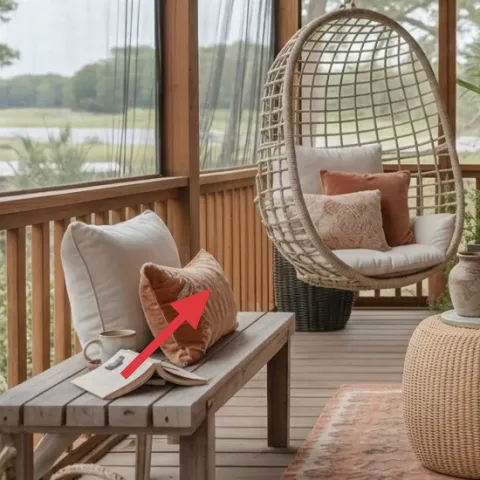
This wooden coffee table matters because it adds that warm, natural material repetition you see throughout the porch. It also brings the styling down to tabletop level, where small ceramics and everyday items can live without cluttering the sofa. The alternative is trying to style only on the sofa, which can leave the middle of the room looking bare—especially with an airy hanging chair dominating the vertical space. The trade-off is durability: outdoor wood needs periodic wipe-downs, especially after rain. Renter bonus: you can move it to a new porch layout with almost no learning curve.
Keep the top intentional
Use a small tray or just two or three items so the table reads styled, not crowded.
The cost, layer by layer
| Layer | Item | Cost |
|---|---|---|
| 1 | Area rug 5×7, boho patterned | $200 |
| 2 | Throw blanket | $25 |
| 3 | Orange throw pillow cover | $30 |
| 4 | Ceramic vase and pot planters | $12 |
| 5 | Potted palm-like plant | $30 |
| 6 | Round woven floor pouf | $20 |
| 7 | Rectangular wooden coffee table | $15 |
| Total | $332 | |
A cheaper variant swaps the rug for a smaller 5×7 jute-look option ($80) and picks one fewer pillow color—keeping the plants and ceramics for cohesion.
What worked, what didn't (across the whole room)
The best wins here are the repeat materials: woven textures in the chair and pouf, warm wood in the table, and terracotta-adjacent ceramics. That consistency makes the porch feel styled even in daylight. The only thing that can derail this look is color oversaturation—if the orange reads neon, the sage greenery and cream tones stop harmonizing.
What worked
- The patterned rug grounds both seating zones and keeps the hanging chair from feeling “solo.”
- Throw placement on the sofa arm creates a clear, natural diagonal fold.
- Rust-orange pillow color echoes terra-cotta planters, so the palette repeats on purpose.
- Ceramic pieces add a handmade feel that matches the woven chair texture.
- Plants provide height variation, which makes the porch feel larger and more layered.
What didn't
- Very smooth, low-texture fabrics can look flat against the deck and wood railing.
- Too much orange saturation fights the sage-green plants in daylight.
- A pouf placed off-rug makes the seating feel unintentional and visually disconnected.
- Over-cluttering the coffee table blurs the “curated” look from a distance.
What we'd skip if we did it again
Skip buying all the pillows at once in one “matching set.” Even if the colors match, identical shapes can flatten the look—this porch works because the textures and tones repeat, not because every piece is the same pattern.
Skip a rug that’s too small. On porches, the deck will read as a separate surface if the rug doesn’t reach under the main seating; that’s how a “pretty photo” turns into a divided layout in real life.
Skip neon-bright accent colors. Under natural daylight, neon reads harsher than you expect and it pulls focus away from the woven chair and the sage-green plants that give this setup its calm, earthy feel.
Frequently asked
Is this renter-friendly if my porch is uncovered or small?
Yes—the core moves here are swappable: rug, pillow covers, a throw, and movable plants. If the porch is uncovered, pick outdoor-safe rug fibers and keep pillows in a covered spot during rain. For a smaller space, use a 5×7 rug, keep only one accent pillow color, and place one taller plant behind the seating so you still get height without crowding.
How long does this kind of porch refresh usually take?
Plan on 2–3 hours, mostly because staging takes time. You’ll want to center the rug so the sofa and pouf look “caught,” then place the throw and pillows so their folds don’t collapse. The plants are usually fast—set them by height first, then add ceramics last. If you’re shopping, add time for delivery or finding the right rug size.
Can I do this look on a tighter budget than $400?
Absolutely. The biggest budget lever is the rug, so start there and choose the most forgiving size you can. Then keep only two pillow covers in warm orange/cream and use the throw for softness. You can also reduce ceramics to one small cluster and go with one statement plant. Prioritize repeat textures over buying more items.
Where should I shop for pieces like this in the US?
For rugs and throw pillows, look for online retailers with outdoor-appropriate materials plus local home stores that stock seasonal colors. Plants are often easiest through local nurseries or big-box garden centers because you can pick the healthiest leaves. For ceramics, try thrift shops, farmer’s markets, or home decor stores with small-object sections so you can find pieces with the same handmade vibe.
What’s the most common mistake people make on porches like this?
They buy plenty of items, but not enough repetition. When the rug, textiles, and ceramics don’t share a warm neutral palette, everything looks like separate purchases. Another frequent miss: a rug placed just inside the furniture footprint instead of under the main seating zone. Centering the rug and repeating rust-and-cream tones solves both issues quickly.
More in Outdoor & Patio
6 renter ways to style a covered porch seating area, $400
A covered porch seating area refresh using 7 renter-friendly upgrades—rug, textiles, decor, plants—keeps the look warm and boho without per…
6 no-drill ways to refresh outdoor rattan seating for $500
A rattan patio seating look that stays move-friendly: swap cushion covers, add two pops of patterned color, and build around statement gree…
7 renter-friendly no-drill swaps for a $400 balcony seating area
A sunlit balcony seating area gets the boho, warm-gold look with no-drill upgrades on a $400 budget. This renter-friendly plan leans on a g…