- Best for
- Shared bathroom refreshes
- Time
- 1 afternoon for styling + DIY
- Total cost
- $350 (around $400 budget ceiling)
- Renter-safe
- No-drill swaps and move-friendly pieces
Why terracotta-tile calm is the bathroom corner of 2026
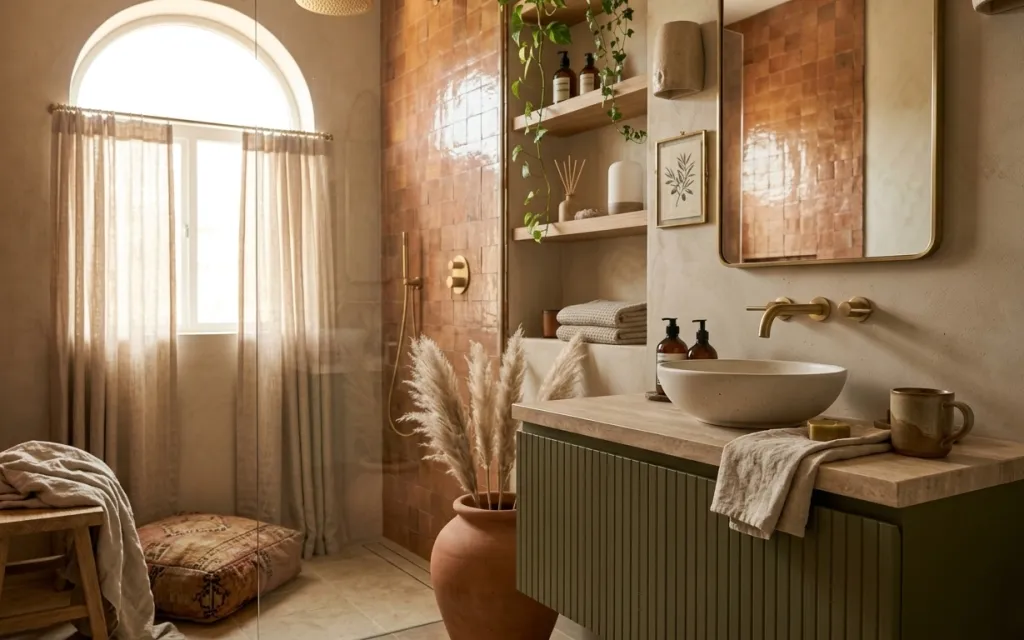
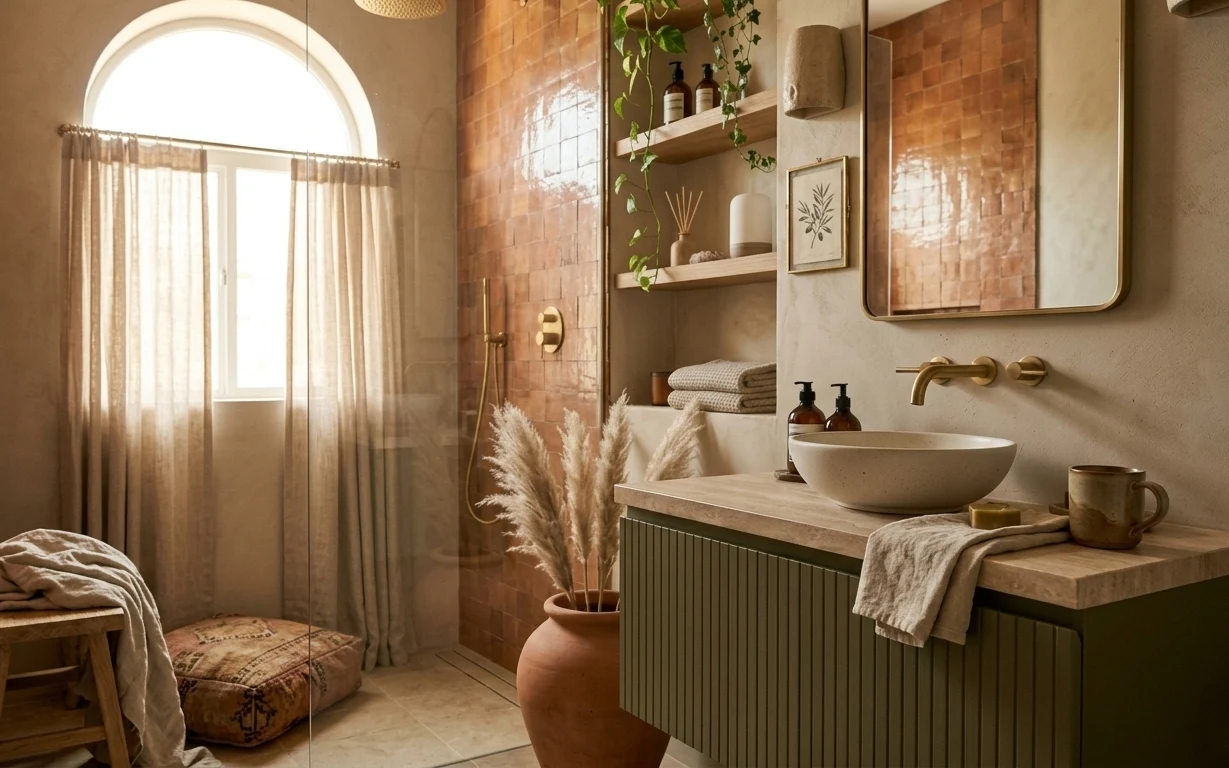
That warm, spa-like feeling here is mostly about texture and layering, not new fixtures. The beige shower curtain softens daylight against the terracotta tile walls, while the ribbed vanity cabinet and light counter keep things graphic and clean. On top of that base, small styling choices—like a vase of dried pampas and a tray holding the everyday items—make the whole scene look intentional. For shared housing, the win is that these are all things you can take with you without changing the plumbing or walls.
I used to buy “bathroom decor” that looked cute in photos but couldn’t survive real life: water splashes, damp towels, and being shoved into a tote. What changed my mind was treating the bathroom like a styling surface with daily reset—curtains, art, and a few anchored objects that belong together. Once I started sticking to move-friendly pieces (no drilling, no permanent swaps), the look stayed cohesive even after moving twice in one year.
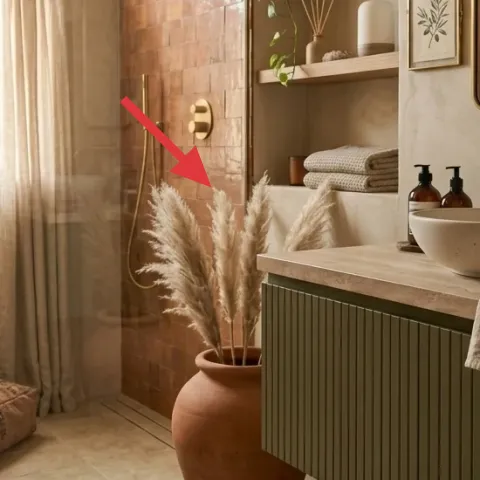
Layer 1 — large ceramic vase with dried pampas stems ($30) Column of height that reads spa-like without clutter
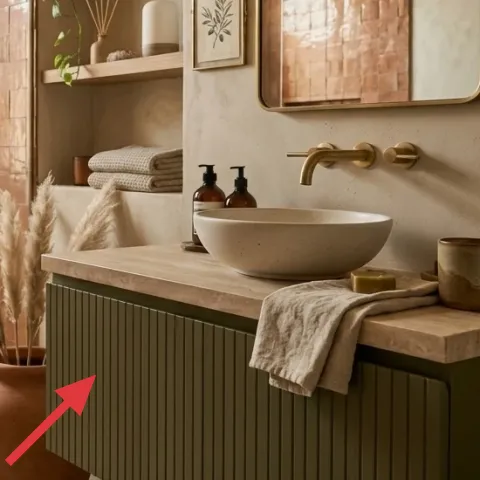
This large ceramic vase anchors the lower half of the frame, and the dried pampas gives you vertical softness against the hard tile. In a bathroom corner, height matters because your eye otherwise bounces between the bright mirror and the counter. I’d choose pampas over a fresh bouquet here because it holds its shape in a humid room and doesn’t need water. The trade-off is that you’re working with a slightly “styled” plant, not something you can revive—so pick stems that already look full. Keep it off the floor so it won’t get splashed.
Use a heavy vase
A bottom-weighted pot makes a bathroom vignette feel steadier, especially when towels get moved around.
Layer 2 — beige shower curtain panel (sheer-weave look) ($80) Soft privacy that warms the whole corner
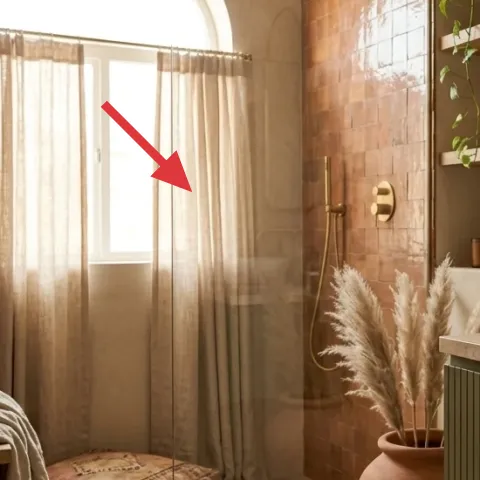
The beige shower curtain panel is doing more work than it looks like. It blurs the outline of the window and reduces glare, so the terracotta wall feels calmer instead of stark. Choosing a sheer-weave look keeps daylight in while still giving you that “spa room” effect. The alternative—going fully opaque—can make a small bathroom feel smaller and darker, especially in the daytime. This is also a good shared-housing move because curtain panels can be packed flat or rolled with zero damage to walls.
Match undertones, not just color
Go for beige with a hint of warmth so it harmonizes with terracotta tile instead of turning gray.
Layer 3 — small framed botanical print ($50) Botanical calm you can DIY on cardstock
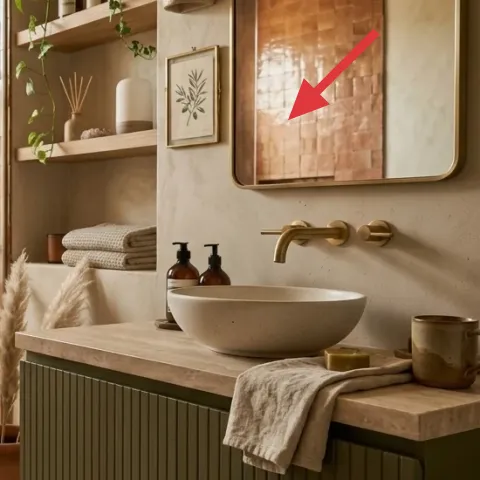
A small framed botanical print adds a quiet focal point without stealing attention from the mirror. In this corner, the art sits near the shelf area, so it reinforces the plant-and-natural motif already happening with the dried stems. The main decision is scale: a print that’s too big will compete with the mirror, and a print that’s too small disappears at bathroom viewing distance. I like this size because it reads even when you’re standing at the sink. For shared housing, you also get flexibility—swap the print later and keep the frame.
Make it instead of buying it
This pressed flower frame uses real botanical scraps on cardstock so you get the same nature detail for less than a ready-made print.
Materials
- Pressed flower pieces — small handful — foraged or saved — $12
- Cardstock (cream) — 1 sheet — craft store — $4
- Archival glue stick — 1 — art supply — $6
- Clear packing tape (thin, optional for edges) — 1 roll — hardware store — $3
- Matte photo paper or printable frame backing — 1 sheet — office supply — $8
Steps
- Lay pressed flowers on cardstock and arrange them dry until the composition feels balanced.
- Lightly trim petals/leaves so edges don’t hang beyond the frame’s inner opening.
- Glue one piece at a time, starting with the largest element, then fill in gaps.
- Let it dry completely, then check the spacing again with the frame held behind it.
- Insert the artwork into the existing frame (or slide into a clip-in frame back if your frame allows).
- Keep it away from direct water splashes in the bathroom by placing it where steam can’t hit it.
Total DIY cost: $33 — saves about $17 over buying.
Seal with placement, not coatings
Skip heavy sealants in a bathroom—use a frame with a glass front and keep the print off the wetest zone.
Layer 4 — decorative tray on the vanity counter ($35) A tidy system for soap, mug, and “daily life”
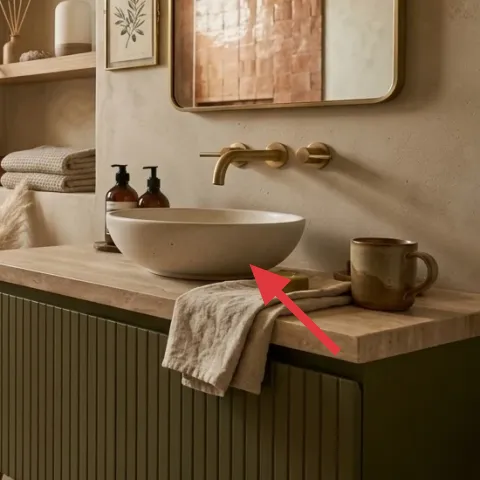
That decorative tray is what makes the countertop look styled instead of accidental. It gathers the small everyday items into one rectangle, which is a huge help in shared bathrooms where things get moved fast. I’d rather buy a tray than try to “hide” items with more containers—the tray gives you instant structure. Choose a tray with warm material tone so it matches terracotta and brass, and keep it sized so it doesn’t spill over onto the sink area. The trade-off is that you have to reset the items onto the tray each time, but that’s exactly the point of a bathroom vignette.
Pick one rectangle, not many shapes
A single tray silhouette makes the counter read intentional even when you’re rushing.
Layer 5 — ceramic mug on the counter ($15) One small ritual object, visible but easy to pack
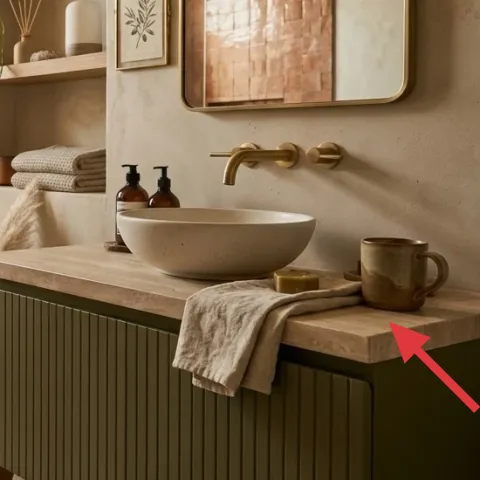
A ceramic mug is small, but it changes how the space feels because it adds “useful decor.” Here, the mug sits on the counter where you naturally look while washing your hands, so it keeps the vibe human instead of showroom-clean. I like using one matching ceramic piece rather than multiple mismatched accessories; it prevents visual noise. The obvious alternative is adding a glass bottle set, but ceramic reads warmer against tile and holds up better to daily handling. This is also easy to pack—wrap and box it like kitchenware.
Skip chips and thin rims
Bathrooms are bump-prone. Choose a sturdy mug so it survives moving and drawer chaos.
Layer 6 — brass wall sconce with round shade ($60) Warm lighting that flatters skin tones
The brass wall sconce with its round shade gives you that gentle “on” look even when the rest of the room is daylight-based. Lighting is often the missing link in renters’ bathroom refreshes: you can have the right colors, but without warm illumination the corner still feels flat. I’d choose this style over a stark modern LED fixture because the round shade softens shadows around the mirror. The trade-off is that wall-mounted lights have to stay compatible with your building setup, so this works best as a portable swap if yours is plug-in or easily replaceable without work.
Keep bulb temperature warm
When shopping replacement bulbs, lean warm (not cool) to keep the terracotta and brass tones cozy.
Layer 7 — large framed mirror ($80) More light, less “narrow bathroom” feeling
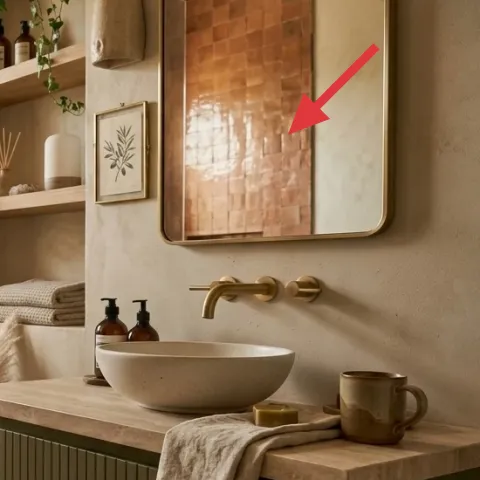
A large framed mirror makes the bathroom corner feel bigger and brighter, and it’s one of the rare pieces that still looks good once everything else gets moved. In this photo, the mirror also ties together the brass elements, so it reads like part of the same design story rather than an afterthought. The alternative—smaller mirrors—can make the sink area feel cramped and visually busy. Choose a mirror with a frame you can carry, not a permanently mounted one, so you can bring it to the next place. The trade-off is weight: protect the frame edges in packing and don’t rely on soft padding alone.
Wrap corners like picture glass
Use bubble wrap and cardboard corner guards so you can transport it without edge scuffs.
The cost, layer by layer
| Layer | Item | Cost |
|---|---|---|
| 1 | Large ceramic vase with dried pampas ($30 look) | $30 |
| 2 | Shower curtain panel (sheer-weave beige) | $80 |
| 3 | Small framed botanical print (DIY ~$33) | $50 |
| 4 | Decorative tray on the vanity | $35 |
| 5 | Ceramic mug | $15 |
| 6 | Brass wall sconce with round shade | $60 |
| 7 | Large framed mirror | $80 |
| Total | $350 | |
If the $80 mirror feels like too much, swap to a smaller framed mirror at the same frame finish tone. Keep the rest of the system—curtain, tray, and one framed botanical—so the bathroom corner still reads cohesive even with less “reflective surface.”
What worked, what didn't (across the whole room)
The look lands because the big moves are all fabric and surface accessories, not permanent changes. Warm brass lighting and terracotta-adjacent tones keep it flattering, while the tray-based countertop styling keeps daily items from looking random. The only weak spot is anything that can’t be easily protected from bathroom humidity or splashes.
What worked
- Beige shower curtain softens glare so terracotta tile feels calmer instead of visually loud.
- Large framed mirror adds brightness and makes the counter area feel less cramped.
- Tray styling groups “daily life” items into one intentional rectangle.
- Brass wall sconce creates gentle, warm shadows that flatter faces in the mirror.
- Pressed-style botanical art keeps the corner nature-forward without adding clutter.
- Dried pampas height adds spa polish without the maintenance of fresh florals.
What didn't
- Anything placed too close to splashes turns into a wipe-every-day job.
- Small countertop objects multiply visual noise when they aren’t collected on a tray.
- Cold, blue-toned bulbs flatten brass and make the terracotta read dull.
- Very lightweight decor pieces can shift during cleaning, especially around the sink.
- Oversized wall art can compete with the mirror instead of supporting it.
What we'd skip if we did it again
Skip replacing the bathroom vanity hardware or any fixed fixtures. Even if the style payoff is tempting, these changes don’t travel well between leases, and they can create friction with landlords or shared-house rules.
Skip adding multiple small containers on the counter without a unifying tray. When soap bottles, a mug, and random extras don’t share one “base,” the area reads cluttered instead of styled—especially in a narrow bathroom corner.
Skip trendy prints that you’ll tire of quickly. Botanical themes stay easy to rework when moving—swap the pressed artwork insert while keeping the frame—so the look can evolve without starting from scratch.
Frequently asked
How long does this bathroom corner refresh take?
Plan on about 1 afternoon. The fastest parts are swapping textiles (the curtain) and building the countertop vignette (tray + mug). The DIY pressed flower frame adds the most time because you’re arranging and letting glue set, but you can do the layout during the same session. If you’re starting from scratch, add an extra hour for packing/transport prep.
Is this renter-friendly if the bathroom is shared housing?
Yes, because the plan focuses on moveable items: a shower curtain panel, a framed botanical print, a tray, ceramics, and a large framed mirror. The brass sconce only works if yours is truly replaceable without work—if it’s hardwired, keep the lighting choice as “what to keep” and prioritize the non-permanent layers. Everything else should pack into boxes and travel easily.
What if my bathroom is smaller or doesn’t have the same tile color?
The system still works. In a smaller bathroom, the mirror and curtain do more lifting than decor does—go larger on the reflective and softer on the fabric. If your walls aren’t terracotta, choose a beige curtain with a warm undertone and swap the botanical art tone to match (earthy greens, warm neutrals, or cream).
Where should I shop for these kinds of pieces?
For the curtain and textiles, look for basic beige panels and sheer-weave options at home goods or big-box retailers. For decor, thrift and home resale sites are great for trays, ceramic mugs, and frames. For the framed print concept, buying a frame first is easier—then DIY the botanical insert to keep costs down and tailor it to your vibe.
What’s the biggest mistake people make with bathroom styling?
They scatter small items across the counter without a collecting structure. A tray (even a simple one) gives the counter one visual “home,” which makes the whole corner look intentional. The second most common mistake is using lighting that’s too cool—warm bulbs keep brass and tile tones looking flattering.
How do I keep dried pampas looking good in a bathroom?
Keep it in a covered, dry-ish spot and avoid placing it right where water sprays. Dust the stems gently with a hairdryer on cool or a soft brush attachment. If the ends shed, trim lightly with small scissors before moving and store the vase wrapped in packing paper so loose bits don’t get everywhere.
More in Bathroom
7 move-friendly swaps for a $400 bathroom corner refresh
A terracotta-and-brass bathroom corner refresh on a $400 shared-housing budget—built from move-friendly textiles, wall art, and decor. This…
A teal-and-gold tub-and-vanity bathroom for $350
A tub-and-vanity bathroom refresh built for renters, using teal-tile contrast, gold mirror shine, and layered towels. This look comes toget…
6 no-drill ways to refresh a bathroom, $1100
This bathroom refresh uses warm terracotta tones, rattan lighting, and simple styling swaps to make the space feel intentional. With a $110…