- Best for
- Shared living room refresh
- Cost
- $460 plan, $500 ceiling
- Difficulty
- Easy
- Renter-safe
- No drilling, packable swaps
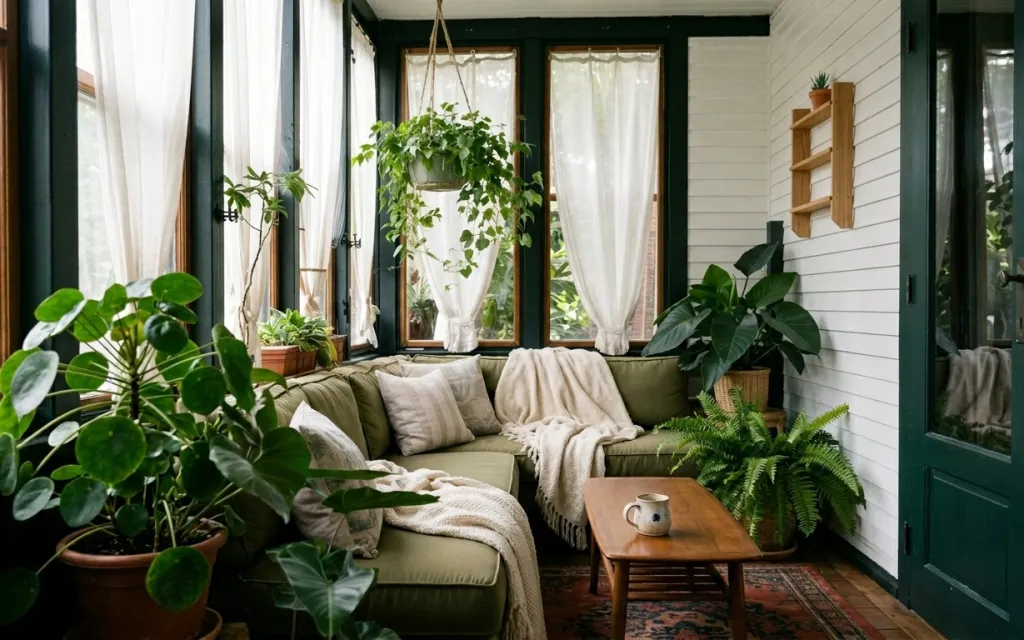
Why this deep-green sofa and fern look is the plant-filled living room corner of 2026
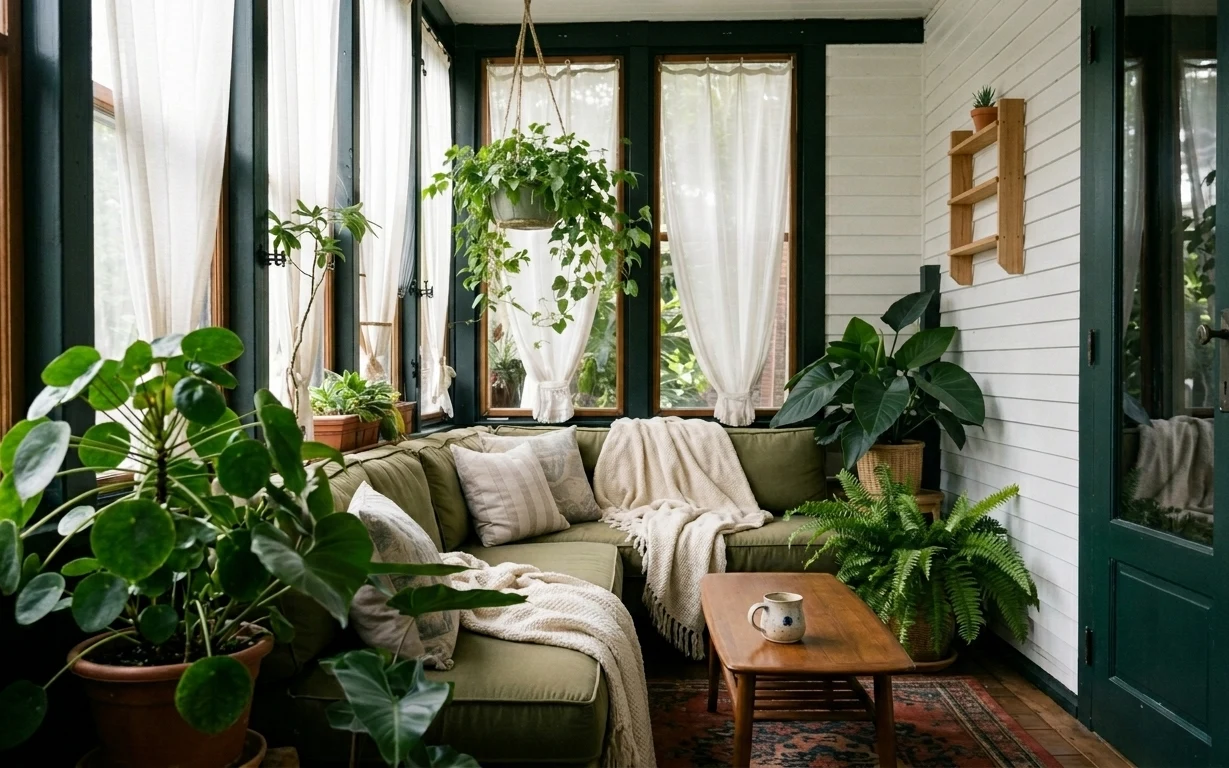
That green sofa reads intentional because the room keeps repeating the same “plant color” in smaller doses. The patterned area rug anchors the whole scene on the wood floor, while the cream throw blanket adds a softer texture layer against the darker upholstery. White sheer curtains bring the eye upward past the windows, so the plants feel framed instead of randomly placed. It’s a look you can absolutely maintain in shared housing: swap soft goods, move pots, and keep the structure simple.
I used to overthink plant styling—like, “am I placing this pot too far from the sofa?”—and I’d end up with a room that looked staged instead of lived-in. What changed my mind was studying rooms that use contrast on purpose: dark sofa + light sheers + a grounded rug pattern. Suddenly the plants didn’t need to be perfect; they just needed a consistent backdrop and one strong textural element.
Layer 1 — patterned area rug ($150) Grounds the plants on the wood floor
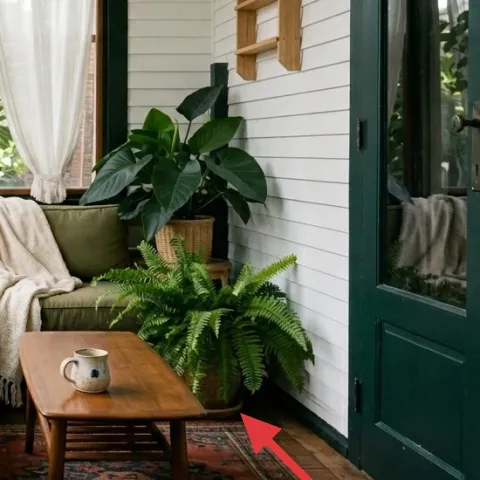
A patterned area rug is doing the heavy lifting here, visually tying the sofa, coffee table, and the right-side potted fern into one zone. On wood floors, pattern also helps hide the daily reality of shared living—shoes by the door, occasional water drips, and the “how did that get there?” crumbs. The trade-off is that you need to vacuum more often than you would with a plain rug, but the payoff is cohesion. Choose a size that sits mostly under the sofa and extends under the front edge so it doesn’t look like a separate island.
Pick a rug with warm undertones
The terracotta notes in the pattern echo the plant pots, so everything looks related even when plants are different species.
Layer 2 — wood coffee table ($100) Gives you a warm surface for ceramics
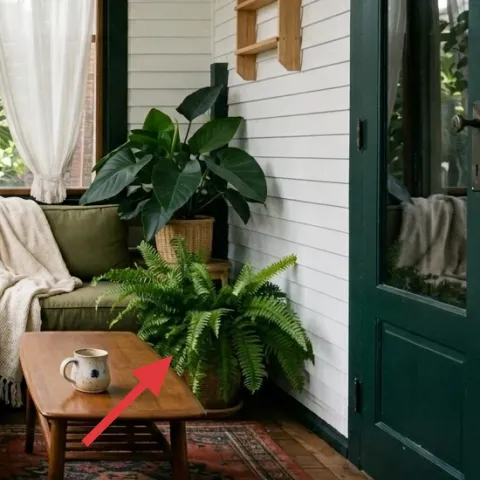
The wood coffee table keeps the palette from going too “all green, all day.” It’s also the practical staging point: the top reads like a surface you can set down a cup on, without fighting the rug’s pattern. If the obvious alternative is a glass table, this is the more forgiving option—wood hides small scuffs and looks warmer under daylight. The trade-off is that wood needs a little care (wiping rings quickly), but it’s still lighter than heavy furniture and can pack safely for a move.
Let it show, don’t over-style it
One small ceramic piece is enough; the plants already provide the “busy.”
Layer 3 — cream throw blanket ($45) Softens the green sofa with chunky texture
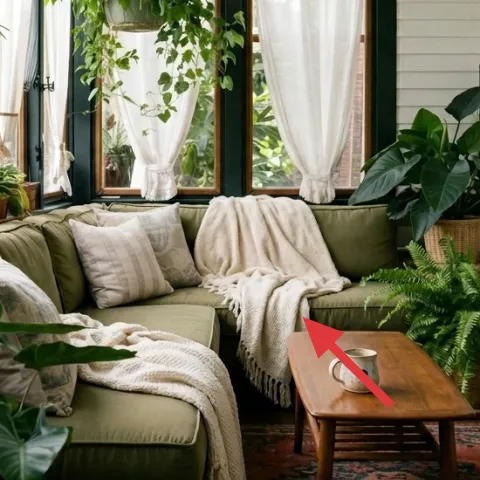
That cream throw blanket adds a second texture besides upholstery—knit-like, slightly chunky, and easy to drape over the sofa edge. In a plant-heavy space, this matters because plants are naturally textured; you want the fabric to feel related, not flat and shiny. The blanket also gives you instant variation across seasons without changing anything fixed in the room. The trade-off is that light color shows lint, but a quick shake-out and a lint roller do the job. When you pack up for a move, it folds down into a single box.
Choose a blanket that drapes past the seat edge
Longer drape looks intentional and makes the sofa feel styled even when you’re not actively “decorating.”
Layer 4 — throw pillow cover ($30) Lets you add color without changing the sofa
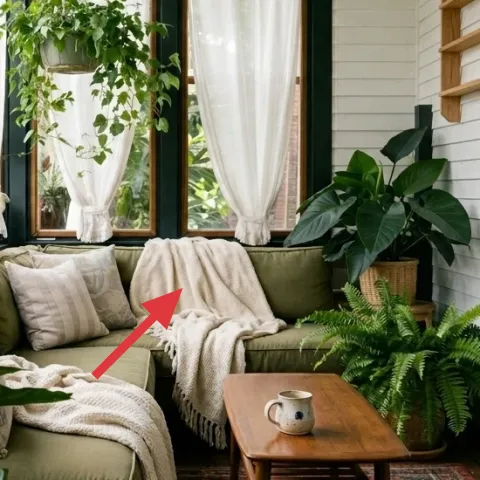
With a deep sofa, pillow covers are the fastest way to steer the mood—cream reads airy, while a slightly warmer or darker cover would deepen the room. The reason this works in shared housing is that pillow covers are small, cheap relative to furniture, and they travel well in a tote. The obvious alternative is buying another bulky cushion, but that’s harder to store during a move and harder to keep looking neat. The trade-off with covers is that you’ll want a simple plan for washing so they don’t fade or pill.
Don’t commit to a super-trendy print
If the pattern depends on one season, it’ll feel dated fast—go for color families you already repeat in the room (green + cream + terracotta).
Layer 5 — white sheer curtains ($80) Adds height and soft daylight around the windows
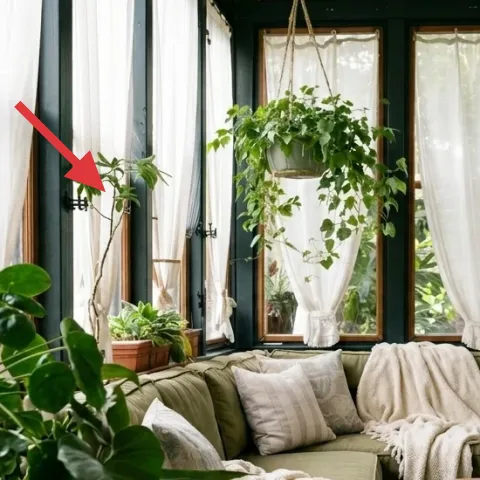
White sheer curtains make the whole corner feel lighter, even when you’re surrounded by deep green and big-leaf plants. They also soften the harsh lines of dark window frames, so the room looks cared for instead of just “functional.” The trade-off is privacy: sheers are for daytime coziness more than full-block coverage. That’s fine here, because the look depends on daylight. If the alternative is heavier curtains, the room can feel closed-in and the plants start to read darker than they are.
Hang for height, not for “exact window fit”
Even when you can’t change hardware, letting the sheer land higher makes the plants feel taller too.
Layer 6 — large leafy plant in terracotta pot ($30) Brings the foreground texture and earth tone
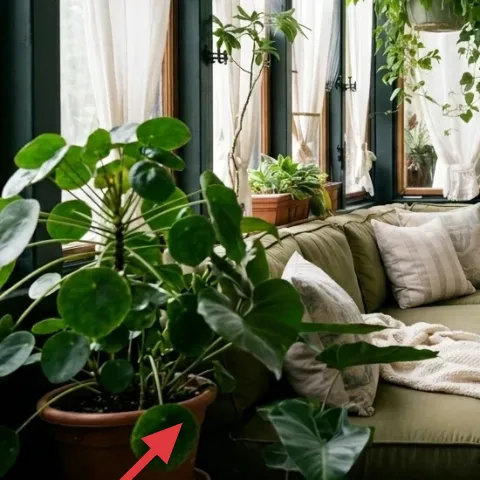
That large leafy plant in a terracotta pot gives you instant foreground fullness and ties into the warm tones already pulled from the rug. In a plant-filled corner, variety matters, but the pot color also matters—terracotta acts like the “bridge” between textiles and natural greens. The trade-off is space: a big plant can crowd a walkway if you place it too close to the coffee table. Keep it where its leaves can spill across the lower-left portion of the frame, so the plant reads as a design element, not a random planter.
Cluster with one pot, not five
More pots can look like clutter unless there’s a rug + fabric foundation first.
Layer 7 — hanging plant ($25) Makes the corner feel layered, not just filled
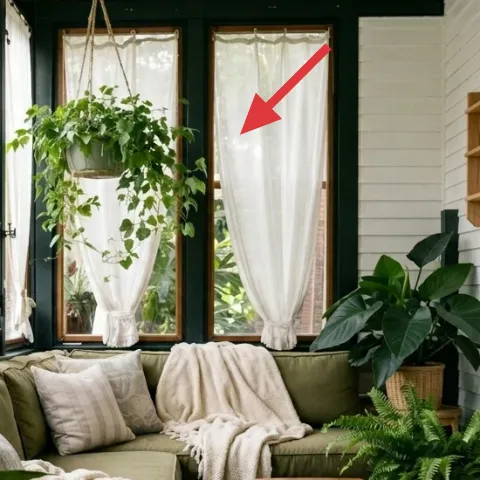
The hanging plant adds vertical dimension, which is what prevents a plant-heavy corner from looking flat. With curtains acting as a soft backdrop, the hanging greenery reads as a “second ceiling layer,” so the scene feels designed. The trade-off is that hanging plants need a bit more regular checking (light changes, watering habits), but they’re small enough to manage in shared housing. This is the move-friendly version of styling: no drilling into walls, just a lightweight plant feature that belongs to you at the end of the lease.
Keep it away from the sofa arm
That way, the leaves look intentional and you avoid accidental brushing while you sit.
The cost, layer by layer
| Layer | Item | Cost |
|---|---|---|
| 1 | Patterned area rug 5×7 | $150 |
| 2 | Wood coffee table | $100 |
| 3 | Cream throw blanket | $45 |
| 4 | Throw pillow cover | $30 |
| 5 | White sheer curtains (pair) | $80 |
| 6 | Large leafy plant in terracotta pot | $30 |
| 7 | Hanging plant | $25 |
| Total | $460 | |
If budget is tighter, downsize the rug to a smaller 5×7, choose a basic cotton throw, and pick one “statement” plant pot over buying multiple sizes.
What worked, what didn't (across the whole room)
The best parts are the ones that do two jobs: the patterned rug anchors the corner while the cream throw adds texture that plays nicely with the plants. The only downside is that sheer curtains and multiple plants can make the room look busy if the table styling and pillow colors aren’t restrained.
What worked
- The patterned area rug keeps the green sofa from feeling isolated against the wood floor.
- Cream textiles (throw and pillow cover) add contrast without fighting the plant palette.
- White sheer curtains raise the visual ceiling and make daylight feel softer.
- The wood coffee table warms up the corner so it doesn’t feel too monochrome.
- Terra-cotta and green repeat through the plants, so the corner reads cohesive.
- The hanging plant adds vertical layers, balancing the big leafy shapes on the floor.
What didn't
- When too many small plant pots crowd the foreground, the rug pattern stops doing its job.
- Extremely neutral pillow covers can blend into the sofa unless the rug has a clear pattern.
- If the coffee table gets more than one small object, the whole corner can look scattered.
- Sheer curtains help daylight, but privacy takes more planning if street visibility is high.
What we'd skip if we did it again
Skip a second, matching “set” piece on the coffee table. One ceramic moment is enough; adding trays, faux stems, and extra knickknacks usually makes the plant area feel cluttered instead of layered.
Skip replacing the sofa with a different color. The green upholstery is already the anchor—this look is about steering it with rug pattern, cream textiles, and sheer height, not starting over every lease.
Skip heavy, dark curtains. In this kind of plant-filled corner, darker drapery flattens the daylight and makes the hanging plant feel less intentional, so the entire scene loses that airy, framed feeling.
Frequently asked
How long does this kind of refresh take?
Plan on one afternoon for textiles and quick styling: rug placement, draping the cream throw, swapping pillow covers, and hanging sheers if the hardware already exists. Plants are a separate, slower step because you want them at the right angles and distances—especially the large terracotta pot and hanging plant.
Is this renter-friendly if I can’t change window hardware?
Yes. The curtain goal is visual height and soft daylight, so if you already have rods or hooks, focus on using sheer panels that look similar in width and length. If hardware truly isn’t an option, prioritize the rug + textiles first, since plants and the coffee table will still sell the look.
What if my living room is smaller than this corner?
Go smaller in rug size and plant scale before changing the style. A 5×7 rug can still ground the sofa, but keep the terracotta pot slightly smaller so it doesn’t crowd the walkway. With sheers, choose panels that don’t pool too much on the floor—just enough to soften the window.
What if my room is bigger and feels empty?
Add visual mass with one larger plant pot and keep the rug anchored under the front of the sofa. Lean into layering: a throw blanket plus a couple of pillows is better than adding more small objects. The hanging plant helps on bigger rooms because it brings the “third height” into the composition.
Where should I shop to match this vibe without overspending?
For the rug and curtains, department stores and big-box home brands often have patterns that look expensive under natural light. For the plants, local nurseries and plant shops are worth it because you’ll get healthier leaves and better shape. For the textiles, thrift or discount home sections can be a win when the colors match cream, green, and terracotta.
What’s the biggest mistake people make with plant-heavy corners?
Over-styling the table and duplicating small pots without a visual anchor. When the coffee table and foreground are busy, the rug pattern loses impact and everything starts to look accidental. Start with the rug and one or two soft textile layers, then place plants around them.
More in Living Room
7 no-drill swaps for a plant-filled living room corner, $500
A plant-filled living room corner can look styled (not cluttered) with $500 of move-ready swaps. This plan leans on patterned rug grounding…
7 renter-friendly swaps for a $400 sofa seating area refresh
A $400 refresh for a renter’s sofa seating area using 7 no-drill upgrades: a woven jute-style rug, yellow faux-fur pillow, orange-shade lam…
7 small upgrades for a sectional lounge
A sectional lounge refresh on a standard homeowner budget: swap in bold curtains, anchor the seating with a green-and-cream rug, and add wa…