- Best for
- Budget renters who want a curated boho corner
- Cost
- About $400 for the full refresh
- Difficulty
- Easy—mostly swap-in textiles and accessories
- Time
- One weekend, plus dry time for DIY art
Why a peach-and-blue palette is the sofa seating area of 2026
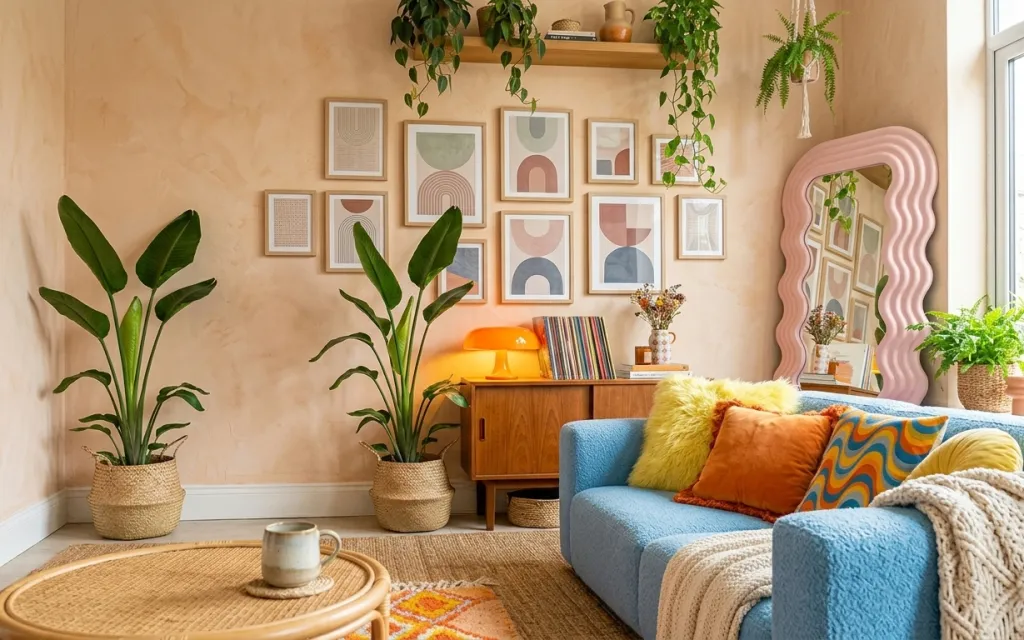
The best part of this setup is how the warm, peachy lighting and the cool blue sofa both feel intentional. You’ve got three obvious texture lanes: woven rug underfoot, faux-fur and knit throws on the sofa, and natural wicker in the coffee table and planters. Then the gallery frames and the pink wavy mirror add that playful “I collect things” energy without needing a renovation. This is achievable on a renter budget because you’re styling what you can swap (textiles, art, and freestanding pieces) around the existing layout.
I caught myself overthinking this one the first time I tried to copy it—my instinct was to make everything match too neatly. The photo holds back on that: the prints are mixed in size, the pillow textures aren’t uniform, and the lamp shade’s orange warmth keeps the palette from reading cold. When I loosened the styling rules—one bold color hit, plus lots of texture—the room looked curated instead of coordinated.
Layer 1 — woven jute-style area rug ($100) Texture anchor under a blue sofa
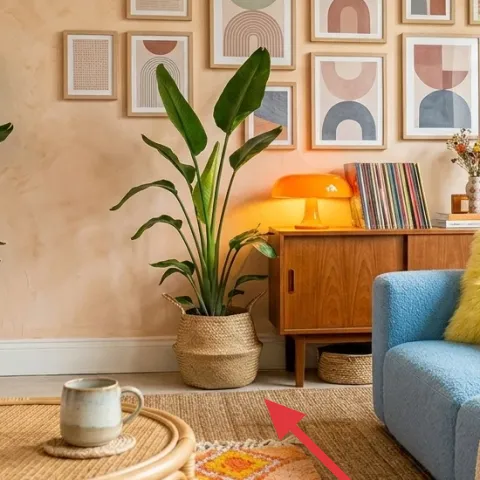
This woven jute-style area rug gives you the “natural base” that makes blue furniture feel warmer instead of stark. In the photo, it sits below the coffee table and extends far enough to connect the planters on the floor to the sofa, so the whole corner reads as one zone. The trade-off is that jute-style textures show footprints and pet traffic more than a low-pile synthetic rug, so timing matters. The fix is practical: keep a rug pad under it and rotate it seasonally so wear evens out.
Go for a rug that visually matches your floor temperature
Warm wood floors + a warm woven rug create cohesion even when the artwork and mirror are colorful.
Layer 2 — throw pillow with yellow faux-fur texture ($20) Bright warmth without changing the sofa
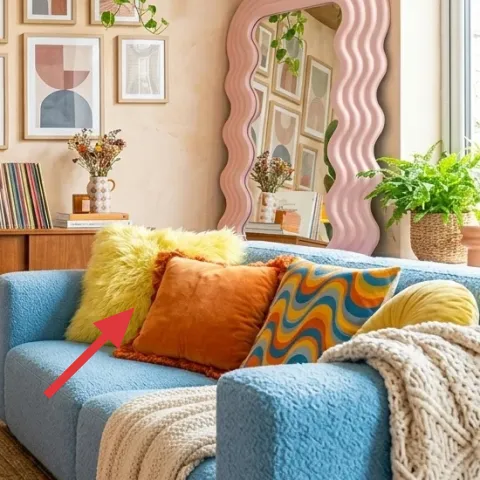
The yellow faux-fur pillow is small in footprint, but it’s doing a lot of work: it adds plush texture against the clean lines of the sofa and echoes the room’s warm highlights. You can see it right where the sofa reads most “finished,” next to the orange pillow and under the draped throw. The choice over the obvious alternative—another cotton pillow cover—is that faux-fur reads cozy in daylight and feels dimensional up close. The trade-off is shedding: it may shed a little at first, so vacuum gently and give it a couple of days to settle.
Texture reads best when it’s layered, not alone
Faux-fur looks intentional when it’s paired with knit and woven materials in the same corner.
Layer 3 — table lamp with orange shade ($40) Warm glow that balances off-white walls
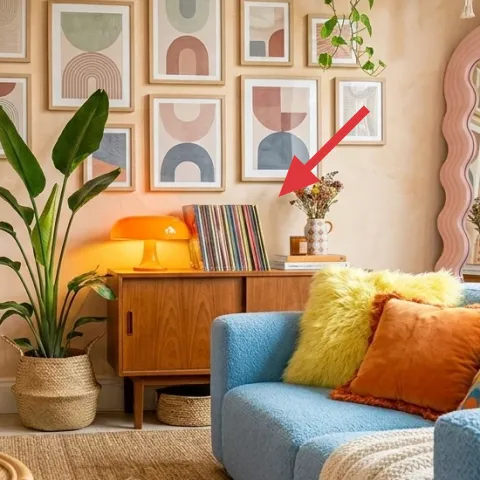
This table lamp with an orange shade keeps the room from feeling flat even with lots of off-white wall space. In the photo, it sits on the wood sideboard and creates a warm pool that complements the natural basket tones and the terracotta-ish accents in the framed prints. The trade-off versus going with a crisp white shade is that orange can look too “heavy” if the rest of the corner is already dark. Here, the blue sofa and the pale walls prevent that—plus a soft warm bulb temperature keeps it flattering after sunset.
Don’t size the lamp by height alone
If the shade is too large for the sideboard, the light source will overwhelm the gallery wall visually.
Layer 4 — framed abstract print ($25) DIY one frame to start the gallery
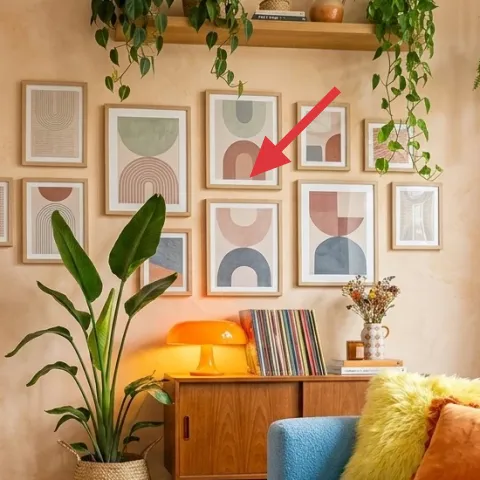
One framed abstract print is the easiest way to get the “collected” feel without matching every piece. In the photo, the gallery mix works because the frames are consistent in finish, while the artwork varies in shapes and colors. For this layer, a DIY piece plays the same role: it fills one frame, adds a similar graphic texture, and lets the room look personal. The trade-off is that DIY art won’t have the exact crispness of a professionally printed image, but the handmade imperfection is part of the boho-casual charm.
Make it instead of buying it
DIY a hand-painted abstract on cardstock to slot into one of the framed gallery positions.
Materials
- Cardstock (8.5×11 or larger sheet) — 1 sheet — craft store — $2
- Acrylic craft paint set (small colors that match blue/peach) — 1 set — craft store — $12
- Small frame or insert (to fit your existing frame opening) — 1 — thrift store — $6
Steps
- Choose 3–4 colors that echo the room: blue, off-white, peach/terracotta, and one muted accent.
- Lightly sketch simple shapes (circles, arcs, blocks) with a pencil—no need to be perfect.
- Paint the largest shapes first, then add smaller details with a fine brush.
- Let the paint dry fully before handling the paper.
- Trim the cardstock to fit your frame opening, keeping edges clean and centered.
- Slide it into the frame and check alignment straight-on.
Total DIY cost: $20 — saves about $5 over buying.
Layer 5 — round rattan coffee table ($80) A woven surface that repeats the plant baskets
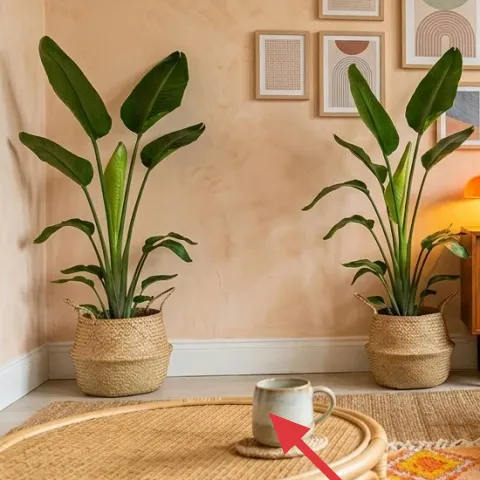
The round rattan coffee table is doing double duty: it brings in warm texture and its rounded shape softens the straight lines of the sofa and sideboard. In this photo, it also provides a natural “stage” for small styling—like the ceramic mug—so the center of the room feels lived-in instead of empty. The trade-off versus a flat-top coffee table is that rattan can snag or scuff if you drag items across it, so keep coasters and lift rather than slide. The payoff is that it visually ties together the woven baskets on the floor and the plant containers.
Style a coffee-table moment with one height change
Keep it simple: mug plus one small object that’s slightly taller so it doesn’t look flat.
Layer 6 — large potted plant in woven basket (left) Big greenery to fill the corner
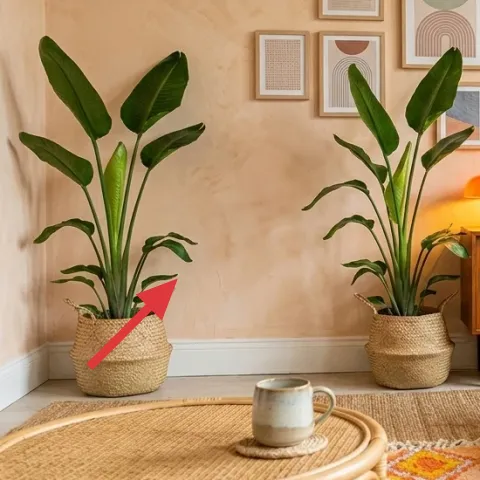
This large potted plant in a woven basket adds height and movement, which is especially helpful in a corner where the wall has a gallery display. The greenery in the photo bridges the warm textiles and the structured art frames, so the room feels organic instead of purely decorative. The choice over buying a tiny desk plant is straightforward: small plants disappear at sofa height, while a larger plant reads immediately and makes the space look intentionally styled. The trade-off is maintenance—larger plants need consistent light and occasional leaf-wiping to keep them looking fresh.
Repeat the material, not the exact plant
Woven baskets show up again in the rug-and-table textures, so even different greens still look cohesive.
Layer 7 — pink wavy mirror ($90) A playful focal point near the window
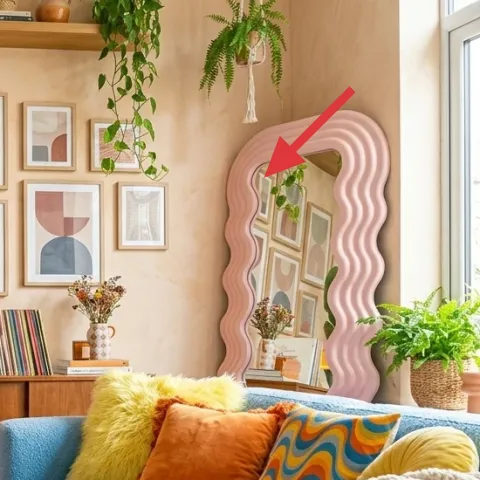
The pink wavy mirror gives the room its personality. It sits near the window, so it catches daylight and bounces it back into the seating area, making the gallery wall feel more lively. The trade-off compared with a simple rectangular mirror is that pink is bolder—if the rest of the palette is too neutral, it can overpower the room. Here, the blue sofa and warm lamp tone keep it balanced, and the mirror’s organic wavy shape matches the handmade feel of the woven textures. It’s also renter-friendly because it’s a freestanding decorative focal you can relocate.
Let the mirror echo your warm accents
Pair it with an orange-shaded lamp or peach artwork so the pink feels like part of the same story.
The cost, layer by layer
| Layer | Item | Cost |
|---|---|---|
| 1 | woven jute-style area rug | $100 |
| 2 | throw pillow with yellow faux-fur texture | $20 |
| 3 | table lamp with orange shade | $40 |
| 4 | framed abstract print (DIY replacement) | $25 |
| 5 | round rattan coffee table | $80 |
| 6 | large potted plant in woven basket (left) | $25 |
| 7 | pink wavy mirror | $90 |
| Total | $380 | |
If a rug is out of reach, choose a similarly warm-looking synthetic jute-style rug instead, and spend the difference on a thicker faux-fur pillow. The woven texture effect is the key, not the exact material name.
What worked, what didn't (across the whole room)
The wins here are mostly about texture and rhythm: woven underfoot, plush on the sofa, and natural basket tones that keep the palette from feeling too curated. The gallery wall and mirror also work because they’re close to warm light, so the shapes read clearly at night.
What worked
- The woven rug grounds the blue sofa so the corner feels intentional instead of floating.
- The yellow faux-fur pillow adds a close-up softness that makes the sofa look styled, not bare.
- The orange-shade lamp balances off-white walls and makes the room feel warmer after dark.
- The DIY framed abstract print gives the gallery wall an easy personalization point.
- The rattan coffee table repeats the woven materials and adds softness to the layout.
- The pink wavy mirror creates a lively focal point near daylight and ties into the warm tones.
What didn't
- Too many pillows of the same texture made my copy feel flat and “catalog clean.”
- A plain rectangular mirror nearby would have competed with the gallery instead of balancing it.
- If the lamp shade is too large, it can overpower the framed prints on the wall.
- A too-small rug would have left the plant baskets disconnected from the sofa seating zone.
- If the faux-fur pillow is unpaired, it looks random rather than styled.
What we'd skip if we did it again
Skip buying a matching set of wall frames right away. A consistent frame finish matters, but the artwork should vary in shapes and colors so the gallery wall feels collected—like the photo—rather than staged.
Skip overbuilding the center of the coffee table. Keep to one ceramic mug moment plus one small object; too many items will compete with the rattan texture and the mirror focal point.
Skip going all-neutral with the throw textures. The yellow faux-fur and the cream knit create contrast against the blue sofa, so without that texture mix the corner reads tidy but less lived-in.
Frequently asked
How long does this kind of refresh take?
Most of the look is plug-and-play: rug positioning, swapping pillow covers, styling the coffee table, and hanging nothing permanently because the framed art and mirror are already freestanding-to-the-wall in your options. Budget a few hours for styling and placement, then add time for the DIY framed abstract to dry before trimming and inserting it.
Will this work in a smaller living room?
Yes—keep the same palette, but scale down the “stage.” Use the same woven rug idea, just pick a smaller size that still reaches under the sofa’s front legs. For the mirror, placement matters more than size; positioning it near the window corner helps it read bigger without overwhelming your wall.
What if my landlord doesn’t allow any wall-mounted decor?
This approach still works because you can keep to freestanding styling: a floor plant in a woven basket, the round rattan coffee table, a plug-in table lamp, and a freestanding or removable mirror option. For wall art, stick with renter-safe methods like Command-style mounting for frames only if your lease allows it—or simply place a framed piece on a tabletop.
Where should I shop for the rug, mirror, and lamp?
Rug and lamp finds are easiest at big-box retailers and home marketplaces with frequent sales, while woven coffee tables and pink wavy mirrors often show up at thrift, consignment, and secondhand furniture sites. The framed abstract can come from thrift for cheap frames and DIY for the artwork inside.
What’s the biggest mistake people make copying this look?
Overmatching. When every fabric and accessory is the same color or same texture, it reads flat. This photo works because warm textures (rattan and woven rug), plush softness (faux-fur), and graphic shapes (gallery prints and mirror) each have their own role.
How do I make it look styled without buying a lot more?
Choose one “bold” focal point (the pink wavy mirror), then repeat materials rather than copies: woven basket textures show up in the planters and coffee table, and the rug connects it to the sofa. Finish with one warm lighting source and one close-up texture pillow so the corner looks dimensional, not empty.
More in Living Room
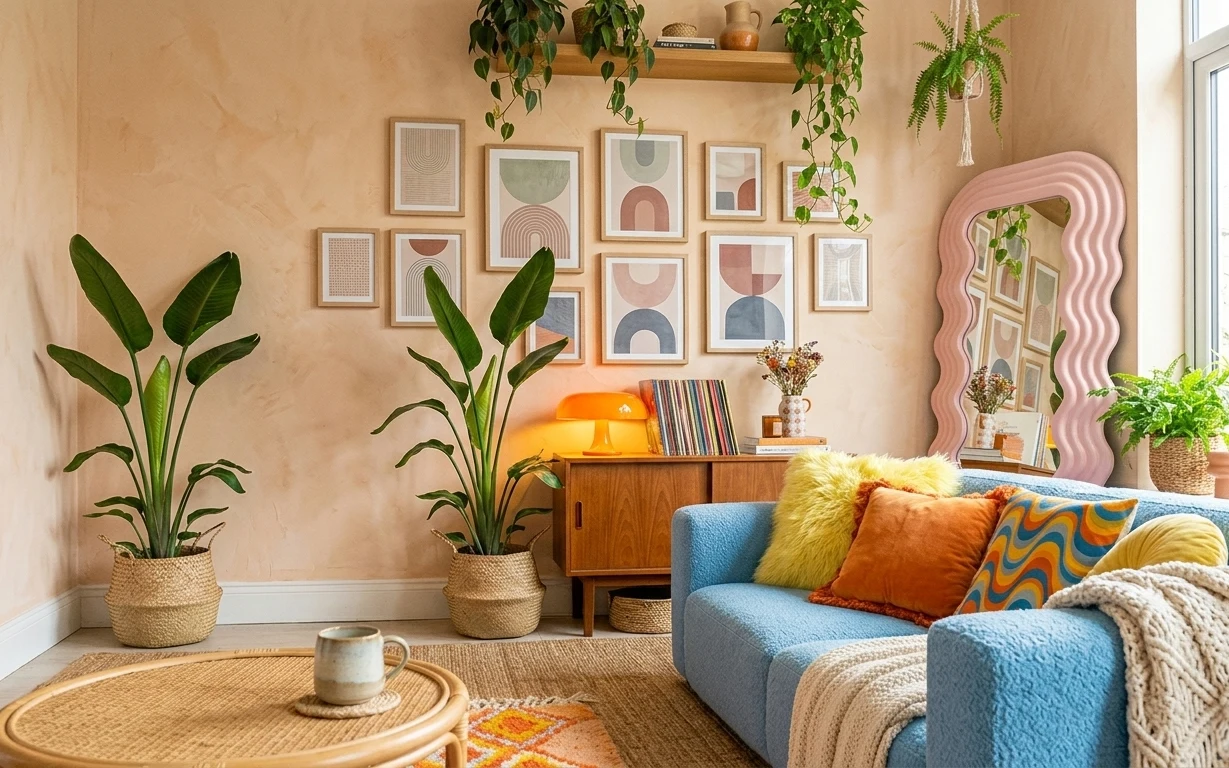
7 renter-friendly swaps for a $400 sofa seating area refresh
A $400 refresh for a renter’s sofa seating area using 7 no-drill upgrades: a woven jute-style rug, yellow faux-fur pillow, orange-shade lam…
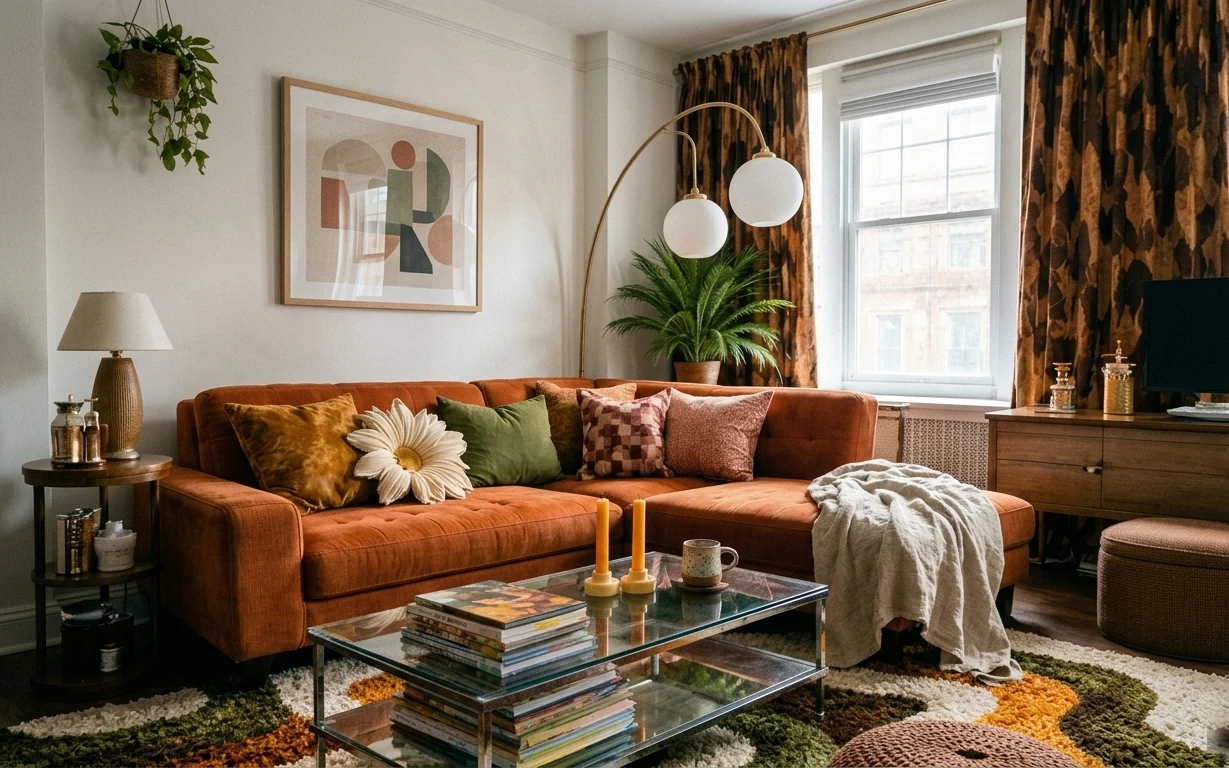
7 small upgrades for a sectional lounge
A sectional lounge refresh on a standard homeowner budget: swap in bold curtains, anchor the seating with a green-and-cream rug, and add wa…
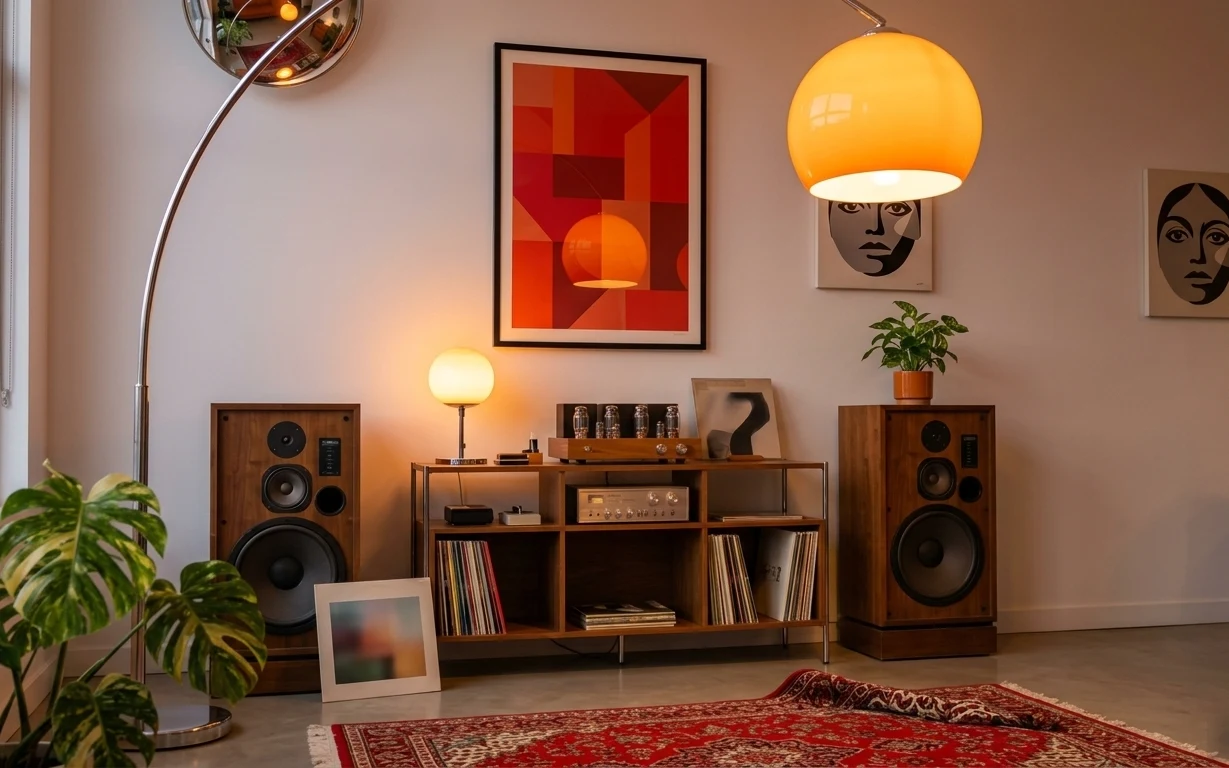
A renter-friendly listening corner for $600
A renter-friendly listening corner for $600—built with a red patterned rug, warm globe lighting, and no-drill framed art updates. The resul…