- Best for
- Move-friendly boho living rooms
- Time
- About a weekend
- Total cost
- $585–$600 range
- Difficulty
- Easy (no drilling)
Why warm earthy-neutrals is the boho living room of 2026
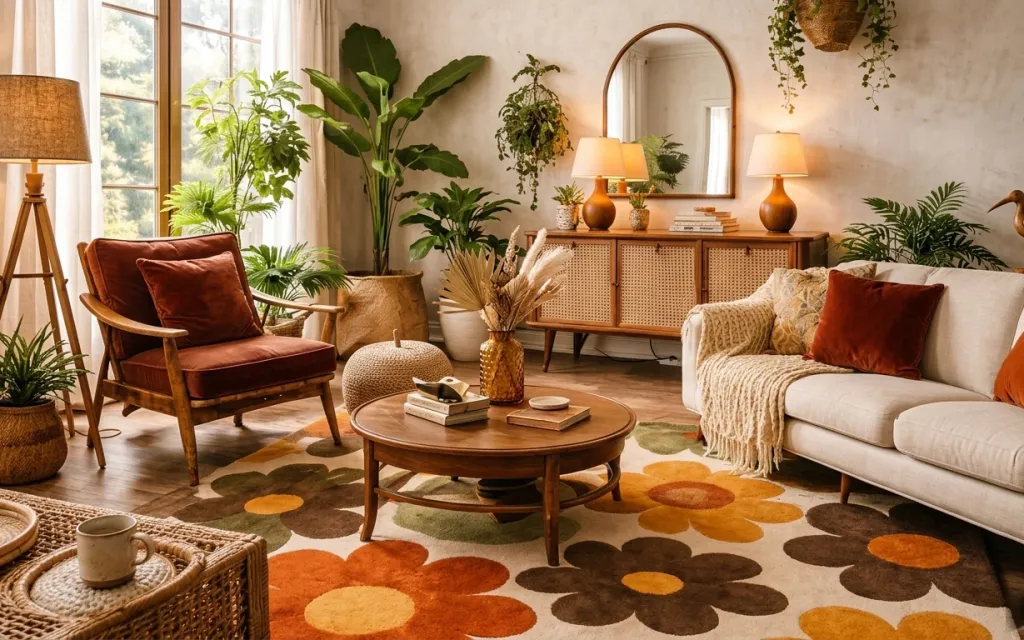
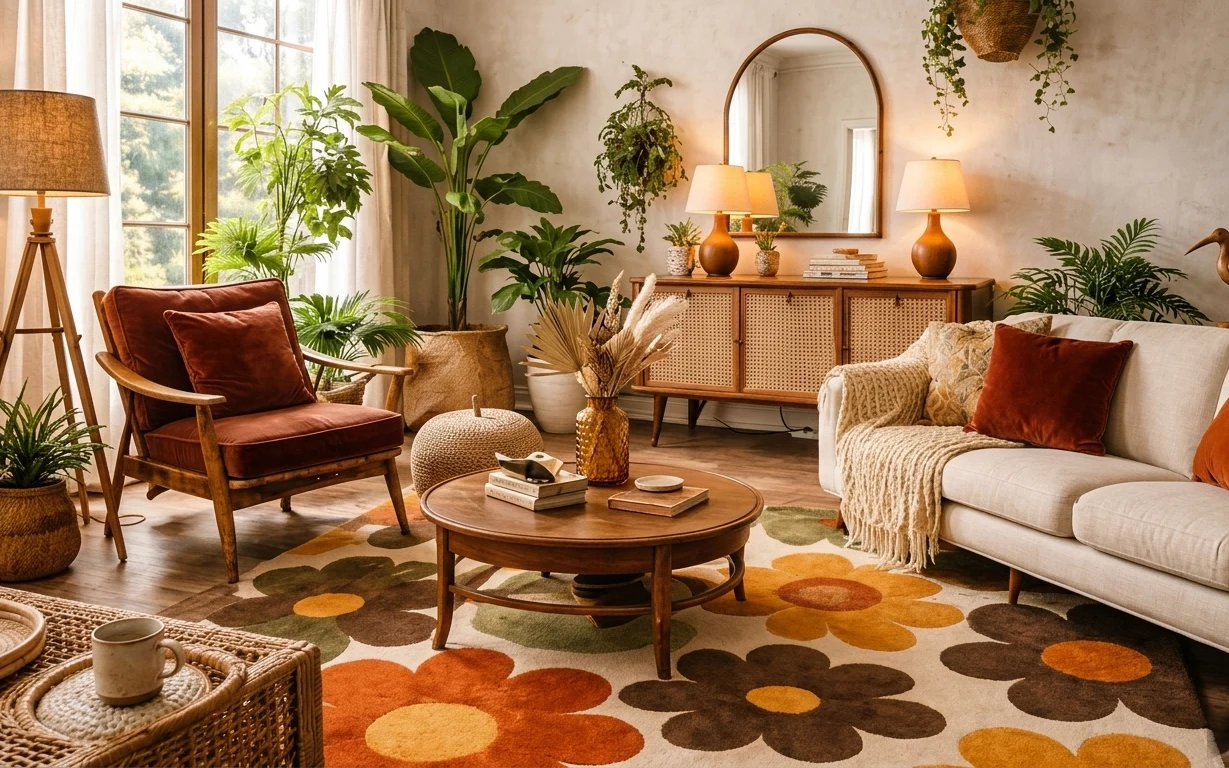
Warmth in this room isn’t one big color choice—it’s the way soft textiles sit on top of wood tones. That flower-pattern area rug anchors the whole layout, while the off-white sheer curtains keep the windows from feeling harsh. The cream throw blanket adds a fuzzy, knit texture over the light sofa, and the woven tray turns the coffee-table clutter into a purposeful surface. For shared housing, the key is that every piece here can be boxed and moved without touching the walls.
I used to overthink “the perfect set” for living rooms—matching lamp bases, coordinating decor trays, the whole thing. Then I noticed my favorite rooms always had one intentional mismatch, like a bold rust pillow against a neutral couch. That’s what’s happening here: the warm accents read cohesive, even when they’re layered at different heights and materials.
Layer 1 — area rug with large flower pattern ($200) Grounded underfoot, not precious
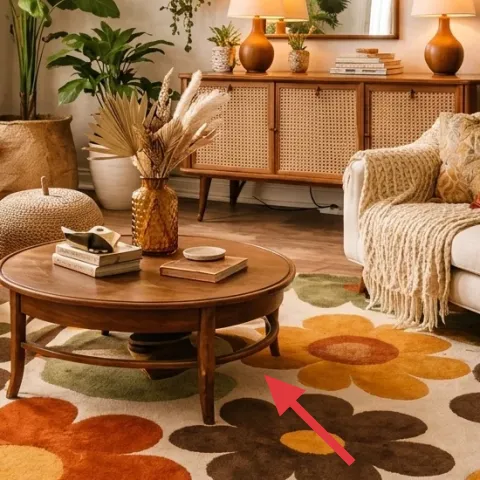
The large flower-pattern area rug is the foundation piece: it’s bold, but it’s still wearable because it uses warm brown, rust, and cream tones already in the room. A rug like this is the easiest way to create “one big design moment” without drilling or replacing anything fixed. The trade-off is size—this look needs enough rug area to show its pattern at full scale, not a corner snippet. In a shared living room, that’s actually a plus, since the rug hides everyday scuffs and helps everyone agree on the vibe.
Go for the full pattern
For a boho look, don’t let the rug feel cropped—aim for a layout where the flowers read clearly from the sofa.
Layer 2 — off-white sheer curtains ($80) Light on the windows, soft on the walls
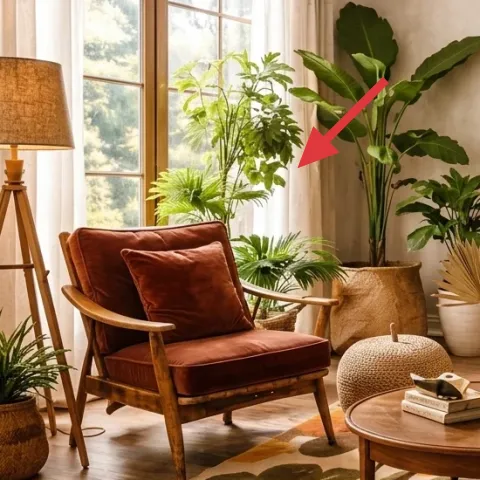
Off-white sheers change the room’s texture more than you’d expect, especially with daylight pouring in. They keep the palette airy while still giving visual privacy, and they’re easy to swap between apartments because they hang and pack flat. If you tried to “fix” the window with heavier drapes, the room would feel heavier against the warm walls. The trade-off here is that sheers aren’t full blackout, so daytime privacy may still be partial depending on your window placement. Clip-on or tension-based curtain options make this renter-safe.
Sheers are a texture decision
The value isn’t darkness or coverage—it’s that translucent fabric softens the whole room’s edges.
Layer 3 — cream throw blanket ($60) Knit texture over a light sofa
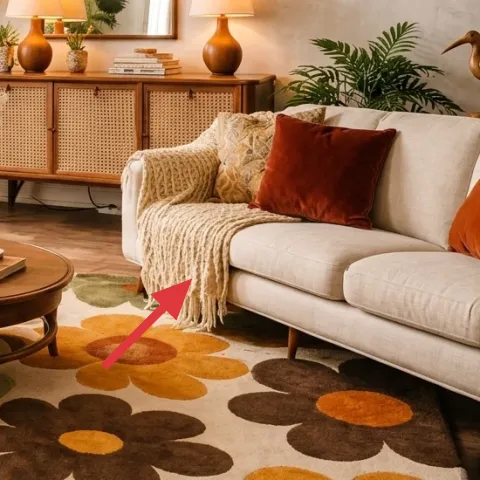
A cream throw blanket adds exactly the kind of cozy, tactile contrast that turns a sofa from “plain” into “lived-in.” On a light sofa, it works because it echoes the rug’s cream moments without competing with the pattern’s rust tones. The alternative is adding more decorative pillows, but that can get fussy fast in shared spaces. A single blanket is flexible: it drapes on movie nights, flattens for packing, and still reads styled from the side. The trade-off is that knit throws show pilling if they catch on rough fabrics, so choose one with a smooth feel.
Use drape, not stack
Drape the throw over the sofa arm or corner so the texture reads from a distance.
Layer 4 — woven tray on the table ($35) A home for “stuff” that isn’t clutter
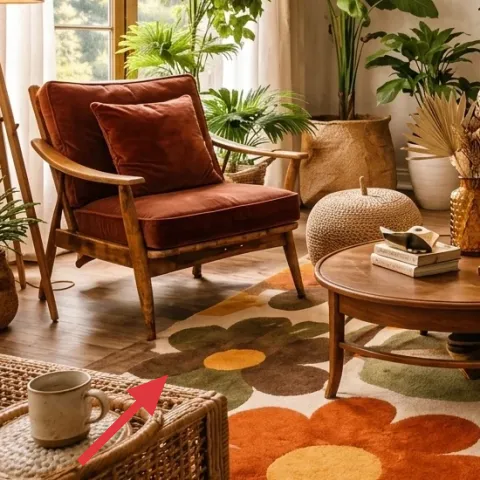
That woven tray on the coffee-table surface is small, but it’s doing system-level work. It groups a ceramic cup moment, a small object, and a couple of styling pieces into one visual block, so the table doesn’t look random as different roommates use it. The boho win is the material contrast: the tray’s texture sits nicely next to wood tones and soft textiles. Buying trays in sets can be tempting, but single, flexible shapes are easier to move and easier to style differently later. Trade-off: woven materials can snag on rings or rough fingertips, so handle it gently and keep it away from wet coasters.
Don’t go too precious
Choose a tray you’ll actually use—if it feels delicate, it’ll get ignored and the styling breaks down.
Layer 5 — arched wall mirror ($120) Depth without a wall project
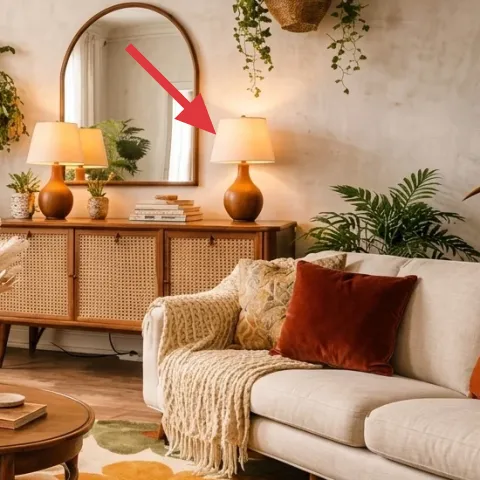
An arched wall mirror makes a room feel bigger by pulling light and reflecting window brightness back into the space. Because it’s a mirror (not a shelf), it doesn’t add visual weight the way lots of extra decor can. The trade-off is hardware: wall-mounted mirrors usually require something that’s either permanent or not renter-friendly. The move-friendly approach is to use mirror hanging methods allowed by your lease and wall type, or choose a mirror that can be leaned safely. This keeps the “arched” look while avoiding drilling. The reflection also helps the rug and curtains look more cohesive across the room.
Mirrors love warm lighting
A warm lamp glow plus a reflective surface makes earthy tones read richer, not dull.
Layer 6 — tall linen table lamp ($60) A warm pool of light at one comfortable height
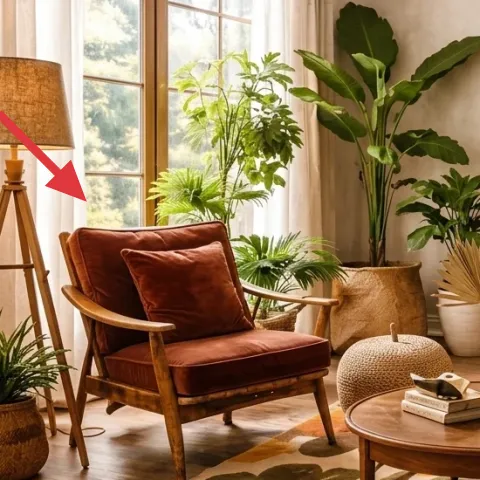
The tall linen table lamp brings the room’s warm tone from “daylight” into “evening,” and its fabric shade softens shadows on the sofa. In shared living rooms, this is better than adding brighter overhead light because it’s flattering from multiple seating positions. It also pairs naturally with the rug’s earth colors—the lamp shade texture looks right next to woven and knit fabrics. The trade-off is that linen shades don’t cast super crisp task lighting, so it’s not the best choice for reading small text. Still, for hanging out, it’s exactly the right vibe and it packs easily as a freestanding piece.
Match the shade, not the base
In boho spaces, keeping linen tones consistent is more important than having identical lamp hardware.
Layer 7 — dyed pillow covers (rust + burnt orange) ($30) Color that you can take with you
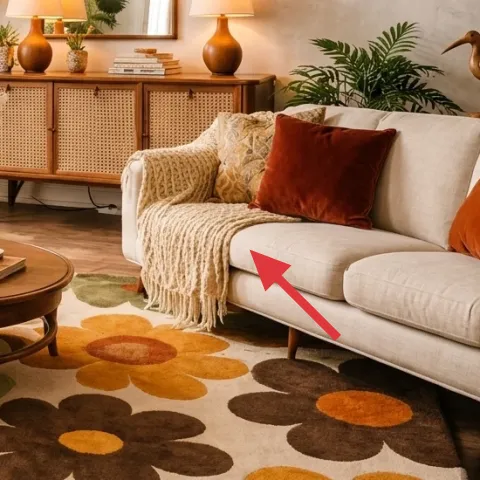
Rust and burnt orange pillow covers pull the room’s warm palette together, especially against the off-white curtains and the cream throw blanket. This is also a shared-housing cheat code: textiles are the easiest things to swap when you move, and covers keep their look longer than furniture tweaks. The alternative is buying a whole new pillow set, which can feel wasteful when roommates change or tastes shift. With dyed covers, you get a custom color story without committing to a fixed wall change. Trade-off: dye can be a little messy, so the “do it once, then enjoy” mindset helps.
Color reads best in pairs
One solid rust cover plus one burnt orange cover keeps the palette warm without leaning flat.
The cost, layer by layer
| Layer | Item | Cost |
|---|---|---|
| 1 | Area rug with large flower pattern | $200 |
| 2 | Off-white sheer curtains | $80 |
| 3 | Cream throw blanket | $60 |
| 4 | Woven tray on the table | $35 |
| 5 | Arched wall mirror | $120 |
| 6 | Tall linen table lamp | $60 |
| 7 | Pillow covers in rust + burnt orange | $30 |
| Total | $585 | |
If you want a cheaper variant, downsize the rug to a less bold pattern, choose fewer curtain panels, and pick one lamp instead of duplicating lighting. The room still reads warm if at least two textiles (rug + throw) do the heavy lifting.
What worked, what didn't (across the whole room)
Most of the wins here are about texture and warm balance: patterned rug + sheer window softness + woven and knit accents. The few weak points show up when lighting or wall mounting choices make the room feel either flat or too “staged.”
What worked
- The flower-pattern rug anchors the seating area and hides everyday wear better than a solid base.
- Sheer curtains soften the window glare and make the warm palette feel calm, not loud.
- A cream throw blanket adds knit texture where you actually see it—on the sofa arm and seat edge.
- The woven tray turns small clutter into a styled still-life without extra bins.
- An arched mirror adds depth and bounces daylight around the room.
- Warm linen lamps keep evenings gentle, especially for shared movie nights.
What didn't
- If the rug is too small, the pattern feels random and the room stops reading as one layout.
- Heavy curtains would fight the boho warmth; sheers are the right balance for this palette.
- Going too matchy with accessories makes shared living rooms feel staged instead of lived-in.
- Wall mounting a mirror the wrong way can create stress at move-out; pick a safe, lease-friendly method.
- Overusing orange accents can tip into “one-note,” so keep pillows as the main color pop.
What we'd skip if we did it again
Skip replacing fixed things or attempting any wall projects. In a shared space, the best upgrades are the ones that pack flat—textiles, mirrors, and freestanding lighting that survive the next move.
Skip an overly matchy set of pillows, trays, and lamp shades. The room’s strength is that it mixes textures (woven + knit + linen) while staying in one warm family.
Skip a mirror size that’s too small for the wall. The arched shape needs presence to add depth; otherwise it reads like an afterthought next to the window and console.
Frequently asked
How long does this kind of living room refresh take?
Plan for about a weekend. The rug and curtains are the slowest parts because you need to get sizes right and style the drape. After that, layering a throw, adding a mirror, and styling a tray are quick wins. If you’re sharing a calendar, doing it in two shorter sessions works well: one day for big layout items, one day for textiles and small objects.
What if this is a rental and I can’t mount anything?
Prioritize freestanding swaps. A mirror can be leaned if it’s lightweight and stable, or replaced with a tabletop reflective piece. For curtains, choose clip-on or tension-style hardware. The easiest “no mounting” look comes from the rug, curtains, throw, and pillow covers—the items that define this room can all be used without touching walls.
My living room is smaller—what should I change?
Start by sizing the rug to fit the seating area, not the whole room. If the pattern feels too bold at smaller scale, go for the same warm color family with a simpler pattern. Keep the window softness with sheers, but consider fewer pillows so the sofa doesn’t feel crowded. One arched mirror is still good for depth—just choose a size that fills the wall blank, not a postage-stamp version.
Where should I shop for these items if I want them to pack easily?
Look for textiles at home goods stores, department retailers, or any place with easy returns. For lighting, choose plug-in table lamps with fabric shades so you can pack the shade and base separately. For mirrors, focus on lightweight frames and non-permanent hanging options. Woven trays and decorative ceramics often show up at thrift and vintage shops—great for shared housing because they feel collected, not precious.
What’s the biggest mistake people make in boho living rooms?
Overbuying matching sets. Boho stays interesting when different textures do the work: woven tray, knit throw, linen shade, and patterned rug. If everything comes from the same collection, the room stops looking layered and starts looking uniform. Keep your color family consistent, then vary materials and shapes across the layout.
More in Living Room
7 no-drill upgrades for a boho living room, $600
Warm, boho living room updates that pack and move with shared-housing life. With a $600 refresh budget, swap in an earth-toned rug, sheer c…
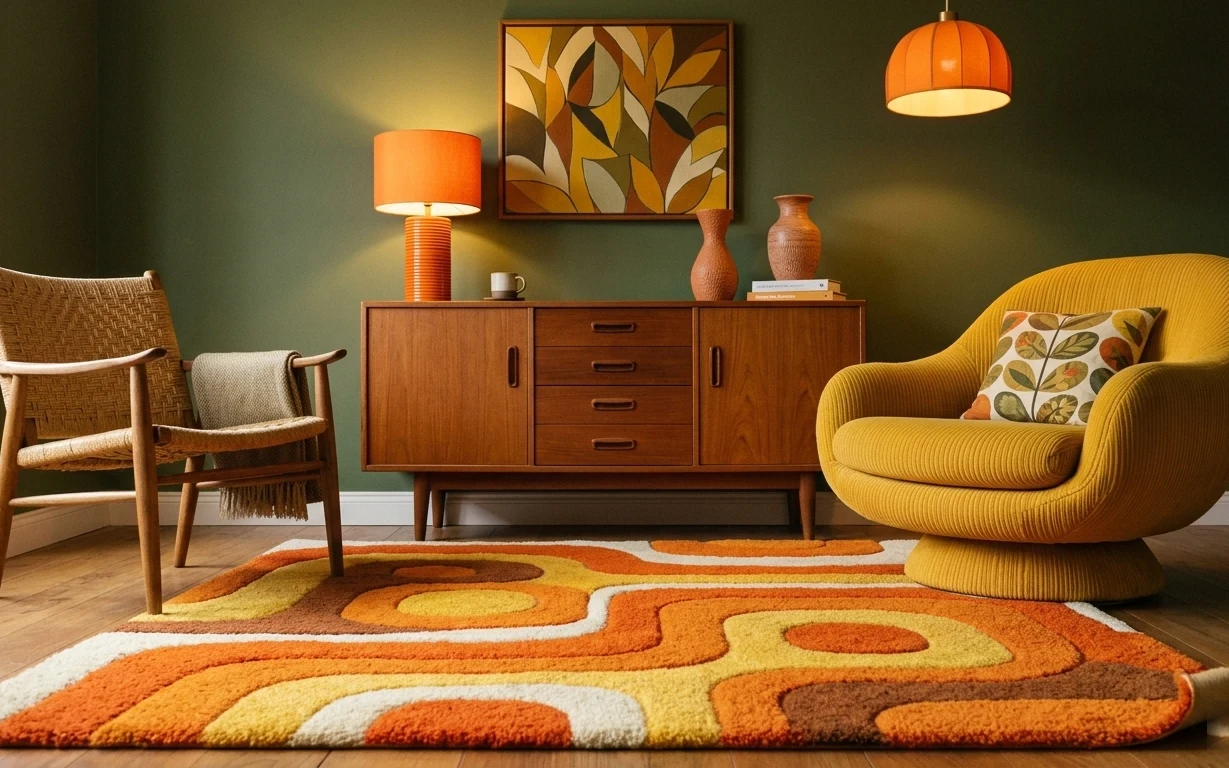
7 practical weekend swaps for a living room seating corner, $800
A mid-century living room seating corner, refreshed with 7 budget-friendly swaps totaling $800. Focus on a bold multicolor rug, a remade ab…
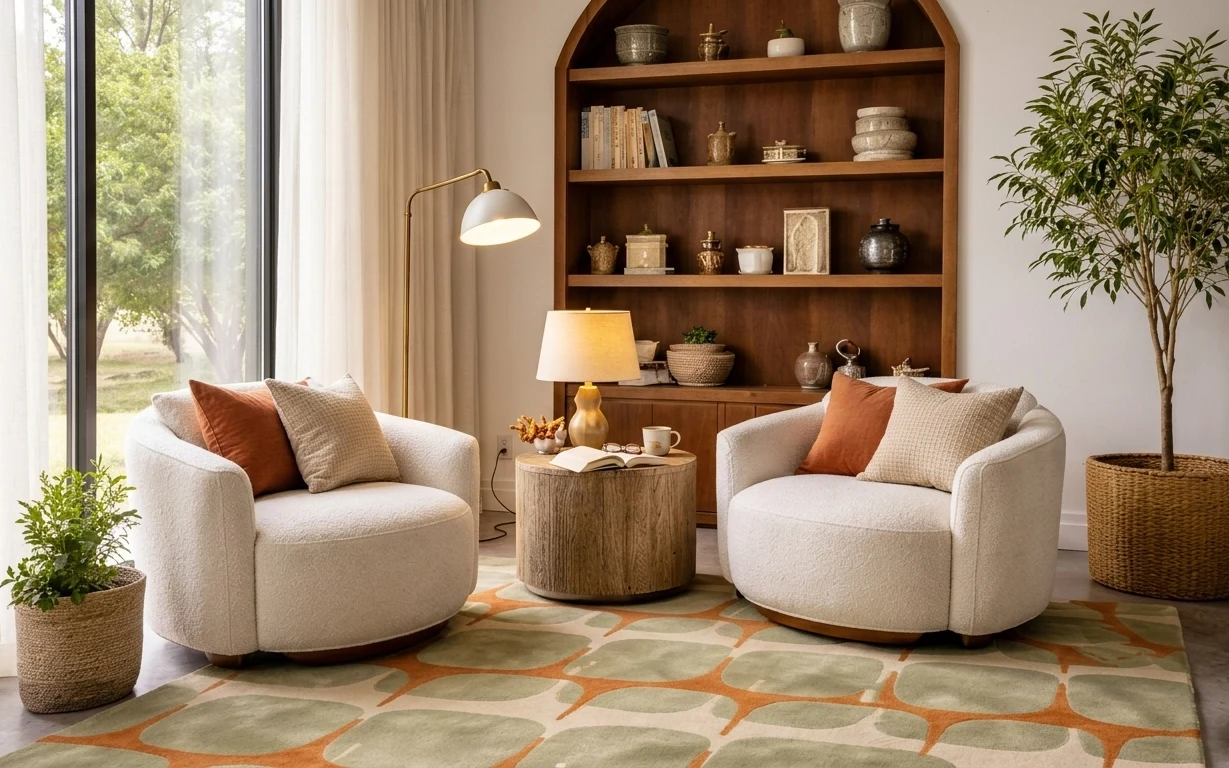
What $700 buys: an earthy living room seating refresh
A weekend refresh for a living room seating area using 7 visible updates—patterned rug, floor-to-ceiling curtains, and warm lighting. The l…