- Best for
- Move-friendly bedroom refresh
- Time
- 2–4 hours for styling + swaps
- Total cost
- $383 (under $400)
- Renter-safe
- No-drill textiles + freestanding decor
Why this terracotta-and-oat palette is the bedroom of 2026
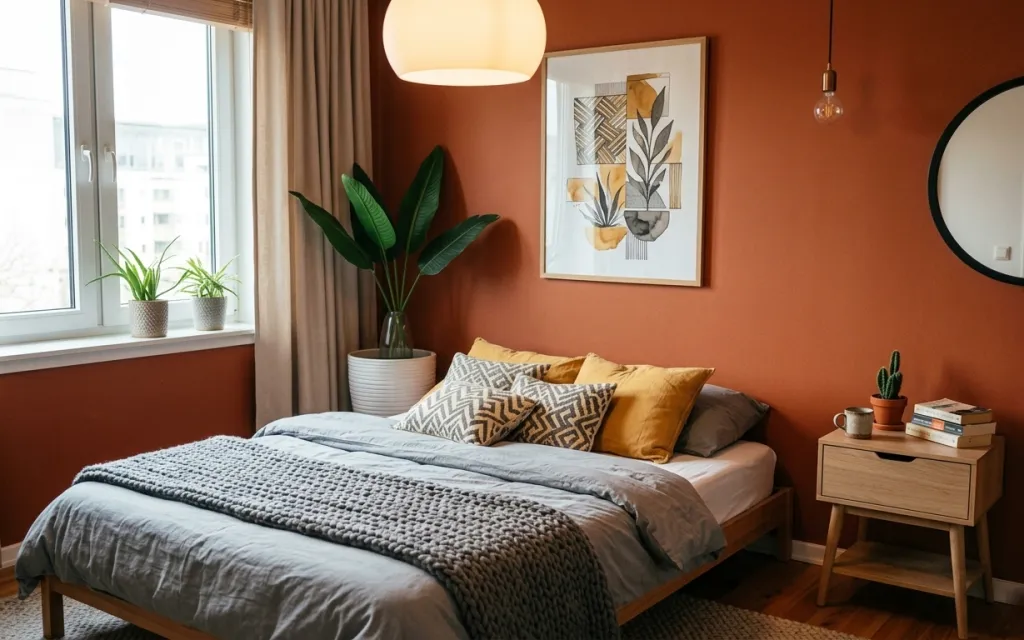
The orange wall color sets the tone, so the goal isn’t to fight it—it’s to repeat the warmth in softer materials. In the photo, you can see crisp beige curtains, a dark gray knit throw, and mustard-and-pattern pillows that add structure without looking fussy. The simple wood bed frame and light bedside table keep everything grounded, while the round mirror bounces light into the corner. For shared housing, this is achievable because the “big impact” pieces are all removable textiles and freestanding furniture.
I used to overcorrect for bold wall colors by buying cooler, bluer accents. Here’s the mistake: when the wall is already warm, icy tones look disconnected fast. The fix is repeating the wall’s warmth in fabric—like that charcoal knit and mustard cushion—so the room reads intentional instead of mismatched.
Layer 1 — 5×7 jute-style area rug ($100) Texture underfoot that hides mess
A jute-style 5×7 rug anchors the bed zone and brings in that slightly rough, woven texture that’s already echoed by the knit throw. I’d choose something with a tight, neutral weave (not super plush) because shared-house floors take real life seriously: shoes, coffee runs, and the occasional “oops.” This also makes the terracotta wall feel less stark by adding an earthy middle tone. The trade-off is that a thinner woven rug doesn’t feel as cushy as a shag, but it’s easier to roll up when your lease ends.
Use the rug size to frame, not fill
Let the rug extend under the front of the bed; you want the bed to feel “set on” something, not floating on bare floor.
Layer 2 — beige curtain panel pair ($40) Taller-looking windows with less visual noise
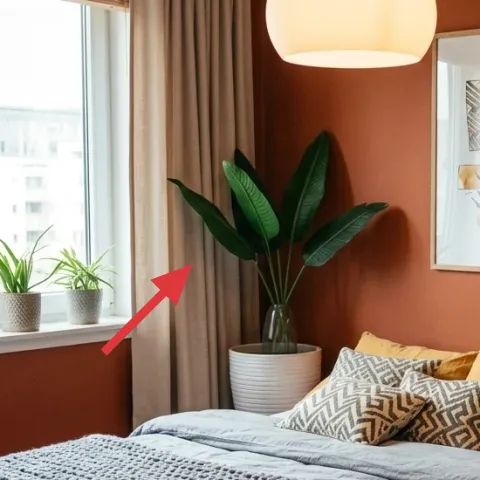
In the hero, the beige curtains soften daylight and blur the edges of the window area, which matters when you have a warm wall color competing for attention. A curtain panel pair in a medium neutral gives you that same “quiet frame” around the bed without adding a new color story. The trade-off with curtains is practicality: too-dark panels can swallow light in a smaller room, so stick with a lighter beige. This option also packs flat and can be re-hung with whatever curtain rod your rental already has.
Choose a drape you can live with daily
A little weight helps the panels fall smoothly, even when you’re adjusting around roommate schedules.
Layer 3 — framed botanical wall art (square frame) ($35) A plant-forward accent you can DIY
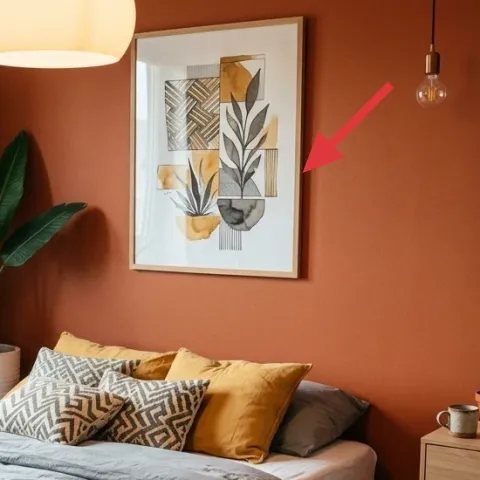
The framed botanical print is the visual bridge between the indoor plants and the leaf shapes on your bedding accents. When wall art is this simple, it keeps the terracotta paint from feeling loud—it reads warm and intentional instead. The move-friendly part: you’re swapping in an art piece that can come with you, not a permanent install. Since the frame size looks like a standard square, it’s also a great DIY candidate: the style is easy to mimic with layered marks and simple plant-inspired shapes.
Make it instead of buying it
Make a hand-painted abstract botanical print on cardstock, then slide it into a simple frame to match the look in the photo.
Materials
- Cardstock (8.5×11 sheets), 2 sheets — craft store — $8
- Acrylic or gouache paint set, 1–2 colors — craft store — $7
- Small brush set — craft store — $6
- Black marker or fine liner — craft store — $4
- Simple frame-ready backing sheet (optional) — craft store — $3
Steps
- Sketch a few plant-like leaf shapes lightly in pencil or marker on the cardstock.
- Block in 2–3 earthy tones with small brush strokes, leaving some cardstock showing.
- Layer darker leaf accents last so the shapes read from across the room.
- Add a small “stem” line or two in black for contrast and structure.
- Let the ink/paint dry fully, then trim if needed to fit the frame insert.
- Slide the finished paper into the frame and secure with the frame’s existing backing.
Total DIY cost: $28 — saves about $7 over buying.
Don’t over-detail
If the lines get too busy, the botanical art competes with the wall color instead of calming it.
Layer 4 — dark gray knit throw blanket ($30) The cozy layer with a clean, modern weave
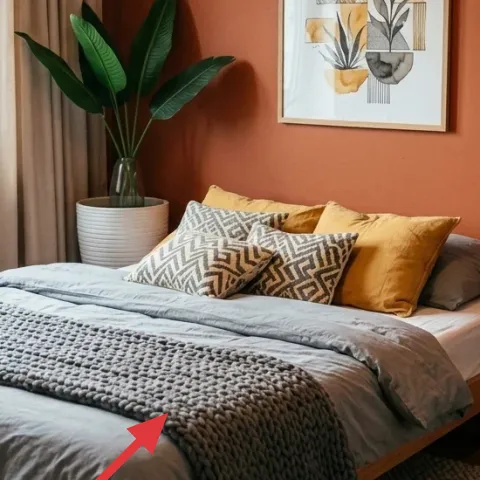
This dark gray knit throw creates the same visual “weight” you see in the hero while staying neutral enough to work with terracotta walls. The chunky texture reads modern because the weave is consistent and geometric—less shaggy, more tailored. Draping it across the bed makes it look styled, not made, which is helpful in shared houses where bedding gets shuffled. The trade-off is that heavier throws can feel warm in summer, so plan to fold it back when you don’t need the extra insulation. It also rolls up easily for moving.
Fold, don’t bunch
A clean fold line keeps the knit looking intentional instead of lumpy.
Layer 5 — mustard yellow throw pillow cover ($18) Warm color that echoes the wall
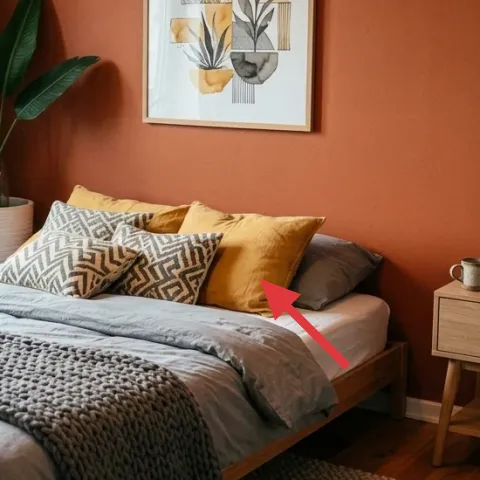
That mustard cushion is the fastest way to repeat the room’s warmth without repainting anything. On the bed, it adds a clear pop that still feels earthy because the yellow is muted—not lemon, not neon. I like using one solid-color pillow plus one patterned pillow (as seen here) because the pattern brings movement while the solid keeps the palette grounded. The downside: bright throw pillows can look dated if you pick a super trendy shade, so choose a toned mustard that reads more ochre than bright yellow.
Keep one pillow in “anchor” mode
If your patterned pillow gets too loud, the solid mustard calms the mix.
Layer 6 — light wood bedside table with drawer ($70) A storage surface that doesn’t fight the bed
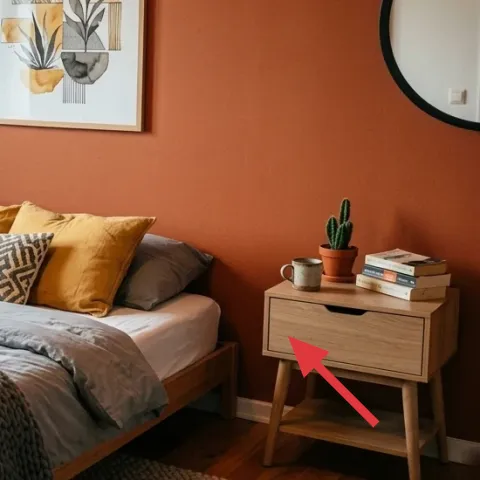
The light wood bedside table gives you a practical landing spot for the small cactus and a mug, but it also matters visually: its pale tone prevents the room from feeling top-heavy next to the orange wall. A single drawer keeps clutter from spreading across the surface, which is a lifesaver in shared housing. The trade-off is footprint—this kind of table is slimmer than a dresser, so it won’t hold big linens. In exchange, it’s easy to move, and the drawer gives you quick “reset” power before guests arrive.
Style with one plant + one book
Two objects max on the top surface keeps it looking curated, not crowded.
Layer 7 — round wall mirror with black frame ($90) Extra light where the room feels tight
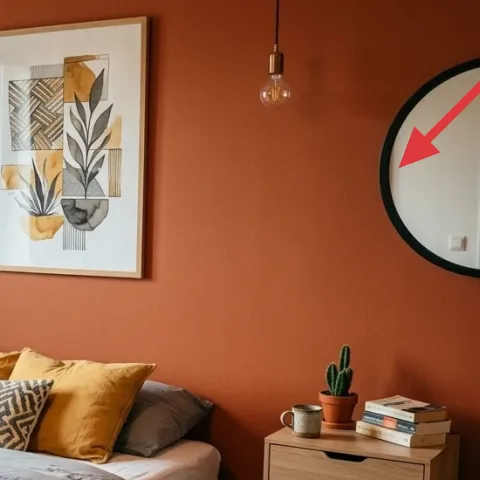
The round mirror adds a second shape language—curved instead of the room’s mostly straight lines—so it makes the bedroom feel softer and more spacious. The black frame also ties into the botanical print, giving you a quiet “outline” effect against the terracotta wall. The trade-off with mirrors is clarity: cheap mirrors can distort edges, so pick one with a clean reflection. This is also move-friendly compared to wall shelving, because it’s a freestanding wall accessory you can pack into foam and boxes for the next place.
Skip a mirror that’s too large
A huge mirror can overwhelm the bed zone; this size keeps the balance with curtains and art.
The cost, layer by layer
| Layer | Item | Cost |
|---|---|---|
| 1 | 5×7 jute-style area rug | $100 |
| 2 | Beige curtain panel pair | $40 |
| 3 | Framed botanical wall art (square frame) | $35 |
| 4 | Dark gray knit throw blanket | $30 |
| 5 | Mustard yellow throw pillow cover | $18 |
| 6 | Light wood bedside table with drawer | $70 |
| 7 | Round wall mirror with black frame | $90 |
| Total | $383 | |
If you want a cheaper route, prioritize the rug and curtains first, then pick one statement textile (either the knit throw or mustard pillow) instead of both. Keep the frame and mirror but choose simpler shapes and save the budget for the bed surface.
What worked, what didn't (across the whole room)
The biggest win here is repetition: warm terracotta gets echoed through mustard and woven textures, so the room reads cohesive even with lots of moving parts. Lighting and reflectivity also help—soft warm light plus a round mirror makes the bedroom feel brighter. The trade-off is that the palette is warm, so the wrong accent colors can look disconnected fast.
What worked
- The woven rug under the bed makes the bed feel grounded against the orange wall.
- Beige curtains frame daylight without adding a competing color story.
- Botanical wall art repeats the plant shapes and softens the room’s geometry.
- Dark gray knit texture makes the bed look styled without adding shine or clutter.
- One mustard pillow adds warmth while patterned accents keep it from feeling flat.
- The round mirror brightens the corner and counterbalances straight furniture lines.
What didn't
- If the curtain beige is too gray, the room can feel colder than the wall.
- A mirror with heavy distortion makes the plants and art look “off.”
- Overly bright yellow cushions read jarring against terracotta paint.
- Too-thick rugs can shift the bed height and make the space feel smaller.
What we'd skip if we did it again
Skip a thick, high-pile rug in a shared bedroom. It’s harder to roll, collects more lint, and can make the bed feel visually heavier against warm walls.
Skip a super matchy nightstand set. A single, simple bedside table in light wood gives you cohesion without locking you into one retailer’s “set” look.
Skip wall-mounted art that requires hardware beyond a simple removable hook. Freestanding frames and no-drill-friendly display choices survive moves—and still look intentional after the next lease starts.
Frequently asked
How long does this bedroom refresh take for shared housing?
For most roommates, it’s a quick reset: rug + curtains + textiles first, then art and mirror last. Expect about 2–4 hours if the furniture is already in place and you’re just swapping soft goods. If you’re doing the DIY art, add 45–90 minutes for sketching, painting, and trimming—plus drying time.
If my room is smaller than the photo, what should I keep and what should I downsize?
Keep the rug and one warm-texture textile layer—those create the biggest visual comfort per square foot. Downsize the mirror slightly or choose a less wide frame so it doesn’t dominate the wall. Also consider narrower curtain panels so the window area stays readable in daytime.
What if my room is bigger—can I stretch this look?
Yes. Keep the same warm palette approach, but scale one category: a larger rug (8×10 if the layout supports it) or longer curtain panels. Add one more plant grouping on the bedside table or window sill to maintain the plant-forward feel. The main rule is repetition: echo terracotta through fabric and texture.
Where should I shop for these items without blowing the budget?
Look for curtains, knit throws, and pillow covers at big-box retailers and online textile shops because you can compare fabric weight and color quickly. For the rug and mirror, check both mid-range retailers and local thrift or marketplace listings—condition matters more than brand. The DIY art works best with a simple frame size so you can reuse it across moves.
What’s the biggest mistake people make with terracotta walls?
They assume they need cool, blue-toned accents to “balance” the paint. In practice, terracotta already has warmth, so too-cool colors can look like they don’t belong. The fix is to repeat warmth with muted yellow, charcoal gray, and woven neutrals—then keep linework simple with botanical art.
Can I do this if I’m not allowed to change curtain hardware?
Absolutely. Stick to curtains you can hang from existing curtain rods, tension rods, or whatever setup is already present in the unit. You can also choose lighter panels so they drape well without needing perfect alignment. The styling impact comes from the color and height, not from drilling new hardware.
More in Bedroom
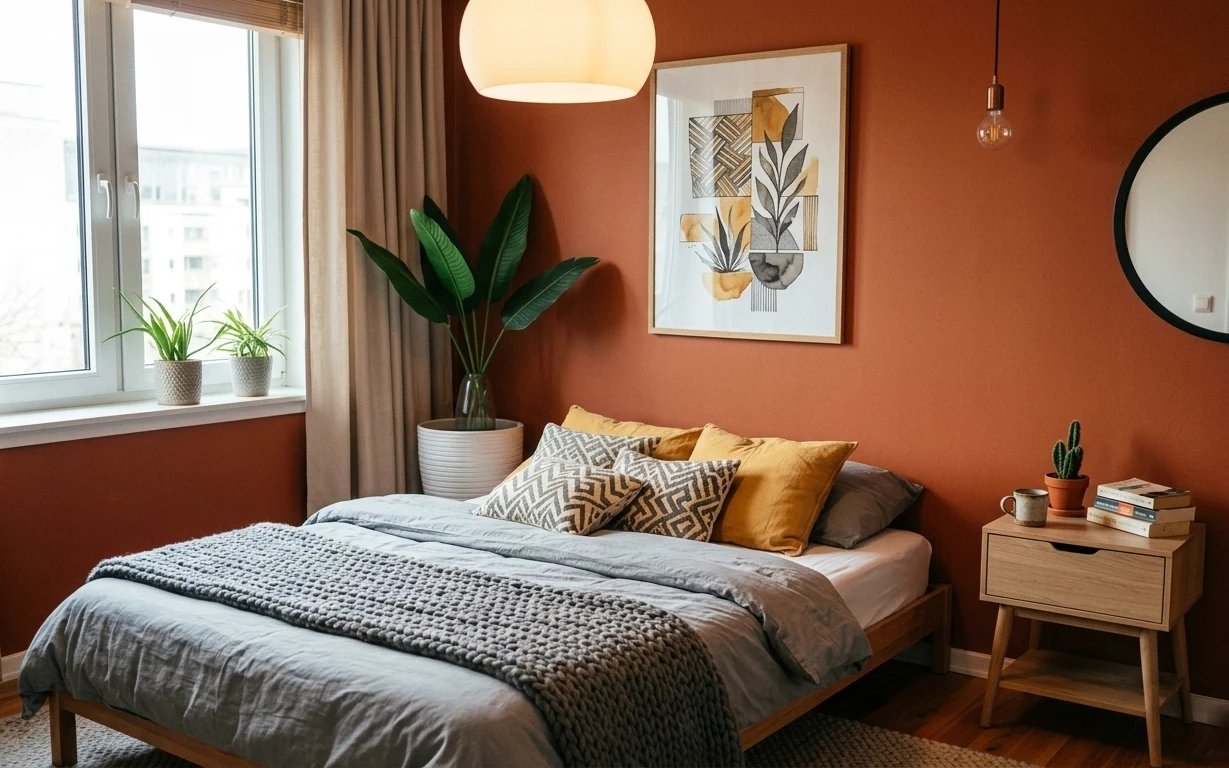
7 no-drill ways to style a terracotta bedroom for $400
A terracotta-and-beige bedroom refresh with move-friendly swaps: rug, curtains, framed art, throw textiles, a bedside table, and a round mi…
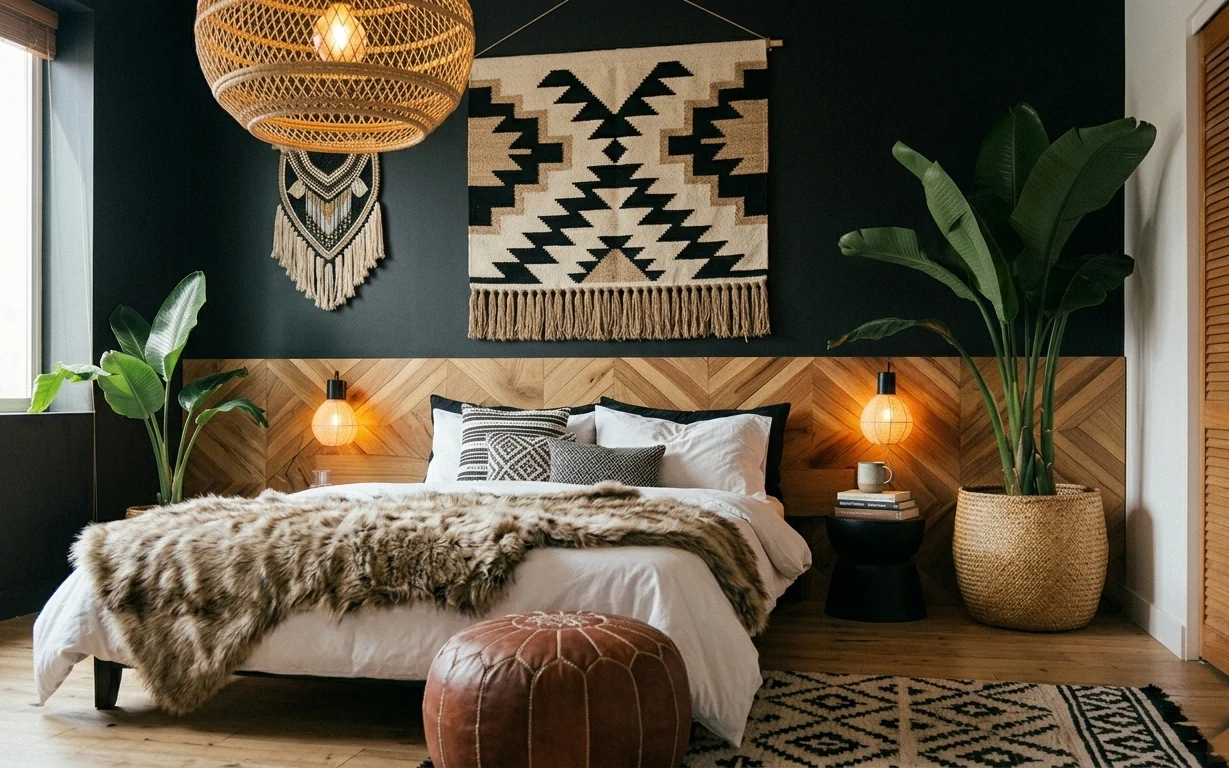
Under $500: boho bed nook refresh with renter-friendly wall decor
A boho bed nook refresh that looks like a full design moment—without drilling. With a $500 renter-friendly plan, you’ll layer a bold geomet…
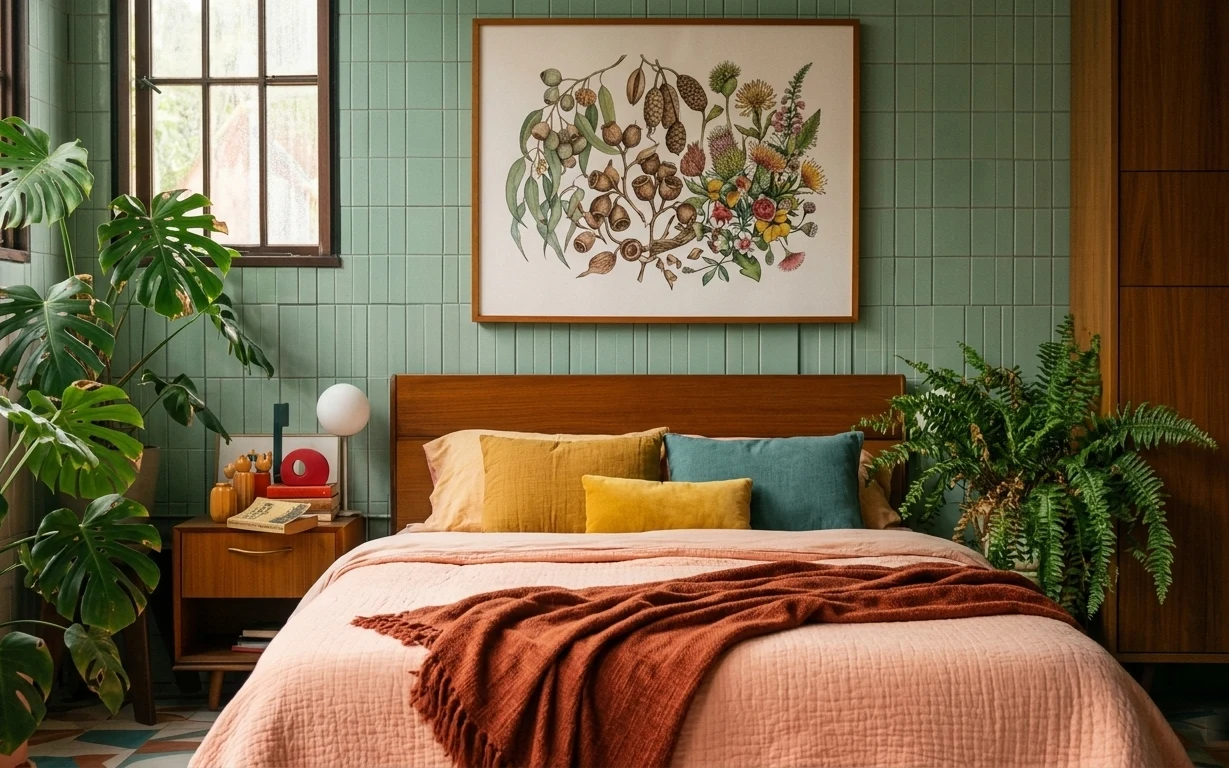
6 no-drill ways to style a green-and-terracotta botanical bedroom, $400
A botanical bedroom refresh using renter-safe swaps—textiles, plug-in lighting, removable wall art, and plants. This look stays cohesive wi…