- Best for
- evening mood lighting + grounding rug
- Weatherproof
- outdoor-rated rug and lights
- Difficulty
- Weekend-friendly DIY installs
- Cost
- about $555 for the layered look
Why woven-light and earthy planters are the patio seating nook of 2026
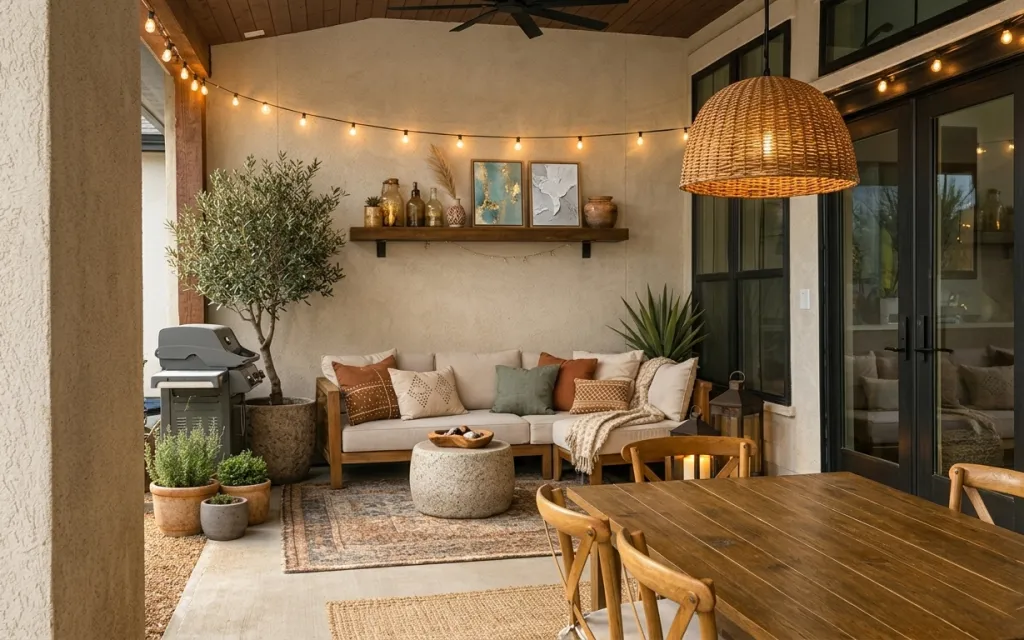
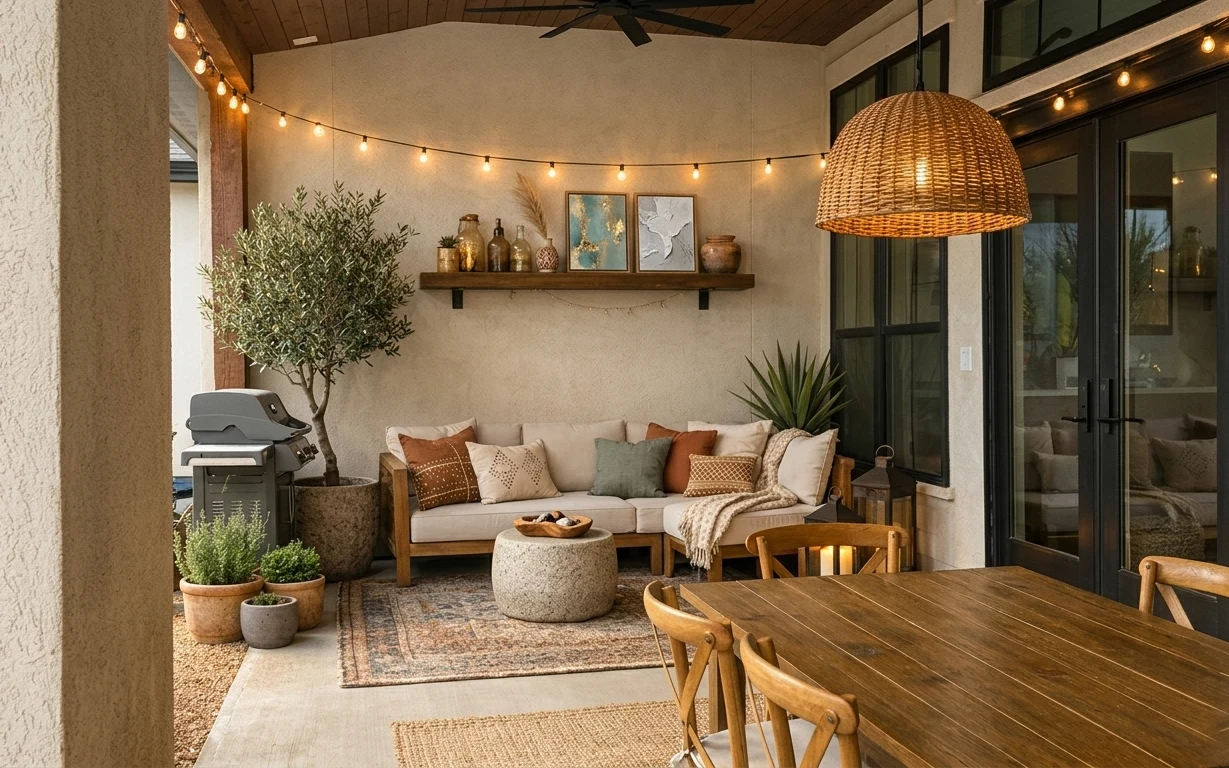
The first thing I notice here is the warm woven pendant hanging above the conversation zone, then the soft string lights that make the ceiling feel intentional. Under it all, the outdoor area rug in warm beige and faded pattern pulls the sofa and the low stone table into one spot. The materials do a lot of talking: woven light texture, stucco wall backdrop, and the rough cast-stone look of the table all keep the palette from feeling flat. For homeowners, you can pick higher-impact pieces like lighting and a real outdoor rug instead of chasing tiny decor.
I used to overthink “outdoor” updates and start with planters, then end up with a corner that still looked staged. This time, the fix was putting light first—string lights at the ceiling line change how every surface reads. Also, I used to buy the cheapest rug I could find; seeing how this one anchors the sofa makes me want to spend at least for an outdoor rug with a pattern that hides patio dust.
Layer 1 — outdoor area rug (5×7) ($200) patterned base for the sofa zone
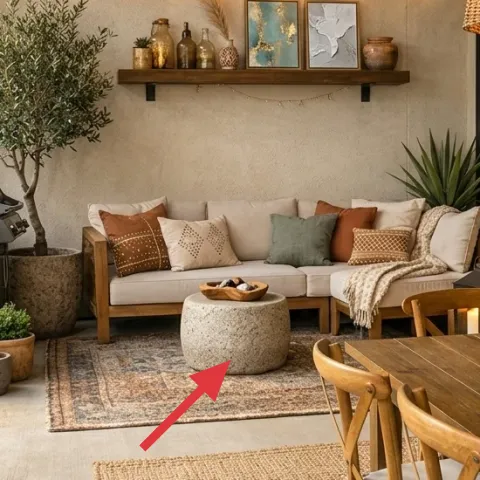
A 5×7 outdoor area rug in warm beige anchors the whole seating nook, especially under the low stone table and the front edge of the sofa. This choice matters because plain patio floors can make furniture feel like it’s floating, even with pretty cushions. Going with a weather-friendly rug also keeps the pattern from looking “too precious” when breezes bring in pollen and dust. The trade-off is size: if your rug runs too small, you’ll see gaps around the sofa and chairs. If you’re between sizes, size up so the dining chairs and front legs still feel connected.
Match the rug’s undertone to the stucco wall
Picking beige-forward neutrals keeps the wall and rug in the same visual temperature instead of creating a gray-on-gray battle.
Layer 2 — woven pendant lamp ($120) warm pool of light from the ceiling
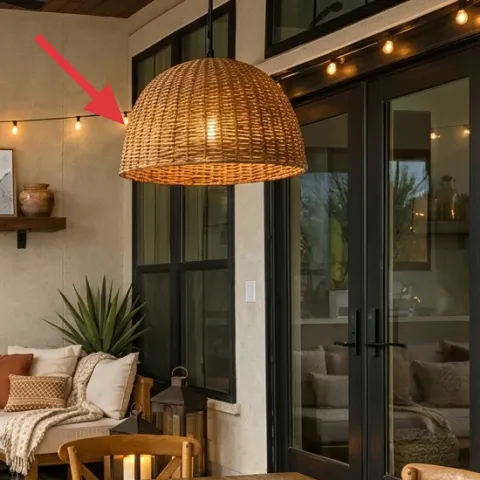
This woven pendant lamp adds a warm, textured glow right above the sofa, which is why the nook feels finished instead of temporary. Because it’s a dome shape, the light spreads without blasting glare toward anyone seated on the cushions. A woven shade also visually softens the wood ceiling beams and keeps the palette earthy. The trade-off is that you can’t treat it like a purely decorative lamp—you still want bulbs that give off a warm tone so the whole room reads cozy after sunset. If you’re swapping hardware, plan the install time before the weekend starts.
Check clearance and bulb heat
Woven shades trap heat more than metal ones—choose a bulb that matches the fixture rating and leave proper ceiling clearance.
Layer 3 — string lights ($15) ceiling line that makes evenings feel planned
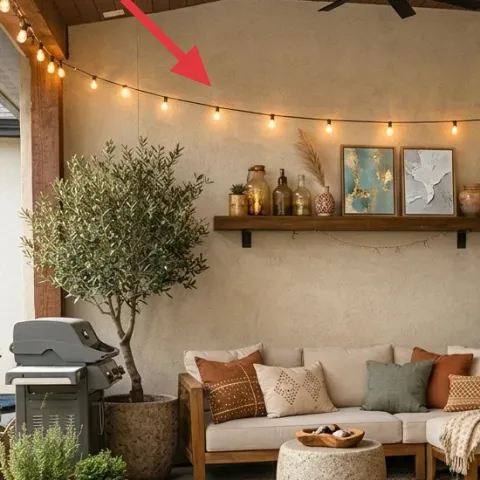
String lights across the ceiling turn the space into a “stay out a little longer” zone, even when the patio is mostly hard surfaces. Here, the warm bulbs echo the pendant’s glow, so the lighting reads intentional instead of random. This is the cheaper step that still changes your eye-level view every time you sit down. The trade-off is weather control: outdoor string lights need to be rated for outdoor use, and you’ll want them hung with enough slack to handle temperature shifts. Once they’re up, the room’s vibe improves instantly without changing furniture.
Keep bulb spacing even for a cleaner look
Uneven spacing shows up fast in photos—measure once, then clip to match every few feet.
Layer 4 — framed wall art on floating shelves (3-piece) ($60) color accents against the light stucco
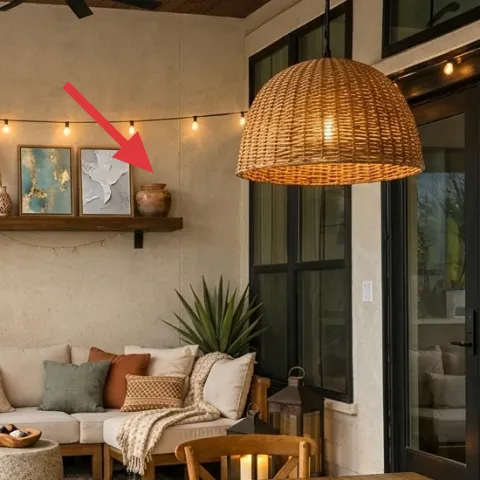
Those three framed pieces on the shelves add a crisp focal point without adding visual clutter to the seating area. The frames sit at eye height relative to the sofa, so you get a “designed” look instead of a blank wall that pulls your gaze downward. This works especially well with an earthy shelf styling because the art brings a bit of contrast—light shapes against the warm wall. The trade-off is that you have to commit to sizing: too small and it disappears; too large and it crowds the shelf items. A small set of matching frames feels more cohesive than mixing random styles.
Use consistent frame finishes
Matching frame colors keep the shelf look calm, even when the planters and pillows add texture.
Layer 5 — black floating shelves (pair) ($60) storage you can style in minutes
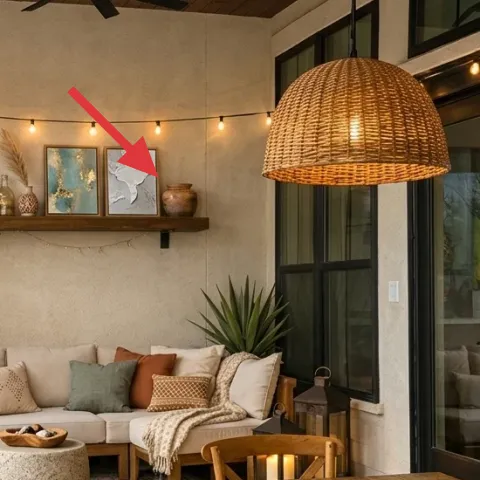
Black floating shelves create a visual “stage” for bottles, ceramics, and small greenery while keeping the wall from feeling empty. The matte dark tone also grounds the lighter stucco and makes the framed art feel deliberate instead of floating on its own. Floating shelves are a great weekend option because the installation is straightforward, and you can refresh the styling without buying new furniture. The trade-off is functional: shelves can feel busy if you overload them, so stick to a repeat rhythm—one taller object, a couple of medium pieces, and a small grouping. That balance is what keeps the shelf from looking like storage.
Leave breathing room between objects
Styling with gaps reads more intentional than stacking every inch of the shelf.
Layer 6 — wood dining chairs (pair) ($60) pulls the foreground into the same palette
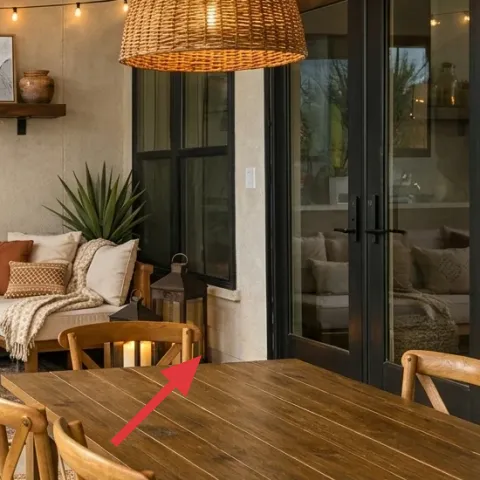
The wood dining chairs in the foreground do double duty: they bring warmth near the camera and they tie the dining function into the seating nook’s wood-and-beige palette. Choosing chairs with similar wood tone to the sofa legs keeps the whole patio from looking like two separate zones. A pair matters here because you can style sightlines—chairs frame the view of the rug and low stone table. The trade-off is comfort vs. speed: fully upholstered dining chairs can be pricier and heavier to set up, while simpler wood chairs keep the weekend refresh doable. If your current chairs are mismatched, updating at least the visible pair changes the first impression.
Match wood tones, not exact stains
Look for the same undertone (warm vs. cool) so the patio reads cohesive even if the shade differs.
Layer 7 — small potted plant group (terracotta + light gray pots) ($40) height and texture at the left edge
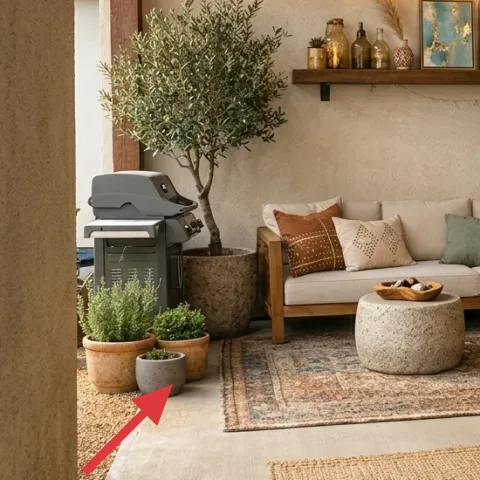
A tight group of small potted plants in terracotta and light gray pots fills the left corner with height and texture without blocking the grill or drawing attention away from the seating zone. This is one of those changes that reads instantly in wide shots because plants break up the straight lines of stucco and patio flooring. The variety matters: a bushy plant gives volume, while a smaller pot anchors the bottom. The trade-off is maintenance—potted plant groupings dry out at different rates, so you’ll need to check moisture more often than with a single planter. When styled well, it looks collected instead of cluttered.
Choose pots with the same “family” of neutrals
Terracotta plus light gray keeps the palette warm while still feeling fresh and airy.
The cost, layer by layer
| Layer | Item | Cost |
|---|---|---|
| 1 | Outdoor area rug 5×7 | $200 |
| 2 | Woven pendant lamp | $120 |
| 3 | Outdoor string lights (set) | $15 |
| 4 | Framed wall art set (3 pieces) | $60 |
| 5 | Black floating shelves (pair) | $60 |
| 6 | Wood dining chairs (pair) | $60 |
| 7 | Small potted plant group in matching pots | $40 |
| Total | $555 | |
If the pendant or rug feels like “one more thing” to buy, substitute a plug-in outdoor floor lamp with a warm shade and add string lights for the main glow. That keeps the evening mood while spreading spending across multiple weeks. The shelf and rug combo is still the best value for the look.
What worked, what didn't (across the whole room)
This patio reads cohesive because the lighting and textures agree: warm woven glow, warm bulbs, and a beige rug that unifies the seating. The wall styling works because the shelves create a deliberate focal point, and the greenery keeps it from feeling too tidy. The few misses were about “too similar” choices—when everything is the same shade, the patio looks flat instead of layered.
What worked
- The woven pendant lamp adds texture overhead and keeps the evening light warm instead of harsh.
- String lights at the ceiling line make the stucco wall feel intentional and photo-ready.
- The outdoor rug anchors the sofa and the low stone table, making the seating zone feel planned.
- Black floating shelves create a clean silhouette that balances the light wall color.
- Three framed pieces keep the shelf area from looking empty without overcrowding.
- Terracotta-and-gray planter pots add height and soften hard patio lines.
What didn't
- Grouping plants without a height mix can make the left corner look like one flat blob.
- Buying a rug that’s too small shows patio floor edges and makes the seating area feel less connected.
- Overstuffing shelves can fight the framed art and turn the wall into visual noise.
- Relying on only overhead light makes cushions and textiles look darker after sunset.
What we'd skip if we did it again
Skip replacing furniture first. In photos, the lighting and rug do most of the work, and chairs that match the wood-and-beige palette come off cohesive faster than a new sofa or table.
Skip choosing mismatched lighting temperatures. If the pendant bulbs and string lights aren’t the same warm range, the wall art and cushions start competing instead of coordinating.
Skip shelves with no styling plan. Floating shelves look best when they have a repeat rhythm—tall object, medium objects, small accents—so the corner reads curated instead of cluttered.
Frequently asked
How long does a refresh like this usually take on a weekend?
For most homeowners, plan on about 4–6 hours total spread across one or two days. Rug and chair placement can be done in under an hour. Hanging string lights and mounting shelves takes the most time—measuring, spacing, and making sure everything sits straight in relation to the sofa. The final 30–60 minutes is styling the shelves and plant group so the wall doesn’t feel random.
Is this renter-friendly, or is it only for homeowners?
This look is mostly homeowner-friendly because it relies on installed pieces like floating shelves and a mounted pendant. If you’re renting, the lighting and shelving can still be done with tenant options: use plug-in lighting and choose wall-friendly shelf systems that don’t damage paint. The core of the vibe—the rug, warm bulbs, and layered textures—still works even if you swap the installed items for freestanding versions.
What if my patio is smaller or the sofa doesn’t fit the same layout?
The biggest adjustment is the rug size and chair placement. On a smaller patio, choose the next size down but keep it centered under the seating zone so the rug still visually connects the sofa to the low stone table area. For shelves, keep them to one long run or one shelf if wall space is tight; the key is a focal point at eye level, not covering the entire wall.
Where can I shop for the key pieces without overspending?
Start with the outdoor rug and lighting, since those set the tone. Outdoor rug deals often show up during seasonal sales, and woven pendant lamps are widely available in both big-box stores and online lighting shops. For framed art, look for matching sets so the wall feels cohesive. For shelves, hardware stores and home centers usually have matte black options that fit modern outdoor palettes.
What’s the biggest mistake people make on a patio refresh like this?
The most common misstep is treating outdoor lighting like decoration only. If the bulbs aren’t warm and evenly placed, everything can look gray or flat after sunset, and the cushions lose their color. Pair that with a rug that’s too small and the whole seating zone reads unfinished. Prioritize warm lighting and adequate rug coverage first.
More in Outdoor & Patio
7 patio seating nook swaps for a $600 outdoor refresh
A patio seating nook can feel finished without a renovation: warm woven light, string lights, and a layered rug. This $600 weekend refresh …
7 swaps for a $700 balcony nook refresh
Turn your balcony nook into a place you actually use with 7 budget-friendly refresh swaps, totaling $630. This weekend-ready plan leans on …
Warm dusk patio seating upgrades, $500 renter-friendly refresh
A patio seating area that feels like a private backyard destination—using no-drill renter swaps: a statement outdoor rug, bold throw pillow…