- Square footage
- Balcony corners to small seating zones
- Cost
- $630 total (7-layer refresh)
- Difficulty
- Moderate weekend project
- Renter-safe
- No-drill is possible if you skip hard mounting
Why woven-rattan light-and-green plant palette is the balcony nook of 2026
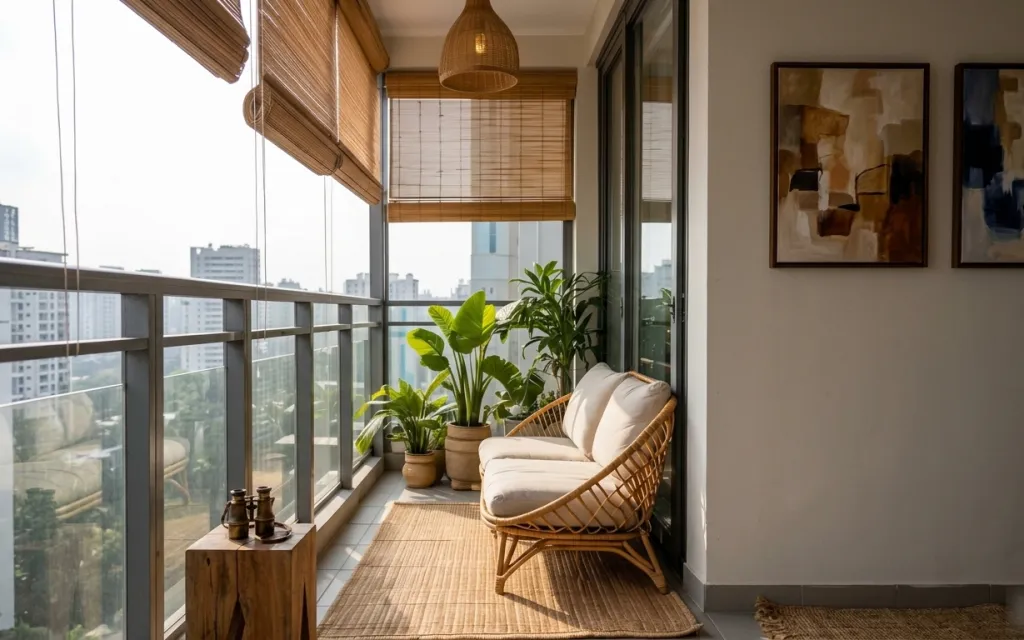
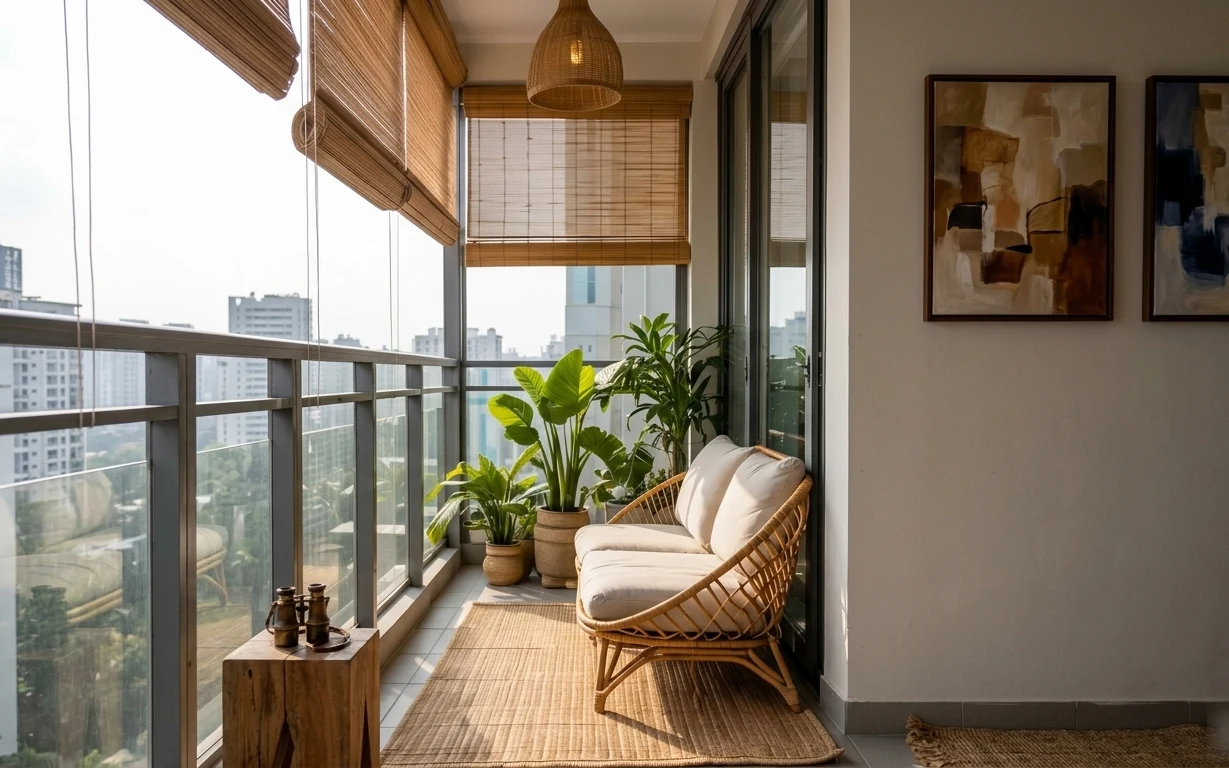
The fastest way to make a balcony feel livable is to treat it like a tiny room: anchor the floor with a jute area rug, then pull the eye up with a wicker pendant light. In this photo, the rug’s warm texture under the rattan lounge chair does the heavy lifting, while the terracotta plant pots bring color without needing extra furniture. The small wooden side table gives you a real spot for drinks, and the two framed abstract wall arts keep the wall from looking blank.
I kept overthinking “outdoor durability” and almost bought a safer, flatter-looking rug. But when I followed the textures in front of me—jute underfoot, woven chair lines, and glazed terracotta—I realized the point is comfort and cohesion, not hiding materials. That’s also why this plan works for homeowners: you can commit to the choices that make you want to sit down immediately.
Layer 1 — jute area rug ($200) texture underfoot
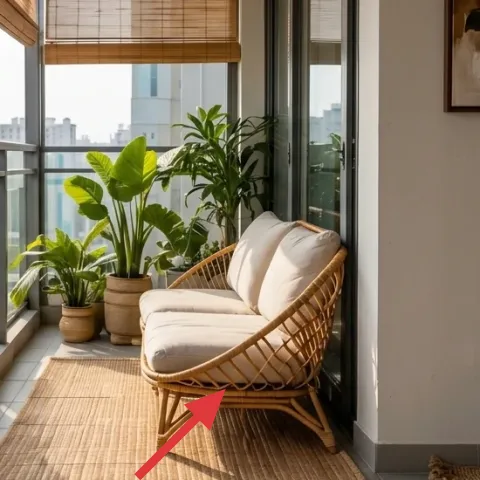
Start with the jute area rug because it’s the only piece that changes the whole balcony’s “shape” at floor level. In the hero, the rug’s woven, tan texture softens the tile floor and gives the rattan lounge chair a stable landing zone. Choosing a 5×7-style size matters: too small makes the chair feel like it’s floating; too large can crowd the railing edge. The trade-off is that jute shows wear faster than synthetic rugs, so it’s worth placing it where spills are easier to catch and rotate.
Pick the rug color by your wall
Match the rug’s undertone to the painted exterior wall so the space looks calm, not chartreuse-random.
Layer 2 — rattan lounge chair ($250) seated comfort with airy lines
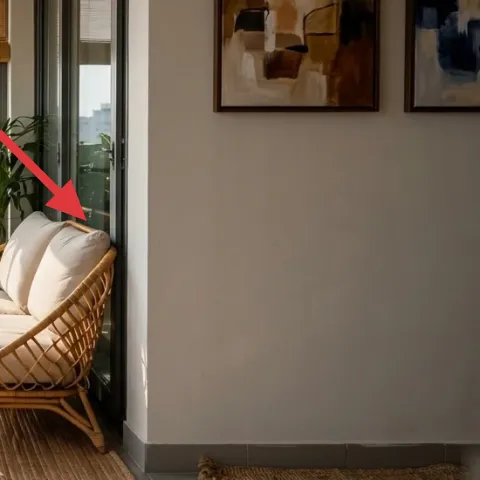
The rattan lounge chair is the visual hero because its curved arms and open weave echo the balcony’s railing and woven lighting. That’s why it works better than a chunky outdoor loveseat here: the chair reads light from every angle, even when it’s sitting close to the wall. The cushion on top brings the comfort—without it, the chair would be all texture and no support. The trade-off is that rattan needs a little care, so you’ll want to keep it covered or sheltered during heavy rain, depending on your building.
Use the cushion to set the tone
A cream cushion keeps the look bright during daylight and lets the green plants stand out.
Layer 3 — wicker pendant light ($80) warm glow overhead
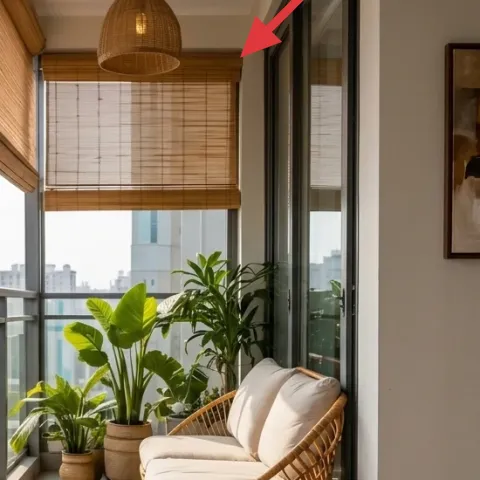
The wicker pendant light adds a “room ceiling” feeling, which is exactly what a balcony usually lacks. In the photo, the woven shade creates soft, patterned shadows and makes the chair-and-rug grouping look intentional even in daylight. If the obvious alternative is a bare ceiling light, this pendant wins because it adds texture at eye level without adding furniture. The trade-off is bulb temperature and shade density—if it’s too dim, you’ll still need task lighting later, but if it’s balanced, the pendant alone makes the space feel finished.
Match the pendant to the chair’s weave
Woven materials belong together: the chair’s rattan and the pendant’s wicker keep the palette consistent.
Layer 4 — terracotta plant pots with green leafy plants ($40) DIY paint refresh
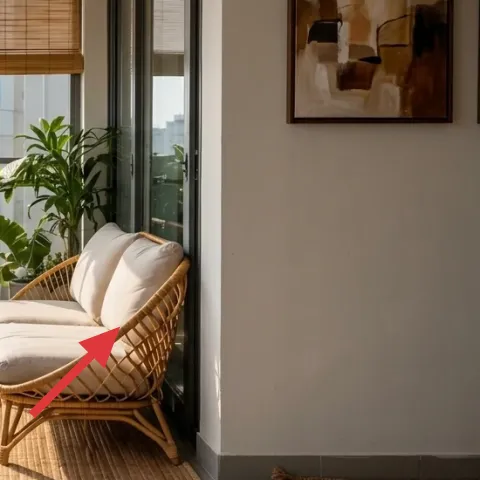
Plant pots are the fastest way to add color on a balcony where you can’t (or don’t want to) build a lot of storage. Here, the terracotta plant pots warm up the space and the green leafy plants bring life right where you’ll look while seated. Instead of buying new planters, this layer is the DIY move: refinish what you already have so the color matches the rug and feels cohesive with the rattan textures. The trade-off is prep time—paint won’t bond well to dusty pots, so cleaning matters.
Make it instead of buying it
Paint terracotta plant pots to deepen the warm tones and make the plants look styled next to the jute rug and rattan chair.
Materials
- Outdoor primer (spray) — ~12 oz can — hardware store — $10
- Exterior acrylic paint — small can — hardware store — $7
- Foam brush + small sanding block — set — hardware store — $8
Steps
- Degrease and rinse the terracotta pots, then let them fully dry.
- Lightly sand to scuff the surface so paint grips evenly.
- Wipe away dust with a dry cloth.
- Spray primer in thin coats, letting it dry between coats.
- Apply exterior acrylic paint in thin coats, staying consistent around the pot’s curves.
- Let everything cure fully before placing plants back inside.
Total DIY cost: $25 — saves about $15 over buying.
Layer 5 — small wooden side table ($80) a surface for everyday
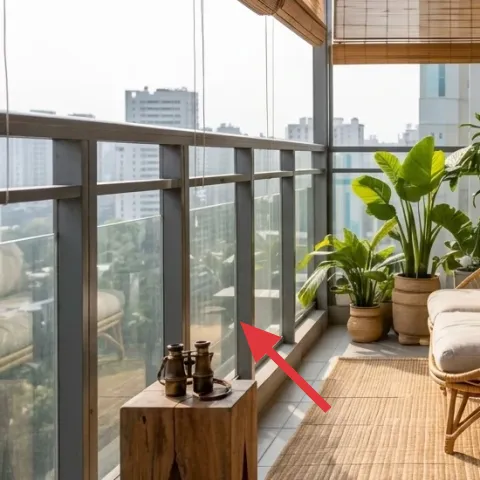
A small wooden side table turns balcony seating from “look at it” into “use it.” In the hero, the table sits between the railing and the chair, making it easy to set down a drink or a book without reaching over the cushion. It’s also a color bridge: the warm wood echoes the chair and keeps the space from feeling too beige and flat. The trade-off versus going bigger is surface space—if you regularly host, you may want a slightly wider top later—but for a weekend refresh, this size keeps the walkway feeling open.
Don’t put the rug edge where rain runs
Keep the rug positioned so water from the railing or doors doesn’t continuously wick into the fibers.
Layer 6 — framed abstract wall art (left) ($40) texture on the blank wall
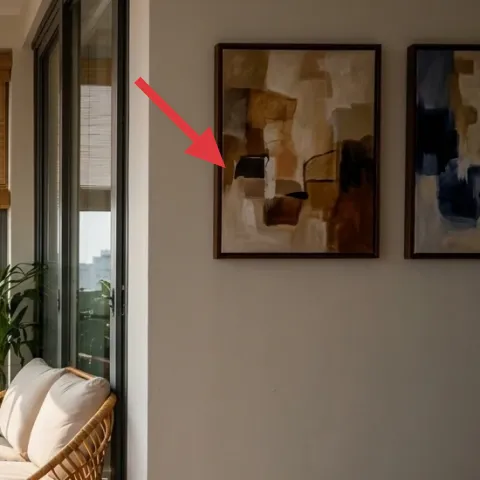
Two framed abstract pieces help the balcony wall feel like part of the same design plan as the seating area. The left frame in the hero adds warm neutrals and soft shapes that match the chair’s organic curves and the terracotta pots. An obvious alternative is skipping wall art and leaning on plants alone, but then the wall stays visually quiet from standing height. The trade-off is weather awareness: pick art that’s sealed and use outdoor-rated frames if your balcony gets regular sun or moisture.
Keep the frames at seated eye level
That’s where you naturally look—so the art feels like part of the conversation, not a background.
Layer 7 — framed abstract wall art (right) ($40) balance and symmetry
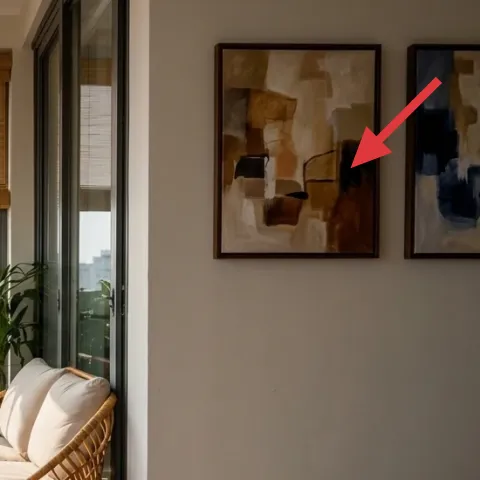
The right framed abstract wall art balances the left piece so the wall doesn’t feel lopsided once you’re sitting in the rattan chair. Together, the two frames create a focal zone that competes less with the green leafy plants and the woven pendant light. If you only add one frame, the composition can feel unfinished, especially when the balcony opens out toward the railing view. The trade-off is spacing: leave breathing room so the two frames look like a pair, not a crowded collage.
Match frame finishes to your wood table
Repeating warm wood tones across frames and furniture keeps the balcony from looking random.
The cost, layer by layer
| Layer | Item | Cost |
|---|---|---|
| 1 | Jute area rug 5×7 | $200 |
| 2 | Rattan lounge chair with cushion | $250 |
| 3 | Wicker pendant light | $80 |
| 4 | Terracotta plant pots (DIY paint refresh) | $40 |
| 5 | Small wooden side table | $80 |
| 6 | Framed abstract wall art | $40 |
| 7 | Second framed abstract wall art | $40 |
| Total | $630 | |
Cheaper variant: choose a thinner jute-look rug (still warm in tone) and swap the second framed piece for a single oversized print, keeping the same chair-and-plant styling.
What worked, what didn't (across the whole room)
The biggest win here is layering texture at three heights: rug underfoot, rattan seating in the middle, and wicker lighting overhead. The framed abstract art then ties the wall into the same palette as the terracotta planters, so the balcony reads like one intentional vignette. The one place that can go wrong is rug sizing—too small makes the chair look temporary.
What worked
- The jute area rug softens the tile floor and makes the seating feel more “room-like.”
- The rattan lounge chair keeps the balcony airy instead of visually heavy.
- The wicker pendant light adds woven texture without adding extra furniture.
- Terracotta plant pots warm up the palette and give the green leafy plants a styled frame.
- The small wooden side table provides a real, reachable surface for drinks and books.
- Two framed abstract pieces prevent the wall from looking blank at standing height.
What didn't
- A jute rug placed too close to the railing edge can take on more moisture than expected.
- One frame on the right side can look unbalanced next to the plant grouping.
- A brighter, cooler cushion would fight the terracotta tones and flatten the warmth.
- Skipping the side table makes the chair feel comfortable but impractical to live with.
What we'd skip if we did it again
Skip replacing everything at once. Balconies get visually chaotic quickly, and the layout in this photo works because rug, chair, and plants are scaled to the same “seated zone.” Finish the floor first, then add lighting and wall art only after you can see the whole grouping from the chair.
Skip a trendy, high-gloss outdoor surface as the main styling move. The hero’s warmth comes from natural textures—woven rattan, jute, and terracotta—so chasing shine usually creates a different mood than the rest of the materials.
Skip wall art that isn’t sealed or isn’t truly meant for the conditions. If your balcony gets consistent sun or rain, choose frames and prints that can take it, or you’ll end up replacing them sooner than a weekend refresh should require.
Frequently asked
How long does this balcony nook refresh take?
Most of the work is placement and styling: rug down, chair positioned, table added, then art centered. For the DIY terracotta pot paint refresh, plan on a dry-and-cure timeline that stretches across a weekend (and into the next day for best results). If you’re buying everything in one run, the “feel the change” part can happen in 2–4 hours, then you finish details.
What if I rent—can I still do this look?
Yes, keep the changes that don’t require permanent alterations. You can usually use a floor rug, a freestanding rattan chair, and potted plants right away. For wall art, choose your preferred mount method (stud screws with anchors if allowed, or removable hanging hardware if that’s what your lease allows). The pendant light is the only piece that may require an electrician depending on your building.
My balcony is smaller. What should I scale down first?
Start by keeping the seated zone cohesive: the rug should still sit fully under the chair area, and the chair shouldn’t be so big that it blocks the walkway. If you have to reduce, cut the rug size before changing the chair shape. Plants and one framed abstract piece can carry the style—two frames are optional for tighter walls.
Where’s the best place to shop for these materials?
For the rug and chair, look for retailers with clear outdoor suitability or known cushion covers. For the framed abstract wall art, search for sealed prints and easy-to-hang frames in warm neutrals. Terracotta pots are usually easiest to find locally in packs, then paint them for a custom match. Wicker pendant styles are often easiest to shop by material and shade shape.
What’s the biggest mistake people make on small outdoor spaces like this?
The most common miss is buying the rug too small and placing it so the chair feet hang off the edge. That makes everything look temporary, even if the pieces are expensive. Another frequent issue is wall art that’s either too low or not weather-appropriate. Use the chair as the measuring tool and keep textures coordinated.
More in Outdoor & Patio
7 swaps for a $700 balcony nook refresh
Turn your balcony nook into a place you actually use with 7 budget-friendly refresh swaps, totaling $630. This weekend-ready plan leans on …
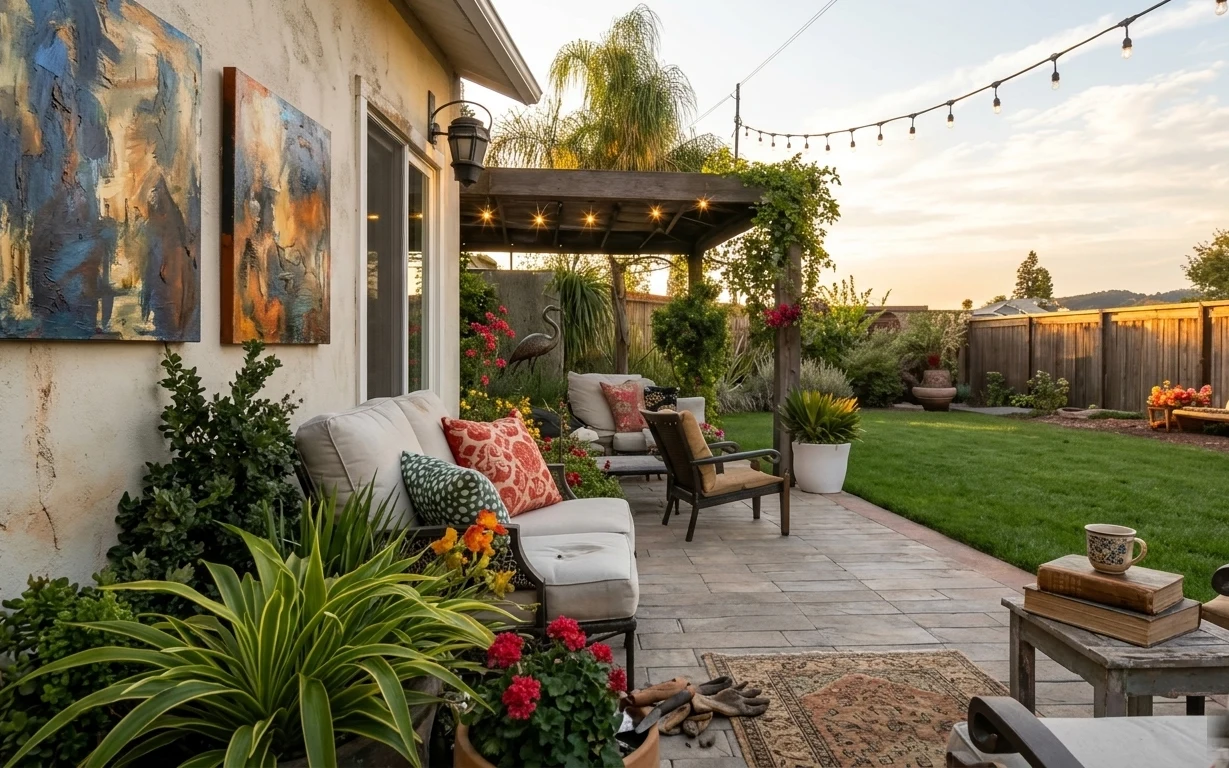
Warm dusk patio seating upgrades, $500 renter-friendly refresh
A patio seating area that feels like a private backyard destination—using no-drill renter swaps: a statement outdoor rug, bold throw pillow…
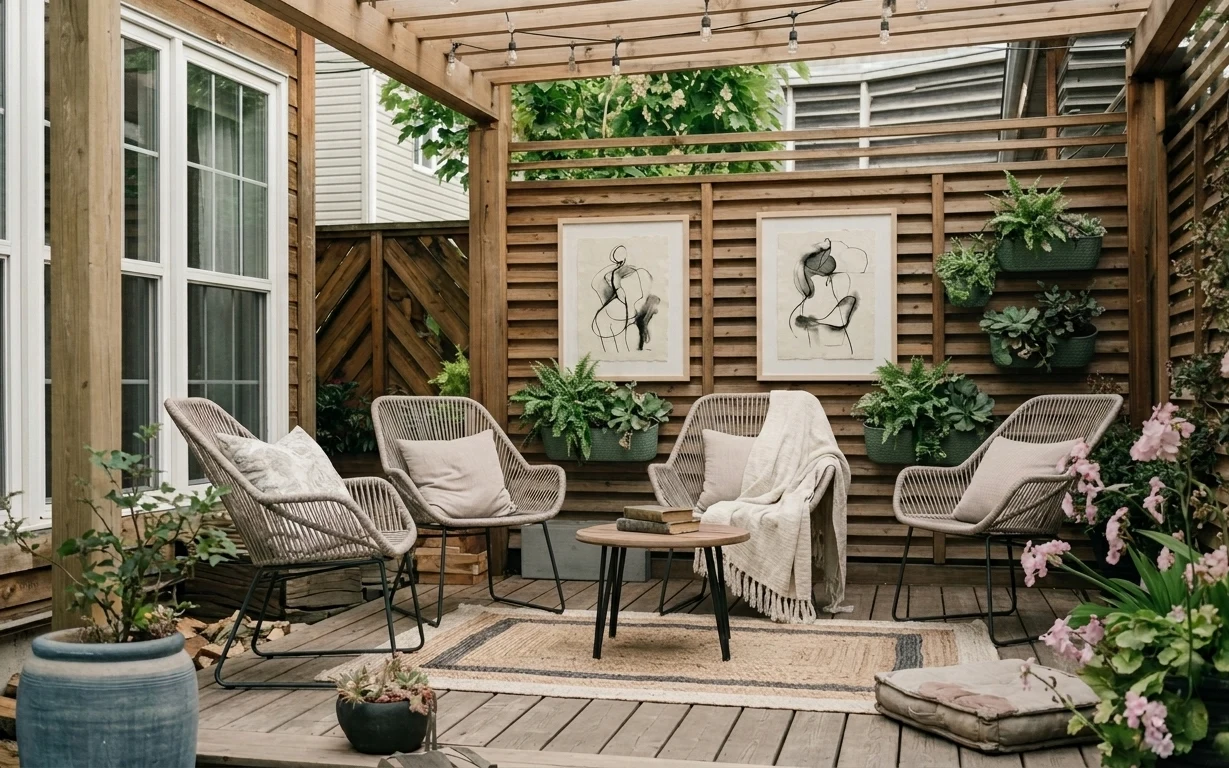
Under $600: a patio seating area refresh with no-drill style
A warm-wood patio seating area refresh built around a large rug, layered throws, framed wall art, and plug-in string lights—no landlord cha…