- Best for
- Softer, spa-like bathroom corners
- Cost
- $380 total refresh
- Difficulty
- Easy (DIY pressed-flower frame)
- Renter-safe
- Yes — textiles + removable wall art
Why sage-green and brass accents are the bathroom vanity nook of 2026
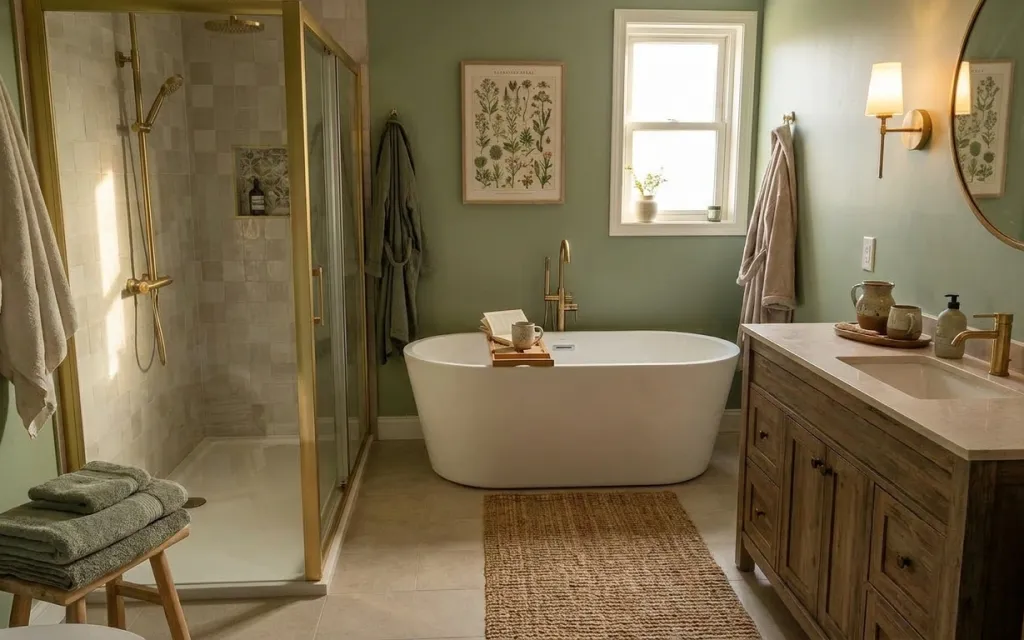
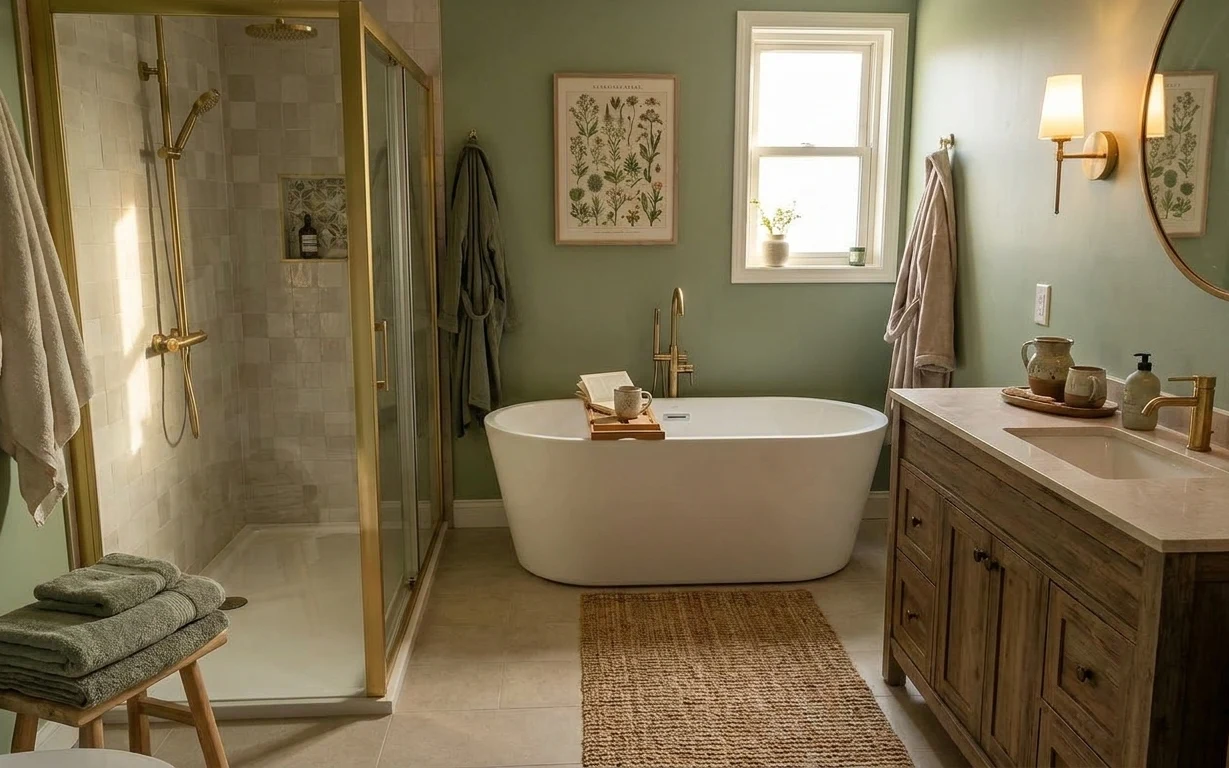
What makes this bathroom feel spa-like isn’t a new fixture—it’s the layering of textures: a woven-looking bath mat runner underfoot, folded towels on a wooden stool, and two framed botanical prints that bounce plant shapes off the sage-green wall. The round mirror and warm wall sconce keep the whole corner feeling gentle, not stark, and the brass details read intentional rather than busy. For renters, this is doable because you’re styling what’s already there with swappable textiles and Command-friendly wall decor.
I used to overdo “bathroom decor” by adding too many small items at once. The trick I missed at first: spacing matters more than quantity. Here, the mirror pulls focus on the right, the bath mat grounds the middle, and the botanical prints give the eye a calm path across the wall. Once I started grouping pieces by function—comfort underfoot, storage/softness, and wall art—the look got instantly more collected.
Layer 1 — bath mat runner ($80) Grounds the center in a textured weave
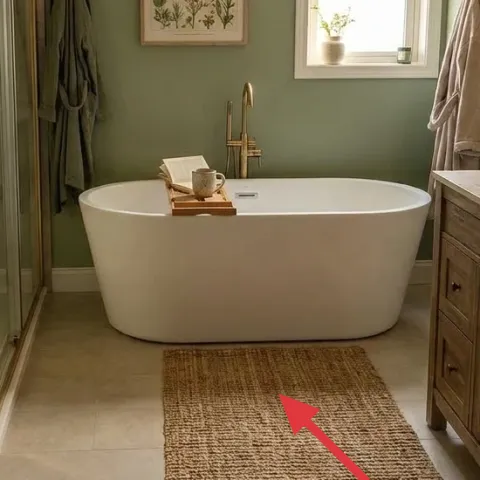
A bath mat runner in a woven, looped texture does three jobs at once: it softens tile underfoot, it reduces slip risk, and it gives the middle of the room a visual “landing spot” that keeps the vanity area from feeling floaty. In this photo it sits in front of the tub and anchors the transition into the open floor. If you went with a smooth flat mat, you’d lose that depth. The trade-off with a more textured mat is that it benefits from a quick shake-out, but it’s still an easy swap you can pack away with your lease ending.
Pick a runner that’s darker than the grout
In a bathroom, the weave hides the occasional splash better than a light, uniform color.
Layer 2 — rolled bath towels on stool ($30) Adds softness you can see from the doorway
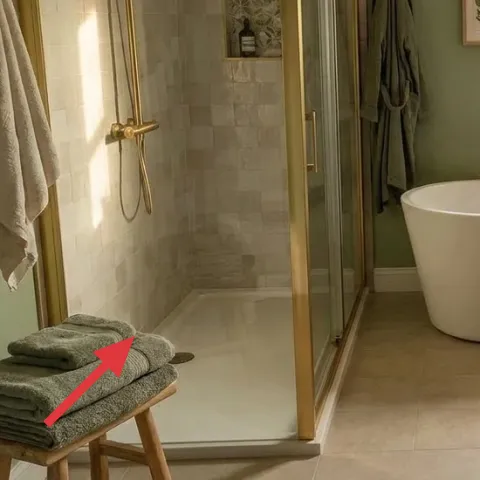
Those rolled bath towels on the wooden stool are doing quiet work: they introduce thickness, create vertical lines, and make the whole corner feel used-in instead of showroom-clean. Choose a neutral that reads close to cream or warm gray so it doesn’t fight the sage-green wall. The obvious alternative is hanging towels on hooks, but that often looks more cluttered when multiple textures compete at once. Rolled towels let the bathroom stay orderly while still looking lived-in. The trade-off is that they need a small reshuffle every so often, but the styling takes under five minutes.
Keep the folds consistent
Same roll width (not perfectly identical, just close) makes the stool look intentional instead of accidental.
Layer 3 — wooden stool ($80) Gives the towel pile a warm, elevated home
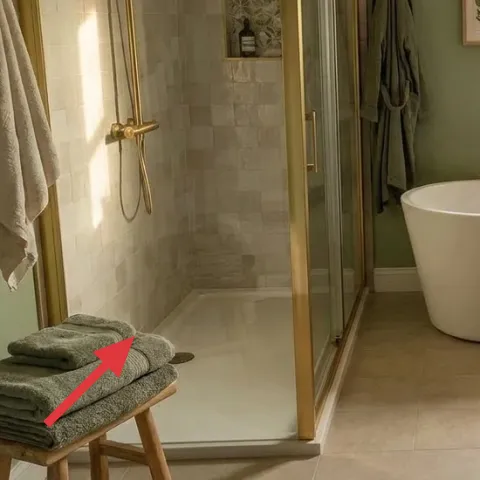
A small wooden stool is the bridge between bathroom utilitarianism and warm interior design. It’s visible in the left foreground, so its color shows up against the sage-green wall and the cream towel stack. A metal side stool would read cooler next to the brass fixtures, and a plastic one would feel too temporary. Wood warms the palette and gives the rolled towels somewhere to “sit” with shape, not just drape. The trade-off is practical: keep it dry and avoid leaving it splashed, but a simple towel wipe-down is enough.
Match wood tone to the brass accents
Look for honey or warm oak reads; it harmonizes with the faucet and hardware tones.
Layer 4 — framed botanical print above tub ($25) DIY botanical texture without new holes
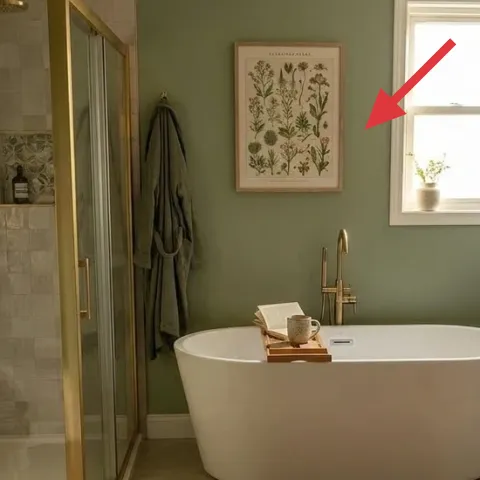
That framed botanical print above the tub is the calm punctuation for the whole corner. A print like this adds detail at eye level, so the bathroom feels styled even if you leave the bigger fixtures alone. The renter advantage here is that framed wall art can be hung with Command strips or removable hooks, so it doesn’t require drilling into painted walls. If you tried swapping the mirror or cabinet hardware instead, you’d run into lease restrictions fast. This DIY version keeps the same botanical energy while staying move-friendly for end-of-lease packing.
Make it instead of buying it
DIY a pressed-flower frame using foraged or craft-store botanicals and a simple frame, so the botanical linework looks custom without drilling.
Materials
- Thrifted small frame — 1 — craft store — $8
- Clear craft glass or protective sheet — 1 — craft store — $6
- Pressed botanicals (dried stems/leaves) — small assortment — foraging/craft kit — $3
Steps
- Press or use already-dried botanicals so they lie flat and don’t puff behind the glass.
- Choose the frame size and remove the backing/paper insert.
- Arrange botanicals in a loose grid or vertical stem composition on the backing.
- Secure pieces lightly so they don’t shift when you handle the frame.
- Lay the protective clear piece over the botanicals.
- Reassemble the frame backing and check that everything sits centered.
- Dry-fit the frame to confirm it fits the wall area without overlapping the tub line.
- Hang with Command strips designed for framed art.
Total DIY cost: $17 — saves about $8 over buying.
Layer 5 — framed botanical print near window ($25) Mirrors the plant theme on the other side
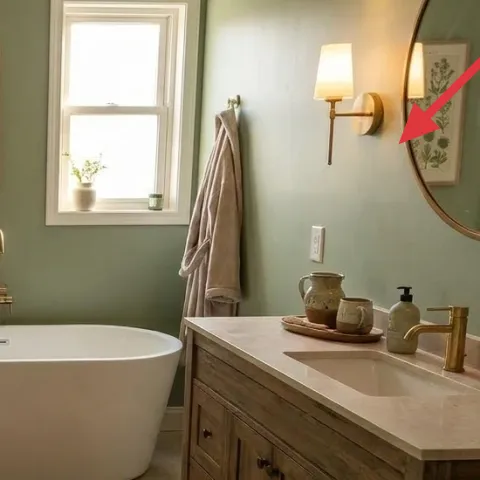
A second framed botanical print near the window keeps the room balanced, especially when the vanity wall has strong shapes like the round mirror and the tub edge. The botanical theme repeats plant silhouettes, which helps the sage-green wall feel intentional instead of empty. If there were only one print, the corner might read one-sided; the pairing creates a simple rhythm. Choose a print with similar green tones and line weight so both frames look like they belong together, even if the compositions aren’t identical. The trade-off is that you have to measure spacing once, but after that it’s a fast, reversible install.
Don’t space frames too close
If the prints touch visually, the wall art starts to feel busy instead of airy.
Layer 6 — round wall mirror ($120) Reflects light and makes the vanity area feel bigger
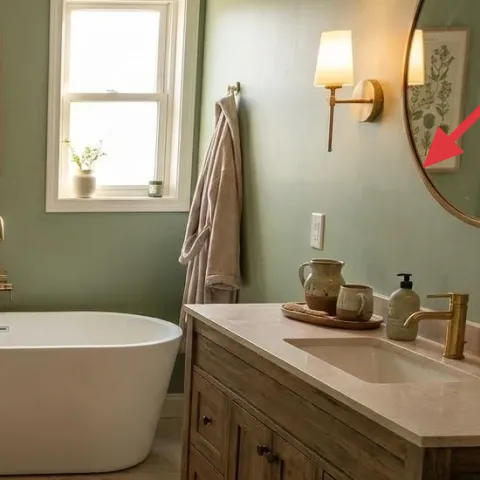
The round mirror is a strong shape-maker here: it softens the bathroom’s straight lines and turns warm light into a gentle glow across the vanity wall. In a renter setup, mirrors can be tricky, but this look is achievable by swapping to a similar size with removable hanging hardware or by styling around what’s already installed. The alternative—using a rectangular mirror—can feel sharper against the tub and towel stool, especially with brass hardware. This round shape also flatters the botanical frames because circles give the wall a visual rest point. The trade-off is that round mirrors show smudges more than you’d expect, so quick wipe-downs help.
Size it to the vanity width
Keeping the mirror proportionate prevents it from overpowering the soap pump and jar.
Layer 7 — soap pump bottle ($20) Keeps the countertop styled and functional
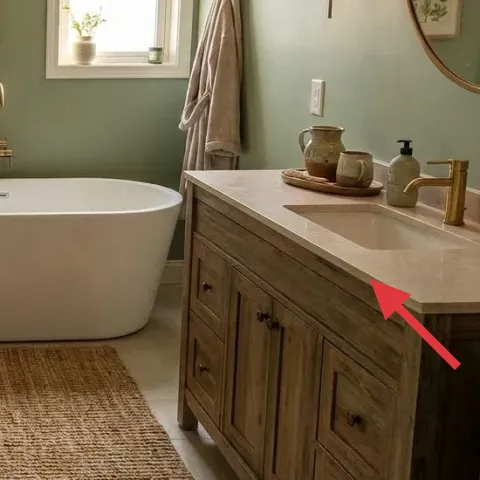
A neat soap pump bottle on the vanity reads like decor and utility at the same time. In this photo it’s part of the warm brass styling language, so it doesn’t look like an afterthought. If you used a clear bottle with a bright label, it could interrupt the calm botanical palette. Choose a bottle in brass, bronze, or a warm metallic finish so it harmonizes with the faucet and the lamp hardware. The trade-off is that matching finishes can cost a bit more, but swapping one small item is much easier than changing built-in fixtures. Keeping it centered with the ceramic jar makes the countertop feel intentional.
Style it with one “quiet companion”
Pairing the soap pump with a single ceramic jar keeps the surface from turning into clutter.
The cost, layer by layer
| Layer | Item | Cost |
|---|---|---|
| 1 | Bath mat runner (woven texture) | $80 |
| 2 | Rolled bath towels on stool (set) | $30 |
| 3 | Wooden stool | $80 |
| 4 | Pressed flower frame (DIY, retail equivalent) | $25 |
| 5 | Framed botanical print | $25 |
| 6 | Round wall mirror (swap or match size) | $120 |
| 7 | Soap pump bottle (warm metallic tone) | $20 |
| Total | $380 | |
If you want a cheaper direction, swap the wooden stool for a small folding towel rack and choose one single framed botanical print instead of two. A lower-cost bath mat runner and soap bottle still keeps the sage-green palette feeling soft.
What worked, what didn't (across the whole room)
The biggest win is how the upgrades stay in the “swappable” zone: textiles, framed art, and small countertop styling. The botanical prints and round mirror give the corner visual calm, while the bath mat runner anchors the foot traffic area. The only thing that requires extra attention is keeping textures tidy—rolls and mirrors both show wear fast.
What worked
- The woven bath mat runner adds texture that makes tile feel softer underfoot.
- Rolled bath towels on the wooden stool keep the corner looking intentional, not cluttered.
- Two framed botanical prints create a balanced rhythm across the sage-green wall.
- The round wall mirror softens straight lines and helps the vanity area feel more open.
- A warm soap pump bottle supports the brass hardware look without adding visual noise.
- The palette stays cohesive because creams and greens repeat across textiles and art.
What didn't
- If the towels are unrolled or mismatched in fold width, the stool looks messy quickly.
- Putting only one framed botanical print can make the wall feel lopsided near the tub.
- A countertop filled with multiple small items competes with the round mirror and soap pump.
- Too-light mat tones show splash marks sooner than darker neutrals.
- Skipping a wipe-down on the round mirror makes smudges stand out under warm light.
What we'd skip if we did it again
Skip swapping out the large built-in fixtures and stick to renter-safe layers. Changing the faucet, vanity cabinet pieces, or other fixed hardware runs into lease limits and costs more than it buys. In this room, the biggest improvements came from adding texture where your feet land and at eye level where prints and the round mirror do their work.
Skip hanging extra towel sets everywhere. The stool-and-roll approach is doing the heavy lifting because it’s visible and organized. If there are too many towels competing across hooks and surfaces, the bathroom reads practical but not calm, and the botanical prints start to feel crowded instead of curated.
Skip choosing a mat runner that’s too smooth or too pale. Tile shows every tiny splash, and a flat light surface makes the middle look slightly unfinished between cleans. A textured woven runner in a warmer neutral tone hides small stains better and keeps the whole vanity nook feeling consistently put together.
Frequently asked
How long does this bathroom refresh take?
Plan for about 2–4 hours total. Textiles (towel rolls and mat runner) take minutes, and placing the frames is the slow part because measuring spacing matters. If you DIY the pressed flower frame, add another 1–2 hours depending on whether you already have dried botanicals. Nothing here requires curing time like paint or sealants.
What if I can’t drill anything into the bathroom walls?
This plan is built around no-drill swaps: bath mat runner placement, towel styling on the wooden stool, and framed botanical prints hung with Command strips designed for framed art. If your landlord prefers you don’t attach hardware at all, you can still do the textiles and countertop styling, then keep the DIY frame as a temporary “stand-in” you move to your next place.
Will this work in a smaller bathroom?
Yes—use the same idea, just scale down. If the vanity area feels tight, keep one framed botanical print instead of two and choose a shorter bath mat runner that stays centered in front of the tub. The round wall mirror still helps because the circular shape visually softens the space. Prioritize texture (mat + towels) before adding more small items.
What if my bathroom is larger and feels too empty?
Add breathing room rather than more clutter. Keep the two framed botanical prints, but consider aligning them as a pair by eye rather than forcing equal spacing. Use a slightly wider bath mat runner so the “landing zone” matches the larger foot traffic path. The countertop can take one more quiet companion item, but keep it to a single ceramic jar-like piece so the soap pump stays the functional center.
Where should I shop for these pieces?
For textiles and the bath mat runner, look for home goods retailers or big-box stores that carry neutral towels and textured bath mats. Frames and botanical prints can come from craft stores, thrift shops, or online marketplaces—just confirm the frame depth and size before buying. For the DIY pressed-flower frame, a thrifted frame plus craft glass keeps costs down.
What’s the biggest mistake to avoid in a sage-green bathroom nook?
Over-mixing competing small details. If towels, countertop objects, and multiple prints aren’t grouped by function, the corner can feel busy instead of calm. The fix is simple: anchor the floor with a textured bath mat runner, keep towels rolled on the wooden stool, and let the two botanical prints plus the round wall mirror do the visual work.
More in Bathroom
7 renter-friendly ways to refresh a bathroom for $400
A sage-green bathroom vanity nook, softened with a renter-safe bath mat, towel styling, and botanical wall art. This $400 refresh focuses o…
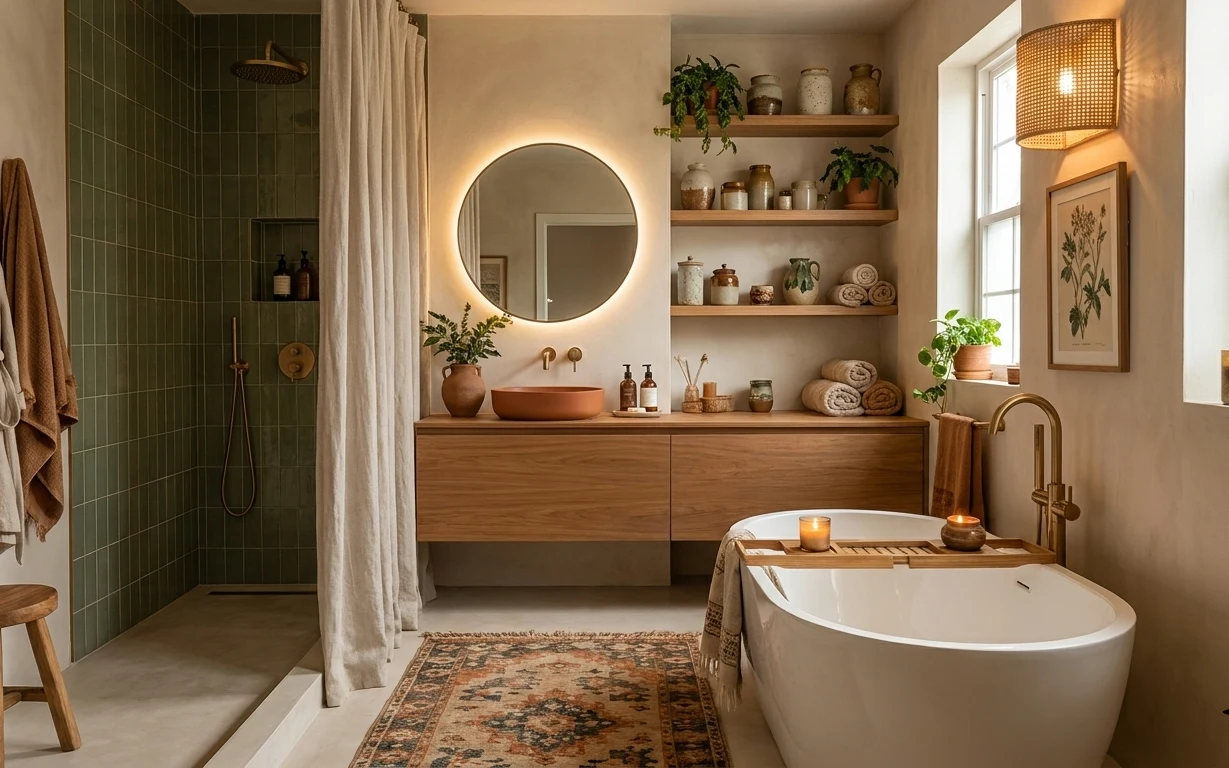
Warm olive-and-terracotta bathroom refresh, $800
A calm tub nook with olive tile, warm walnut tones, and soft lighting—updated with 7 weekend-friendly upgrades. For about $800, swap in a p…
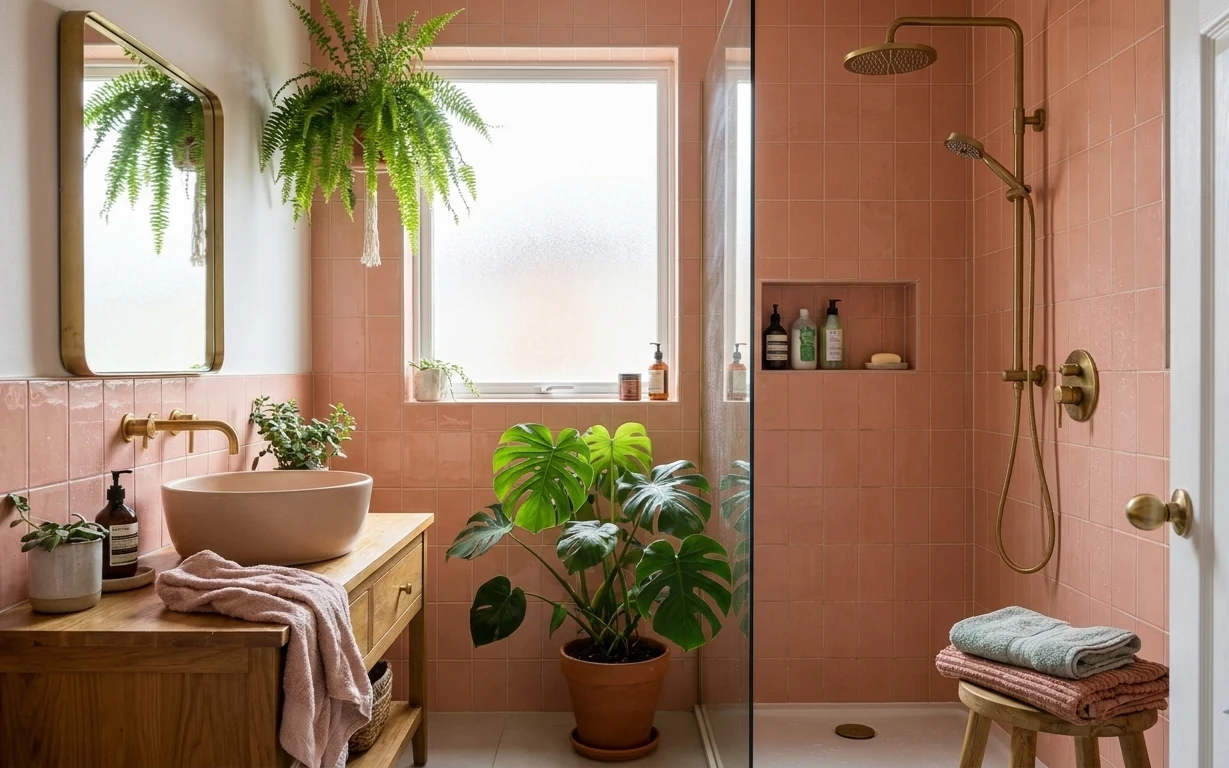
7 no-drill renter ways to style a terracotta shower corner
A terracotta shower corner can look spa-like with renter-safe swaps for under $300. This refresh focuses on a bath mat, a wooden stool, bot…