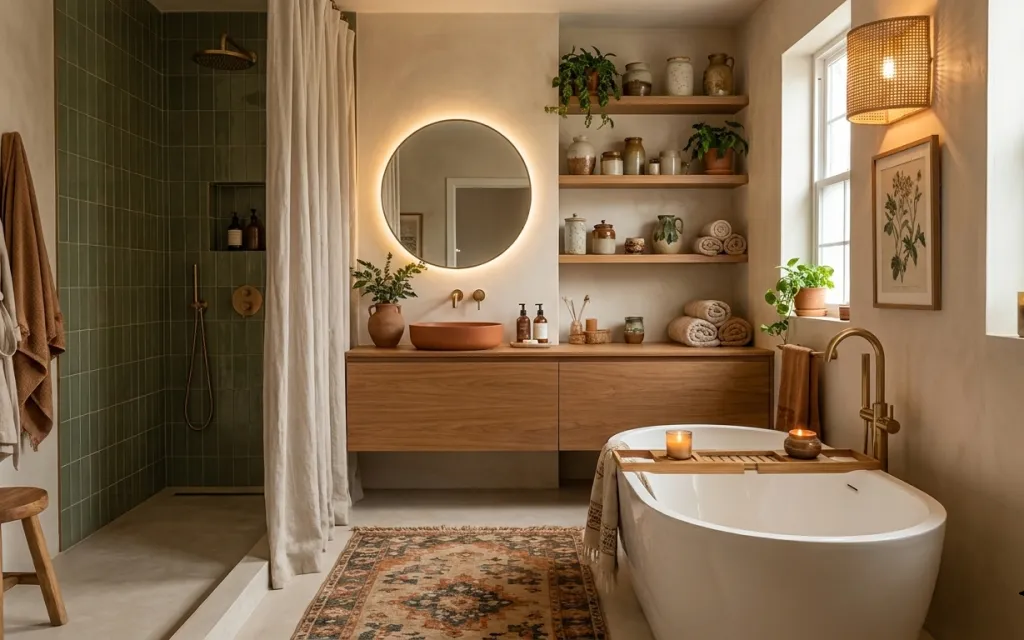
- Best for
- Soft, spa-style tub zoning
- Cost
- $760 total refresh
- Time
- One weekend (plus dry time)
- Renter-safe
- Mostly yes (swap textiles + decor)
Why this olive-and-warm bathroom is the tub nook of 2026
That arched vibe around the tub area isn’t just architecture—it’s the way the textures stack. In the photo you’ve got a green tiled shower wall, a walnut-toned vanity top, and a patterned rug that visually grounds the middle. The linen-look curtain adds vertical softness next to the straight lines of the vanity and window trim. What makes it doable for homeowners is that most changes are surface-level: swap textiles, add or replace one mirror, and refresh a few fixtures.
I used to chase “pretty” first and forget “placement.” In one bathroom refresh I bought a mirror I loved, then realized it didn’t sit at the right height for the sink moments. Here, the round mirror and warm brass tones create a practical focal point that works every day. After that, the whole tub nook feels intentional—even before the candles go on.
Layer 1 — curtain panels (linen-look, pair) ($80) Hang tall for privacy without blocking light
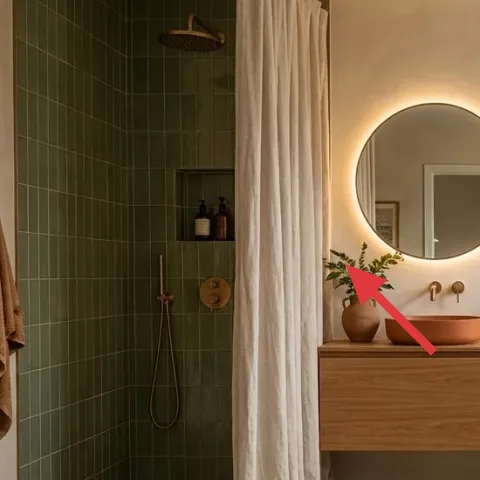
These linen-look curtain panels on the left side do a lot of quiet work: they soften the shower-zone corner and add height beside the window light. I’d choose a pair in a warm neutral (not stark white) so it blends with the beige walls and walnut vanity. The key trade-off is that true linen wrinkles more—so plan to hang them with a relaxed bottom hem and embrace the lived-in texture. If you go for sheer, you’ll get more daylight, but you’ll lose some of that “tub nook” cocoon feeling.
Hang for height
Mount higher than you think, so the fabric drops slowly and makes the ceiling feel taller.
Layer 2 — bathroom rug (patterned) ($200) Ground the tub with a dense, walkable pattern
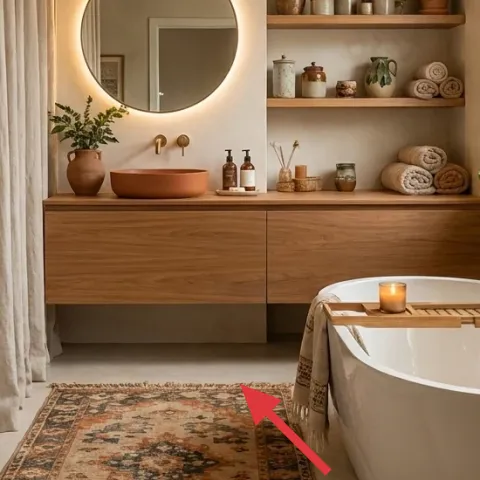
The patterned rug under the tub is the anchor: it fills the “blank middle” between the tile and the vanity base with color (earthy oranges + muted greens) and a grounded weave. A rug like this makes the space feel finished even if you keep the big surfaces as-is. The trade-off is that detailed patterns show lint and water spots differently than solids, so keep a small spot-clean routine. The win here is optical—pattern adds warmth without needing another wall color change.
Why pattern works here
With green tile and warm wood already in play, a warm multicolor rug prevents everything from reading too one-note.
Layer 3 — framed botanical print ($80) Add one flat focal point to balance the mirror
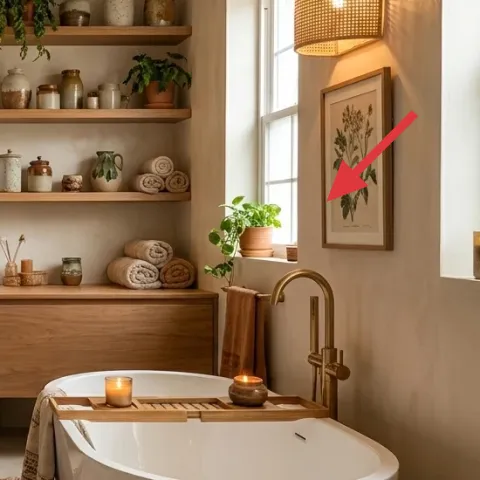
The framed botanical print on the right wall gives your eye a single, calm story while the mirror handles the vanity function. I like choosing art with organic shapes (leaves, branches) near a bathroom because it echoes what plants are doing on the shelves. The trade-off is that botanical prints can skew “farmhouse” if the frame is too ornate—so keep the frame simple and let the linework do the talking. If your bathroom already has strong texture (like tile), one botanical print is enough.
Match the frame to fixtures
When you see brass in the faucet, a warm wood or neutral frame keeps the whole palette consistent.
Layer 4 — round wall mirror ($120) Soften the vanity with a shape that doesn’t feel rigid
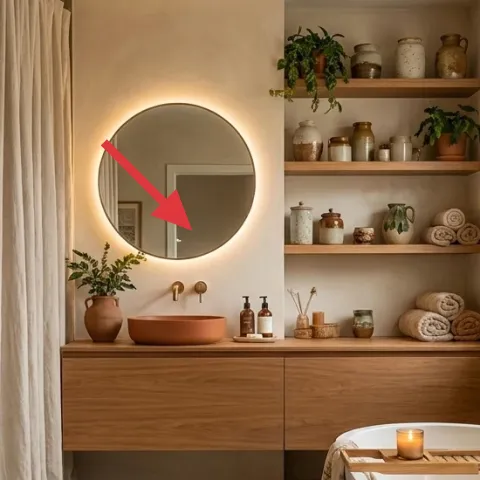
The round mirror is the “why” behind the tub nook feeling balanced. Against the straight vanity drawers and the rectangular window, a round shape adds calm and reflects light in a softer arc. Choose a mirror with a slim frame (or frameless) so it doesn’t compete with the patterned rug. The trade-off is that round mirrors can slightly distort edges at the extremes, so position it centered above the sink rather than off to the side. Here, that center placement makes morning routines feel easy.
Placement matters more than size
A mirror that’s slightly smaller but perfectly centered will look more intentional than a bigger one that’s off.
Layer 5 — brass sink faucet ($120) Keep the hardware warm so everything reads cohesive
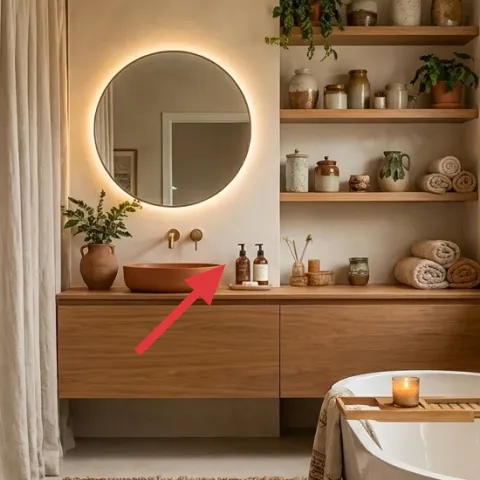
The brass sink faucet ties together the warm wood vanity and the wall sconce so the room feels like one story instead of separate parts. If you’re choosing one fixture upgrade, this is a strong candidate because it shows up every time you wash your hands. The trade-off is maintenance: brass finishes can dull if you don’t wipe after splashes. Still, it’s worth it—warm metal in a bathroom is one of the quickest ways to make beige and green feel designed.
Don’t ignore finish longevity
If the finish is uncoated, water spots and oxidation can show faster—choose a finish meant for daily bathroom use.
Layer 6 — woven shade wall sconce ($120) Add warm, directable light at eye level
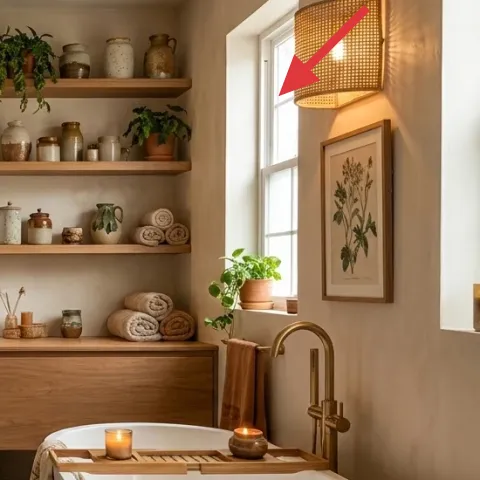
That woven shade wall sconce on the right adds texture to the vertical plane and makes the tub nook glow when the overhead lights are off. A warm-toned shade keeps the bathroom from reading too sterile, especially next to the cool green tile. The trade-off is you may need to test bulb brightness—too dim and the vanity area feels shadowy, too bright and the shade effect disappears. Pick a warm color temperature (around 2700K) and check that the beam lands where you want it: sink tasks and mirror reflection.
Test the bulb before you commit
Bring home the same bulb temperature you plan to use so you can see the color on beige walls.
Layer 7 — terracotta planters on vanity shelves ($40) Bring in a lived-in palette with painted pots
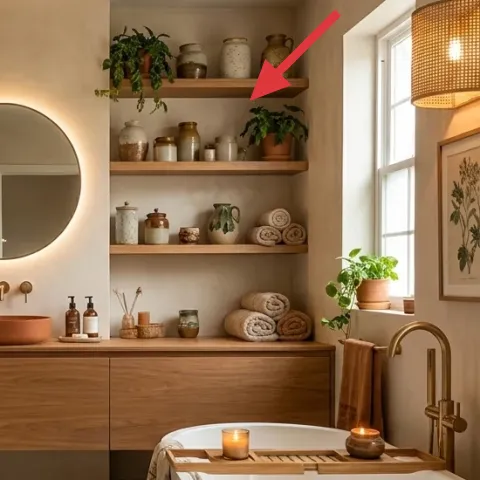
The terracotta planters on the vanity shelves make the whole vignette feel natural and layered, especially alongside the folded towels and candlelight. Even if you already have plants, the pots themselves are the part you can customize—paint them to match your bathroom’s beige and olive tones. The trade-off is that paint needs a little sealing so the finish survives normal bathroom humidity. Once that’s handled, the painted pots add color without adding clutter, and they look good from both the tub and the vanity angle.
Make it instead of buying it
Paint terracotta planters to dial in the same warm-beige/earthy tones as the shelves and rug, so the plants look styled instead of random.
Materials
- Acrylic craft paint — 2 small bottles — craft store — $12
- Small angled brush — 1 — craft store — $6
- Water-based clear sealer (matte) — 1 can — hardware store — $10
Steps
- Wash and fully dry the terracotta (no dusty surface), then wipe with a damp cloth.
- Lightly sand the outside to help paint grip.
- Mask the rim if you want a crisp edge.
- Paint a thin first coat; let it dry completely.
- Add a second coat for even coverage; let it dry again.
- Seal with a matte water-based clear coat; keep it dry for the full cure window on the can.
- Unmask and set the planters aside so they’re ready when shelves go back in place.
Total DIY cost: $28 — saves about $12 over buying.
The cost, layer by layer
| Layer | Item | Cost |
|---|---|---|
| 1 | Curtain panels (linen-look, pair) | $80 |
| 2 | Bathroom rug (patterned, 5×7) | $200 |
| 3 | Framed botanical print | $80 |
| 4 | Round wall mirror (24–36 inch) | $120 |
| 5 | Brass sink faucet | $120 |
| 6 | Woven shade wall sconce | $120 |
| 7 | Terracotta planters on vanity shelves (painted) | $40 |
| Total | $760 | |
If you want a cheaper look, scale down by choosing a curtain panel pair on sale and swapping to a simpler framed print. You can also pick a smaller rug size and rely on the mirror + sconce for the main focal points.
What worked, what didn't (across the whole room)
This bathroom comes together because the updates focus on texture and placement: curtains up high, a patterned rug in the center, and warm light at the right height.
What worked
- The patterned rug anchors the tub zone and makes the tile-and-vanity shapes feel intentional.
- The round mirror softens straight lines and reflects warm light toward the sink area.
- Warm brass hardware and a woven shade create a cohesive, spa-like palette without repainting everything.
- Plants and terracotta pots add life and color depth on the shelves.
- Folded towels keep the vanity shelf styling from looking cluttered.
What didn't
- A very sheer curtain would weaken privacy and lose the “nook” framing around the tub.
- A too-busy wall print would compete with the patterned rug instead of balancing it.
- If the sconce bulb is too cool or too bright, the woven shade won’t deliver that warm glow.
- Brass finishes can look spotty if they aren’t wiped regularly after splashes.
What we'd skip if we did it again
Skip replacing the whole vanity when the look mainly needs warmth and softness. In this tub nook, the palette is already doing the heavy lifting with wood tones and beige walls, so spend on the visible “halo” items: mirror, rug, and lighting.
Skip a matching set of bathroom fixtures that all share the same finish. Brass + wood + woven texture already reads curated—adding more identical chrome pieces makes the room feel like a showroom checklist.
Skip either going all neutral or all patterned. The win here is the balance: one strong pattern (the rug) plus one organic print (botanical) and lots of texture in textiles and plants.
Frequently asked
How long does a bathroom tub nook refresh like this take?
Plan on 1 weekend for the big visible items: rug in place, curtains hung, mirror and art positioned, and the sconce checked. If you’re painting planters, the extra time is mostly drying and sealing—so it’s best to do that on Saturday morning and let everything cure fully before styling. Total time is often 6–10 hours depending on what needs anchoring.
What if I rent—can I still get this look?
You can keep the tub nook vibe without touching tile or built-ins. Focus on removable items: curtain panels, rug, wall art placement, and decor styling. Use wall-safe methods for picture hanging (the right anchors depend on your wall type). If lighting is fixed, prioritize lamps or a plug-in sconce option so you don’t need any permanent electrical changes.
My bathroom is smaller—what should I change first?
Start with vertical framing: curtains hung high and a smaller rug that still sits under the tub edge visually. Keep the botanical print simple and avoid multiple large wall objects. If the mirror looks oversized, go slightly smaller but keep the round shape. For shelves, fewer plants with better spacing reads bigger than more clutter.
Where should I shop differently to stay on budget?
Rugs and framed prints are the fastest to hunt deals for, since these often run promotions. For lighting, check open-box sections for the woven shade style. Brass faucet pricing varies a lot by finish and brand—compare a mid-tier option with an easy-to-clean finish rather than chasing the most expensive showroom model.
What’s the biggest mistake people make in bathrooms like this?
Overmatching everything. When every finish is too identical—same chrome tone, same plain fabric, no texture—the room feels flat even if it’s expensive. This look works because textures differ: woven light, patterned rug, linen-like curtains, and warm terracotta planters.
Do I really need to paint the terracotta planters?
No—if you already have pots in a close warm color, leave them and style around them. Painting is just a way to control the palette when your bathroom has both olive-green tile and beige walls. The payoff is that the plants look intentional rather than random, especially when they sit next to a patterned rug and warm mirror.
More in Bathroom
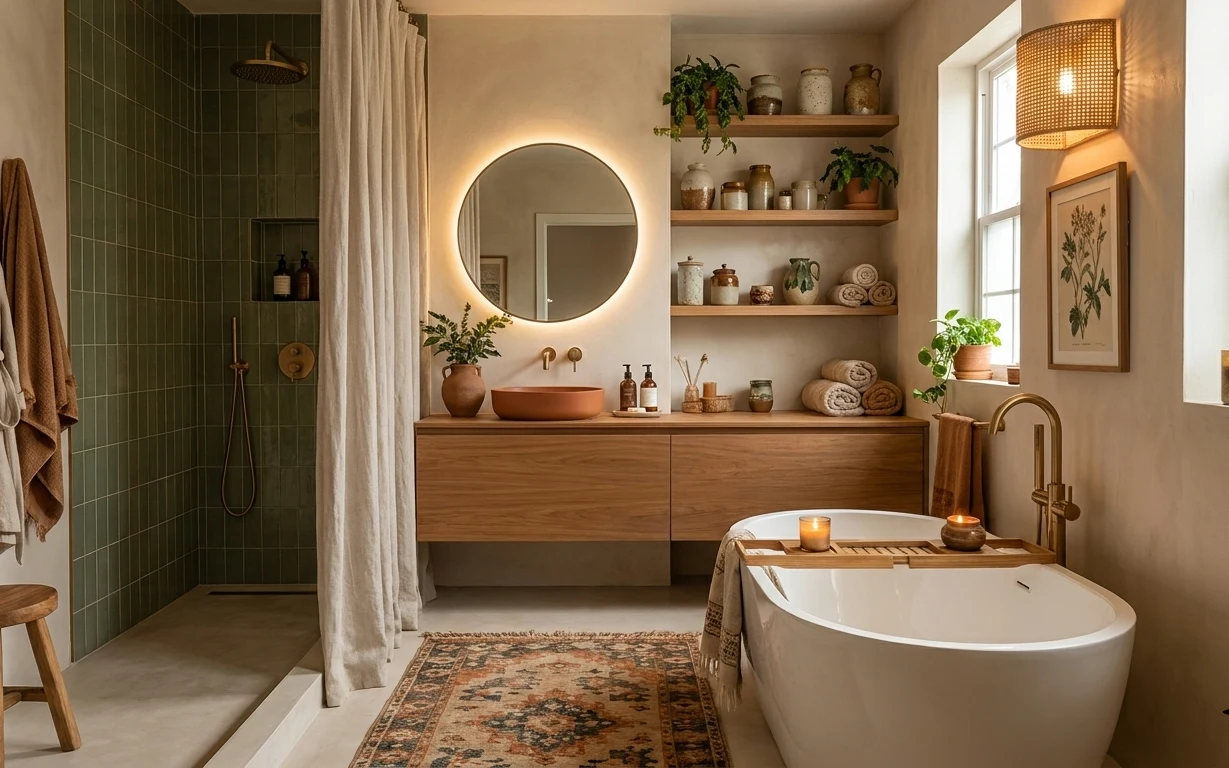
Warm olive-and-terracotta bathroom refresh, $800
A calm tub nook with olive tile, warm walnut tones, and soft lighting—updated with 7 weekend-friendly upgrades. For about $800, swap in a p…
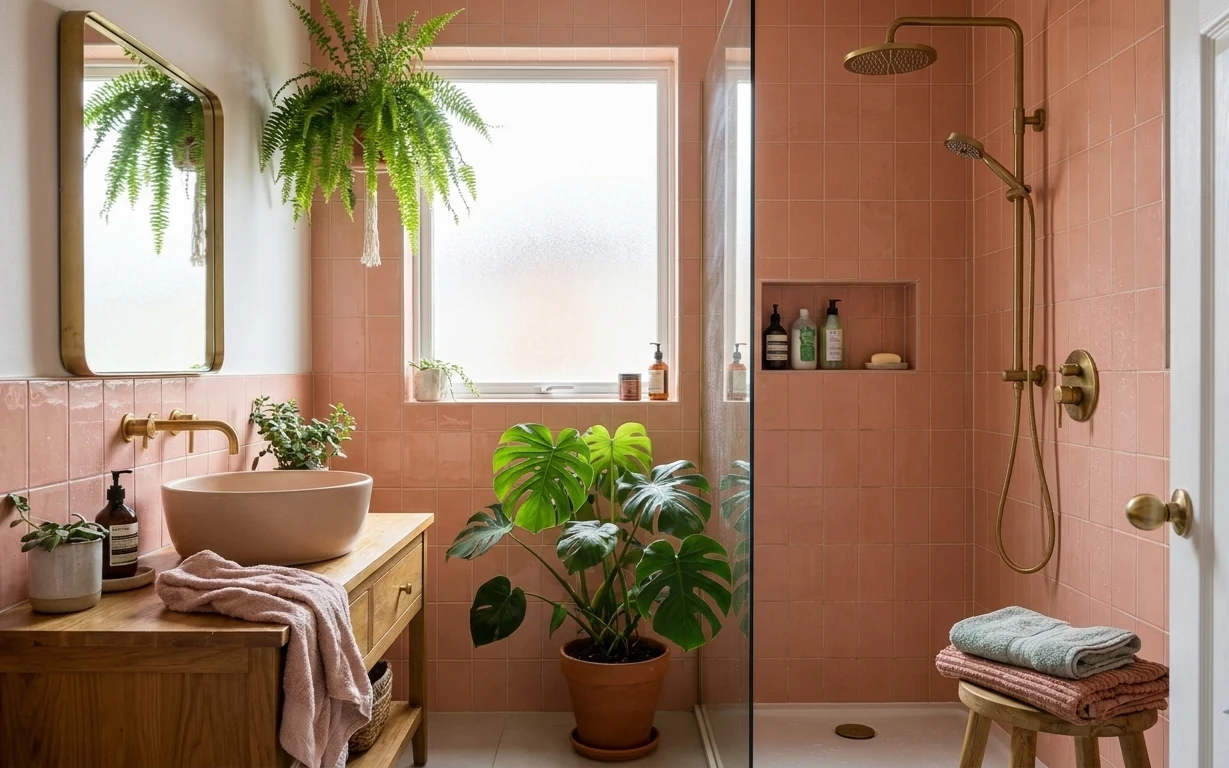
7 no-drill renter ways to style a terracotta shower corner
A terracotta shower corner can look spa-like with renter-safe swaps for under $300. This refresh focuses on a bath mat, a wooden stool, bot…
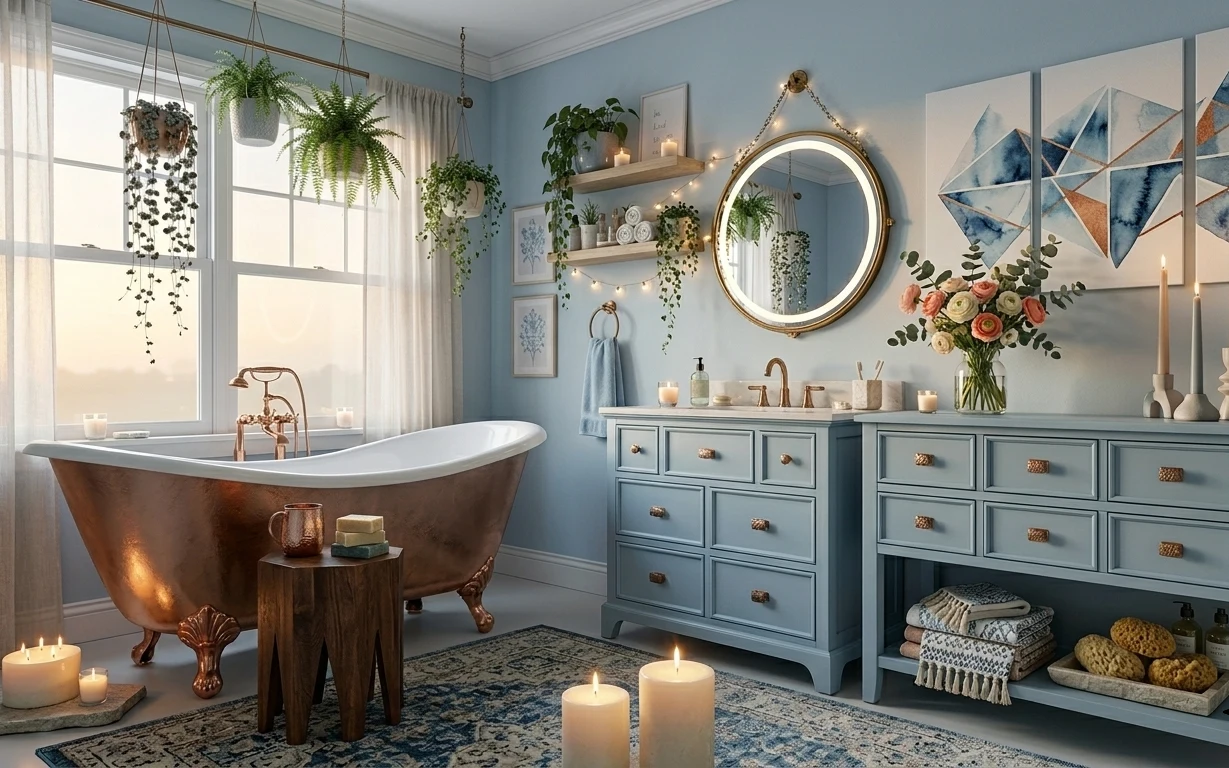
Under $700: a powder-blue bathroom refresh with 7 upgrades
A powder-blue bathroom looks different the moment you swap the rug, refresh the vanity color, and add a warm brass-framed mirror plus candl…