- Best for
- Creating a cohesive porch lounge with renter-safe swaps
- Cost
- $444 total for the 7-layer look
- Difficulty
- Easy (mostly rugs, textiles, and plants)
- Time
- About 2–3 hours for layout and styling
Why sage-and-rattan textures are the porch lounge of 2026
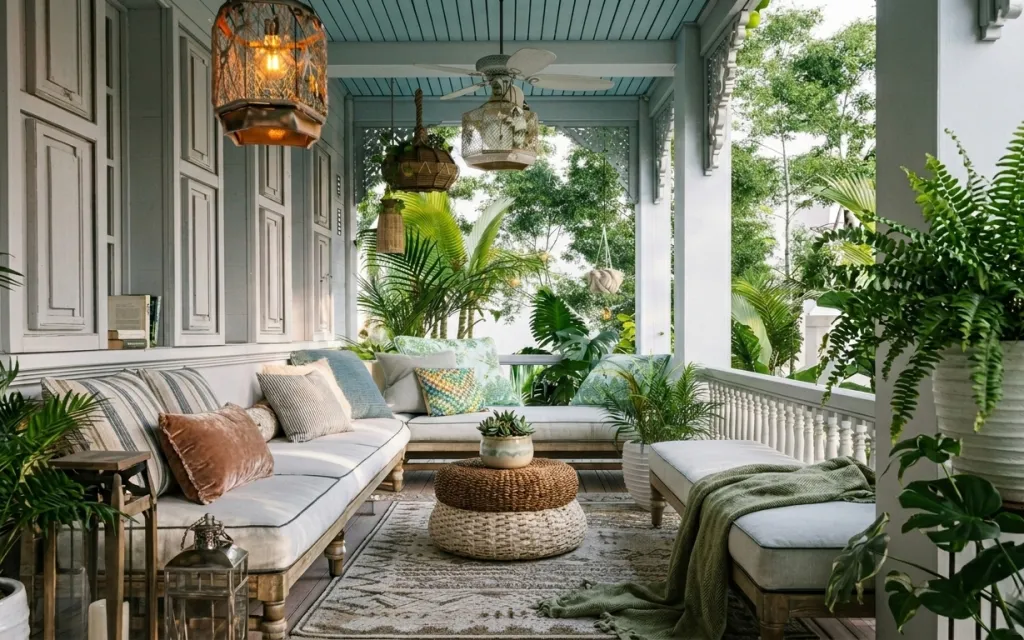
There’s something about a covered porch that makes colors feel calmer and patterns feel louder—especially when tropical plants fill the background. In this setup, the light-cream seating cushions, a sage-green throw blanket, and the rust-and-blue pillows create an easy palette, while the large rug anchors the whole conversation area on the wood floor. The round woven side table adds warmth without blocking sightlines, and the hanging lantern pendant makes the space feel intentional even in bright daylight. This is achievable for renters because every swap can be packed back up when the lease ends.
I used to think outdoor styling needed “matching sets”—a whole sofa ensemble, then a coordinated rug and matching planters. Here’s the mistake I corrected: I stopped chasing perfect coordination and started building contrast instead. The woven textures and fern greens do the heavy lifting, while the pillow patterns add motion against all that calm wood and pale railing. Once the rug is down, the rest reads like one lived-in plan, not separate purchases.
Layer 1 — area rug under seating ($200) Defines the seating zone on wood
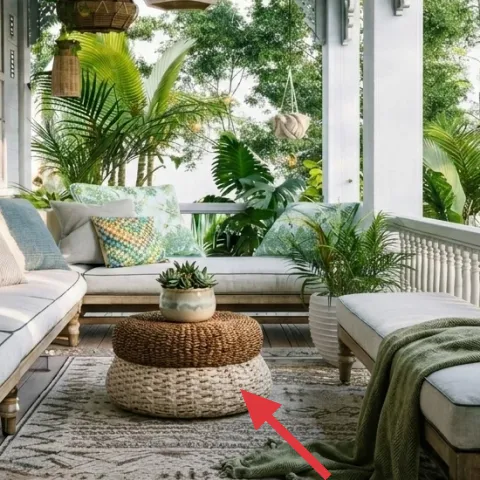
The rug sits across the porch floor under the sofa chaise and bench, and that’s why the seating area looks grounded instead of floating. Go for a neutral base with subtle patterning so the palms and ferns don’t compete—this one’s the right kind of busy for a plant-filled backdrop. A practical trade-off: a larger rug is more work to carry than a small one, but it also reads “designed” from every angle. Choosing a 5×7–ish footprint also lets the rug edges land under cushions rather than cutting through leg lines.
Match the rug to the floor’s undertone
If the porch wood pulls warm, pick a rug with tan or oatmeal in the pattern. It keeps the whole scheme from looking gray or washed out.
Layer 2 — green throw blanket draped on right bench ($35) Adds an instant color echo
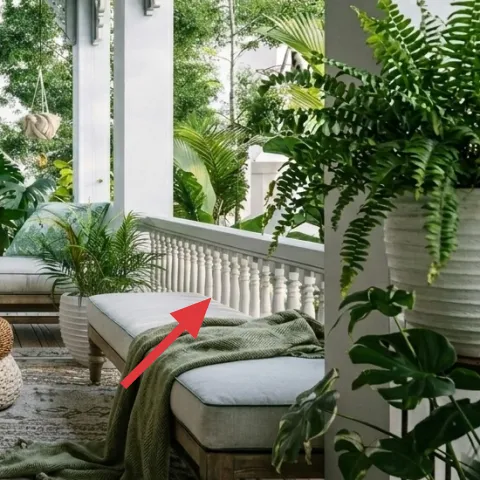
This green throw is draped over the right bench back, so it does two jobs: it softens the bench slats and it repeats the sage tone already in the cushions. That repetition matters on a porch where you can’t control the landscaping—plants change color throughout the day. A blanket is an easy renter win because it’s movable, washable, and doesn’t require hardware. Compared with buying a whole new cushion, it’s cheaper and gives the option to switch seasons—thinner in summer, heavier in cooler months.
Drape beats “folded decor” outdoors
Let the blanket fall naturally with one visible fold. Too-straight folds look staged and feel less lived-in under real sunlight.
Layer 3 — blue patterned throw pillow ($30) Brings contrast against cream cushions
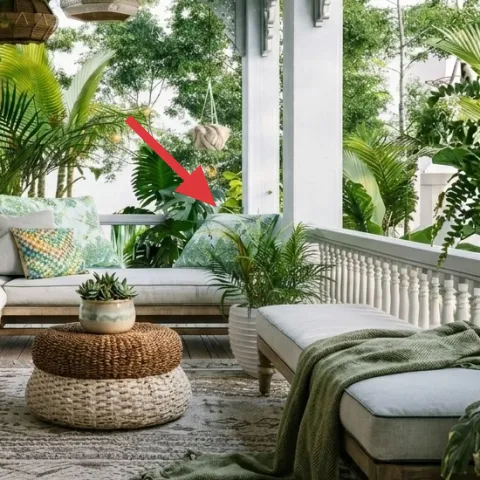
This blue patterned pillow adds the pop that keeps the porch from turning into one big beige-green block. It’s sized like a standard throw pillow—small enough to swap out later, big enough to read clearly from the sofa. The trade-off is that pattern can clash if the rest of the textiles are too busy, so the best move here is to keep one pillow patterned and keep the others solid or stripe-like. The blue also acts as a visual bridge between the cooler railing tones and the warm lantern glow overhead.
Don’t over-order patterns
With multiple plants, you already have texture. Limit yourself to one patterned pillow so the plant background stays the star.
Layer 4 — rust throw pillow on sofa chaise ($24) Warms up the cool plant palette
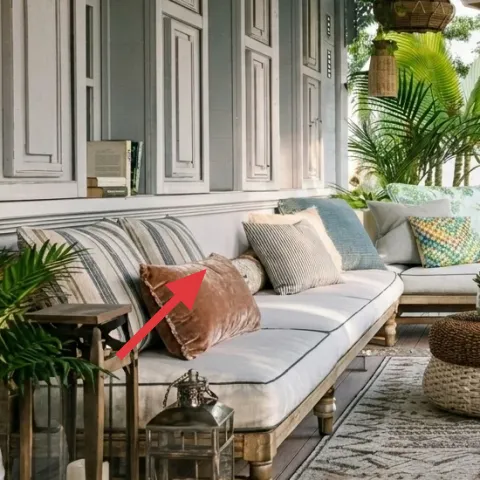
The rust pillow lands on the sofa chaise, right where your eye drops when you sit. That warm tone is what makes the sage-green blankets feel richer instead of muted. It’s also a smart “mix without stress” choice: rust reads like a sunset color, so it flatters greenery in the way a plain tan pillow can’t. The trade-off is that rust can look a little intense if it’s the only warm thing, but here it’s balanced by the neutral rug and the lighter cushions underneath.
Keep the warm color in one category
Repeat rust once more—either in one pillow or one small accessory—rather than scattering it everywhere.
Layer 5 — round woven side table ($60) Adds texture where the rug is busy
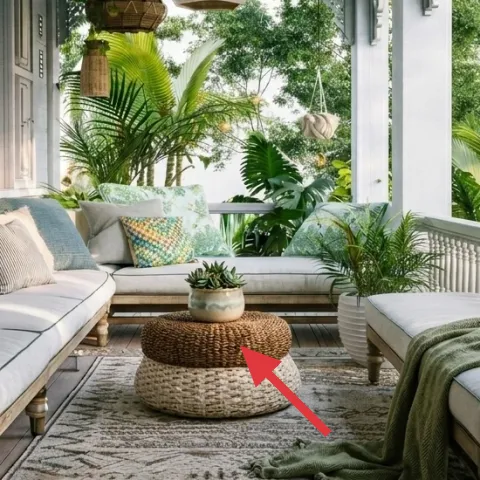
The round woven side table sits near the center, functioning like a casual landing for drinks and small styling moments. Its tan woven texture complements the rug’s neutral pattern and echoes the natural materials running through the plants and wood. A round shape is a practical trade-off: it can roll a little on uneven porch surfaces, so check it by setting a coaster on top and making sure it doesn’t wobble. Still, it’s worth it because the curve softens the angles of the sofa and bench and keeps the porch from feeling blocky.
Use it like a styling “pause”
When the background has palms and ferns, a textured center piece helps your eye reset between leaves.
Layer 6 — large fern in white pot ($80) Makes the porch feel lush without over-styling
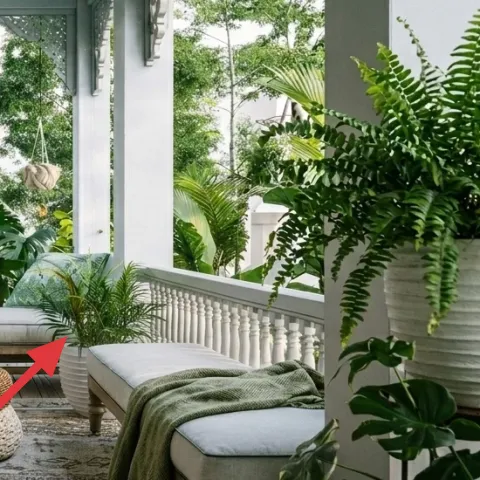
This fern in the white pot brings the tallest vertical texture on the right side, so the lounge reads full even from a standing position. Large plants are a different kind of investment, but they do more work than another decorative object because they change the scene in three dimensions. The trade-off is maintenance—water needs to be consistent, and you’ll want to rotate the pot so the leaves grow evenly toward the light. Still, because this plant is already “in the photo,” you can recreate the effect with a similar leafy variety.
Choose a pot that matches your railing or cushion colors
White reads crisp against green tones and keeps the plant from looking heavy.
Layer 7 — small succulent plant ($15) Finishes the coffee-table styling
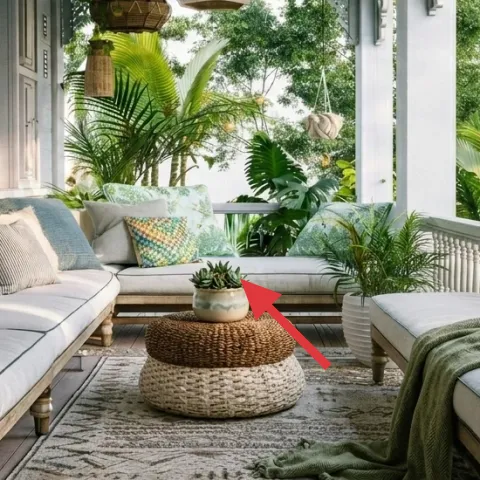
The small succulent on top of the woven table makes the center feel intentional and usable, not just decorative. Succulents are also a renter-friendly choice: they’re usually low-fuss and easy to move inside when the weather shifts. The trade-off is scale—too tiny and it disappears, too large and it blocks the table’s function—so aim for a plant that fits on a small surface without taking over. This little green moment ties into the larger fern shapes while still reading as a fresh accent.
Keep one small plant, not five
On a porch packed with greenery, one smaller tabletop plant is enough to complete the vignette.
The cost, layer by layer
| Layer | Item | Cost |
|---|---|---|
| 1 | Area rug 8×10 (for porch seating zone) | $200 |
| 2 | Throw blanket in sage/green | $35 |
| 3 | Blue patterned throw pillow cover | $30 |
| 4 | Rust throw pillow cover | $24 |
| 5 | Round woven side table | $60 |
| 6 | Indoor plant (large fern, 4–6 ft) | $80 |
| 7 | Tabletop plant (small succulent) | $15 |
| Total | $444 | |
If you want this look for less, swap the large fern for a smaller 2–3 ft leafy plant and pick a medium-size rug (around 5×7). Keep the same color story—sage, cream, and rust—so the porch still reads coordinated without adding extra pieces.
What worked, what didn't (across the whole room)
The biggest win here is anchoring the seating zone with a large rug, then letting the plants and textiles do the color work. The layered greens and warm rust keep the porch from feeling cold, even with a cooler railing tone. The only part that needs restraint is pattern: once too many pillows get busy, the plant background becomes visually loud.
What worked
- The rug creates a clear “lounge zone” on wood, so the seating feels intentional from any angle.
- The sage-green throw repeats the cushion color and makes the porch feel cohesive without new hardware.
- Rust and blue pillows add contrast against cream cushions and keep the palette from looking flat.
- The round woven side table adds warmth and texture near the center without blocking sightlines.
- The tall fern brings vertical texture, so the porch looks lush even in daylight.
- The small succulent on the table finishes the vignette and makes the seating feel lived-in.
What didn't
- When a second patterned pillow gets added, the porch reads busy and the plants lose their impact.
- If the rug is too small, it visually disconnects the sofa and bench and makes the floor look empty.
- Choosing a green blanket that’s too dark can fight the railing tone and look heavy instead of airy.
- Putting a large plant too close to the seating can block leg space and make the lounge less usable.
What we'd skip if we did it again
Skip a small rug. On a porch, the rug has to reach under the seating so the area feels like one setup, not separate furniture pieces on a bare wood floor.
Skip buying matching cushions from the same set. Using one warm pillow, one patterned pillow, and one green throw gives the same “styled” read with more flexibility at renter lease end.
Skip adding more than one tall plant cluster. With palms and ferns already giving vertical volume, extra greenery on top of greenery turns the background into visual clutter fast.
Frequently asked
How long does this porch refresh take, start to finish?
Plan on 2–3 hours if the big pieces (rug and plants) are already available. The main time sink is placing the rug so it sits under both the sofa and bench without looking skewed, then arranging pillows for balanced heights. After that, plants only need a quick “read from the doorway” adjustment: rotate pots and nudge the woven side table so the center feels intentional.
Is this renter-friendly if I’m not allowed to drill or install anything?
Yes—this look relies on items you can pick up and move: an area rug, removable throw blankets and pillow covers, and potted plants that you can relocate. The only “system” change is textile layering, not any changes to the structure. When the lease ends, you can pack the rug and soft goods into boxes and transport the plants in the same pots.
What if my porch is smaller or narrower than this one?
Go down one rug size rather than spreading the rug too thin. In a narrower space, keep the bench and sofa relationship the same but reduce the number of accent pillows—aim for one patterned pillow, one solid warm pillow, and one green throw. If you lose floor coverage, the porch will still read cohesive because the color story repeats across textiles and plants.
Where should I shop for these pieces if I want the same materials and vibe?
For rugs and pillow covers, start with retailers that specialize in indoor/outdoor overlap so you get fabrics that tolerate porch air. For plants, pick a greenhouse or local nursery so you can match the leaf shape and pot size. The woven side table usually shows up at home stores and marketplaces—look for natural tan, not painted wicker, so it echoes the rest of the textures.
What’s the biggest styling mistake people make on porch lounge setups?
Over-pattering everything at once. With plants in the background, two patterned pillows plus a patterned rug can feel visually loud. Keep the rug neutral, choose one patterned pillow for contrast, and let the fern do the “texture work” outdoors. When in doubt, reduce by one accent item before adding another.
Do the plants need to be in the exact same places for it to work?
Not exactly. The goal is to place one tall anchor plant near a corner or side so you get vertical framing, then add one tabletop greenery moment to finish the center. If your layout is different, mirror the roles: tall foliage for height, a small plant on the woven table for detail, and keep the sofa textile colors consistent.
More in Outdoor & Patio
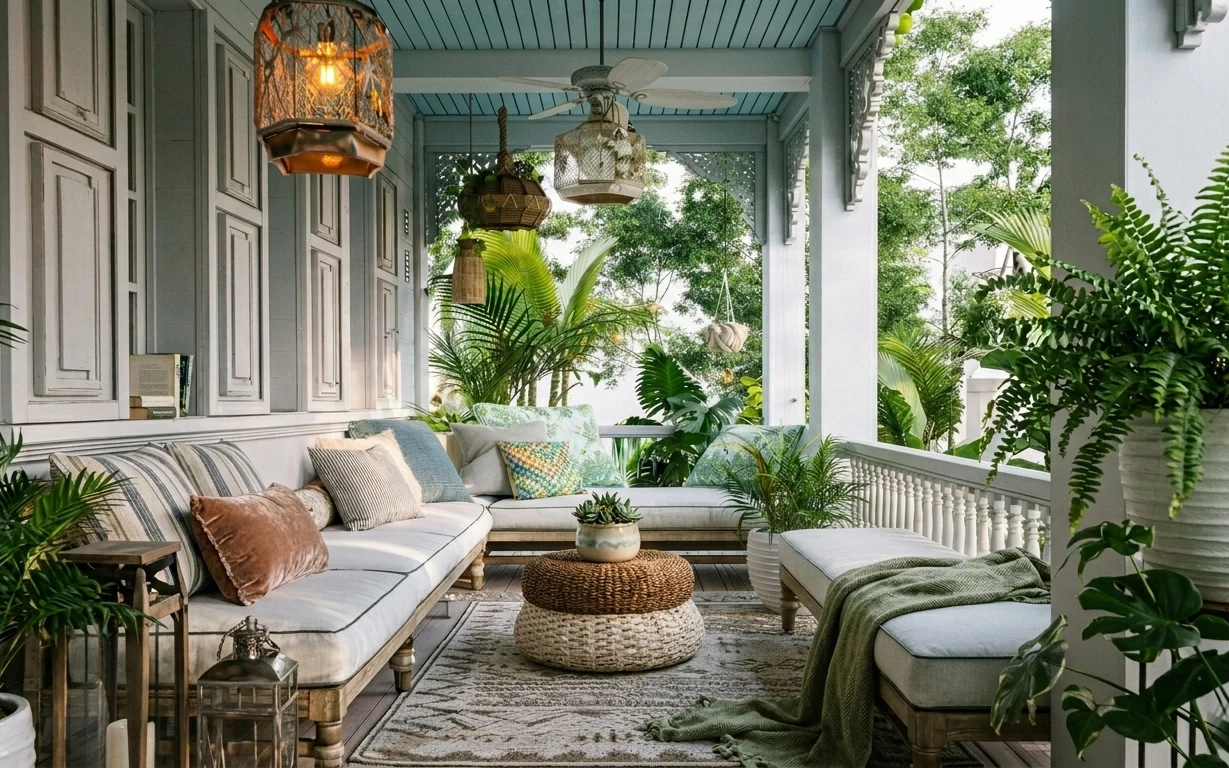
7 renter porch upgrades for $500 with a no-drill rug and pillows
A bright porch lounge refresh with renter-safe swaps that don’t require permission: rug, layered textiles, and plants. This $500 plan focus…
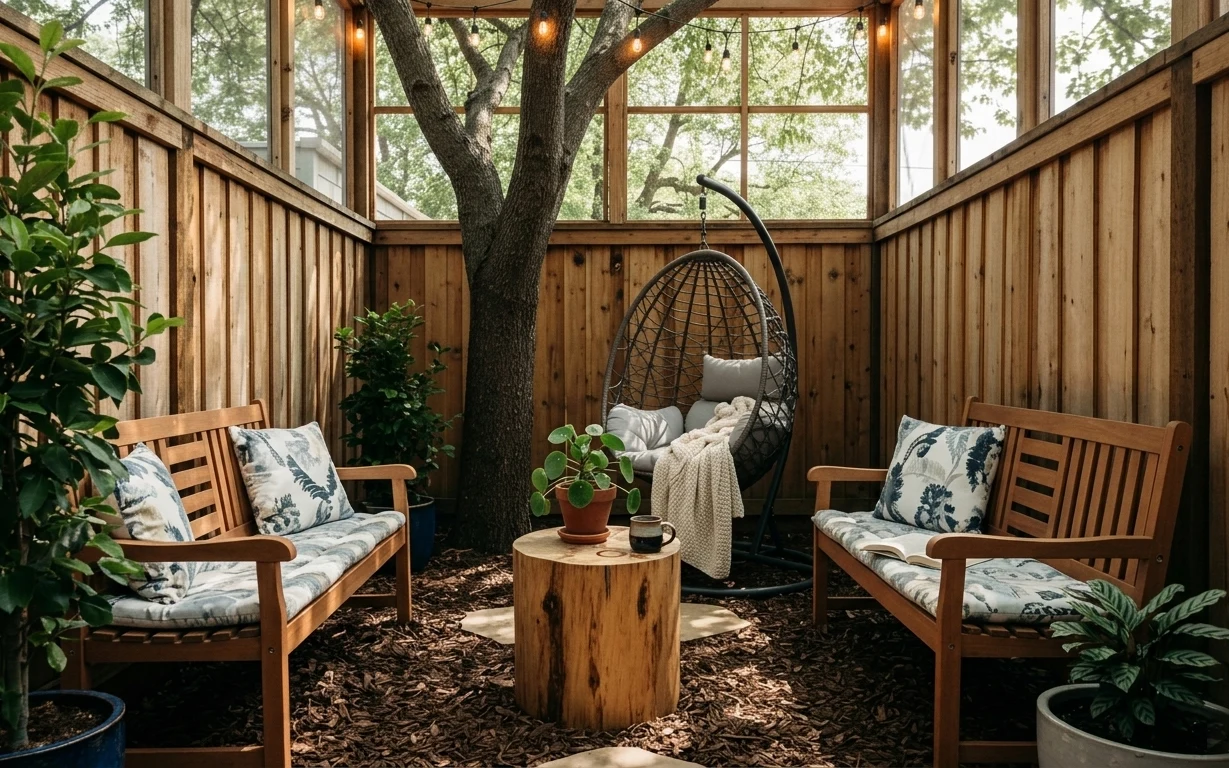
7 renter-friendly ways to soften a patio seating area
A patio seating refresh for shared renters: $400 worth of move-friendly swaps (rug, throws, lights, and planters) keeps the look intentiona…
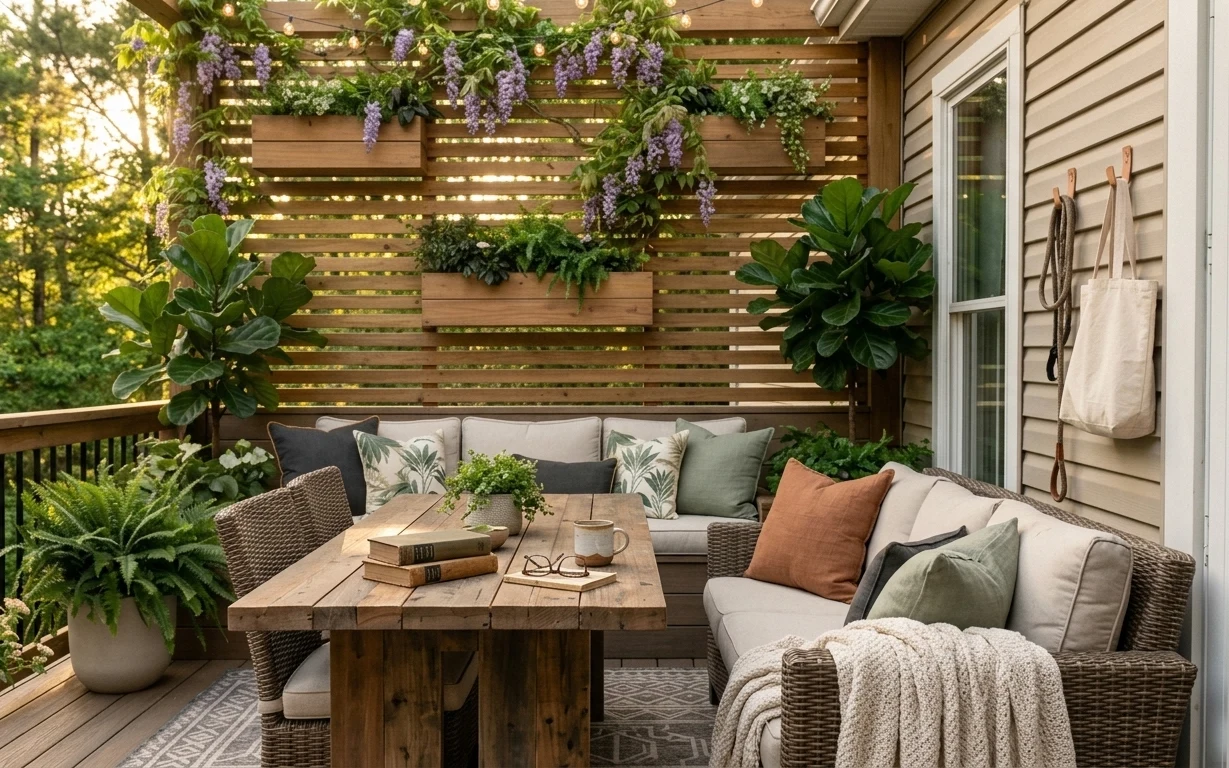
How to refresh a patio lounge corner for under $700
A lush patio lounge corner starts with the big visual moves: a cream-and-gray rug, a painted coffee table, and warm string lights. This wee…