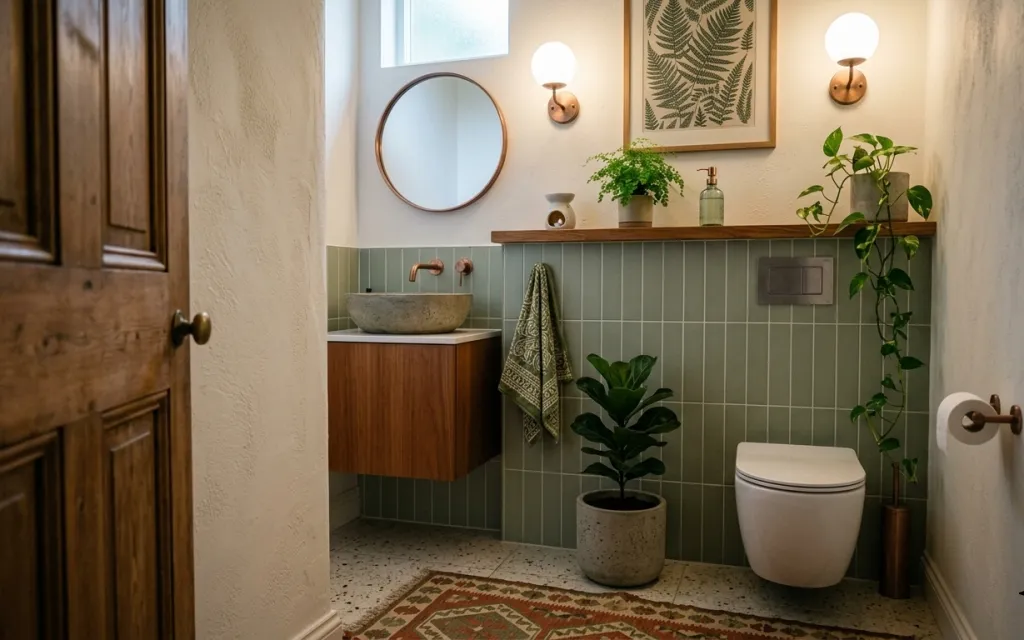
- Best for
- move-ready bathroom styling
- Cost
- $430 total (under $500)
- Time
- 1 afternoon
- Renter-safe
- yes—no drilling or installs
Why sage-and-wood bathroom vanity nook is the move-friendly nook of 2026
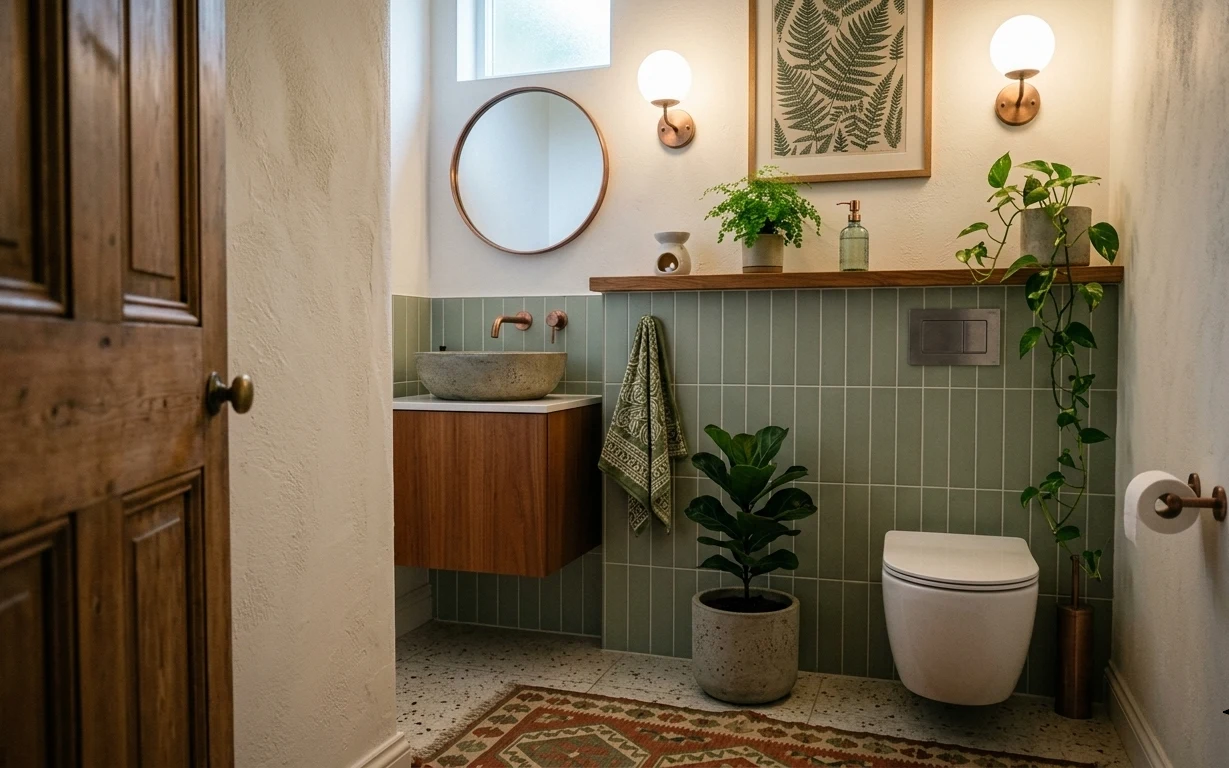
That green grid backsplash already does the heavy lifting, so the easiest win is adding softness in the places tile doesn’t cover: underfoot, on the towel, and in the wall art. In this photo, the warm wood countertop, cream textured walls, and matte ceramic soap dispenser set a calm palette, while the plants bring movement and height. The trick for shared housing is choosing decor that’s easy to box—no hardware changes, no grout-level commitment, just swaps you can take with you when the lease ends. Even the botanical print works because it echoes the greenery instead of fighting it.
I once tried to make a bathroom “match” by buying one perfectly coordinated set of accessories, and it ended up looking like a showroom sample card. What changed for me: I started mixing one patterned textile (the towel) with two natural elements (plants + botanical art) and kept the rest in simple shapes—round mirror, neutral ceramic, and plain tile contrast. This balance is the difference between themed and lived-in.
Layer 1 — ceramic soap dispenser ($15) keeps the counter visually calm
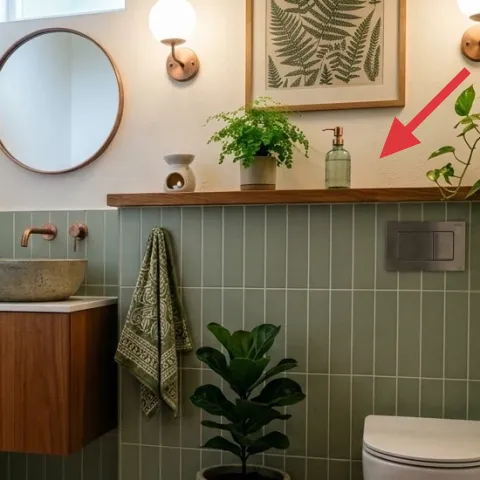
A ceramic soap dispenser—matte, chunky, and in a neutral tone—makes the countertop feel intentional without adding clutter. In this bathroom, the dispenser sits near the backsplash, so its shape and finish help break up all the hard edges created by tile lines. The alternative is a pump bottle that looks “utility,” usually too glossy and too tall for a small ledge. This one reads more like decor because it matches the bathroom’s earthy palette while still doing the job. If you switch it seasonally, you can keep the rest of the vignette steady.
Pick matte over glossy
In bathrooms, matte ceramic hides water spots better and looks warmer under globe lighting.
Layer 2 — hanging patterned towel ($30) adds pattern without taking up floor space
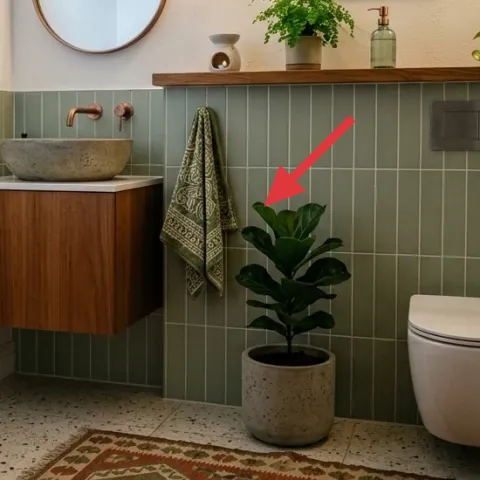
The hanging patterned towel is one of the fastest ways to soften a tile-heavy room, because it gives your eye a fabric texture at hand level. Here, the towel’s pattern brings movement against the grid backsplash and the smooth vanity surfaces, so the bathroom doesn’t feel sterile. A plain solid towel can look fine, but pattern is what creates that lived-in rhythm—especially in shared spaces where the room might not stay “styled” for long. The trade-off: you’ll want to keep the towel dry and not over-stuff it, so it still hangs neatly. Choose a print that includes at least one of your bathroom’s existing colors.
Use one patterned textile only
With green tile as a backdrop, one towel pattern usually beats adding more prints.
Layer 3 — potted indoor plant on floor ($30) brings height where tile feels flat
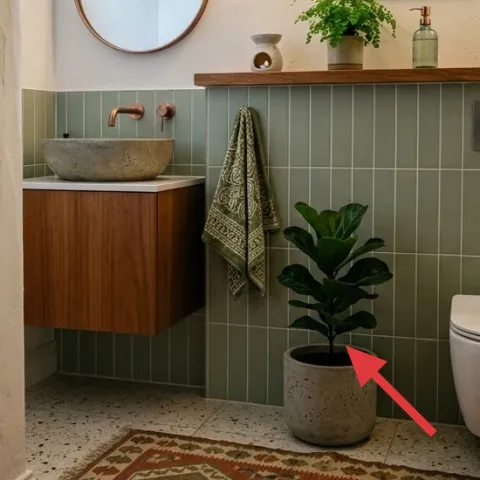
This potted indoor plant on the floor is doing visual work: it adds height near the toilet-and-vanity zone, which keeps the room from reading like only vertical lines and grout squares. The plant also adds a softer “organic” texture right next to the sleek ceramic and wood finishes. If you swap in a tiny tabletop plant, it often looks lost in a bathroom that’s otherwise architectural. The larger footprint here makes the greenery feel anchored, even with limited wall area. The main trade-off is careful watering—bathroom humidity helps some plants, but soggy soil can show up fast in a small pot.
Match the pot to your ceramics
Keeping pot tones in the same family as the soap dispenser makes the whole nook look edited.
Layer 4 — potted trailing indoor plant on floor ($35) softens the right-side edge
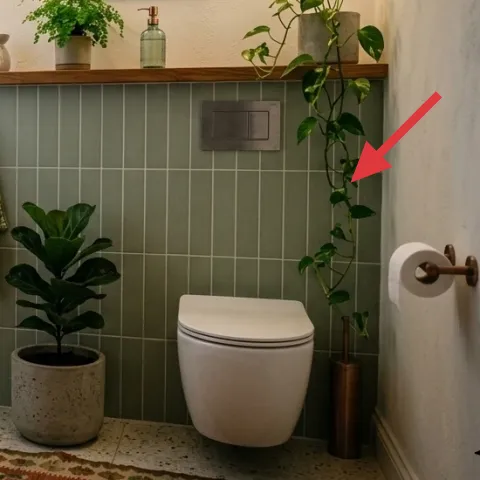
On the right side, the trailing indoor plant balances the composition so the room doesn’t feel weighted only on the vanity wall. Trailing leaves also help break up the straight lines of the backsplash and the tile floor, especially when they reach upward and outward. The obvious alternative would be a short, upright plant, but that tends to feel “stacked” against bathroom fixtures. This trailing shape gives you a more relaxed silhouette. Trade-off: trailing plants usually need more frequent checking for droop, and they can outgrow a corner if left untouched for months.
Don’t pick a pot with no drainage
If your plant pot doesn’t drain, bathroom humidity can turn it into a health problem quickly.
Layer 5 — round wall mirror ($40) makes the nook feel brighter and rounder
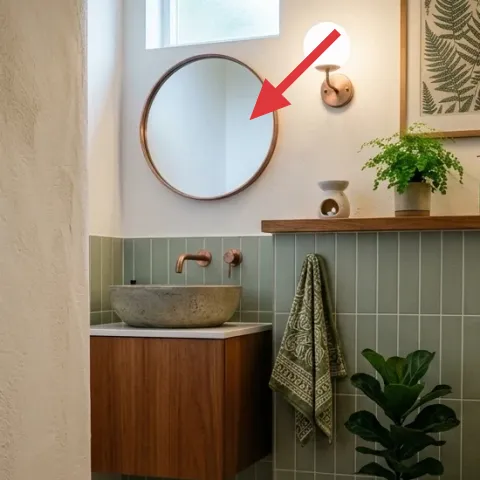
A round mirror is the easiest way to soften a bathroom dominated by rectangles and grids. In this photo, the mirror sits high enough to bounce light and visually widen the vanity nook without competing with the botanical print above it. You could go for a rectangular mirror, but then you’d be reinforcing the backsplash’s geometry instead of balancing it. The round shape also plays nicely with the globe light’s circular form and the ceramic curves in the counter vignette. The trade-off with mirrors is packing: wrap it well and keep it protected, but you can still take it down and box it like any other wall decor.
Keep it simple, then layer art
If the mirror frame is bold, choose wall art that stays airy in color.
Layer 6 — framed botanical print ($80) echoes the plants instead of fighting them
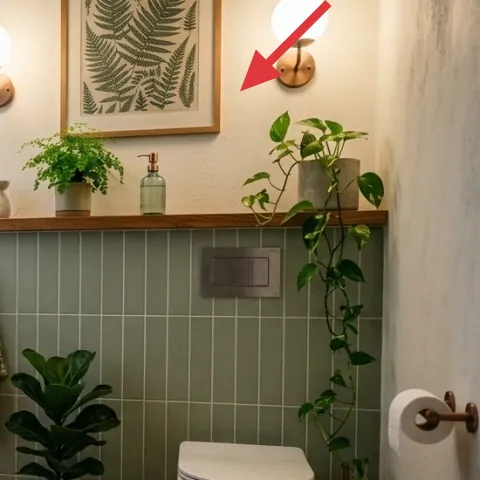
A framed botanical print gives the “green” theme a focal point, and it also makes the wall feel finished even when you’re not adding shelves or additional hardware. Here, the print color echoes the backsplash’s sage tone, which is why the whole corner reads cohesive instead of random. A landscape photo can work too, but botanical line-and-leaf details tend to look more intentional in bathrooms because they mirror the natural elements already present. The trade-off is that paper art can warp in extreme humidity, so it helps to choose a frame that seals the print behind glass. For shared housing, framed art is also move-friendly: it packs like a flat parcel.
Choose glass if your bathroom runs humid
Glass-front frames protect paper from damp and make the art last longer between moves.
Layer 7 — tile-friendly area rug ($200) adds cushion and warmth underfoot
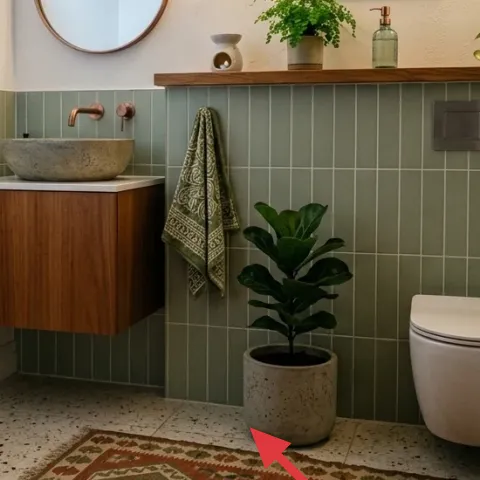
A tile-friendly area rug is the “big comfort” layer in a bathroom, and it’s doing more than decor—it reduces the cold feel under bare feet and gives you a spot to slow down after a shower. In this nook, the rug grounds the floor and visually separates the plant-and-toilet zone from the rest of the tile, so the room feels more designed than purely functional. You could swap in a washable runner, but the area rug scale in the photo reads more balanced with the vanity footprint. The trade-off is choosing a rug that can handle bathroom life: look for a rug with a backing that won’t slip and a pile that won’t trap too much moisture. Take it up to dry if your space is especially humid.
Use a rug pad made for slick floors
Tile can be slippery, and a good pad keeps the rug flat and safer.
The cost, layer by layer
| Layer | Item | Cost |
|---|---|---|
| 1 | ceramic soap dispenser | $15 |
| 2 | hanging patterned towel | $30 |
| 3 | potted indoor plant on floor | $30 |
| 4 | potted trailing indoor plant on floor | $35 |
| 5 | round wall mirror | $40 |
| 6 | framed botanical print | $80 |
| 7 | tile-friendly area rug | $200 |
| Total | $430 | |
A cheaper variant is swapping the area rug for a $120 option with similar coloring, choosing a $25 towel, and picking a smaller plant for the floor. You can still keep the round mirror and framed botanical print to anchor the look.
What worked, what didn't (across the whole room)
This bathroom corner works because the styling supports the strongest fixed element: the sage grid tile. Textiles, ceramics, and plants add softness without needing any installation changes, so the whole nook stays move-ready.
What worked
- The rug brings warmth and cushion right where tile usually feels cold.
- The towel’s pattern adds visual rhythm against the backsplash grid.
- The plant placement adds height and softness near the toilet-and-vanity zone.
- The round mirror balances the bathroom’s rectangular tile lines.
- The framed botanical print repeats the natural theme instead of starting a new one.
- The ceramic soap dispenser keeps the counter looking styled, not cluttered.
What didn't
- Glossy bottles can look out of place next to matte ceramic and tile.
- If plants are too small, the nook looks top-heavy and the floor zone feels empty.
- Too much pattern (more than one textile print) can fight the grid backsplash.
- A rug without grip tends to slide on tile and breaks the “anchored” look.
What we'd skip if we did it again
Skip swapping fixed hardware or trying to match everything to the vanity cabinet. Even if you love the color, renters/shared rules make hardware changes risky, and the visual payoff is rarely worth the hassle.
Skip a tiny plant or one that’s only tabletop-sized. In a tile-heavy bathroom nook, small greenery reads like an afterthought; floor scale keeps the composition calm and intentional.
Skip adding multiple patterned textiles at once. With the sage grid backsplash already doing a lot, you’ll get a cleaner result by choosing one pattern (like the towel) and letting art + plants provide the rest of the interest.
Frequently asked
How long does this bathroom nook refresh take?
Plan for about 60–120 minutes if the items are already in hand: place the rug, hang or drape the towel, set both floor plants, then finish with wall decor (mirror and botanical print). The biggest time variable is moving and wrapping the mirror so it arrives at your next place safely. If you need to shop, add a second short block for pickup and returns.
Will this still work if my bathroom is smaller than the photo?
Yes—scale down by keeping the same “roles,” not the same exact sizes. Use a runner-style tile-friendly rug or a smaller 5×7, choose one plant with a similar vertical presence, and keep the wall print simple. The round mirror can still be the anchor as long as it sits high enough to reflect light and visually widen the vanity zone.
What if my rental won’t allow wall-mounted decor?
If wall mounting is a no, swap the framed botanical print for a piece that can lean safely—like a flat framed print resting on a stand, shelf, or the back of a vanity. The mirror is trickier: many renters leave it if it’s already installed, but if yours is moveable, wrap it and relocate it during your next move. The rug and plants are the backbone either way.
Where should I shop for pieces that pack well?
Look for bathroom-friendly textiles and decor from retailers with easy returns and clear dimensions. For plants, pick a local nursery for stronger root health and fewer “dry on arrival” surprises. For rug and framed art, prioritize models that specify rug pad compatibility and ship in protective packaging. The goal is simple: items that won’t get damaged during an apartment-to-apartment move.
What’s the biggest mistake people make in small bathrooms?
Over-accessorizing with too many small items. When everything is small—plant, towel, bottles, and art—the space feels busy and visually noisy against the tile grid. Instead, choose a few larger “anchors” (rug + mirror + one framed print) and then add softness with one textile and two plants. That approach stays calm even after weeks of real-life use.
How do I keep the rug and towel looking good between moves and guests?
Use a grip rug pad made for hard floors and keep the rug dry after showers by blotting instead of leaving puddles to sit. For towels, rotate so one is always ready to be swapped out quickly—bathrooms change fast, and wet fabric makes everything feel dingy. If your towel pattern includes sage tones, it also disguises light stains better than crisp whites.
More in Bathroom
How to build a bathroom vanity nook under $500
A bathroom vanity nook refresh built around renter-safe swaps: a tile-friendly rug, a patterned towel, two live plants, and warm botanical …
6 no-drill ways to refresh a bathroom tub corner for $400
A $400 move-friendly refresh for a bathroom tub corner: swap in soft textiles, add practical storage styling, and keep everything easy to p…
Make a green-tile bathroom feel finished, $350
A renter-friendly bathroom vanity nook refresh with 7 no-drill upgrades for a $350 total. Learn how to add texture with a hex-pattern rug, …