- Best for
- colorful sofa-corner styling
- Cost
- $320 total
- Difficulty
- easy
- Time
- a long weekend
Why blue-and-gold curtain refresh is the sofa corner of 2026
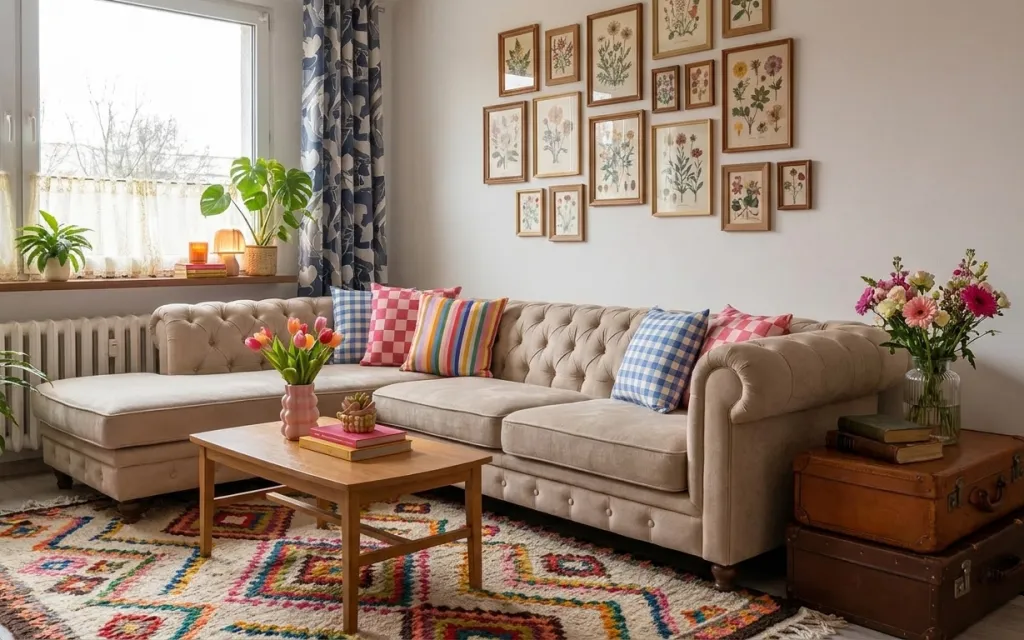
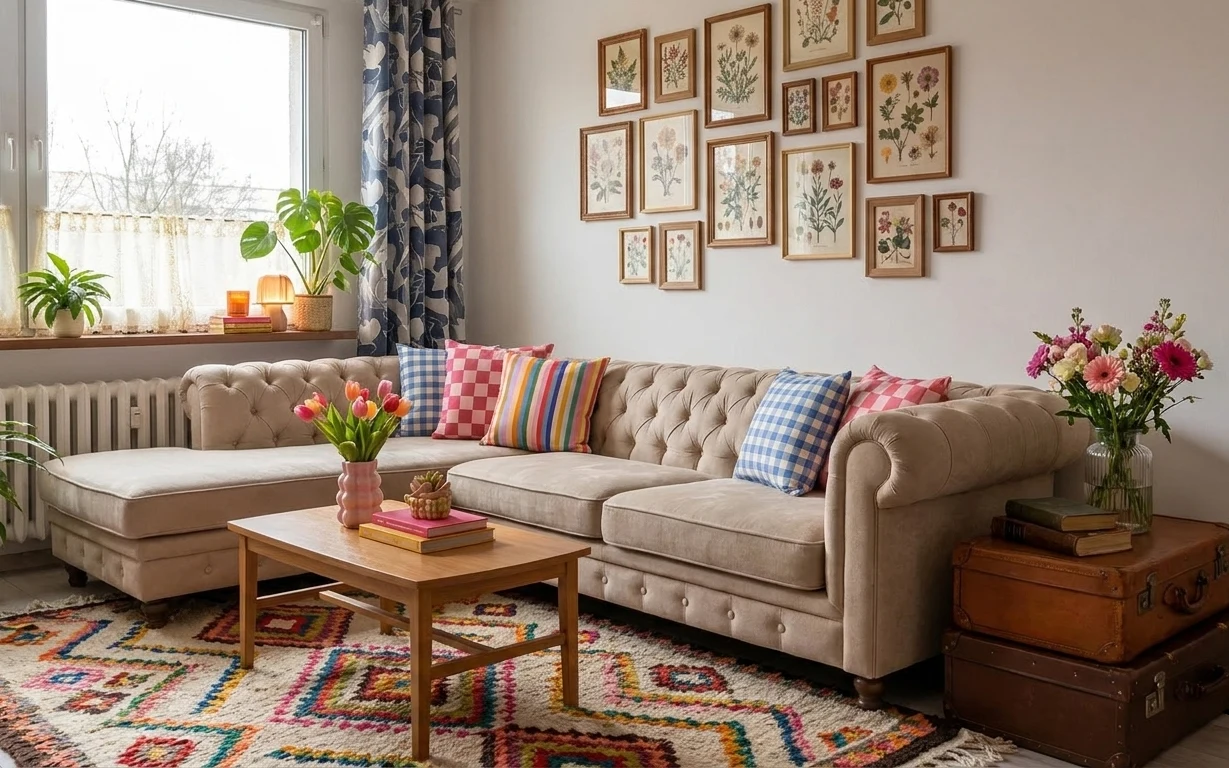
What I love here is the layering order: pattern first, then texture, then a repeat of botanicals so your eye has somewhere to land. The beige tufted sofa reads calm, while the patterned rug adds movement underfoot and the blue patterned curtains add structure at window height. That warm tan lamp shade brings the room back to “easy to live in” after dark, which matters more than matching pieces perfectly. For renters, this kind of mix-and-match looks intentional without touching the landlord’s fixtures.
I used to think I had to “finish” a living room by buying a full matching set. The day I left a room with one too-many matching items, I realized the fix was repeating a single motif instead—here it’s framed botanical prints. Once that grid shows up, the colorful pillows and rug can do the playful work without making the space feel chaotic.
Layer 1 — patterned area rug ($100) Underfoot color that hides everyday mess
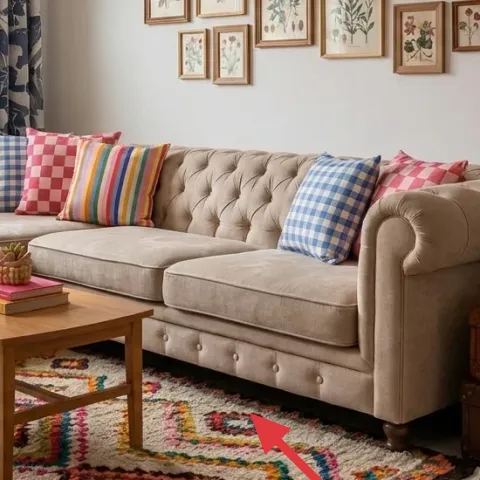
This patterned area rug grounds the beige sofa and visually anchors the sofa corner. It’s the loudest layer in the room, so picking a rug with busy-but-cohesive colors (blue, pink, cream) makes the rest of the styling choices feel easier. I also like rugs like this for rentals: they protect light floors and you can roll them up when the lease ends. The trade-off is that busy patterns make small spills less “noticeable” but can look like they’re fighting your wall art if the rug colors don’t share a couple of tones—so match at least one blue and one warm neutral.
Pattern rule for renters
If your wall art is already patterned (like botanical prints), keep the rug pattern more about color blocks than tiny gradients.
Layer 2 — wood coffee table ($80) Warm grain that balances all the tufted beige
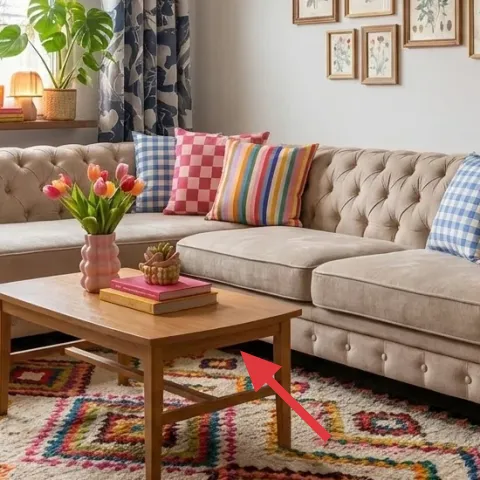
The wood coffee table is the middle layer between the rug’s color and the sofa’s softness. In the hero photo it sits right in front of the sofa, sized to leave a walk space, and its light grain keeps the beige from feeling heavy. A common alternative is an all-dark table, but then you lose that bright counterweight and the corner starts reading “too warm, too brown.” With wood, you can also style it without committing to a whole set—books, a single vase, and one tray-like object look styled even when the room is clearly lived in.
Clear the center, style the edges
Keep most of the tabletop open so the rug and sofa stay the stars.
Layer 3 — plug-in table lamp with tan shade ($40) Soft, warm light for evening lounging
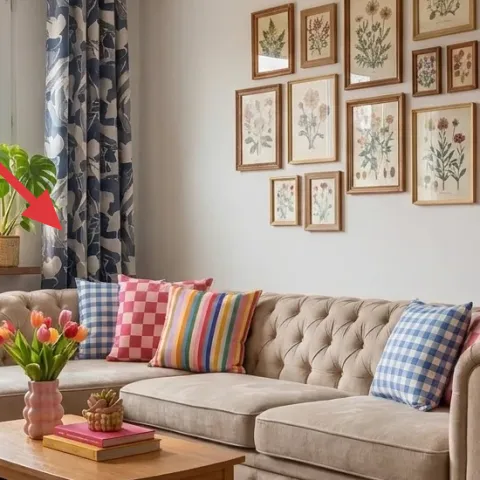
This plug-in table lamp matters because it adds a second lighting height—right where pillows and window light meet. The tan shade gives a warm glow that works with beige upholstery and plays nicely with the pink in the flowers. If you only use overhead light, the corner can feel flat and a little “daytime-only.” The trade-off with a floor or table lamp is footprint: it takes up space on the side of the coffee-table zone, so it’s best to choose a slimmer base and tuck it where you can still reach the sofa easily.
Watch cord routing
Before you buy, plan where the plug will sit so the cord doesn’t become the most visible line in the room.
Layer 4 — colorful throw pillow covers (DIY dyed) ($30) A DIY color repeat that doesn’t require new furniture
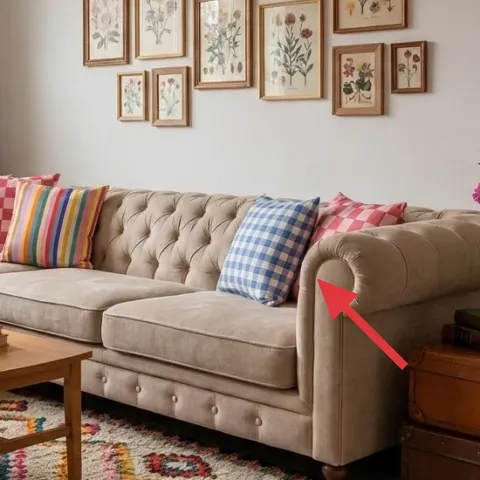
Make it instead of buying it
DIY dyed pillow covers to match the rug’s blues and pinks, so the sofa reads intentional without replacing the sofa itself.
Materials
- Cotton pillow covers (2) — standard size — fabric store — $12
- Fabric dye (blue + pink or one mix) — 1–2 packets — craft store — $8
- Rubber gloves + a plastic tub liner — household — $4
Steps
- Pre-wet the cotton covers so the dye spreads evenly.
- Mix dye according to the packet for the exact shade you want.
- Submerge and stir to get a consistent tone, then pull and drain.
- Rinse in cool water until the water runs mostly clear.
- Air-dry completely, then check the shade in daylight.
- Insert into the sofa-ready pillow forms and arrange with the existing patterned covers.
Total DIY cost: $24 — saves about $6 over buying.
Throw pillows are the fastest way to add color when you can’t change the room’s big bones. In the photo, the mix of blue and pink pillows sits across the beige sofa, so it visually ties the rug and the flowers together. The reason this works better than swapping a bigger piece is control: you can adjust placement until it looks balanced, then remove everything when the lease ends. The trade-off is that dyed color can vary slightly from batch to batch, so it’s smart to dye covers first and live with them for a day before adding any other new textiles.
Anchor the palette
Pick 2 colors from the rug and make those the only new pillow tones you introduce.
Layer 5 — blue patterned curtains (pair) ($30) Window framing with move-ready swags
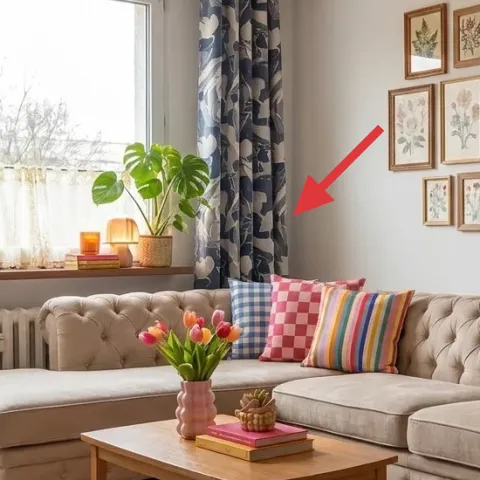
These blue patterned curtains add height, softness, and a second “pattern source” near the window, which is what makes the sofa corner feel styled instead of accidental. In a rental, curtains are especially helpful because you can change the mood without dealing with wall changes or permanent fixtures. The key detail is choosing panels with navy/blue tones that echo the rug, so the whole room has one consistent visual thread. If you go for solid curtains instead, you’ll lose some of the playful energy that makes this corner feel collected rather than staged.
Hang for fullness
Even with a pair, you want enough width so the fabric falls in soft folds, not straight lines.
Layer 6 — framed botanical print (one in the grid) ($25) Repeat art that makes the wall feel collected
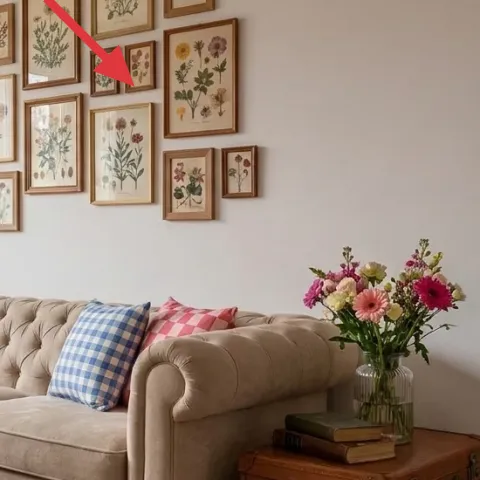
The framed botanical prints create a grid that reads curated from across the room, which is why this setup works with lots of other colors. A single framed print won’t do the same job, so the move-friendly approach is: pick one framed botanical print you love, then add more later at your pace. The trade-off is that the grid demands a little spacing discipline—if the frames end up too tight, it can feel cluttered instead of rhythmic. Compared with one oversized statement piece, a small grid is easier to replace if you tire of one print.
Choose one frame finish
Keep wood-toned frames consistent so the botanicals read as a set.
Layer 7 — small vase with pink flowers ($15) A single pop of color near the seating
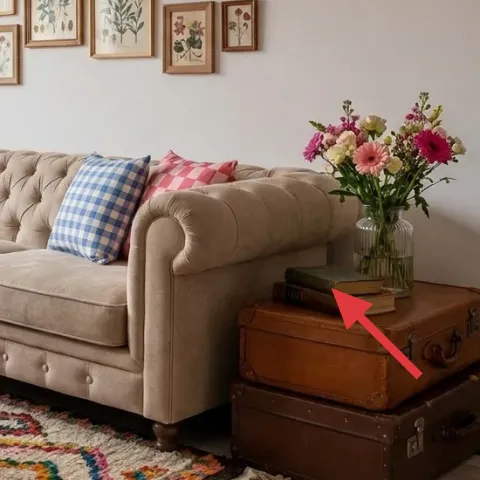
This small vase with pink flowers gives the sofa corner a fresh focal point on the right side, right where your eye moves after scanning the rug and sofa cushions. It also repeats the rug’s pink, which keeps the color story from feeling random. A common alternative is a stack of decor books only, but then the corner loses the “living” feeling of something organic and changing. The trade-off is upkeep: you’ll swap flowers as they fade, but that’s also why this layer feels so rental-friendly—containers and styling are easy to pack and re-create anywhere.
Make it seasonal
Swap pink flowers for whatever’s in season to keep the palette current.
The cost, layer by layer
| Layer | Item | Cost |
|---|---|---|
| 1 | Patterned area rug (5×7-ish) | $100 |
| 2 | Wood coffee table | $80 |
| 3 | Plug-in table lamp with tan shade | $40 |
| 4 | Colorful throw pillow covers (DIY dyed; retail equiv) | $30 |
| 5 | Blue patterned curtains (pair) | $30 |
| 6 | Framed botanical print | $25 |
| 7 | Small vase with pink flowers | $15 |
| Total | $320 | |
If you want a cheaper version, choose one “big” pattern (either the rug or the curtains) and keep the other layers more solid—then add color with pillows and the vase only. That keeps the sofa corner bright without buying two patterned textiles.
What worked, what didn't (across the whole room)
This setup succeeds because the colors echo across layers: blues in the curtains and rug, pinks in pillows and flowers, and warm neutrals in the sofa and lamp. The botanical grid also creates a sense of intention so the room never feels random.
What worked
- The patterned rug anchors the beige sofa and keeps small floor scuffs from looking obvious.
- Blue curtains add vertical structure and make the sofa corner feel “finished” near the window.
- A tan-shade plug-in lamp warms up the space after dark without any hardwiring.
- Pillows provide fast color control, especially when you can dye or swap covers.
- The framed botanical prints add a repeat motif that ties together multiple textures and patterns.
- A small vase on the right side gives the whole corner a living focal point.
What didn't
- If the curtain blue doesn’t echo the rug tones, the patterns can start feeling disconnected.
- Too many new patterned pillows at once can compete with the framed botanical grid.
- A lamp placed too far from the seating area makes the sofa feel dim compared to the window.
- Skipping the repeat motif (botanicals) makes the wall look like a collection of singles.
- If the rug is too small, the coffee-table zone looks like it’s floating.
What we'd skip if we did it again
Skip buying a full furniture “set” in the same finish. This corner works because the wood coffee table and warm lighting contrast the tufted sofa, not because everything matches.
Skip oversized wall changes. Instead of touching the wall, repeat botanicals in a grid with move-friendly hanging methods so the effect comes from layout, not paint.
Skip solid-and-silent textiles everywhere. If you already have patterned art on the wall, keep at least one other textile patterned (rug or curtains), then let pillows and flowers do the color dialing.
Frequently asked
How long does this sofa-corner refresh take?
Most of the work is swapping textiles and placing decor, so you can do it in about a day. If you DIY dyed pillow covers, plan an extra evening for dyeing and drying. Adding the framed botanical print grid is the only part that can slow you down—measuring spacing and leveling takes longer than it looks.
Will this look work in a smaller living room?
Yes—lean into the same stacking logic, just tighten the scale. Choose a slightly smaller rug and reduce the number of pillows to 3–4 at most. If the wall grid feels overwhelming, use fewer framed botanical prints in a smaller rectangle instead of spreading them across the whole wall.
Can I do this if I rent and can’t drill or anchor?
This concept is renter-safe because the key changes are removable: a patterned rug, curtains, a plug-in lamp, and freestanding styling objects. For framed botanical prints, use hanging methods designed for renters (like Command-style hooks) so nothing is permanent.
What’s the biggest mistake people make with patterned rugs and wall art?
The biggest mistake is choosing patterns that share no color thread. If your rug and your framed prints don’t have at least one matching blue or one matching warm neutral, the room looks busy instead of curated. Match two colors max, then let one layer (rug or art) do the visual work.
Where can I shop for these specific pieces on a renter-friendly budget?
Look for the rug and curtains at big-box home stores or resale shops with a wide size selection. Plug-in lamps are widely available online and in thrift stores—focus on shade color rather than brand. For framed botanicals, thrift frames and swap in matching prints, so you can build the grid without overspending.
More in Living Room
Under $350: a renter-friendly sofa-corner refresh with color
A renter-friendly sofa-corner refresh that brings boho color and structure using a patterned rug, blue curtains, a plug-in lamp, and a sing…
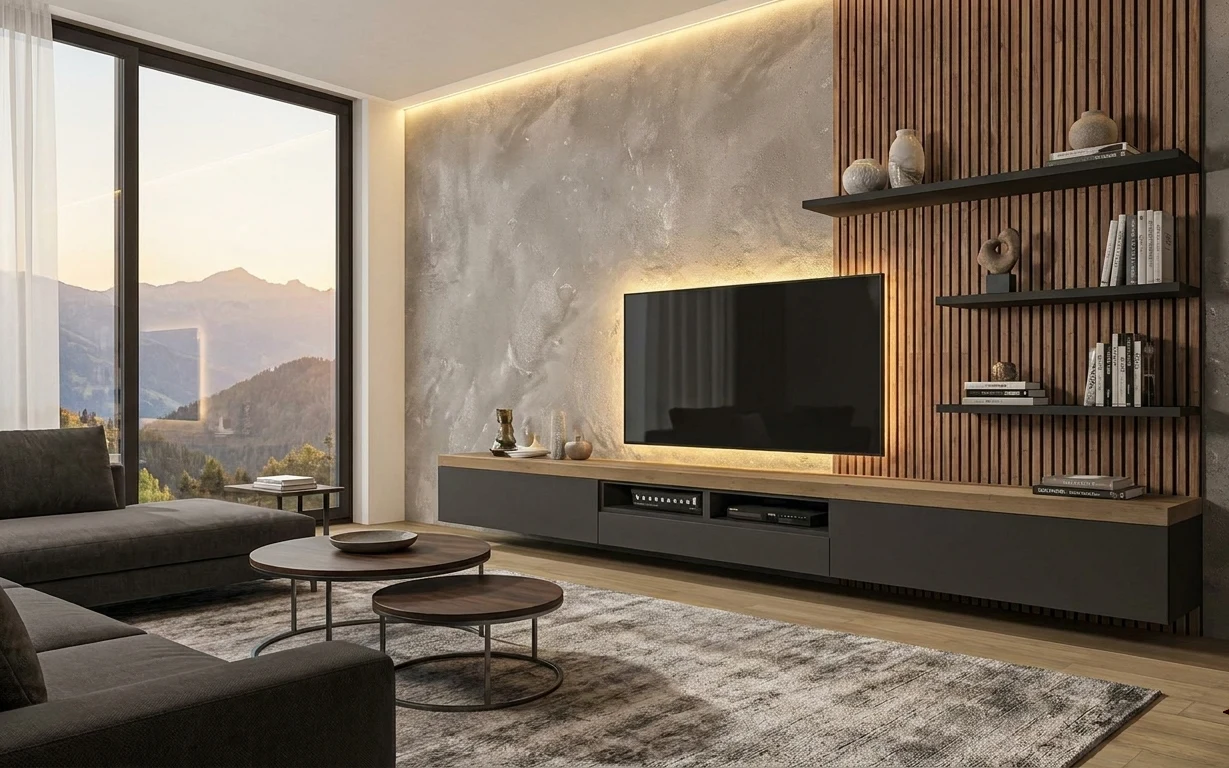
Under $700: renter-friendly TV lounge nook refresh
A renter-friendly TV lounge nook refresh that leans on one big rug, warm LED glow, peel-and-stick wood slats, and soft sheers. The whole lo…
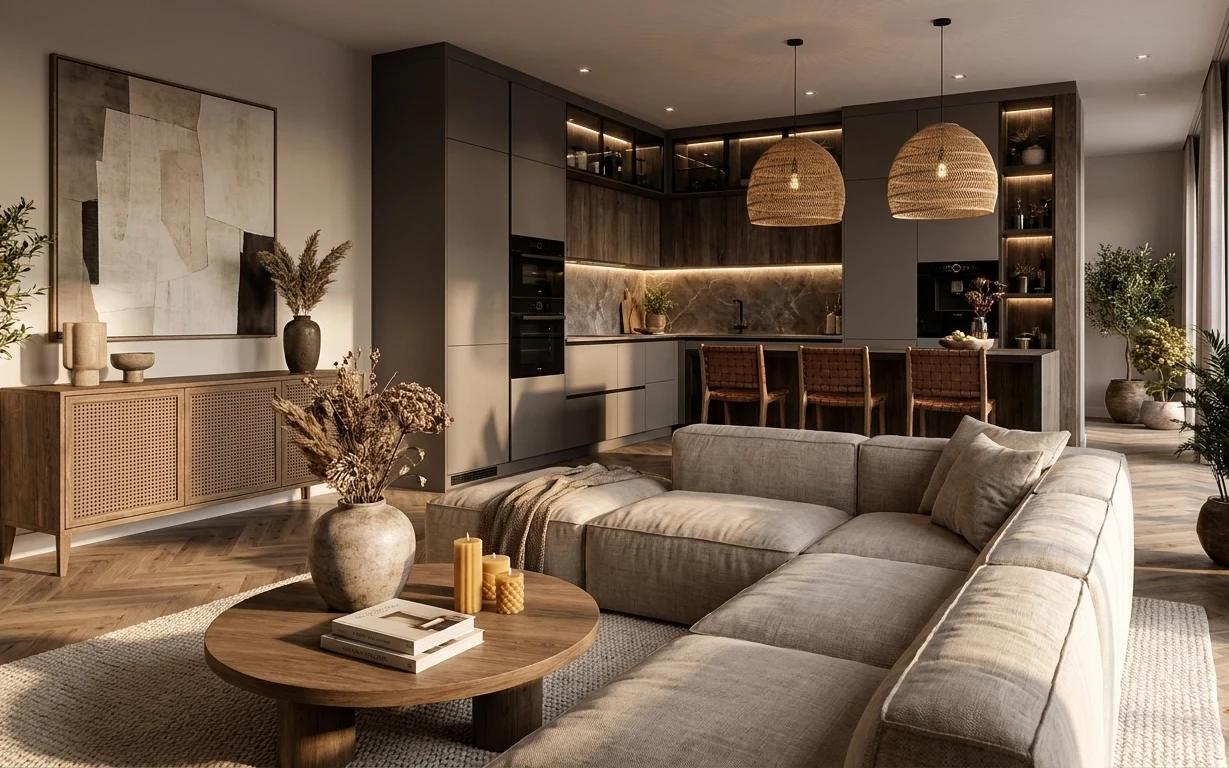
Under $600: warm neutrals living room refresh with 7 renter swaps
A warm beige-and-charcoal living room look is easier than it looks. This renter-friendly refresh uses 7 swaps—rug, coffee table styling, th…