- Best for
- small dining refreshes
- Cost
- $350 total build
- Difficulty
- Mostly easy swaps
- Renter-safe
- no-drill wall art + freestanding decor
Why warm terracotta details are the dining nook of 2026
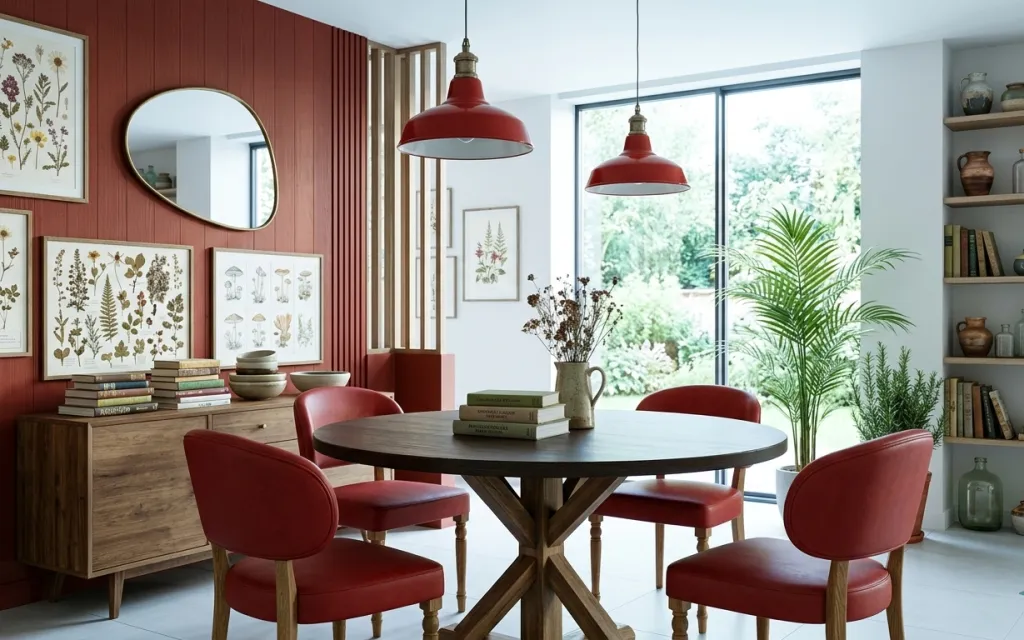
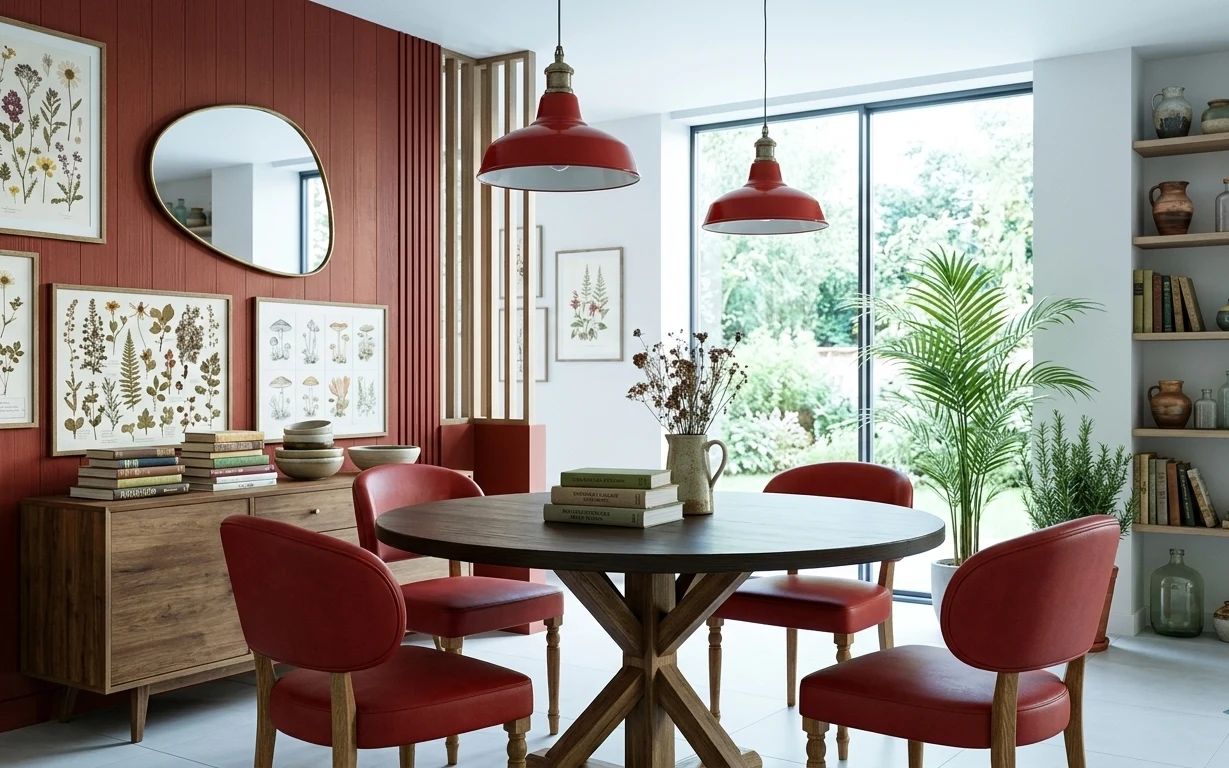
In this dining nook, the visual “anchor” is the warm reddish wood wall paired with terracotta-red upholstered chairs. The round wall mirror softens the geometry, while the framed botanical prints pull in a natural, lived-in feel. A pedestal dining table keeps the sightlines open, and the shelf styling adds color without cluttering the floor. For shared housing, the trick is choosing things that can pack flat or dismantle fast, so the look survives the next move.
I once tried to match a bold dining color with a single “perfect” art print—and ended up with a wall that felt like a sticker instead of a scene. Here, the layered botanicals and the warm metals/ceramics do the heavy lifting. The moment I stopped chasing one exact match and started repeating the same tones across chair upholstery, framed art, and shelf objects, everything clicked.
Layer 1 — Dining chairs (red upholstered set of 4) ($120) Seat color that shows up from every angle
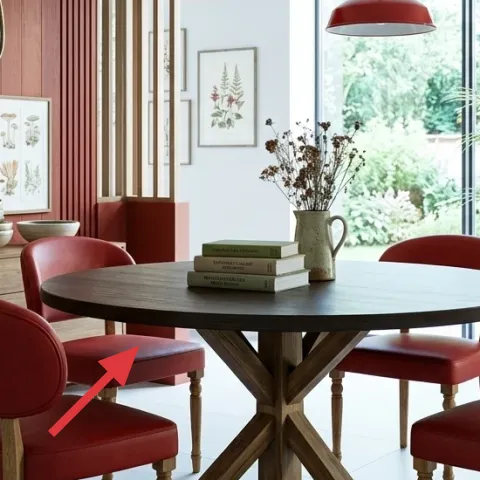
The red dining chairs are the loudest color note in the photo, and they’re what makes the room feel intentionally “styled,” not accidental. Swapping or refreshing chair coverings (or re-covering with renter-safe slipcovers) is also one of the easiest move-friendly moves—chairs can go back into boxes, and the color story travels. The trade-off is that chair fabric needs to look good up close, not just across the room, so picking a solid tone matters more than prints. Compared with repainting walls, this choice keeps the big visual impact without touching the fixed surfaces.
Match the chair tone to the wall’s undertone
The chairs here lean terracotta-red, not bright cherry. Choosing a similar warmth keeps the mirror and botanicals from looking too cool or too harsh.
Layer 2 — Round wall mirror ($40) A soft-edged reflection for a warm wall
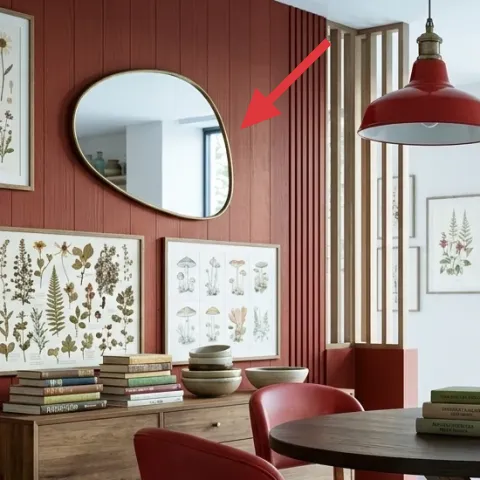
The round wall mirror breaks up the vertical lines of the reddish wood paneling and gives the dining nook a gentle “breathing room” effect. A round shape reads friendlier than a rectangle in tight spaces, and it also helps daylight feel less blocked near the window. For a shared-housing setup, the key is choosing mounting that doesn’t damage the wall—Command-style hooks designed for plaster/painted drywall can work depending on the surface. The trade-off is size: a mirror that’s too small won’t catch the light, while a huge mirror can feel fussy when the room is rearranged for moving day.
Keep it easy to pack
Mirrors take the most care during moves, so wrap well and keep the boxed packing if possible.
Layer 3 — Framed botanical print (press-and-frame style) ($25) Repeating the plant theme without committing
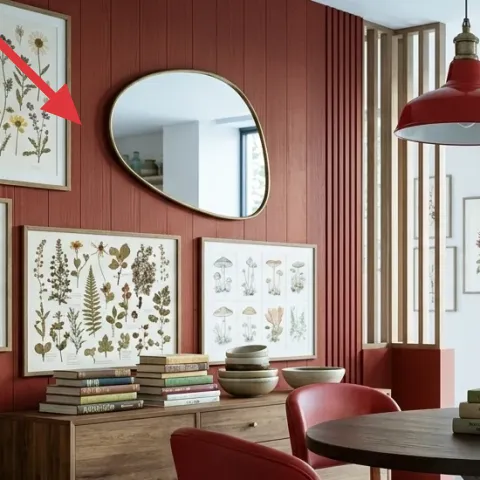
One framed botanical print is enough to echo the natural mood of the photo, especially when it sits near the mirror and other frames. The botanical drawings also give the terracotta seating and warm wood paneling an organic counterpoint. This is the kind of wall item you can keep move-ready: it’s light, it can be boxed flat, and it doesn’t require changing any fixed fixtures. The trade-off is that paper art is sensitive to humidity—so it belongs in a controlled home environment and needs careful handling when relocating.
Make it instead of buying it
This DIY pressed flower frame recreates the framed botanical look with a simple paper insert and preserved flowers, using supplies that pack easily.
Materials
- Cardstock (8.5×11) — 2 sheets — craft store — $3
- Pressed flowers — 1 small bundle — foraged or craft store — $4
- Clear adhesive photo corners or tape — 1 pack — craft store — $6
- Matte clear sleeve (for protection) — 1 — stationery store — $2
- Frame (reused or thrifted) — 1 — thrift/secondhand — $0
Steps
- Lay cardstock flat and arrange the pressed flowers for the composition.
- Trim the cardstock insert to the frame’s opening.
- Secure flowers using photo corners/tape on the edges so they stay flat.
- Slide the insert into a clear sleeve to protect against light and dust.
- Fit the protected insert back into the frame and close the backing.
- Test the layout once centered, then swap to a final arrangement if needed.
Total DIY cost: $15 — saves about $10 over buying.
Layer 4 — Sideboard cabinet ($120) A warm storage base for the whole scene
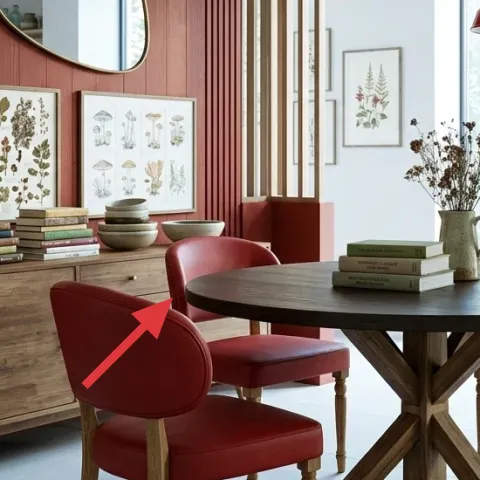
The sideboard does two jobs at once: it anchors the dining zone visually, and it gives a spot for styled stacks without piling things on the table. In this photo, the warm wood finish echoes the wall paneling, while the open styling surfaces let ceramics and books act like decor instead of clutter. For shared housing, the best version is a freestanding cabinet you can move with friends in one trip—or a lighter console that breaks down if needed. The trade-off is that furniture is harder to transport than textiles, so prioritizing a piece that already fits the room’s proportions (and keeps your “staging” height consistent) makes the refresh worth it.
Don’t oversize the storage piece
A too-wide cabinet makes the dining area feel cramped. Measure the clearance to chairs and the walkway before committing.
Layer 5 — Vase with dried flower stems ($15) Texture that reads like effort, not mess
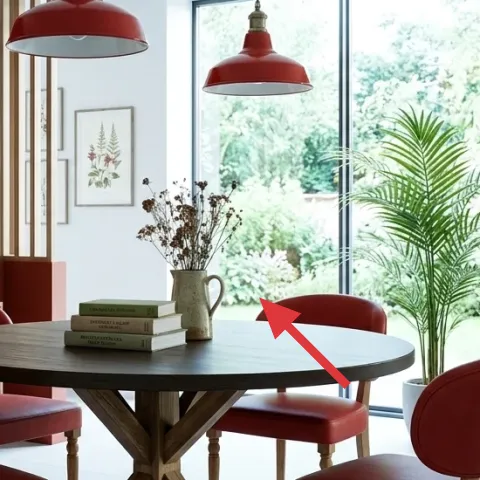
The vase with dried stems brings movement to the center styling, and the muted greens and browns keep the terracotta palette from feeling one-note. Dried stems also handle imperfect environments better than fresh flowers, which is a real win when you’re moving within a year or two. A small vase is easy to box, and the stems can be bundled to stay together. The trade-off is that dried arrangements look best when they’re intentionally sparse—too many stems can look accidental rather than curated.
Pick stems in the same green family
If the room’s plants lean bright green, choose dried varieties with similar tones so the centerpiece doesn’t fight the window greenery.
Layer 6 — Decorative books stacked ($10) A height layer that makes everything feel styled
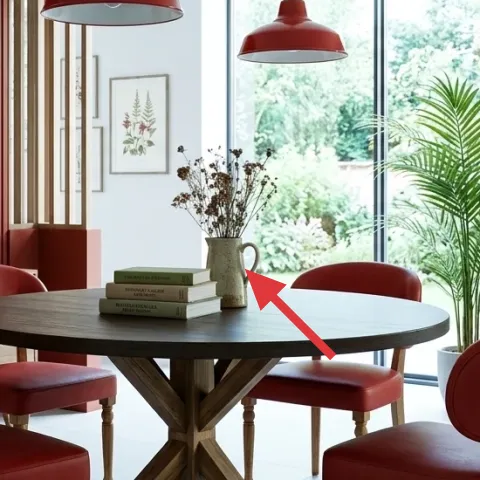
The stacked books give the styling surface a controlled height, which helps ceramics and the vase look intentional rather than randomly placed. Because stacks compress into boxes, books are also one of the most move-friendly decorative categories—especially compared with bulky decor objects. The trade-off is that book covers matter: picking muted spines that echo the room’s warm neutrals keeps the color story cohesive. In a small dining nook, this “height trick” is a fast way to avoid flat-looking surfaces while staying within a tight refresh budget.
Use a consistent stack size
If the stack height changes every week, the room reads less curated. Keep it at one repeatable height for calm visual rhythm.
Layer 7 — Decorative ceramics and glass bottles on shelf ($20) Window-adjacent color without more clutter
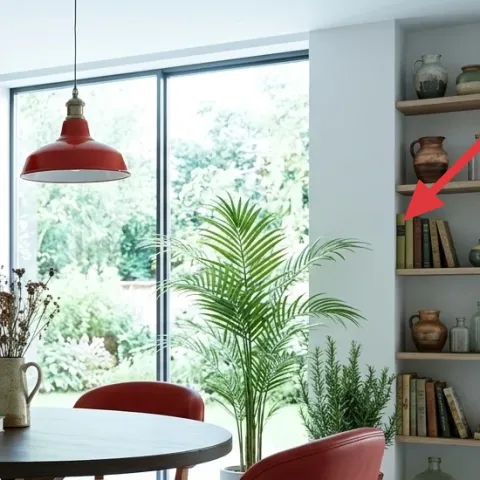
The ceramics and glass bottles on the right shelf add subtle color variation—greens, browns, and creams—so the room feels collected instead of decorated. Because they’re small, they can be swapped per season and easily boxed for a move. This is also the lowest-effort way to make a shelving unit feel “finished” when it’s visible from the dining table. The trade-off is stability: glass and narrow bottles need protection during transport, so choose pieces with thicker bases or plan on bubble wrap and a sturdy box.
Group by color temperature, not by “set”
In warm rooms like this, ceramics with similar warmth look cohesive even when they don’t match.
The cost, layer by layer
| Layer | Item | Cost |
|---|---|---|
| 1 | Dining chairs (red slipcovers for 4) | $120 |
| 2 | Round mirror (24–36 inch) | $40 |
| 3 | Framed botanical print (16×20, DIY press-frame equivalent) | $25 |
| 4 | Sideboard cabinet (freestanding storage) | $120 |
| 5 | Small vase for dried stems | $15 |
| 6 | Decorative book stack | $10 |
| 7 | Decorative ceramics and glass bottles (shelf group) | $20 |
| Total | $350 | |
A cheaper variant skips the sideboard upgrade and focuses on chair slipcovers plus one new framed botanical print. That keeps the biggest color story while reducing the cost of moving larger furniture during a lease change.
What worked, what didn't (across the whole room)
The warm reds, round mirror, and botanical framing all reinforce the same natural theme without making the nook feel busy. The chair color reads from multiple viewpoints, and the shelf ceramics keep the right side from looking empty. The only parts that require extra care are the delicate wall art and glass decor during moves.
What worked
- Terracotta-red chair color repeats the wall warmth and makes the dining nook look intentional.
- The round mirror softens the vertical wood paneling and bounces daylight toward the table.
- Botanical prints add an organic counterpoint to the room’s red-and-wood palette.
- Stacked books create styling height so ceramics and vases look placed, not scattered.
- Dried-stem arrangements stay attractive longer and pack more easily than fresh flowers.
What didn't
- A too-small mirror would leave the left wall feeling flat against the bold wood paneling.
- Overfilling the shelf with mixed-size bottles can look random from the dining table.
- Paper-based botanical art needs careful handling to avoid creases during transport.
- If chair slipcovers are too shiny, they can fight the matte wood and ceramic finishes.
What we'd skip if we did it again
Skip any approach that depends on changing fixed architectural elements. In a rental-style shared home, permanent wallpaper, paint, or hardwired light changes are a headache on move-out and don’t pack well.
Skip going “set-matching” on everything. Matching ceramic colors and print styles too perfectly can flatten the look; the room stays interesting because the botanicals, glass, and chairs repeat tones without being identical.
Skip fragile display pieces that can’t survive a box. Glass bottles and thin decor are beautiful, but thicker-base items (or pieces that wrap well) reduce stress when the dining nook has to travel.
Frequently asked
How long does this dining nook refresh take?
Most of the work is shopping and styling, so a realistic timeline is a half-day for chair covering swaps and shelf arranging, plus about an hour for framed art and mirror placement. The DIY pressed flower frame adds extra time for assembling the insert and letting everything set in place, but it’s still very doable in an afternoon.
What if I’m moving before the next season—will these items pack easily?
The strongest move-friendly picks here are chair coverings, paper-based botanical art, the round mirror (wrap carefully), and lightweight shelf decor. The only time-sensitive piece is the sideboard, since furniture packing is more involved. For faster moves, keep the sideboard as-is and prioritize swap-friendly textiles and wall styling first.
My dining nook is smaller—how do I scale this look down?
Use the same color logic, but reduce volume: choose chair coverings that still read terracotta, keep just one main botanical print (instead of multiple), and reduce shelf groups to 3–5 items. The round mirror can stay, but going slightly smaller helps it feel proportional. Keep one styled height element, like the book stack, so the surface still looks deliberate.
Where should I shop for the mirror, framed prints, and chair covers?
Mirrors and frames are easiest to find secondhand to match the scale, while chair-cover options are common in home goods and online marketplaces. For the pressed flower frame, cardstock and photo corners are usually in craft stores, and pressed flowers can be foraged or sourced from hobby shops. Buying thrifted frames is the fastest way to keep the DIY cost down.
What’s the biggest mistake to avoid in this dining nook style?
Don’t overmix greens and warm reds without a repeat. If the greens on the shelf and in the centerpiece don’t relate to the daylight plants, the room looks busy. Also avoid choosing a mirror shape that’s too angular for the soft wood-and-botanical mood; the round edge keeps the whole scene calm.
Can this work in a place with different wall materials?
Yes—because the swaps here rely more on color repetition and geometry than on one specific wall finish. If the wall isn’t red wood paneling, the terracotta chairs and botanical framing still create the same theme. The mirror’s job stays the same too: it adds reflection and softness. The ceramics and book stacks are also portable styling systems that adapt to new spaces.
More in Small Spaces
Under $400: move-friendly dining nook refresh in warm reds
A warm-wood dining nook with red accents can look intentional without permanent changes. This $400 (max) refresh uses 7 move-ready swaps—ch…
Under $300: ceramic-and-walnut window-side shelf nook refresh
A bright window-side shelf nook can look styled, not fussy, with 7 move-friendly swaps. This $300 refresh focuses on matte black vases, a c…