- Best for
- Earthy, arched-niche bedrooms
- Time
- 2–3 hours (plus drying for DIY art)
- Total cost
- About $450
- Renter-safe
- Yes—textiles + removable art styling
Why warm terracotta palette is the arched bed nook of 2026
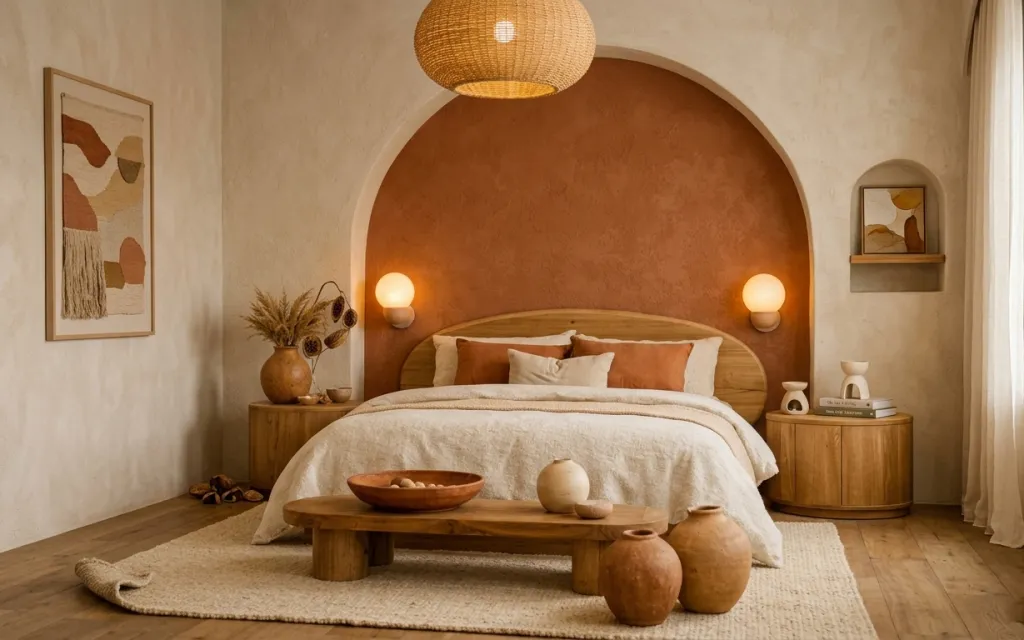
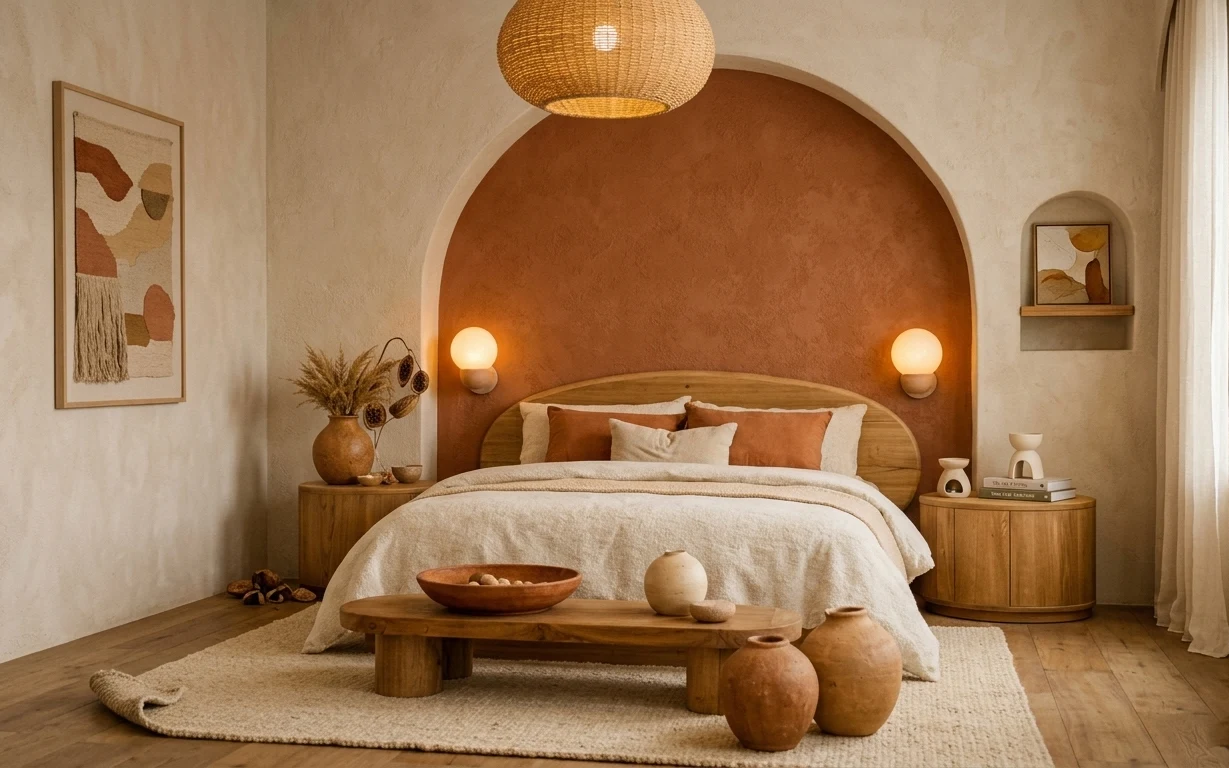
There’s a reason this setup feels “finished” without looking busy: the textures are doing most of the work. A natural jute rug grounds everything, then the white linen-texture bed cover and layered throw pillows add soft contrast against the warm terracotta backdrop. The cream sheer curtain panels keep the light moving, while the ceramic vessels and wooden platform coffee table styling make the whole nook feel collected rather than staged. For renters, this is the sweet spot—swap textiles and styling without asking permission.
I used to chase the look by replacing too many things at once—usually pillows first, then I’d realize the rug and curtains weren’t pulling their weight. What changed for me was choosing one “anchor palette” (in this case, terracotta + cream + warm wood) and sticking to it in smaller, cheaper moves. The rug color and the bed-cover texture made the wall color feel intentional instead of loud. Suddenly the art and ceramics were just icing, not the heavy lift.
Layer 1 — Area rug 5×7 in natural jute tone ($150) Soft underfoot, even when the room is plain.
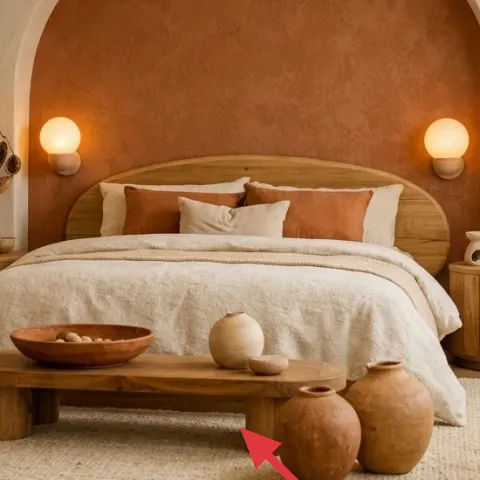
A natural jute-toned area rug sits under the wood platform coffee table and extends toward the bed, which is exactly why this nook feels styled instead of scattered. Jute also plays nicely with warm walls: it reads as a neutral that won’t fight terracotta, and it adds that slightly rustic fiber texture that flat prints can’t replicate. The trade-off is that jute can look uneven if the pile is too thick—so this rug stays flatter and more graphic. Compared to a shag rug, this one feels grounded and lets the bed linens stay the star.
Get the scale right
If the rug stops short of the bed front, the space can feel like two separate zones. Aim for a rug that lets at least the main “sleep zone” sit on it.
Layer 2 — Linen-texture bed cover in cream ($80) The crisp base for a warm, earthy bedroom.
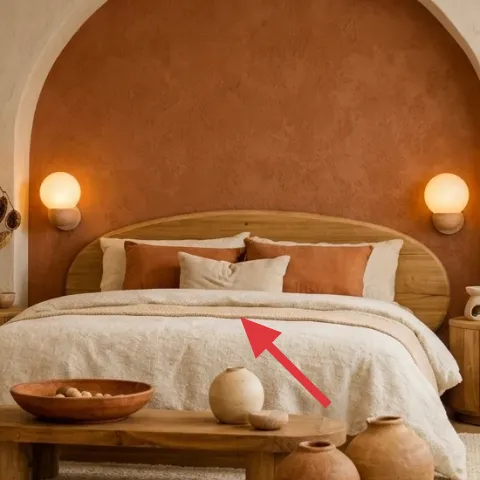
The cream linen-texture bed cover is the quiet backbone here. It’s light enough to cool down the terracotta wall, but still has the natural, slightly slubby surface that reads “textural” from across the room. If you swap the look with a smooth, shiny blanket, you lose that woven softness and the bed can start to look stark instead of serene. Choosing linen-texture also works because it pairs with both the white and cream throw pillows without turning everything into one exact shade. It’s an easy renter win because bedding is always lease-safe.
Texture beats color-matching
In rooms with a warm wall, a slightly imperfect weave reads more intentional than a perfectly matched white.
Layer 3 — Throw pillow covers in white and cream mix ($30) A simple way to add depth without clutter.
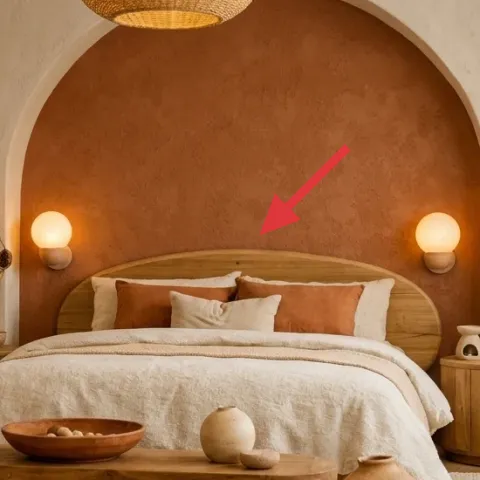
Those pillows—white plus cream tones—create the “layered” look that makes a bed feel styled even before you add art or decor. The pillow covers are the lever: a mix of slightly different whites prevents the bed from looking one-note against the warm niche wall. I’d rather adjust pillow covers than replace the whole bed cover, because it’s cheaper and easier to pack away when the lease ends. The trade-off is that you need restraint: too many covers can overwhelm the arched shape, so keep it to a tight set and let the linen texture do the rest.
Skip glossy finishes
Pillows with a shiny satin face can make warm bedrooms look colder. Stick to matte, woven, or cottony textures.
Layer 4 — Hand-painted abstract on cardstock, framed (DIY) ($80) One piece of art that matches the terracotta story.
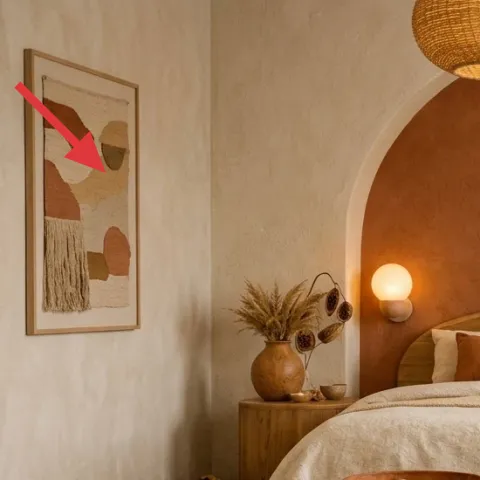
The left framed abstract print is all about shape and color: earthy blocks that echo the terracotta wall without going full “theme decor.” For a renter-friendly version, a hand-painted abstract on cardstock gives the same organic feel at a fraction of the cost, and it’s easy to remove and reframe later. The trade-off is that it won’t look perfectly uniform—embrace that. This is the layer that makes the room feel curated rather than generic because your artwork can share the exact warmth of the wall.
Make it instead of buying it
DIY a hand-painted abstract on cardstock, then frame it to replace the large left-side framed print.
Materials
- Cardstock (thick) — 1 sheet — craft store — $10
- Acrylic paint set (earth tones) — 1 small set — art store — $8
- Paintbrushes (assorted sizes) — 3–4 brushes — craft store — $12
- Painter’s tape — 1 roll — hardware/craft store — $15
- Frame (16×20 style) — 1 frame — home goods store — $10
Steps
- Choose 3–4 colors that match the wall warmth and print off a quick reference photo for yourself.
- Cut cardstock to fit the frame opening (measure the rabbet inside the frame).
- Tape off 2–4 rough shapes with painter’s tape for imperfect “blocky” edges.
- Paint the largest shapes first with a mid-size brush, then let the shapes dry fully.
- Paint smaller accents on top (keep them asymmetrical so it doesn’t look like a template).
- Peel tape slowly while the paint is mostly set so edges stay crisp but not sterile.
- Touch up any areas and add one lighter/off-white mark to echo the room’s cream bedding.
- Let the piece dry completely before inserting it into the frame.
- Slide into the frame and secure using the back tabs or clips.
- Hang with Command Strips sized for the frame weight, then step back to confirm balance.
Total DIY cost: $55 — saves about $25 over buying.
Layer 5 — Cream sheer curtain panels ($60) Make the light feel softer around the bed.
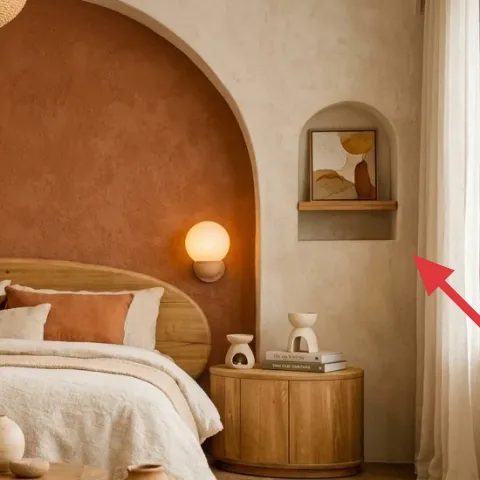
Cream sheer curtain panels by the bed right side keep the room airy and stop the terracotta niche from feeling too heavy. Sheers also create a gentle diffusion effect, which matters most in bedrooms where you want the warm mood to feel calm—not orange. The trade-off is privacy: sheers are for daytime softness, so you’ll likely rely on blinds or nighttime options. That said, they’re renter-friendly because you can hang them with tension rods or existing hardware, then remove everything at move-out. This layer is also the easiest way to add “fabric architecture” without changing any fixed features.
Hang for height, not width
Mount the rod close to the ceiling line so the sheers pull the eye up and make the niche feel taller.
Layer 6 — Terracotta ceramic vase (medium size) ($35) Warm ceramics that read like collected objects.
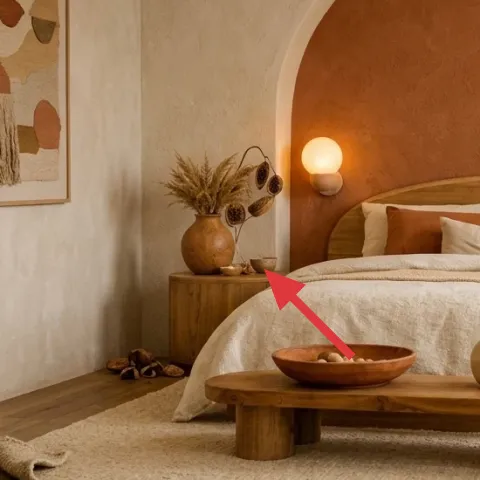
The medium terracotta vase is doing two jobs: it repeats the wall’s warmth and it brings that ceramic matte surface that looks great under warm light. Placing it near the dried-stem vase and the smaller ceramics creates a grouped vignette that feels organic instead of “one thing on a table.” A strong alternative would be a plastic or glossy vase, but that sheen can look out of place next to the textured bedding and plaster wall. The trade-off here is managing scale—choose a medium footprint so it doesn’t swallow the round nightstand. This kind of styling also packs easily for a move.
Repeat one material, lightly
If the room already has matte plaster and woven fibers, stick to matte ceramics for visual coherence.
Layer 7 — Wood platform coffee table styling (wood bowl + clay vessels) ($25) The front-of-bed detail that makes the niche feel lived-in.
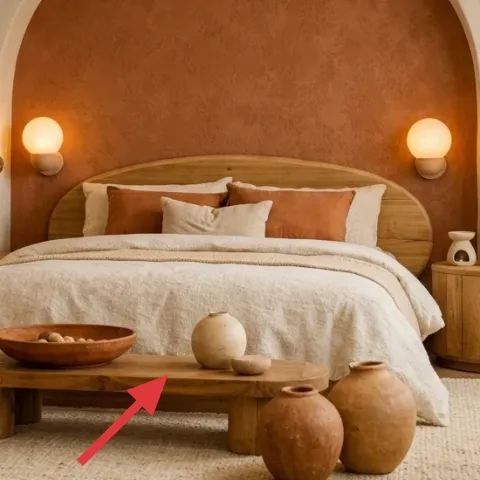
That wooden platform coffee table styling—wooden bowl plus small clay vessels—turns the “empty foreground” into a deliberate landing spot. This is where the boho accents land, but it stays neutral because the forms are earthy and the colors stay within cream, wood, and terracotta. You could skip this and still have a pretty bed, but the nook would feel less finished because your eye would hit the wall first and then drop to bare surfaces. The trade-off is that small pieces require a quick reset now and then; clay vessels are simple to re-style for seasons or moods.
Use odd numbers
Three small ceramics and one bowl reads more natural than matching pairs.
The cost, layer by layer
| Layer | Item | Cost |
|---|---|---|
| 1 | Area rug 5×7 in natural jute tone | $150 |
| 2 | Linen-texture bed cover in cream | $80 |
| 3 | Throw pillow covers in white and cream mix | $30 |
| 4 | Hand-painted abstract on cardstock, framed (DIY equivalent) | $80 |
| 5 | Cream sheer curtain panels | $60 |
| 6 | Terracotta ceramic vase (medium size) | $35 |
| 7 | Wooden bowl + clay vessels styling set | $25 |
| Total | $450 | |
A cheaper variant keeps the palette but swaps one texture-heavy item: choose a smaller jute look rug (or a budget flat-weave) and use a single curtain panel pair instead of multiple lengths.
What worked, what didn't (across the whole room)
The room’s success comes from texture stacking: jute underfoot, linen on the bed, and matte ceramics that don’t compete with the warm niche wall. The layered pillows and the framed abstract create visual rhythm so the bed doesn’t read as a plain focal point. The one place styling can go wrong is the foreground—without the wood bowl and small vessels, the niche can feel unfinished.
What worked
- The jute rug grounds the arched niche and keeps the warm wall from feeling visually heavy.
- The cream linen-texture bed cover softens the terracotta palette without making the room look cool-toned.
- White-and-cream pillow covers add depth while staying within a tight color range.
- Sheer curtain panels make the light feel diffused around the bed and keep the space airy.
- The hand-made abstract framing matches wall warmth more closely than generic beige art.
- Terracotta ceramics and matte clay vessels add collected “lived-in” detail at low cost.
What didn't
- Using one single solid color textile (instead of linen-texture) flattened the whole bed area.
- Oversized front decor on the wood platform made the coffee table feel cluttered.
- Too-dark art accents pulled attention away from the warm wall niche.
- Thick curtains blocked light and made the room feel smaller than it is.
What we'd skip if we did it again
Skip glossy decorative pieces on the nightstands and coffee table. In warm, plaster-and-terra-cotta rooms, shine can look like it belongs in a different environment and interrupts the soft, matte texture story.
Skip buying a “set” that matches too perfectly. This look works because the tones sit close to each other—cream, warm white, and terracotta—not because every item is the exact same shade and finish.
Skip adding more than two big visual anchors. If the rug and bed textiles are doing the heavy lifting, the framed art and ceramics can stay smaller and more intentional instead of turning into a crowded vignette.
Frequently asked
Is this renter-safe if I can’t change anything on the walls?
Yes. The visible “structure” stays put (your bed frame, the niche, and the lighting). The refresh relies on lease-friendly swaps: textiles like a rug and bed cover, removable framed art, and styling ceramics. If hanging art is allowed only with removable methods, Command Strips work well for lightweight frames.
How long does it take to put this look together?
Most rooms can be staged in a single afternoon. Plan about 20–40 minutes for rug placement and bed layering, 15–25 minutes for pillow styling, and another 20–30 minutes to arrange the bedside and coffee-table ceramics. The only time sink is the DIY framed abstract—still usually manageable within a half-day.
What if my room is smaller than the photo?
Keep the same color palette but reduce the rug footprint and front styling density. A smaller rug still works as long as it reaches under the main “foot traffic” zone by the bed. For the bed, use fewer pillow covers and keep the coffee-table pieces to a single bowl plus two small clay vessels.
What if my room has brighter floors or a cooler wall color?
Lean harder into cream and keep the terracotta accents warm, not pink-orange. Jute and linen-texture are forgiving because they add warmth through material rather than pigment. If your wall reads cooler, choose curtain sheers in a warmer off-white and pick ceramics with a slightly brown clay tone.
Where should I shop for the rug, bed cover, and sheers?
For the rug and textiles, focus on natural-fiber look categories (jute, flat-weave, or linen-texture). For sheers, look for “cream” or “off-white” panel sets that come with rod-friendly hems. For ceramics, home goods sections and artisan markets tend to match the matte clay vibe better than generic decor.
More in Bedroom
Under $500: a move-friendly arched bed nook refresh
A renter-friendly refresh for an arched bed nook using 7 swap-ready layers—jute rug, cream linen-texture bed cover, sheer curtains, and sty…
5 boho bedroom swaps for a $600 refresh
A warm, move-friendly bedroom refresh under $600: rug + chunky knit throw + pillow color, plus no-drill wall art and a soft lamp glow. Desi…
Earthy boho bedroom refresh, $800
A boho bed nook makeover that makes one bedroom feel intentionally styled—using a braided rug, neutral duvet, soft knit throw, and a framed…