- Best for
- Move-friendly living rooms
- Cost
- Under $600
- Difficulty
- Easy
- Time
- Half a weekend
Why warm pink tones are the living room anchor of 2026
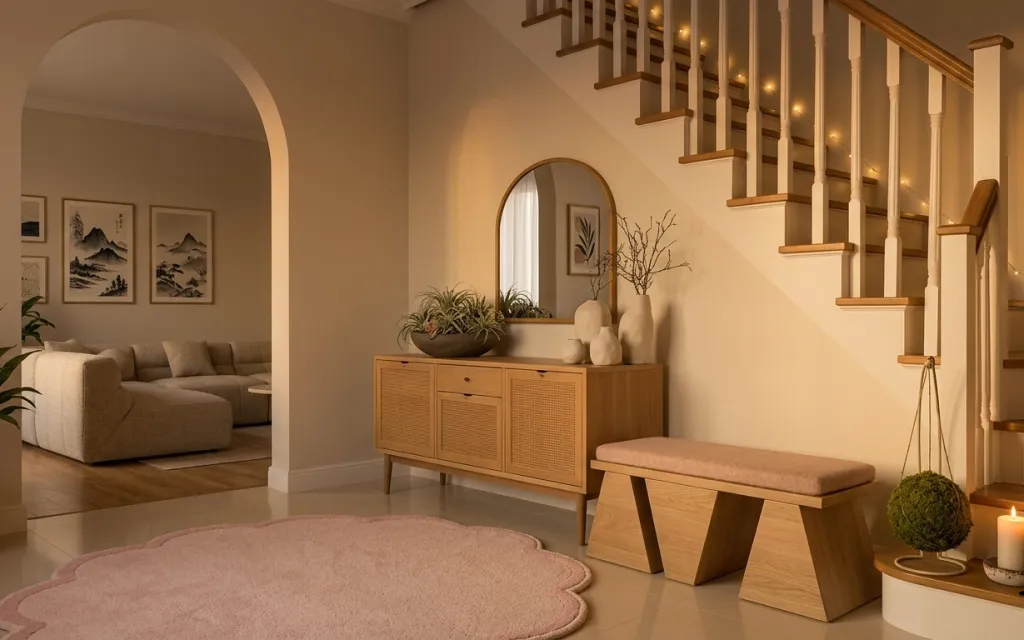
In this living room, the pink round rug does the heavy lifting: it softens the light wood floor and gives the whole space a gentle, rounded rhythm. Around it, the wood sideboard grounds the palette, while the arched mirror adds that “hallway light” feeling without eating up floor space. The framed mountain prints bring in calm, nature-based contrast against the white walls, and the vase set keeps the styling from looking too staged. For shared housing, this is the sweet spot: textiles and stand-alone decor that pack fast.
I used to overthink it—trying to “fix” a room with wall changes I couldn’t take with me. The turning point was realizing how often a rug plus a mirror can do the visual work for free. Here, the warm string lights along the stairs make the evenings feel intentional, even when the rest of the setup is neutral. Keeping the statement pieces movable is how this look stays realistic for roommates and short leases.
Layer 1 — pink round rug ($200) makes the floor feel softer
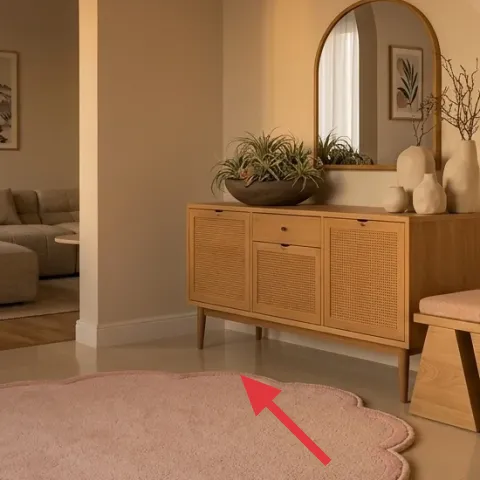
A pink round rug is the most immediate change here because it changes the “reading” of the whole living room. In the photo it sits flat on the light wood floor and visually rounds off all the straight lines from the sofa and stairs. The trade-off: round rugs can move if you skip a grippy underlayer, so plan for a non-slip base. The color is also bold enough to feel intentional without needing wall alterations. Buying the rug (instead of trying to repaint or add a permanent runner) keeps everything coming with you to the next lease.
Stay centered under the main seating
Cut down on visual drift by placing the rug so the sofa edges land over the rug’s inner third—not the very border.
Layer 2 — wood sideboard ($120) adds warm storage where you need it
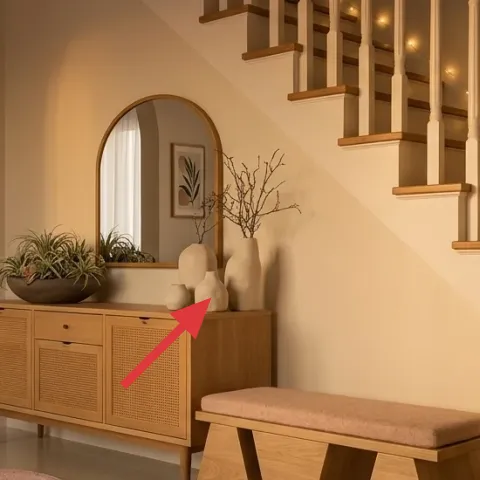
The wood sideboard reads as the room’s organizing station: it’s warm against the white walls and tall enough to balance the stairs behind it. In this setup it also gives a home to the vase set, so the “style” is contained in one moveable zone instead of spreading across shelves. I’d choose this over a wall shelf because you can pack it in parts (or rent movers if needed) and you’re not relying on landlord-approved mounting. The trade-off is footprint—measure doorways and stair widths before committing to the exact size you want.
Use it like a staging platform
Keep decor clusters small (vases + a plant) so the sideboard stays flexible for books, board games, or extra linens later.
Layer 3 — arched mirror ($70) bounces light without taking over a wall
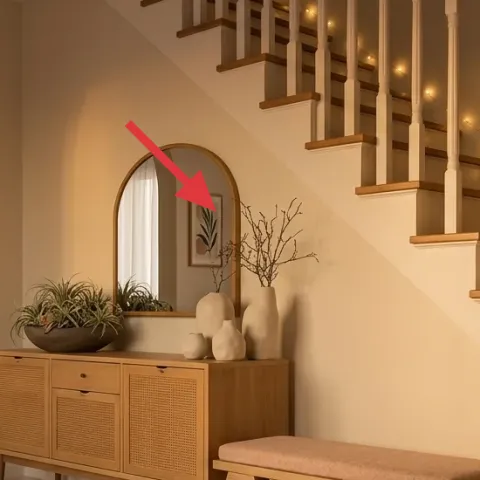
An arched mirror brings softness to the geometry of the room—especially with the stairs and the arch-shaped entry behind it. In the hero image, the mirror’s rounded top echoes the curve of the pink rug, so the palette feels cohesive. The trade-off versus a rectangular mirror: arches are less common, so you may pay a little more for a size you love. Still, it’s a renter-friendly swap because mirrors are freestanding or come with non-invasive hanging options. This is the kind of piece that makes the room look “more finished” on day one.
Angle it to catch the brightest window wall
Even without changing lighting fixtures, the right angle makes warm tones read clearer and less flat.
Layer 4 — framed mountain prints set ($60) creates calm texture over the white walls
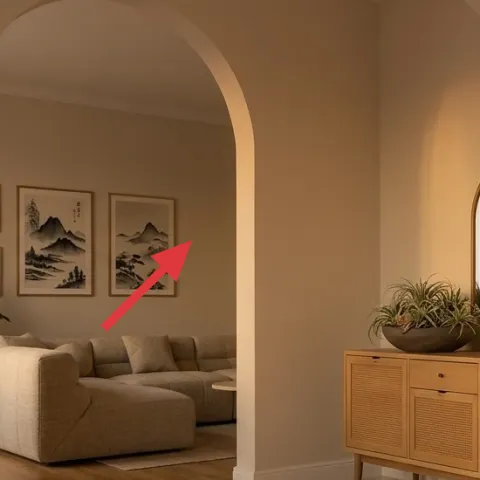
The framed mountain prints set adds a nature-coded pattern that keeps the room from feeling too monochrome. In the photo, multiple small frames work better than one large statement because they look intentional even when they’re slightly asymmetrical. The trade-off is spacing: if frames crowd too tightly, they can start to feel cluttered. For shared housing, prints are also a win because you can re-shelve or re-arrange them with a new layout instead of committing to one permanent “gallery wall.”
Skip anything that pulls paint
If you’re using adhesives, avoid anything that tears paint on removal; foam-safe options help when walls aren’t yours.
Layer 5 — vase set on sideboard ($15) keeps the styling from looking empty
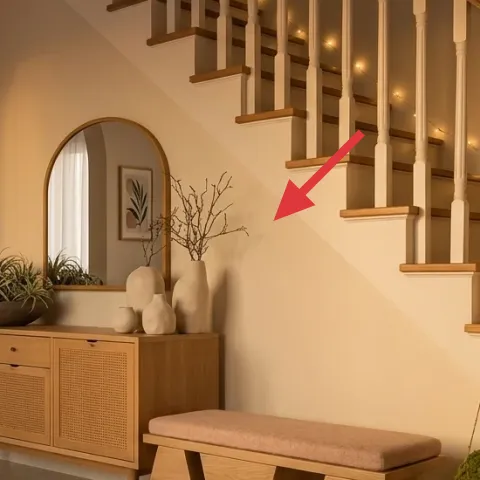
A vase set is a small-cost way to add height and negative space around the sideboard. In this scene, the vases sit together and give the arrangement a deliberately “collected” feel—like you found them over time. The trade-off is that vases look best with a plant or a few branches, so plan one easy living-room element to swap in and out. This beats trying to cover the whole wall with decor because it stays portable, and it keeps the room’s warm, japandi-leaning calm.
Let the plant do the color work
If the vases are neutral, a small potted plant keeps the palette lively without adding more patterns.
Layer 6 — string lights ($15) makes the evening lighting feel intentional
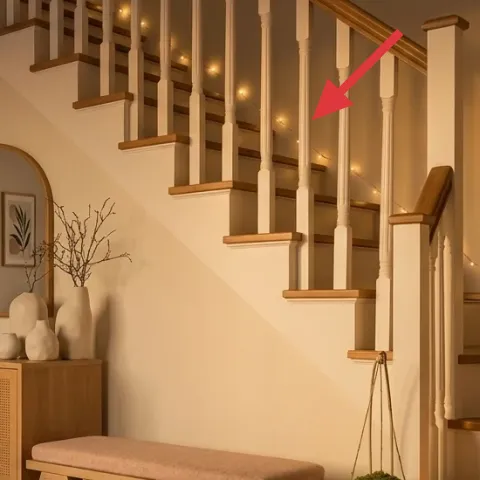
String lights are doing a specific job here: they add warm, low-glow light along the wood stairs, which softens the room after dark. In a move-friendly refresh, this is one of the easiest upgrades because it’s decorative lighting, not a fixed fixture, and it packs into a compact coil. The trade-off is placement—if the lights sag or snag when you move them, the effect gets messy fast. The win is that this look still reads as designed even when the rest of your decor is mostly flat textiles and freestanding pieces.
Keep the wire path tight and visible
Arrange where the cord travels so the glow looks like a line, not random dots.
Layer 7 — candle ($25) adds that warm, low moment
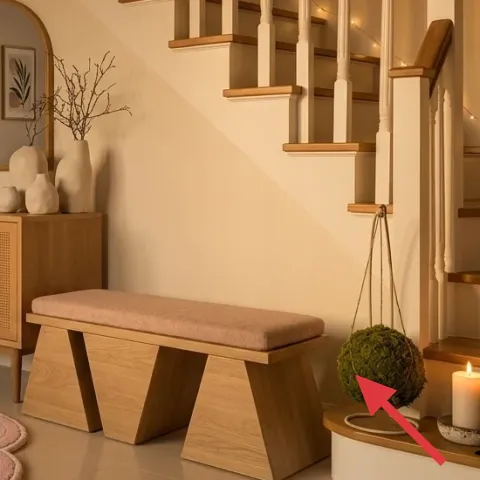
The candle gives the room a final sensory layer: warm, flickering light on the right-side surfaces, which makes the styling feel lived-in instead of staged. In the photo it sits on a small round tray area near the bench, so it reads as part of the right-hand vignette rather than floating alone. The trade-off is safety and airflow—always keep it away from drafts and anything flammable. For shared housing, a candle is also ideal because it’s fully packable and doesn’t require landlord permission. Pair it with the string-light warmth for a cohesive evening mood.
Use a covered holder for easier packing
A stable, lidded holder prevents wax mess during moves and storage.
The cost, layer by layer
| Layer | Item | Cost |
|---|---|---|
| 1 | Pink round rug (5–6 ft round) | $200 |
| 2 | Wood sideboard | $120 |
| 3 | Arched mirror | $70 |
| 4 | Framed mountain prints set (3 prints) | $60 |
| 5 | Vase set | $15 |
| 6 | String lights set | $15 |
| 7 | Candle | $25 |
| Total | $495 | |
If this needs to be cheaper, downsize the rug to a smaller round size and choose a mirror in a simpler frame—those two swaps usually preserve the look while cutting the biggest chunk of cost.
What worked, what didn't (across the whole room)
The overall win is that the room gets its personality from movable pieces: a rounded rug, a warm wood storage unit, framed prints, and string-light glow. That combination holds up even when the layout changes, which matters for shared housing.
What worked
- The pink round rug softens the hard lines from the sofa and stairs.
- The wood sideboard creates a natural “styling station” for plants and vases.
- The arched mirror adds curve and makes the white walls feel brighter.
- The framed mountain prints keep the palette calm without needing more color.
- String lights add warm, evening ambiance without changing any fixed fixtures.
- The candle makes the right-side vignette feel finished and lived-in.
What didn't
- If the framed prints are hung too evenly, the wall can lose its casual balance.
- A candle without a stable holder looks messy when you’re packing for a move.
- String lights can look “random” if the cord path isn’t kept consistent.
- The rug can shift visually if it isn’t sized to sit under the main seating zone.
- Vase sets look flatter without one botanical element to add texture.
What we'd skip if we did it again
Skip a large, fixed-looking wall upgrade and go straight to framed prints plus an arched mirror. In short leases, it’s harder to pack and you lose options if the next place has a different wall layout or outlet placement. The framed set and mirror keep the same visual function—pattern plus light bounce—without permanent commitments.
Skip an all-or-nothing furniture swap. Even when the sofa is already there, it’s tempting to chase a full matching set. Instead, anchor the room with the rug and one storage piece, then style with vases and a plant. That approach keeps the refresh move-ready and avoids buying a big item you’ll regret carrying.
Skip cool, bright lighting experiments. The warmth in this room comes from string lights and the candle glow, not from changing ceiling fixtures. If the goal is a similar evening mood, it’s smarter to add portable lighting that works in every apartment you’ll live in next.
Frequently asked
How long does this kind of living room refresh take?
Plan for about a half weekend. Rug placement and sideboard styling are the fastest wins, while mirror and framed prints usually take the most time because you’re aiming for spacing and alignment. String lights add another 30–45 minutes, mostly for getting the cord path to look intentional. If you’re moving soon, also budget 20–30 minutes for quick packing test runs.
What makes this renter-friendly for shared housing?
The big changes are textiles and freestanding decor: a rug, a storage piece, a mirror, framed prints, and portable lighting. Those don’t replace fixed items like fixtures or built-ins. You’re also not committing to one irreversible layout—vases, plants, and candles can be restyled around a different sofa position later without breaking the whole look.
If my room is smaller, what should change first?
Start by scaling the rug so the round shape still anchors the seating zone; a too-large rug can make a small living room feel boxed in. Then choose a narrower mirror and keep the framed prints to a smaller set. For styling, use one main plant cluster instead of multiple small elements, and keep string lights only in one “line” for the cleanest look.
What if my room is bigger than this one?
In a larger living room, keep the rug as the anchor but consider going bigger so the sofa reads as grounded. Add a second styling moment on the opposite side (another small plant or an extra candle holder on the same tray level) so the room doesn’t feel lopsided. Keep the framed prints grouped, not scattered—grouping preserves the calm, curated feel.
Where should I shop differently to get the same vibe on a budget?
For the rug and rug-style textiles, budget home stores and discount marketplaces often have round options with better pricing than boutiques. For the mirror, look for simple arches at resale shops and online marketplaces—this shape is easy to find without hunting for a specific color. String lights are usually cheapest when bought as sets, while framed prints can be replaced one at a time if you find mismatched sizes.
What’s the biggest mistake people make with this kind of setup?
Overfilling surfaces. When the sideboard has too many small objects, the room loses its calm balance and starts to look busy instead of curated. Keep to one plant cluster, a vase set, and one candle moment. Let the rug and mirror do the “big visual work,” and then add just enough texture through prints and greenery.
More in Living Room
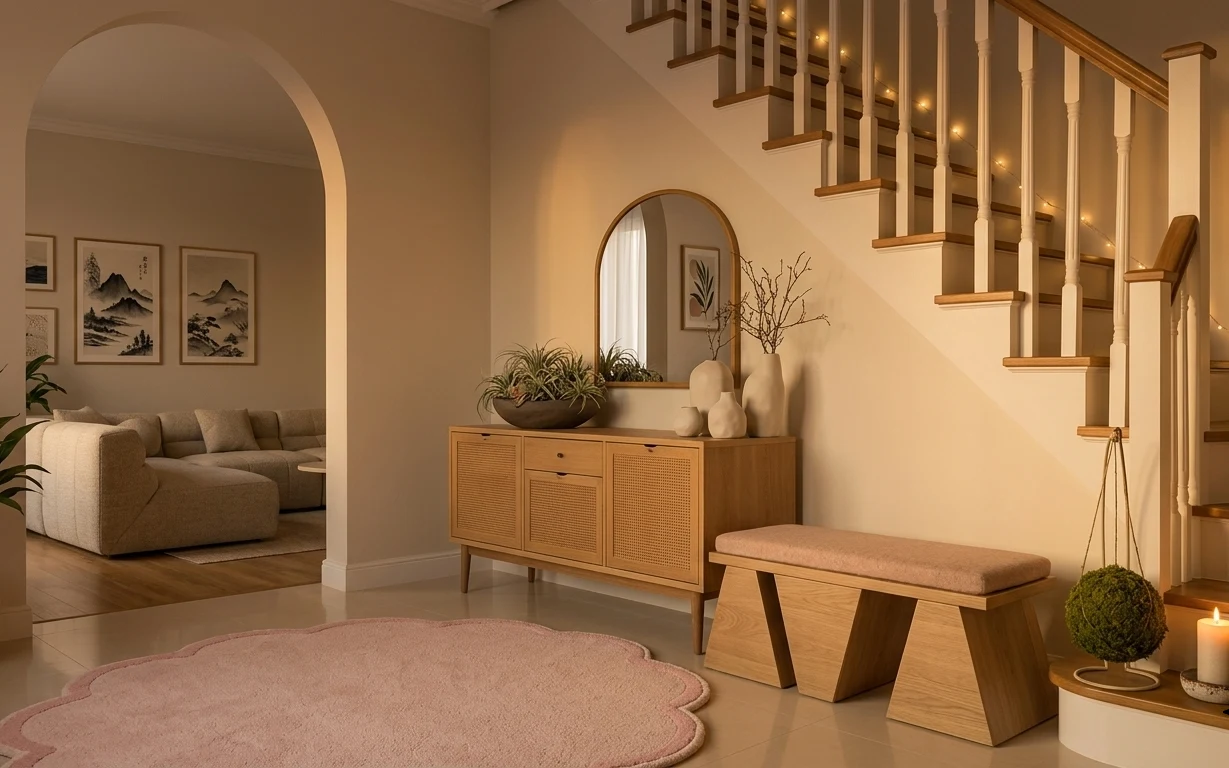
Under $600: 7 move-ready living room swaps with string lights
A move-friendly living room refresh under $600 using the pink round rug, a wood sideboard, and warm string lights. This plan focuses on ren…
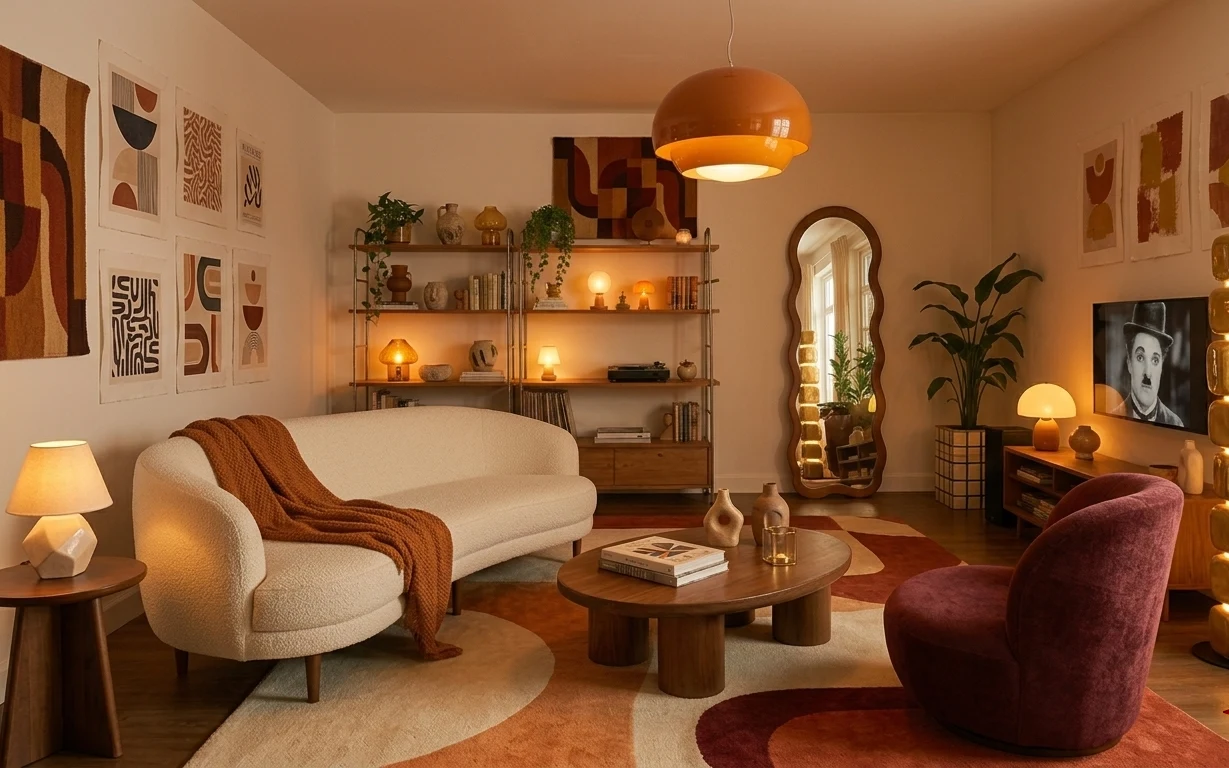
Under $500: warm earthy living room refresh for renters
A warm, earthy living room look is achievable on a $500 renter-friendly budget using seven movable swaps—starting with a patterned rug, a r…
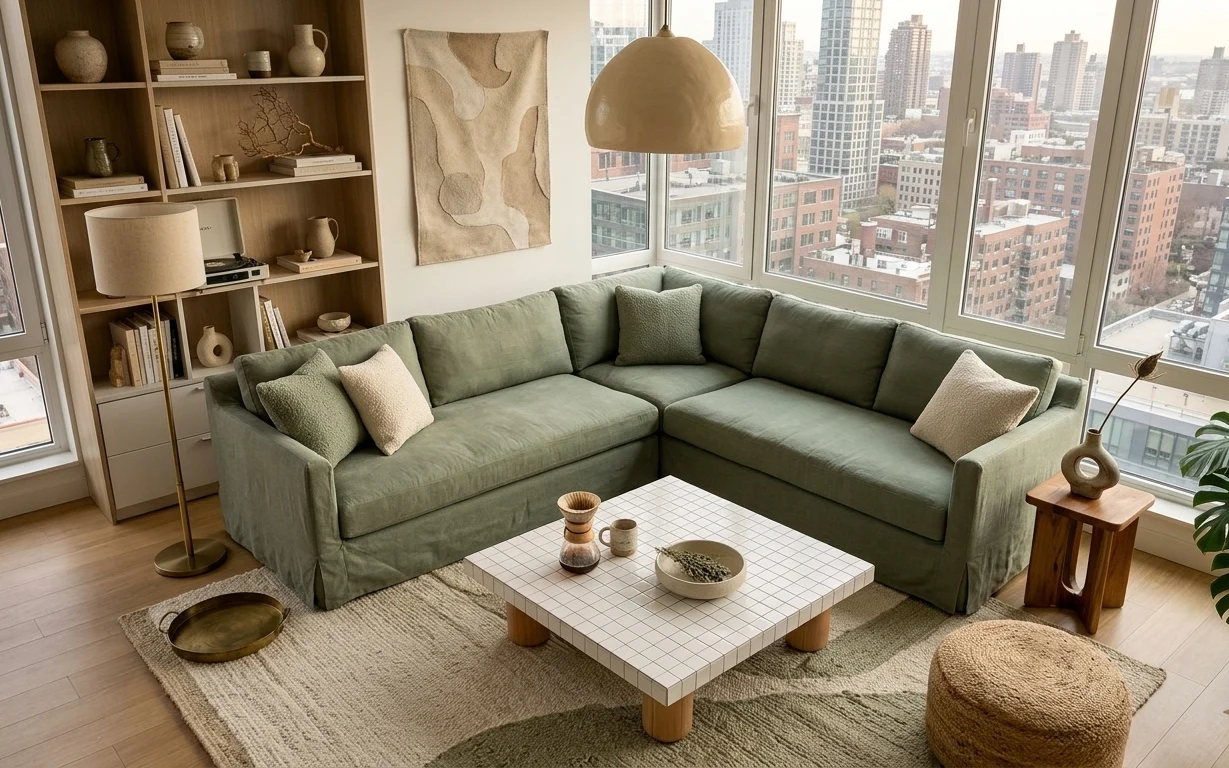
Under $700: sage-and-cream living room refresh for an L-shaped setup
A sage-green sectional and warm neutrals can look expensive without a big renovation. This weekend refresh targets the rug, lighting, wall …