- Best for
- turning an L-shaped seating area into a cohesive lounge
- Cost
- under $700
- Difficulty
- Confident DIY
- Time
- 1–2 weekends
Why this sage sofa corner is the L-shaped seating area of 2026
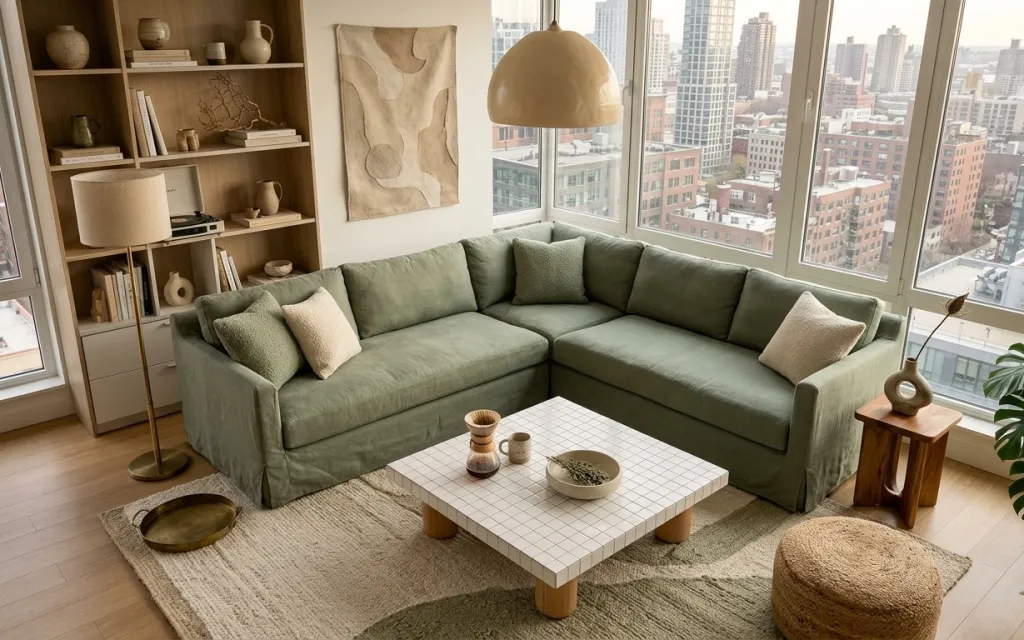
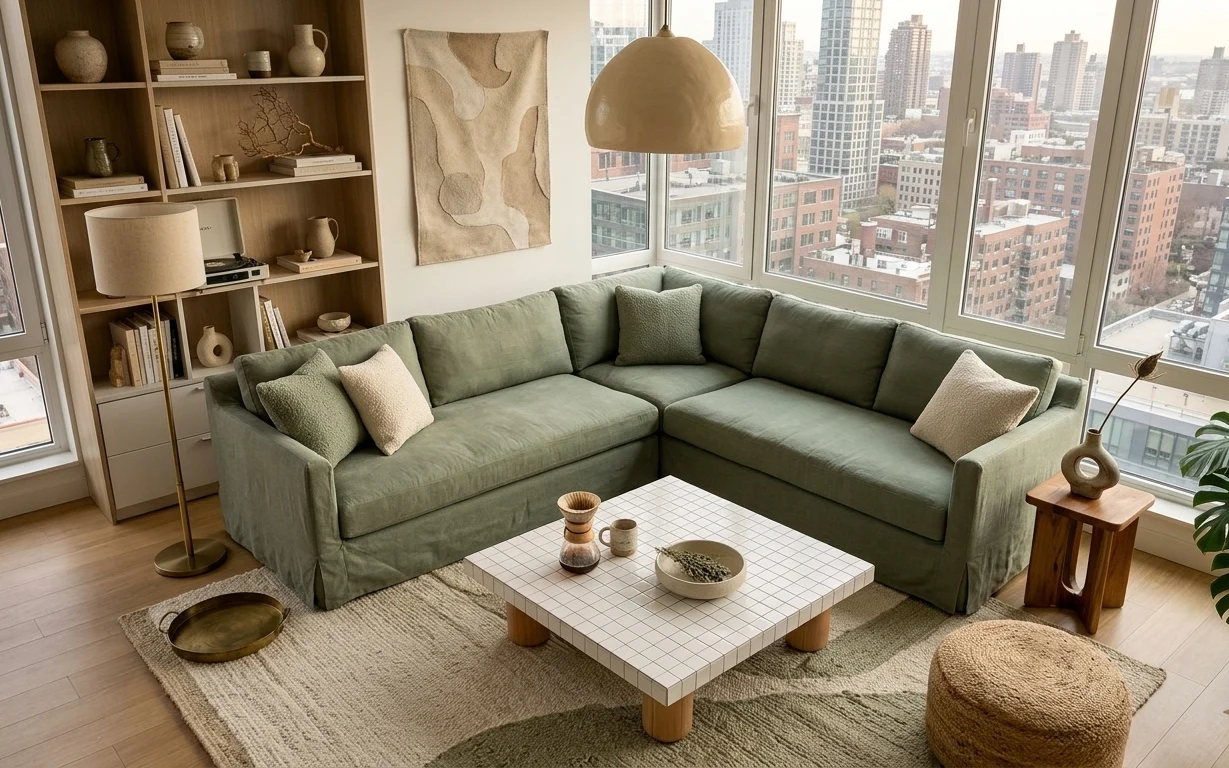
Start by noticing how the palette stays disciplined: sage green upholstery, cream tones, and warm wood details all show up in multiple places. The scene reads “put-together” because textures do the heavy lifting—soft rug fibers underfoot, a grid-like tabletop surface, and matte art in beige against the shelves. For homeowners, the easiest high-impact path is to buy the anchor pieces (rug + lighting) first, then tune the wall and tabletop so everything matches in scale.
I used to overthink wall art, like it needed to be perfectly aligned with furniture. This setup changed my mind: the beige abstract piece works because it’s textured and a little irregular, so it doesn’t fight the clean geometry of the coffee table. I also caught myself wanting to swap the lamp shade instantly—then I realized the dome shape is doing a real job by keeping the light soft and contained.
Layer 1 — area rug ($200) grounds the sectional without fighting it
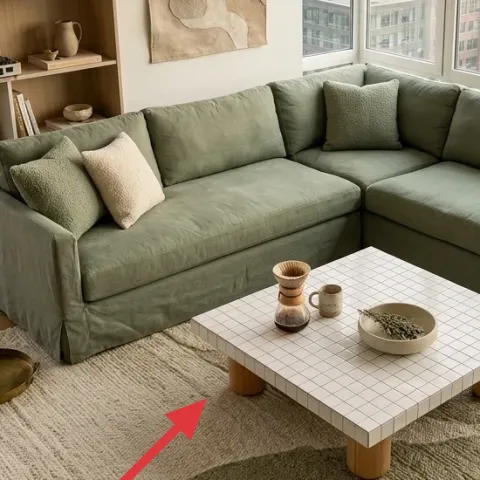
The area rug sits under the front legs of the L-shaped sectional and extends far enough to unify the seating zone. Its neutral, woven look gives you warmth against light wood floors and keeps the sage upholstery from looking too “standalone.” The grid of the coffee table is structured; pairing it with a rug that has subtle texture (instead of a glossy or busy pattern) avoids visual whiplash. A common mistake is choosing a high-contrast rug that competes with both the upholstery and the wall art—this one prioritizes calm, then lets your accessories add the interest.
Let the rug handle the layout
In an L-shape, aim for rug coverage that reaches both “sides” of the seating, not just the chaise end.
Layer 2 — tall floor lamp with dome shade ($120) adds warm, contained light
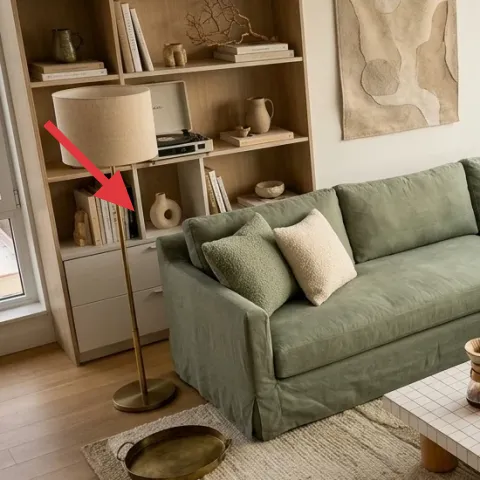
This tall floor lamp with a dome shade creates a focused pool of light without turning the room into a spotlight. That matters here because the windows already bring in bright daylight; the lamp needs to feel complementary, not theatrical. The warm metal tone (and the dome’s rounded silhouette) also echoes the warm wood accents at the coffee table legs and the side table. If the dome feels too “traditional,” the trade-off is worth it: the rounded shape smooths out the sharp angles of the sectional and the coffee table’s grid.
Bright days still need nighttime planning
Even with daylight, a dome shade keeps evening lighting soft and doesn’t glare off hard surfaces.
Layer 3 — square coffee table with wood legs ($180) turns a flat surface into a design moment
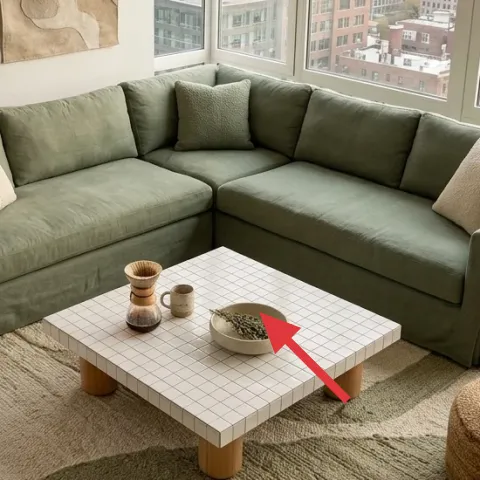
The square coffee table with wood legs and a grid tile tabletop is doing two jobs at once: it provides a hard geometric center and gives you a clear styling stage. The light wood legs keep the silhouette airy, while the tile pattern adds structure that feels intentional next to the upholstered sectional. When you style this top, you’re not just placing items—you’re repeating shape language: circular decor sits neatly on a square surface, and the tonal neutrals stay aligned with the wall art. The “obvious alternative” is a plain round table, but you’d lose the grid detail that anchors the room visually.
Match shape, not color
Use circular or softly rounded decor on a square top to keep the look balanced.
Layer 4 — beige abstract wall art hanging ($80) adds texture at eye level
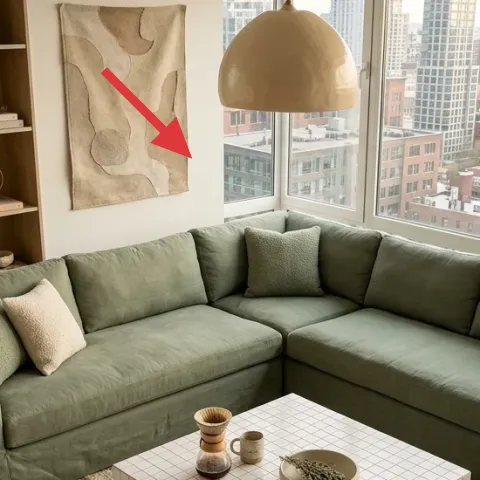
That beige abstract hanging works because it’s both neutral and imperfect—its organic shapes soften the room’s straight lines from the shelves and coffee table. It also gives your eyes a place to land above the sofa without pulling focus away from the sage upholstery. If you’re tempted to go for a framed print, you can do it, but the trade-off is texture: the hanging’s fabric-like surface makes the palette feel warmer and more “lived with.” This is the layer that makes the whole corner feel finished, especially when the shelves are already carrying books and small ceramics.
Make it instead of buying it
DIY a beige abstract canvas wall hanging so you get the same soft, irregular shapes for less.
Materials
- Canvas panel (16×20) — store — $20
- Acrylic paint set in beige tones — store — $18
- Painter’s tape — 1 roll — store — $6
- Foam brushes (set) — store — $10
- Matte clear sealer — 1 can — store — $15
Steps
- Lightly sand the canvas edges so paint sits evenly.
- Tape off a few irregular “island” shapes on the canvas.
- Block in the base beige tone with a foam brush.
- Remove tape to reveal crisp boundaries in your negative space.
- Layer darker beige and warm gray shapes over the top.
- Let the paint dry completely between layers.
- Add a small amount of variation—thin streaks or stipple—to mimic organic movement.
- Seal the whole piece with a matte clear coat, then let it cure fully.
- Hang it with picture hooks appropriate for the wall type.
Total DIY cost: $69 — saves about $11 over buying.
Layer 5 — throw pillows ($30) brings in the cream/linen softness
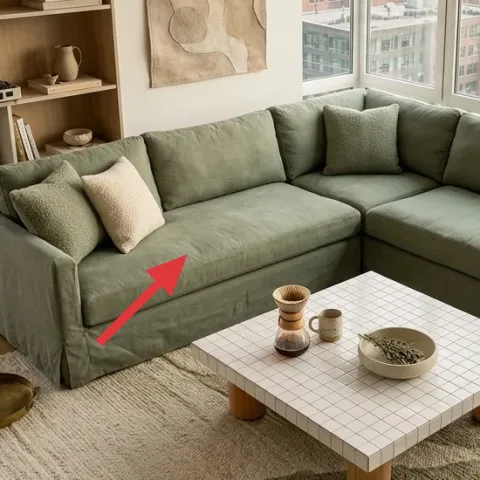
These throw pillows—cream-toned and textured—make the sage sectional feel calmer instead of cool. You can see how they echo the wall art’s warm beige, which is why the whole corner reads cohesive rather than random. The pillows also add “soft geometry” over the sectional’s structured upholstery, giving the room a softer landing at seat height. The trade-off is simple: you’re swapping visual weight, not function. If the sofa already looks full, don’t add too many pillows—stick to two to three so they feel curated, not crowded.
Keep the pile low
For a modern corner, choose pillow covers with a matte weave or subtle texture, not plush shag.
Layer 6 — decorative wood tray ($35) organizes the coffee table without clutter
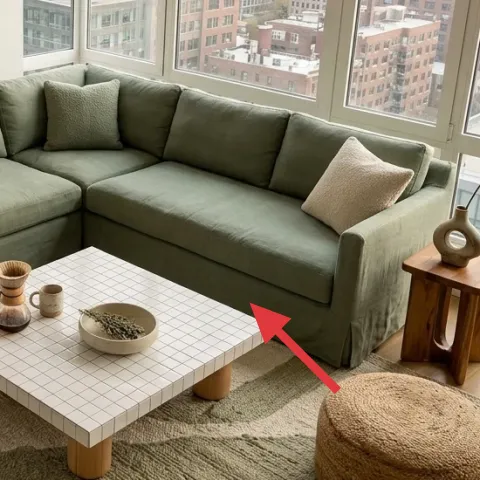
A decorative wood tray creates instant order on the grid tile surface. It keeps small items—like a decorative bowl and everyday objects—visually contained so the table looks styled even when life happens. The warm wood tone connects the coffee table to the side table, while the tray’s simple shape prevents the top from feeling busy against the sectional’s smooth upholstery. This is the step people skip when they first bring home a new table, then wonder why the styling looks “unfinished.” A tray gives you a repeatable placement system for every refresh.
Don’t overfill the center
If you add more than two or three pieces on the tray, the grid tile starts to feel visually loud.
Layer 7 — indoor potted plant with long leaves ($50) softens the right-side frame
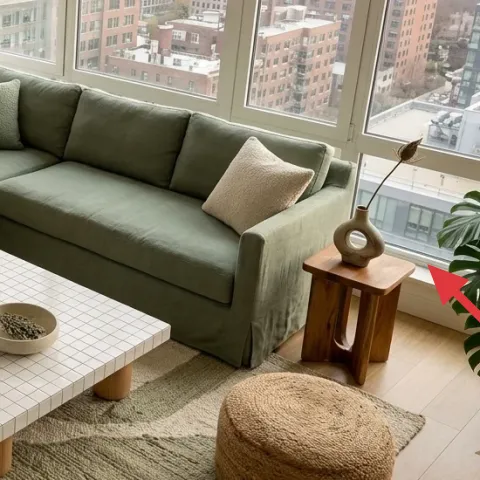
The indoor potted plant with long leaves adds vertical movement near the window wall, balancing the horizontal lines of the sectional and coffee table. Because it’s positioned at the right edge of the seating area, it also helps the room feel “brought down to human scale” instead of just looking like a view-focused lounge. The key is the silhouette: long leaves create a light, airy shape that doesn’t compete with the beige abstract art. If your plant looks too tight or short, it’ll read like clutter—choose a fuller plant or plan to rotate it for even growth.
Rotate for symmetry
Once a month, turn the pot so leaf growth faces into the room.
The cost, layer by layer
| Layer | Item | Cost |
|---|---|---|
| 1 | Area rug 5×7, neutral woven | $200 |
| 2 | Tall floor lamp with dome shade | $120 |
| 3 | Square coffee table with wood legs and grid tile top | $180 |
| 4 | Beige abstract wall art hanging (DIY equivalent) | $80 |
| 5 | Throw pillow covers in cream/linen texture | $30 |
| 6 | Decorative wood tray | $35 |
| 7 | Indoor potted plant with long leaves | $50 |
| Total | $695 | |
If you want a cheaper version, swap the coffee table for a simpler wood frame with a neutral top and reduce the rug size by one step. Keep the dome-floor-lamp and beige wall art—those two do the most “finished room” work per dollar.
What worked, what didn't (across the whole room)
The overall win here is cohesion: neutral beige elements show up across the wall, pillows, and tabletop, while the sage upholstery stays the main color block. The lighting choice also matters—soft, contained light keeps the room from feeling flat after dark.
What worked
- The woven neutral rug made the sage sectional feel grounded instead of floating on bare wood.
- The dome-floor-lamp silhouette softened the room’s geometry at evening height.
- The square coffee table’s grid tile pattern created a structured styling zone.
- Beige abstract wall art added texture without introducing new strong colors.
- Cream throw pillows echoed the wall art so the corner reads intentional, not random.
- The decorative wood tray kept small items contained on the tabletop.
What didn't
- Too many pillows (or mismatched tones) would make the sage upholstery look visually heavy.
- A bright white wall art option would fight the beige shelf styling instead of blending.
- Skipping the tray and placing items directly on the grid top can look cluttered fast.
- If the plant is too small, the right side feels bare compared with the left shelves.
- A glossy tabletop finish would reflect light more, flattening the cozy textures.
What we'd skip if we did it again
Skip a high-contrast rug pattern. With a sage sectional, the room already has strong color presence, so an extra pattern layer can make everything feel louder than it needs to. A neutral woven rug is the calmer base that lets the dome lamp and beige wall art do the styling work.
Skip replacing the lamp for something with multiple bulbs or an overly bright shade. The dome shape is the point—it keeps the light warm and contained. If you want brighter light, swap the bulb temperature instead of changing the fixture’s silhouette.
Skip over-styling the coffee table. A decorative tray plus two to three meaningful objects is enough. The grid tile top already adds visual structure, and too many items start to compete with the texture of the wall art.
Frequently asked
How long does this kind of living room refresh take?
Plan for 1–2 weekends. The rug and lamp swaps are quick, while wall art is the only slower part—especially if you’re DIY-ing it. Styling the coffee table and adjusting pillow placement is usually the final 2–3 hours.
I rent—can I still pull off the same look?
Yes. Choose a rug and floor lamp that don’t require any alterations, and use renter-safe picture hanging hardware for the beige abstract art. For the tabletop and pillows, you can match the palette without changing anything structural.
What if my living room is smaller than this setup?
Use a smaller rug and keep the coffee table styling tighter. In a smaller room, pillow scale matters too—stick to two cushions in cream textures instead of adding more. The goal is the same: one grounded base, one structured centerpiece, and one soft wall texture.
What if my living room is larger and the seating feels empty?
Go bigger on rug coverage and consider leaving a little more negative space around the coffee table. If the plant looks too small for the sightline, upgrade to a taller pot or fuller plant so the vertical balance matches the window wall.
Where should I shop differently to stay on budget?
Rugs and lighting can be price-flexible depending on retailers, but aim for quality in texture. Look for dome-floor-lamp options with a matte shade finish, and choose wall art that’s neutral and tactile. For tabletop pieces, secondhand marketplaces often have the best decorative trays and bowls.
What’s the biggest mistake people make in an L-shaped seating area?
They treat the rug and wall art as afterthoughts. Without the rug’s coverage and a textured focal point above the sofa, the sectional can look like furniture placed on bare floors. Start with the anchor layers, then style the coffee table last.
More in Living Room
Under $700: sage-and-cream living room refresh for an L-shaped setup
A sage-green sectional and warm neutrals can look expensive without a big renovation. This weekend refresh targets the rug, lighting, wall …
Under $1000: warm modern living room refresh with 7 layers
A warm-modern living room refresh with 7 weekend-friendly upgrades: cream curtains, an abstract focal artwork, a mirror, and styling lighti…
Under $600: sunlit living room refresh with earthy layers
A sunlit living room starts with a green sofa and warm daylight. This renter-friendly refresh adds a jute rug, rust throw, framed artwork, …