- Best for
- Texture-led renter refresh
- Cost
- Under $600
- Difficulty
- Easy to medium
- Time
- 2–4 hours
Why olive-and-terracotta weekend refresh is the sunlit living room of 2026
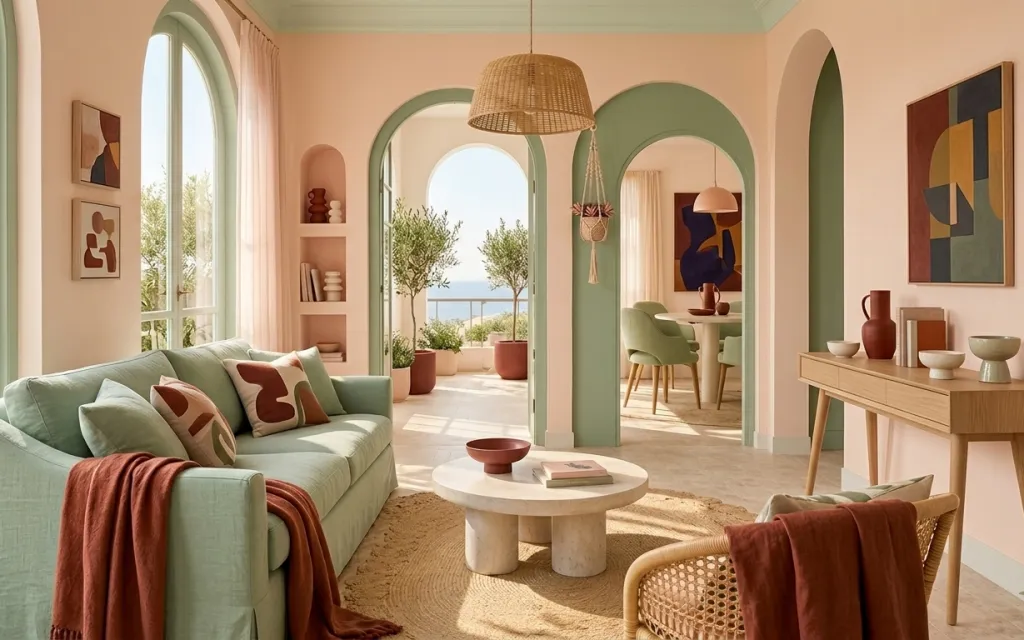
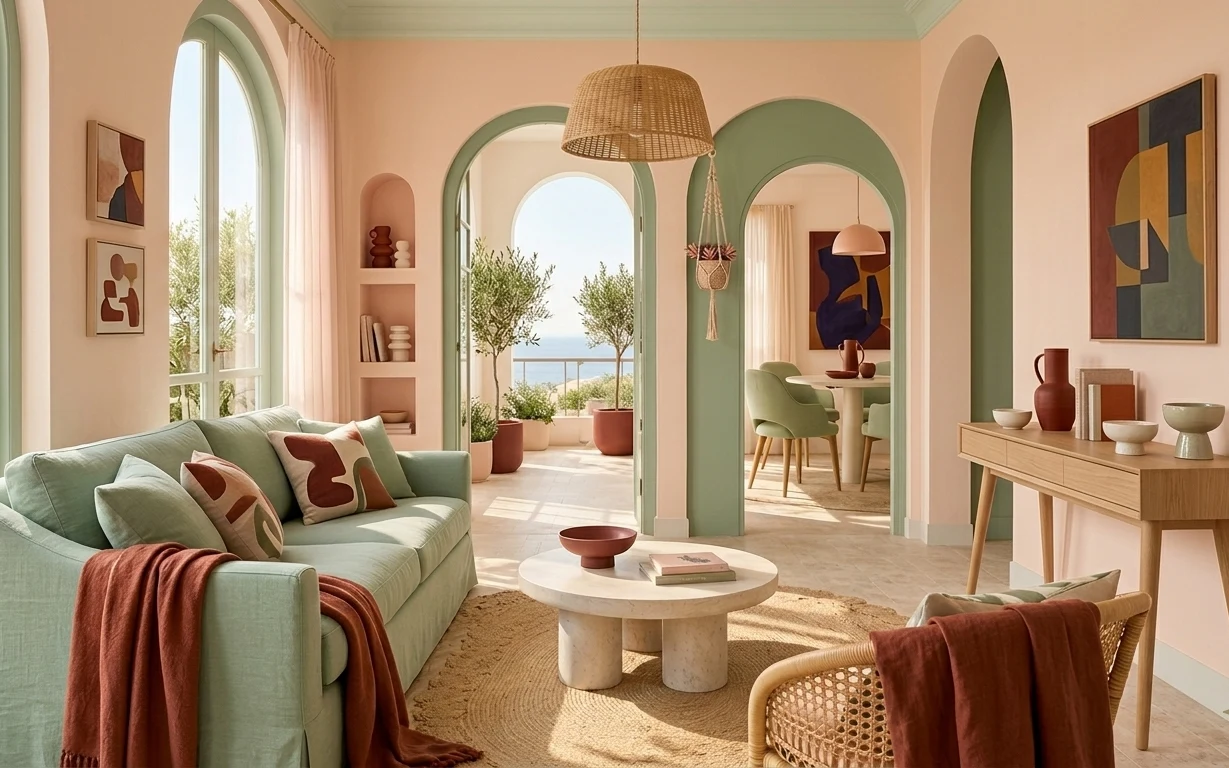
This space works because it’s built in layers: the green sofa gives the base color, the jute area rug anchors the seating, and the rust throw blanket adds that terracotta warmth you can feel in the sunlight. Off-white curtains soften the arched openings, while the framed abstract artwork keeps the walls from feeling blank. Even the rattan pendant lamp reads like decor, not just overhead light—so the room stays relaxed at every hour. Best of all for renters: everything here swaps in and packs up without touching the lease.
I learned the hard way that “one big thing” usually looks lopsided in a bright room. Early on, I over-bought art and under-bought textiles, so the whole sofa area looked exposed. This time, the win is balancing the high-contrast green with warm textures: the rug underfoot, the throw over the arm, and a couple of patterned throw pillows that echo the terracotta tone.
Layer 1 — jute area rug ($200) Anchors the seating with a warm, textured base
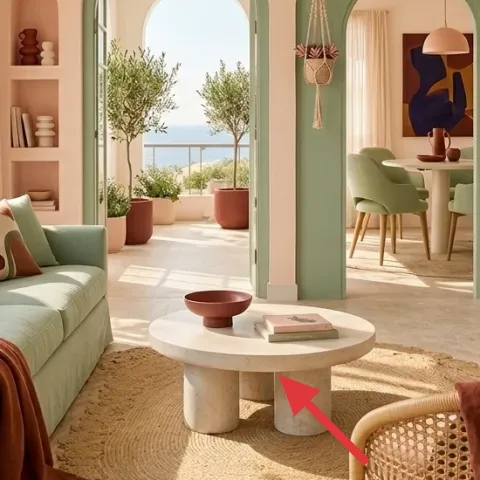
The jute area rug sits under the green sofa and pulls the whole seating zone together, especially with the light tile floor showing around the edges. Jute has that slightly uneven fiber texture that looks expensive next to smooth surfaces, and it doesn’t fight the peach-and-sage palette in the room. The obvious alternative is a flat, low-pile synthetic rug, but that tends to look too uniform in bright light. This choice accepts a little scratchy texture (and the need to vacuum gently), in exchange for the layered, earthy foundation that makes the rest of the decor feel intentional.
Go big enough to “hug” the sofa
Let the front legs of the sofa land on the rug so the rug feels like furniture, not just flooring.
Layer 2 — rust throw blanket ($60) Adds terracotta warmth where the eye rests
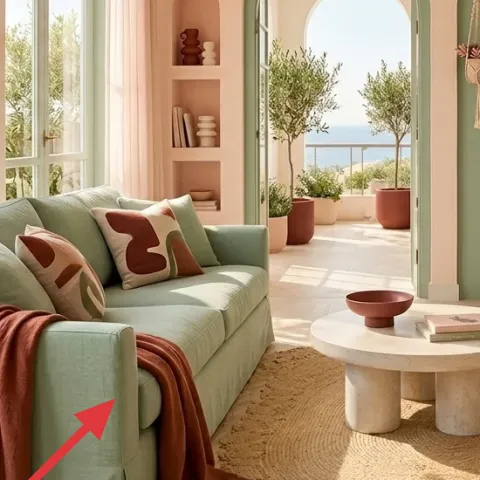
The rust throw blanket is draped over the green sofa arm area, where it catches light and instantly warms up the palette. That terracotta-rust note matters here because the walls and arch openings lean peach and sage green—so you get contrast without going full color-blocking. A lighter beige throw would blend too much into the off-white curtains and painted walls, while an all-dark blanket could feel heavy in a sunlit room. This layer accepts that throws get wrinkly during daily use; the trade-off is softness, plus a color cue that reads clearly from across the room.
Drape it, don’t fold it flat
A casual drape creates shadow lines that look natural with the rattan pendant lamp and bright daylight.
Layer 3 — patterned throw pillows ($30) Brings playful shapes to the green sofa
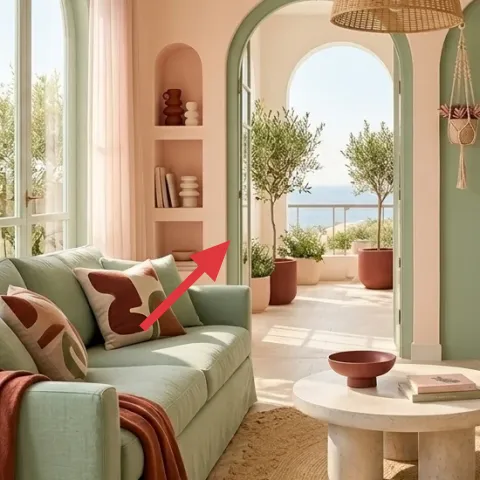
Patterned throw pillows in the sofa area are doing the visual work that curtains and framed art can’t: they add repeat shapes and smaller color accents without making the whole room busy. The pillows sit at the front of the green sofa so their pattern stays readable, even in a wide view through the arches. The alternative is plain solid cushions, which can look elegant but often feel unfinished next to a textured jute area rug. This pick leans into trade-offs—patterns mean you’ll need to rotate them when one side gets flattened—but it’s the quickest way to make the seating feel styled.
Match one color, not all of them
Pull a single tone from the framed abstract artwork or rust throw and repeat it, keeping the rest flexible.
Layer 4 — framed abstract artwork ($80) Creates a focal point on painted wall
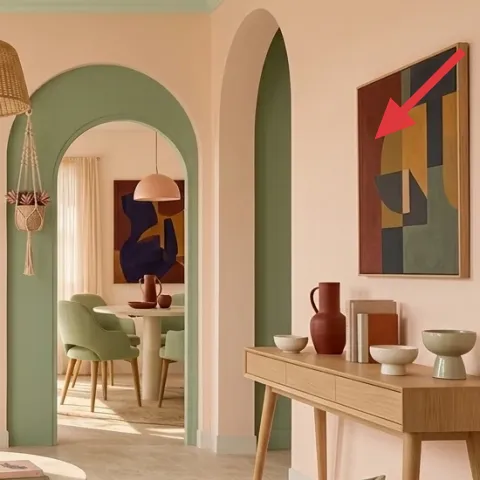
The framed abstract artwork on the right wall balances everything that’s curved in the room—arched openings, rounded coffee table edges, and the rattan pendant lamp shape. In a sunlit living room, a frame also performs like a “window within the window,” because it stays sharp against the painted wall. The easy alternative is adding a smaller print cluster, but that can start to look like a temporary college apartment. This approach accepts one bolder placement instead, keeping the composition calmer while still letting the wall color and abstract shapes do the talking.
Avoid drilling for wall mounting
Use Command strips or removable hooks for framed art so the painted wall stays lease-friendly.
Layer 5 — hanging macramé wall hanging ($55) Adds boho texture above the seating zone
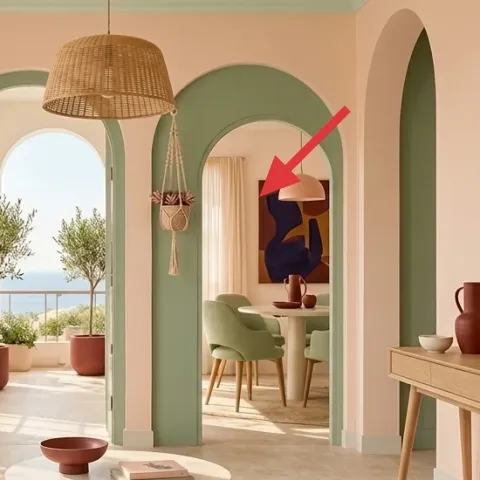
The hanging macramé wall hanging brings vertical texture right where the arches pull your eye through the room. It also softens the geometry: even though the coffee table is rounded and the openings are arched, macramé introduces lacy lines that feel airy in bright light. Buying a ready-made piece would cost more, and it’s hard to find one that matches the scale here, so a DIY macramé wall hanging is the renter-friendly route. Trade-off: DIY takes an afternoon and a bit of patience, but the result can be sized to the exact spot without touching the lease.
Make it instead of buying it
This DIY macramé wall hanging uses cord and a dowel so you can match the airy scale and hang it with removable hardware.
Materials
- Macramé cord — 80 ft total — craft store — $18
- Wooden dowel — 12–14 in — craft store — $10
- Command hook — 1 pack — hardware aisle — $4
- Scissors — 1 pair (if needed) — craft store — $8
- Measuring tape — 1 — hardware aisle — $6
Steps
- Cut cord lengths for even hanging strands, then bundle them around the dowel for spacing.
- Secure the top around the dowel using a simple lark’s head knot pattern.
- Work a basic knot row (like alternating square knots) to build the macramé texture.
- Continue knotting in sections so the center reads fuller than the outer edges.
- Refine the bottom fringe by trimming ends to a consistent length.
- Attach the hanging loop to the dowel and test the drop length against the wall height.
Total DIY cost: $46 — saves about $9 over buying.
Layer 6 — wood console table ($120) Adds warm mid-century lines for styling
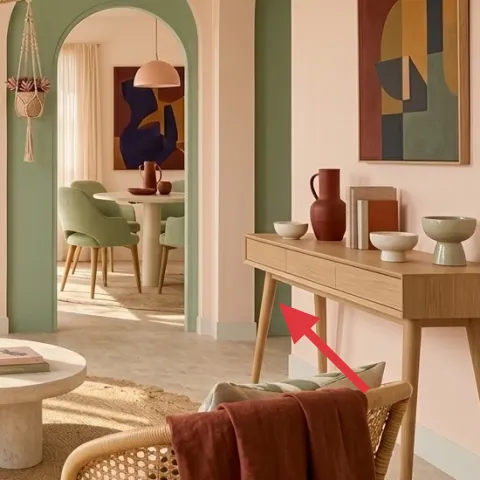
The wood console table on the right side gives you a horizontal surface to style without adding clutter to the sofa area. Its light wood tone works with the rattan pendant lamp and keeps the sunlit room from feeling too heavy, especially next to sage green areas and terracotta accents. The decor on top—ceramic vases and ceramic bowls—stays visible and intentional because the console sits at the right height for glance-level styling. A taller cabinet would hide the ceramics, and a darker table would absorb daylight. This pick accepts that you’ll dust the top occasionally, in exchange for a clean, functional staging spot.
Use a small tray to control visual spread
A decorative tray makes vases and bowls feel collected instead of random.
Layer 7 — potted olive tree ($30) Brings a natural height cue through the arches
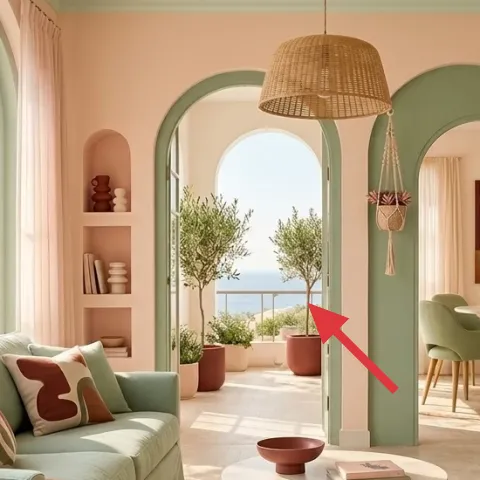
A potted olive tree in the foreground zone creates instant movement and vertical structure, which matters because the room already has lots of horizontal planes: curtains, rugs, and the coffee table. Terracotta planters also echo the rust throw blanket, so the plant doesn’t feel like an afterthought—it feels like part of the same palette. The alternative is a small tabletop plant, but that usually gets swallowed by framed abstract artwork and the white round coffee table. This choice accepts that plants need watering and occasional rotation toward the light, while delivering the most “real-life” softness of any single swap.
Rotate weekly for an even silhouette
Turning the planter keeps the leaves balanced so the arch view stays symmetrical.
The cost, layer by layer
| Layer | Item | Cost |
|---|---|---|
| 1 | Jute area rug | $200 |
| 2 | Rust throw blanket | $60 |
| 3 | Patterned throw pillows | $30 |
| 4 | Framed abstract artwork | $80 |
| 5 | Hanging macramé wall hanging (DIY equivalent) | $55 |
| 6 | Wood console table | $120 |
| 7 | Potted olive tree | $30 |
| Total | $575 | |
If you want a cheaper version, swap the jute area rug for a smaller natural-fiber look (or a low-cost sisal-style alternative) and choose one statement framed abstract artwork instead of styling a console with multiple ceramics. Keep the rust throw and patterned throw pillows—those do most of the mood work for less money.
What worked, what didn't (across the whole room)
The strongest part of this setup is the sequence: rug first, then soft textiles, then wall focal points, and finally height from plants. Most choices are also easy to move when a lease ends, which keeps the look feeling intentional rather than temporary.
What worked
- The jute area rug warms up the light tile floor and makes the green sofa feel grounded.
- The rust throw blanket adds terracotta contrast without competing with the framed abstract artwork.
- Patterned throw pillows keep the sofa from looking too flat against off-white curtains.
- The framed abstract artwork gives the eye a clear stop, even with arches pulling attention forward.
- The hanging macramé wall hanging softens straight lines and adds texture above the seating zone.
- The wood console table creates a clean styling ledge for ceramic vases and ceramic bowls.
- The potted olive tree adds height and makes the room feel lived-in, not staged.
What didn't
- Too many small decor items on the console can make the arch views feel visually crowded.
- Solid throw pillows alone can read flat next to a textured rug and patterned wall art.
- If the framed abstract artwork is hung too high, it competes with the rattan pendant lamp silhouette.
- A plant placed only at tabletop height can get swallowed by the sofa and coffee table scale.
What we'd skip if we did it again
Skip matching everything from the same set. In this palette, the jute area rug, rust throw blanket, and framed abstract artwork all need variety in texture and shape, not identical styles.
Skip a plant that’s too small for the arch view. A potted olive tree needs enough height to read through the openings—otherwise it looks like a temporary side note.
Skip drilling into the painted wall for frames. Command strips or removable hooks keep the framed abstract artwork secure while protecting the lease deposit.
Frequently asked
How long does this kind of living room refresh take for a renter?
Plan for about 2–4 hours if most items are pre-owned or ready to place. The jute area rug is a quick swap, throw and pillows are minutes, and framed abstract artwork is usually the longest part if you’re measuring for level. The hanging macramé wall hanging DIY is the time anchor—think an afternoon for the cord knot work plus a few minutes to trim.
Can I do this without drilling or wall anchors?
Yes. Use Command strips or removable hooks for the framed abstract artwork and the hanging macramé wall hanging, and rely on freestanding furniture like a wood console table. The jute area rug and textiles don’t require any hardware, and plants like the potted olive tree are completely lease-safe. The only “effort” is planning placement and keeping everything level.
What if my living room is smaller than this one?
Downsize the rug first: aim for a jute area rug that lets the front legs of your sofa sit on it. Keep the rust throw blanket and patterned throw pillows, because those scale down easily. For wall art, choose one framed abstract artwork instead of multiple, and keep the wood console table styling simple—one decorative tray plus a ceramic vase.
What if my space is bigger and needs more presence?
In a bigger living room, keep the same palette but scale up the rug size and use a wood console table with longer depth for more styling. Consider a taller potted olive tree so it reads through arches or sight lines. For textiles, use the rust throw blanket with more drape length so it shows clearly from across the room.
Where should I shop differently to stay renter-friendly?
Look for rugs and throw pillows at discount home stores and marketplaces for better pricing, then purchase wall art from framers or print shops that offer removable hanging options. For the hanging macramé wall hanging DIY, craft stores usually have cord and dowels at predictable costs, and the materials are easy to find. The wood console table is often best at mid-century furniture or big-box retailers.
What’s the biggest mistake people make with this style?
Over-styling the console and under-styling the seating. If the sofa zone doesn’t get enough texture—jute area rug, rust throw blanket, and patterned throw pillows—the room can feel empty even if the walls look “decorated.” Balance happens when you layer softness at couch level and add only a few ceramic vases and ceramic bowls above it.
More in Living Room
Under $600: sunlit living room refresh with earthy layers
A sunlit living room starts with a green sofa and warm daylight. This renter-friendly refresh adds a jute rug, rust throw, framed artwork, …
Under $500: 7 move-friendly swaps for a plant-filled living room
A plant-filled living room refresh for shared housing: 7 budget-friendly, packable swaps totaling under $500. The look stays warm and mid-c…
Under $1000: terracotta-and-olive living room refresh with 7 layers
A warm, mid-century–leaning living room refresh built from 7 budget-friendly layers—patterned rug, beige curtains, a pink pendant, and cura…