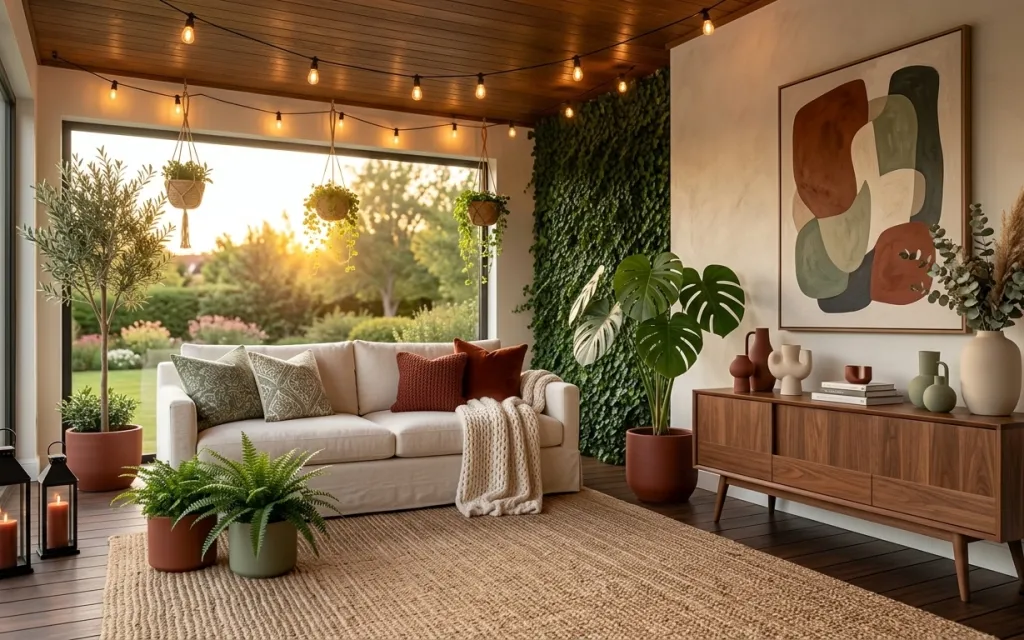
- Best for
- Move-ready living room warmth
- Cost
- Under $500
- Difficulty
- Easy
- Time
- 1 afternoon + drying time
Why olive-and-terracotta lighting details are the plant-filled living room of 2026
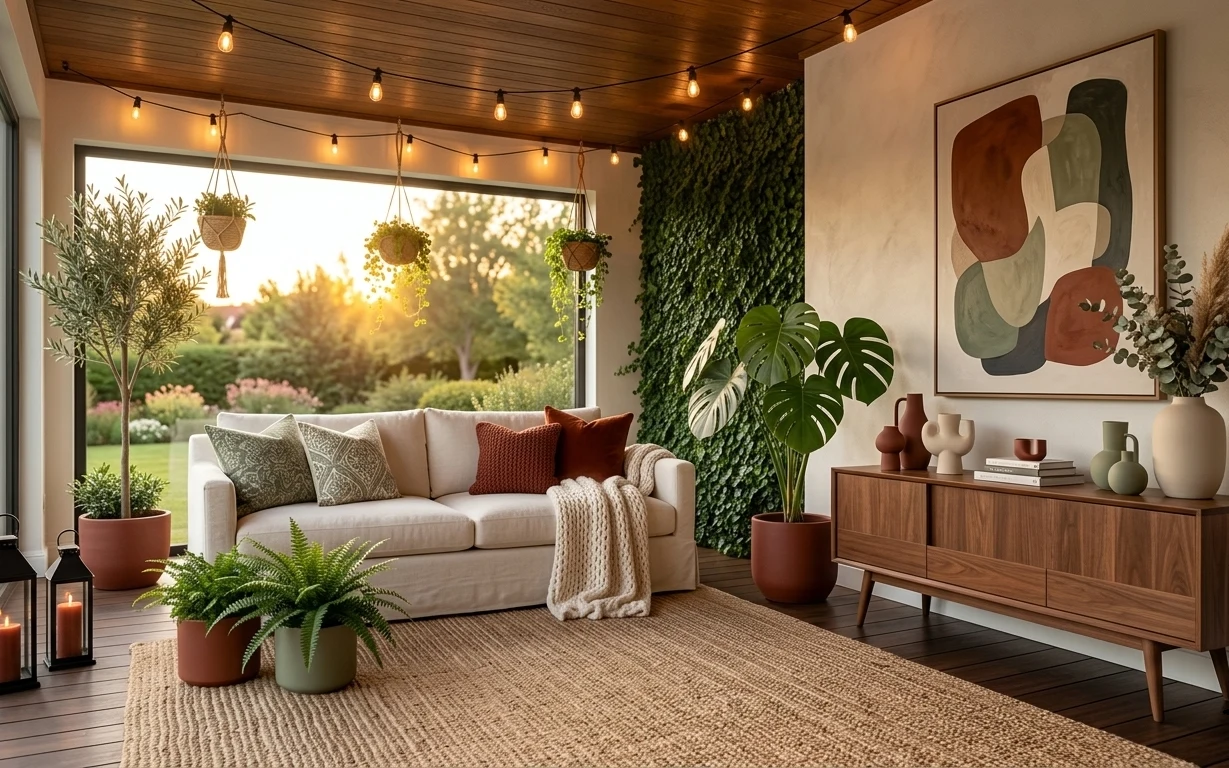
That soft golden glow isn’t just mood—it’s the string lights spaced across the ceiling, bouncing off the light walls and making the cream sofa feel calmer. Underfoot, the beige textured area rug reads cozy without going precious, and the console’s warm wood tones keep everything mid-century modern. The look also leans biophilic: multiple terracotta and green planters pull in color, while the cream throw blanket and rust pillow add small, washable texture. For shared housing, this kind of layered, freestanding approach wins because you can box it up and move it with you.
I used to overthink “statement” pieces and tried to make my rental look like a permanent magazine set. The mistake: I picked decor that didn’t travel well (and I regretted how many awkward items I carted each time). Now I choose things that stay good in any room—textiles with a neutral base, plug-in lighting, and planters that can be swapped or regrouped fast. That’s why this formula feels right for the next lease, not just today’s photo.
Layer 1 — Area rug (8×10 style, beige textured) ($200) Soft texture that hides floor scuffs
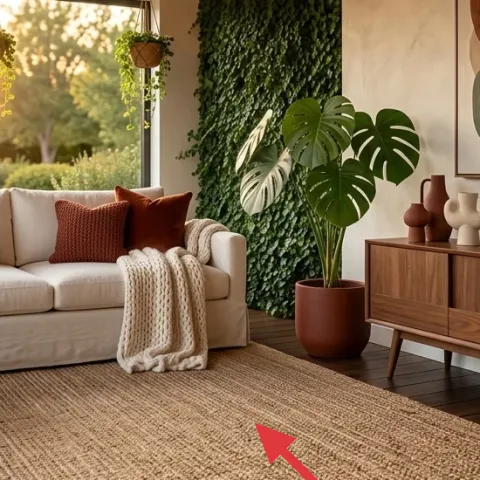
A big beige textured area rug anchors the whole seating zone and keeps the dark wood floor from feeling too contrasty. In the hero it’s a warm neutral, so it plays nicely with the cream sofa and the console’s honey-toned wood legs. Buying a rug with texture (rather than a flat weave) is one of those practical choices: it camouflages tiny spills and foot traffic, especially in shared housing. The trade-off is size—choose a rug that’s wide enough to fit the front legs of the sofa so the room feels intentional, not like rugs “floating” on top of the floor.
Front-leg placement for cohesion
Try to fit the sofa’s front legs on the rug; it visually ties your seating together even before you add wall art.
Layer 2 — Cream throw blanket ($35) Adds chunky knit warmth over the sofa
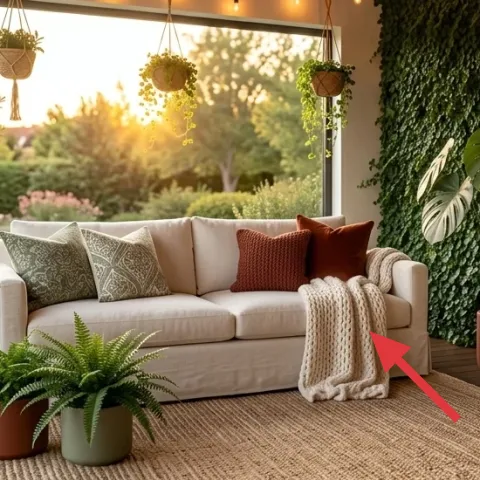
The cream throw blanket draped across the sofa turns a clean, simple seat into something you actually want to live on. Its neutral tone keeps the palette cohesive with the rug and the console, while the knit texture adds “handmade” depth without adding clutter. Choosing a throw over a heavier blanket is also practical for moving—folds into a flat stack and doesn’t require careful mounting. The trade-off is that throws need occasional re-folding to keep the drape looking casual, but that’s an easy daily habit compared to rearranging furniture.
Texture beats color-matching every time
When your main colors are already neutral, a knit texture gives contrast without forcing a new color story.
Layer 3 — Rust throw pillow cover ($18) Brings the terracotta note without committing
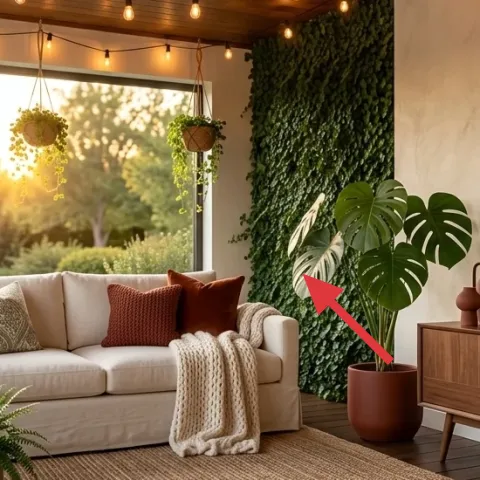
A rust pillow cover is the small pop that connects the planter color family to the rest of the room. In the hero, that warm orange-red sits next to patterned olive and tan cushions, so you get movement across the sofa instead of everything blending into “cream.” It’s also the most move-friendly upgrade: covers swap fast, pack flat, and you’re not stuck with a long-term decor commitment. The trade-off is that one pillow alone won’t do much—pair it with at least one neutral pillow and one patterned cushion so the rust has something to “bounce off.”
Match the undertone, not just the hue
Look for rust that leans warm (more terracotta than brick) so it stays harmonious with the planters.
Layer 4 — String lights set (plug-in) ($15) Warm ceiling glow that doesn’t require hardwiring
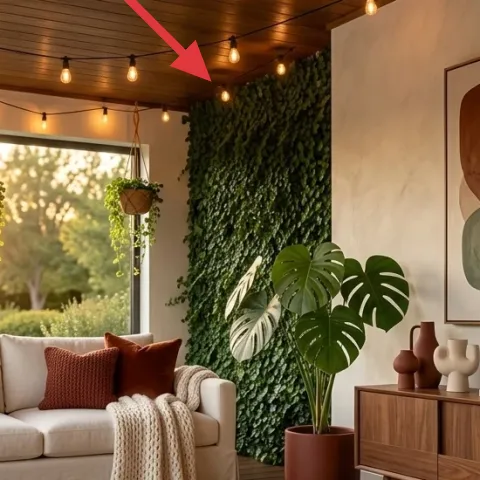
The hero’s ceiling string lights are doing real work: they soften the room in the evening and make the plants feel more lush. For shared housing, the easiest version is a plug-in set—no hardwired fixtures, no landlord arguments. The trick is placement: follow the line you already see in the photo by angling the strand so it visually frames the seating and doesn’t sag into the plants. You can use removable hooks and keep the cord management tidy by gathering slack into small loops. The trade-off is planning: take down in reverse before you move so the strand doesn’t tangle forever.
Skip the sticky strips that rip paint
On plaster or textured walls, avoid adhesive that can pull; use the foam-core style Command hooks instead of anything that feels too aggressive.
Layer 5 — Large framed abstract art print ($80) A single statement that travels in one box
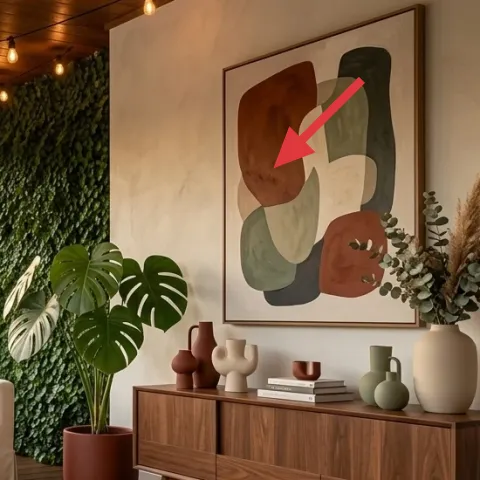
That large framed abstract art print above the console gives the room an organized focal point, and it’s the rare “statement” item that still ships well. A framed print is easier to pack than oversized decor objects, and it protects the image during moves. The key is scale: in the hero it’s big enough to balance the console width, so the wall doesn’t feel bare between the plants and the furniture. Go for an abstract with warm earth tones and one olive or sage note to echo the greenery. The trade-off is cost versus size—bigger frames cost more, but they’re also one-and-done compared to building a gallery wall.
One frame can replace a gallery wall
If you’re moving soon, a single large print keeps the wall style consistent without the packing hassle.
Layer 6 — Painted terracotta planter set ($55) DIY color that makes the plants look intentional
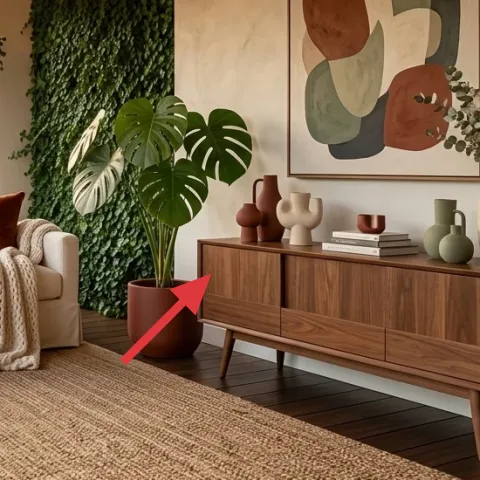
The hero’s terracotta pots make the room feel grounded, and that color shows up across the rug and near the sofa where your eyes land first. A painted terracotta planter set lets you control the “warmth” without buying new furniture—swap the finish and the whole room looks updated. Painted planters are also genuinely packable: they nest, wrap easily, and you can move them with a small box stack. The trade-off is mess and timing—ceramic needs time to dry fully—so plan for a couple of drying sessions instead of rushing right before you host friends.
Make it instead of buying it
Paint a small set of plain terracotta pots in two complementary earth tones so your planters match the room palette without a brand-new plant purchase.
Materials
- Plain terracotta pots (3) — small sizes — $24
- Acrylic craft paint (terracotta + warm clay tone) — small bottles — $10
- Sponge brushes — pack of 2 — $6
- Painters tape — 1 roll — $4
- Plastic drop cloth or garbage bag — 1 — $3
Steps
- Set up a covered workspace and wipe each pot clean and dry.
- Mask a simple band or section using painters tape for clean edges.
- Stipple paint with a sponge brush to keep the terracotta texture visible.
- Let the first coat dry fully, then add a second coat for even coverage.
- Peel tape when the paint is dry to the touch (not fully cured) to avoid tearing.
- Touch up any thin spots and let everything dry overnight.
Total DIY cost: $47 — saves about $8 over buying.
Layer 7 — Black metal lanterns with candles (pair) ($35) Adds flicker along the floor level
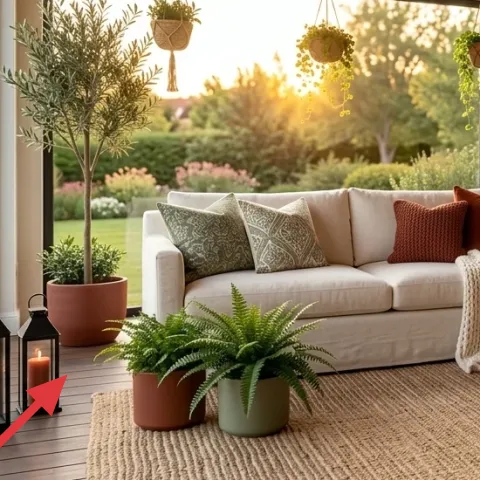
Those black metal lanterns with candles add a low, sculptural light source that makes the room feel styled after dark. In the hero they sit at floor level near the left side, which helps the string lights feel intentional instead of floating overhead. Choosing lanterns (instead of another table lamp) keeps the decor renter-friendly: they don’t compete with the console surface and they pack into a manageable footprint. The trade-off is flame logistics—candles take mindful use—so stick with smaller tea-light style candles and replace them often so the burn stays clean and even.
Use floor-level light to “raise” everything
When your plants are already tall, low lanterns balance the height so the whole room reads layered.
The cost, layer by layer
| Layer | Item | Cost |
|---|---|---|
| 1 | Area rug (textured, 8×10 style) | $200 |
| 2 | Cream throw blanket | $35 |
| 3 | Rust throw pillow cover | $18 |
| 4 | String lights set (plug-in) | $15 |
| 5 | Large framed abstract art print | $80 |
| 6 | Painted terracotta planter set (DIY) | $55 |
| 7 | Black metal lanterns with candles (pair) | $35 |
| Total | $438 | |
If the budget needs to shrink, prioritize the rug and one pillow cover first; choose a smaller frame size and a fewer-candles version of the lanterns to keep the look coherent.
What worked, what didn't (across the whole room)
This setup nails that “plants + warmth” vibe without relying on anything that needs landlord approvals or permanent change. The biggest wins are the rug texture and the plug-in lighting, because they make the room feel finished even when you’re still accumulating pieces.
What worked
- The beige textured rug makes the dark wood floor feel softer and hides small day-to-day mess.
- Layered sofa textiles (throw + rust cover) connect the terracotta planters to the seating palette.
- String lights add evening warmth without hardwired ceiling fixtures.
- A single large framed abstract print keeps the wall from looking bare between plants and console.
- Terracotta planters add color in a way that’s easy to re-group for the next move.
- Black lanterns at floor level add a second lighting height to balance the room.
What didn't
- Trying to match every pillow pattern exactly can make the sofa look busy instead of curated.
- Overcrowding the rug with too many pots can shrink the negative space that makes it look intentional.
- If the string lights sag toward the plants, they visually compete with the greenery instead of framing it.
- A frame that’s too small reads like decoration rather than structure for the wall.
- Using only one warm accent (like just terracotta) can make the palette feel incomplete next to olive tones.
What we'd skip if we did it again
Skip buying a “perfect set” from one retailer. In shared housing, the set-matching looks great in one photo but gets boring fast once you add real-life clutter and rotate pieces between rooms.
Skip adding another ceiling light source. The string lights already do the evening work; adding more overhead can flatten the room and fight the plant height.
Skip painting anything on the walls. Between moves and deposit math, the easiest wins come from textiles, framed art, and planters that can pack into boxes without drama.
Frequently asked
How long does this kind of living room refresh take in shared housing?
If you’re mostly swapping soft goods and styling, plan for one afternoon: rug placement, draping the throw, arranging pillows, setting out lanterns, and hanging the string lights with removable hooks. The longest part is the planter DIY—paint needs drying time—so schedule that a day earlier if you can. The framed art is the second time chunk, mostly because you’ll want to center it carefully.
What if the string lights can’t go up exactly where the photo has them?
The goal is not matching the exact ceiling line—it’s getting warm, overhead bounce in the evening. If your ceiling beams or outlet placement changes, keep the overall pattern: a gentle arc above the sofa and enough spacing that the bulbs don’t droop into plant leaves. A plug-in set still delivers the same visual effect even when the route is slightly different.
Can this work in a smaller shared living room?
Yes, but scale matters. Use a slightly smaller rug so it doesn’t overwhelm the floor and pick fewer planters on the rug at once. Keep the framed art big enough to anchor the console wall, but consider a narrower frame width. For lighting, keep lanterns and string lights, and skip extra tabletop lamps so you don’t reduce walkway space.
What if my living room is larger and needs more structure?
Repeat the height language. Add one more planter on the console or near the corner (in a similar terracotta/green palette) and consider a second framed print only if you can keep the wall composition cohesive. For textiles, add one more neutral pillow cover (cream or tan) so the sofa looks intentional from multiple angles.
Where should I shop to keep the look under budget?
For the rug and rug-adjacent basics, try discount home sites, marketplace listings, and warehouse retailers. For framed art, search for large abstract prints in the 16×20 style range and check for open-box deals. String lights are often cheapest as a basic plug-in set, while lanterns can be thrifted for a lower cost than buying new metal décor.
What’s the biggest mistake people make with plant-filled living room decor?
Overfilling the floor-level area too quickly. Plants are gorgeous, but if every corner has a tall pot plus extra small clutter, the room stops reading as “layered” and starts reading as “busy.” Start with the rug and sofa textiles, place one standout planter cluster, then add the rest in a second pass after you live with the layout for a day.
More in Living Room
Under $500: 7 move-friendly swaps for a plant-filled living room
A plant-filled living room refresh for shared housing: 7 budget-friendly, packable swaps totaling under $500. The look stays warm and mid-c…
Under $1000: terracotta-and-olive living room refresh with 7 layers
A warm, mid-century–leaning living room refresh built from 7 budget-friendly layers—patterned rug, beige curtains, a pink pendant, and cura…
Under $500: sofa-and-console corner refresh with earthy pink accents
A renter-friendly living-room refresh built around a pink textured rug, black-framed oval art, and console styling. This look lands under $…