- Best for
- Textiles + lighting swaps that move
- Cost
- $600 total
- Difficulty
- Easy
- Time
- 1–2 weekends
Why warm earthy-green styling is the boho living room nook of 2026
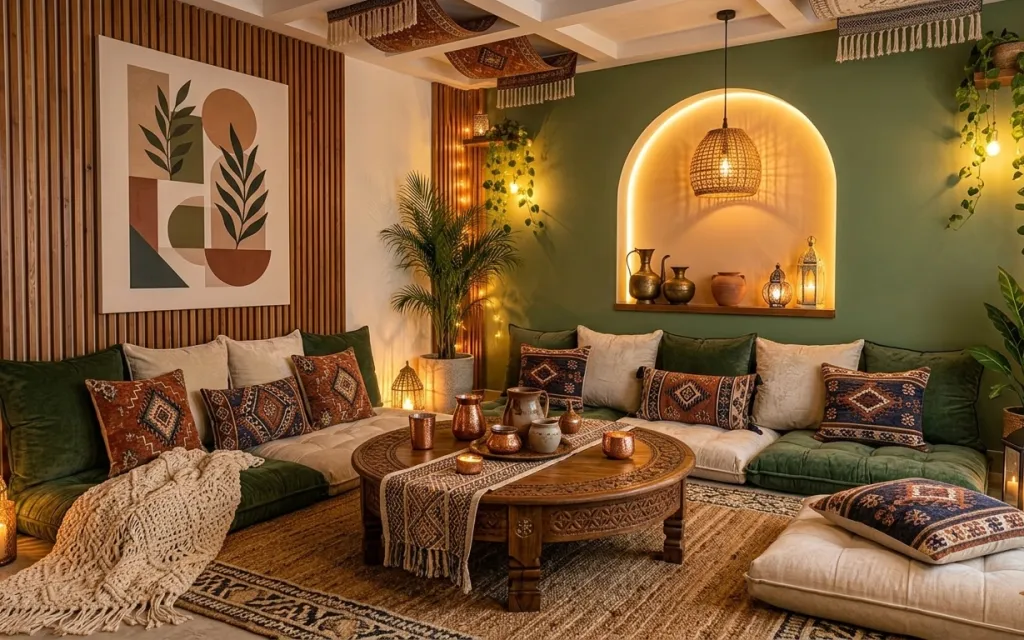
That deep green wall tone and the amber lighting do most of the heavy lifting here, but the “feel” comes from layers: a large patterned rug, a chunky tan crochet throw, and multiple throw pillows in similar warm hues. The coffee table anchors everything with warm wood grain, while the framed botanical art adds a calm botanical counterpoint to the busy textures. For shared housing, this setup works because none of it depends on permanent changes—just washable textiles, plug-in lighting, and decor that packs flat.
My first shared-house version of this vibe went wrong when I bought a rug that looked great in photos but didn’t hide everyday life—instant visible wear. The fix was simple: choose a rug with enough pattern and contrast to forgive the week. After that, the whole room felt intentional even when the rest of life was messy. This look is basically “forgiving layering” in real space.
Layer 1 — large area rug ($200) patterned enough to hide shared-house chaos
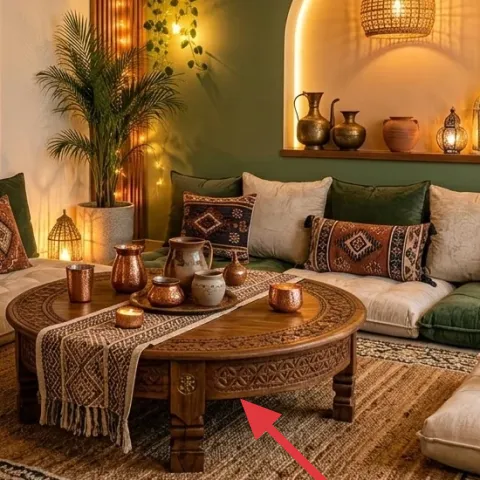
The large area rug is the foundation of the whole palette: warm tan background with darker patterning that keeps the deep green furniture from feeling heavy. In this room it sits under the coffee table and extends into the seating zone, which is why the space reads as one “area” instead of scattered pieces. A plain rug would show every sneaker scuff and spilled drink; pattern and contrast buy you time. Trade-off: you’ll want a rug pad to prevent sliding, because shared rooms get bumped constantly.
Match the rug to the lighting temperature
With warm amber lamps, choose rugs that have tan, camel, or ochre in them so the colors look consistent after dark.
Layer 2 — tan crochet throw blanket ($35) adds texture without taking over

The tan crochet throw draped across the left seating edge gives you that “handmade” rhythm without changing the furniture shape. The stitch texture shows up clearly against the smoother green cushions, so it reads as more than just color—it’s a tactile highlight. The important part for a move-friendly refresh is that a throw folds flat and can live in the bottom of a box without damage. Trade-off: crochet can snag on small loops, so keep it away from sharp corners and toss it in a wash bag when needed.
Use it like a color bridge
Bring the rug’s tan tones into the sofa area so the whole room feels connected, even if the pillows aren’t identical.
Layer 3 — wooden coffee table ($180) warm wood grain keeps the room grounded
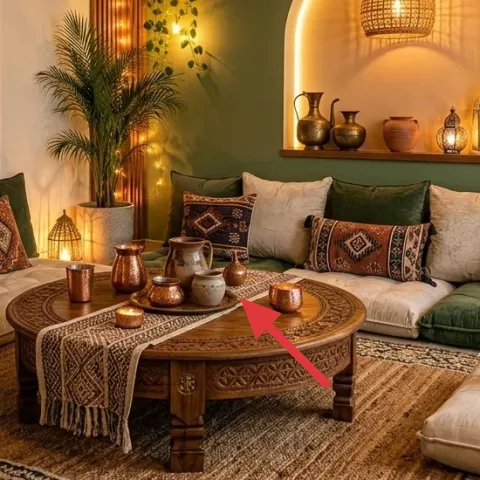
The wooden coffee table ties the earth-tone palette together and gives the seating cluster a clear focal point. In the photo it’s centered in front of the sofa, and the table top holds the decorative pieces—vases and candles—that repeat the warm metal and brown tones elsewhere. A glass table would look light for a day, then show fingerprints and be harder to style consistently. Trade-off: keep the footprint realistic for moving—choose something that breaks down or is simple to carry in one trip.
Style the tabletop in a low, grouped height
Keep objects close to the table surface so tall items don’t block lamp glow or create awkward sightlines.
Layer 4 — green and cream throw pillows ($30) repeat the wall color in fabric form
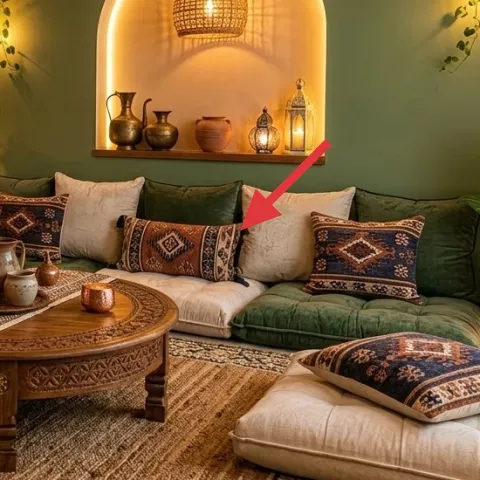
These green and cream cushions are doing double duty: they echo the room’s deep green and they soften the visual weight of the sectional. Because pillows are just textiles, they’re the easiest shared-house swap—no measuring walls, no permanent installs, and they pack into suitcases or flat boxes. The key choice over the obvious option (buying one “statement” pillow) is repetition: multiple pillow shapes in related colors make the sofa look styled even when you’re tired. Trade-off: more pillows mean more laundry days, but covers are simple to refresh.
Pick a limit of two base greens
One deeper green and one lighter tone keep it cohesive instead of looking mismatched.
Layer 5 — large framed botanical wall art ($80) swap in macramé for instant wall personality
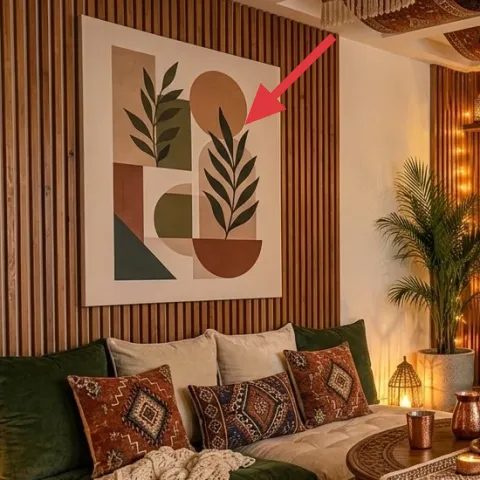
The framed botanical art brings calm, graphic shape to a wall with strong textures—wood paneling on one side and a green painted field nearby. Visually, it’s a vertical anchor, so the sofa doesn’t feel like it’s floating in front of everything else. For shared housing, framed art can stay move-ready, but the bigger benefit is picking something lightweight and removable. Trade-off: if you go too heavy on large frames, you lose packing convenience; macramé offers the same “statement” effect with easier handling.
Make it instead of buying it
Macramé wall hanging works as the vertical botanical-style anchor here, and it’s still removable with a Command hook.
Materials
- Macramé cotton cord — 1 roll (about 100–150 ft) — craft store — $30
- Wooden dowel rod — 1 piece (about 20–24 in) — craft store — $15
- Command hook (adhesive hook only) — 1 pack — hardware section — $8
- Natural twine — 1 small ball — craft store — $5
- Small scissors or utility knife (if needed) — borrow if possible — home — $2
Steps
- Cut cord lengths (mix a few strands for texture), then group into sets for your knot plan.
- Wrap strands around the dowel and tie secure starter knots for consistent spacing.
- Work repeating knot sections (like square knots) down from the dowel to create a clean pattern.
- Add slight variation by mixing knot density in the middle band for a fuller center.
- Finish the bottom edges with trimming to even lengths and a simple wrap knot.
- Hang the dowel from a Command hook using a loop of twine so the piece stays removable.
Total DIY cost: $60 — saves about $20 over buying.
Layer 6 — potted tall plant at right ($40) adds softness to the hard textures
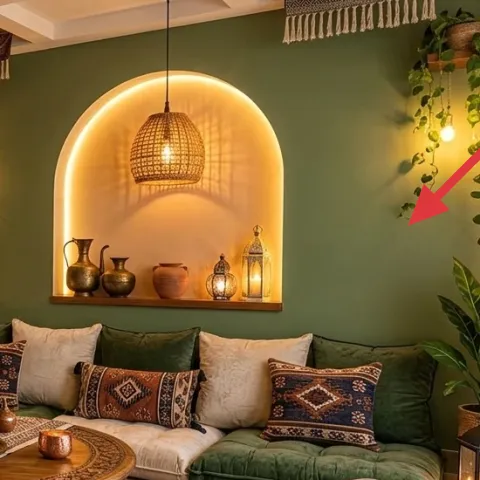
The tall potted plant on the right side adds organic movement that offsets the geometric wall paneling and the structured sofa lines. It also echoes the botanical theme from the framed wall art—so even if someone walks in mid-day and doesn’t notice the pillows, the room still reads “natural.” The plant is move-friendly because most tall indoor plants are in plastic or can be repotted into a simpler pot before a move. Trade-off: real leaves need light and occasional watering, but it beats trying to keep a faux arrangement looking convincing.
Don’t block the amber glow
Place the plant far enough from the hanging pendant light so the leaves don’t cast heavy shadows across the sofa.
Layer 7 — table lantern lamp at left ($35) warm light that flatters the green
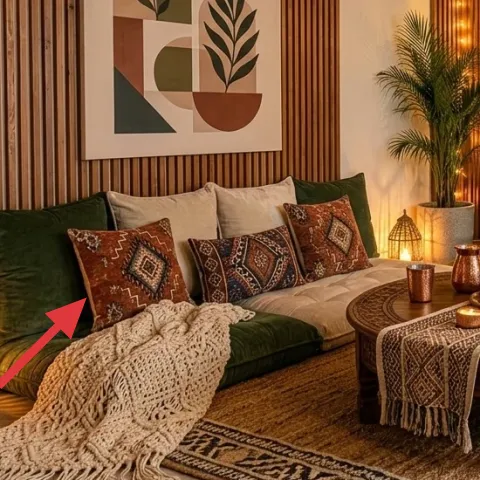
The table lantern lamp on the left brings that warm amber, “evening reads better” feel without needing any hardwired updates. Because it’s portable, it’s perfect for shared housing: swap rooms, swap sides, and it still looks right next to a patterned rug and textured throws. This is the smarter alternative to a bright white overhead bulb—white light can make greens look harsh and makes fabrics look flat. Trade-off: lantern-style lights can dim over time, so choose a reliable bulb and replace quickly if output drops.
Use warm bulbs consistently
Keep bulb color temperature in the same warm range across lamps so greens and tans stay cohesive.
The cost, layer by layer
| Layer | Item | Cost |
|---|---|---|
| 1 | Area rug 8×10 with earth-tone pattern | $200 |
| 2 | Crochet throw blanket, tan | $35 |
| 3 | Wooden coffee table with storage or lower shelf | $180 |
| 4 | Green and cream throw pillows (set) | $30 |
| 5 | Large framed botanical wall art (DIY-equivalent cost) | $80 |
| 6 | Potted tall indoor plant (4–6 ft) | $40 |
| 7 | Table lantern lamp | $35 |
| Total | $600 | |
If the rug budget needs to soften, go one size smaller or choose a simpler pattern with clear tan-and-brown contrast. The rest still holds up because the rug anchors the palette, while the throw, pillows, and warm lamp keep the “boho living room nook” look cohesive.
What worked, what didn't (across the whole room)
The strongest win was the layering system: pattern on the floor, texture on the sofa, and warm amber light that flatters deep greens. The only issues came from overloading too many tiny decorative elements at once.
What worked
- The patterned rug keeps day-to-day marks from standing out, especially in shared-house foot traffic.
- Tan crochet adds visible texture so the sofa looks styled even on low-effort nights.
- The wooden coffee table makes the palette feel warmer and more cohesive than metal surfaces.
- Green-and-cream pillows repeat the wall color without making the room matchy.
- The botanical wall art (or macramé swap) adds calm vertical balance against wood paneling.
- The tall plant softens hard lines and gives the room a living, natural focal point.
- Lantern-style warm lighting improves fabric color and makes evenings feel intentional.
What didn't
- Too many small tabletop pieces make the coffee table look cluttered instead of curated.
- Using cool white bulbs can make deep green look flat and slightly dull in photos.
- If the throw blanket is too thin, the sofa loses that chunky texture contrast.
- Plant placement too close to lighting can create heavy shadows across cushions.
What we'd skip if we did it again
Skip buying a matching furniture “set” for this vibe. The room looks good because pieces share color families (deep green, warm tan, rust brown) instead of matching finishes down to the millimeter.
Skip a low-contrast rug that’s too close to the sofa color. In a shared space, it will highlight every stain and make the whole seating zone feel like one flat block.
Skip over-styling the coffee table with lots of tiny items. A simple grouping—something candle-like, one vase, and a warm-toned accent—reads more expensive and packs easier for moves.
Frequently asked
How long does this kind of boho living room refresh take?
Most of the time is textile swaps: swapping pillow covers, draping the crochet throw, and getting the rug positioned and smoothed. The lighting and tabletop styling come next. If the macramé wall hanging is the DIY, allow a focused afternoon plus another hour to trim and hang it. Overall, plan for 4–8 hours total spread across two days.
Is this renter-friendly if we can’t change the walls or fixed lighting?
Yes—this look is built around movable pieces: area rug, throws, pillow covers, plug-in lantern lighting, and lightweight wall decor. The only wall decision is how to add that botanical focal point, and the DIY macramé option uses a Command hook rather than drilling or permanent mounting.
What if the room is smaller than this photo?
Go one step smaller on rug size or use a rug with bolder pattern so it still reads “anchored.” Keep the coffee table footprint realistic, and reduce pillow count by one pair while keeping the green-and-cream repetition. The plant can move closer to a corner to avoid crowding the walkway.
What if the room is bigger and needs more coverage?
Use the same color palette, but widen the rug coverage so the sofa legs sit fully on it. Add another textile layer—an extra throw pillow in the same green range—and keep tabletop styling grouped, not scattered. For wall balance, choose a slightly taller macramé or wall art scale.
Where should you shop differently to keep it under $600?
Prioritize buying the rug and the lamp in the widest budget lanes because they affect the whole photo. For the rest, use pillow covers, thrifted or sale throws, and a simple macramé DIY. Plants are sometimes cheaper at local nurseries than big-box stores, especially outside peak seasons.
What’s the biggest mistake in rooms like this?
The biggest mistake is buying a rug and lighting that fight each other. If the rug is low-contrast or the bulb color temperature is too cool, deep greens can look dull and the whole palette stops reading warm and intentional. Start with rug contrast and use consistent warm bulbs to keep the look cohesive.
More in Living Room
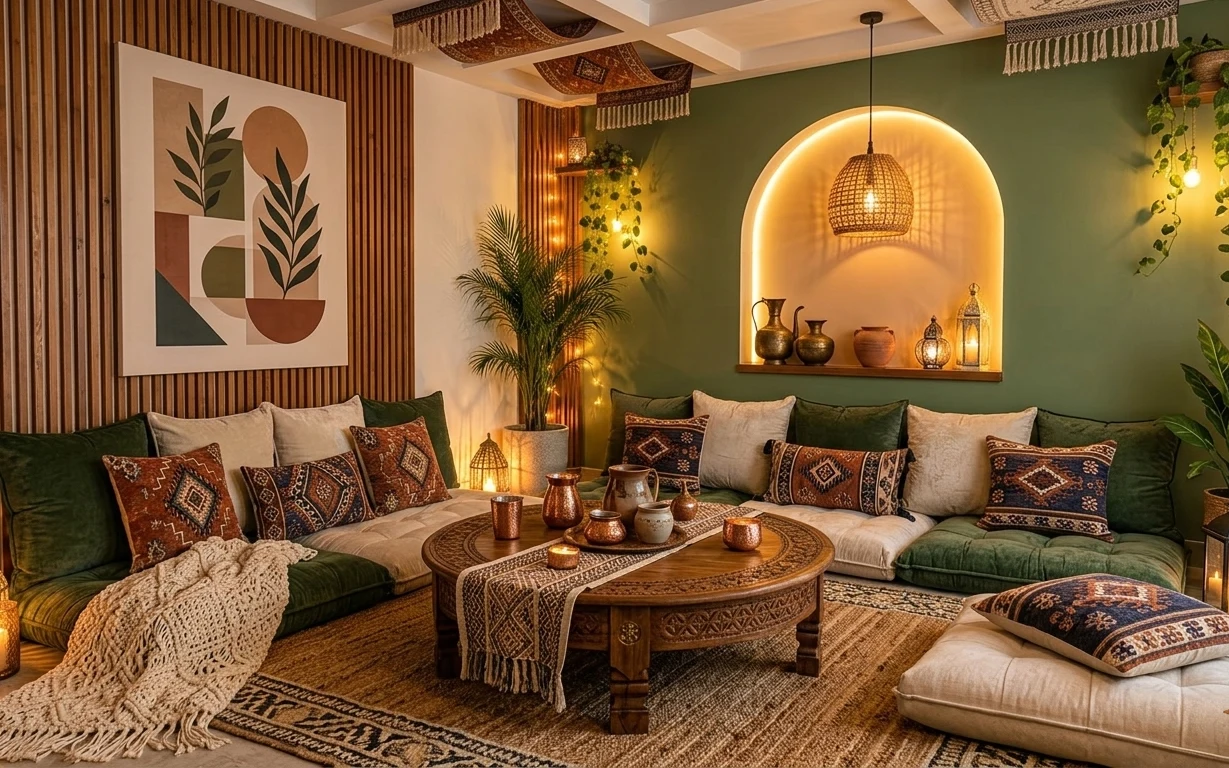
Under $600: boho living room nook refresh with move-friendly swaps
A boho living room nook, refreshed with renter-friendly textiles and freestanding swaps for under $600. The look leans warm amber light, de…
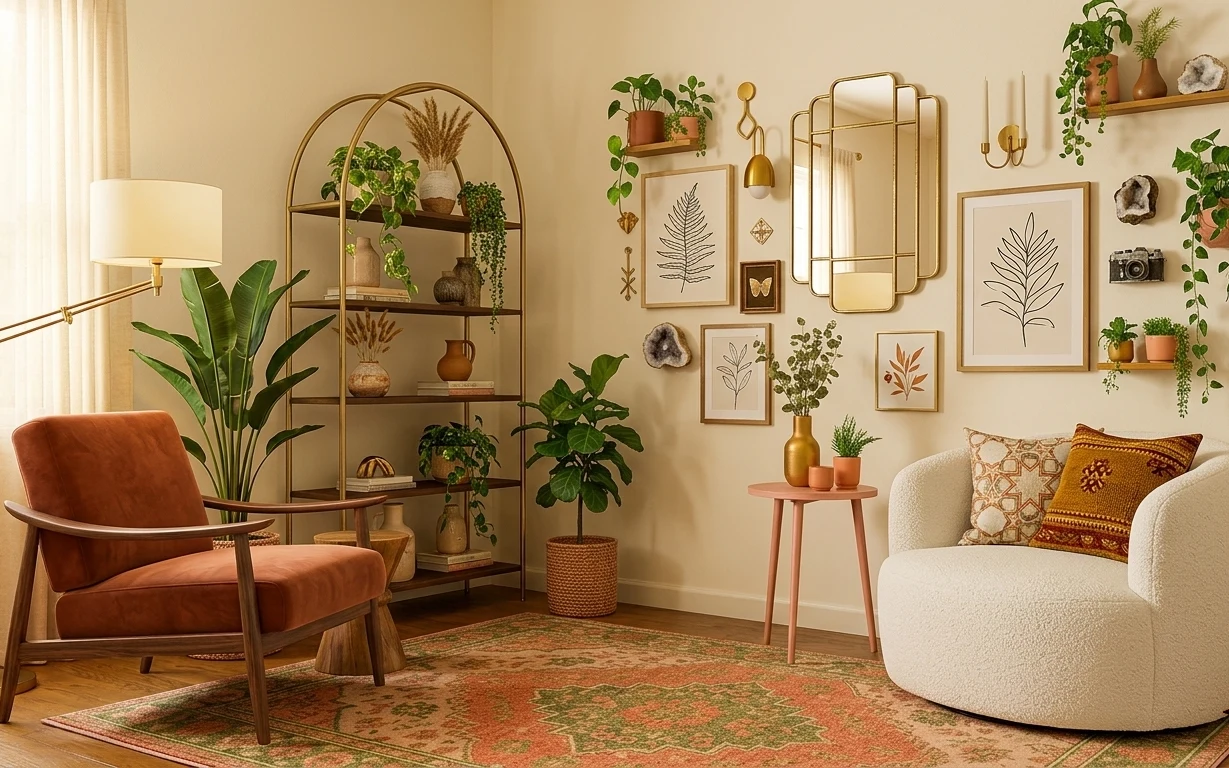
Under $1500: plant-filled living room refresh with 7 swaps
A plant-filled living room seating nook, built around a warm gold lamp, terracotta rug, and layered botanical wall art. This weekend refres…
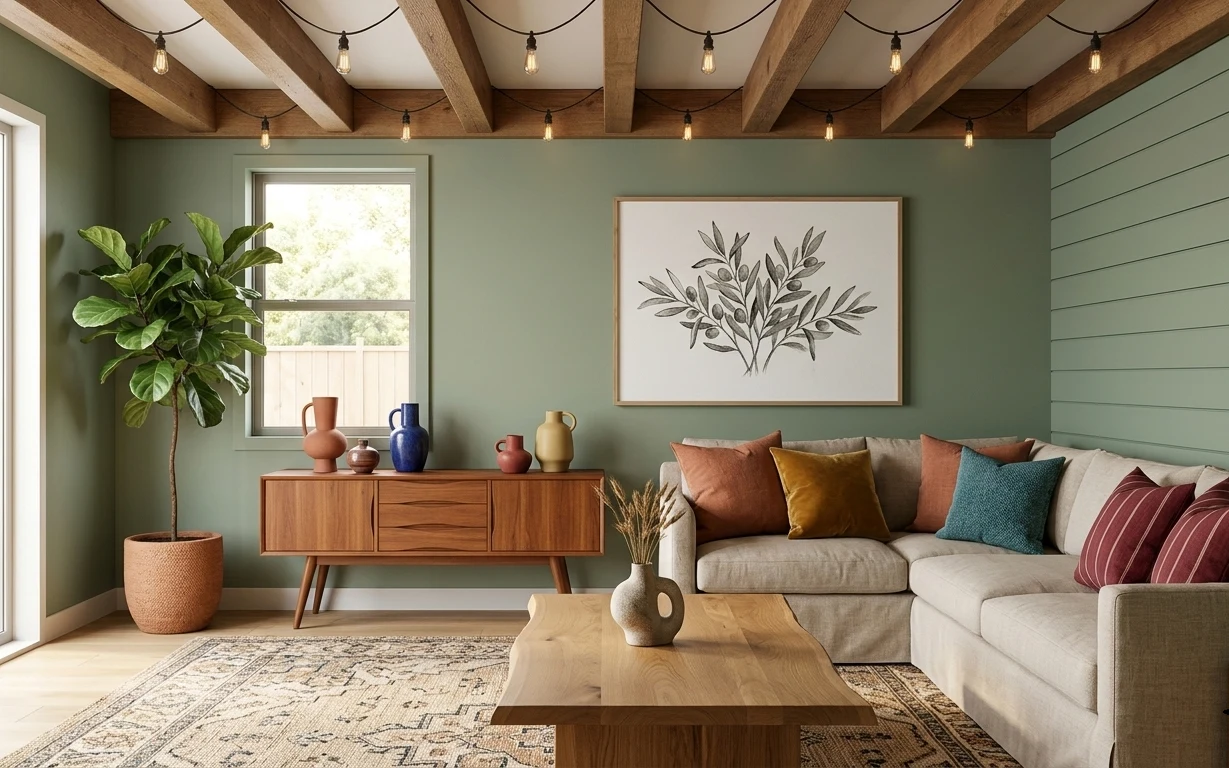
Under $1000: sage-and-walnut living room refresh with 7 layers
A sage-green-and-walnut living room refresh that looks intentional (not spendy). This weekend-friendly plan uses 7 visible upgrades—rug, fr…