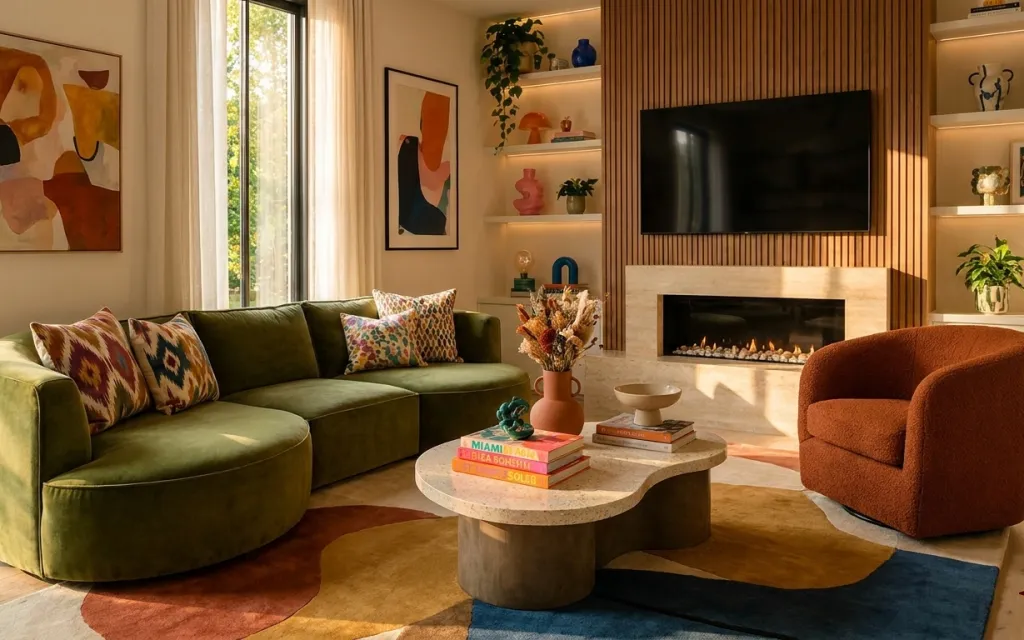
- Best for
- Layered color + warm lighting
- Cost
- $555 total for 7 layers
- Difficulty
- Easy to moderate
- Time
- About a weekend for styling + DIY
Why olive-and-rust styling is the living room mood of 2026
Start with the rug because it sets the whole “palette gravity.” In the photo, rust and blue bands meet an olive sofa, then the warm table lamp makes everything feel cohesive even against the fireplace stone. You’ll also notice texture stacking: velvet-like cushions, a smooth ceramic vase, and the soft pile of the rug underfoot. For renters, this is doable because the biggest visual anchors are all freestanding pieces and swap-in textiles. I’ve seen the same approach in interior spreads that lean boho-mid-century: one bold color, one warm light source, and a few repeat textures.
I used to chase matching sets—same brand, same vibe, same everything. Then I tried this mix of jewel-toned sofa cushions, a terracotta planter moment, and artwork with totally different shapes. The room stopped looking “decorated” and started looking lived-in. The mistake I caught myself making was choosing fabrics that all felt the same (too flat). Adding one plush textile and one ceramic/plant element fixed the depth instantly.
Layer 1 — area rug with rust and blue bands ($200) A pattern that holds the whole color story
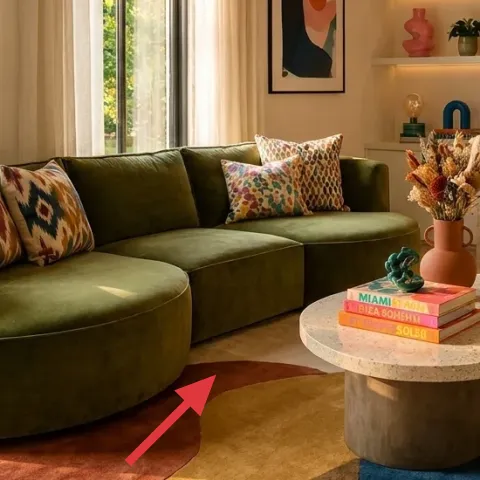
A medium-to-bold area rug with rust and blue bands anchors the seating and keeps the olive sofa from looking isolated. In the hero, the rug’s bands echo the warm terracotta accessories while adding contrast near the coffee table and armchair. This is the “bigger than you think” moment: a small rug makes the coffee table look floating. The trade-off is that you’ll want vacuuming and spot cleaning to stay on schedule, because the pattern still shows lint. Choose a rug with enough contrast so it reads from across the room, not just close-up.
Pick for scale, not trend
Let the front legs of the sofa sit on the rug; it’s the quickest way to make a room feel intentional without changing anything permanent.
Layer 2 — throw pillows on the sofa ($30) Repeat color in fabric, not paint
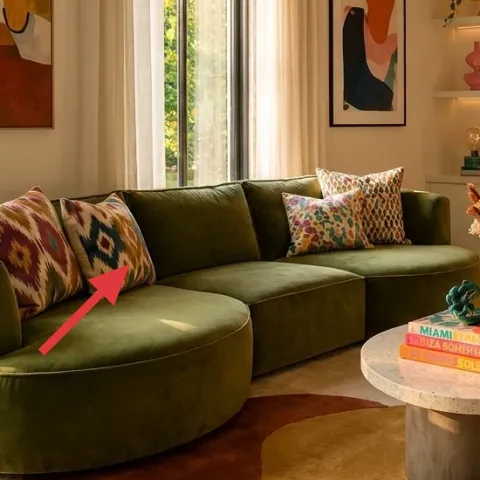
Swap in a tight mix of pillow covers that repeat the room’s key colors: olive, rust, and a small hit of warm pattern. In the photo, the sofa cushions aren’t all the same—some add geometric energy while others read as solid texture—so the chaise looks styled instead of plain. This matters more than matching every pillow to your rug, because the sofa provides the largest surface in the room. The trade-off is you may need one extra iteration to find the right mix of prints to solids. Start with two patterned covers and one coordinating color, then fine-tune.
Use the sofa as your “base”
If your upholstery is already bold (like this olive green), the pillows can be your only place for extra pattern.
Layer 3 — warm table lamp on the fireplace mantel ($60) Plug-in light that flatters ceramics
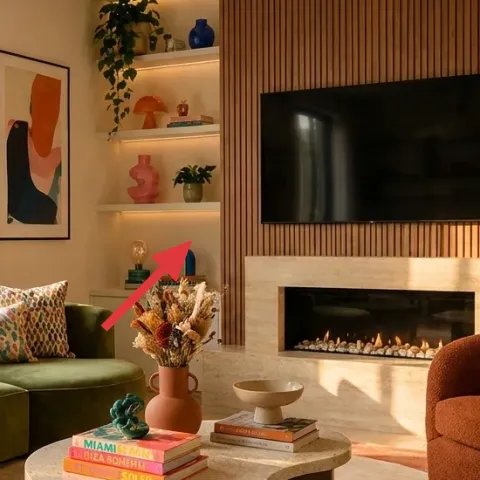
A warm table lamp positioned where you can see the glow does more than brighten—it makes terracotta and stone look richer. Here, the lamp on the fireplace mantel works with the firebox area and keeps the right wall from feeling flat, especially when daylight fades. Choose a plug-in table lamp with a warm bulb and an opaque shade so the light reads as “golden” instead of blue-white. The trade-off: you’ll want to plan your outlet route so the cord doesn’t become the visual center. In a rental, that’s still easier than permanent lighting changes.
Don’t place the bulb where it glares
If the shade is too translucent or too high, you’ll end up with glare on the TV/TV stand area.
Layer 4 — large framed abstract artwork above the sofa (left) ($80) Bring shape without committing to a gallery wall
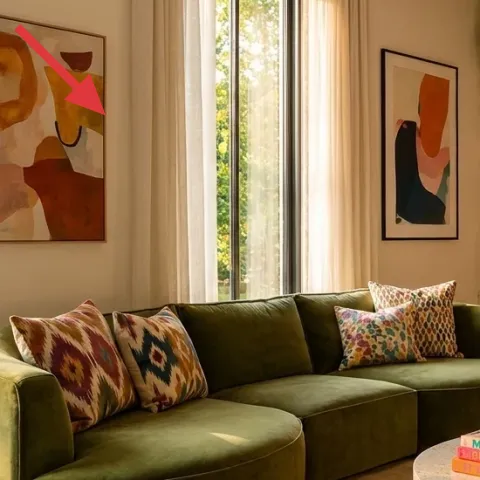
A single large framed abstract piece above the sofa gives the room a focal point without turning into a whole gallery wall project. In the hero, the left artwork is warm-toned and rounded in its shapes, which plays nicely with the straight lines of the wood-slat wall. Frame it to similar height as the main seat cushion so it reads balanced. The trade-off is that one piece demands more decision-making: too small and it vanishes, too busy and it competes with the rug pattern. If your landlord limits wall changes, use renter-safe hanging methods (like Command hooks) and keep the frame lightweight.
Match the art’s warmth to the lamp
Warm frames and warm light create a consistent undertone, even when the colors don’t “match” exactly.
Layer 5 — round coffee table ($120) Styling with height beats more clutter
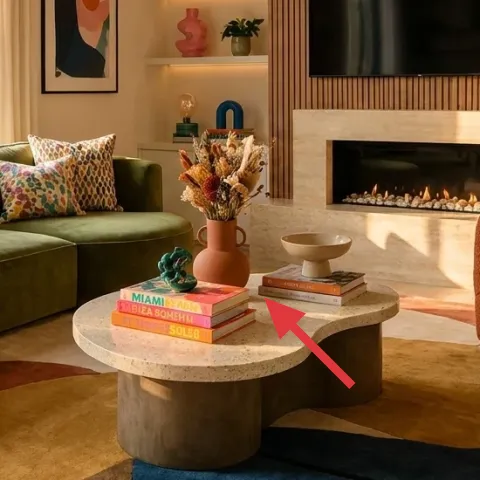
A round coffee table is key here because it keeps the seating zone flowing from sofa to armchair without hard edges. The stone-look top and solid base also handle mixed objects—books, a ceramic vase, and smaller decorative pieces—without looking messy. In the photo, styling works because the tallest item sits slightly off-center, then everything else is layered around it. The trade-off is that a round table can feel wide in small layouts, so the styling needs to be purposeful. Stick to 3–5 items max, and vary height so the surface looks arranged from standing height, not just up close.
Limit objects to a “reading stack”
Books plus one vase gives you visual organization without adding extra trays and containers.
Layer 6 — green houseplant in a white pot on the floor (right) ($30) Add living height at the room’s edge
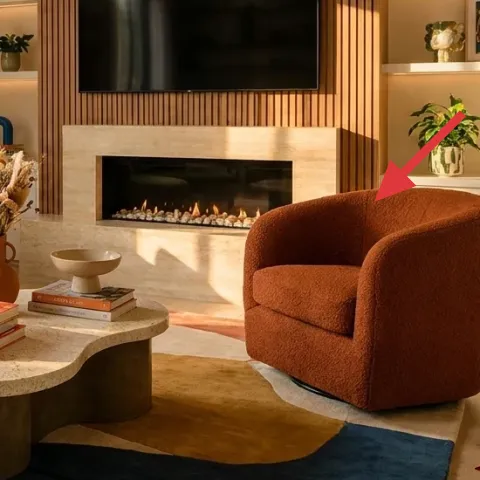
A floor plant in a simple white pot brings softness at the boundaries, where the room can otherwise feel too structured. In the hero, the plant sits near the armchair, balancing the heavier fireplace side and adding movement through its leaves. Choose a plant with a natural branching shape so it grows outward rather than drooping straight down. The trade-off is practical: you’ll need to rotate it occasionally so it doesn’t lean toward the light. Still, this is rental-friendly because the planter is movable and you’re not changing any built-ins.
Rotate once a week for even growth
Even small rotation keeps the silhouette round instead of one-sided.
Layer 7 — painted terracotta planter set ($35) DIY color for a renter-friendly shelf moment
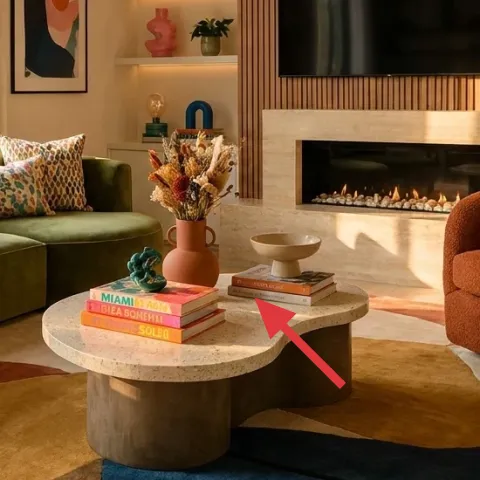
Terracotta reads “warm” next to an olive sofa, but it’s even better when it’s painted in a way that echoes your rug and artwork tones. This layer targets the same role as the hero’s terracotta vase/planter: a grounded ceramic piece that makes the coffee table and mantel styling look intentional. The trade-off is that you’ll have to wait for paint to dry before styling it, so plan this for a weekend. Painting is also forgiving—imperfections can look organic on terracotta.
Make it instead of buying it
DIY a painted terracotta planter set to recreate the warm ceramic accent without relying on a single expensive vase.
Materials
- Terracotta pots — 2 small (4–6") — craft store — $12
- Acrylic paint — 1 small set — craft store — $6
- Foam sponge brush — 1 pack — craft store — $5
- Painter’s tape — 1 roll — hardware store — $3
Steps
- Measure pot height and plan 1–2 paint bands using painter’s tape.
- Clean and dry the terracotta so paint grips evenly.
- Apply tape lines, then sponge-paint your first warm color band.
- Let paint dry completely to the touch.
- Carefully remove tape to reveal crisp edges.
- Add a second accent color if you want more contrast, then let dry again.
- Set pots aside for final drying until fully matte.
Total DIY cost: $26 — saves about $9 over buying.
The cost, layer by layer
| Layer | Item | Cost |
|---|---|---|
| 1 | Area rug 8×10 (rust and blue band pattern) | $200 |
| 2 | Throw pillow covers (set of 3) | $30 |
| 3 | Plug-in table lamp with warm bulb | $60 |
| 4 | Framed abstract art print 16×20 | $80 |
| 5 | Round coffee table (stone-look top) | |
| $120 | ||
| 6 | Indoor plant (4–6 ft) in white pot | $30 |
| 7 | Painted terracotta planter set | $35 |
| Total | $555 | |
If you want to spend less, drop the rug to a 5×7 size and keep the same rust/blue palette. Then replace the framed print with a single affordable print and frame, keeping the lamp and plant as the warmth and height anchors.
What worked, what didn't (across the whole room)
The strongest win was using one bold floor anchor and then repeating the color through pillows and ceramics. Warm plug-in lighting also made the terracotta details feel cohesive with the fireplace stone. The only hiccup was that the patterned rug demands a tighter edit on the coffee table so it stays styled, not crowded.
What worked
- The rug’s rust-and-blue bands create continuity from sofa chaise to armchair.
- Layering pillows with both solids and patterns keeps the olive upholstery from feeling flat.
- A warm lamp on the mantel adds glow without touching any hardwired fixtures.
- One large framed abstract piece gives shape while keeping wall projects minimal.
- The round coffee table makes styling easier with height variation and fewer sharp edges.
- A floor plant on the edge balances heavier built-in features and softens lines.
What didn't
- If pillows all match exactly, the sofa loses depth and starts to look too “set-like.”
- A cool-toned bulb washes terracotta and makes the room feel less cohesive.
- Too many small objects on the coffee table fights with the rug’s pattern.
- Choosing wall art that’s too small can leave a gap above the seating zone.
What we'd skip if we did it again
Skip buying a matching “set” of decor. In this room, the mix of olive upholstery, rust ceramics, and abstract art works because it’s not identical, and matching sets usually remove that lived-in depth.
Skip a low-contrast rug in favor of a muted one. When the rug doesn’t carry enough contrast, you end up compensating with extra objects, and the coffee table starts looking crowded fast.
Skip cool-white lighting. If your plug-in lamp uses a daylight bulb, terracotta and stone lose their warmth, and the whole palette reads off—even if every other item is right.
Frequently asked
Is this renter-friendly if my lease doesn’t allow much wall hanging?
Yes. The biggest anchors here are textiles (rug and pillow covers), freestanding furniture (coffee table and armchair), and plug-in lighting. For the framed art, use lightweight renter-safe hanging like Command hooks and keep frames small enough to remove cleanly at move-out.
How long does this refresh take in real life?
Most of the time goes to swapping textiles and getting the pillow mix right—usually 1–2 hours. Sourcing a rug and a lamp can take longer depending on shipping. The painted terracotta DIY is the only timed step, and you’re basically waiting for dry times (plan 2–3 short sessions).
What if my living room is smaller than this one?
Use the same palette, but scale down the rug size so the seating stays grounded. Keep the coffee table styling to a minimal 3-item rule: a stack of books, one ceramic accent, and one small object with height. If the room is tight, lean into fewer pillows with larger patterns rather than many small ones.
What if my living room has different colors than olive and rust?
Use the pattern logic instead of the exact colors. Pick one color to repeat in the rug and pillows, then match the ceramic accent to the warm lighting undertone. The shapes matter too: rounded abstract art pairs well with a round coffee table and plush upholstery.
Where should I shop if I want this look on a budget?
Start with the rug and lamp first—those set the tone. Rugs often come from large retailers with frequent sales; plug-in table lamps are easy to find in home stores and thrift when you know you want warm bulbs. For wall art, choose prints that already include warm tones so the frame doesn’t fight the room.
What’s the biggest mistake people make with this kind of palette?
Over-editing the ceramics and objects. With a bold rug and patterned pillows, the coffee table needs breathing room; otherwise everything competes at once. A good rule is height variation plus a limited number of pieces—so the room reads styled rather than cluttered.
More in Living Room
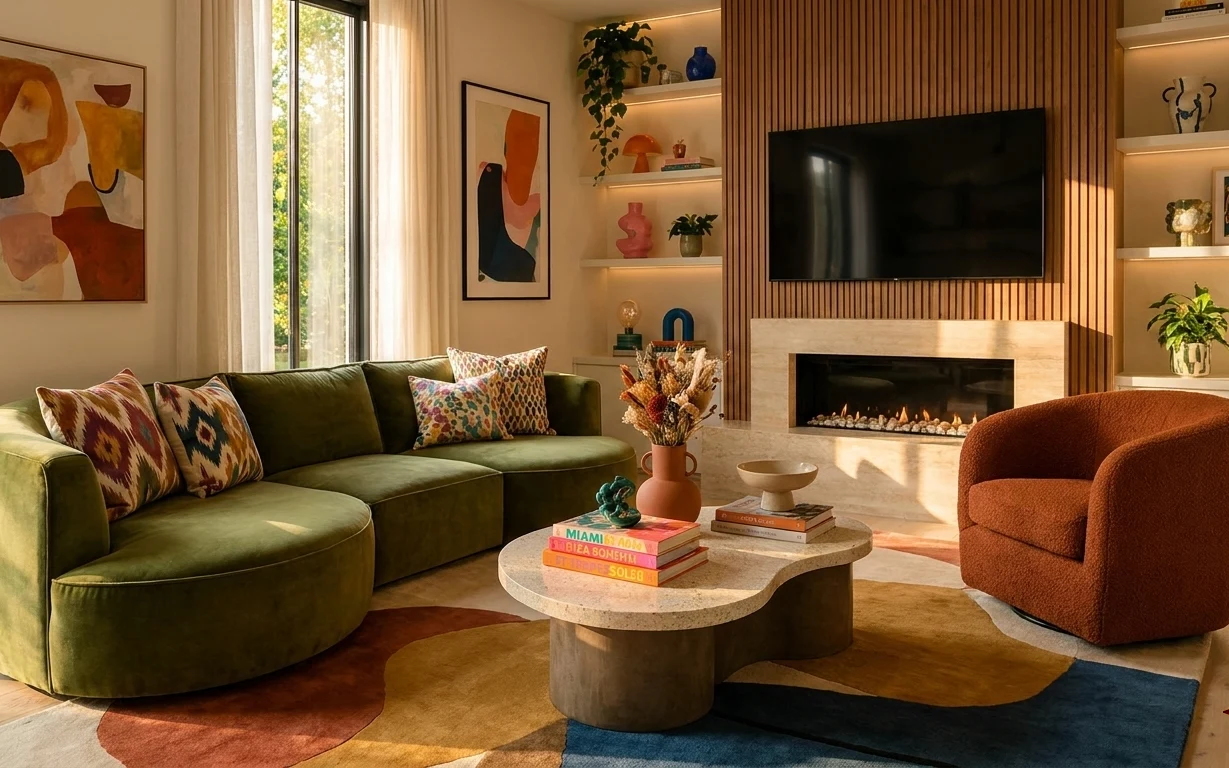
Under $600: eclectic living room swaps that look settled
A warm, olive-and-rust living room look—made renter-friendly with 7 movable swaps. Plan for about $600 total and focus on rug scale, layere…
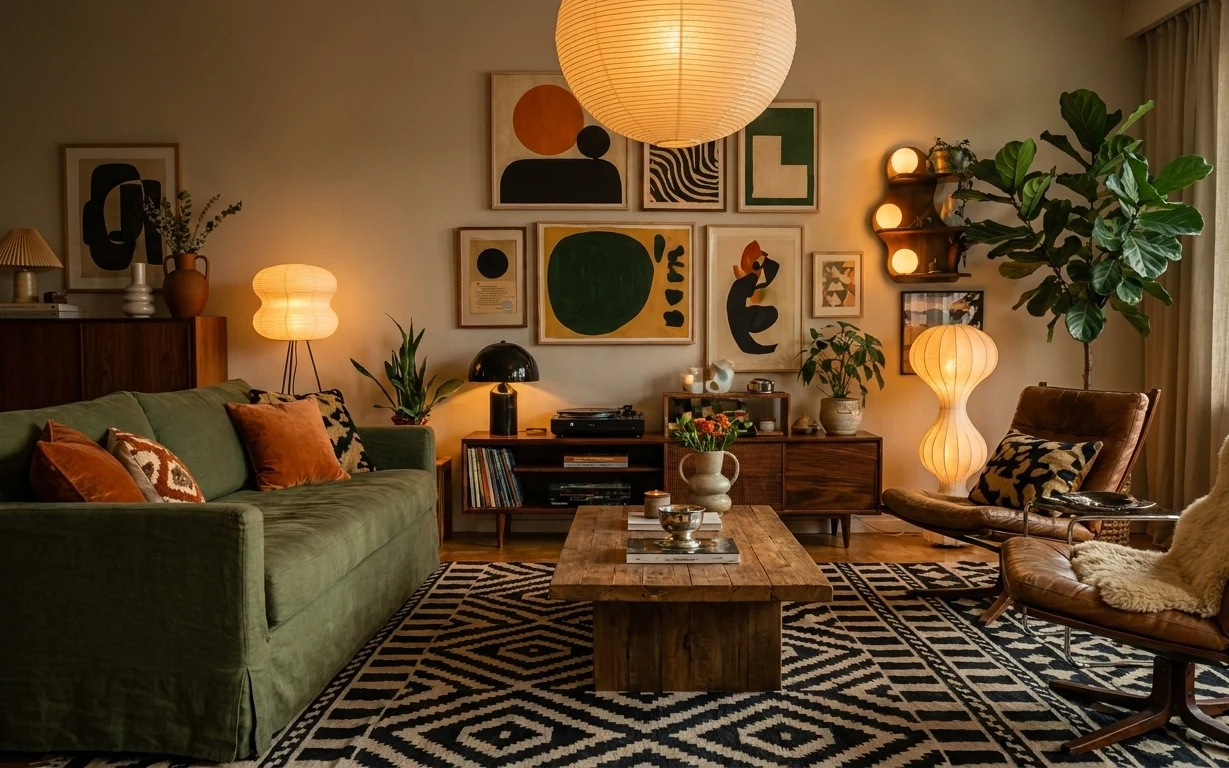
Under $600: olive-and-tan living room refresh with 7 renter swaps
A renter-friendly living room refresh inspired by olive-and-tan styling: a bold patterned rug, warm lamps, a tray-and-candle coffee table m…
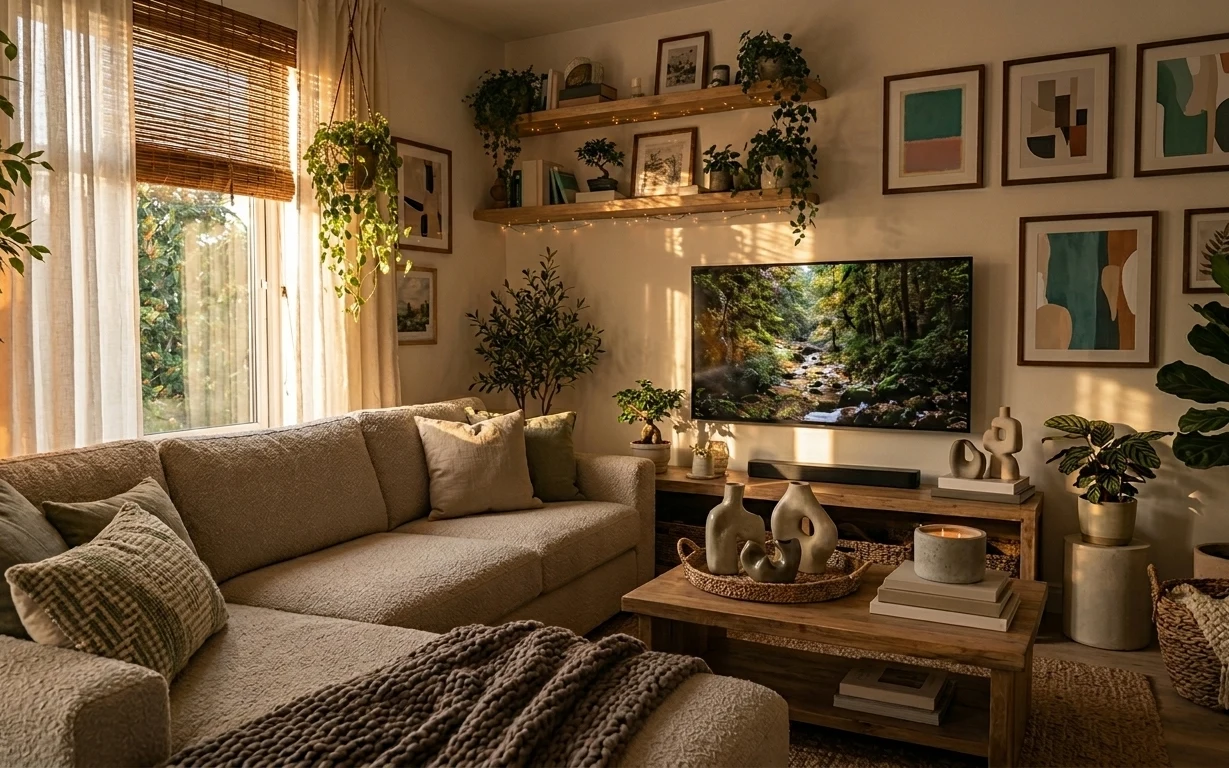
Under $400: boho sofa lounge refresh with 7 move-ready swaps
Warm, plant-stacked boho style for a sofa lounge—built from seven move-ready swaps for under $400. The biggest lift comes from a grounding …