- Best for
- earthy-neutrals renters
- Cost
- about $545
- Difficulty
- easy (mostly swap-in decor)
- Time
- 2–4 hours for styling
Why olive-and-tan renter styling is the living room of 2026
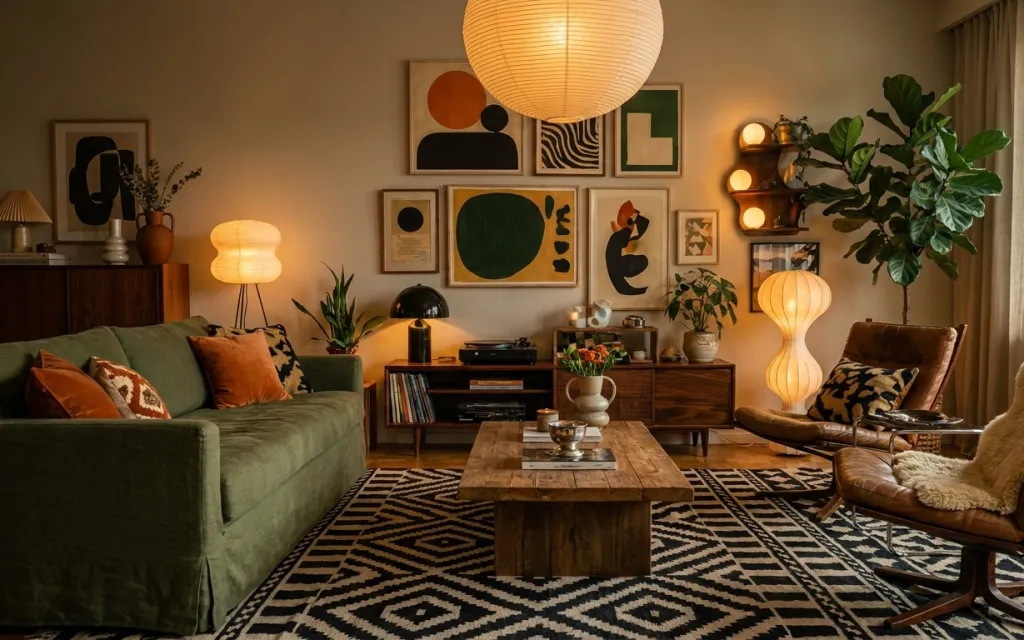
The vibe here isn’t “one big statement,” it’s a stack of small ones: a bold black-and-cream rug, warm lamp light, and earthy textures like wood and wool. You can see that mix on the green sofa plus the leopard-and-geometric pillows, then it softens again with the tan throw draped over the lounge chair. A wall of framed abstract art adds contrast, and the plant brings in that living, slightly wild energy. For renters, the best part is that these layers are replaceable at move-out.
I used to overthink wall styling and chase perfect symmetry—until I realized the room only feels balanced because the colors repeat (olive, tan, black) in different materials. When I first tried to copy this kind of setup, I kept my lamp light too “cool,” and everything felt flat. Switching to warmer bulbs and placing the light sources at different heights made the whole room read like the photo, not like a showroom.
Layer 1 — patterned area rug (8x10 style) ($200) Grounds the sofa-and-chair layout
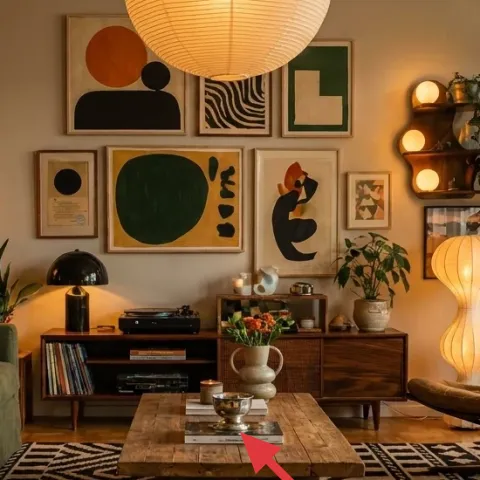
This is the anchor: a black-and-cream patterned rug that sits under the coffee table and reaches far enough to tie both seating pieces together. Because your rug is the darkest element in the center, it makes the green sofa and brown lounge chair look intentional instead of random. The trade-off is that bold patterns can feel “busy” if the rest of the palette isn’t limited—so keep accessories in olive, tan, and black, not bright colors. If your landlord won’t allow changes, a rug is also the easiest thing to roll up and take with you at move-out.
Pick a rug with enough contrast
Look for a high-contrast pattern (dark lines on a light base) so it can hold its own under warm lamp light.
Layer 2 — geometric throw pillow cover ($30) Adds the mid-pattern texture
The geometric pillow cover (the one with the crisp shapes) is how the room gets energy without adding another furniture silhouette. Placed on the green sofa, it repeats the rug’s graphic language while staying flatter and lighter than the leopard pillow. I like choosing one pillow that’s more structured (geometry) and one that’s more organic (animal print) because they balance each other visually. The downside is that too many patterns can fight—so keep the rest of the sofa pillows to two patterns max, and let the rug do the heavy graphic work.
Why it works with the green sofa
The black-and-cream palette in the pillow mirrors the rug, which makes the olive fabric read richer instead of dull.
Layer 3 — plug-in table lamp with beige shade ($60) Brings warm light near the seating
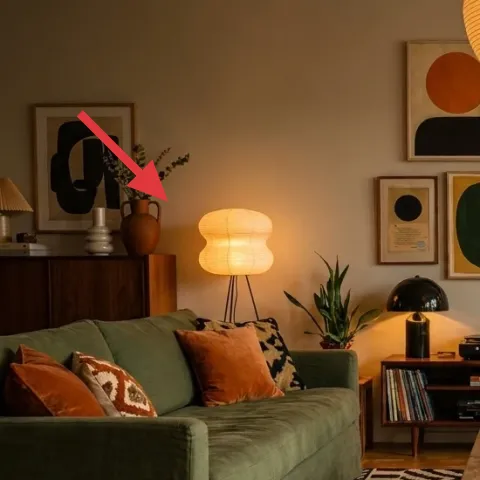
That plug-in table lamp with a beige shade is doing more than lighting—it’s adding a soft, paper-lantern-like warmth that flatters wood and wool textures. In the photo it sits on the left sideboard area, so it also helps balance the darker corners created by the sofa and the rug pattern. A key decision here is to choose a warm-toned shade and let the light hit from the side, not from directly overhead. The trade-off: lamps mean you’re managing light levels, so it’s worth grabbing a bulb with a warmer temperature (the “cozy” look comes from warmth, not brightness).
Use warm bulbs for the same mood
Warm, amber-toned lighting makes olive and tan feel cohesive instead of gray.
Layer 4 — decorative tray on coffee table ($35) Makes the center feel styled, not cluttered
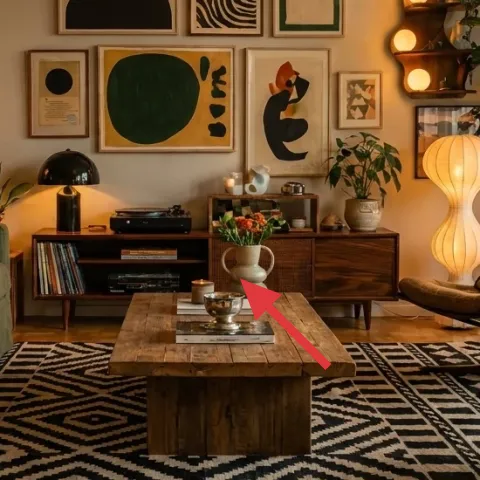
A wood-and-neutral decorative tray on the coffee table is what turns “objects” into a mini scene. In the hero photo, it holds small pieces together—so the tabletop looks deliberate even when the room is lived-in. This is also renter-friendly: no hardware, no permanent fixing, just set it down and swap it whenever the season changes. The alternative would be leaving items loose, but that usually reads as clutter against a patterned rug. With a tray, you accept a smaller surface “footprint” so everything stays within a neat border.
Keep tray colors close to the wood
If your tray reads too cool-toned (gray metal), it will fight the warm wood coffee table in the photo.
Layer 5 — unscented jar candle ($15) Adds a second layer of glow
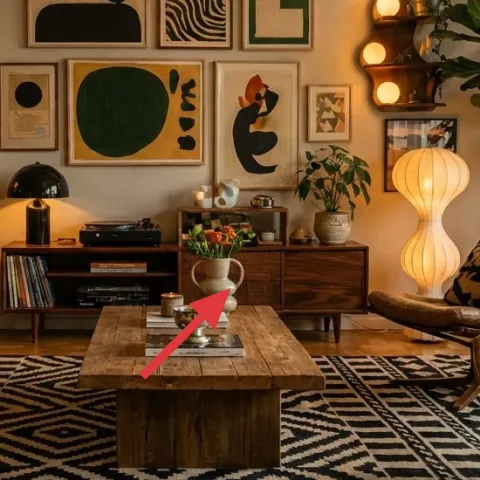
The small jar candle gives a concentrated warm point near the coffee table—right where your eyes land between the rug and the framed wall. It’s subtle compared to a lamp, but it changes the whole “after dark” feel, especially in a room that already has a patterned rug. I’m calling out unscented here because it keeps the styling cohesive (no new visual notes from a colored label) and avoids scent deciding the mood. The trade-off is practical: you’re lighting it, so you’ll have to blow it out before you leave the room or go to bed.
Don’t place it too close to plants or paper
Keep candles away from curtains, paper shades, and any leafy bits that could get knocked or heated.
Layer 6 — large leafy indoor plant ($35) Adds scale and “soft edges”
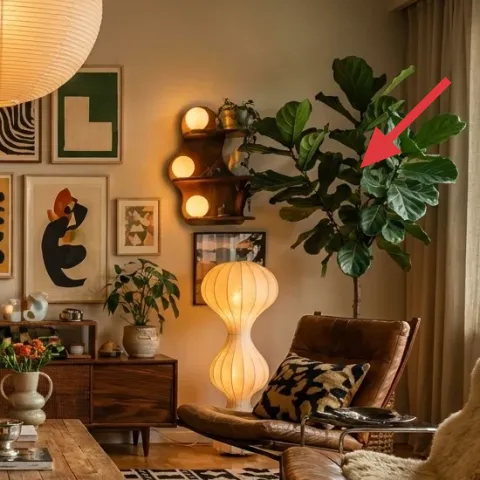
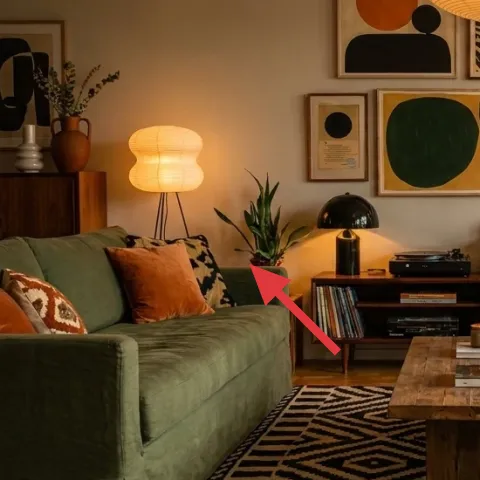
A large leafy plant near the window is the quickest way to keep this look from feeling too graphic. In the photo, the plant’s organic shapes soften the straight lines of the framed art and the structured rug pattern. It also adds a third texture tier—besides wood and fabric—so the room feels layered rather than flat. The trade-off is that plants are living things, so placement matters (light level) and leaves may drop during acclimation. Still, this is one of the easiest swap-out layers at move-out because you can pack the pot and bring the plant with you.
Use a plant for vertical balance
If your seating feels low compared to the art wall, a taller plant helps the eye travel upward.
Layer 7 — framed abstract art set (5–7 prints) ($180) Repeats olive, tan, and black across the wall
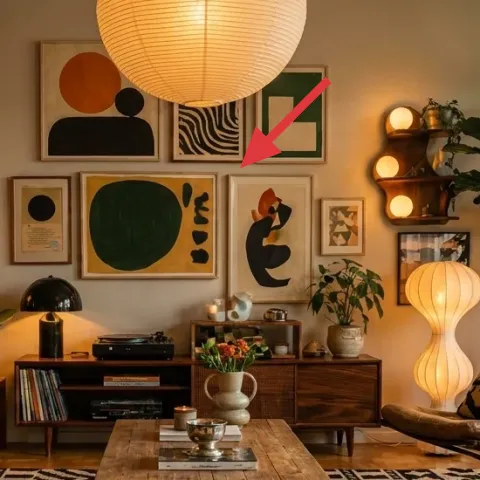
Those framed abstract prints are the color “glue” of the entire setup. You don’t need to match every drawing, but the palette matters: warm tan shapes, olive greens, and black marks that echo the rug lines. This layer also gives you height and texture without adding furniture bulk—so your sofa and chair keep their visual breathing room. The trade-off is that wall art is where renters sometimes hesitate because of drilling, but you can solve it with renter-safe hanging methods (and the frames themselves are easy to remove later). Aim for a cohesive set that still feels a little eclectic.
Make it instead of buying it
Make one framed abstract like the hero by painting a simple olive-and-tan composition on cardstock, so it blends with the gallery wall while staying budget-friendly.
Materials
- Small picture frame (8x10) — 1 — craft store — $40
- Cardstock (thick, for painting) — 2 sheets — office supply — $12
- Acrylic craft paint set — 1 small set — craft store — $8
- Disposable brushes/foam sponge — 1 pack — craft store — $10
- Painter’s tape — 1 roll — hardware store — $20
Steps
- Measure the frame opening and cut cardstock to fit behind the glass.
- Mask off 2–3 shapes with painter’s tape (circles, rectangles, or blobs).
- Paint the largest shape with olive tones first, using thin layers.
- Let the paint dry fully, then remove tape to reveal clean edges.
- Add black accents with a small brush (short lines, dots, or a single bold form).
- Fill small negative spaces with warm tan and then let the artwork dry completely before inserting.
Total DIY cost: $90 — saves about $90 over buying.
The cost, layer by layer
| Layer | Item | Cost |
|---|---|---|
| 1 | Patterned area rug (5×7) | $200 |
| 2 | Geometric throw pillow cover | $30 |
| 3 | Plug-in table lamp with beige shade | $60 |
| 4 | Decorative tray for coffee table | $35 |
| 5 | Jar candle | $15 |
| 6 | Large leafy indoor plant (4–6 ft) | $35 |
| 7 | Framed abstract art set (5–7 prints) | $180 |
| Total | $545 | |
If you want a cheaper version, simplify the wall: do one large framed print instead of a multi-print set, and choose a solid-color throw pillow cover with only one patterned accent. Keep the rug and the plug-in lamp, since those two create most of the look.
What worked, what didn't (across the whole room)
This room works because the palette repeats (olive, tan, black) across rug, textiles, and art, while lighting adds warmth at multiple heights. The biggest success is how the coffee table stays “styled” with a tray, candle, and a few objects instead of random clutter. The only thing that can go wrong is adding too many patterns at once.
What worked
- The patterned rug keeps the olive sofa and brown chair from feeling like separate zones.
- Warm plug-in lighting makes the room read cozy in the same way as the photo.
- The tray on the coffee table creates structure for small items and prevents visual mess.
- Framed abstract art brings color repetition that ties the wall to the rug.
- A large leafy plant softens straight lines from furniture and frames.
- The geometric pillow adds crisp contrast without adding another large texture.
What didn't
- Trying to match every print exactly can make the wall feel overbuilt instead of curated.
- Using cool-toned bulbs makes olive look flat and gray next to tan wood.
- Adding more than two patterned pillows competes with the rug’s graphic intensity.
- Skipping a tray on the coffee table makes small objects look scattered.
What we'd skip if we did it again
Skip replacing anything large and permanent—this look is all about layers you can pack away: rugs, pillows, lamps, tray styling, plants, and frames. If the landlord won’t let you change anything, that’s actually the point. Keep your money on the items that read clearly in the photo and leave landlord-fixed elements untouched.
Skip buying a second patterned throw unless you can repeat the exact palette (black, tan, olive). Patterns look “intentional” only when there’s a limit. If the rug is already bold, let one pillow add geometry and keep the rest more solid or texture-based.
Skip wall hanging methods that require drilling or anchors. The framed-art look can still happen with renter-safe hanging systems, and you’ll be happier at move-out when the wall is still intact.
Frequently asked
How long does it take to pull this living room together?
Plan on about 2–4 hours for the main swap-in layers: rug placement, pillow styling, and setting up lamps. Framing or hanging wall art can add another hour depending on how quickly you finalize the arrangement. The plant may take a little longer the first day since you’ll want to position it for the light source in the room.
What if my rental has a different room size or layout?
If your living room is smaller, use the same palette but reduce the number of frames—try fewer prints in one cluster. If it’s larger, keep the rug big enough to sit under the coffee table and front legs of seating, and add one taller plant for vertical balance. The goal is repeating color and texture, not matching every exact proportion.
Is this renter-safe if I can’t drill into the wall?
Yes. The approach relies on removable decor: rugs, freestanding lamps, pillows, plants, and framed art that can be hung with renter-safe methods. No painting walls, no drilling, and no permanent hardware. At move-out, the frames and art can come down quickly, leaving fewer “moving scars” than renovation-style changes.
Where should I shop for these kinds of items without overpaying?
Start with the rug and lighting from retailers with lots of sizes (then use resale or discount sites for pillows and candles). For framed art, look for sets that already share a palette or make one DIY abstract on cardstock and frame it. Plants are often cheapest locally, especially during spring shipments.
What’s the biggest styling mistake people make with a look like this?
The most common mistake is adding too many patterns at once—especially when the rug is already graphic. Another frequent issue is letting lighting stay too cool, which makes tan and olive look less rich. Limit patterned pillows to two, keep the palette tight, and use warm light to unify everything.
Can I get this vibe without a large leafy plant?
If you can’t do a taller plant, use a smaller one but repeat the “leafy softness” in another way—like a textured throw with natural fibers or a vase with dried stems. Still, aim for at least one organic shape so the room doesn’t feel only geometric. A plant is the easiest way to add that softness without adding clutter.
More in Living Room
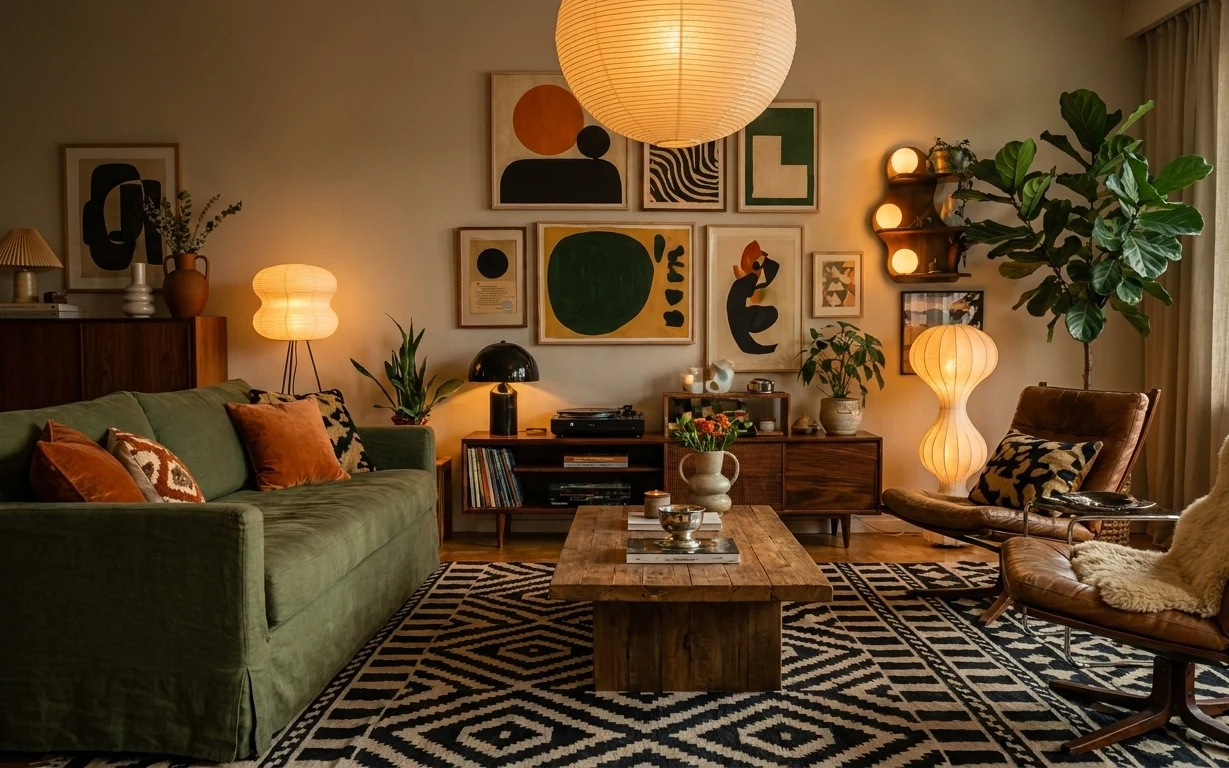
Under $600: olive-and-tan living room refresh with 7 renter swaps
A renter-friendly living room refresh inspired by olive-and-tan styling: a bold patterned rug, warm lamps, a tray-and-candle coffee table m…
Under $400: boho sofa lounge refresh with 7 move-ready swaps
Warm, plant-stacked boho style for a sofa lounge—built from seven move-ready swaps for under $400. The biggest lift comes from a grounding …
Under $800: warm beige living room refresh with 7 layers
A warm beige-and-gray living room refresh you can finish in a weekend. This $800 plan uses 7 visible upgrades—rug, curtains, coffee table s…