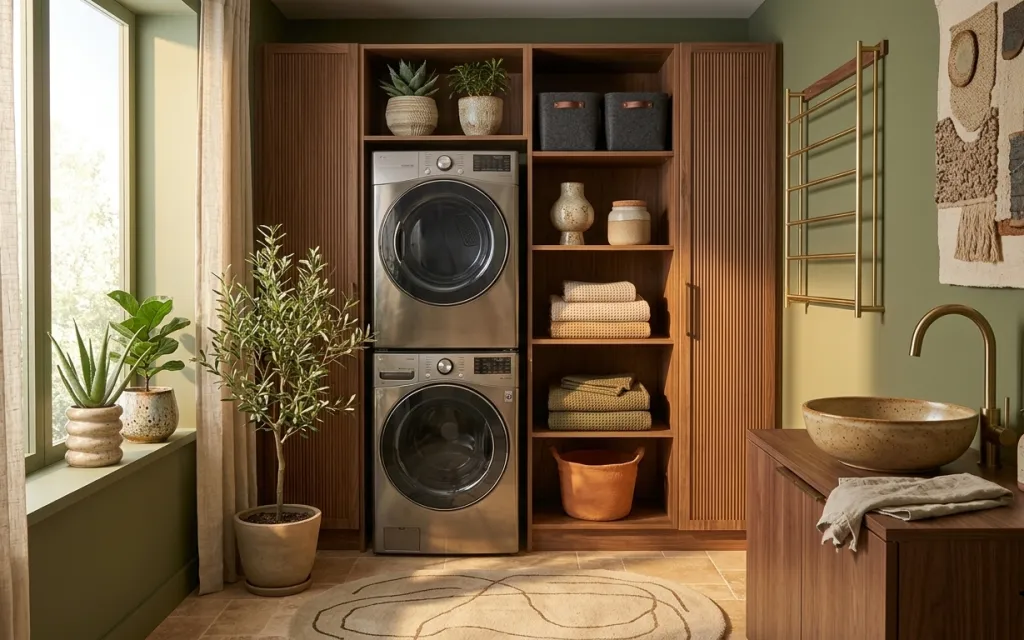
- Best for
- calmer laundry-and-bath organization
- Cost
- about $580
- Difficulty
- Easy–Moderate
- Time
- 1 weekend
Why sage-green wood-and-tile palette is the laundry bathroom nook of 2026
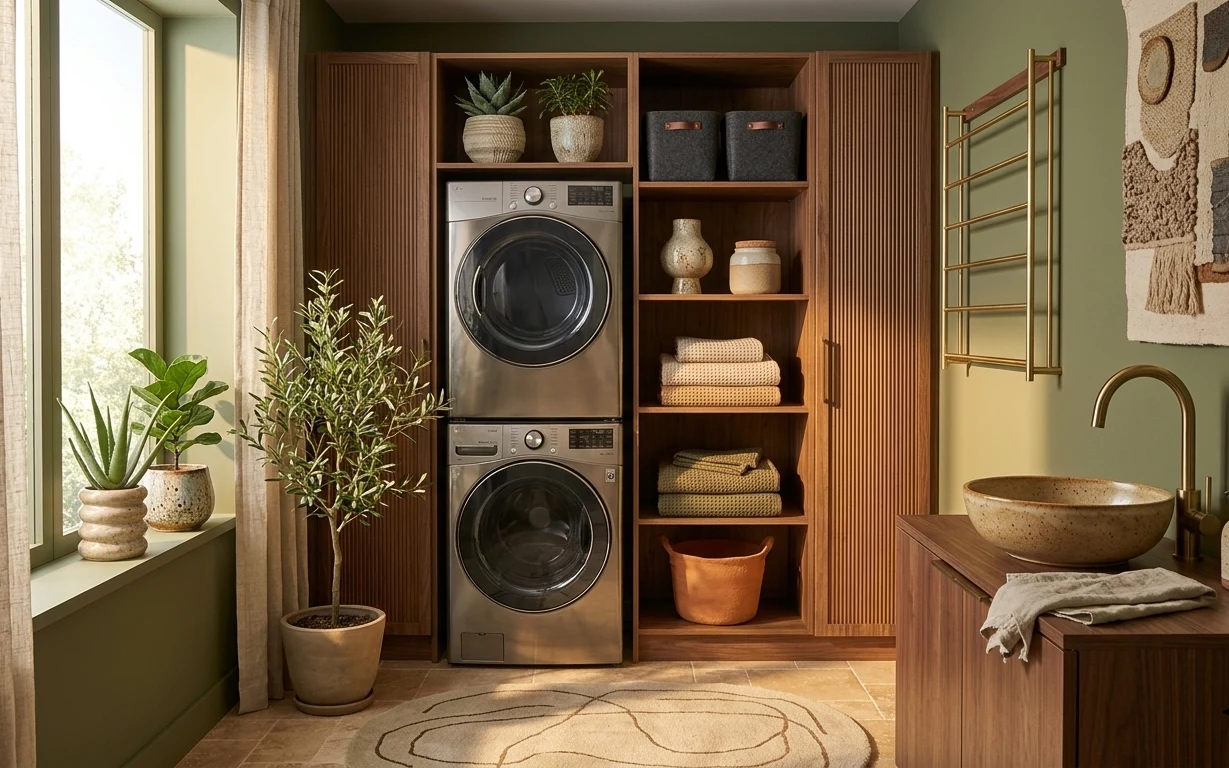
The easiest way to make a laundry bathroom nook feel less utilitarian is to borrow from the playbook of bright, airy rooms: keep the hard surfaces tidy (tile + wood), then add softness where your eyes land first—underfoot and at the window. In this setup, the warm wood cabinet fronts, cream-toned textiles, and the beige-brown earth of the ceramic pieces all sit next to sage green walls. That mix is doable on a weekend because you’re not chasing a full remodel; you’re choosing a few high-impact buys that match.
I used to overthink “perfect” storage and forget the obvious: towels and plants do the styling whether you mean them to or not. The mistake I caught myself making in my first redo was buying a towel rack that looked right, then leaving it empty for weeks. This time, I’m choosing the rack first, then building a repeatable routine around what actually gets used daily. The result reads intentional, not fussy.
Layer 1 — bath mat area rug ($150) defines the zone with warmer underfoot texture
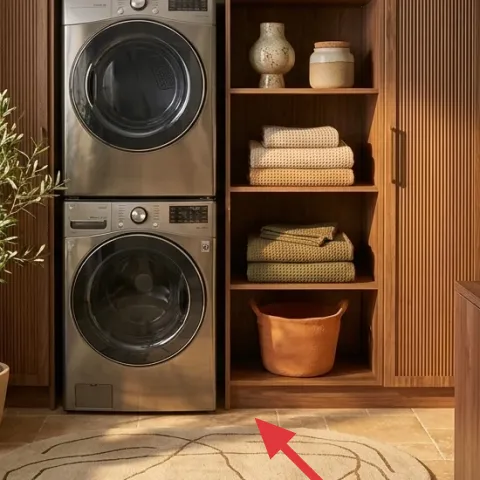
A bath mat area rug sits right where you’ll step from tile, and the one here has that gentle beige pattern that doesn’t fight the warm wood cabinets or the sage walls. A lot of people skip the rug because laundry rooms “need function,” but the truth is function improves when your feet aren’t constantly hitting cold tile. I’d go for a rug shape and tone that’s close to neutral—this style hides small laundry-day messes and still looks good folded into the overall palette. Trade-off: a patterned mat needs a quick shake or vacuum weekly to stay crisp-looking.
Go slightly bigger than you think
Let the rug extend a bit beyond the washer-and-dryer footprint so the room reads as one organized zone.
Layer 2 — curtains ($80) softens the window wall without reducing light
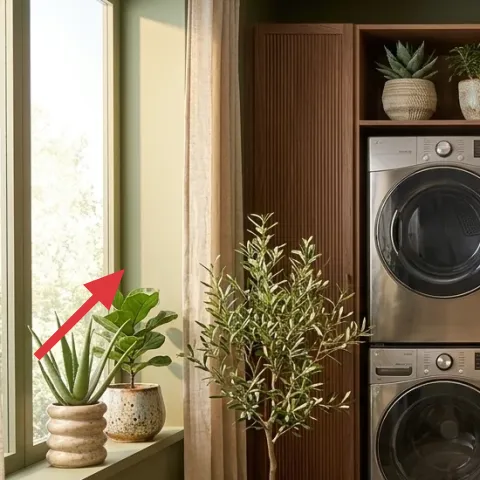
These curtains frame the window and soften the straight lines of tile and cabinet doors. In a nook like this, curtains do more than privacy—they make the space feel “finished” when laundry storage can otherwise look industrial. The beige color reads warm against the sage green and the wood cabinet, and the fabric weight looks substantial enough to drape instead of puff. If you’re choosing between sheer and heavier panels, pick heavier for texture; the trade-off is slightly less bright glare, but you gain a calmer, more styled look.
Measure for height, not just width
Hang curtains close to the ceiling line so the window feels taller and the nook feels less cramped.
Layer 3 — ladder-style towel rack ($160) turns towels into vertical storage
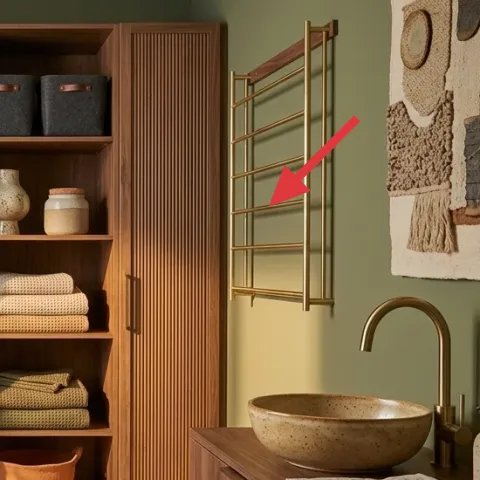
The ladder-style towel rack is the quickest way to add both function and structure: it holds a hand towel on an upper rung and gives you a place for everyday linens without crowding the countertop. Because it’s vertical, it also visually lifts the room, which matters when the washer and dryer are already stacked and blocky. This finish pairs with warm wood and the hardware tones on the vanity, so you don’t have to chase a perfect match. Trade-off: go with a rack that’s stable—wobbly hardware feels cheap fast.
Don’t rely on the countertop for “extra” towels
In a laundry bathroom nook, countertop clutter makes the whole room feel busier, even if it’s clean.
Layer 4 — potted plants ($40) adds a living layer between shelves and tile
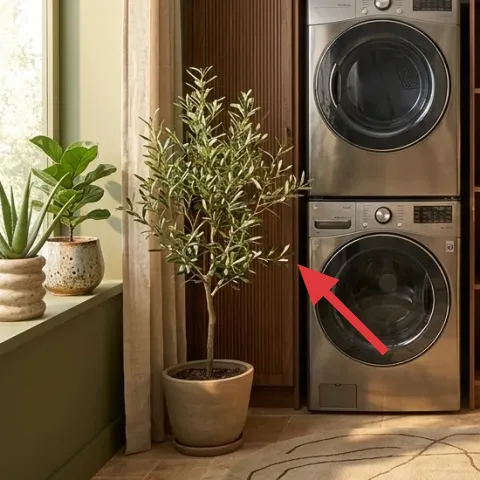
Potted plants break up the hard surfaces—tile, metal, and wood cabinetry—by adding organic shapes and a slightly softer green note. In this hero, the plants sit on the window ledge and near the floor, which is smart because you’re using vertical space already “dead” for storage. Choose plants that can handle bathroom humidity and bright window light; the leaves in the photo read sturdy, not delicate. Trade-off: plants ask for a routine—rotate the pots and wipe leaves occasionally so they keep looking polished rather than neglected.
Group by pot texture
Mix matte and speckled ceramics so the plants don’t all blend into one green blob.
Layer 5 — sage green wall paint ($70) gives the whole nook its calm, neutral backbone
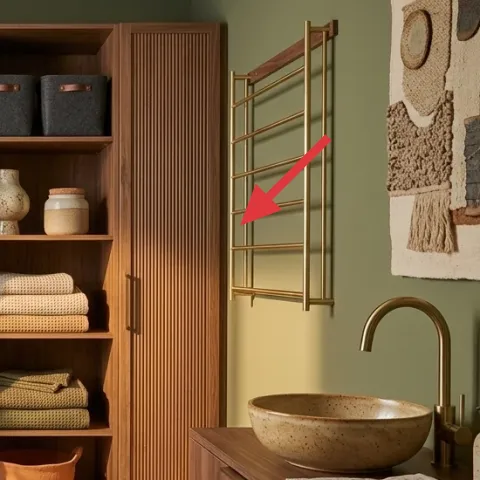
The sage green wall color is doing heavy lifting here. It ties together the warm wood cabinet, the cream-beige textiles, and the tile floor so the room feels cohesive instead of like separate “laundry” and “bath” areas. Paint is also one of the few changes that affects every single item afterward—rug, curtains, towels, even the ceramic pieces look more intentional once the backdrop is right. The trade-off is prep time: cutting in clean lines around window trim and cabinet edges takes patience, but it’s weekend-realistic.
Pick a sage that doesn’t read gray
If it leans too cool on test swatches, warm up with beige textiles like the curtain and towel tones shown.
Layer 6 — orange storage bin ($50) keeps shelf-stored linens from looking chaotic
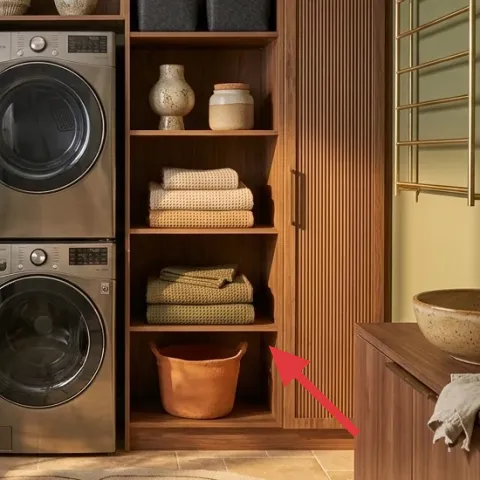
The orange storage bin is a practical visual organizer tucked inside the open shelving. Open shelves can look “messy” even when everything is folded, so the bin adds structure: one container shape, one color note, and a clear spot for small items. The warm orange works with the wood cabinetry and the earthy ceramics, so it doesn’t feel like a random pop. Trade-off: a bin like this has to be wiped down occasionally to prevent laundry-day dust and lint from dulling it.
Use one bin per category
Keep the bin for items of the same size—small linens or extras—so it doesn’t become a catch-all.
Layer 7 — decorative ceramic vases ($30) adds the final “styled” cue without cluttering counters
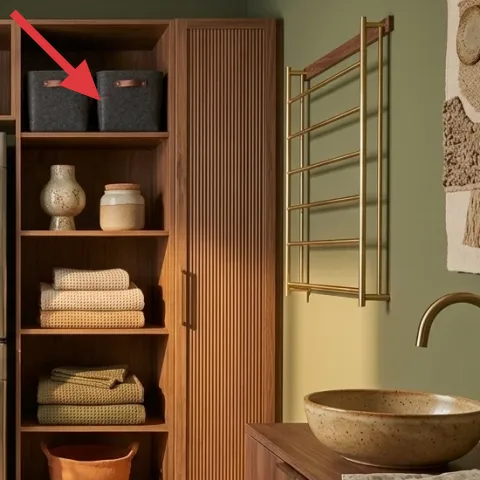
Decorative ceramic vases on the shelving and window ledge keep the nook feeling like a room, not a storage closet. The creamy, speckled look in the photo echoes the rug tones and softens the shiny metal of the washer and dryer. This is the kind of styling you can do once and then maintain by swapping in what’s already around—fresh stems, dried branches, or a simple refillable jar. Trade-off: ceramics can feel fussy if you over-collect; keep it to a small cluster so the shelves stay readable.
Match the ceramics to your plant pots
When pot and vase textures feel related, the whole shelf reads calmer.
The cost, layer by layer
| Layer | Item | Cost |
|---|---|---|
| 1 | Bath mat area rug | $150 |
| 2 | Curtains (84") | $80 |
| 3 | Ladder-style towel rack | $160 |
| 4 | Potted plant (pot + plant) | $40 |
| 5 | Sage green wall paint (1 gallon) | $70 |
| 6 | Orange storage bin | $50 |
| 7 | Decorative ceramic vases | $30 |
| Total | $580 | |
Cheaper variant: swap the rug for a smaller neutral bath mat, choose basic off-white curtains, and use one plant instead of two. You’ll still get the vertical towel storage, the warmer ceramic accents, and the same sage backdrop—just with less “styling layers” on top.
What worked, what didn't (across the whole room)
This nook feels more put-together because the changes hit the three places you look first: the floor zone, the window edge, and the vertical towel storage. Plants and ceramics then finish the story without cluttering the countertop. The trade-off is that open shelving means the bins and folds have to stay tidy, or the room reads messy quickly.
What worked
- The bath mat area rug warms up the tile and makes the stacked washer-and-dryer area feel intentional.
- Curtains soften the window wall and add texture that matches the ceramic tones.
- The ladder-style towel rack keeps hand towels off the countertop while adding vertical order.
- Potted plants introduce organic shapes so the room doesn’t feel like only wood and machine surfaces.
- Sage green wall paint links laundry and bath elements into one calm palette.
- The orange storage bin provides structure inside open shelving so linens stay visually contained.
What didn't
- If the rug is too small, your eye tracks the tile boundaries and the nook looks unfinished.
- If curtains hang too low, the window feels shorter and the shelving looks heavier.
- A towel rack that’s undersized leaves the ladder rungs empty, which makes the space feel staged but unused.
- Open shelves without bins show every folded edge, so small items can look cluttered fast.
- Too much plant variety creates visual noise against the sage wall, especially near the window.
What we'd skip if we did it again
Skip matching “set” thinking for linens and ceramics. In this nook, the most convincing look comes from mixing textures—ceramic speckle, curtain drape, and folded towel stacks—rather than buying one coordinated bundle that can look themed instead of lived-in.
Skip going too bright on wall color. If sage green feels too bold in a small bathroom, test a quieter green first; the goal is to support the wood-and-tile base, not compete with it.
Skip leaving open shelving “empty but pretty.” A bin or container that keeps small items in one place matters more than another decorative object, because it preserves the clean visual lines that make the whole nook feel calm.
Frequently asked
How long does a refresh like this usually take?
Most of the work can land in one weekend if the purchases are ready before day one. Plan on about a half-day for curtains (measuring and hanging), 1–2 hours for placing the rug and plants, and a couple of hours for towel rack placement and styling shelves. Painting, if needed, is the swing factor; it’s easiest when you can let coats dry without rushing.
If I rent, what parts are realistically renter-friendly?
Curtains and rugs are always renter-safe, and plants are basically the lowest-risk change you can make. For towel storage, choose a ladder-style rack that uses existing placement options or ask a landlord about drilling only if needed. If you can’t paint, lean into the sage look by repeating tones through towels, ceramics, and a rug with warm beige patterns.
What if my laundry bathroom nook is smaller than this one?
Go smaller on the rug first, then protect the vertical space. Keep curtain panels tall and choose a ladder-style towel rack that doesn’t jut into walkways. On open shelving, use one bin and one color, not multiple container styles, so everything stays visually contained. Plants can work in smaller nooks—just limit the number and prioritize one window-ledge pot.
What if my nook is bigger and feels too bare?
Add a second “supporting” layer: either an extra plant pot or an additional towel/linen bin inside the shelving. For a bigger footprint, a slightly larger rug can help the washer-and-dryer zone read as a distinct area. Keep the ceramic accents together in a tight cluster so the styling looks intentional, not spread out.
Where should I shop for these items if I want warm wood + sage to look cohesive?
For curtains and rugs, focus on neutral-beige tones with textured weave. For the ladder-style towel rack, look for finishes that echo your faucet and hardware, then keep the rack styling minimal (one folded towel plus a hand towel). Ceramics and plant pots are easiest to match when you shop by texture—speckled stoneware reads well with warm wood.
Biggest mistake people make in laundry bathroom nooks?
Treating open shelving like a decorative surface instead of an organizational one. Without a bin or consistent folding method, the shelf becomes visually busy, even if everything is clean. Another common miss is skipping the rug—tile plus stacked appliances can feel cold and heavy until you add a soft underfoot layer and a window textile.
More in Bathroom
Under $600: laundry bathroom nook refresh with 7 layers
A laundry bathroom nook can look intentional without a full renovation. Here are 7 weekend-friendly updates—rug, curtains, towel storage, p…
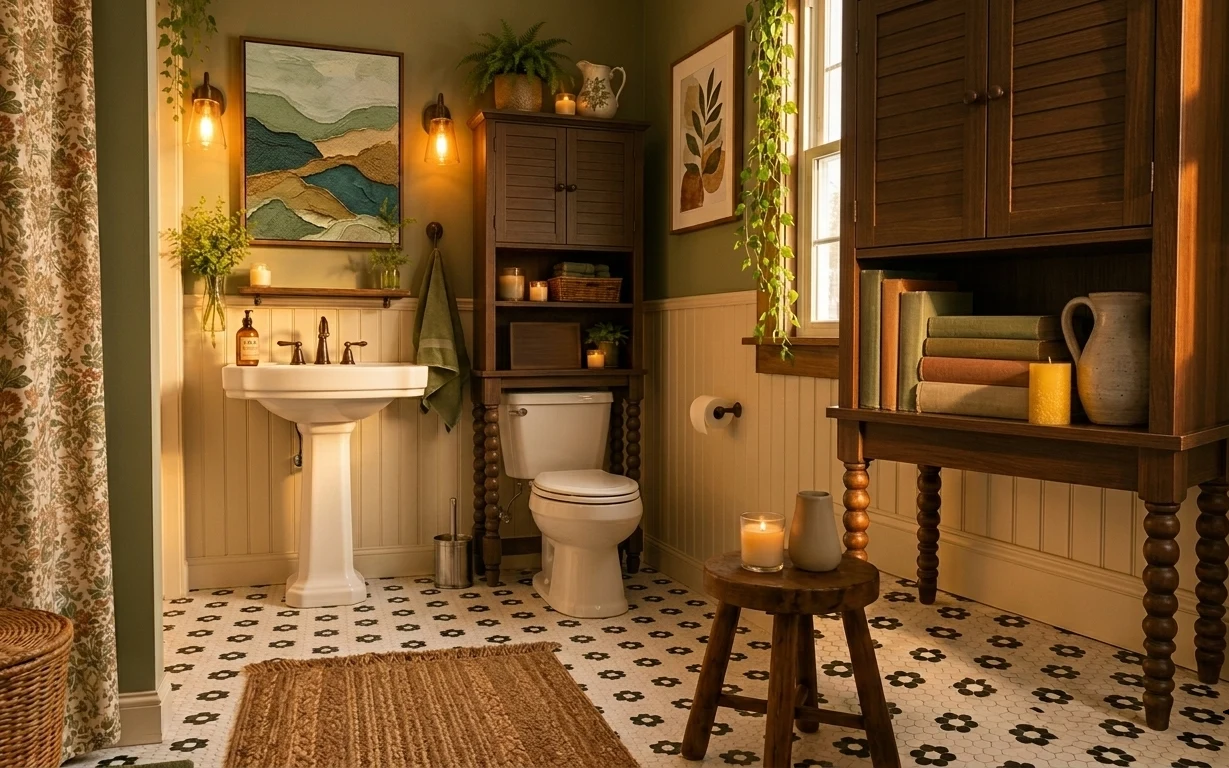
Under $400: renter-friendly vanity corner refresh with warm candles
A warm, olive-and-wood vanity corner makeover that you can do as a renter for under $400. This look uses a patterned bath rug, layered fram…
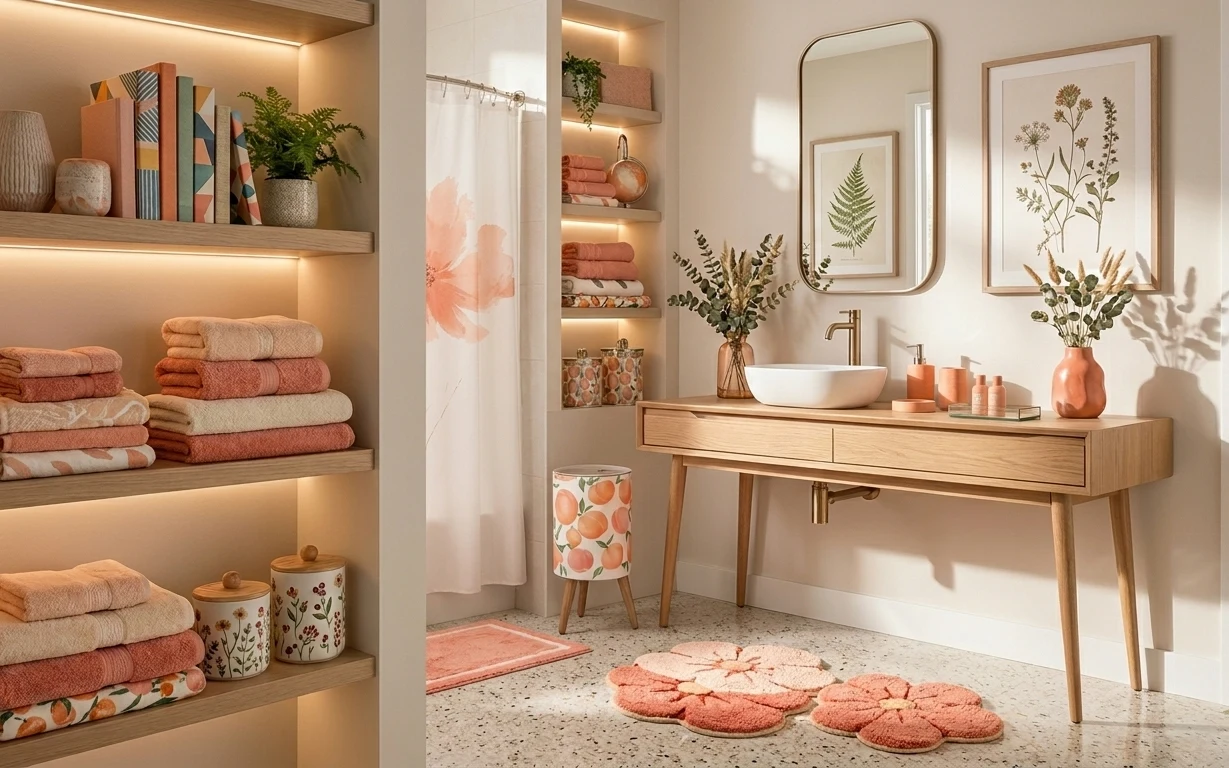
Under $400: make a renter-friendly vanity counter nook
A soft boho vanity counter nook for renters—built from bath mats, a shower curtain, framed botanical art, and countertop styling. This look…