- Best for
- Shared housing renters who need pack-flat style
- Cost
- Under $600 total ($593) for 7 layers
- Difficulty
- Easy DIY where needed; mostly swap-and-style
- Time
- About a weekend (6–8 hours)
Why green tufted seating is the living room of 2026
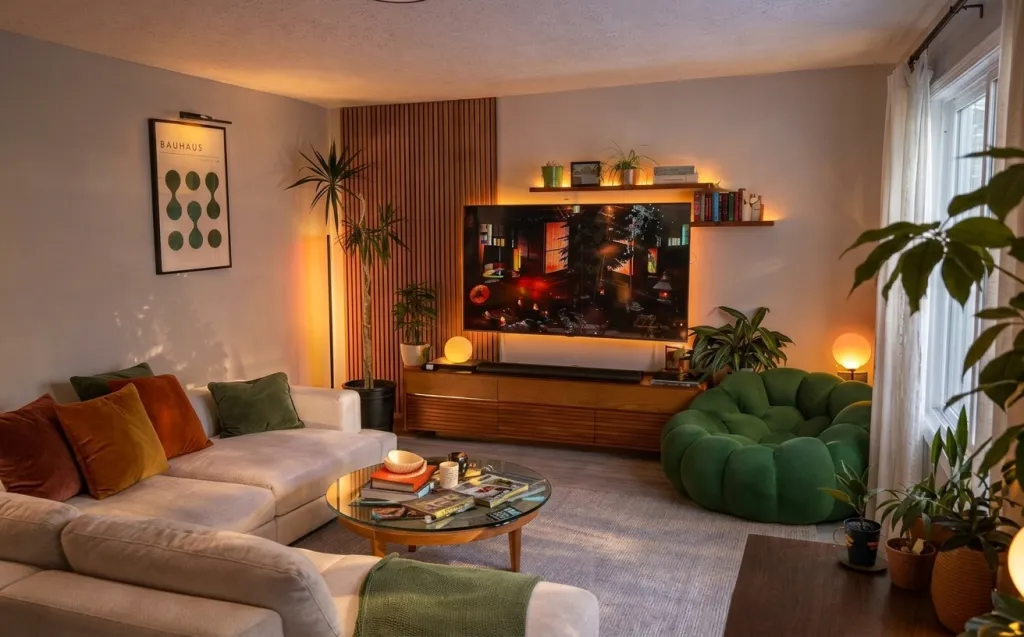
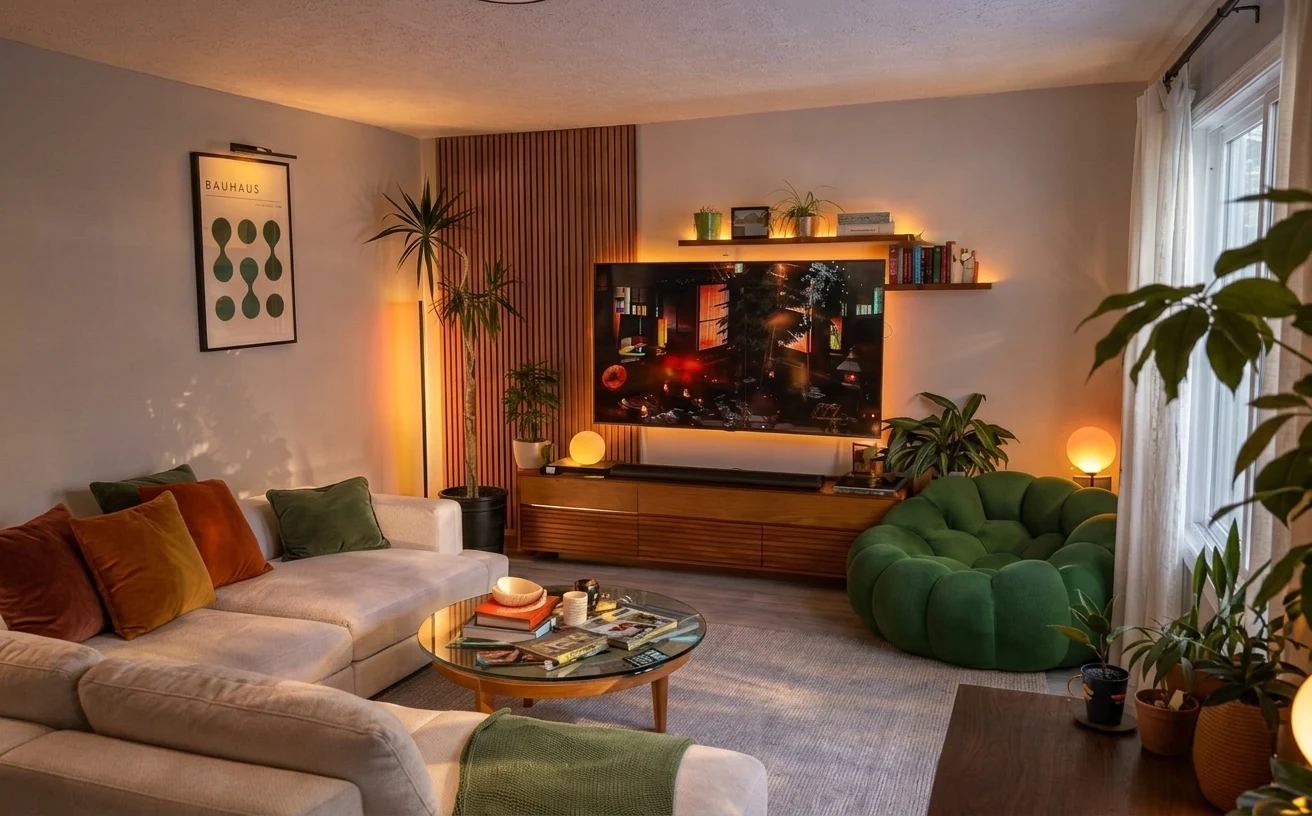
Some rooms “read” like a mood board. This one reads like a plan: green tufted seating, warm wood around the TV wall, and a glowing, cozy lighting setup that feels straight out of a mid-century showroom. The trend I keep seeing in 2026 is texture-first decorating—velvet, woven fibers, and glass reflections instead of relying on bold wall color. Between the tufting, the woven rug, the wood console, and the glossy coffee-table top, you get depth without doing anything permanent. I’ve learned (the expensive way) that shared housing rewards the stuff you can disassemble fast: when you move, your style shouldn’t become a donation pile. With a total of $593, this refresh is achievable for students and roommates—especially because the biggest pieces are still “moveable furniture,” not fixes.
I tried to recreate this exact balance once by buying only matching items—same shape, same color, same vibe—and it looked flat the minute the lights went off. What changed my mind was adding contrast on purpose: a strong color (that green), then neutral softness (the rug + pillows), and finally a graphic “anchor” on the wall (the Bauhaus print). I also stopped trying to hide the TV wall; instead, I treated it like the room’s gallery. The result is a look that stays coherent even when you’re rearranging for roommates, guests, or a new lease. This is also why the pack-flat approach works here: you can keep your layers in rotation without needing tools or wall changes.
Layer 1 — Green tufted sofa ($250) Deep-pile circle tufting that photographs warm
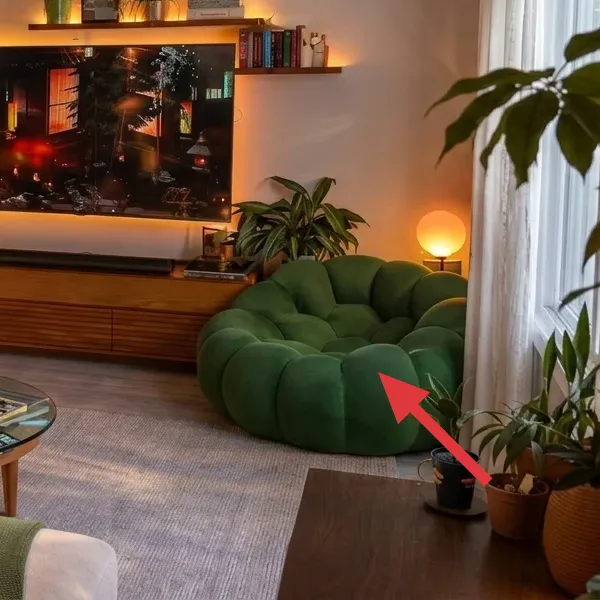
This green tufted sofa is the room’s color anchor—rounded, plush, and covered in deep-pile upholstery with repeating circle-like tufting. It sits on the right side as a statement shape next to the TV wall, so it reads even from across the room. The upholstery looks dense rather than slippery, which helps the room feel cushioned instead of “decor-only.”
Yes, the obvious alternative is to buy a neutral sofa and add color with accessories. But neutrals don’t give you this kind of instant geometry, and they can make a shared living room feel like a waiting room. I’d choose the sofa color here because it sets the tone before you even style. The trade-off is that strong color shows wear sooner, so you’ll want to be consistent with spot-cleaning and protect it with a blanket during parties.
Build around shape, not just color
Choose one bold silhouette (like this tufted rounded sofa) and let everything else—rug, art, and pillows—support it in calmer tones.
Layer 2 — TV + wood media console ($130) TV stays the focal point; the console is packable furniture
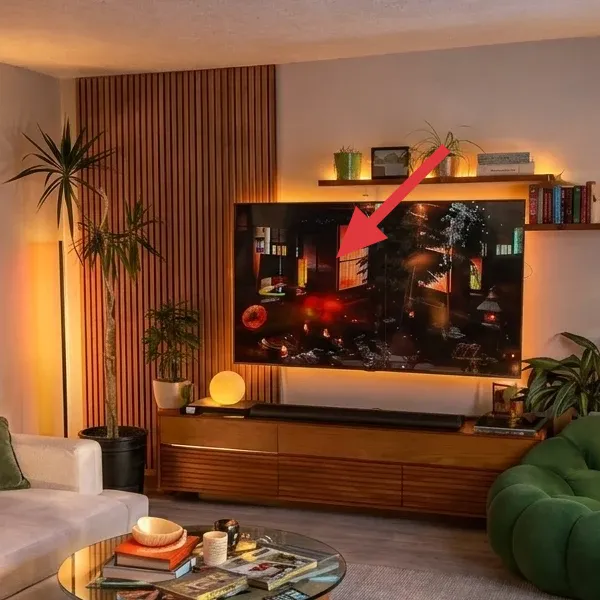
The TV is centered above a low wood media console, with a warm, slatted backdrop that gives the whole wall a “designed” feel. The console’s wood surface adds softness against the screen, and it creates a natural place for stacked books and small decor objects. This is the visual spine of the room: even if you change pillows or plants later, the setup keeps the layout grounded.
Most people would try to replace the wall look with something permanent—paint, shelves, or built-ins. For shared housing, that’s exactly the trap. I’d rather keep your refresh focused on moveable furniture like a console you can unplug and pack. The trade-off is that TV-wall styling takes a little curation: you’ll need to keep the tabletop from turning into a random catchall.
Think “focal point styling,” not wall fixing
As long as your TV + console are moveable, you can keep the same layout even when you move out—then swap small props later.
Layer 3 — Orange pillow cover ($18) Dyed-to-match terracotta pop for the couch
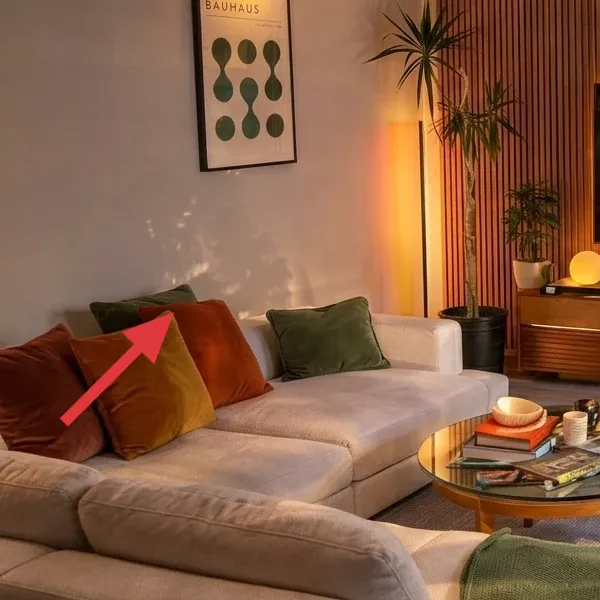
This layer is the orange pillow cover sitting on the left sectional—warm, saturated, and high-contrast against the sofa’s lighter upholstery. It’s a small object, but it matters because it’s one of the only “face-forward” colors on the seating side. The cover reads as plush fabric (not glossy), so it softens the room when combined with the rug texture underneath.
I’d skip buying a whole new pillow set because it’s too easy to overspend—and because your taste will keep shifting during grad school or your early career years. Instead, pick one hero color and dye one cover to match it. The trade-off is that dye is a real process, so you’ll want to commit to good prep and follow the dye instructions carefully so you don’t end up with uneven patches.
Make it instead of buying it
Dye a plain white cotton pillow cover orange so it lands in the same warm terracotta lane as the hero pillow, without buying a matching set.
Materials
- White cotton pillow cover, 18x18 in — 1 — Target — $9
- All-purpose fabric dye (orange) — 1 box — Walmart — $7
- Kosher salt — 1 small box — Walmart — $2
Steps
- Pre-wash the pillow cover with hot water to remove any sizing or finishes, then let it dry fully.
- Dissolve the dye according to the box directions, then stir in the salt so the color can bond evenly to the cotton.
- Submerge the cover and stir continuously for the time listed on the dye instructions, keeping the fabric moving to avoid blotches.
- Rinse under cool water until the runoff runs mostly clear.
- Wash once with a small amount of detergent (or as directed), then air-dry or tumble on low heat.
- Insert your pillow form and fluff until the cover looks uniform, then place it back on the sectional.
Total DIY cost: ~$18 — saves about $7 versus buying an orange cover at full price.
Layer 4 — Round glass coffee table ($60) Clear top keeps the room feeling light
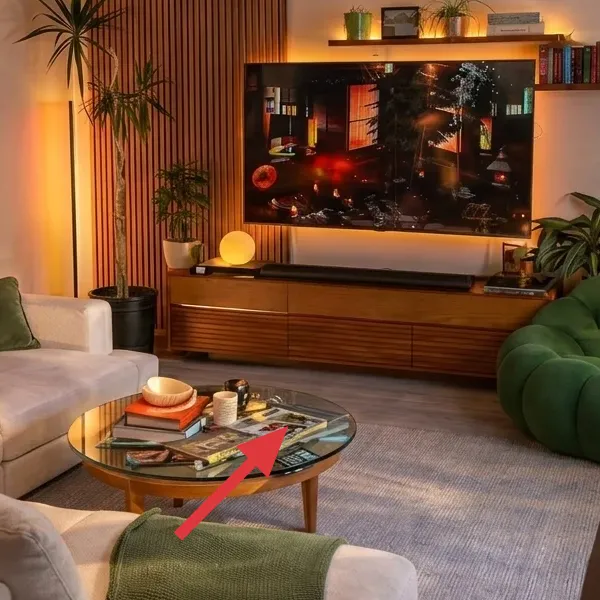
This round coffee table has a glass tabletop that reflects the warm light in the room, plus a compact base that doesn’t visually block the seating area. Because it’s circular, it softens the straight lines of the TV wall and the rug edge. The surface is practical too—magazines and small everyday items can sit on top without feeling cluttered.
I’d choose glass-topped shapes over bulkier wood coffee tables in shared living rooms because they visually “thin out” the center of the room. That matters when you’re working around the reality that roommates will move things for movie nights, study sessions, and random dinner guests. The trade-off is that glass shows fingerprints, so you’ll want to wipe it quickly before guests come over.
Style for “one sweep,” not five resets
Use a tray or a small stack of magazines so your coffee-table styling can be moved and re-centered in under a minute.
Layer 5 — Warm gray woven area rug ($80) Textured softness that hides everyday chaos
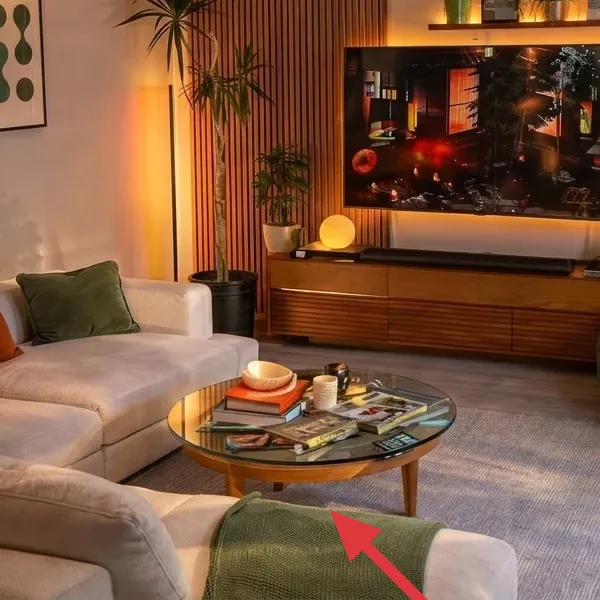
The rug sits under the seating and coffee table, in a warm gray tone with visible texture that reads less like “flat carpet” and more like a woven surface. It creates a shared floor layer, tying the green seating, the lighter sofa side, and the wood console together. The rug’s texture also helps soften the room acoustically—perfect for roommates living on top of each other’s schedules.
Sure, the alternative is a sleek low-texture rug that’s easier to shake out. But sleek rugs tend to show wear patterns faster, and they can make a living room feel cold when the lighting is warm. Here, you’re accepting that the rug has texture (and needs a normal vacuum routine) in exchange for a room that looks lived-in on purpose.
Don’t rely on a rug that’s too small
If you under-size it, the furniture won’t feel connected and the room can look visually cramped—even when it’s physically spacious.
Layer 6 — Plant cluster in terracotta ($30) Tall greens + small pots for instant “lived-in” depth
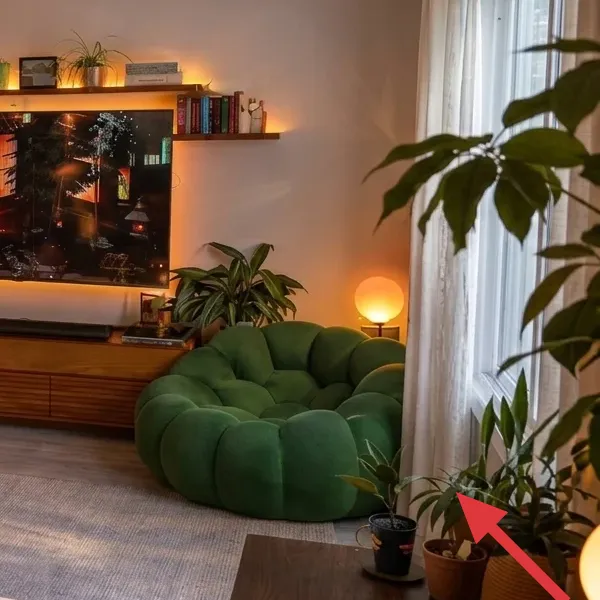
On the right side and near the floor, you’ve got potted plants: at least one taller, upright plant with narrow leaves and smaller pots grouped nearby. The pots add a warm terracotta tone that plays nicely with the wood console and the orange pillow. Visually, the plants also break up the heavy shapes—the rounded sofa and the TV wall—by adding vertical lines and organic edges.
I’d pick plants like this over a single statement planter because shared living rooms benefit from “layered greenery.” You can swap one plant if it struggles, and you still keep a full look. The trade-off is maintenance: plants need basic light and watering consistency, which is hard when roommates have different schedules. A cluster is forgiving because one less-happy plant doesn’t ruin the whole effect.
Choose plants you can move without drama
In a moving year, grab pots that lift easily and keep the root ball stable so you’re not repotting at the last minute.
Layer 7 — Framed Bauhaus print ($25) Black frame + green geometric shapes
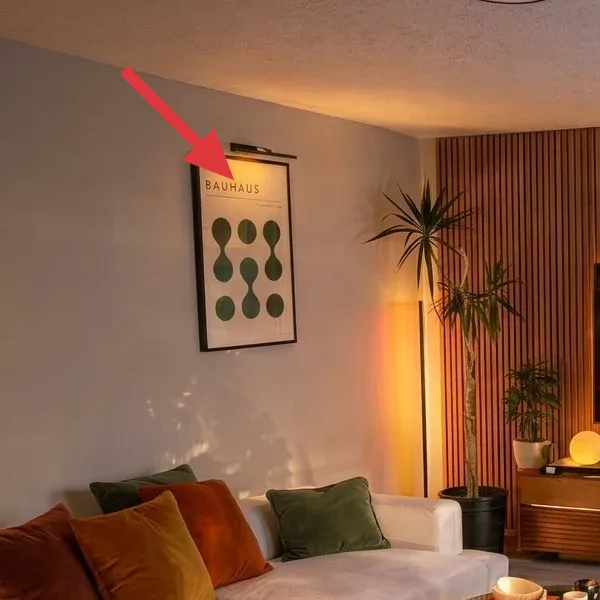
The Bauhaus poster on the left wall is a crisp, graphic moment—black frame, white background, and repeated green geometric circles. It’s the kind of print that makes the room feel intentional without asking for extra furniture. Because it’s framed and flat, it’s also one of the easiest “move with you” art layers in shared housing.
I’d pick one strong graphic print over a wall of tiny photos because it keeps the room from feeling busy when your coffee table and TV console are already doing work. The trade-off is that a bold print needs breathing room; don’t crowd it with other art the way you might in a dorm hallway. For renters, hang it with no-drill methods so you’re not negotiating with paint when you move.
Hang it with renter-safe strips
Use foam-core Command hooks/strips designed for plaster or textured walls so removal is cleaner than adhesive tape meant for smooth paint.
The cost, layer by layer
| Layer | Item | Cost |
|---|---|---|
| 1 | Thrifted green tufted sofa | $250 |
| 2 | Used TV + low wood media console | $130 |
| 3a | White cotton pillow cover, 18x18 in | $9 |
| 3b | All-purpose fabric dye (orange) | $7 |
| 3c | Kosher salt (for dye setting) | $2 |
| 4 | Round glass coffee table (used) | $60 |
| 5 | Warm gray woven area rug | $80 |
| 6a | Snake plant in a small pot | $20 |
| 6b | Terracotta pots (2) + saucers | $10 |
| 7a | Framed Bauhaus print | $17 |
| 7b | Foam-core Command Strips for framed art | $8 |
| Total | $593 | |
If you want a cheaper version, hunt for the rug in a smaller thrifted size (or a near-duplicate pattern) and keep it under $60, then move the saved dollars into a better sofa cover you can wash. You’ll still keep the same “big anchors + small accents” structure—just with a lighter floor layer.
What worked, what didn't (across the whole room)
The overall look works because it layers contrast: bold green seating, warm wood around the TV, and soft textiles that make the space feel livable. The biggest misses come from small maintenance issues—nothing you can’t handle, but worth planning for.
What worked
- The green tufted sofa reads as a sculptural centerpiece, so your room still feels “styled” even when you’re not adding much else.
- The glass coffee-table top keeps the center airy, which matters in shared housing where furniture rearranges constantly.
- The warm gray rug visually stitches the seating zone together, so the room looks coherent from both the couch and TV viewpoints.
- That Bauhaus print adds graphic structure, making the plants and upholstery feel more intentional instead of random.
- Plant height breaks up flat wall surfaces near the TV, helping the room avoid the “two blobs only” look.
- Warm lamp light around the TV makes the wood console and textiles look richer without changing anything permanent.
What didn't
- Glass on the coffee table shows fingerprints, so if you’re hosting, quick wipe-down before guests is non-negotiable.
- The bright orange pillow color is fun, but it also highlights lint—expect more frequent fabric checks than with neutrals.
- Plants can make the corners look crowded if you place them too close to the seating legs or rug edge.
- The TV wall styling can tip into clutter fast; stacked items on the console need a “limit rule.”
- If the rug is vacuumed too aggressively or with the wrong attachment, the texture can start looking slightly flattened.
What we'd skip if we did it again
Skip buying a full “matching set” of pillows and decor. In shared housing, your taste will evolve faster than your budget, and matching sets can look too coordinated once you add plants and a graphic print. Instead, pick one hero color (that terracotta/orange pillow lane) and let everything else support it with texture and tone.
Skip going cheap on the rug’s texture. A rug that’s too thin makes the whole seating area feel louder and harder—especially when you’re pairing velvet-like upholstery with glass surfaces. If you find a rug that looks similar but feels flatter in person, pass. Spend a little more on a woven texture that can handle daily life.
Skip hanging multiple small artworks at once. You already have a TV focal point, so the wall needs one strong graphic anchor rather than five competing moments. Keep it to a single framed print (or a small set you can pack as one unit), and you’ll keep the room feeling calm even when your console and coffee table have everyday clutter.
Frequently asked
How long does it take to get this look?
Most of the time is sourcing and positioning, not building. If you already have a few basics (frames, command strips, and pillow forms), plan for a weekend: one afternoon for furniture placement and rug alignment, and another for art hanging, pillow styling, and plant pot grouping. The DIY dyed pillow cover is usually the only “process” piece; if you follow the dye instructions closely, you’re looking at a few hours plus drying. If you’re moving soon, do the DIY first so you’re not scrambling when you’re packing.
What if I’m renting and can’t hang things on the wall?
You can still keep the same vibe. For framed art, use renter-safe hanging methods like foam-core Command strips made for your wall type; the goal is removable adhesive with minimal residue. If your landlord is extra strict, you can also lean the framed print upright on the console for a temporary “gallery moment” while you wait. Plants and textiles are the safest layers because they don’t ask permission—so prioritize the rug, pillows, and sofa styling if hanging isn’t allowed.
Can this work in a smaller or oddly shaped living room?
Yes, but you’ll need to be picky about scale in one place: the rug footprint. The room relies on the rug to stitch the seating area into a single zone, so if your rug is too small, everything starts to look disconnected. With a smaller room, choose a slightly narrower coffee table or ensure the table still allows comfortable walking paths. Keep the art single-anchor (one graphic print), and use plants as height, not bulk—one tall plant can do more than three wide ones.
Where would you shop differently in 2026?
I’d lean even harder into local thrifting and marketplace sourcing for the “anchor” furniture, because pricing shifts week to week. For the DIY pillow cover, craft stores and big-box retailers tend to carry consistent fabric dye formulas, so it’s easier to match the orange tone you’re aiming for. For rug and framed art, I’d prioritize in-person viewing for texture and color accuracy—photos don’t always show how warm gray and terracotta tones read under your specific light.
What’s the single biggest mistake people make with this kind of living room?
It’s treating the color palette like it’s only about color, not texture. If you pick a green statement but skip woven softness (like a textured rug and plush pillows), the room can look flat and a little harsh. The second mistake is adding too many small decorative items on the coffee table or TV console—when you pile everything up, the bold seating doesn’t feel intentional anymore. Start with one anchor (sofa or rug), then add only two or three supporting textures.
Can I wash and re-use the dyed pillow cover?
You can—just plan your routine around the dye instructions. After the dye is set and the cover is rinsed thoroughly, washing cold is usually the safest approach. Avoid soaking the cover for long periods at first, and don’t use bleach. If you’re worried about fading, dye a cover you’re okay re-dyeing later, and keep your inserts separate so you can swap covers without buying new pillow forms. That’s the shared-housing advantage: you can change the look without repainting or replacing fixed things.
What if I hate the green sofa once I move?
That’s the beauty of building a layered look around moveable furniture. If the green tufted sofa stops working for your next place, you can keep the rug, art, plants, and pillow palette while you replace only the sofa. In other words: your other layers should be neutral enough to survive the next version of you. The refresh works because the room doesn’t rely on permanent changes—everything here is designed to pack into boxes or roll into the next lease.
More in Living Room
Under $600 living room refresh: 7 renter-friendly layers
This under-$600 living room refresh (total: $593) leans on pack-flat, renter-safe layers: a green tufted sofa, a TV-and-console focal point…
A green living room refresh for under $700: sofa glow, plants & art
This green living room refresh shows how to build a layered, renter-friendly look for under $700—starting from the existing sofa, walnut me…