- Best for
- Bedrooms that need one weekend refresh
- Cost
- Under $700
- Difficulty
- Moderate DIY
- Time
- A weekend (about 5–8 hours)
Why this cream-and-olive bedroom corner is the move-friendly bedroom of 2026
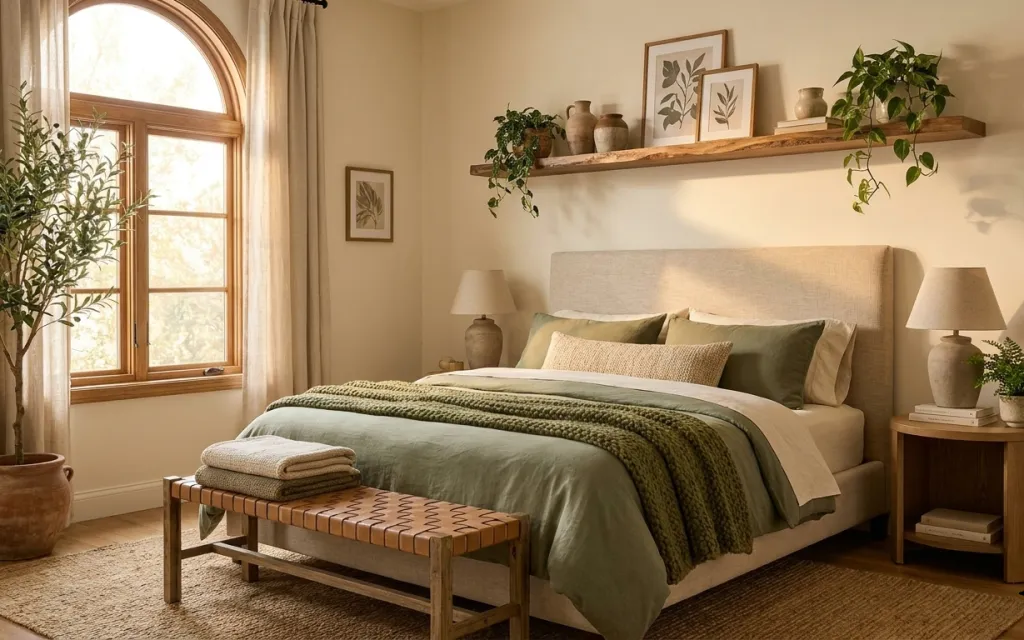
In this photo, the look starts with soft cream bedding, warm wood, and olive green accents—nothing feels precious, and everything reads intentional. You can see the textures doing the work: an area rug with subtle variation, curtain panels that break up the light, and a thick throw blanket folded at the foot of the bed. The framed botanical prints and the wood wall shelf add vertical structure, while the table lamp keeps the lighting warm after dark. For homeowners working weekends only, this recipe is achievable because each piece is a single, concrete swap.
The first time I tried to copy this kind of “calm but styled” bedroom, I over-bought matching décor—same shape, same finish, same height. It looked tidy for five minutes and then felt flat, like I was dressing a catalog instead of living there. What changed my approach was leaning into contrast: warm wood against off-white walls, and olive against cream. Once I added one shelf with plants and one framed botanical print, the room finally looked like it belonged to someone who actually has plants and laundry.
Layer 1 — Area rug ($200) grounds the whole bed zone
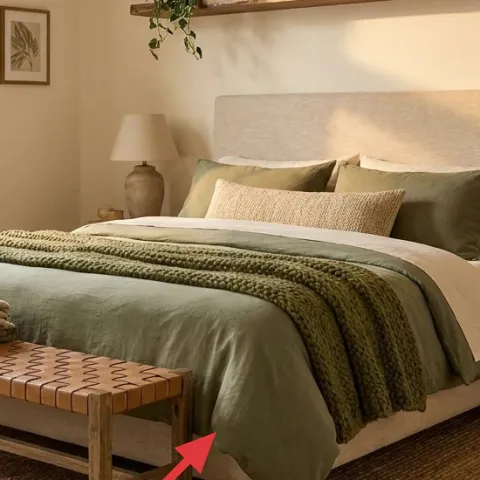
This area rug sits under the bed and extends past the wood bench, which is why it anchors the entire bedroom corner instead of floating the furniture. The key choice is texture and tone: go for a low-pile rug with warm neutrals (think oat, sand, or light tan) so the olive green bed layer reads softly, not loudly. The obvious alternative is a thin flatweave, but that makes the bed look like it’s levitating and shows more “hardwood truth.” I’d rather accept a thicker, slightly more varied weave that hides small scuffs and feels good on bare feet.
Let it reach past the bench
If the rug stops at the foot of the bed, the bench and linens look disconnected. Aim for the rug edge to tuck beyond the bench legs so everything feels composed.
Layer 2 — Curtain panels ($80) frames the arches with softer edges
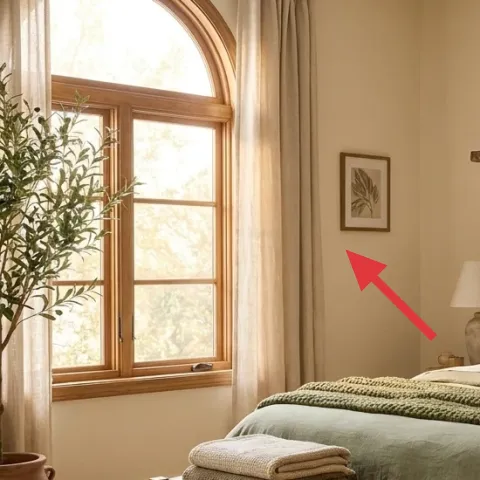
The curtain panels in the photo hang in front of the arched window, and that framing effect matters as much as the color. Choose cream curtain panels with a medium-weight drape so the daylight diffuses instead of bouncing straight back. The trade-off is that sheer-only curtains can wash out the room’s warm wood, while super-heavy blackout fabric can feel heavy in a light-filled bedroom corner. If you have to compromise, prioritize drape—length and softness read more “expensive” than a tiny palette shift.
Drape beats perfect matching
These curtains don’t have to match the bed linen exactly. A close cream-to-cream relationship keeps everything cohesive without making the room feel costume-like.
Layer 3 — Table lamp ($60) keeps the room warm at night
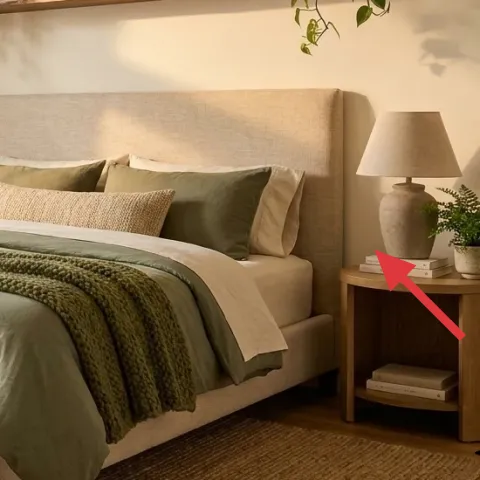
The table lamp with a beige shade sits on a wood nightstand, and that height positioning is what gives the bed-side area a finished glow. Pick a plug-in table lamp with a simple, tapered or softly rounded shade so the light lands on the pillows instead of blasting upward. The obvious alternative is relying only on overhead lighting, but that flattens the textures—rug weave, pillow slip surface, and the throw blanket’s knit pattern all disappear. A single lamp won’t make the room dim, but it will make it feel lived-in once evening hits.
Match the shade color to the bedding
A warm beige shade makes cream linens read richer and keeps olive from turning gray on nights with cooler light.
Layer 4 — Throw blanket ($60) adds the “tucked at the foot” texture
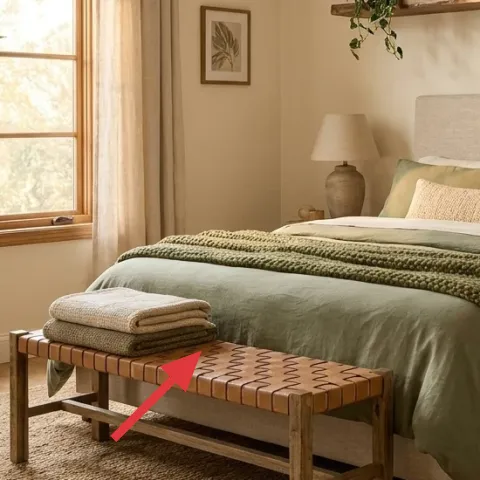
The throw blanket is folded and placed at the foot of the bed, which gives you an extra texture layer you can see immediately without buying more furniture. Look for a knit or woven throw in a cream tone that works with your pillows, plus one olive-friendly accent you can swap seasonally. The trade-off here is that thinner throws fold into a neat rectangle but don’t show much pattern. A chunkier knit reads better from across the room and makes the bench feel styled instead of purely functional.
Use the bench as your display surface
Even in a small bedroom corner, the bench gives a horizontal “landing” spot for a throw so styling doesn’t sprawl across the bed.
Layer 5 — Bed linens ($80) set the cream base before you add olive
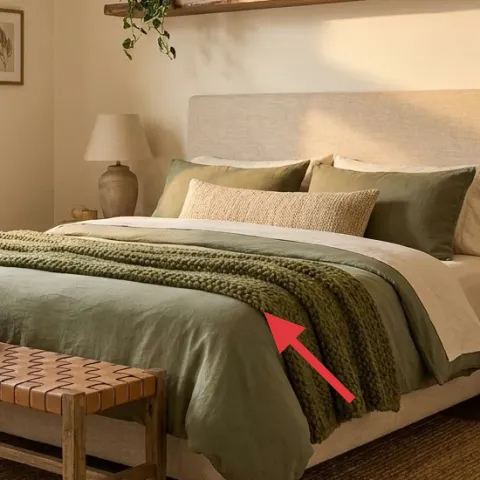
Bed linens in a light cream shade are the base layer that makes the olive green accent feel intentional rather than random. The photo reads clean because the linens keep the color family consistent: cream, olive, and warm wood. If you go too bright white, you risk making the room feel stark next to warm wood; if you go too gray, olive can look dull. The trade-off with linen-like textures is they show a bit more movement and wrinkling, but that’s exactly what keeps this style from looking stiff or hotel-only.
Don’t add too many different greens
When olive overlaps with multiple green shades, the room can look busy. Keep the palette to cream plus one olive direction.
Layer 6 — Wood wall shelf ($60) DIY paint to match the warm wood
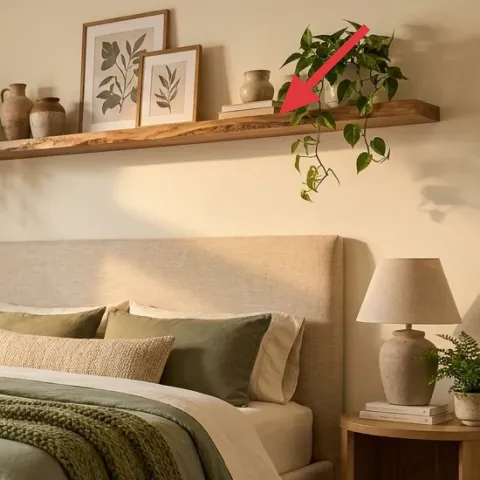
This wood wall shelf is doing real structural work: it creates a horizontal line above the headboard and gives you a place for plants and framed botanical prints. For the DIY version, build something simple with a single plank so the shelf looks intentional without turning into a carpentry project. The alternative is buying an already-finished shelf, but that often costs more and can mismatch the undertone of your wood nightstand. The trade-off with DIY is that you’ll spend a little time sanding and painting, but the result looks tailored to the room’s cream-and-wood palette.
Make it instead of buying it
Make a simple painted wood wall shelf so the plant-and-botanical styling matches the warm wood tones in the bedroom corner.
Materials
- Wood plank (4ft × 6in) — 1 — hardware store — $10
- Paint, 1 gallon (homeowner only) — 1 — home improvement store — $40
- Sandpaper (medium + fine) — 1 pack — hardware store — $8
- Wood stain-blocking primer (for better coverage) — 1 small can — hardware store — $12
Steps
- Measure the wall space where the shelf will sit, then mark shelf length on the plank.
- Cut the plank to size using a power saw.
- Sand the cut edges and faces starting medium, then finish with fine sandpaper.
- Wipe off dust with a dry cloth so paint adheres cleanly.
- Apply a thin primer coat and let it dry.
- Paint the first coat in the cream tone you already see in the room and let it dry.
- Lightly scuff-sand the surface, then remove dust.
- Apply a second paint coat and let it dry before styling with plants and framed art.
Total DIY cost: $70 — saves about -$10 over buying.
Layer 7 — Framed botanical print ($80) pulls the shelf styling upward
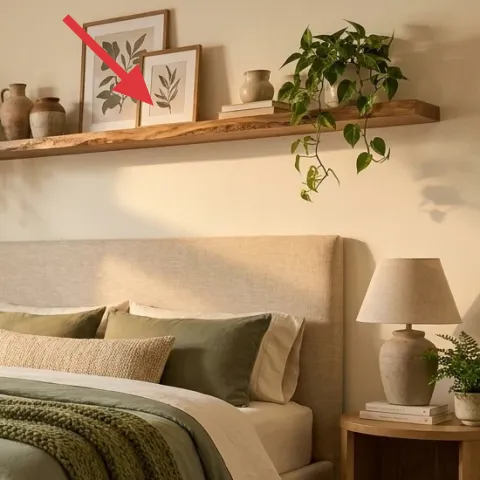
A single framed botanical print keeps the shelf from looking like a “catch-all” and gives your plant styling a clear focal point. Choose a frame finish that sits comfortably next to your warm wood nightstand, then keep the print content botanical so it reads cohesive with the potted leafy tree and the plants on the shelf. The alternative is adding multiple small prints, but that can compete with the arch window and the bed’s textures. One print is enough to create a vertical rhythm without overcrowding the visual field.
Center the print above the plants
Placing the framed botanical print at eye level for the shelf makes the arrangement feel intentional and stable.
The cost, layer by layer
| Layer | Item | Cost |
|---|---|---|
| 1 | Area rug 5×7 | $200 |
| 2 | Curtain panel pair (84") | $80 |
| 3 | Plug-in table lamp | $60 |
| 4 | Throw blanket | $60 |
| 5 | Sheet set (queen) | $80 |
| 6 | Wood wall shelf | $60 |
| 7 | Framed art print 16×20 | $80 |
| Total | $620 | |
If the budget needs to stay tight, swap the curtain panels for a single lighter panel pair and choose a slightly smaller rug size. The look stays cohesive as long as the cream base, warm wood, and olive accent stay in the same family.
What worked, what didn't (across the whole room)
The biggest win here is how the room’s soft layers—cream linens, a textured rug, and draped curtains—work together without fighting the warm wood. Plants plus a wood wall shelf give you “height interest” that the bed alone can’t provide, and the table lamp keeps the bedside area from feeling unfinished after dark. The framed botanical print adds structure so the shelf doesn’t read like random décor.
What worked
- The warm-toned area rug makes the bench and bed feel like one composed zone.
- Curtain panels soften the arch window and keep daylight from turning harsh.
- A beige table lamp shade flatters cream linens and keeps olive from looking dull.
- The folded throw blanket adds visible texture without adding more furniture.
- A wood wall shelf creates a natural place for plants and framed art above the bed.
- The framed botanical print anchors the shelf so the plants don’t feel like leftovers.
What didn't
- Multiple green shades can read messy next to olive, especially under daylight.
- Too-sheer curtains can make the room look flat because the drape doesn’t pool.
- Skipping a framed print on the shelf makes the styling feel accidental.
- A very thin rug under the bed can make textures disappear and highlights hardwood scuffs.
- Placing the lamp too low on the nightstand reduces the bedside glow.
What we'd skip if we did it again
Skip adding more furniture just to “fill space.” This bedroom corner works because the rug, bed linens, curtains, and one shelf create enough structure without new pieces.
Skip a second framed botanical print on the same shelf if the plants are already trailing. One framed print keeps the vertical rhythm clean and lets the foliage stay the focus.
Skip an all-matching color set for every accessory. Cream, warm wood, and olive should guide the palette, but different textures—rug weave, knit throw, and linen-like bedding—are what keep it interesting.
Frequently asked
How long does it take to redo a bedroom corner like this on a weekend?
A realistic weekend timeline is 5–8 hours total. The rug and linens are the fastest wins, while curtains take the most time if they need hanging. The wall shelf DIY is the time sink: measure, cut (if needed), sand, prime, paint, and dry. If you’re keeping plants where they are, styling is the final 30–60 minutes.
Can I do this refresh if I’m renting, or do I need to drill?
For renters, focus on items that are easy to remove: rug placement, bed linens, a plug-in table lamp, and curtain rods. For the shelf and framed art, use renter-friendly hardware such as anchors only where allowed, or skip wall-mounting and style plants on furniture surfaces. The overall palette will still work without the shelf as long as one framed botanical print stays near the bed.
What if my room is smaller or the bed takes up more wall space?
In a smaller bedroom corner, keep the visual anchors consistent but scale down the footprint: choose a slightly smaller rug and shorten curtain panels to fit your window proportions. Stick to one framed botanical print and fewer plants so the eye has a clear focal point. Use the bench or a single nightstand surface for the throw blanket so styling doesn’t crowd the bed.
Where should I shop for these pieces without blowing the budget?
Start with broad essentials—area rugs, curtain panels, and bed linens—at big-box retailers and online during home sales. For framed botanical prints, look for standard 16×20 sizes so the frame options stay consistent. Plug-in table lamps and shades are often best found at thrift stores or discount lighting sites, then matched to warm beige tones.
What’s the biggest mistake people make with bedroom corners like this?
The most common mistake is buying too many matching “sets” and not enough texture variation. If everything is the same finish and the same shade family, the room reads flat. Another frequent miss: curtains that don’t drape (either too short or too thin) and a rug that doesn’t extend past the bench. Aim for a warm cream base plus one olive accent.
Do I need two lamps, or can one work?
One lamp can absolutely work if it’s placed to create light over the pillow area. The second lamp mainly balances the bed visually and adds symmetry. If you choose one, keep the lamp shade color in the warm cream-to-beige range so it flatters the bed linens. If the room is dim, rely on a second lamp later rather than sacrificing the shelf and rug.
More in Bedroom
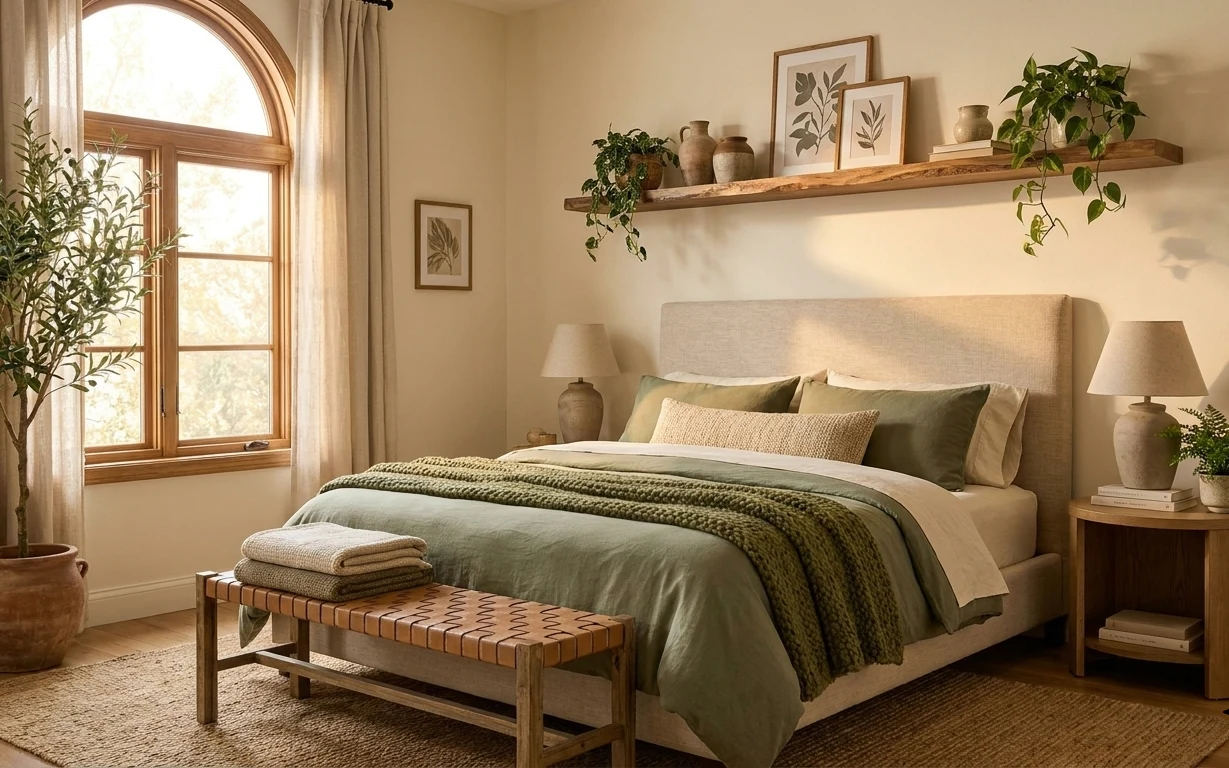
Under $700 bedroom corner: rug, curtains, shelf, and botanical art
A warm, earthy bedroom corner refresh you can build in one weekend under $700. Focus on an area rug, curtain panels, a simple table lamp, a…
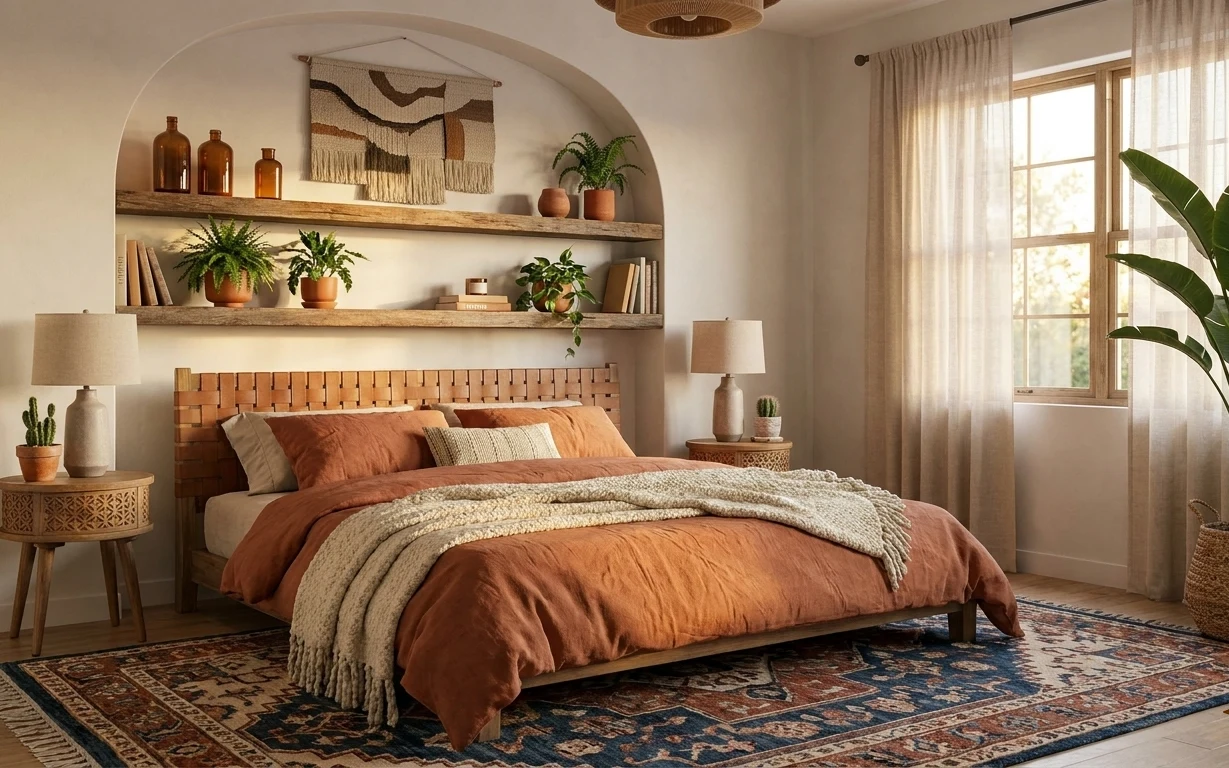
Under $400 Boho bedroom refresh: 7 move-friendly layers
A boho bedroom refresh you can pack up when the lease ends, built from 7 move-friendly layers. The total comes in under $400, with a patter…
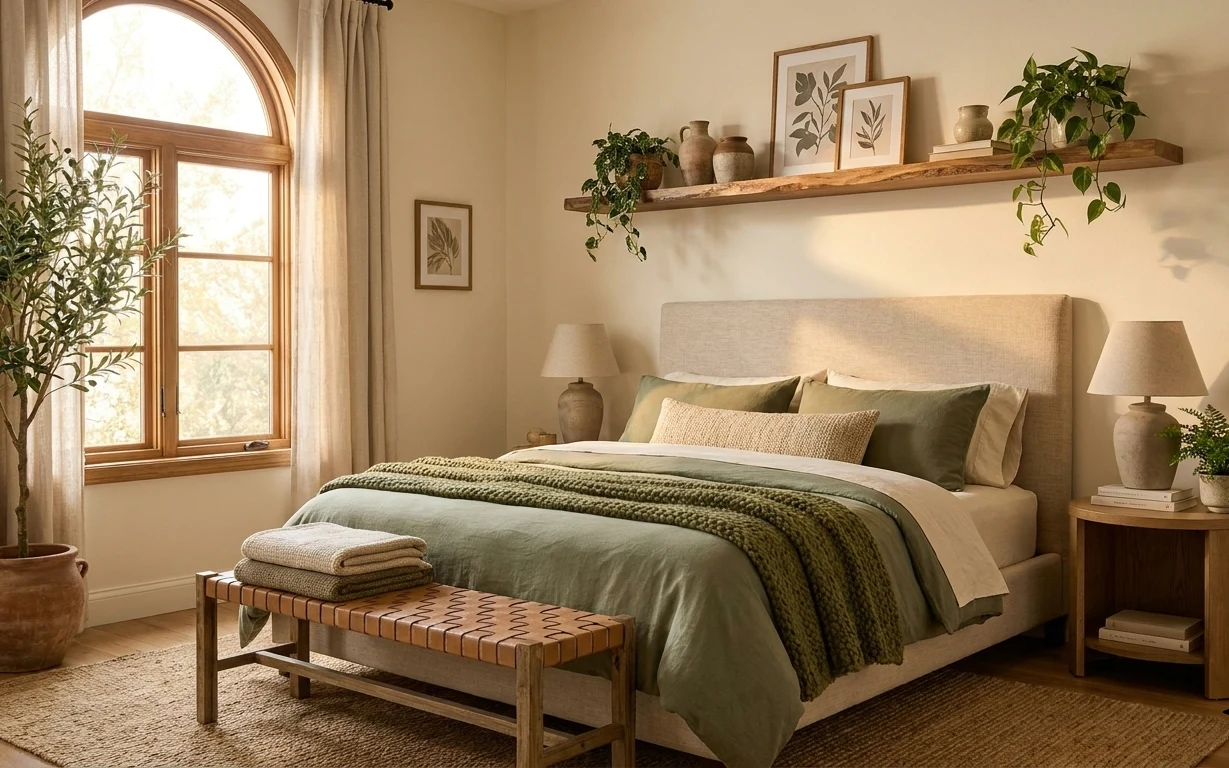
Under $800: a sage-and-cream bedroom refresh with one DIY
A sage-and-cream bedroom refresh you can finish on a weekend, using an area rug, curtain panels, layered textiles, and wall art. This plan …