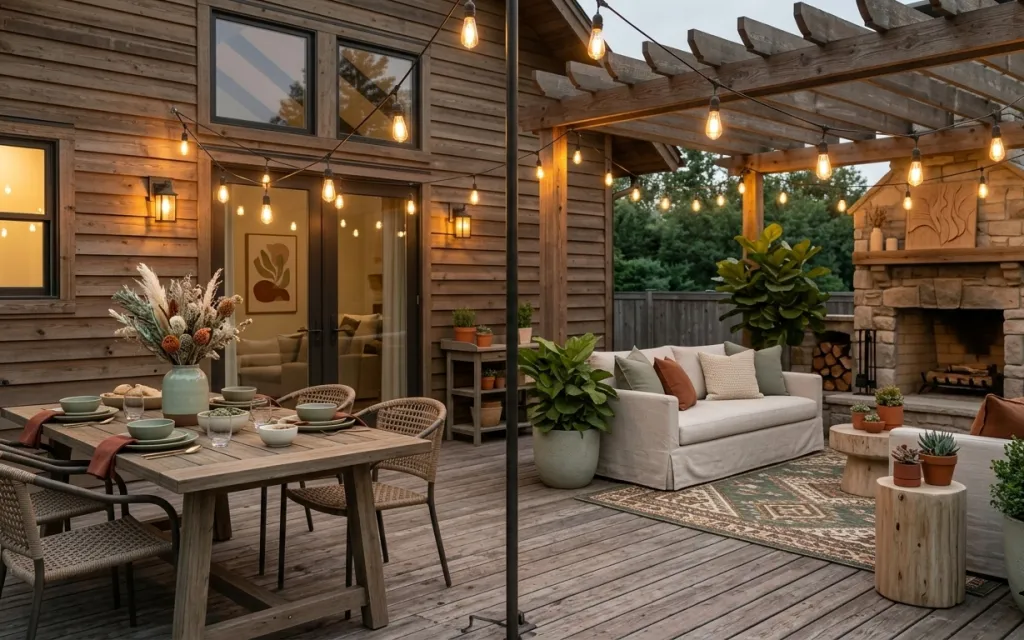
- Best for
- Weekend patio refresh
- Cost
- $620 total
- Time
- 4–6 hours + cure time
- Difficulty
- Confident DIY
Why this olive-and-warm-wood string-light setup is the patio seating area of 2026
If your porch already has good bones—wood deck flooring and shiplap-style walls—then the easiest way to make it feel finished is to add softness where your eyes land: underfoot with an outdoor area rug, around the seating with throw pillows, and overhead with string lights. In the photo, the textures do a lot of work: woven rug fibers, matte ceramic planters, and the warm glow reflecting off the wood. This is achievable for homeowners because you can pick the highest-impact options (like the rug and lighting) instead of chasing “small” details first.
I used to overthink outdoor decor and start with tiny accessories—new candles, a single pot, a random sign. It never looked wrong, exactly; it just didn’t look anchored. What changed my mind was learning how quickly a big rug and warm lighting make everything else read as intentional. Once the base is set, plants and art stop fighting for attention.
Layer 1 — area rug ($120) anchors the whole patio
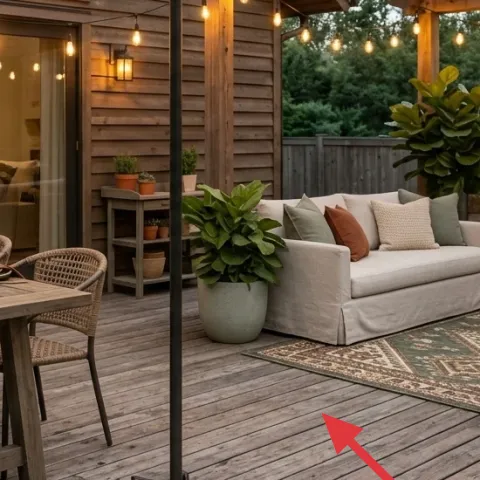
This outdoor area rug sits under the sofa and helps separate the seating zone from the rest of the wood deck flooring. It’s the piece that makes the space feel “planned” instead of just furnished, because it visually stretches the platform under your feet and pulls the colors together. The trade-off: a rug means a little extra care—shake debris and rinse spots before they set—so it’s worth choosing a rug you’d keep looking at, not one you’ll rush to replace. Compared with swapping only pillows or planters, the rug changes the room shape.
Choose rug colors that echo the wood
Picking tans, creams, and earthy reds that already exist in the deck tones keeps everything from looking like separate purchases.
Layer 2 — outdoor sofa ($250) adds the relaxed seating line
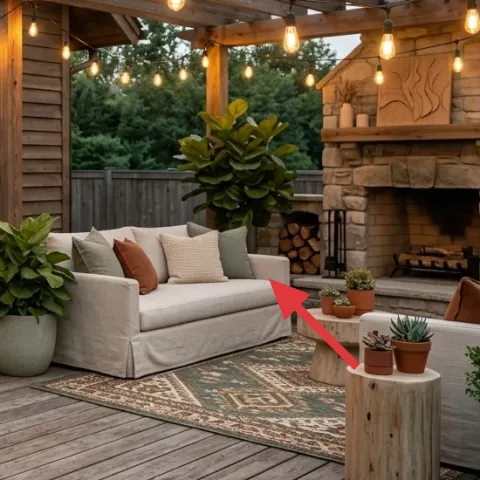
The outdoor sofa is the long, low anchor on the right side, and it reads cleanly against the lighter shiplap wall and the darker stone fireplace. Upholstery choice matters outdoors because fabric texture is what your eye registers first; here, the neutral cushions let the rug pattern and terracotta accents do the decorating. The easier alternative would be to buy a mismatched “statement” cover, but that often looks busy when the rug already has pattern. Keeping the sofa and pillows mostly in creams and greys buys you flexibility for plants, lantern tones, and seasonal swaps.
Let pillows carry the color, not the upholstery
Neutrals on the sofa make it simpler to adjust the palette with throw pillows and plant pots later.
Layer 3 — string lights ($30) soften the overhead space
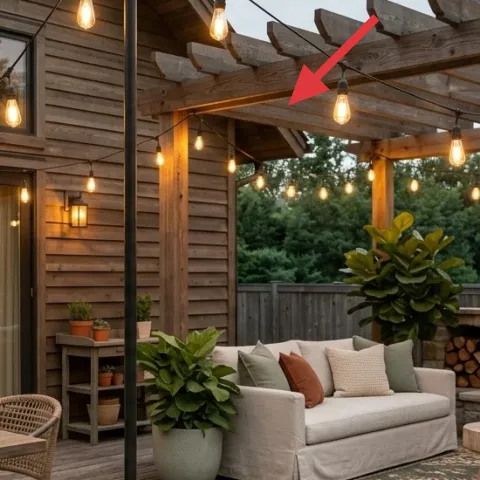
The string lights are strung across the patio and create a warm layer near the ceiling beams, which is exactly where most outdoor layouts feel “unfinished.” This matters even in daylight because the visual lines suggest cozy evenings and a defined path through the seating. The trade-off is planning: you’ll want enough slack so the bulbs don’t sag too low over chairs, and you’ll need a safe placement so cords don’t get yanked. Still, compared with adding a single spotlight, a string-light web makes the whole area glow instead of just one spot.
Match the bulb color to your wood
Warm bulbs keep the wood deck looking honeyed instead of orange-red.
Layer 4 — framed abstract artwork ($80) balances the stone fireplace wall
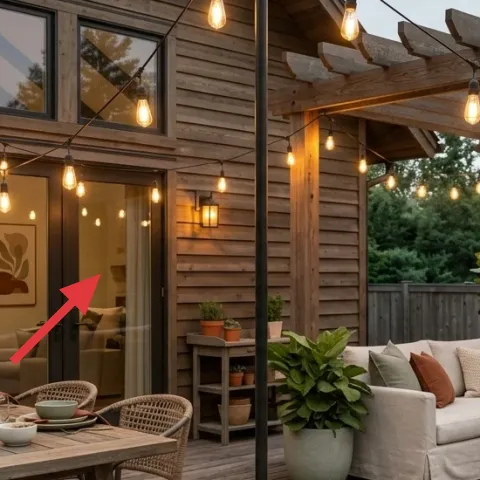
Those framed abstract artworks on the shiplap wall add a vertical pause so the eye doesn’t only travel across the sofa and rug. They also bridge the outdoors-in vibe: the art’s muted shapes echo the patio’s earthy palette, so it feels cohesive rather than decorative-for-decorative’s-sake. If the instinct is to skip art and rely only on plants, you’ll miss that “curated” wall moment—especially with a statement feature like the stone fireplace. The main decision is scale: keep the frames medium so they don’t look tiny beside the wall texture.
Don’t go too small on a textured wall
With shiplap and stone nearby, small frames can disappear, making the wall feel visually unfinished.
Layer 5 — wall lantern light ($45) adds a second warm pool
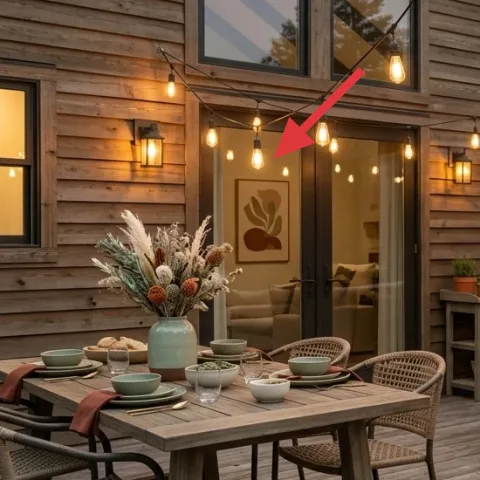
The wall lantern light on the exterior wall provides a focused, warm glow that complements the string lights overhead. This layered lighting is why the patio reads cozy even from the wide view—the room isn’t relying on one brightness level. The trade-off is that wall fixtures can look “off” if the finish clashes with the rest of the hardware, but in this setup the lantern color blends with the warm wood tones. Compared with swapping just one lamp, a wall lantern gives you height and direction, which helps the seating and dining table feel lit from multiple angles.
Height matters more than wattage
Mounting glow higher gives softer illumination across cushions and planters.
Layer 6 — large ceramic plant pot ($25) gives one sculptural shape
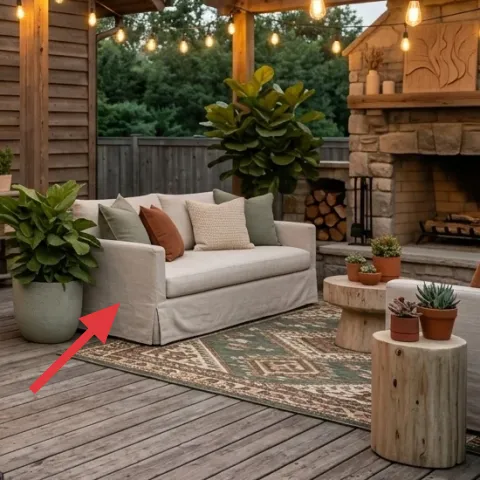
The large ceramic plant pot holds a leafy plant and acts like a visual “column” between the sofa and the rug. Ceramic reads clean and slightly more refined than plastic, and its matte surface keeps the whole palette from looking glossy or synthetic. The alternative would be filling that corner with multiple small pots, but too many containers can make the seating feel cluttered. Keeping one larger pot gives breathing room while still adding greenery. It also helps the rug pattern look intentional, because the plant silhouette creates another texture layer.
Use one big pot to prevent pot-pile clutter
Even if you add smaller pots elsewhere, let one container do most of the vertical work.
Layer 7 — terracotta plant pots ($70) bring that warm, earthy rhythm
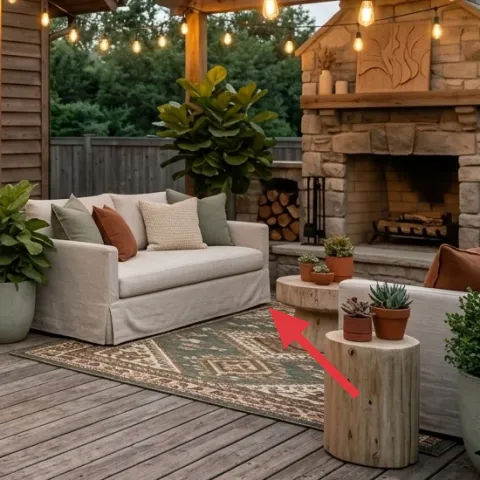
Terracotta plant pots scattered around the patio—near the sofa side and along the edge—create quick bursts of warmth that echo the wood deck and the string-light glow. The reason it works is repetition: you see the same pot color more than once, which reads as a plan instead of random thrift finds. The trade-off is weathering: terracotta can look faded over time, and paint chips if it isn’t sealed properly. That’s why a paint refresh is such a good weekend job here—reset the color so the whole outdoor palette looks freshly styled again.
Make it instead of buying it
Paint and seal the terracotta plant pots so they match the warm palette in the patio and look newly styled without replacing containers.
Materials
- Outdoor primer (spray) — 1 can — Home improvement store — $18
- Exterior matte paint — 1 can — Home improvement store — $12
- Painter’s tape + drop cloth — assorted — Home improvement store — $10
- Small sanding block (fine grit) — 1 — hardware store — $8
- Outdoor sealant (matte) — 1 can — hardware store — $9
Steps
- Clean the pots thoroughly and let them dry completely.
- Lightly scuff-sand the surface so primer grips.
- Mask drainage holes and any label areas with painter’s tape.
- Apply a thin, even coat of outdoor primer; avoid heavy runs.
- Let primer dry fully, then sand any roughness lightly.
- Spray 2 light coats of exterior matte paint, letting each flash-dry.
- Wait for paint to cure before handling.
- Apply 1–2 light coats of exterior sealant; keep coats thin.
- Let the sealant cure fully outdoors before returning pots to the patio.
Total DIY cost: $57 — saves about $13 over buying.
The cost, layer by layer
| Layer | Item | Cost |
|---|---|---|
| 1 | Outdoor area rug (5×7) | $120 |
| 2 | Outdoor sofa with neutral cushions | $250 |
| 3 | String lights set | $30 |
| 4 | Framed abstract artwork (16×20) | $80 |
| 5 | Wall lantern light | $45 |
| 6 | Large ceramic plant pot | $25 |
| 7 | Terracotta plant pots (DIY refresh) | $70 |
| Total | $620 | |
If the sofa budget gets tight, keep the sofa and upgrade only the rug + string lights first. In many patios, those two moves create the “finished” look faster than replacing furniture, and they also make plants and art look more intentional.
What worked, what didn't (across the whole room)
The biggest win here is layering: rug underfoot, string lighting overhead, and lantern glow at wall height. The second win is palette control—neutral seating and art make the wood deck, stone fireplace, and terracotta pots feel like one story.
What worked
- The outdoor area rug visually defines the seating zone on the wood deck.
- String lights create a second “ceiling layer,” making the patio feel cozy after dark.
- Neutral sofa cushions keep the pattern from getting too busy next to the rug.
- Framed abstract artwork prevents the shiplap wall from feeling empty beside the stone fireplace.
- Large ceramic planting gives vertical shape without adding visual clutter.
- Terracotta pot repetition ties the planters to the warm wood and lantern tones.
What didn't
- Using only small pots would have made the patio feel busy instead of styled.
- Skipping wall lighting would leave harsh contrast between string lights and the deck level.
- Over-saturating paint colors on terra-cotta could fight the rug pattern.
- Choosing a rug with random cool-tones would clash with the warm wood deck.
What we'd skip if we did it again
Skip replacing the sofa first. Even a good outdoor sofa can look “meh” if the rug and lighting aren’t in place, so the initial spend usually doesn’t pay back visually.
Skip adding three different pot colors at once. Terracotta repetition is doing the heavy lifting; mixing too many tones makes the plants feel like separate items, not a cohesive palette.
Skip art that’s too small for textured walls. With shiplap and nearby stone, medium frames are what keep the wall from reading as blank spacing between features.
Frequently asked
How long does this kind of patio refresh take?
Most homeowners can do the shopping and swap-out pieces (rug, lighting, frames, and pot styling) in a single afternoon. The DIY paint work depends on drying and curing, so plan an extra day window for the sealant to fully set. If you’re working around evening light, string-light placement can be done after dinner once everything else is positioned.
What if I rent and can’t keep wall-mounted lighting?
Focus on the rug, sofa cushions, and string lights first. For the wall lantern idea, choose a plug-in alternative or skip wall lighting entirely and double down on string-light spacing. The rug + warm string-light glow can still create a finished patio look without touching the wall.
My patio is smaller—should I use the same rug size?
Use the closest smaller rug size you can find, but keep the “rule of coverage”: the rug should sit under the front legs of the seating so it reads as one zone. If the seating won’t fit, reduce the amount of dining area on the rug instead of shrinking the rug so much that it floats only under the coffee-table area.
What’s the biggest mistake when styling outdoor planters?
Overbuying different pot colors and then trying to fix it with random accessories. Pick one repeating container color (like terracotta) and one larger “anchor” pot for height. Then add only one or two smaller planters so the plant silhouettes support the rug and sofa, not compete with them.
Where should I shop for these items without overspending?
For rugs, look for outdoor-safe versions at home stores and marketplaces, but prioritize the right pile and UV fade rating. For framed art, search for print sets in the same size range and keep the frames simple. String lights are often cheaper during seasonal sales; buy a quality set that lists weather resistance.
Is painting terracotta pots really worth it versus buying new?
Painting is worth it when you’re keeping the same pot shapes but want the color to match the rest of your palette. It’s also faster than replacing everything and lets you correct faded terracotta. Just use primer and an exterior sealant so the finish holds up to rain and sunlight.
More in Outdoor & Patio
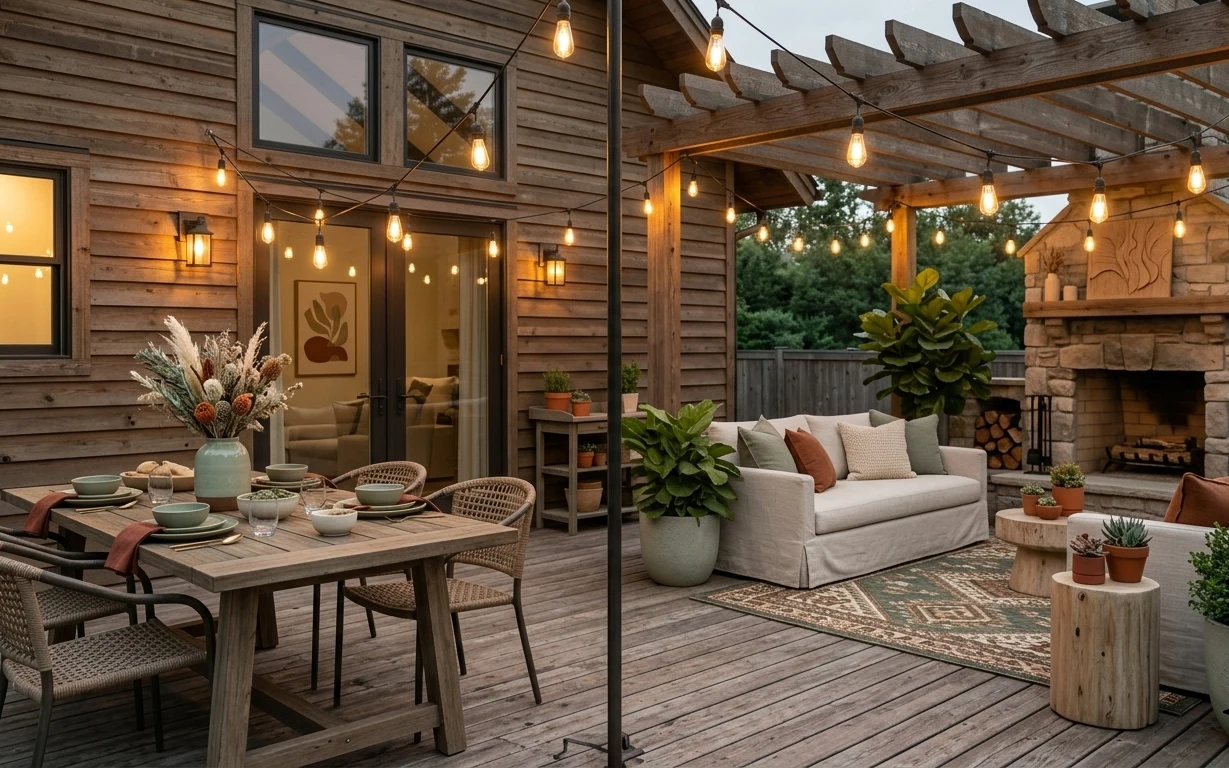
Under $700: patio seating refresh with 7 budget upgrades
A warm, wood-heavy patio seating area can look intentional without a renovation. This weekend-friendly refresh uses 7 swaps (rug, seating s…
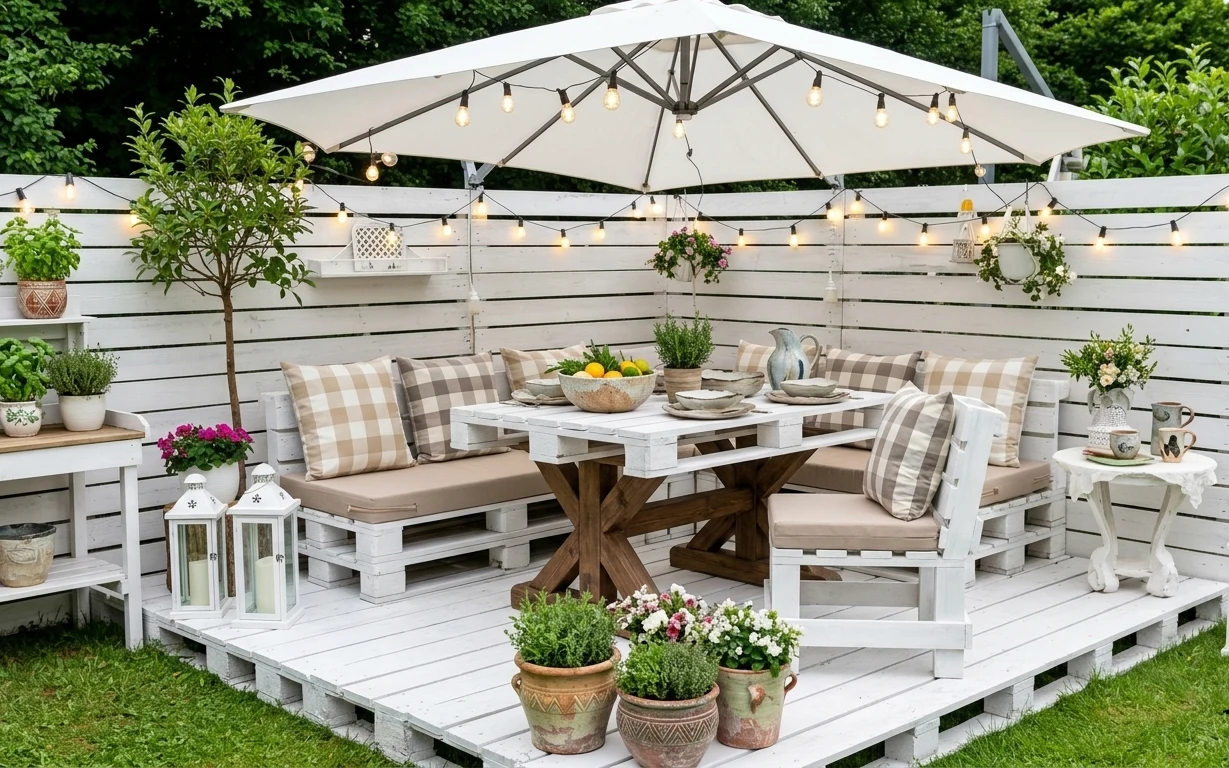
Under $300: move-ready pallet patio nook refresh with 7 layers
A pallet patio nook already has the structure—so this $300 refresh focuses on move-friendly textiles, light, and plant styling. Seven layer…
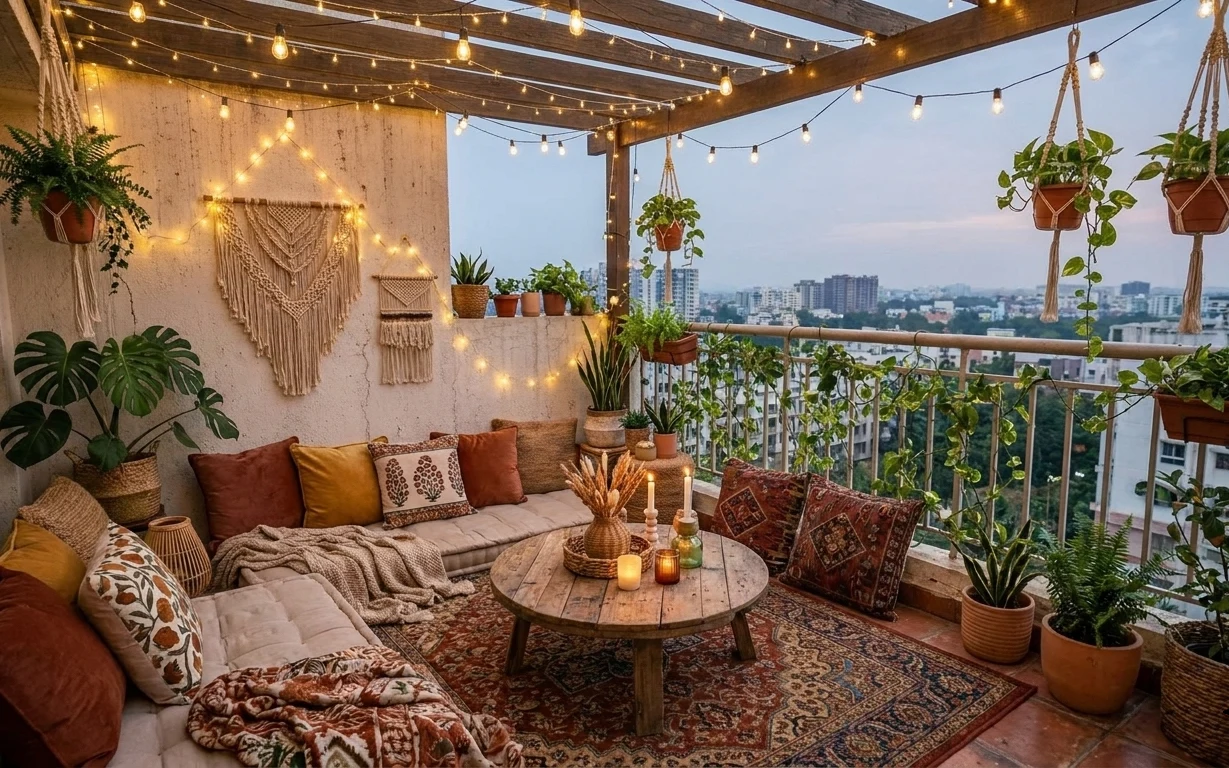
Under $600: boho balcony lounge refresh with 7 move-ready swaps
A boho balcony lounge refresh under $600, built from 7 move-ready swaps that pack into boxes. The look leans on warm string lights, a patte…