- Best for
- Renter-friendly bedroom refresh with layered textiles
- Time
- 1 weekend
- Total cost
- Under $700
- Renter-safe
- Yes (no drilling; move-out friendly items)
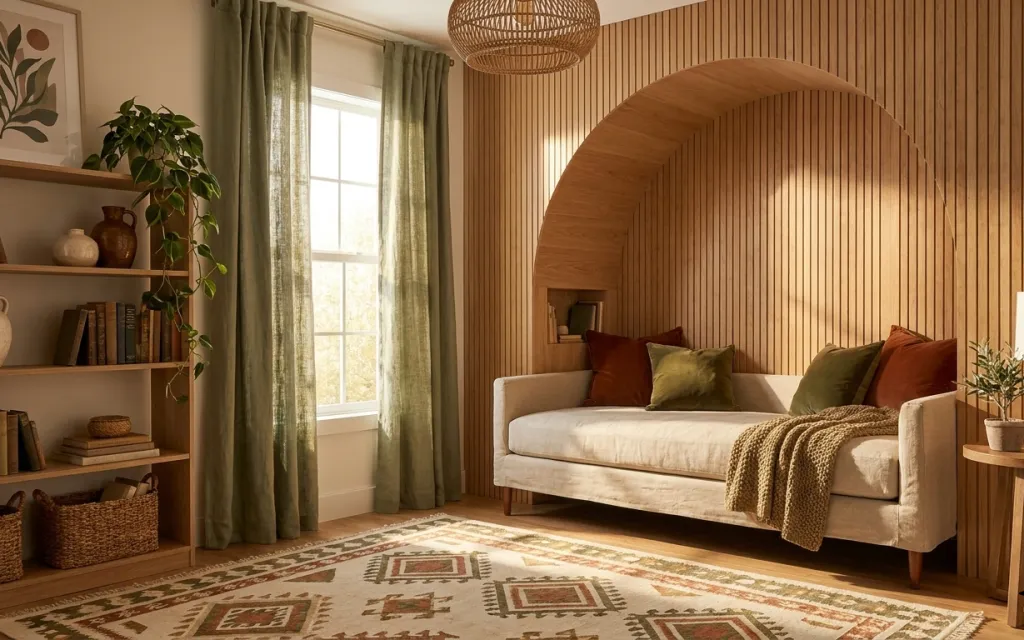
Why this olive-and-wood bedroom is the arched bed nook of 2026
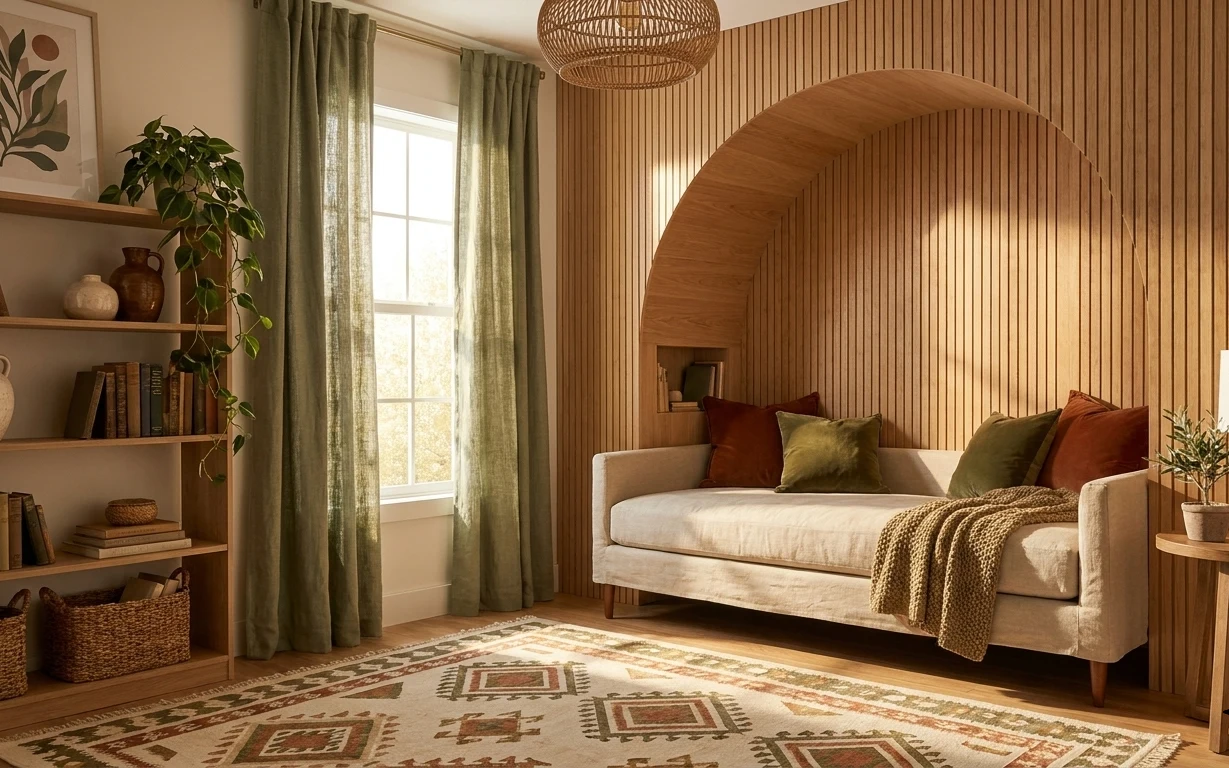
The hero here is all about warm wood and soft, olive-green textiles—especially the thick curtain panels framing the window and the patterned area rug grounding the whole bed zone. That arched bed frame shape reads “architectural” without any renovation work. I’d build it by echoing the same material textures you see: woven rug fibers, linen-like curtain weight, and the earthy throw draped over the bed. For renters, the good news is most of this comes from standard, movable furniture and lighting.
My own mistake the first few times I tried this vibe: I over-matched everything and ended up with a flat, samey palette. In this photo, the variation matters—the pillows aren’t all the same green, and the rug pattern has warm terracotta undertones that keep the room from feeling too uniform. Once I started treating each layer like a color sample, the look clicked.
Layer 1 — Patterned area rug ($180) Grounds the bed zone
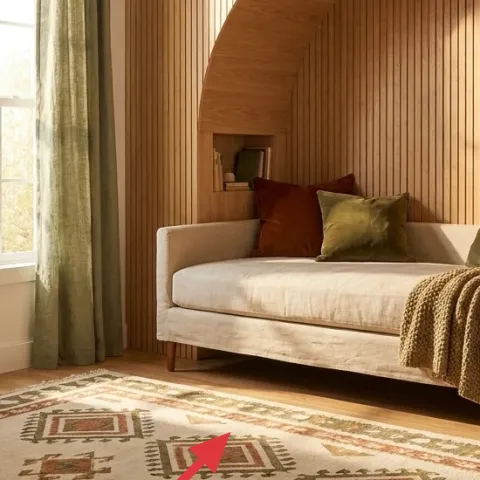
This patterned area rug sits under most of the bed and extends toward the window, so it does two jobs at once: it anchors the arched bed frame and adds the “collected” feeling you’d otherwise need art for. Choose a rug with warm neutrals (cream, tan) and small pops of rust or terracotta so it harmonizes with the throw and pillow colors. The trade-off is that high-pattern rugs can hide footprints but still show fringe wear—keep it on a rug pad and rotate it occasionally. In a renter setup, a rug is also one of the easiest things to pack and reuse.
Go slightly larger than you think
When the rug reaches beyond the bed’s sides, the whole nook reads intentional instead of “placed.”
Layer 2 — Green curtain panels ($60) Frames the window in olive tones
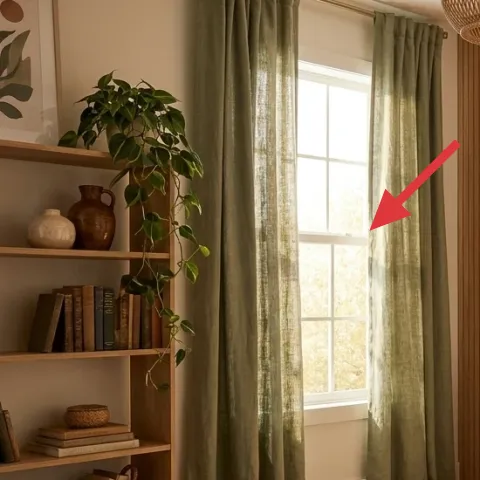
These green curtain panels create height and softness on the left side of the room, especially because they fall in full, weighted folds from high on the window. For a similar look, pick an olive shade that leans sage rather than neon and aim for full coverage (panel pairs, not single panels). I like the trade-off here: curtains do a lot of visual work for a relatively low cost, even if you can’t change the wall paneling. If your window is narrower, letting the panels puddle just a little at the floor keeps the same “curated” drape you see in the photo.
Height is the real upgrade
Hang curtains close to the ceiling line (using existing hardware) so the room feels taller.
Layer 3 — Arched bed frame ($220) Adds shape without renovation
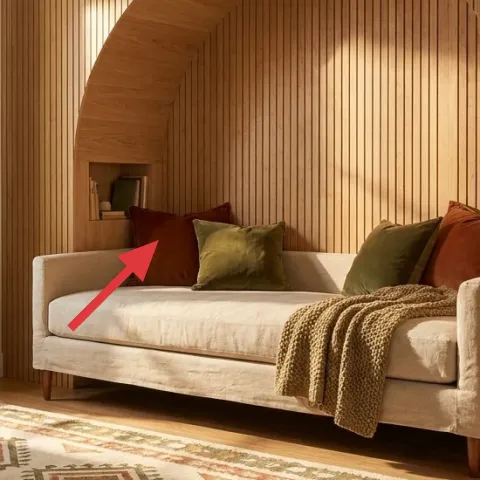
The arched bed frame is the architectural anchor in this bedroom, and it’s doing the heavy lifting that wall paint can’t. Visually, the curve echoes the circular pendant light above and keeps the natural wood backdrop from reading too severe. If you’re choosing an alternative, prioritize the curve + warm finish first, and let your textiles bring the color. The trade-off is that bed frames can be bulky to move, so check dimensions and delivery access before buying. For renters, this is still worth it because you can keep the frame in storage and reuse it in a future place.
Measure the alcove depth
An arched frame can look perfect in a listing photo but hit a window trim or walkway once it’s in the room.
Layer 4 — Throw blanket ($35) Brings texture over the bed edge
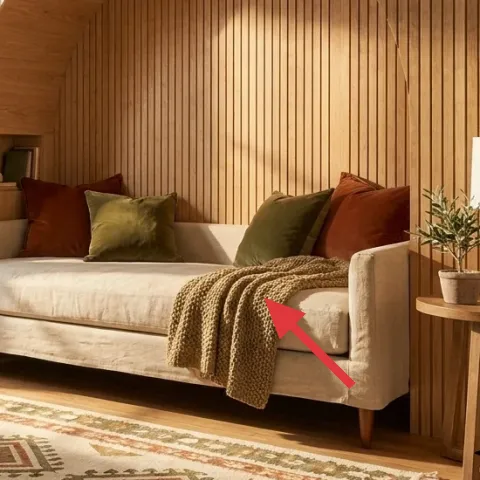
The throw blanket draped across the bed front adds a chunky, tactile layer and brings in the warm, golden-tan tone that keeps the olive from feeling too dark. Drape it so one corner lands near the bed’s edge rather than folding it into a tidy square—this photo has that slightly relaxed, “used daily” look. Choose a woven or knit throw that reads textured up close; smooth throws can flatten the whole palette when your walls already have vertical lines. The trade-off: textured throws shed a bit initially, so a quick lint pass before guests helps.
Let one corner do the work
One intentional drape is enough—too many throws can fight the bed’s arched shape.
Layer 5 — Decorative pillow covers ($24) Adds color without changing the bed
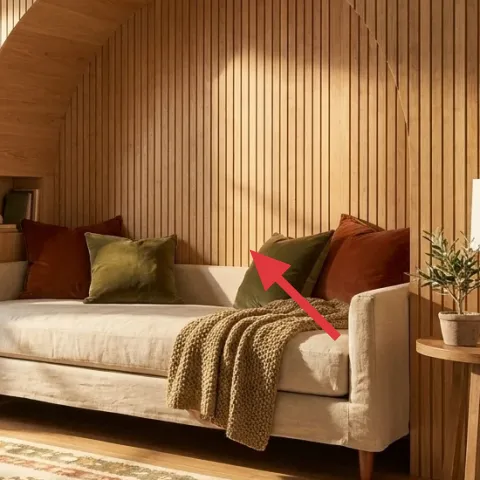
The decorative pillow covers are a small but important layer: they repeat the room’s colors (warm terracotta and olive) while keeping the overall look airy. Go for a mix of tones rather than identical matching—one pillow can lean rust while another pulls olive to mirror the curtains. The trade-off is that cover-only styling means inserts still matter, but you can shop smarter by reusing existing inserts and just buying covers. This is also renter-friendly because covers are easy to swap between seasons and different apartments.
Vary scale a touch
If one cover is a solid tone, balance it with a different texture (ribbed, woven, or linen-like).
Layer 6 — Framed art print ($50) One botanical note on the wall
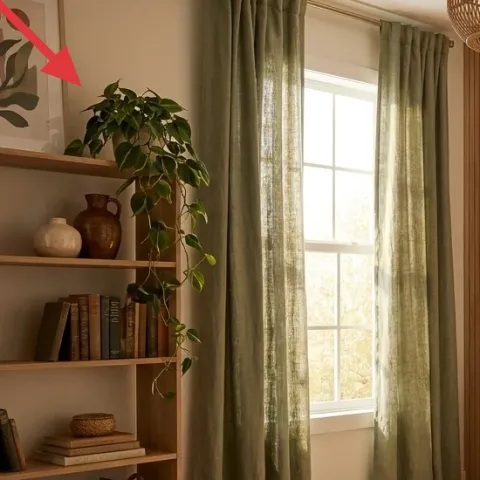
This framed art print anchors the left wall shelf area and repeats the botanical energy of the plants without competing with the vertical wood paneling. Keep the print in a simple frame so it doesn’t visually clash with the warm wood tones; a natural wood or light neutral frame works best here. The trade-off is that art can feel like a “detail,” but in this room it’s part of the color map—so it’s worth spending a little. As a renter, you’ll also love that you can remove it cleanly at move-out.
Make it instead of buying it
This DIY replaces the framed art print with a hand-painted abstract on cardstock that matches the room’s plant-and-earth palette.
Materials
- Cardstock (10-pack) — 1 set — craft store — $4
- Acrylic paint set — 1 small set — craft store — $15
- Paintbrushes (assorted, flat + round) — 1 set — craft store — $6
- Simple frame (11×14 or similar) — 1 — home goods/thrift — $20
- Clear tape or painter’s tape — 1 roll — craft store — $4
Steps
- Cut cardstock to fit your chosen frame’s opening, then dry-fit it so it sits flat.
- Sketch loose shapes with a pencil: a few leaf-like arcs and one rounded block for grounding.
- Tape off the background areas lightly so you get clean edges without overthinking symmetry.
- Paint the light base first using a cream/tan tone, then let it dry completely.
- Add olive-green and warm rust accents in thin layers, using a damp brush for softer edges.
- Use a small brush to dot in tiny “plant” details—sparingly—so it stays readable at a distance.
- Let the whole piece dry fully, then remove tape and check for any gaps you want to reinforce.
- Place the finished artwork into the frame, then hang it using removable hardware appropriate for your wall.
Total DIY cost: $49 — saves about $1 over buying.
Layer 7 — Plug-in table lamp ($50) Adds warm pools of light at night
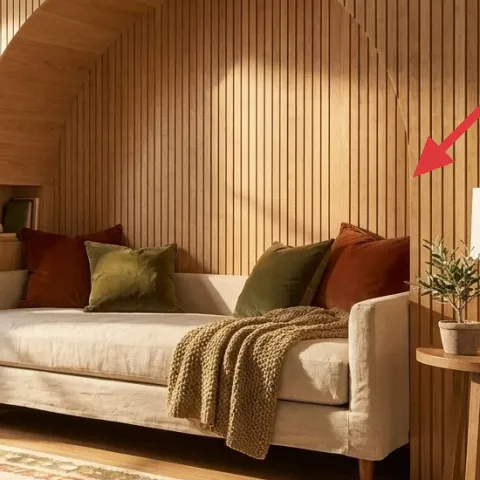
The plug-in table lamp on the right side table is what makes the room feel livable after dark, and it also mirrors the warm, woven/woody mood of the pendant light overhead. Because it’s plug-in, you can place it exactly where you want light—perfect for renters who can’t rely on hardwired fixtures changing. The trade-off: you’ll want a shade that doesn’t look too bright white; in the photo, the shade reads creamy and diffused. Pick a warm bulb temperature so the light works with the golden wood paneling instead of turning it gray.
Match the bulb color, not the lamp
A warm 2700K bulb keeps the wood and olive textiles looking cohesive.
The cost, layer by layer
| Layer | Item | Cost |
|---|---|---|
| 1 | Patterned area rug 5×7 | $180 |
| 2 | Curtain panel pair (84") in olive | $60 |
| 3 | Arched bed frame | $220 |
| 4 | Throw blanket | $35 |
| 5 | Decorative pillow covers (2) | $24 |
| 6 | Framed art print | $50 |
| 7 | Plug-in table lamp + shade | $50 |
| Total | $619 | |
If you need it cheaper, swap the arched bed frame for a simpler wood bed frame (still warm-toned) and choose a solid-cream throw and pillow covers. That keeps the look cohesive while lowering the biggest-ticket furniture cost.
What worked, what didn't (across the whole room)
This bedroom works because the layers repeat the same visual language: warm wood shapes, olive curtains, and earthy textiles with a pattern that echoes the terracotta notes. The lighting strategy (a plug-in lamp paired with warm bulbs) makes the room feel soft without needing extra wall fixtures.
What worked
- The arched bed frame reads as architectural, so the room doesn’t need wall paint changes.
- The patterned area rug grounds the bed and adds color that the curtains and throw can borrow from.
- Weighted curtain panels make the window feel taller and bring movement to a structured space.
- Layering a textured throw over the bed edge adds depth without cluttering the silhouette.
- Pillow cover color variety keeps the palette from turning flat and monochrome.
- The plug-in table lamp creates warm pools of light that match the wood-paneled backdrop.
What didn't
- If the rug pattern is too cool-toned, the whole room can start to feel gray despite the warm wood.
- Choosing sheer or lightweight curtains can erase the tall, cozy drape effect you see here.
- Using pillow covers that match perfectly (no variation) makes the bed look one-note.
- A cool-white bulb in a table lamp can fight the warm paneling and make textiles look dull.
- Overspending on art without matching textiles can make the wall feel disconnected from the bed zone.
What we'd skip if we did it again
Skip buying a full matching bedroom “set.” The look depends on contrast—pattern on the rug, depth in the curtains, and small color shifts in the pillows—so forced matching usually flattens it.
Skip a lamp with a very bright white shade or daylight-toned bulb. In this warm wood context, a diffused creamy shade and a warm bulb temperature keep the whole nook from turning harsh.
Skip small, low-impact wall art. If the print feels too tiny or too neutral, it won’t compete with the plants and the vertical wood paneling, and the left wall zone won’t read finished.
Frequently asked
How long does this kind of arched bed nook refresh take?
Plan for about 6–10 hours total spread across one weekend. Curtains and the rug are fast if you order the right measurements first. Swapping the bed frame can take the most time, especially if it’s a bulky delivery. Framed art and a plug-in lamp are quick wins at the end, when you can see how the lighting and colors land together.
Will this work if my apartment has stricter landlord rules?
Yes—because the moving parts here are renter-safe choices: curtains, rugs, a bed frame you can keep, and plug-in lighting. For wall art, use removable hanging methods like Command strips or hooks designed for your wall type. The vertical wood paneling in the photo is built-in, so you’re not relying on any painting or fixture swapping.
What if my room is smaller or the bed won’t fit in an alcove?
Scale the rug and textiles first. A smaller rug can still work if it sits under the front half of the bed and reaches the room’s visual center. For the bed frame, keep the arched shape if possible, but prioritize a warm wood tone and the right bed height so the curtains still read tall. In tighter rooms, use fewer pillows and keep one throw draped for breathing room.
Where should I shop if I want the same materials and colors?
Start with big basics that come in lots of sizes: rugs, curtain panels, and pillow covers. For the framed botanical look, thrift stores and home goods carry plenty of frames, then you can DIY the artwork. For lighting, choose a plug-in table lamp with a creamy shade and a warm bulb option. Bed frames are the one item worth measuring carefully before checkout.
What’s the biggest mistake people make with this bedroom style?
The most common misstep is choosing everything in the same tone—same green, same cream, same texture—so the room ends up flat. This photo works because the rug pattern brings warm terracotta undertones, curtains add weight, and pillows add small color variation. Aim for two strong anchors (rug + curtains) and treat pillows and art as the “color notes.”
More in Bedroom
Under $700: renter-friendly arched bed nook layers
A warm, renter-friendly arched bed nook built with curtains, a patterned rug, an arched bed frame, and layered textiles—plus move-out-frien…
Under $700 bedroom corner: rug, curtains, shelf, and botanical art
A warm, earthy bedroom corner refresh you can build in one weekend under $700. Focus on an area rug, curtain panels, a simple table lamp, a…
Under $400 Boho bedroom refresh: 7 move-friendly layers
A boho bedroom refresh you can pack up when the lease ends, built from 7 move-friendly layers. The total comes in under $400, with a patter…