- Best for
- Warm neutral bedroom styling
- Time
- 1–2 weekends (mostly waiting on drying for DIY art)
- Total cost
- About $615
- Renter-safe
- Yes—no-drill swaps and removable hanging
Why warm beige-and-terracotta tones are the bedroom of 2026
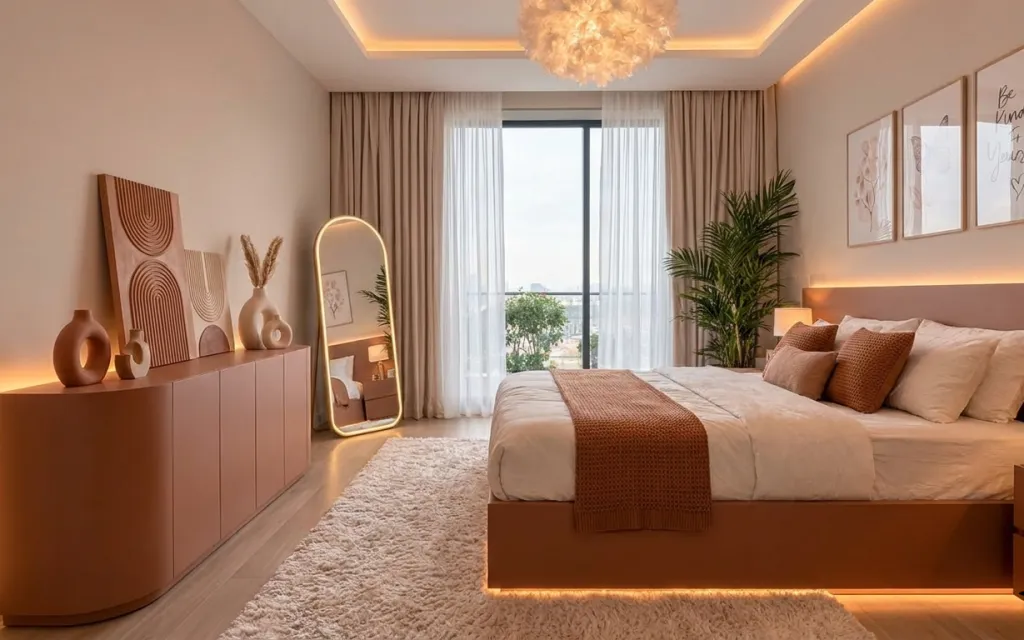
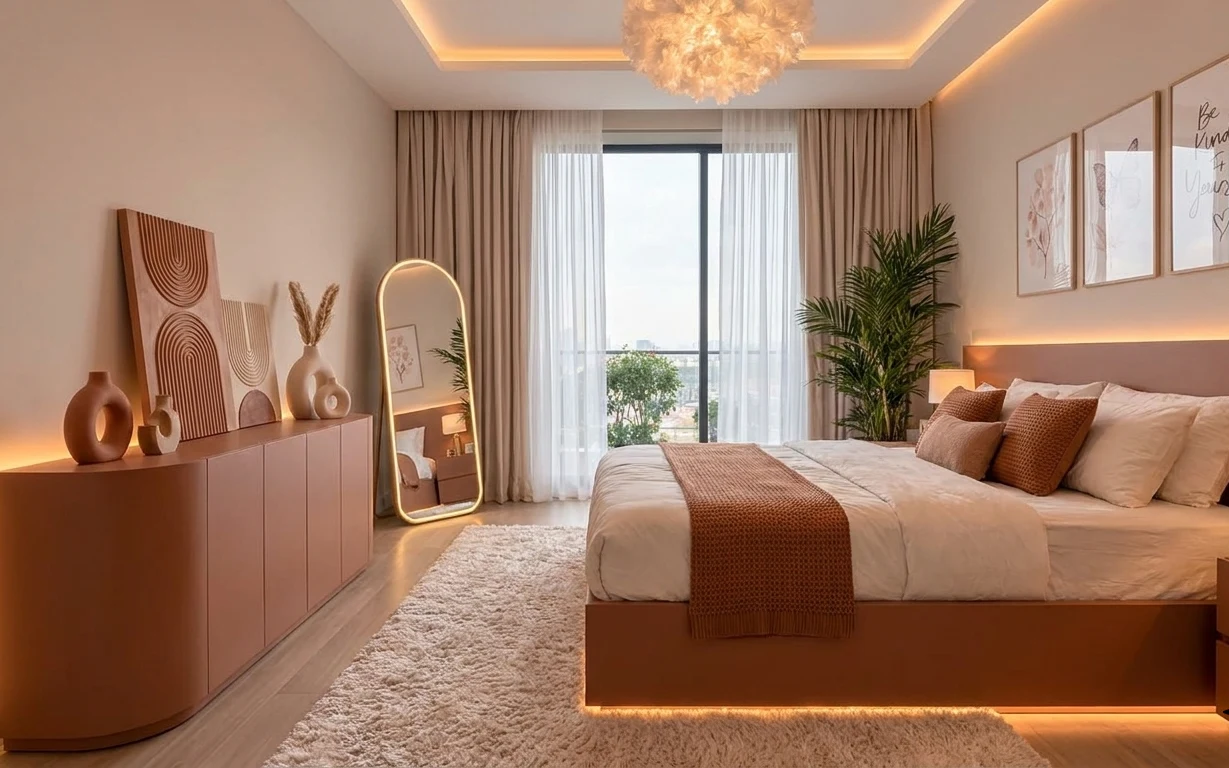
Start with what your eye already loves in the photo: the soft beige floor underfoot, the textured throw folded across the bed, and the warm lamp glow bouncing off smooth, pale surfaces. This is the kind of japandi styling that feels intentional without needing wall changes—everything is either freestanding or hung with removable methods. The arched floor mirror adds height, while the tall indoor plant brings in that lived-in “green in the corner” feeling. For renters, the trick is choosing textiles and objects with similar warmth, then repeating their shapes (curves, arcs, and rounded ceramics).
I used to overdo the wall art because it felt like “the only place to finish.” Then I moved into a place where the outlets were annoyingly placed, and I had to slow down. Swapping to a plug-in table lamp and adding one taller mirror made the whole room look styled, even before I touched the rest. Now I build in layers: rug first, then one sculptural light source, then one plant, and only then the art.
Layer 1 — area rug ($200) jute-style 5×7 grounding for warm neutrals
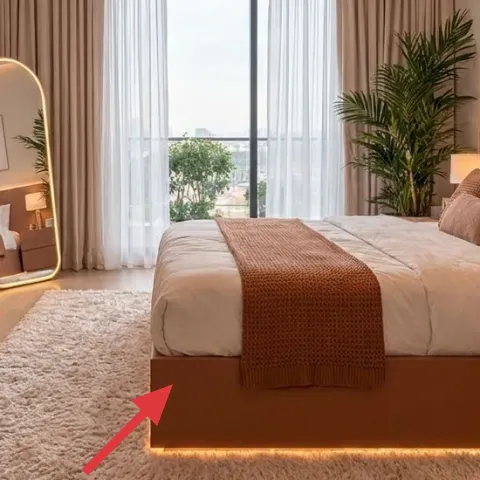
An area rug in a warm, slightly lived-in neutral is what makes the floor feel finished here—like the room has a “buffer” between wood and textiles. Look at how the rug’s plush texture softens the lines of the bed and dresser while also hiding everyday wear. Choosing a jute-style rug (or another high-contrast, beige-forward texture) is the better bet than going for a thin flatweave, because it visually cushions the whole bed zone. The trade-off: a plush rug takes a little more vacuuming, but it’s the fastest way to get the same cozy base.
Keep it centered under the bed
In this layout, the rug reads best when it’s broadly under the front third of the bed, not just a small strip underfoot.
Layer 2 — textured throw blanket on bed ($40) camel weave for the bed’s “front edge”
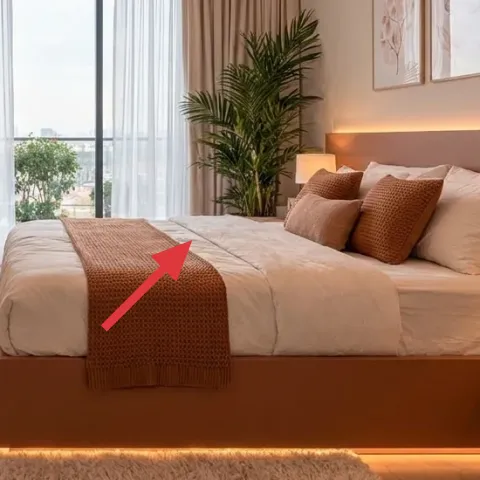
This textured throw blanket is doing real work: it adds a second fabric rhythm next to the pillows, without needing a different bedding set. The warm camel tone keeps everything in the same family, which is why the bed doesn’t look flat against the pale walls. I’m also choosing a throw with visible weave instead of a smooth knit—texture shows up even in indirect light and helps the room feel styled, not accidental. The trade-off is you’ll see it more when you’re making the bed, but that’s the point: it’s the detail your eye lands on first.
Let the throw sit slightly off-center
A small, intentional asymmetry keeps it from looking like it was placed by a catalog photo.
Layer 3 — arched floor mirror ($120) tall curve to add visual height near the dresser
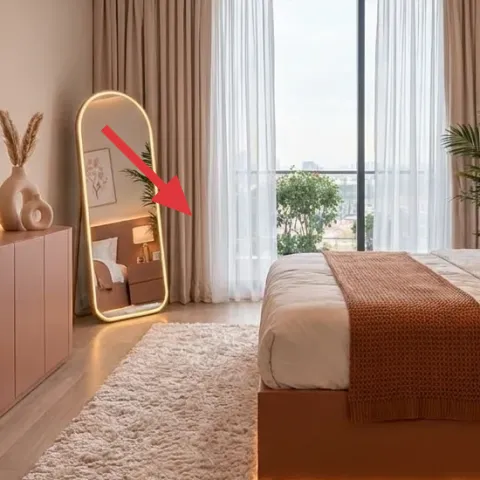
The arched floor mirror gives you that tall, airy effect without touching the walls in a complicated way. In the photo, the mirror’s warm frame color echoes the room’s beige surfaces, while the arch shape repeats the rounded ceramics on the dresser. This is the better alternative to a small rectangular mirror because it reads as a single sculptural shape from across the room. The trade-off is footprint: you’ll need a clear path behind or in front of it, depending on how you place it. Once it’s set, it also helps the room feel brighter by reflecting the window light.
Angle it toward the brightest window
If the mirror catches window light, the whole bedroom warms up—especially at dusk.
Layer 4 — table lamp on dresser ($60) warm plug-in glow for the nightstand zone
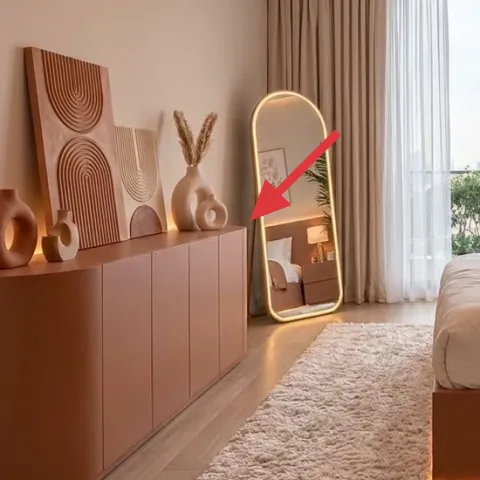
A plug-in table lamp is what turns the bedroom from “styled” to “usable at night.” The shade in this photo is a warm cream tone, which pairs naturally with the rug and the throw, and it keeps the lighting soft instead of harsh. This choice beats overhead-only lighting because you get a second light height level: the lamp sits between the bed and the top of the window area. The trade-off: you may want a dimmer bulb (if your lamp allows it) so the lamp doesn’t overpower the room, but the warm diffusion is worth it.
Don’t match the lamp too perfectly to the walls
If it’s the exact same cream as the wall, the lamp can disappear—aim for “close but distinct” warmth.
Layer 5 — tall indoor plant in pot ($80) vertical greenery to balance the bed
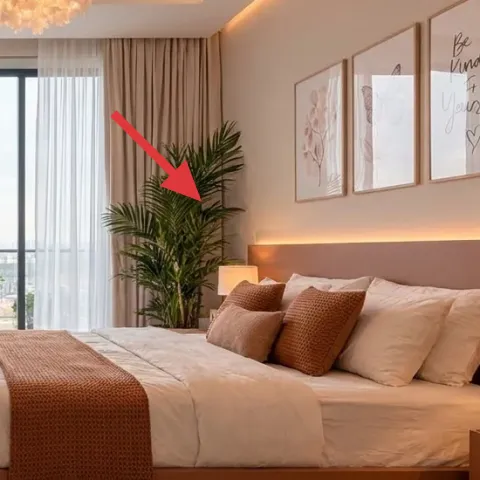
The tall indoor plant is the vertical counterweight to the bed’s horizontal lines. It also adds organic movement: fronds and curves soften the clean, minimalist furniture shapes. I’d pick a plant with similar leaf texture to the photo (not a tiny sprig), because scale matters here—small plants get visually lost next to a large rug and tall mirror. The trade-off is care time: a bigger plant wants consistent watering and occasional rotation toward light, but it pays you back with that “lived-in” look without any renovations.
Rotate the pot for even growth
A quick turn every couple of weeks keeps the plant from leaning and looking uneven.
Layer 6 — framed botanical wall print (DIY) ($80) one simple print in a warm palette
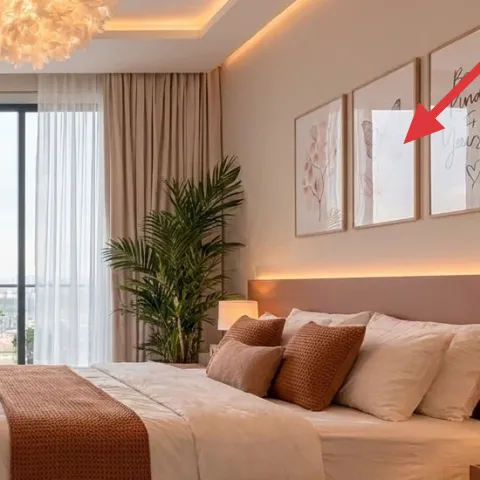
Make it instead of buying it
This DIY replaces one framed botanical print with a hand-painted abstract on cardstock in the same warm, neutral mood—easy to hang with Command strips.
Materials
- Cardstock sheet — A4/A5 size — craft store — $2
- Acrylic paint set (warm neutrals) — small set — art supply store — $10
- Matte small frame (fits your cardstock) — 1 — thrift or craft store — $25
- Brush set (one detail + one flat) — 2 brushes — craft store — $5
Steps
- Sketch a loose composition with 3–5 organic shapes on the cardstock (no need for perfect botany).
- Paint 1 background wash using a warm beige and let it dry fully.
- Add darker tan and camel lines for “veins” or arch-like forms.
- Let the acrylic finish dry completely before handling.
- Test a few colors on scrap first, then adjust contrast on the main piece.
- Place the cardstock into the frame and check centering against the window light.
Total DIY cost: $42 — saves about $38 over buying.
Layer 7 — ceramic vases and decor objects on dresser ($35) warm sculptural styling with repetition
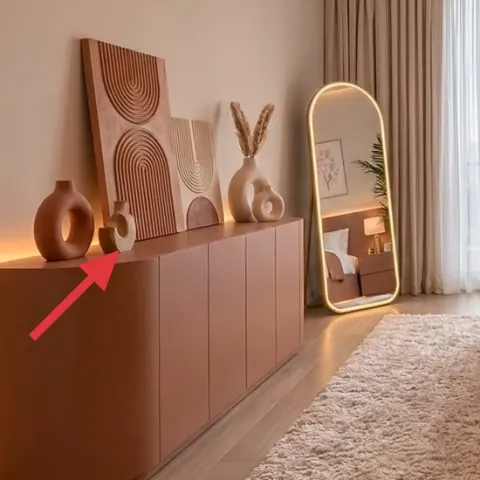
The ceramic vase cluster is the finishing detail that makes the dresser feel curated instead of empty. In the photo, the objects share similar warmth and rounded silhouettes, which is why they look cohesive even though they’re different pieces. It’s the kind of layer that’s hard to replicate with only one item—so instead of buying one “hero vase,” you can build a small group that repeats the same palette (beige, tan, and cream) and balances height. The trade-off is that styling takes a little trial-and-error: you may move objects around a few times before the spacing feels intentional. Once set, it’s also easy to refresh later.
Use odd numbers and vary height
Try three pieces: one tall, one medium, one low—then add a small book for a base.
The cost, layer by layer
| Layer | Item | Cost |
|---|---|---|
| 1 | Area rug (warm neutral 5×7 style) | $200 |
| 2 | Textured throw blanket for the bed | $40 |
| 3 | Arched mirror (approx. 24–36 inch) | $120 |
| 4 | Plug-in table lamp | $60 |
| 5 | Tall indoor plant in pot (4–6 ft) | $80 |
| 6 | Framed botanical wall print | $80 |
| 7 | Ceramic vases and decor objects | $35 |
| Total | $615 | |
A cheaper variant is to pick an $80–$120 rug instead of $200, choose a smaller mirror for around $40–$60, and swap the plant for a tabletop plant for $10–$25—keeping the throw and lamp for the biggest “finished” feel.
What worked, what didn't (across the whole room)
The overall win is how consistently warm the tones stay: beige rug, camel throw, cream lamp shade, and terra-cotta ceramics all read like one palette. The arched mirror and the tall plant also give vertical balance without any wall work. The only part that can fall apart is when people rush the art or buy wall pieces in a completely different color family.
What worked
- The rug’s texture softens the bed zone and makes the wood floor feel intentional.
- The throw blanket adds a second tactile layer, so the bed looks styled from across the room.
- The arched mirror brings height and reflects window light for a brighter feel.
- The plug-in table lamp adds warm lighting at a usable height, not just overhead glow.
- The tall plant balances the bed’s width and keeps the room from feeling too linear.
- Warm ceramic decor ties the dresser to the same neutral temperature as the textiles.
What didn't
- If the mirror is too small, it looks decorative instead of structural and height-giving.
- Choosing a throw in a cool gray or stark white breaks the warm beige palette.
- Skipping the plant (or going too tiny) leaves the corner feeling visually empty.
- Overloading the dresser can make the styling look busy rather than calm.
- Picking wall art with a different undertone (pink vs. tan) makes the room feel mismatched.
What we'd skip if we did it again
Skip buying multiple matching “set” pieces at once—especially a coordinated nightstand-and-lamp package. The photo’s look is calmer because the dresser decor, lamp shade, and textiles each pull their warmth from the same palette, not because they came from the same collection.
Skip a thin, low-pile rug if your room gets busy foot traffic. The rug is one of the biggest comfort cues here, and a flatter rug tends to make the bed area feel less plush and less grounded.
Skip adding too many wall pieces. Instead of building a big arrangement, use one framed botanical print (or a small pair) in warm neutrals so the mirror and plant stay the main vertical moments.
Frequently asked
How long does this bedroom refresh take?
Plan for about 1–2 weekends. The rug, lamp, mirror placement, and plant move-in are quick (often a single afternoon). The only time sink is the DIY framed botanical print: you’ll sketch, paint, let it dry, then assemble. Once everything is in place, you may spend another hour adjusting spacing so the mirror height and dresser styling feel intentional.
Is this renter-safe if my lease forbids drilling?
Yes. The layered look uses freestanding furniture and removable decor choices, like a plug-in table lamp, a floor mirror, and a rug. For the framed botanical print, use a removable hanging method (for example, Command strips) that won’t damage the wall surface when you move out. No permanent fixtures or wall alterations are needed to get the same warmth.
What if my bedroom is smaller than the photo?
Go smaller on the mirror or plant footprint, not on the rug idea. A narrow rug runner-style layout can work, but keep the rug’s texture and warm tone. If the room feels tight, place the arched mirror so it reflects the window area and doesn’t block pathways. For wall art, use one framed print instead of two to keep the visual breathing room.
What if my bedroom is larger?
Scale up by choosing a bigger rug and keeping the plant at true height. A larger framed print can also help the wall feel proportionate to the bed, especially when you’re using a single botanical piece. The throw blanket can stay the same, but consider a wider fold so it covers more of the front edge of the bed for a fuller look.
Where should I shop for these pieces without overpaying?
For the rug, check home goods stores and online marketplaces for warm neutral textures. Mirrors and plug-in lamps often show up at home stores and thrift-friendly inventory, as long as you’re matching the warm tone. Plants are easiest through local nurseries (so you can see scale), and ceramics are often best found at thrift shops for a cohesive “collected” feeling.
What’s the biggest mistake people make with this bedroom style?
Buying items in the wrong undertone. Beige can look pink, yellow, or gray depending on the light, so it matters that the rug, throw, lamp shade, and ceramic decor all read warm together. If one piece is cool-toned—often the throw pillow set or wall art—the room stops feeling curated and starts feeling accidental.
More in Bedroom
Under $700: warm neutral bedroom refresh with 7 renter-friendly swaps
A warm beige-and-camel bedroom refresh you can recreate in a rented space with 7 renter-friendly swaps. Focus on the area rug, textured thr…
Under $600: move-friendly earthy bedroom refresh
An earthy-neutrals bedroom refresh you can do as a renter for under $600. This look leans on a woven rug, soft gray textiles, plug-in lamps…
Under $800: peach-and-green bedroom daybed nook refresh
A peach accent wall, a green knit throw, and plant-styling make this daybed nook feel finished without major construction. This weekend ref…