- Best for
- Weekend bedroom refresh
- Time
- 1–2 weekends
- Total cost
- $605
- Renter-safe
- DIY paint depends on landlord
Why this indoor-plant bedroom is the daybed nook of 2026
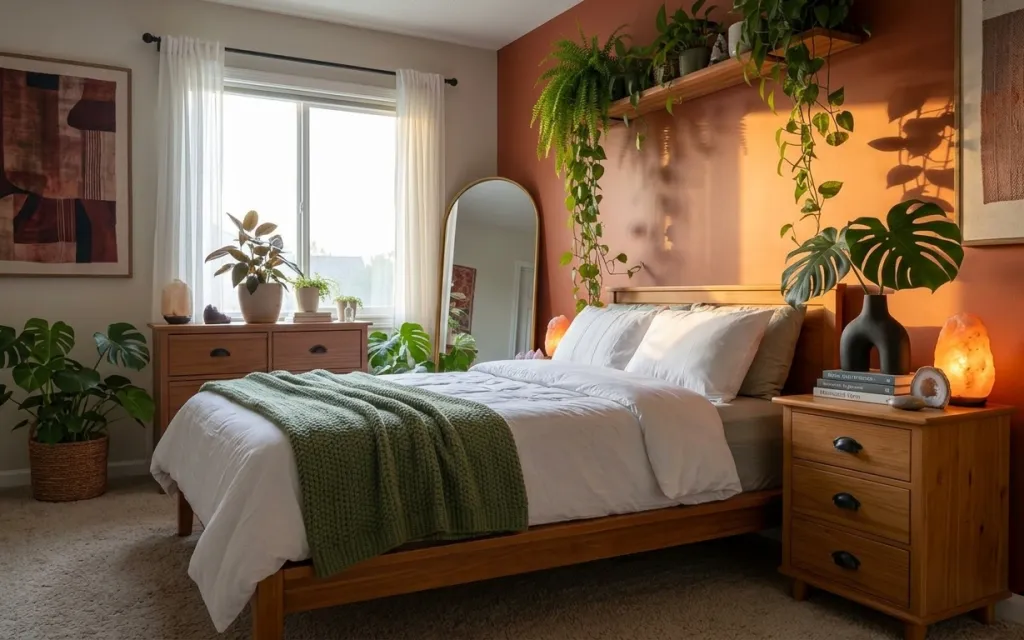
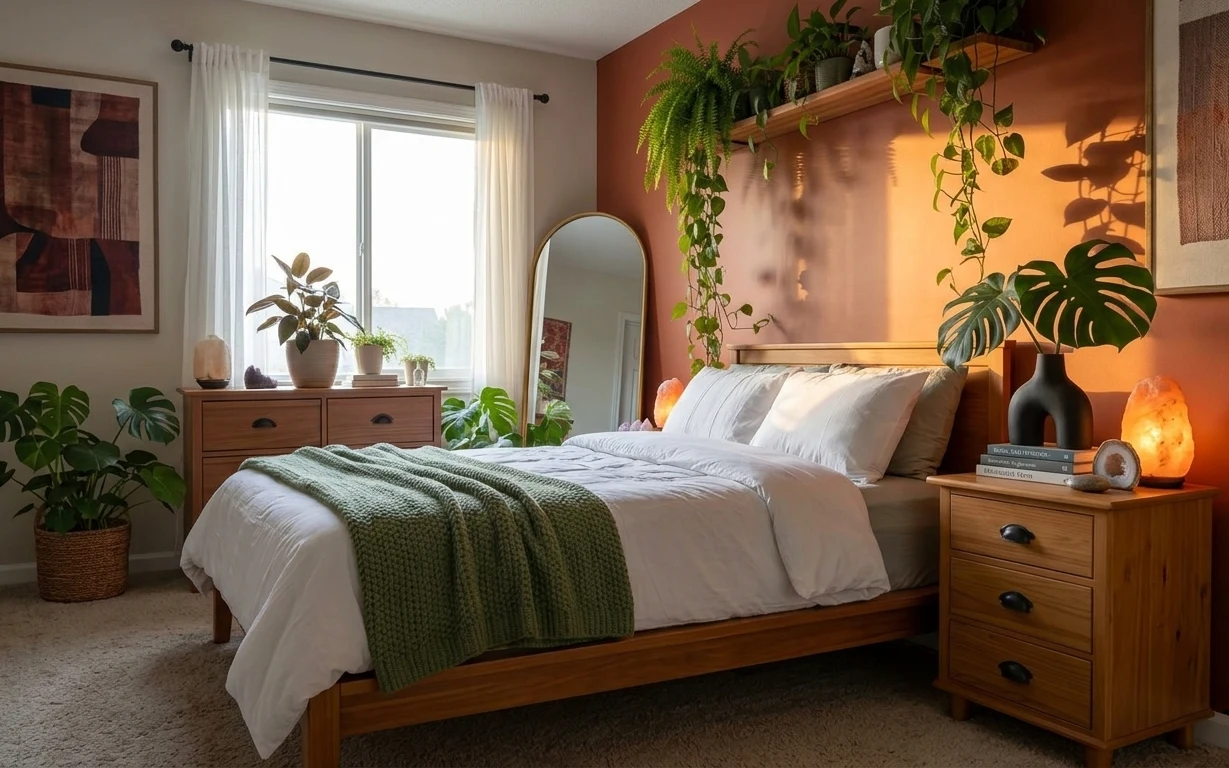
The look here is all about contrast: a peach accent wall behind the bed, warm white bedding, and a chunky green knit throw that shows texture up close. You can also feel the mix of materials—carpet underfoot, the wood grain of the bed and dresser, and glossy leaves in a black ceramic vase. I kept coming back to the window moment: white curtain panels soften everything while still letting daylight do the heavy lifting. None of this requires a renovation—just pick what you can change quickly and let the plants make it feel lived-in.
I caught myself wanting to “start over” by swapping too many pieces at once. The better move was treating the room like styling with a backbone: paint the one wall, then add soft textiles and repeat the warm palette in smaller places. The green throw and salt lamp do more than they look like they cost—they add depth and warmth after dark, especially against peach.
Layer 1 — green knit throw blanket ($60) Adds texture against white bedding
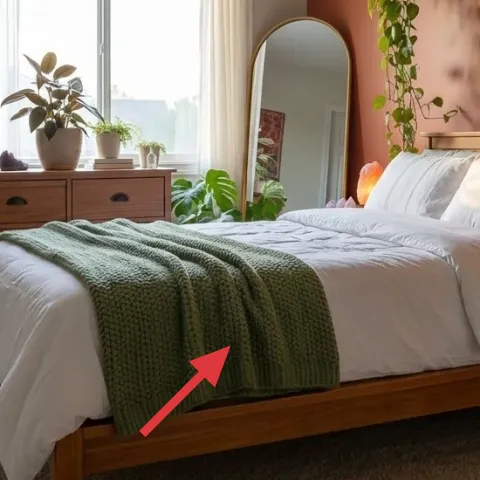
A green knit throw blanket on top of the white duvet cover gives the bed a third “layer” of texture, not just color. In this photo it lands across the front third of the bed, so it reads instantly when you walk in, even if the rest of the room is mostly neutral. The obvious alternative is swapping the whole bedding set, but that’s pricier and usually feels less flexible. This throw is also easier to change seasonally—swap the color or weight and the room updates without touching the bed frame.
Use a chunky weave for instant depth
Look for a visible knit pattern that casts soft shadows in window light; thin jersey throws disappear on camera.
Layer 2 — arched mirror ($80) Makes the bed area feel taller
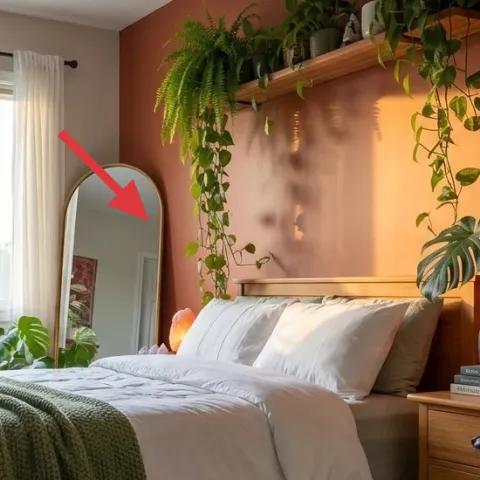
The arched mirror sits near the center of the wall zone above the bed, creating a gentle curve that contrasts with the straight lines of the bed frame and dresser. It also bounces light back toward the curtains, which matters in a bedroom where you’ll rely on daylight and a small lamp at night. A flat rectangle mirror would work, but the arch adds a softer silhouette and makes the head-of-bed area look more intentional. Trade-off: mirrors show smudges, so plan for a quick wipe with a microfiber cloth.
Place it where it catches daylight, not just where it fits
If the mirror reflects clutter, shift it a few inches (or adjust what’s on the dresser).
Layer 3 — white curtain panels ($80) Frames the window for a calmer rhythm
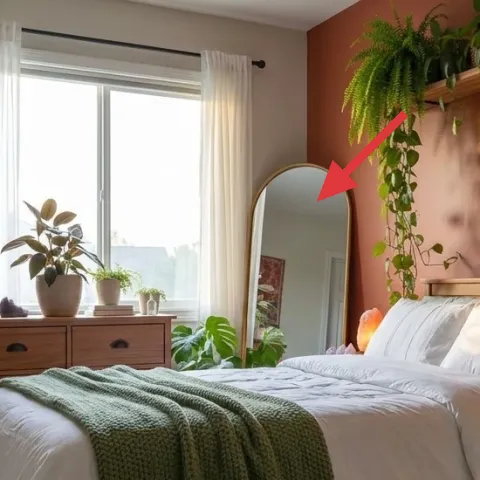
White curtain panels pull the whole nook together because they echo the white bedding while adding movement and softness to the peach wall. In the photo, the curtains hang in an even spread on either side of the window, so the eye can rest there before it travels to the plants and the bed. The “obvious” alternative is blinds or shorter curtains, but that tends to make the space feel boxy. Curtain panels give you instant height and softness with no demolition—just measure, mount the rod correctly, and let the fabric do the work.
Don’t mount too low
If the rod sits at head height, the window looks squat; hang closer to the ceiling for the same material cost.
Layer 4 — framed abstract wall art ($80) Adds color without competing with plants
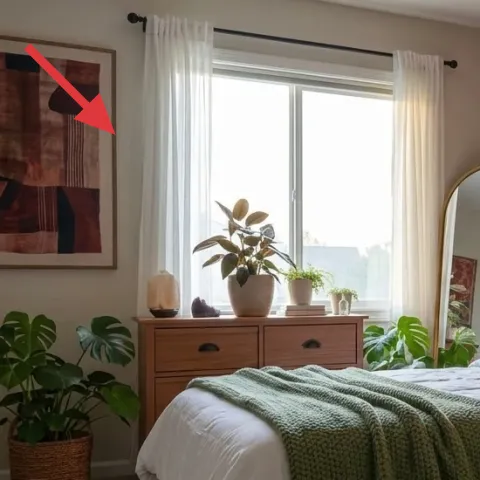
The framed abstract wall art gives the left wall a focal point that’s still playful. It’s also the job of “color anchor” here: it connects the room’s warm tones without turning the whole bedroom into a single-color block. I’d choose art over a second large mirror because the painting-like shape plays better next to the textured green throw and the glossy leaves. The trade-off is that you’ll want to dust the frame and keep the print centered—crooked art is more noticeable than people expect.
Match undertones, not the exact color
Pull peach or brown notes from the accent wall; exact duplication looks flat.
Layer 5 — wood dresser with drawers ($200) Creates a styled surface that’s still useful
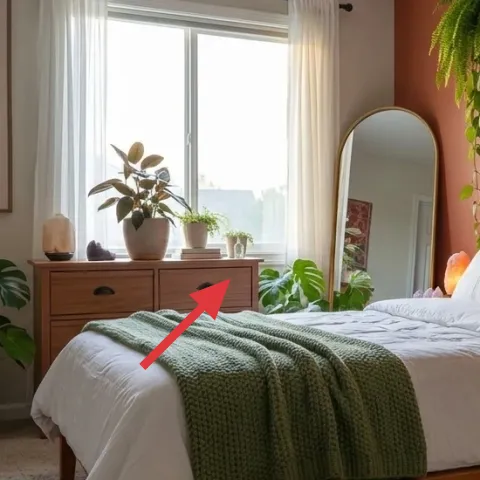
This wood dresser with drawers works because it’s both storage and display. The surface holds potted leafy plants and keeps the room from feeling like it’s “only” the bed. The dresser also repeats the warm wood tone from the bed frame, so everything reads as one set even if the pieces weren’t bought together. The alternative is floating shelves, but shelves can feel too busy when you’re already styling plants; drawers calm the visual noise. Trade-off: you’ll need to style it on purpose—blank tops look unfinished.
Use height variation, not just more items
Plants plus a simple tray or stack of books make a calmer arrangement than lining up objects in a row.
Layer 6 — Himalayan salt lamp ($35) Soft warm light for evenings
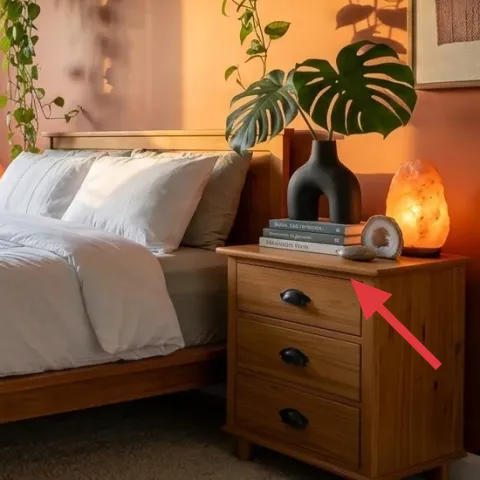
The Himalayan salt lamp adds warm, low-glare light on the nightstand, which is key for bedrooms—white bedding can look crisp but a little stark after sunset. Here it sits near the right side of the bed zone, so it pairs with the peach wall like a natural glow-up: warm light, warm paint, and greener tones in the textiles. If you went with an overhead fixture replacement, you’d spend more time and effort for a smaller day-to-night payoff. Trade-off: salt lamps are delicate, so keep it away from drafts and only place it where it won’t get bumped.
Pair warm light with a textured throw
The knit pattern catches the glow, making the bed feel cozy without changing your bedding.
Layer 7 — peach painted accent wall ($70) Gives the whole nook its backbone
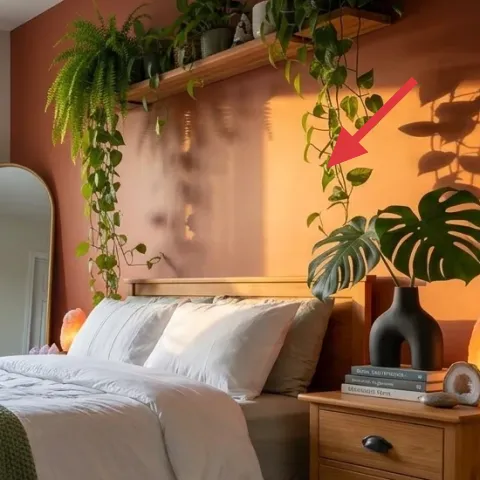
Painting the peach accent wall is what makes the daybed nook look designed instead of “mostly furnished.” The wall color sits behind the white duvet and green throw, so the contrast reads from across the room and makes the plants feel richer instead of random. The shortcut would be buying more decor to hide bare walls, but that tends to look patchy. A single painted wall keeps the palette cohesive and also gives you a consistent backdrop for mirror reflection and curtain light. Trade-off: the paint job has to be clean—edges and roller streaks show next to white bedding.
Make it instead of buying it
This is a one-wall peach accent paint refresh so the bed area has a permanent color anchor.
Materials
- Interior wall paint, 1 gallon — satin or eggshell finish — $30
- Primer (if switching colors or covering patchy spots) — 1 quart — $8
- Painting roller cover (9-inch) — $10
- Painter’s tape + edge brush kit — $12
- Drop cloths + microfiber cloths — $5
Steps
- Clean the wall with a damp microfiber cloth so paint bonds evenly.
- Patch small holes and sand smooth; wipe dust off after sanding.
- Use painter’s tape along the trim line and ceiling edge to protect borders.
- Prime only the spots that need extra coverage, then let primer dry fully.
- Cut in edges with an angled brush, keeping a steady paint line.
- Roll the wall in a “W” pattern, then blend strokes for a uniform surface.
- Apply a second coat once the first coat is fully dry.
- Remove tape while paint is slightly tacky to prevent tearing.
- Let the wall cure before hanging art or rearranging furniture.
Total DIY cost: $65 — saves about $5 over buying.
The cost, layer by layer
| Layer | Item | Cost |
|---|---|---|
| 1 | Green knit throw blanket | $60 |
| 2 | Arched mirror | $80 |
| 3 | White curtain panels (pair) | $80 |
| 4 | Framed abstract wall art | $80 |
| 5 | Wood dresser with drawers | $200 |
| 6 | Himalayan salt lamp | $35 |
| 7 | Peach paint (1 gallon) | $70 |
| Total | $605 | |
If you need a cheaper variant, start with the textiles and light: swap to a lower-cost knit throw, choose curtain panels on sale, and use a small framed print instead of the larger abstract piece.
What worked, what didn't (across the whole room)
The strongest improvement is the peach accent wall paired with soft window textiles and warm light—everything feels connected even when the room includes lots of plants. The best “system” choice was repeating warm wood tones in both the bed zone and dresser zone. Where it can get tricky is keeping the styling from turning into clutter.
What worked
- The green knit throw adds visible texture that still reads as cozy in natural daylight.
- The peach accent wall makes white bedding look intentional instead of flat.
- White curtain panels create a calmer frame around the window and add height.
- The arched mirror adds softness and bounces light toward the bed zone.
- The framed abstract art gives the wall a focal point without competing with plant shapes.
- The salt lamp brings warm, low-glare evening light right where you need it.
What didn't
- Skipping painter’s tape can leave messy edges that show up next to white bedding.
- Over-styling the dresser surface makes the plants feel crowded instead of curated.
- Choosing a thin throw fabric can disappear against the bed when the room is bright.
- Hanging curtains too low makes the window feel shorter than it really is.
- Using cool-toned bulbs turns the salt lamp glow less flattering against peach paint.
What we'd skip if we did it again
Skip buying a second decorative light source that doesn’t match the salt lamp’s warm tone. In a small bedroom, two competing “warm” fixtures can still feel harsh. One warm lamp with controlled placement keeps evenings soft, and the peach wall does the rest.
Skip replacing the entire bed setup to chase color. A green knit throw blanket plus the painted accent wall gives the same impact with far less commitment. Bedding swaps can also lead to mismatched textures—texture is the part that stays looking good up close.
Skip adding more wall décor than the room can breathe. The framed abstract wall art already gives the left wall a focal point, and the arched mirror does visual work on the bed side. If both areas get extra pieces, the plants start to feel like background noise instead of highlights.
Frequently asked
How long does this kind of bedroom refresh take?
Plan for about 6–10 hours of hands-on work across a weekend if paint is included, plus drying and curing time. Painting one accent wall typically takes the longest part of the calendar, especially between coats. If you already own a drill/anchors and have the rod measured, curtains and art can be done quickly. Total “start to finished” time is usually closer to 10–14 days of calendar time because paint cures and you’ll want to live with the layout before final styling.
What if I rent—can I still get this look?
Yes, focus on the reversible layers: curtains, the knit throw, the framed art, and the arched mirror. Those changes don’t require lasting alterations. For the peach wall look, a renter can choose peel-and-stick wallpaper on one wall (or stick with plant-styling and a painted palette in smaller decor pieces). A Himalayan salt lamp and properly hung curtains still make the room feel warm even without repainting.
My room is smaller—what should I scale down first?
Start by keeping one strong focal moment, like the accent wall or the mirror, and scale the rest. In a smaller bedroom, use a slightly narrower framed print and keep plants to two “hero” groupings rather than many small pots. For curtains, choose panels that still stack nicely and hang close to the ceiling. The goal is fewer competing vertical edges so the window and bed zone read as one calm block.
What if my ceiling is low—does the curtain trick still work?
Yes, and it may matter even more. Mount the rod as high as you can without blocking the window operation. Opt for full-height curtain panels so they pool slightly or break near the floor. If you can’t go high, choose lighter fabric and keep the color bright to avoid creating extra visual weight. The arched mirror also helps by softening hard lines and making the eye travel upward.
Where should I shop for these exact types of items?
Look for white curtain panels as a standard “pair” listing, then match the curtain rod and rings at the same retailer if possible. For the arched mirror and framed abstract art, browsing locally (home decor stores and thrift/consignment) can help you find the right shape and warm undertones. For the green knit throw, search by fabric type (“chunky knit” or “cozy waffle knit”) and prioritize texture over color name accuracy.
What’s the biggest mistake people make in a plant-filled bedroom like this?
Overloading surfaces so the plants start to look random instead of intentional. It’s easy to add one more pot because it feels like “decor,” but too many heights can crowd the bed zone and make everything feel busy. Use one tall plant grouping near the window and one smaller styling cluster on the dresser, then repeat warm wood tones so the room still feels cohesive.
More in Bedroom
Under $800: peach-and-green bedroom daybed nook refresh
A peach accent wall, a green knit throw, and plant-styling make this daybed nook feel finished without major construction. This weekend ref…
Under $800: earthy, olive-bedroom refresh with 7 weekend wins
A weekend-ready bedroom refresh that leans earthy—olive quilt, warm wood, and soft neutrals. This plan uses 7 doable upgrades and keeps the…

Under $400: earthy-neutral bedroom refresh with 7 move-ready swaps
A move-friendly earthy-neutral bedroom refresh under $400. Seven swaps focus on warm textiles, layered light, and renter-safe plant styling…