- Best for
- Weekend bedroom refresh
- Time
- 4–8 hours total
- Total cost
- Under $800
- Renter-safe
- No-drill shelf option possible
Why this cream-and-olive bedroom is the bedroom of 2026
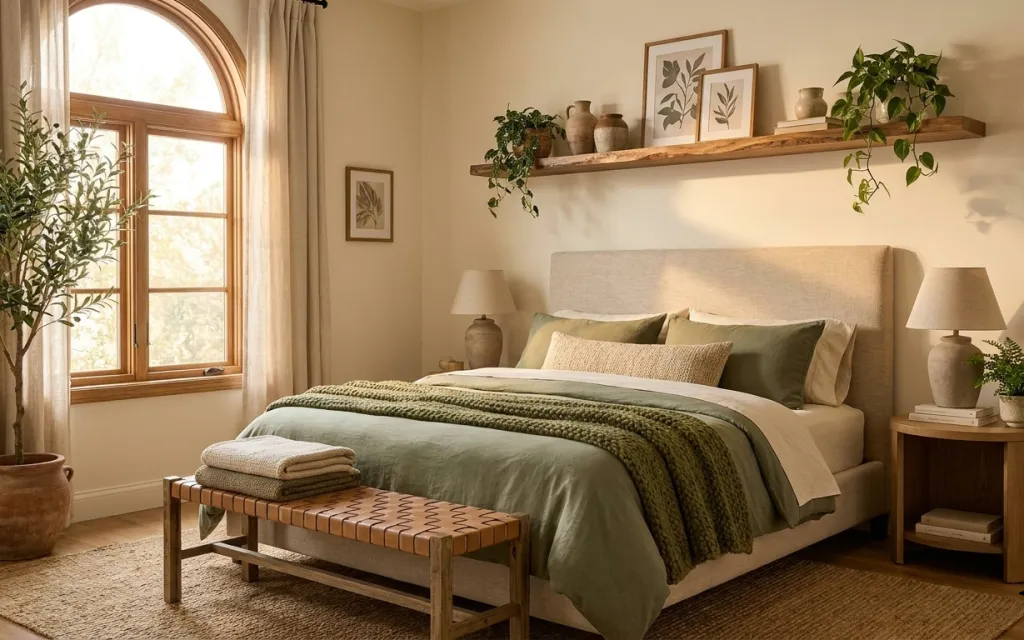
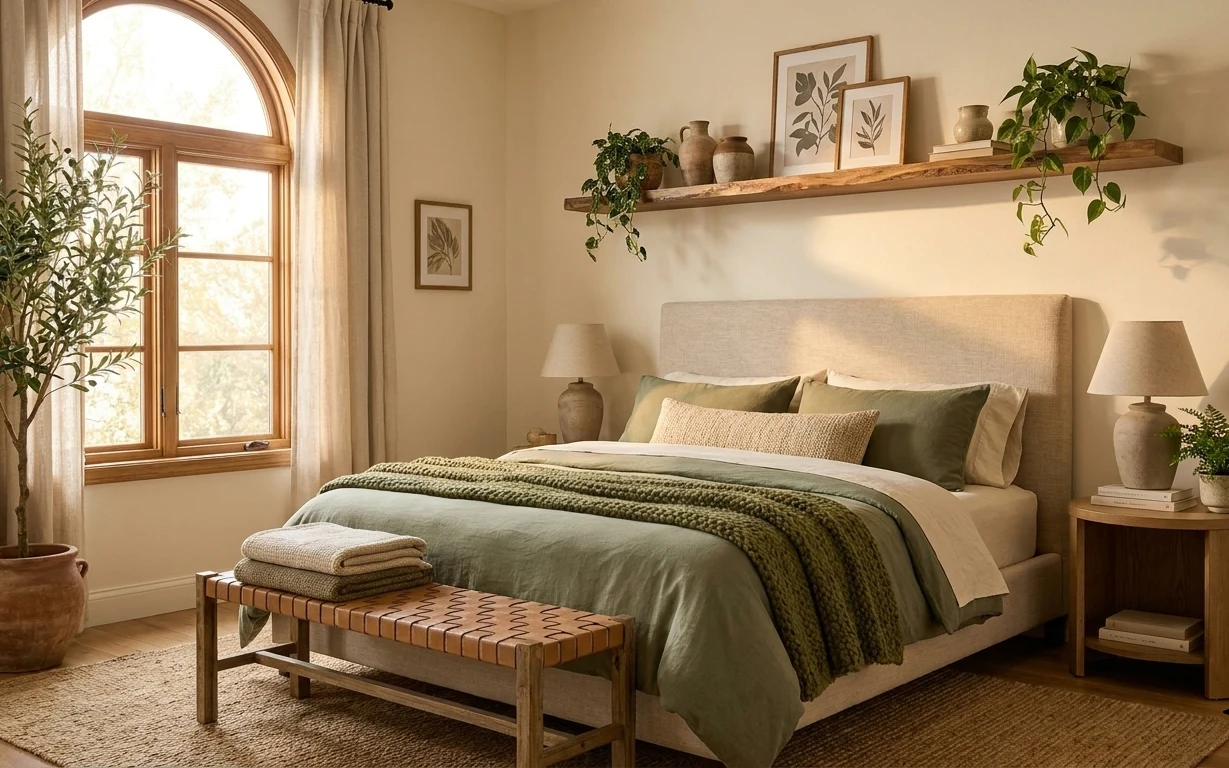
Start with what your eyes already land on: the bed reads calm because the textiles stay in a tight palette of cream and olive. In this photo, the jute rug, beige curtain panels, and warm wood nightstands do the background work—then the floating shelf styling and framed botanical prints add the “intentional” feeling. If you’re refreshing your own home for the first time, this is the kind of weekend plan where every purchase earns its place. You can copy the proportions (rug under the bed, curtains pulled wide, shelf centered) without needing exact furniture brands.
I almost made the common mistake of buying a single oversized artwork piece and calling it done. What shifted my thinking: the framed botanical prints and shelf decor work together like a visual set, with the plants repeating the same green note as the quilt. Also, I’ve learned the hard way that curtains matter even more than people think—your bed will look “finished” only if the fabric frame is tall enough.
Layer 1 — jute 5×7 area rug ($200) Hides footprints and grounds the bed
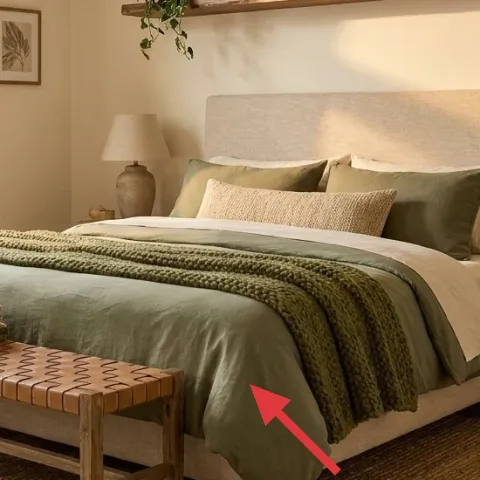
A jute 5×7 area rug works here because it’s textured without looking busy. The fibers catch light softly against the light wood floor, and the size is big enough that the bed and bench feel anchored instead of floating. The obvious alternative is a smooth patterned rug, but that usually pulls focus away from the olive bedding and warm wood. Trade-off: jute shows a little more wear over time, so it’s worth choosing a rug with a tight weave and keeping shoes off. Once it’s down, you can build the rest of the palette—cream curtains and olive textiles—around it.
Rug placement check
Center the rug so at least the front legs of the bed sit on the rug, not on the floor.
Layer 2 — beige curtain panels ($80) Frames the bed with soft vertical lines
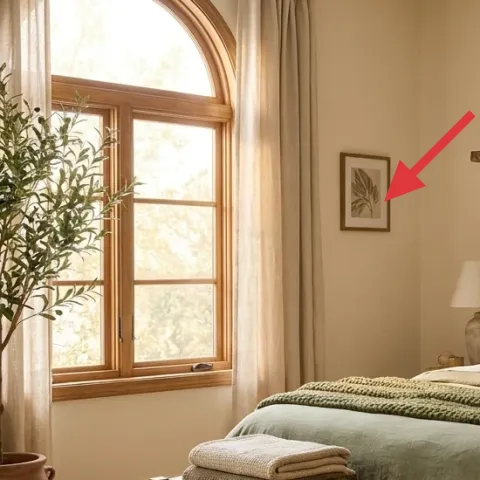
Beige curtain panels add height and softness, and they make the arched window feel like part of the bed zone instead of something separate. In the photo, the curtains fall in straight, neutral folds that echo the cream linens, which is why the whole scene stays calm. The “obvious” swap would be to skip curtains or use sheers only, but the bed needs that fabric frame to look styled. Trade-off: full panels take a little effort to hang and steam, but they’re one of the biggest perceived upgrades per dollar. Pull them wide enough that light doesn’t make the window area feel skinny.
Why beige works
Beige curtains don’t compete with the olive quilt; they act like a neutral backdrop for the plants and frames.
Layer 3 — floating wall shelf (wood plank) ($180) Adds storage for plants and “collected” decor
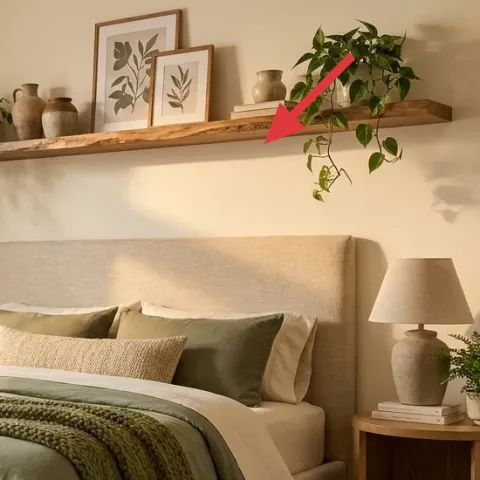
A floating wall shelf gives you functional surface space and instant styling height above the bed. Here, the wood plank matches the warm tones in the nightstands, which keeps everything from looking like mismatched purchases. The shelf also lets you repeat the green note with plants and bring in creamy ceramics without cluttering the nightstands. The alternative is stacking small decor pieces on both nightstands, but that usually makes the bed area feel busy and cramped. Trade-off: you’ll need to measure carefully for level and spacing, but drilling and anchors are fair game for homeowners, and the result is cleaner than floating baskets or loose stacks.
Keep the shelf centered
Center the shelf over the bed’s midline so the whole wall reads balanced.
Layer 4 — framed botanical print ($80) Brings a natural pattern to the wall
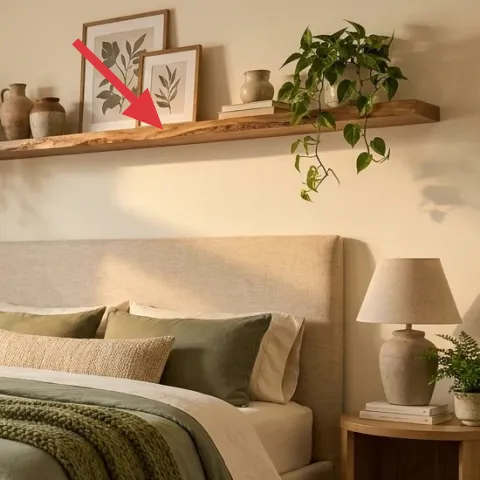
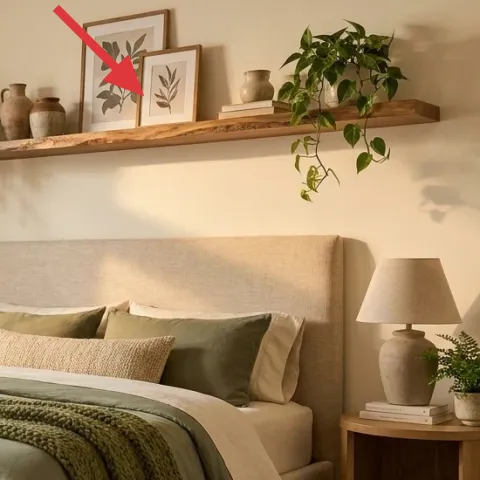
One framed botanical print (or a matching set, if you’re going bigger) adds a print texture that echoes the plant leaves without changing the room’s color story. In the photo, the frames sit near the shelf and echo the same warm, minimal vibe as the wood and linen tones. Going for a bold abstract piece is tempting, but it can fight the olive quilt and make the bed area feel less restful. Trade-off: prints need the right spacing—if they’re too high, they feel disconnected from the shelf styling. Choose frames with a matte finish or light wood so they don’t add shine that pulls attention away from the bedding.
Spacing rule
Leave a consistent gap between the print(s) and the shelf so the wall looks planned, not random.
Layer 5 — table lamp with beige shade ($60) Softens evenings with warm, indirect light
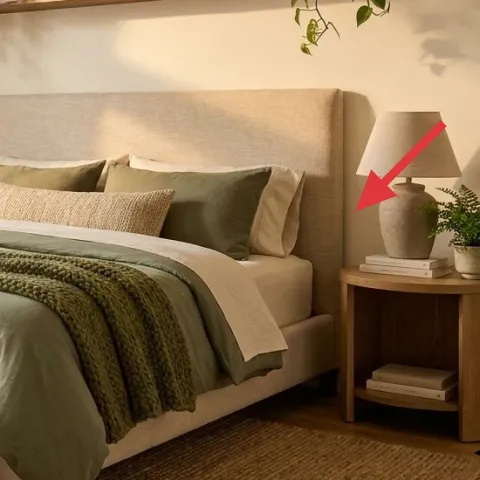
Table lamps with beige shades are doing more than lighting here—they shape the mood. The warm shade color pairs with the cream textiles and keeps the room from reading too cool, especially at night. The obvious alternative is overhead-only lighting, but that flattens the bed zone and makes the shelf and plant styling look harsh. Trade-off: you’ll need to place lamps where cords won’t dominate and where the light falls around the pillows, not behind them. If you’re hard-wiring or swapping fixtures, that’s a job best handled with an electrician if it’s beyond plug-in changes; for many setups, plug-in placement is enough to get the effect.
Don’t aim the shade at the wall
If the bulb glare hits your face when you sit up, tilt or reposition the lamp so the light washes the bedding.
Layer 6 — tall potted plant in terracotta pot ($80) Adds life on the left side of the bed
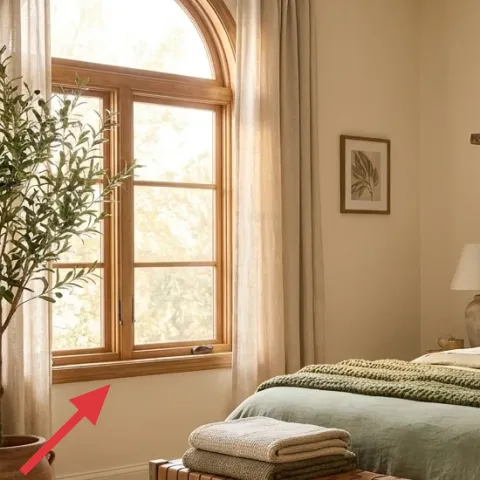
A tall potted plant in a terracotta pot brings vertical movement that balances the bed’s height and makes the window corner feel intentional. The terracotta tone also connects visually to the warm wood and the shelf items, so the plants don’t feel like an afterthought. The alternative is buying a shorter plant and grouping small pots, but that usually reads cluttered next to curtains. Trade-off: tall plants need light and occasional rotation, so they’ll ask for a little care. Still, they’re easy to maintain compared to living-wall projects, and repeating green with the shelf plants keeps the whole palette cohesive.
Easy maintenance move
Rotate the pot every couple of weeks so leaf growth stays even.
Layer 7 — decorative ceramic vase ($30) Repeats warm color without more clutter
Make it instead of buying it
Paint a thrifted ceramic vase so it matches the olive-and-cream styling on the shelf, using the same “warm matte” look without buying a new set.
Materials
- Ceramic primer — 1 small can — craft store — $6
- Matte paint (cream or olive) — 1 small jar/can — craft store — $6
- Fine sandpaper (220–320 grit) — 1 pack — hardware store — $5
- Painter’s tape — 1 roll — hardware store — $4
- Disposable gloves and stir stick set — 1 pack — craft store — $3
Steps
- Scuff the vase lightly with fine sandpaper to help primer grip.
- Wipe off dust with a dry cloth (no soaking).
- Mask any areas you want to stay unpainted with painter’s tape.
- Brush or roll on ceramic primer in thin, even coats.
- Let primer dry fully, then lightly sand for a smooth topcoat.
- Apply matte paint in thin layers until the color looks even.
- Unmask and let everything dry without moving the vase.
- After fully dry, place on the shelf and style with real greenery nearby.
Total DIY cost: $24 — saves about $6 over buying.
Even in a curated shelf moment, ceramics can quietly do the heavy lifting. In the photo, the vases sit on the wood plank with plants spilling over them, which makes the styling look “collected” rather than purchased in a set. When the vase finish matches the room’s muted palette—warm cream and softened olive—it blends into the background instead of competing with the bedding. The trade-off with painting is that you have to prep and apply thin coats for an even finish, but once it’s dry you get a custom look that still feels cohesive and calm. Style two at different heights so the shelf reads like a cluster, not a line.
Best shelf rhythm
Put one taller vase toward the end, then add one shorter piece near the plant.
The cost, layer by layer
| Layer | Item | Cost |
|---|---|---|
| 1 | Jute 5×7 area rug | $200 |
| 2 | Beige curtain panel pair (84") | $80 |
| 3 | Floating wall shelf (wood plank) | $180 |
| 4 | Framed botanical print 16×20 | $80 |
| 5 | Table lamp with beige shade | $60 |
| 6 | Tall potted indoor plant in terracotta pot | $80 |
| 7 | Decorative ceramic vase (DIY ~$24 materials) | $30 |
| Total | $710 | |
If you want a cheaper version, use a smaller rug (or skip the rug pad) and choose curtains with a shorter installed height; the bed still gets the anchored look, and the shelf remains the main styling focus.
What worked, what didn't (across the whole room)
This layout works because it layers neutrals with one clear color note (olive) and uses plant height to balance the bed. The shelf-and-frame wall keeps the bed zone from feeling plain, and the rug + curtains create a soft visual border. The only time it gets tricky is when one element is too shiny or too bright compared to the matte textiles.
What worked
- The jute rug grounds the bed and hides everyday wear better than thin flatweaves.
- Beige curtains add height and make the window feel built into the bed wall.
- The floating shelf creates vertical styling space without crowding the nightstand surface.
- Framed botanical prints add pattern that matches the plant leaves without going loud.
- Beige-shade table lamps create warm evening light around the pillows.
- Repeating green on the shelf and floor plants keeps the palette cohesive.
What didn't
- Switching to glossy ceramics would fight the matte textiles and read less calming.
- A rug that’s too small makes the bed look like it’s sitting on the floor, not anchored.
- Curtains hung too short shrink the perceived ceiling height and flatten the whole look.
- Too many separate small objects on the shelf turns the cluster into clutter.
- Cool-white bulbs can make olive bedding look gray at night.
What we'd skip if we did it again
Skip buying a matching “bedroom set” where everything matches perfectly. The magic here comes from texture and variation: jute underfoot, linen-like bedding, and wood that looks warm instead of uniform.
Skip using artwork and decor that’s too glossy or too high-contrast. In this palette, matte finishes and softer botanical lines keep the wall styling from pulling attention away from the bed.
Skip placing the lamps too close together. Spread the light across both sides of the bed so reading and evening lighting look balanced, not shadowy.
Frequently asked
How long does a refresh like this usually take?
Plan on a half-day to a full day for the easy wins (rug positioning, curtain hang, lamp placement). If you add a floating shelf, budget another 1–2 hours for measuring and mounting, plus styling time. Overall, most people can get the room looking “done” in about 4–8 hours across one weekend—especially if you’re reusing any existing lamps.
What if I rent—can I still get the same look?
The shelf and framed art are the only parts that usually require more commitment. If you can’t drill, prioritize a no-drill approach: removable shelf alternatives, freestanding shelf units, or simply swap to taller table decor and keep styling on nightstands. Curtains are usually the easiest renter upgrade—just choose a proper tension rod or existing hardware.
My bedroom is smaller. Should I go with a smaller rug or different curtains?
If the room is tight, choose a rug that still reaches under the front of the bed, even if it’s not 5×7. For curtains, keep the same “tall frame” idea—hang them higher than the window trim so they visually stretch the wall upward. The shelf cluster should also get fewer items: two vases and one plant usually beats five small objects.
Where should I shop for the shelf and framed botanical print?
For the shelf, look at home stores and hardware sections that carry floating shelves in warm wood tones. For the botanical print, you’ll get the best match by searching for 16×20 framed botanical art in neutral or sage tones. Thrift stores can also work if you reframe pieces—just keep the finish matte and the colors softened.
What’s the biggest mistake people make in this bedroom style?
Overloading the shelf and nightstands with lots of unrelated small items. This look works because the ceramics and plants repeat the same color family (cream, olive, warm wood) and share similar matte textures. If anything feels “off,” reduce the number of objects first, then check that curtains and rug placement still create a consistent bed frame.
More in Bedroom
Under $800: earthy, olive-bedroom refresh with 7 weekend wins
A weekend-ready bedroom refresh that leans earthy—olive quilt, warm wood, and soft neutrals. This plan uses 7 doable upgrades and keeps the…
Under $400: earthy-neutral bedroom refresh with 7 move-ready swaps
A move-friendly earthy-neutral bedroom refresh under $400. Seven swaps focus on warm textiles, layered light, and renter-safe plant styling…
Under $600: earthy-olive arched bed alcove refresh
This arched bed alcove look leans warm wood, olive curtains, and layered textiles—built for renters without drilling. For under $600, swap …