- Best for
- soft lighting + layered neutrals
- Cost
- under $700
- Difficulty
- easy (no-drill swaps)
- Time
- 2–4 hours
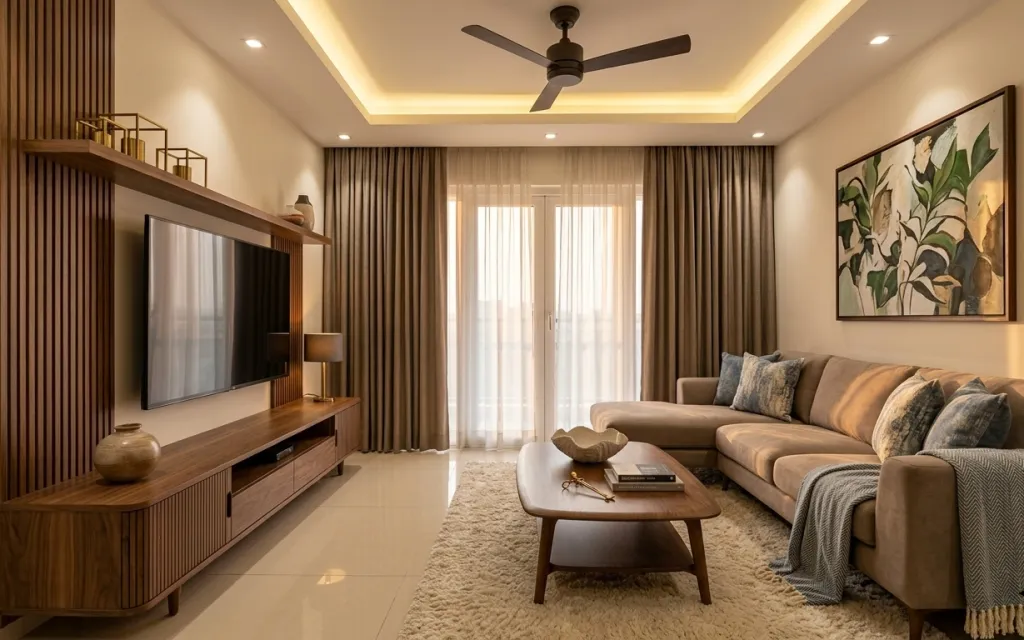
Why warm walnut-and-cream is the living room seating area of 2026
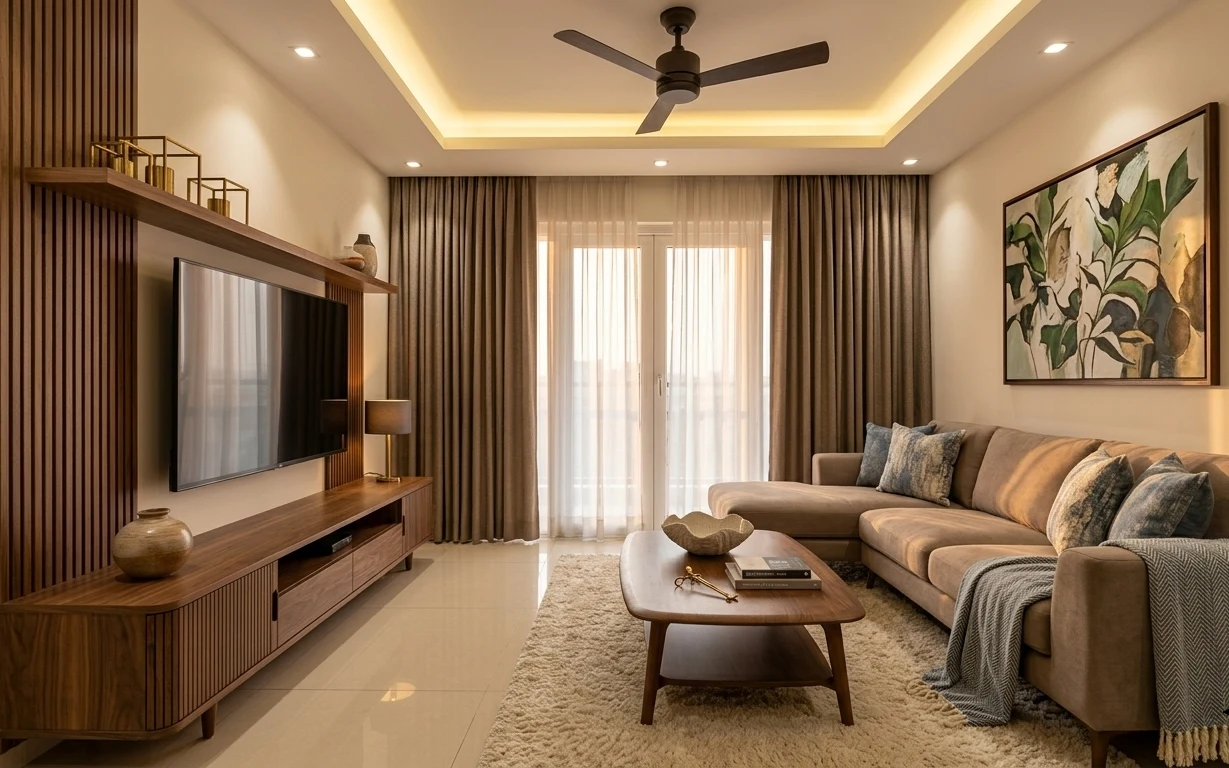
Warm neutrals with walnut-brown furniture always read “intentional” once there’s texture in the right places. In this photo you can see a plush area rug underfoot, a throw blanket and pillows in muted tones, and a ceramic vase that softens the TV-console lines. The table lamp adds a controlled pool of light, which makes the whole setup feel calmer than overhead lighting alone. The good news: this is achievable on a renter budget because everything here can be packed away—rug, textiles, and wall art included.
The mistake I used to make was trying to match every object perfectly—then the room looked flat and overly tidy. What changed my mind was moving from “matchy” to “repeatable”: same family of warm neutrals, different textures. Once I paired a shaggy rug with layered sofa textiles (not all the same fabric), the look started doing the work for me.
Layer 1 — throw pillow covers ($18) muted linen-and-wool texture
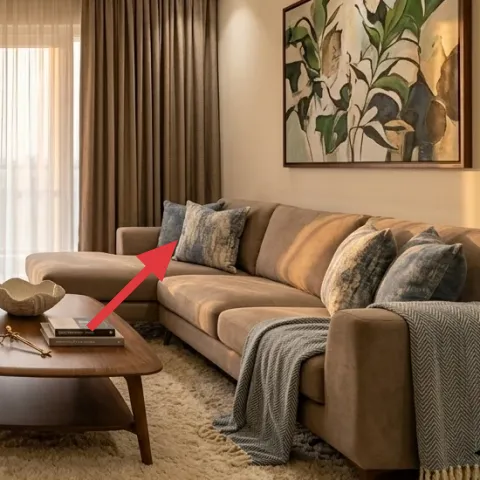
These throw pillow covers are the fastest way to bring in the same muted, textured feel you see on the sofa: a mix of light cream and smoky gray-blue tones with a woven, linen-or-wool look. I’m choosing covers rather than an entire pillow set because covers are easier to swap at move-out and less risky if you’re unsure about color. The trade-off is that you need an insert for full comfort, but the visual payoff is immediate once they’re layered at two heights (front edge and back cushion). Keep one pattern-free and one softly mottled for that “styled, not staged” look.
Layer by height, not just color
Put one cover in front for texture and another slightly behind so the tones don’t blend into one flat block.
Layer 2 — ceramic vase on TV console ($25) warm sand-toned sculptural shape
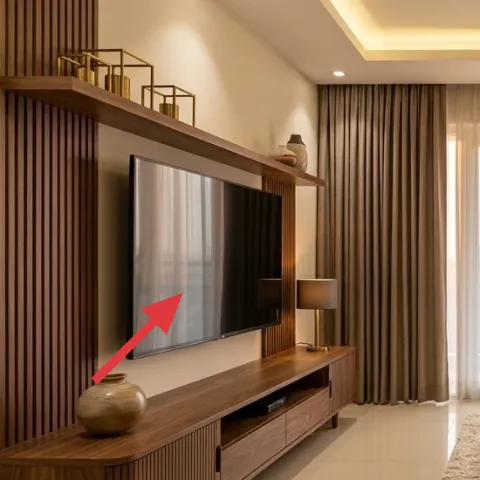
The sculptural ceramic vase on the TV console is small, but it keeps the whole media wall from feeling like furniture-only. Choose a matte, sand-to-umber tone (like the one in the photo) with an organic profile—rounder than a cylinder, less angular than a perfect vase. This works because warm ceramics echo the walnut wood and visually “buffer” the darker TV and shelf lines. The trade-off: the vase needs negative space around it, so resist adding three more objects right next to it. One hero piece is the move; then let the lamp and woodwork do the rest.
Match the finish, not the exact shade
A slightly different beige still looks cohesive as long as the vase finish stays matte and the wood stays warm.
Layer 3 — table lamp on TV console ($25) plug-in glow with a fabric shade
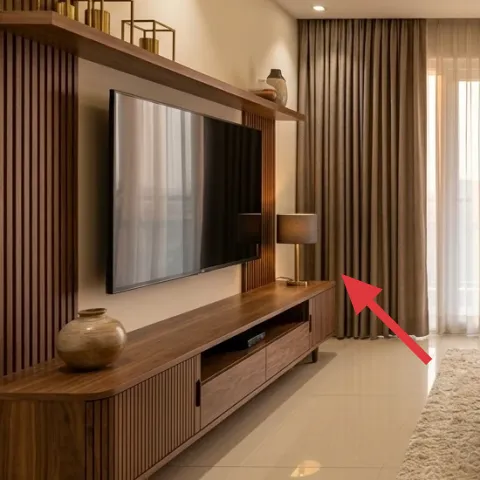
This table lamp on the TV console creates the warm, low-angle lighting you want for evenings—exactly the kind of “soft warm” mood that makes beige interiors feel lived-in instead of pale. Look for a simple silhouette with a light fabric shade so the light spreads, not punches. The advantage over overhead is control: you can dim the room’s contrast and make the rug and textiles look richer without changing any walls. The trade-off is that you’ll need a nearby outlet and the lamp has to be stable on the console, but plug-in styling is totally renter-friendly.
Pick an off-white shade for warmer neutrals
As soon as the shade turns bright white, the whole palette can look cooler than the sofa.
Layer 4 — coffee table ($90) compact wood top for books-and-tray styling
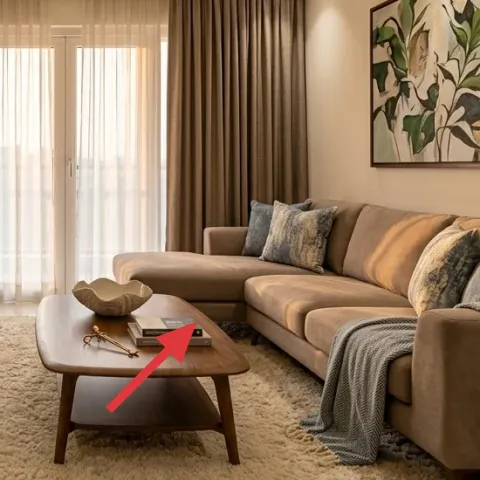
The coffee table is doing double duty here: it anchors the seating area and gives you a “stage” for everyday objects like books and small decorative pieces. In the photo it’s a compact wood top with a clean edge—so it doesn’t compete with the rug texture or the sofa upholstery. I’d choose a similar scale rather than a large coffee table because this room reads airy even with a big rug. The trade-off is less surface for stacking, but the upside is fewer clutter zones. Keep styling to one book stack plus one small object, then leave breathing room.
Avoid a clutter-heavy tabletop
If the coffee table fills up, the room loses the calm, warm-minimal balance you see in the photo.
Layer 5 — framed wall art print (abstract botanical) ($80) earthy shapes with high-contrast color
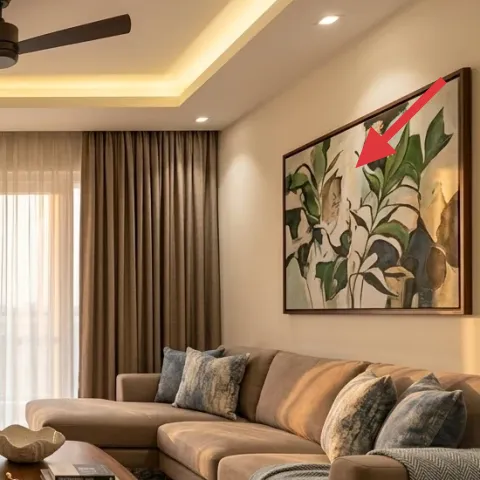
The framed abstract botanical print is the wall’s visual “pause”—it adds color depth (greens and warm earth tones) without turning the room into a pattern party. For a renter-friendly version, stick to a medium frame size that sits at eye level from the sofa, and choose art with both light and dark areas so it holds up against the warm walls. This is an easier alternative than trying to rework the whole media wall, and it’s move-out-friendly with Command hooks (when the frame backing allows). The trade-off: you’ll need to measure your sofa sightline and hang height, but once it’s right, the room instantly looks finished.
Keep the frame slim if your media wall is busy
A thicker frame can feel heavy next to the TV console and shelving lines.
Layer 6 — area rug ($200) warm cream base to soften tile floors
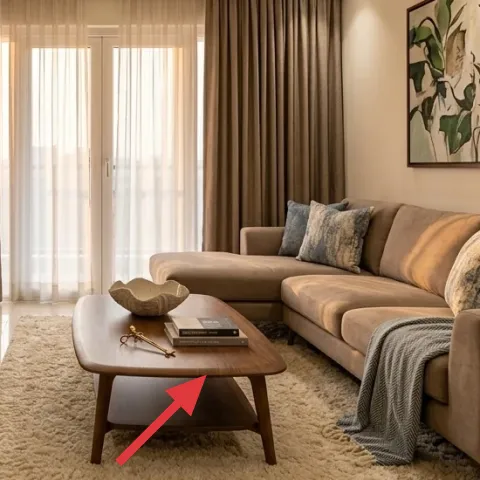
The area rug is the foundation that makes everything else look expensive. In this photo it’s a plush, light-cream rug that softens the light tile floor and gives the sofa texture somewhere to “land.” I’d choose a warm neutral pile that’s dense enough to blur small specks, because shag and high-pile can show dirt quickly. The alternative—going with a flatter rug—would read more modern-casual, but it wouldn’t match the cozy, layered look here. Trade-off: high-pile needs a careful vacuum routine, but it’s the fastest way to bring softness to a room with clean lines and warm wood.
Size it so the front sofa legs touch
When the rug is anchored under the seating, the whole area feels intentional.
Layer 7 — L-shaped sofa ($250) warm taupe upholstery for a japandi baseline
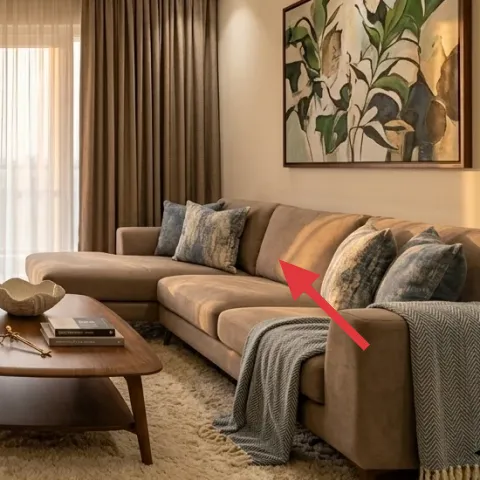
The L-shaped sofa (warm taupe, clean upholstery) is the baseline that keeps this color story cohesive. Because the rest of the room is wood-forward and warm-neutral, the sofa’s muted fabric tone prevents the space from swinging either too brown or too beige. Choosing a sofa with a simple silhouette is the practical move for renters—you can style it with textiles and wall art each season without fighting bold design lines. The trade-off is that upholstered pieces can be harder to move, so if you’re shopping, focus on manageable size and comfort. Once it’s in, you can build the look with rug + lamp + wall art.
Use textiles to “season” the sofa
Swap covers and throws before you ever replace the upholstery.
The cost, layer by layer
| Layer | Item | Cost |
|---|---|---|
| 1 | Throw pillow covers (set) | $18 |
| 2 | Ceramic vase (medium, matte) | $25 |
| 3 | Plug-in table lamp with fabric shade | $25 |
| 4 | Coffee table (wood top) | $90 |
| 5 | Framed abstract botanical wall art print | $80 |
| 6 | Area rug 8×10 (warm cream) | $200 |
| 7 | L-shaped sofa (thrifted price estimate) | $250 |
| Total | $688 | |
If you need a cheaper variant, keep the same palette and swap the rug for a smaller 5×7 in a similar cream tone. That usually saves $80–$120, while leaving room for better pillow covers or a higher-quality lamp shade.
What worked, what didn't (across the whole room)
The warm walnut-and-cream mix works because it’s built from texture: rug pile, woven pillow covers, and a ceramic accent. Lighting also matters here—one table lamp at console height makes the seating area feel softer than overhead lighting alone.
What worked
- The cream rug on tile makes the whole seating area feel warmer and more grounded.
- Muted pillow covers add depth without introducing loud patterns.
- The table lamp creates a low, forgiving glow that flatters beige tones.
- The ceramic vase gives the console a clear focal point instead of “empty wood.”
- The abstract botanical art adds color depth while still reading cohesive with walnut.
- The coffee table stays uncluttered, so styling looks intentional instead of crowded.
What didn't
- A heavy, high-contrast rug would fight the sofa’s quiet upholstery and feel too busy.
- Pillows in only one texture can look flat; mixing woven and softer tones matters.
- Over-styling the coffee table blurs the warm-minimal feel quickly.
- A bright white shade lamp can cool down the palette and make the wood feel dull.
- Art hung too high makes the wall feel disconnected from the seating.
What we'd skip if we did it again
Skip a “matchy” set of everything in the same fabric or finish. Beige rooms get boring fast when every texture is identical; mix rug pile, woven pillow covers, and a matte ceramic for the best result.
Skip replacing the whole media wall or repainting walls for this look. The photo’s style comes from renter-safe choices—textiles, lighting, and one framed print—so you get the finish without lease-risk.
Skip hanging art without checking sofa eye level. Measure from the cushion to the center of the frame; even a few inches off can make the wall feel accidental.
Frequently asked
How long does this living room seating area refresh take?
Plan on 2–4 hours total. Day one is for swapping the rug and layering the sofa with pillow covers and a throw. Day two is for adding the plug-in lamp, styling the coffee table, and hanging the framed wall art at sofa eye level. If you’re shopping for items, budget extra time for delivery and returns.
Is this renter-friendly if I can’t drill into the wall?
Yes—this look relies on move-out-safe choices. Rug and textiles are no-drill. For the framed wall art, use a renter-safe hanging method like Command hooks that matches the frame’s weight, and avoid modifying any landlord fixtures. The lamp and decor sit on surfaces, so there’s nothing permanent to reverse later.
What if my room is smaller than this one?
Go down one size on the rug (for example, 5×7) but keep the same warm cream tone so the rug still softens hard flooring. Choose pillow covers in the same color family, and use one framed art piece instead of adding multiple frames. Keep the coffee table styling minimal so the seating area doesn’t feel cramped.
What if my room is bigger and feels sparse?
Upsize the rug so the front sofa legs sit on it, not just the back edge. Add a second pillow cover only if you can keep the palette muted and textures varied. For wall art, consider a slightly larger frame in the same earthy-green direction; one bigger focal point usually looks more intentional than several small ones.
Where should I shop differently to stay on budget?
Start with the rug and lamp shade—those are worth spending on because they do the heavy lifting visually. Then look for the sofa and ceramic vase through resale or discount channels like marketplace listings, estate sales, or outlet retailers. Framed art prints are often cheaper via art marketplaces than custom framing.
What’s the biggest mistake people make with this warm-neutral look?
The biggest mistake is choosing all one texture and one finish, which makes beige feel flat and slightly washed out. The fix is simple: add pile (rug), weave (pillow covers), and matte ceramics, and keep the lamp shade light. Also, don’t overfill the coffee table—warm-minimal works because of breathing room.
More in Living Room
Under $700: warm walnut-and-cream living room seating area refresh
A renter-friendly living room seating area refresh that leans mid-century modern warmth: rug first, then lamp glow, plus a move-out-safe wa…
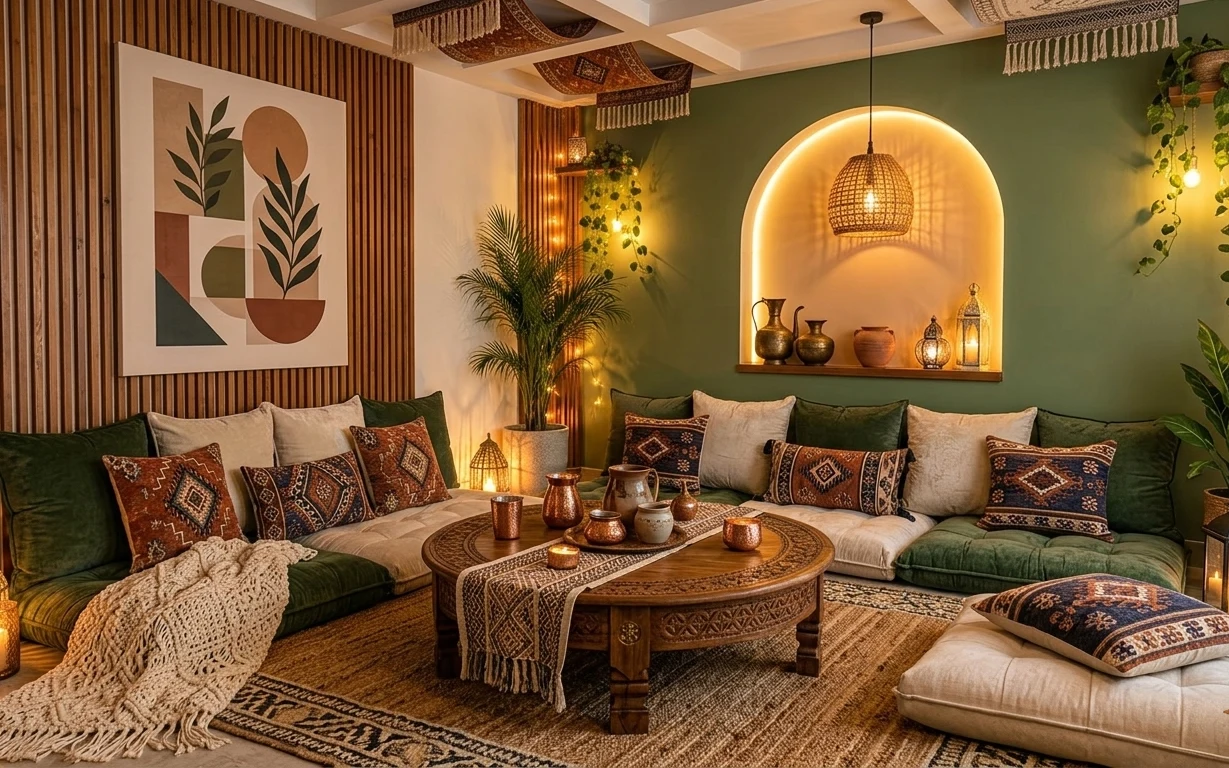
Under $600: boho living room nook refresh with move-friendly swaps
A boho living room nook, refreshed with renter-friendly textiles and freestanding swaps for under $600. The look leans warm amber light, de…
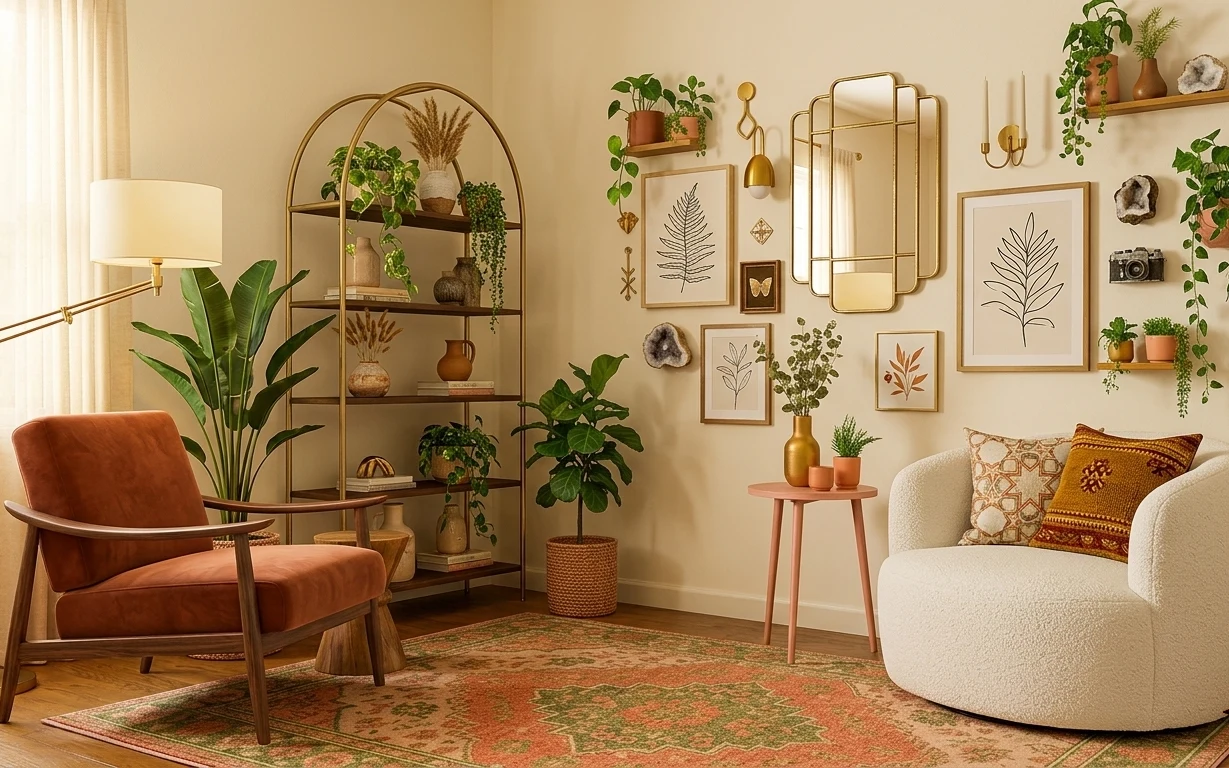
Under $1500: plant-filled living room refresh with 7 swaps
A plant-filled living room seating nook, built around a warm gold lamp, terracotta rug, and layered botanical wall art. This weekend refres…