- Difficulty
- Easy to paint and place the decor
- Time
- One weekend for the wall + setup
- Total cost
- $590 typical DIY mix
- Renter-safe
- Yes for styling; paint and shelf choices depend on your lease
Why warm cream bathroom vanity wall is the bathroom vanity wall of 2026
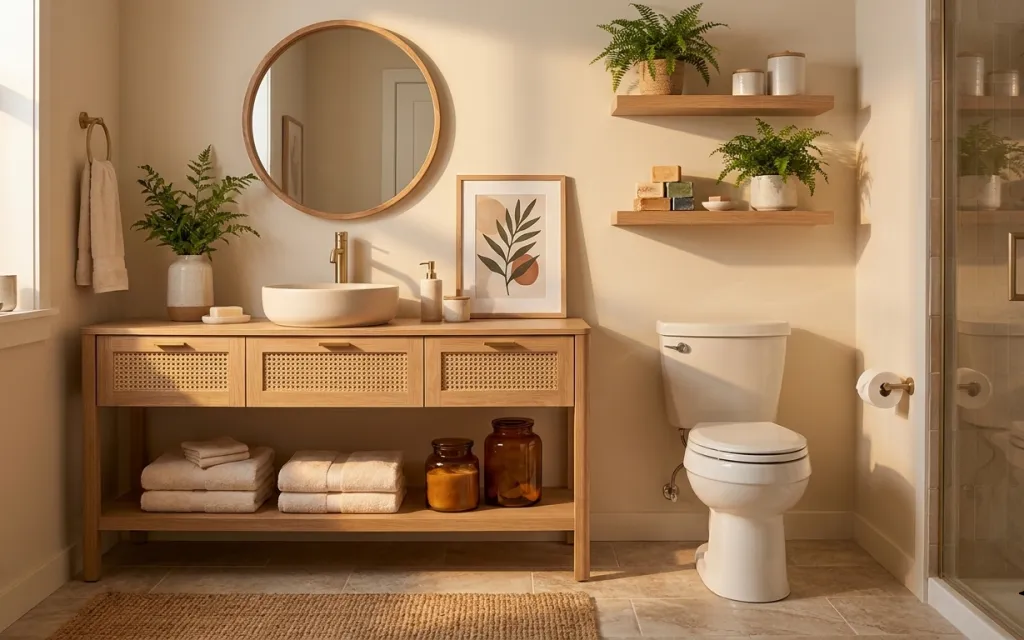
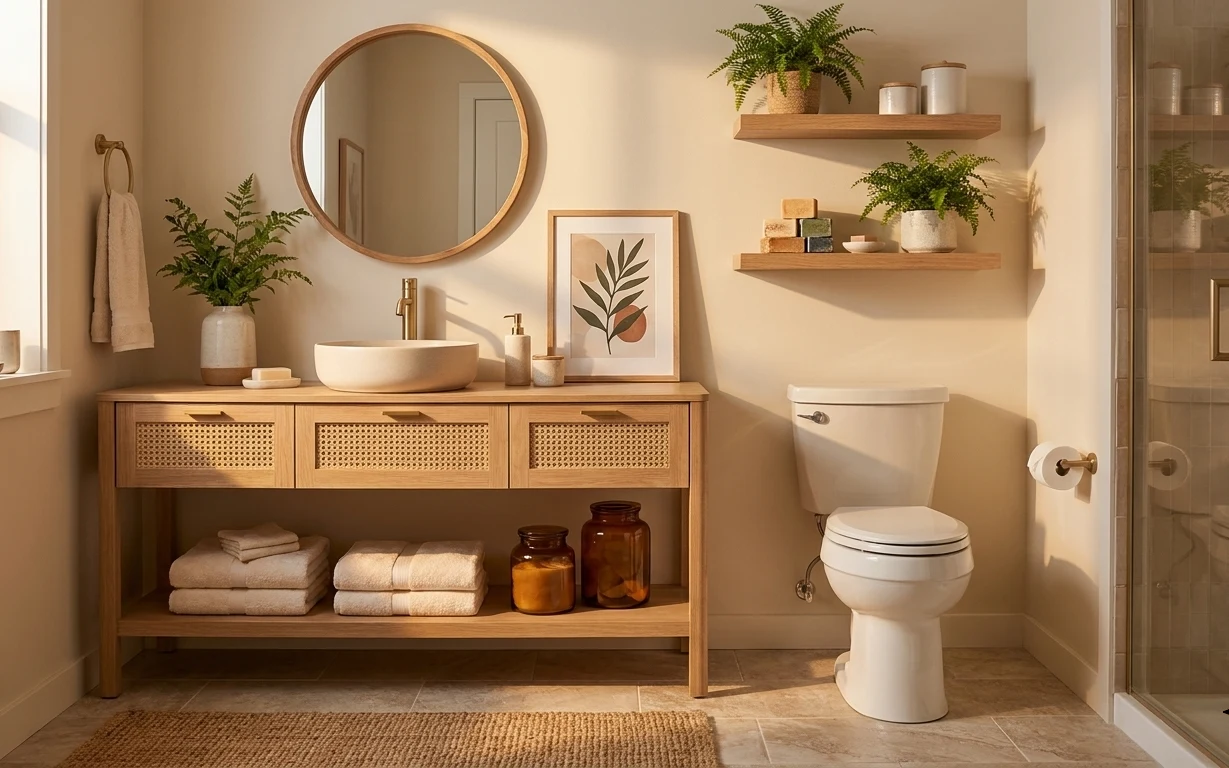
That soft, warm cream backdrop is doing more work than the accessories ever could. In this bathroom, the round mirror, framed botanical print, and two floating wood shelves create a clean vertical rhythm—then the jute area rug and stacked towels keep the whole scene from reading too formal. You can see the materials playing nicely together: smooth tile underfoot, matte-painted walls, and warm wood tones that don’t fight the greenery. As a homeowner, you get to pick the option with the highest visual payoff (like paint) instead of chasing only reversible swaps.
I almost talked myself out of painting because I’ve “been fine” with beige before. Then I remembered what always happens: the room stays flat, and everything else looks like it’s floating. Here, the paint choice makes the botanical print feel intentional and the mirror frame look richer. It’s the kind of change you notice the second you walk in, not the kind you have to explain.
Layer 1 — jute area rug ($80) Texture underfoot that anchors the vanity
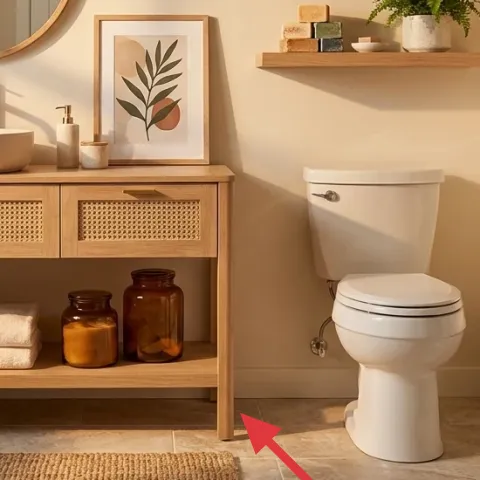
This jute area rug sits in front of the vanity, stopping the tile from feeling cold and echoing the warm wood tones at the cabinet and shelves. Jute’s woven texture also makes the white ceramic soap dish and amber glass jars look more “placed” instead of random. The obvious alternative is a cheap flatweave in a cool gray, but it tends to read harsh against warm cabinetry. The trade-off: jute needs gentle rug care, so you’ll shake it out and keep water off the edges when the bathroom is active.
Work from the vanity footprint
Pick a rug size that reaches far enough beyond the cabinet doors so the edges don’t visually stop mid-routine.
Layer 2 — painted light walls ($70) The calm backdrop that makes everything look curated
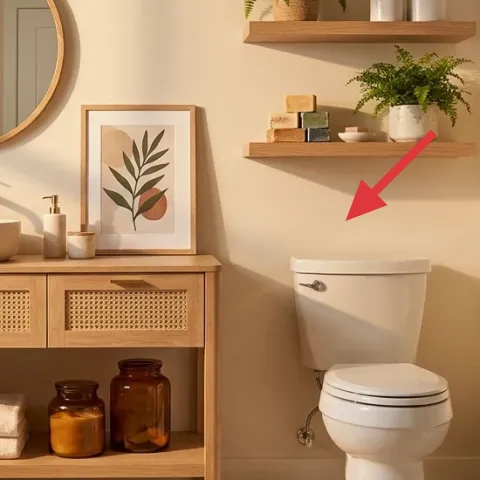
The painted light walls are the quiet base that keeps the round mirror, botanical print, and plants from competing. A warm-leaning cream also flatters the walnut-toned wood on the vanity and shelves, so the room reads cohesive instead of patchwork. If you chose a cooler white, the amber jars and greenery would look slightly dull by comparison. The trade-off is time: you have to prep and cut in carefully around the vanity edge and any wall hardware, but it’s still a weekend-friendly refresh.
Make it instead of buying it
DIY a warm cream wall refresh with sample-size paint and painter’s tape so you get the same calmer backdrop without buying a full gallon.
Materials
- Warm cream sample paint (enough for touch-ups/one coat) — ~1 qt — local paint store — $25
- Painter’s tape (2–3 rolls) — 1 in/1.5 in — hardware store — $10
- Mini foam roller + roller covers — 2–3 pack — hardware store — $8
- Angle sash brush — 1 — hardware store — $7
- Paint tray liners + drop cloth — set — hardware store — $5
Steps
- Clean the wall spot area with a damp cloth, then let it dry fully.
- Use painter’s tape to mask edges near the vanity, mirror, and shelf line.
- Cut in around tape lines with the angle brush for a crisp perimeter.
- Roll the main wall area in thin, even coats, keeping a “wet edge” as you go.
- Let the first coat dry completely, then assess coverage in changing light.
- Apply a second thin coat only where needed for consistent color.
- Remove tape while the last coat is slightly tacky to reduce peeling.
- Let everything cure overnight before rehanging or restyling objects.
Total DIY cost: $45 — saves about $25 over buying.
Layer 3 — framed botanical print ($80) One vertical focal point in a small footprint
The framed botanical print sits above the vanity, giving your eye a clear stop point between the round mirror and the soap-and-jars styling. Botanical art also pairs with the plants without matching them exactly—which is how you avoid the “all green, all day” look. If you went with an abstract print instead, the shelves and towel stack might feel less integrated because the bathroom would lose the leaf motif. The trade-off with botanical imagery is that you’ll want to keep the rest of the styling restrained so the print reads intentional, not busy.
Match the frame color to the wood
Even if you switch other items, keep the frame tone close to the vanity/shelf wood so the wall looks planned.
Layer 4 — round mirror ($120) Softer than a rectangular mirror, better for daylight
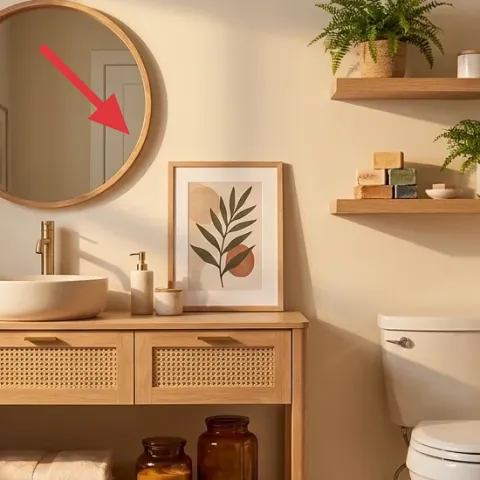
This round mirror warms up the whole vanity wall. Compared with a rectangular mirror, it’s visually softer and helps the space feel less boxed in—especially with the toilet area nearby. The mirror frame’s wood tone also echoes the vanity cabinet and floating shelves, so the bathroom doesn’t drift into “white-only” territory. The trade-off: round mirrors can amplify any clutter on the counter, because the reflection catches more of the countertop line. You’ll get the best result by keeping the soap dish and jars spaced rather than piled.
Center it to the sink, not the vanity
Line the mirror up with the bowl and faucet zone so the reflection feels balanced instead of slightly off.
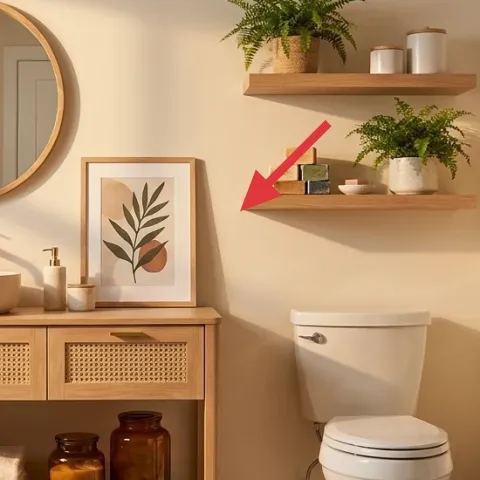
Layer 5 — two floating wood shelves ($80) Extra storage that still looks light
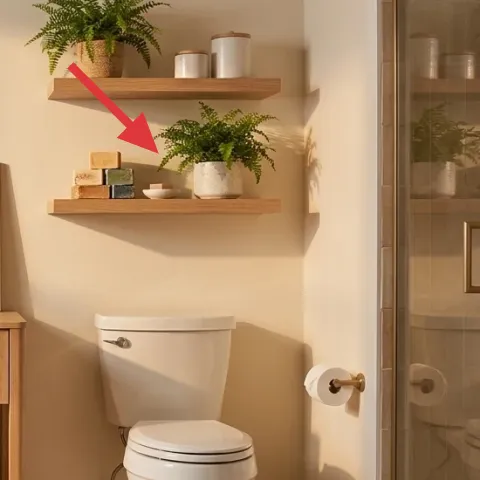
Those two floating wood shelves add a practical place for the plants, jars, and small ceramic pieces without making the room feel heavier. They also create a layered “vertical ladder” above the vanity—top shelf for plants and stackables, middle shelf for small groupings. The obvious alternative is a single wide shelf, but it often forces everything to one level and makes the wall look flat. The trade-off is careful placement: if the shelves are too low or too close together, the counter and mirror will feel crowded.
Don’t overcrowd the top shelf
Leave breathing room around the potted plants so the wall doesn’t read cluttered in reflection.
Layer 6 — two potted green plants ($40) Add life without adding visual noise
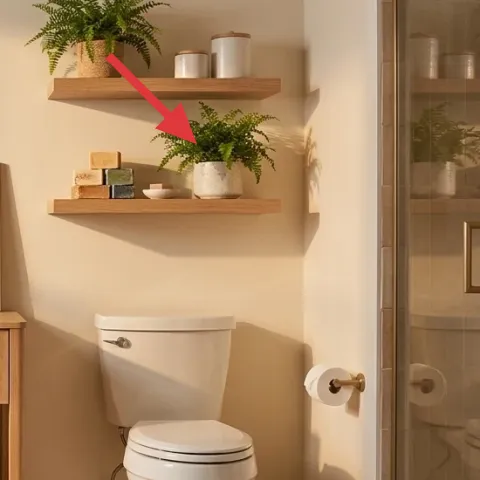
The two potted green plants bring a “real” texture layer that connects the botanical print to the everyday countertop objects. Because they’re in simple pots, they don’t compete with the wood, ceramic, and tile; instead, they soften the straight lines from the shelves and mirror. If you opted for only one plant, the wall would look less balanced—there’d be more focus on one side of the mirror reflection. The trade-off: plants need light and occasional rotation, so you may have to adjust their position if the bathroom gets uneven daylight.
Rotate weekly for even growth
A quick weekly turn keeps both plants from leaning and keeps the wall look symmetrical.
Layer 7 — bathroom faucet ($120) Small metal detail, big “finished” read
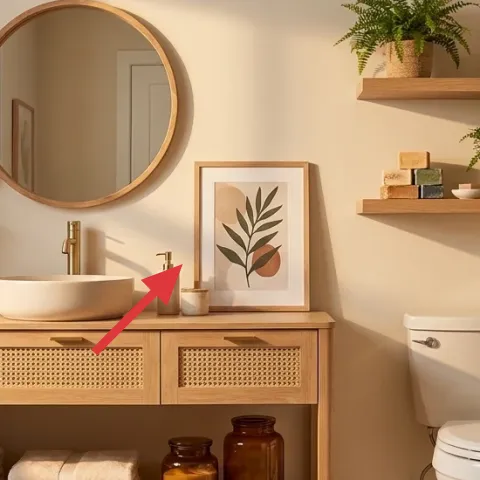
Swapping in a cohesive bathroom faucet makes the vanity wall feel finished because it’s one of the first things you notice near the sink. The faucet sits right between the soap dish and the framed print, so its finish influences how warm or cool the whole vignette looks. The best “obvious” alternative—keeping an outdated faucet—often undermines everything else, because the rest of the styling will look more current than the metal hardware. The trade-off with faucet swaps is you’ll want to plan for compatible sizing and parts before purchase, even if you’re doing a fast refresh.
Keep the faucet finish consistent
If towel hooks or other hardware are visible, match their finish so the details don’t fight.
The cost, layer by layer
| Layer | Item | Cost |
|---|---|---|
| 1 | Jute area rug | $80 |
| 2 | Paint, 1 gallon (homeowner) | $70 |
| 3 | Framed art print 16×20 | $80 |
| 4 | Mirror (24–36") | $120 |
| 5 | Floating wood shelves kit | $80 |
| 6 | Indoor plant (4–6 ft) | $40 |
| 7 | Bathroom faucet | $120 |
| Total | $590 | |
If you need a cheaper variant, choose a smaller mirror size and a simpler frame for the botanical print, then keep the jute rug and paint as the main budget anchors. Swapping one plant for a tabletop plant also cuts cost without changing the overall look.
What worked, what didn't (across the whole room)
This setup works because the wall has one clear vertical focal point (the mirror) plus one secondary focal point (the botanical print), and the shelves fill the “in-between” space. Warm wood, matte paint, and the woven rug create texture without clashing with the plants. The only place to be careful is countertop density—too many small objects will read busy in reflection.
What worked
- The jute area rug keeps the tile from feeling cold underfoot while matching the vanity wood tone.
- Warm cream painted walls make the amber jars look richer and the greenery look brighter.
- The round mirror softens the wall geometry compared with a more rigid rectangle.
- The framed botanical print repeats the plant shape so the wall feels intentional, not random.
- Two floating wood shelves give storage without making the room visually heavier.
- The plants add texture depth so the shelves don’t feel like “just decor.”
What didn't
- If shelves are too low, the reflected countertop line starts to feel crowded.
- Using a cool white paint can make the amber jars and wood look a little washed out.
- A too-dark frame color on the botanical print can fight the warm wood tones nearby.
- Overstyling the counter makes the reflection look cluttered even if each item is nice.
What we'd skip if we did it again
Skip a mirror that’s too small for the vanity width. With a tiny circle, the framed print and shelves start to look like they’re “oversharing,” and the wall loses its main anchor point.
Skip buying one giant statement shelf. Two lighter floating shelves keep the wall airy, and you can still distribute plants, jars, and small ceramics without stacking everything at eye level.
Skip cool-toned paint samples unless the bathroom gets strong daylight all day. Warm cream is what keeps the faucet, amber jars, and wood from reading gray, especially when you’re looking at the room at night.
Frequently asked
How long does this kind of bathroom vanity wall refresh take?
Plan for about a weekend. Day one is for patching/cleaning, taping, and painting (plus drying time), then letting everything cure overnight. Day two is for mounting/placing shelves (if needed), hanging the framed botanical print, and styling the plants, ceramic soap dish, and jars so they look spaced, not piled. If you swap the faucet, add time for parts and any dry-fit testing.
What if my bathroom is smaller than the photo?
If your vanity wall is narrower, scale down one element instead of cutting all of them. Keep the round mirror and framed botanical print as anchors, but reduce shelf depth or use fewer objects on each shelf. A slightly smaller jute area rug still works as long as it reaches past the vanity doors so the floor looks intentional.
What if my bathroom is bigger—can I go bolder?
You can add one extra layer of “vertical presence,” like a second plant position or a taller plant, but keep the palette consistent: warm cream walls, warm wood tones, and the same leaf direction from the botanical print. If the counter has more usable space, spread the amber jars and ceramic tray wider rather than clustering them.
Is this renter-friendly if I can’t make permanent changes?
Yes for the majority of styling: rug, framed botanical print, and countertop objects are all removable. For wall changes, you’ll want to skip painting and prioritize renter-safe shelf options or free-standing shelving (if allowed). If you do hang anything, use the least invasive method your lease permits and avoid anything that leaves unpatchable holes.
Where should I shop for these exact pieces?
Look for the round mirror and framed botanical print at home decor retailers that carry mid-range wood frames, then source the jute rug from rug-focused stores for better texture selection. For floating shelves, search for a wood shelf kit that includes the bracket system you’re comfortable installing. Plants and ceramic soap dishes are often easiest at big-box garden sections and home stores.
Biggest mistake on this bathroom vanity wall look?
Overcrowding the shelves and counter. It’s tempting to style every square inch with jars, trays, and candles, but the mirror reflection turns that into visual clutter fast. Leave negative space around the two potted plants and keep the countertop arrangement consistent—soap dish, then jars, then one small tray.
More in Bathroom
Under $800: a warm cream bathroom vanity wall makeover
This bathroom vanity wall refresh stays under $800 and leans into warm cream paint, a round mirror, and tidy styling on floating shelves. Y…
Under $350: Warm wood bathroom vanity wall with renter swaps
A warm wood bathroom vanity wall makeover using renter-safe swaps for textiles, framed art, and styling pieces. This look comes together un…