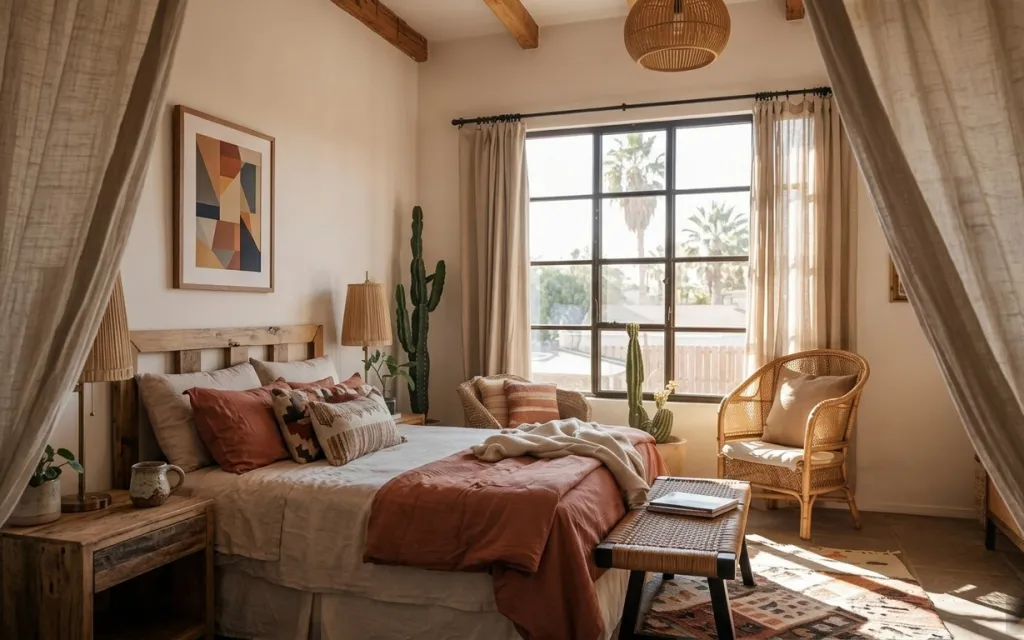
- Best for
- Sunlit bed corners
- Time
- 2–6 hours
- Total cost
- $1,230
- Renter-safe
- Mostly renter-safe with simple hanging
Why warm terracotta bedding is the sunlit bed corner of 2026
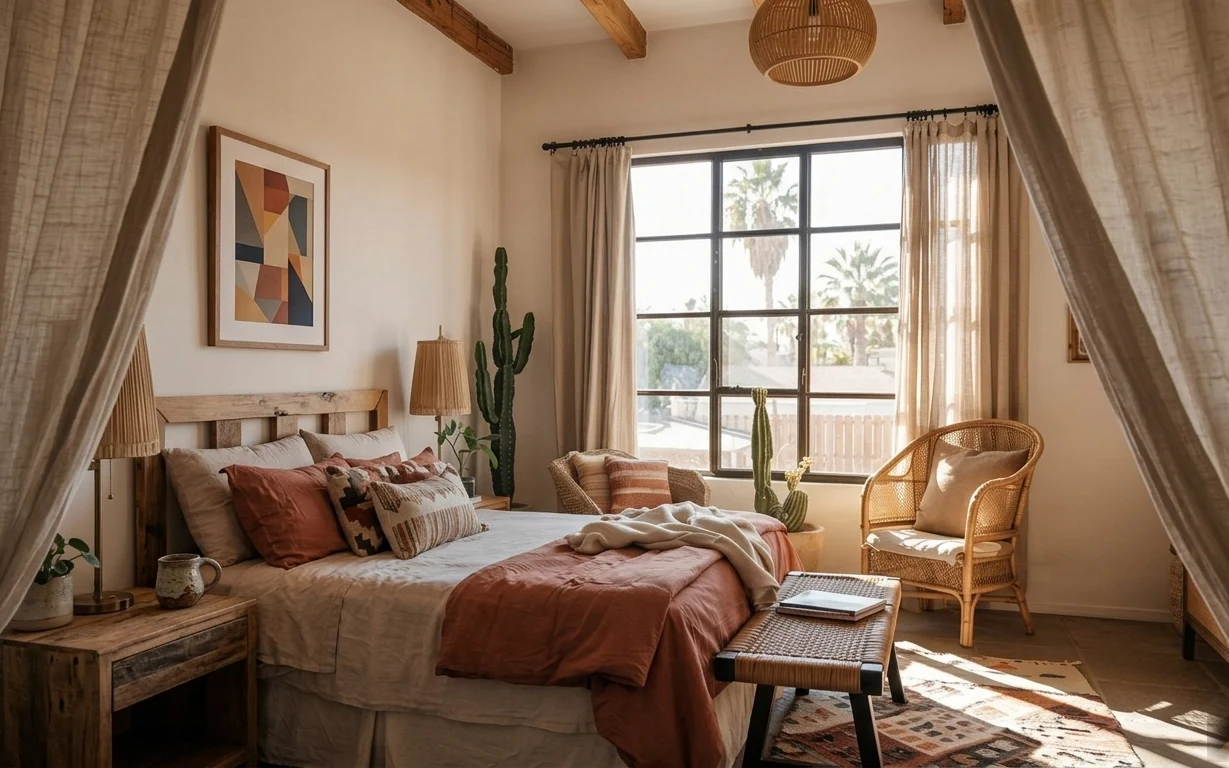
This setup works because the textures do the talking: the rust terracotta quilted bedding reads rich, the cream bed throw softens the palette, and the patterned rug grounds everything from the foot of the bed to the armchair. I’m also obsessed with how the beige curtain panels frame the window—tall, light, and slightly relaxed—so the daylight feels intentional rather than accidental. The framed abstract geometric wall art adds structure without feeling too “matchy” for a weekend refresh.
I used to overthink window treatments, and I’d end up with curtains that looked fine in the store but landed too short at home. On this kind of sunlit corner, the height matters more than the fabric weight. Hanging the panels where they visually “reach” and keeping the colors warm makes the whole bed area feel pulled together—even when you’re working with what you already have.
Layer 1 — patterned area rug ($200) anchors the whole bed zone
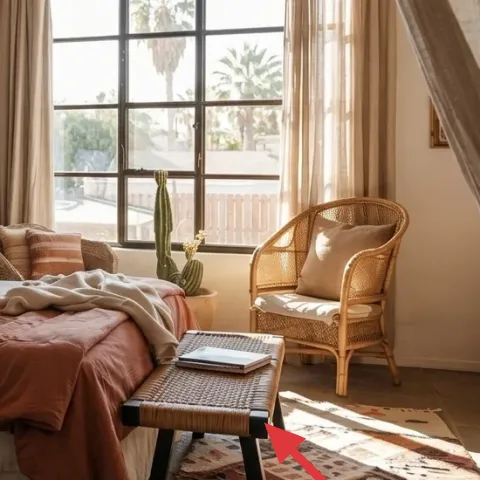
Start with the patterned area rug because it decides how much warmth the room shows at floor level. In the photo, the rug’s earthy pattern visually ties together the cream bedding and the terracotta rust pillows, and it helps the wood floor look more finished. The alternative is buying a plain solid rug, but then you lose that boho “collected” rhythm. Yes, a pattern makes placement matter, but that’s exactly why it’s high-impact: get the rug size right and everything above it looks more deliberate.
Rug first, then textiles
Pick a rug with at least one color already showing in your bedding so your curtains and pillows feel coordinated without matching every thread.
Layer 2 — beige curtain panels ($80) frame daylight and add soft height
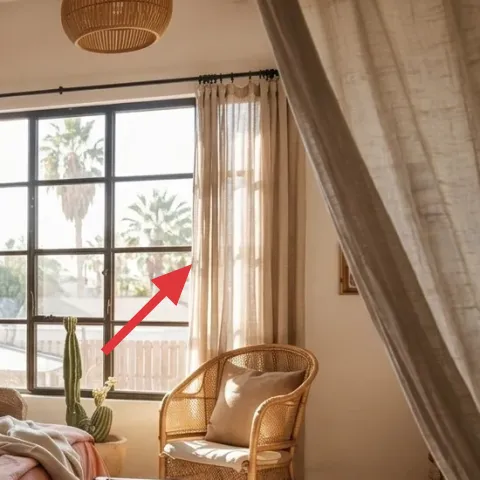
Beige curtain panels do three jobs at once: soften the hard edges around the window, add vertical lines, and make the morning light feel flattering instead of harsh. In this room they’re long and neutral, so the rust bedding and patterned rug stay the stars while the window becomes a calm backdrop. The obvious alternative is short curtains that stop at sill height, but that visually “shelves” the window and shrinks the bed corner. If you’re renting, this is still achievable; you can hem or adjust pole height fast, then keep everything warm-toned.
Go for taller than you think
Even a subtle lift in hanging height makes the room feel bigger, especially with a bed positioned right under the window.
Layer 3 — framed abstract geometric wall art ($80) gives the wall a focal point
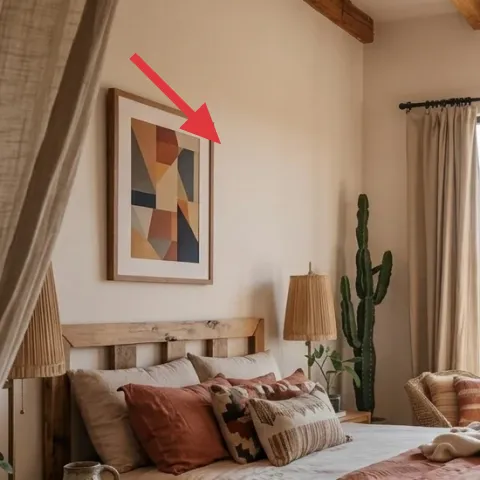
The framed abstract geometric wall art brings structure to an otherwise soft, textile-heavy corner. It sits above the nightstand/bench table area, so it naturally balances the visual weight of the bed and the armchair. A different approach would be a cluster of small prints, but the geometric single piece reads cleaner and more intentional at this scale. Choose a frame that feels warm (wood tone or a natural matte) so it doesn’t compete with the rattan textures. Once the art is up, the rest of the refresh feels less “random” and more curated.
Center it to your eye height
Hang the art so its center lands around eye level when standing, not at whatever height the old nail happened to be.
Layer 4 — medium ceramic cactus pots (DIY terracotta paint) ($30) turns plants into color accents
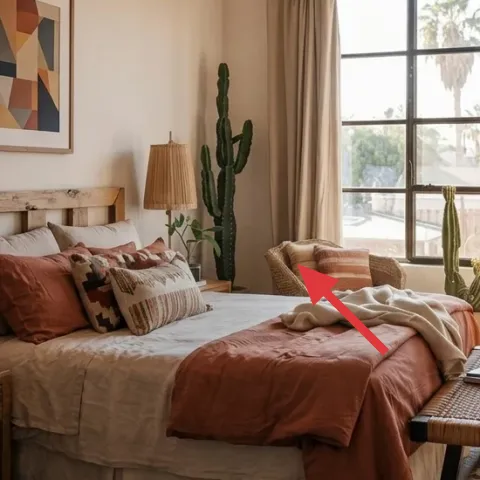
Small changes around the plant pots make the whole corner look styled, not just “decorated.” In the photo, the tall cactus and smaller cactus bring an olive note, and a warmer pot color would echo the terracotta rust bedding instead of letting the green become the only color story. Buying new planters is simple, but repainting or refinishing the existing pots is the more personal move—and it’s usually cheaper because you’re working with the same shapes. The trade-off is that painted ceramic needs a little prep and a steady hand, so the finish stays even.
Don’t skip prep on ceramic
Clean and lightly scuff the pot surface before painting so the coat adheres—otherwise you’ll get tacky spots or chipping.
Layer 5 — wood nightstand/bench table ($120) adds storage and texture near the bed
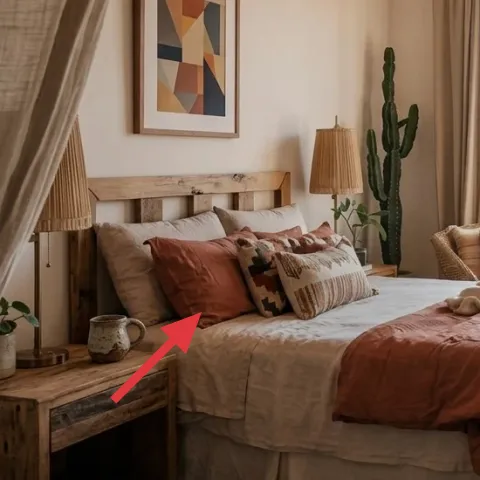
A wood nightstand/bench table is the practical bridge between “rest zone” and “styling zone.” In this bed corner, the warm wood tone matches the ceiling beams and helps the rattan armchair feel connected rather than floating on its own. You can style the top with a lamp, a small plant, or a tray, but the key is keeping the surface from looking empty. Swapping for a sleek metal table can look modern, but it’s usually a mismatch with the boho textures already in play. The trade-off is scale: pick a height that supports your bedding edge so the whole area reads even.
Keep the top styling low
Opt for one plant and one lamp (or one tray) so the bedside area doesn’t compete with the wall art and curtains.
Layer 6 — rattan armchair ($600) creates a reading nook without new walls
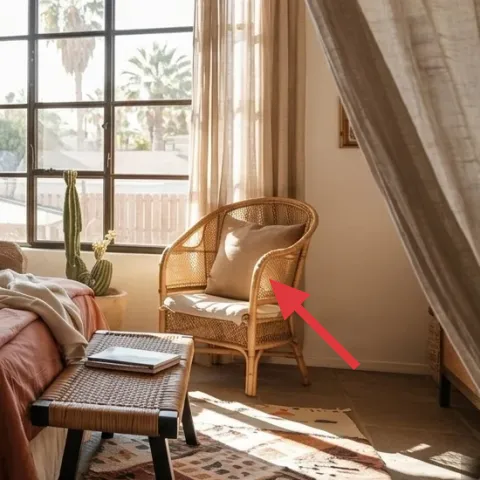
The rattan armchair is what makes this corner feel like a place you’d actually use, not just a bed pushed against a wall. Its woven texture repeats the warmth of the rug and the wood ceiling beams, so the room looks cohesive even when each piece has its own shape. The alternative is a solid upholstered chair, which can feel comfortable but often reads heavier in bright rooms like this. With rattan, the airiness matters: sunlight moves through the weave, so the corner stays bright. The trade-off is seating comfort—choose cushions you’ll happily live on, not just look at.
Match textures, not finishes
Let rattan echo through one or two other elements (curtain tiebacks, lamp shade texture, or woven rug details).
Layer 7 — rattan pendant light ($120) sets a warm overhead glow
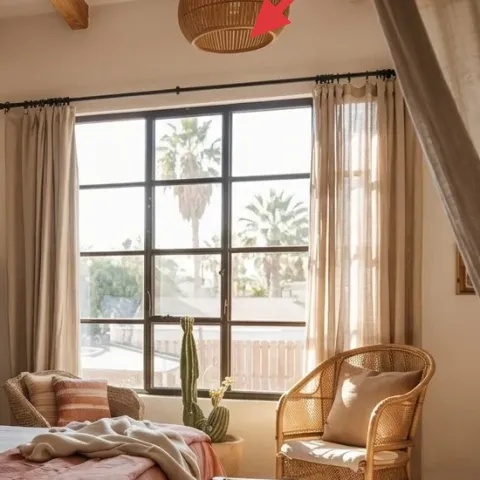
The rattan pendant light is the finishing layer that turns daylight-only styling into a room that still feels good after dark. Hanging from above the bed zone, its warm woven look ties into the armchair and keeps the lighting story consistent with the natural materials theme. The obvious swap—going for a bright white LED fixture—would make the room feel more like a hallway than a bedroom. A woven pendant also softens shadows, which makes textured bedding and the rug pattern look richer. The trade-off is bulb choice: use a warm color temperature so the cream walls don’t look gray.
Warm bulb temperature matters
Pick a warm light so the terracotta and rattan tones stay flattering on off-white walls.
The cost, layer by layer
| Layer | Item | Cost |
|---|---|---|
| 1 | Area rug (8×10) | $200 |
| 2 | Curtain panel pair (84") | $80 |
| 3 | Framed abstract geometric wall art | $80 |
| 4 | Medium ceramic cactus pots | $30 |
| 5 | Wood nightstand/bench table | $120 |
| 6 | Rattan armchair | $600 |
| 7 | Rattan pendant light | $120 |
| Total | $1,230 | |
If you want a cheaper variant, swap the rug for a smaller 5×7 and choose curtain panels in a lighter weave. A budget-friendly framed print and a thrifted nightstand can still keep the bed corner cohesive without losing the warm, boho texture mix.
What worked, what didn't (across the whole room)
This bed corner succeeds because the palette is consistent: cream walls, terracotta rust textiles, and natural wood and rattan textures repeat across every surface. The lighting choices also help—daylight stays soft, and the woven pendant would keep the corner flattering after dark.
What worked
- The patterned rug ties the bed, armchair, and floor into one grounded zone with warm undertones.
- Beige curtain panels add height around the window and keep daylight from feeling too stark.
- The framed geometric wall art balances the bed volume without crowding the wall.
- Natural rattan textures repeat across chair and pendant so the look feels intentionally collected.
- The terracotta rust bedding makes the room feel richer than an all-neutral setup.
- Plant placements bring life near the bed without blocking sightlines from the window.
What didn't
- If the curtain rod sits too low, the window shrinks visually and the bed corner loses its airy feel.
- Over-styling the nightstand/bench table can compete with the wall art and look cluttered in bright light.
- Choosing a cool-white bulb in the pendant would flatten the terracotta and make walls look gray.
- Too much contrast at floor level (like a very dark rug) would fight the warm cream walls.
What we'd skip if we did it again
Skip the impulse buy of a matching “bedroom set” (a coordinated nightstand plus chair plus headboard vibe). This corner works because it mixes textures—rattan, woven lamp shade texture, and wood—so the room feels lived-in rather than showroom-matched.
Skip short curtains. Even if the fabric is beautiful, sill-height hanging makes the window look smaller and reduces the impact of that sunlit bed corner. Hang panels higher for the same material investment, and the whole room reads taller instantly.
Skip a cool temperature bulb for the pendant light. The woven fixture is meant to throw warm shadow softness; if the light turns blue-white, the cream walls and terracotta bedding lose their flattering tone.
Frequently asked
How long does a refresh like this take?
For most homeowners, plan for a half-day to a weekend. Curtains and a new rug are the biggest time blocks because of measuring and hanging height; framed art is quick once the spacing is right. If you’re also swapping lighting, add time for measuring and basic electrical safety. Total time is usually 2–6 hours depending on what’s already in place.
Is this renter-friendly if I can’t change the walls?
Yes—most of the impact comes from textiles and freestanding styling. Use tension rods or a removable curtain rod, then hang the framed abstract wall art using standard hardware your lease allows. The woven pendant can be swapped, but if you need hard-wiring, that’s when a licensed electrician is the safest call. The rug and chair arrangement are fully reversible.
What if my bedroom is smaller or the window is different?
In a smaller room, keep the same color language but scale down the rug and avoid bulky seating. You can still use beige curtain panels, but prioritize hanging height and a single, clean window treatment. If the framed wall art feels too large, choose a simpler abstract print with the same warm frame tone so the wall doesn’t overpower the bed corner.
Where should I shop for the rug, curtains, and chair style?
Start with rug and curtains from retailers that show multiple sizes and curtain lengths; that’s where you avoid expensive returns. For the rattan armchair and pendant light, browse furniture marketplaces or home stores with natural-material collections. For framed geometric art, look for wood or natural matte frames so the art looks integrated, not taped on.
What’s the biggest mistake in a boho-leaning bedroom corner?
The biggest mistake is mixing too many warm accents at once—too many oranges plus too many patterns—so the room looks busy instead of collected. Pick one dominant accent (terracotta rust here), then repeat it in two places: bedding and one smaller object. Keep the rest mostly cream and wood so the textures can do the work.
More in Bedroom
Warm terracotta sunlit-bed-corner refresh, $1500
A sunlit bed corner is all about layering: a patterned rug, breezy beige curtains, and warm terracotta accents. This weekend refresh is bui…
6 renter-friendly swaps that make an earthy bedroom feel finished, $600
Earthy-green walls, rust bedding, and layered textiles make this bedroom look intentional without permanent changes. This $600 move-friendl…
7 renter-friendly swaps for a bedside garden bedroom, $600
A bedside garden bedroom look, built for renters with no drilling—layering a patterned rug, teal curtains, warm lighting, framed art, and a…