- Best for
- Weekend refresh with big visual wins
- Cost
- Under $1500
- Difficulty
- Moderate DIY
- Time
- 1–2 weekends
Why this terracotta-and-sage living room is the cozy living room of 2026
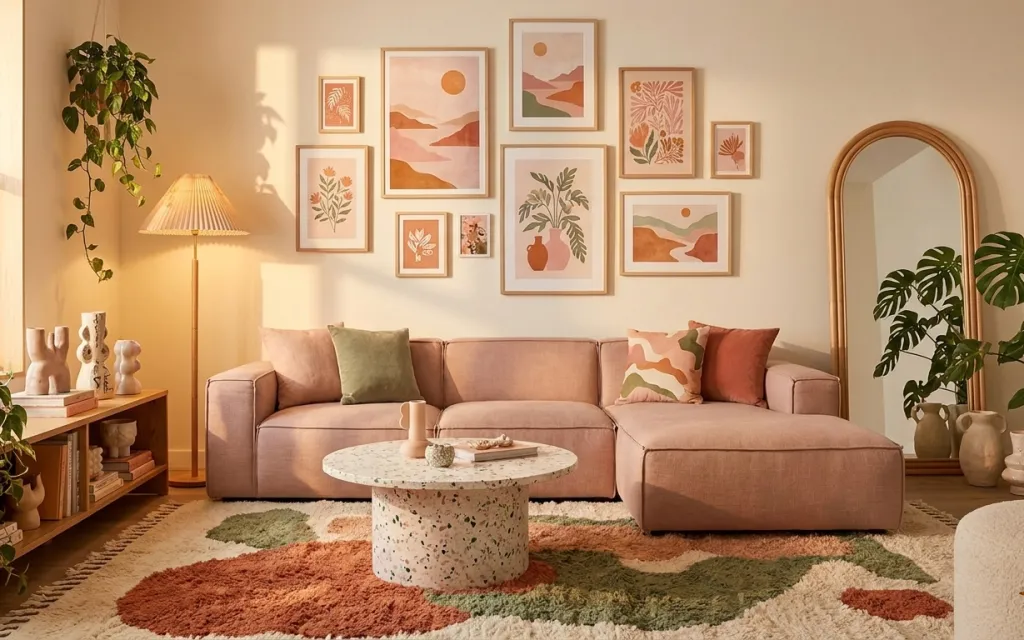
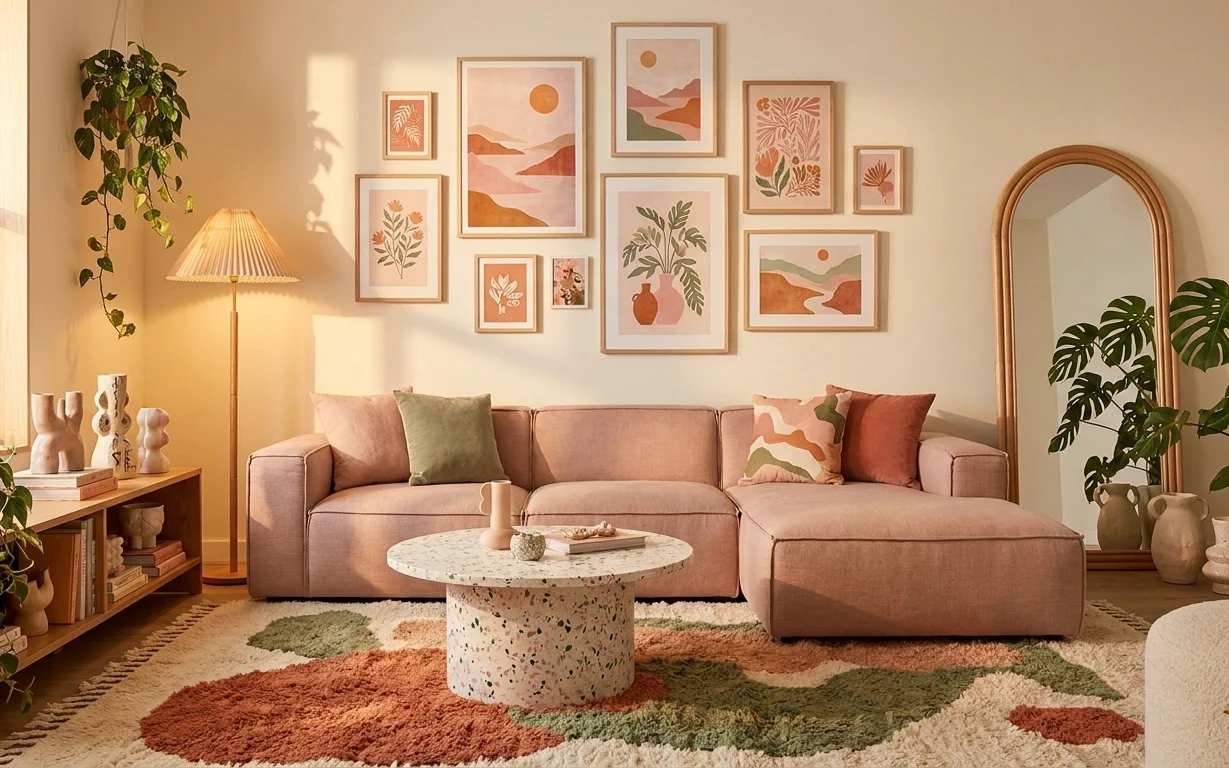
The fastest way to get this look is to treat the room like a palette, not a pile of purchases: the multicolor area rug anchors the terracotta and sage green, while the beige sofa keeps everything grounded. From there, the arched mirror adds that soft curve against the straight lines of the coffee table and console. I’m especially into how the framed botanical art prints repeat warm earth tones without competing with the plants. For homeowners, this weekend-friendly combo is realistic because you can choose the impact items first, then fill around them.
I’ve made the classic mistake of buying wall art that’s “pretty” on its own—then realizing it fights the rug. This time, I’d match the botanical prints to the same warm-beige, terracotta, and sage notes already showing in the rug. The other change that always helps: place your lighting so it reaches the wall, not just the seating area. That’s the difference between flat and dimensional, even before you tweak anything else.
Layer 1 — Multicolor area rug ($200) Warm pattern underfoot, not just decoration
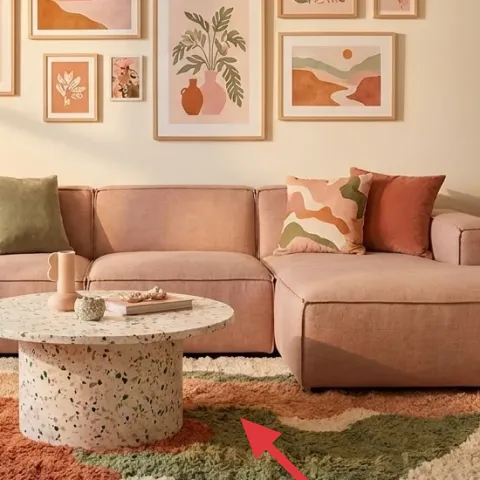
A multicolor area rug with terracotta and sage-like greens does the heavy lifting here because it gives the whole room a shared “story” of colors. It also solves a very practical problem: rugs make a space feel pulled together even when you’re still collecting art and accessories. The one in the photo reads grounded, not busy, because the beige base keeps it from looking chaotic. If you went with a plain neutral rug instead, you’d have to add pattern elsewhere—usually with pricier textiles or a bigger art moment—so this is the best trade-off for time and budget.
Pick the beige base first
Bring home rug swatches and compare them to your sofa fabric in daylight; the base tone should disappear into the upholstery, so the color only shows in the pattern.
Layer 2 — Arched mirror ($120) A curve that softens the whole layout
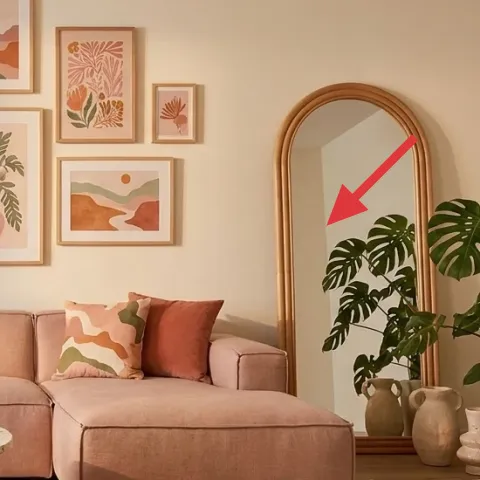
The arched mirror works because it repeats the room’s softer shapes—especially against the straight back edge of the sofa and the rectangle wall frames. It also makes a warm, lived-in corner feel larger without adding more clutter. I’d choose this instead of a flat rectangular mirror because the arch pulls focus upward and matches the earthy, organic vibe from the plants and botanical prints. The trade-off is that mirrors with stronger shapes are easier to misalign; take an extra ten minutes to center it so the curve looks intentional, not accidental.
Hang it where you’ll actually see it
Position the mirror so it catches light from your floor lamp; otherwise it can read darker than you expected at night.
Layer 3 — Framed botanical art prints ($180) Build a cohesive wall from repeats
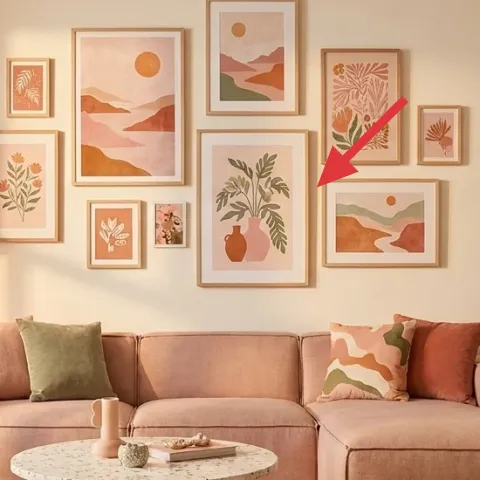
That wall of framed botanical art prints creates cohesion because the illustrations share a similar color temperature and subject matter—warm earth backgrounds, leafy greens, and terracotta accents. Grouping multiple prints is often more forgiving than trying to find one “perfect” oversized piece, especially if you’re mixing sizes. I’d choose this approach over a single large print because it lets you echo the rug pattern and repeat the same visual rhythm across the wall. The trade-off is spacing: you’ll need to measure the gaps so the grid feels curated, not scattered.
Lay it out on the floor first
Tape rectangles on the rug first (even a few inches off) to spot awkward gaps before you commit.
Layer 4 — Floor lamp with beige pleated shade ($120) Warm light that reaches the wall
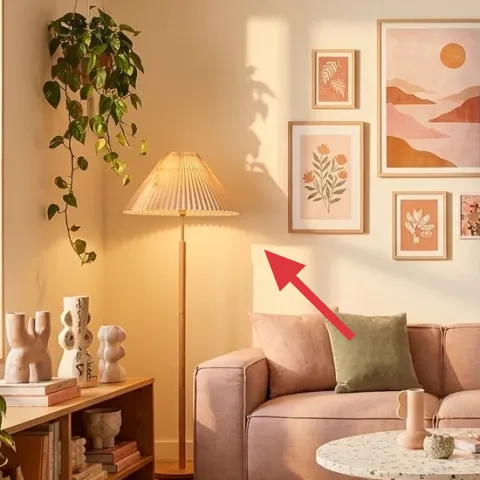
This floor lamp is doing more than providing light—it’s shaping the mood. A beige pleated shade spreads warmth evenly, so the wall behind the sofa doesn’t fall flat, and the framed art reads softer after dark. If you only used overhead lighting, the room would look flatter and less inviting, especially around the coffee table and the plant corners. The trade-off with a floor lamp is floor space, so it’s smart to place it near a visual anchor (like the console or the framed wall) instead of tucking it behind furniture.
Make it instead of buying it
Refresh the lamp base with paint and update the look of the pleated lampshade fabric so it matches your rug tones.
Materials
- Paint, 1 gallon (homeowner only) — 1 — hardware store — $40
- Fabric (1 yd upholstery) — 1 — fabric store — $15
- Wood plank (4ft × 6in) — 1 — hardware store — $10
- Candle — 1 — grocery/home goods — $15
Steps
- Protect the floor and cover the shade so no paint mist gets on the fabric.
- Lightly sand the lamp base to help paint grip.
- Prime the base with your chosen paint (thin coats, let it dry).
- Apply a second coat until the base matches the warm beige tone you want.
- Measure the shade panels and cut upholstery fabric to cover the shade evenly.
- Wrap and secure the fabric so the pleats look smooth from the front.
- Let everything dry fully before reassembling.
- Turn the lamp on at night to confirm the shade still throws warm light without uneven patches.
Total DIY cost: $80 — saves about $40 over buying.
Layer 5 — Beige sofa with chaise ($600) The big neutral that keeps the room breathable
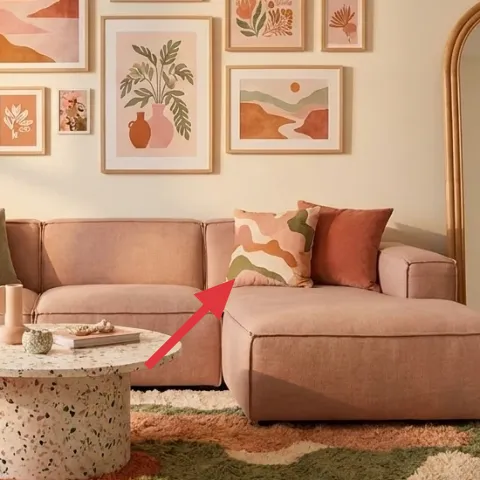
The beige sofa with chaise is the “reset button” in this palette: it’s neutral enough to let the multicolor rug and botanical art do the talking, but it’s structured enough to read tailored. In a room like this, going too gray or too white can make the terracotta look harsh—beige keeps it earthy. You could chase a cheaper fabric sofa, but you often lose that crisp shape and comfortable seat depth that makes the living room feel usable every day. The trade-off here is that sofa-shopping takes the most time; if you’re refreshing an existing sofa, prioritize a deep clean and new throw pillows first.
Match pillow undertones, not just colors
Choose throw pillows where the green looks slightly muted (sage-like) so it stays in the same temperature family as the rug.
Layer 6 — Round white speckled coffee table ($180) A textured center that breaks up straight lines
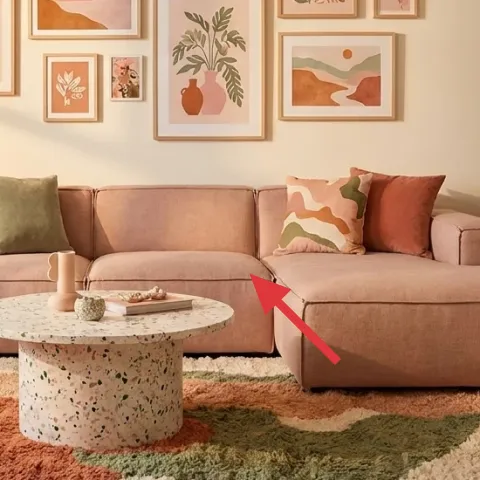
The round white speckled coffee table adds texture without visual clutter. That terrazzo-like surface catches warm lamp light and keeps the coffee-table moment from looking flat, especially in front of a sofa with clean lines. The shape matters too: a round top softens the geometry between rug edges, sofa arms, and the framed art on the wall. I’d choose this over a square coffee table because corners can feel busy when you already have patterned textiles and a gallery wall. Trade-off: round tables can take slightly more “thinking” for where small decor sits, so keep the top styling minimal and intentional.
Don’t overload the top
If the table is already speckled and the rug is patterned, too many objects compete—stick to one small tray or two pieces max.
Layer 7 — Cream-painted walls ($70) The calm backdrop that makes everything else work
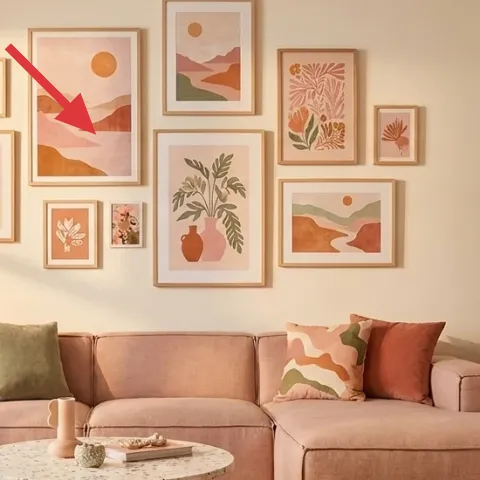
Cream-painted walls are the background that lets terracotta, sage green, and botanical illustration colors stay warm instead of murky. In a room with multiple framed prints and plants, the wrong wall tone can flatten contrast, making the art look washed out. I’d choose a creamy neutral rather than a pure white because it supports that soft, warm lighting mood in the photo. The trade-off is that cream can look different depending on time of day, so test a sample area near the floor lamp footprint before rolling the whole room.
Test near the lamp
Paint a small square and observe it after dark; warmer lamps can make cool undertones show up fast.
The cost, layer by layer
| Layer | Item | Cost |
|---|---|---|
| 1 | Multicolor area rug | $200 |
| 2 | Arched mirror | $120 |
| 3 | Framed botanical art prints | $180 |
| 4 | Floor lamp with beige pleated shade | $120 |
| 5 | Beige sofa with chaise | $600 |
| 6 | Round white speckled coffee table | $180 |
| 7 | Cream-painted walls | $70 |
| Total | $1,470 | |
If your budget is tighter, downsize one big-ticket item: swap a new sofa for thrifted-upholstery finds or start with a rug upgrade plus art and lighting first, then repaint walls later.
What worked, what didn't (across the whole room)
This setup works because it layers pattern and texture in “controlled” amounts: the rug brings color, while the beige sofa and cream walls keep the look breathable. The lighting and wall grouping also matter—when the lamp reaches the artwork area, the whole room feels finished after dark.
What worked
- The multicolor area rug hides small everyday messes while still reading warm and intentional.
- The arched mirror softens the room’s geometry and reflects warm floor-lamp light around the sofa.
- Framed botanical art prints repeat terracotta and sage so the wall feels curated, not random.
- The beige pleated floor lamp shade spreads light evenly instead of creating harsh hotspots.
- The round coffee table adds texture and breaks up straight lines between rug edges and sofa arms.
- Cream-painted walls keep plants and artwork from looking too contrasty or too muted.
What didn't
- If you mirror-match the rug colors but ignore the beige undertone, the terracotta can look too orange.
- Placing the floor lamp behind furniture makes wall art look flat and less readable at night.
- Using too many small decor objects on the speckled coffee table makes the pattern feel busy fast.
- Skipping spacing on framed prints turns a “gallery” into a collage.
What we'd skip if we did it again
Skip a full repaint if your walls are already close to cream. In this room, the big visual lift comes from the rug pattern and the wall artwork layout, so you can save painting for later—or only touch up high-traffic scuffs.
Skip buying a rectangular mirror in the same place. The arch is part of what softens the straight lines around the sofa and framed prints; a standard mirror would read more formal and less earthy in this palette.
Skip going heavy on countertop or coffee-table styling. When you already have a multicolor rug and speckled coffee table, keep the tabletop to a small tray plus one or two pieces so the texture can do its job.
Frequently asked
How long does this kind of living room refresh usually take?
If you’re buying new large pieces (rug, sofa, coffee table), plan the timeline around delivery. The hands-on part—arranging framed botanical art prints, placing the arched mirror, and styling the coffee table—typically takes 4–8 hours total. The DIY lamp refresh is another 2–5 hours depending on drying time and how cleanly you want the fabric update to look.
What if I rent and can’t paint the walls?
Keep the color read you want by focusing on the rug, framed botanicals, and lighting first. For the lamp, you can refresh the shade with fabric that can be removed later, and you can swap light bulbs for a warmer tone to mimic the cream-wall effect. If your mirror or art holes aren’t an option, use your landlord-approved hanging method and keep the grouping compact.
My room is smaller than this—what should I change?
For a smaller living room, choose a rug that still has a beige base but reduce the pattern scale slightly so it doesn’t feel overwhelming. Keep the framed botanicals in fewer prints with the same warm repeats, and place the arched mirror slightly higher so it visually lifts the space. A smaller coffee table may work, but keep it round if possible for flow.
Where should I shop for these items without overspending?
Start with wall art and lighting at home goods retailers for easy returns, then watch for sales on area rugs and mirrors. For the sofa and coffee table, thrift or consignment can be worth it if you inspect upholstery wear and stability. If you want a matching look quickly, buy a rug first, then use the rug colors to guide pillow and wall print choices.
What’s the biggest mistake people make with earthy living room palettes?
They pick terracotta and green colors that look right in daylight but clash under warm lamps. Always check how your choices read at night—especially the green undertone and the beige base on the sofa and walls. The second common mistake is hanging artwork without measuring gaps; the room ends up feeling accidental instead of collected.
More in Living Room
Weekend budget refresh: under $1500 for a cozy living room
A warm, earthy living room refresh under $1500 by upgrading one big thing (a multicolor rug) plus lighting, wall art, and finishes. You’ll …
Under $800: a warm boho living room corner refresh
A warm boho living room corner refresh with a jute-style rug, layered textiles, and art. This $800 plan focuses on high-impact changes like…
Under $500: move-friendly boho living room refresh
A bright, boho living room look built from move-friendly layers. This $500 plan focuses on a woven rug, sofa textiles, warm wall art, and a…